

What do you think?

Espiritualidad emocionalmente sana - Guía de estudio: Es imposible tener madurez espiritual si somos inmaduros emocionalmente (Emotionally Healthy Spirituality)
Para quienes desean tomar los pasos en su fe cristiana y discipulado, para liberarse de las ataduras del pasado y experimentar la sanidad, Espiritualidad emocionalmente sana es un estudio bíblico de ocho sesiones con video sobre la integración de la salud emocional y la espiritualidad contemplativa. Muchos seguidores de Cristo, que están realmente apasionados por Dios, se unen a una iglesia, participan semanalmente en un grupo pequeño, sirven con sus dones, y quienes son considerados «maduros», permanecen estancados a un nivel de inmadurez espiritual, especialmente cuando enfrentan conflictos y crisis interpersonales. El estudio en video Espiritualidad emocionalmente sana y la guía de estudio que lo acompaña, ofrecen una estrategia para que el discipulado aborde este vacío, ofreciendo poderosos caminos hacia la transformación que ayudará a las personas maduras a llegar a una fe llena de autenticidad y un profundo amor a Dios.
Las ocho sesiones incluyen:
1. El problema de la espiritualidad emocionalmente no sana.
2. Saber que puedes conocer a Dios.
3. Retroceder para avanzar hacia adelante.
4. Viaje a través de la pared.
5. Expandir tu alma a través del dolor y la pérdida.
6. Descubrir el ritmo de las Oficio diario y el Sabbat.
7. Crecer en un adulto emocionalmente sano.
8. Tomar el siguiente paso para desarrollar una «regla de vida».
Las ocho sesiones incluyen:
1. El problema de la espiritualidad emocionalmente no sana.
2. Saber que puedes conocer a Dios.
3. Retroceder para avanzar hacia adelante.
4. Viaje a través de la pared.
5. Expandir tu alma a través del dolor y la pérdida.
6. Descubrir el ritmo de las Oficio diario y el Sabbat.
7. Crecer en un adulto emocionalmente sano.
8. Tomar el siguiente paso para desarrollar una «regla de vida».
134 pages, Kindle Edition
First published July 21, 2014
Ratings & Reviews
Friends & Following
Create a free account to discover what your friends think of this book!
Community Reviews
Displaying 1 - 30 of 33 reviews
July 13, 2023
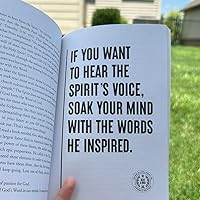
This is one of my favorites books of the year! Although there are many great things to learn from this book the biggest thing for me was the love chapter. That chapter helped me understand that I can love everyone well despite us having contrary beliefs or life styles. Their actions and what they say don’t have to offend me because we are two different people and it shouldn’t stop me from loving them. Love helps us grow emotionally and become more like Christ. When we love we walk in Gods presence daily.

December 16, 2020
I highly recommend this course, but if you had to choose just one of the three, the book is the most helpful. Going through the book, workbook, and devotional gets a bit repetitive as Pete uses the same examples in all three. There's a lot to process and it can be overwhelming to consider real-life implementation, but I think if you go about it the right way and add one step at a time rather than trying to change everything at once, it could be doable!
February 4, 2023
This is by far the best non-fiction book i've ever read. So eye-opening and easy to follow along and understand. I never realized how common it is in Christianity for us to be emotionally unstable, I thought it was just me. Ha ha. This book serves as a guideline to becoming emotionally mature along with our spirituality. It will touch your heart in a way that you are changed forever. It encourages us to fully feel our emotions (in a non-self hatred way), be true (in a biblical way, not a false image), and let Jesus transform us inside and out (the love of God is transformative). The insight I received from this book is the start of a journey of healing and emotional maturity!
Quoted in the book, words by Carlo Carretto: "Live love, let love invade you. It will never fail to teach you what you must do."
Quoted in the book, words by Carlo Carretto: "Live love, let love invade you. It will never fail to teach you what you must do."

January 28, 2025
My small group read this book together after several of us hearing many recommendations. This book came to me at such a timely moment in my life. I didn’t know how to put language around certain experiences or that there even was language to describe how the things of my past could be informing my present. This book bridges the gap between emotions and our spiritual walk, two things that cannot truly be separated. I highly recommend! Also, this book is based off of Christian principles. “Spirituality” refers to a Christian faith, just an fyi (:

September 30, 2022
If you are reading the main book, you’ll get WAY MORE out of it if you do the workbook alongside it! Very good

March 17, 2021
Great book. This is hard for a lot of people because many of us our emotionally constipated. If you’ll simply give into the direction Scazzero offers, you will grow. It may hurt and you may want to put the book down at times, but see it through. If you’re honest with yourself this book will provide the steps for some deep change.

April 21, 2026
This is the workbook that's used for the Emotionally Healthy Spirituality class. I read the book several years ago and liked it, but noted at the time that it felt someone incomplete, almost as if it was introducing many topics but not actually getting into them. The workbook and class definitely augments the book a lot and makes it stick. In particular the discussions it leads to are very illuminating and helpful.
I have a couple reservations though. 1/ in general the workbook seems to focus deep on 1 or 2 ideas from each chapter of the book, not the chapter overall, so it feels like some concepts get lost. 2/ Having gone through both the book and workbook, I still feel like the material in general is not complete. Specifically, it's never defined what emotional health is. There's a late appendix that's titled Emotionally Healthy Spirituality Defined but it's not actually a definition, it's a description, a set of bullet points of characteristics it includes. I think an actual definition would be helpful; without it, the discussion continues to feel like it's hinting at what it all comes down to instead of saying outright, which feels a little frustrating.
I have a couple reservations though. 1/ in general the workbook seems to focus deep on 1 or 2 ideas from each chapter of the book, not the chapter overall, so it feels like some concepts get lost. 2/ Having gone through both the book and workbook, I still feel like the material in general is not complete. Specifically, it's never defined what emotional health is. There's a late appendix that's titled Emotionally Healthy Spirituality Defined but it's not actually a definition, it's a description, a set of bullet points of characteristics it includes. I think an actual definition would be helpful; without it, the discussion continues to feel like it's hinting at what it all comes down to instead of saying outright, which feels a little frustrating.

November 17, 2022
LOVE the concept of this book, I feel like it could be 400 times longer, or that each chapter should/could be an entire book as well. I’d recommend it as “required reading” for all followers of Christ, especially those in leadership positions. The importance of emotional health for church leaders cannot be overstated! I love that this concept is becoming more widespread and pray it will grow into a movement!
I only knocked one star off because the study itself involved 3 books and I found that really difficult to keep track of. I feel like the study could be made into one book (weekly chapter - weekly workbook - daily readings) and this book should/could otherwise stand alone. I’ll rethink this when/if I ever lead a group through it, which I really hope to! Because of the heavy content, it’s best read in community with others.
I only knocked one star off because the study itself involved 3 books and I found that really difficult to keep track of. I feel like the study could be made into one book (weekly chapter - weekly workbook - daily readings) and this book should/could otherwise stand alone. I’ll rethink this when/if I ever lead a group through it, which I really hope to! Because of the heavy content, it’s best read in community with others.
October 20, 2020
Another “easier said than done” book but nonetheless found some nuggets ~
“The extent to which we love and respect ourselves is the extent to which we will be able to love and respect others”
Emotional health is about “awareness of and responding to the love of God”
“How can we affirm other people’s unique identities when we don’t affirm our own”
“We honor our parents, culture, and histories but obey God”
“The extent to which we love and respect ourselves is the extent to which we will be able to love and respect others”
Emotional health is about “awareness of and responding to the love of God”
“How can we affirm other people’s unique identities when we don’t affirm our own”
“We honor our parents, culture, and histories but obey God”
March 5, 2026
This book is horrendous. Sophomoric theology, drenched in racist, sexist, classist victim mentality. The author is sixty years behind modern theologians, comparing his experience of emotionally manipulating his wife to being a slave, glorifying suffering, and selling a course to be a better Christian to unsuspecting people about to shell out more money for badly researched, non-peer reviewed theological discourse.
October 7, 2020
This isn’t a standalone book, but it’s meant to help collect thoughts as you read the devotional book and to organize and prepare for weekly group meetings in the program. I found it helpful to write notes instead of just reading and thinking, and I look forward to gong back and reviewing to see if my struggles change over time.

February 27, 2026
There are some good things about this course BUT the “Between sessions personal study” for weeks 6 and 7 are reversed! Has no one complained about this so that it gets corrected?! The structure of this course is clunky, but having discovered the flip-flopped weeks, I wonder how much of that is poor organization or poor communication on the part of the author/publishers?

April 20, 2026
I really enjoyed how practical Scazzero is in this book.
Our health is worth paying attention to, in order to have a healthy church and love others well.
I feel challenged to incorporate more silence in Gods presence- allowing him to let me listen to what He is saying.
And building our habit of keeping the Sabbath to include:
Stopping
Resting
Delighting
Contemplating
Our health is worth paying attention to, in order to have a healthy church and love others well.
I feel challenged to incorporate more silence in Gods presence- allowing him to let me listen to what He is saying.
And building our habit of keeping the Sabbath to include:
Stopping
Resting
Delighting
Contemplating

November 10, 2017
I found this workbook helpful, but not as necessary as the book or the devotional. Overall, I truly enjoyed the course offered through my church, West Side Presbyterian in Ridgewood. I hope this will be the beginning of some true transformation.
May 5, 2019
This is a must read to grow and develop into an emotionally mature person. I was stuck in a teenage maturity and at the wall too many times. This series will help you examine yourself, your family of origin and how to move forward and grow.

April 7, 2020
A few friends and I used some of the exercises in this workbook as we talked through the Emotionally Healthy Spirituality book. We didn’t watch the videos or use the Day by Day portion. I recommend this as a supplement to go deeper in your study. It was helpful even though we didn’t use it all.

August 28, 2020
I used this book as a supplement to a men’s discussion group of the book. We didn’t use the workbook this time, but I would consider using it in the future. It works in tandem with chapter readings, refers to video clips (which I didn’t have), and provided prompts for reflective questions.

May 4, 2023
I took this course at my church, and it's invaluable for personal and spiritual growth. There is a formal structure to the material which is helpful for keeping everyone engaged and moving through the chapters. An excellent small group study and companion to the main book.

September 6, 2025
overall, I enjoyed the course. I did it through our church and it was impactful. I would want to go through it again and write out the things that really struck home for me. I believe there are many actionable items and the guide that goes along with this is good, too.

July 26, 2020
Muy Estructurado
Tremendo estudio wuao la verdad que esta recomendado , muy bueno y les invito a desarrollarlo en grupo para sacarle el mayor beneficio.
Tremendo estudio wuao la verdad que esta recomendado , muy bueno y les invito a desarrollarlo en grupo para sacarle el mayor beneficio.

March 11, 2021
Life changing and powerful.
A must for every leader.
A must for every leader.

July 7, 2022
This book has challenged me and it has grown me but the work is only just beginning. Take from it what is needed now and continue to let it grow you in every season of life.

December 19, 2022
I learned a lot through this book! It gave me some new perspective on how to incorporate my emotions with my relationship with the Lord! great stuff!!!

January 12, 2023
Omg. Please read this book.
April 21, 2023
Great companion to the text. Lots of great prompts and diagrams. Helpful to ensure really thinking about it and expressing self as you do the work each week

October 26, 2023
I found the workbook much more helpful than the actual book, although between the three, the 40 day Daily Office book was the most useful for me.

June 12, 2024
A great book that's practical and spiritual at the same time

January 9, 2025
Lots to put in to practice, will I? Probably not.
March 10, 2025
Going through this book, in a group setting was really where it was at. It was actually doing the work, not just reading about it.
Emotionally Healthy Spirituality was 3.5⭐
The Daily Office was 3⭐
Emotionally Healthy Spirituality was 3.5⭐
The Daily Office was 3⭐

October 19, 2025
really good! I learned a lot!
Displaying 1 - 30 of 33 reviews