Jump to ratings and reviews
Rate this book

Letters of Sylvia Plath #1

Letters of Sylvia Plath, Volume I: 1940-1956

Rate this book
Sylvia Plath's renown as one of the twentieth century's most influential poets is beyond dispute, but she was also one of its most captivating correspondents. This remarkable, collected edition of Plath's letters is a work of immense scholarship and care, presenting a comprehensive and historically accurate text of the known and extant letters that she wrote to over one hundred and twenty correspondents, including her husband the poet Ted Hughes, to whom previously unseen letters are now revealed. The edition reproduces previously unknown photographs, and a gathering of Plath's own elegant line drawings taken from the letters she sent to her friends and family, offering the reader generous insight into the life of one of our most significant poets.

1424 pages, Hardcover

First published October 17, 2017

275 people are currently reading
3633 people want to read

About the author

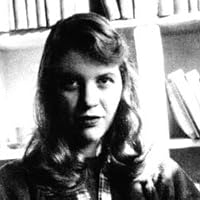
Sylvia Plath

280 books28.5k followers
Sylvia Plath was an American poet, novelist, and short story writer, widely regarded as one of the most influential and emotionally powerful authors of the 20th century. Born in Boston, Massachusetts, she demonstrated literary talent from an early age, publishing her first poem at the age of eight. Her early life was shaped by the death of her father, Otto Plath, when she was eight years old, a trauma that would profoundly influence her later work.
Plath attended Smith College, where she excelled academically but also struggled privately with depression. In 1953, she survived a suicide attempt, an experience she later fictionalized in her semi-autobiographical novel The Bell Jar. After recovering, she earned a Fulbright Scholarship to study at Newnham College, Cambridge, in England. While there, she met and married English poet Ted Hughes in 1956. Their relationship was passionate but tumultuous, with tensions exacerbated by personal differences and Hughes's infidelities.
Throughout her life, Plath sought to balance her ambitions as a writer with the demands of marriage and motherhood. She had two children with Hughes, Frieda and Nicholas, and continued to write prolifically. In 1960, her first poetry collection, The Colossus and Other Poems, was published in the United Kingdom. Although it received modest critical attention at the time, it laid the foundation for her distinctive voice—intensely personal, often exploring themes of death, rebirth, and female identity.
Plath's marriage unraveled in 1962, leading to a period of intense emotional turmoil but also extraordinary creative output. Living with her two children in London, she wrote many of the poems that would posthumously form Ariel, the collection that would cement her literary legacy. These works, filled with striking imagery and raw emotional force, displayed her ability to turn personal suffering into powerful art. Poems like "Daddy" and "Lady Lazarus" remain among her most famous, celebrated for their fierce honesty and technical brilliance.
In early 1963, following a deepening depression, Plath died by suicide at the age of 30. Her death shocked the literary world and sparked a lasting fascination with her life and work. The posthumous publication of Ariel in 1965, edited by Hughes, introduced Plath's later poetry to a wide audience and established her as a major figure in modern literature. Her novel The Bell Jar was also published under her own name shortly after her death, having initially appeared under the pseudonym "Victoria Lucas."
Plath’s work is often classified within the genre of confessional poetry, a style that emphasizes personal and psychological experiences. Her fearless exploration of themes like mental illness, female oppression, and death has resonated with generations of readers and scholars. Over time, Plath has become a feminist icon, though her legacy is complex and occasionally controversial, especially in light of debates over Hughes's role in managing her literary estate and personal history.
Today, Sylvia Plath is remembered not only for her tragic personal story but also for her immense contributions to American and English literature. Her work continues to inspire writers, artists, and readers worldwide. Collections such as Ariel, Crossing the Water, and Winter Trees, as well as her journals and letters, offer deep insight into her creative mind. Sylvia Plath’s voice, marked by its intensity and emotional clarity, remains one of the most haunting and enduring in modern literature.

Ratings & Reviews

What do you think?
Rate this book

Friends & Following

Create a free account to discover what your friends think of this book!

Community Reviews

5 stars
277 (56%)
4 stars
144 (29%)
3 stars
56 (11%)
2 stars
9 (1%)
1 star
3 (<1%)
Displaying 1 - 30 of 59 reviews
Profile Image for belljareads.
108 reviews14 followers
December 21, 2017
(4.5 but hell, how is one supposed to 'rate' one of the best poetess' letters?)
What a journey. Sylvia, I'll miss you, and am much looking forward to the release of the second volume of your letters. You've helped me go through 2016 and 2017, as your work and the way you saw life and described it has had the power to change me & the way I look at things. You're an inspiration, and I can't even grasp half of the things reading you has brought me.
-- I can only recommend to anyone interested in Sylvia Plath & her work to read this, even though I consider reading her journals a better way to understand the working of her brilliant mind - and a shorter one.
Profile Image for Roman Clodia.
2,897 reviews4,650 followers
January 8, 2021
Last night I read a long involved Jean Stafford story in the New Yorker, and had one of my apocalyptic visions: someday I will be a rather damn good woman writer. Suddenly, I feel this queer sense that, in time, I can surpass her; and even Eudora. If I live "in-myself" this way, all the quirks and queer musings in my head can bear fruit, without being blurred and blunted by constant prosaic contacts with exterior people; this year will set me deeper than ever in the dark secret well of my own fancies, dreams and visions; living with you will save me from being suffocated with no outlet (except these interminable letters, please forgive their length & tediums) as I am now.
~ Plath to Ted Hughes, 10 October 1956

How do we even begin to rate letters? In terms of their personal revelations? Their contextualisation for an author's poetry and fiction? As pieces of writing in their own right? We know from recent 'letter theory' that not even seemingly-spontaneous correspondence can be read as entirely innocent, neutral or transparent - letters are a prime locus of self-fashioning and identity construction, as the authorial 'I' articulates itself to an implied 'you', both of which may only partially overlap with the designated writer and recipient of the letter in question. The boundaries between letters and fiction, in other words, may be more porous than is sometimes assumed.

This first volume of Plath's letters are described as a form of autobiography in the preface - and any reader of Plath's other writings must be struck by how different this voice is, generally, from that of her journals, her fiction and, especially, the raging, bloody poetry of Ariel. Only one or two of the searing love letters to Richard Sassoon contain echoes of the poems to come; and the drier-than-dry monotones of Esther Greenwood from The Bell Jar are rarely here either.

Instead, what we get is, generally, an upbeat, energetic, lively Plath, in love with life even when she's anxious and overwhelmed with pressure and anxiety. The persona of the letter writer doesn't match that of the journal writer - and are all the more fascinating precisely for that reason. These letters, I'd suggest, offer the image Plath wanted to show to the world - even her intimate world of mother, brother, lovers and, towards the end, husband.

The sheer number of letters written to Aurelia Plath is extraordinary. Sometimes dated to a single day, Plath reports to her mother all the minutiae of her life: her college timetable, the grades of each individual essay, the poems/stories she's written, what she's wearing on each of her dates, what she eats and drinks. We're so used to coming to this story having been told of the unhealthy mother-daughter relationship that it's hard to untangle that image and read these letters afresh: for what it's worth, at least at this stage of Plath's life (this volume ends at her 24th birthday), the pressures on Plath seem to me to be more self- and culturally-imposed than coming from Aurelia - though the idea of perfect femininity was, of course, widely dispersed in the 1950s. There is an uneasiness at the level of detail Plath needs to share - mother living vicariously or co-dependency? - it's hard to say.

It is notable that Plath sometimes tells the same stories in almost exactly the same words to different correspondents - also, that she sometimes undermines herself. Glowing reports from Spain to Aurelia, for example, give way to discontented versions of the same material to Warren, her brother.

It's also worth noting that Plath was despairingly in love with another man at the time that she met Ted Hughes - and that legendary first meeting with its bruising kiss/bite/blood doesn't get a look in here (it's in the journals). All the same, the letters about and to Hughes can't help but be fascinating, not least the way they depict the creative symbiotics and the way Plath herself saw them as equal and balanced in power.

A word on the volume itself: there is minimal editorial intervention so the underlying assumption is that we're familiar with the outlines of Plath's life (if not, I'd highly recommend Red Comet: The Short Life and Blazing Art of Sylvia Plath). Not surprisingly, foundational events (the 1953 suicide attempt, the shock treatments) are not mentioned in any of the letters. But this does include all the requisite scholarly apparatus of notes, references, sources and a well thought out and immensely helpful index with direct links in the Kindle edition to the relevant letters.

This ends in 1956 with Plath eager and excited - how tragic that we know how much will change in the following seven years...
Profile Image for Laura.
7,132 reviews606 followers
October 12, 2017
From BBC Radio 4 - Book of the week:
Sylvia Plath's renown as one of the twentieth century's most influential poets is beyond dispute, but she was also one of its most captivating correspondents. This radio selection, is abridged by Caitlin Crawford from the remarkable, collected edition of Plath's letters published last week. Edited by Peter K Steinberg and Karen Kukil , it is a work of immense scholarship and care, presenting a comprehensive and historically accurate text of the known and extant letters that she wrote to over one hundred and twenty correspondents, including her husband the poet Ted Hughes, to whom previously unseen letters are now revealed. The programmes offer us a generous insight into the life of one of our most significant poets. Known primarily for her poetry, Plath also wrote a semi-autobiographical novel, The Bell Jar, under the pseudonym Victoria Lucas. The book's protagonist, Esther Greenwood, is a bright, ambitious student at Smith College who begins to experience a mental breakdown while interning for a fashion magazine in New York. The plot parallels Plath's experience interning at Mademoiselle magazine and subsequent mental breakdown and suicide attempt.

Despite her remarkable artistic, academic, and social success at Smith, Plath suffered from severe depression and underwent a period of psychiatric hospitalization. She graduated from Smith with highest honours in 1955 and went on to Newnham College, Cambridge, in England, on a Fulbright fellowship. Here she met and married the English poet Ted Hughes in 1956. For the following two years she was an instructor in English at Smith College.

1. 1943 to 1951 - Adolescence to Smith College .
Read by Lydia Wilson
Abridged by Caitlin Crawford
Produced by Susan Roberts.


http://www.bbc.co.uk/programmes/b0978cbg
Profile Image for tortoise dreams.
1,235 reviews59 followers
November 22, 2017
Plath put as much effort into her correspondence as her other writing, she's witty, engaging, energetic -- a true writer, she wanted the recipients to enjoy her letters.

Book Review: The Letters of Sylvia Plath is a chunker, a monster, a brick, a beast, massive ... literally a "tome." Sylvia Plath, in those pre-Twitter and texting days, wrote a lot of letters (future generations will not have the pleasure of reading letters collections). More than 1,390 letters. You've already read some of this book if you've ever read a biography of Plath; these letters are what her biographers have been quoting at us for years. Many previously appeared in the 500 page volume, Letters Home (1975), edited by Plath's devoted mother, Aurelia Schober Plath, which I read previously. This volume is only the first (the second is expected in 2018), clocking in just shy of 1400 pages. This brobdingnagian volume will mostly appeal only to biographers and the most pious Plath fans. I count myself in the latter group (Plath and Emily Dickinson are two of America's best poets, not just best female poets).

No, I haven't read the whole book, perhaps never will. I've been paging through and reading randomly for about a month now, but already two fascinating themes have emerged. First is how, paradoxically, Plath is wonderfully confident of her mother's love and interest in the tiniest of details, but her need for her mother's approval is also nakedly apparent. So much focus has been placed on Plath's relationship with her too-soon departed father (per her most famous poem, "Daddy"), but her relationship with her mother could be a lifetime study (thanks to this recent overdose of evidentiary material). Second, Plath is surprisingly open, frank, and confident in her letters with her boyfriends. Perhaps I have a mistaken image of the times. With further reading, I'm looking forward to further revelations and insights. Plath was diligent and hard working. She was intelligent, ambitious, talented beyond belief, and funny; those qualities come through in the letters. So much personality. Aurelia Plath was a single mother, uncommon in those days, with two children. Coming from limited means, money was always an issue. Plath worked hard for scholarships and literary prizes -- they were not only a much needed validation, the money was necessary to exist in her elite academic circle (Smith College, University of Cambridge). She needed the money, even simply to buy a sweater.

In addition to the letters, there are photos, facsimiles, poems, and drawings. The footnotes and index are amazing, extensive and thorough -- for scholars half the research is already complete. This volume is a class act, professional, expert, and always well done, worthy of Plath's legacy. [5★]
Profile Image for Stefania.
285 reviews28 followers
February 24, 2024
Un libro maravilloso para los que amamos y admiramos a Sylvia Plath.
Profile Image for Brenna.
32 reviews2 followers
April 6, 2019
It would be impossible for me to describe just what Sylvia Plath means to me. After reading this first volume of her letters, it's official: I have never connected with another writer like I have with her.

If you have ever wanted to get to know Sylvia beyond the stereotype of "depressed female writer who committed suicide," this collection is really the best place to start. I think her real self truly comes through in the letters to her mother, Aurelia Schober Plath. My favourite running theme from her time at Smith is when Sylvia describes her dates to her mother and nearly all of them read like this: "His intellect was incredible and we spent all night talking; I could have talked to him forever, but he's shorter than me, so I won't be seeing him again." I feel this as a 5'9" woman! Her need to date a tall, intelligent man is a need I feel on a spiritual level.

As I continued through this collection, I kept finding myself and my views mirrored in Sylvia's thoughts. Her musings on life, men, and the need to write match mine to an almost terrifying degree.

This book is massive -- it's more than 1300 pages. It took me nearly a year to read, and spending all that time inside Sylvia's thoughts has left me with a sense of profound loss after finishing this book.
Profile Image for Antoni.
141 reviews26 followers
January 2, 2021
Llegit a l'adolescència un parell de vegades, em va impressionar molt. Segur que no és un llibre magistral però la cruesa de les pujades i baixades de la Plath és molt forta.
Profile Image for sherry ♡.
26 reviews1 follower
September 3, 2023
Just give me a minute to gather the pieces of my shattered heart …

I have never felt this empathy for anyone.

i felt pain, comfort and sadness reading this book…

It made me sob so 5 stars ofc.
Profile Image for Marisa.
46 reviews3 followers
March 23, 2019
"I shall be one of the few woman poets in the world who is fully a rejoicing woman, not a bitter or frustrated or warped man-imitator, which ruins most of them in the end. I am a woman, and glad of it, and my songs will be of fertility of the earth and the people in it through waste, sorrow, and death."

It was my goal to finish the first volume of Sylvia Plath's letters during Women's History Month. And I succeeded -- despite, taking me over five months. I felt sort of strange, almost like an intruder, reading these letters as they are truly a window to her soul. Sylvia was very happy in these years. She had a drive and a lust for life that was contagious. She found pleasure in simple things such as buying oranges and doing on dates. This collection of letters was truly a joy to read and enjoy. Until Volume II....
Profile Image for faith adams-michaels.
354 reviews1 follower
October 4, 2021
Finishing this book is a devastating experience. Sylvia led me through so many situations & challenges & emotions, providing parallels for my life & confrontational examples of how she managed (or didn't manage). First, I am upset that letter writing is no longer a consistent form of communication, it gives space for incredible depth and reflection. Second, I am even more upset that there are not fifty years of Sylvia's letters, to read throughout my life. Third, I wish I could tell her that she didn't need to be martyr or a wife or even a woman in the colloquial sense, that she could've been whatever she wanted and whatever she needed. and it would have been enough. Cannot wait to get my hands on the second volume, although I imagine that one is very different from this one.
Profile Image for Sergio Sergio.
103 reviews6 followers
Want to read
August 14, 2022
en mi proyecto de convertirme en la persona más interesante, deprimida, guapa, inteligente y graciosa de cualquier grupo con el que me junte entra el leerme cualquier libro que tenga que ver con una mujer (ya sea muerta, viva, ficticia o no ficticia) guapa y que la depresión haya marcado parte d su vida.
Es por eso que me he comprado las Cartas de la Sylvia después de ver que mi amiga Alba (grande donde las hay, la única que cumple con los 5 adjetivos que quiero ser en la vida) se las ha leído. 26€ menudo sablazo, me duele el corazón pero no os preocupéis que es la primera parte y la segunda cuesta solo 28€
Profile Image for Neil Fulwood.
978 reviews23 followers
August 23, 2021
I’m not even going to try to compress this reading experience into a capsule review. All I’ll say is that it’s an autobiography in real time, unfiltered, unmediated, immediate, charged with emotion that still fizzes and crackles seventy years down the line; that is sometimes exhausting, sometimes overwhelming and always compelling. These letters buzz with Plath’s lust for life, art, love and the act of creation.
Profile Image for Theresa.
Author 19 books15 followers
February 9, 2019
I've never had a reading experience like this before—reading years of letters all in succession. What a unique window into a person's mind, and such a fascinating mind Plath's was. Immersive.
Profile Image for Diana.
288 reviews8 followers
June 24, 2023
I don't think I can write anything that hasn't already been said here (and probably much better than I could). However, I didn't want to leave this space blank. These letters have provided me with a deeper understanding of Sylvia Plath, her circumstances, her emotions at specific moments, her joys, her concerns, her humour, etc.; but, surprisingly, they've also prompted me to reflect on aspects of my own self. Reading this book has been a dual voyage, simultaneously taking me towards her (or at least the 'her' that is reflected in the letters) and inward into my own being.
Profile Image for J.S. Watts.
Author 30 books44 followers
December 19, 2017
I thoroughly enjoyed reading this. For me it was a coming together of the original works of Plath I have read, along with the many biographies, critical essays, diary and letter extracts. These letters are a fascinating insight into the thought processes and life of Plath. The book's a must read for Plath scholars and those fascinated by her and her oeuvre. Given it's size, though, it's probably not a book for the faint-hearted or those with a passing curiosity.

My next task is to re-read Ted Hughes's letters chronologically with the related Plath letters from the same period.

I am very much looking forward to Volume II.
Profile Image for esmé.
225 reviews12 followers
December 26, 2023
I love Sylvia Plath like she's my own mother.

Inspired my writing in so many numerous ways. Reading these letters feels so intimate. She is such a prolific writer... Rest easily my girl.
Profile Image for Lisa  Andersen.
15 reviews8 followers
September 30, 2021
The Letters of Sylvia Plath Volume 1: 1940-1956 clocks in at over 1400 pages (!) and goes all the way back to Plath’s childhood letters from summer camp up to her days as a Fulbright Scholar at Cambridge University in England. This first volume ends right after her marriage to Ted Hughes.

These letters were sent to her family, friends, and lovers over many years, and many had never been published before.

Plath’s Correspondence

The editors obviously worked very hard to obtain all of these letters from friends and family. This was in response to the previous book, Letters Home, published in 1975 by Sylvia’s mother, Aurelia Plath. That volume was criticized for not being complete and for some editing of the letters, although I believe the mother’s intention was to show “another side” of her daughter and a better understanding of the fraught mother-daughter relationship.

We learn about her eating habits, her stamp collections, and her interesting social life at Smith College. Sylvia’s productivity astounds me. She was a brilliant student and deeply involved in campus activities. Plath also wrote literally thousands of letters, journal entries, poems, and short stories. She also submitted many of these to prestigious publications. Plath also was struggling with what would now probably be considered clinical depression.
Comparing Plath’s Correspondence to Her Journals

I find it especially interesting to compare her letters with her journal entries in The Unabridged Journals of Sylvia Plath. It’s fascinating to read what she tells others while sometimes saying something completely different in her private journals.

Of course, being Sylvia, while her moods are constantly shifting, the writing is still darkly beautiful.

I haven’t yet bought The Letters of Sylvia Plath Vol 2: 1956-1963 , but I look forward to reading that book!

Read this review at https://theliterarylioness.com/letter...
Profile Image for False.
2,432 reviews10 followers
December 18, 2018
I read this book when it first came out. There was a sense of "expectations to be met." If you are told often enough you are the golden girl, then such you will become. Even the photograph on the dust jacket reinforces that belief system. Some authors, upon achieving fame, start turning their correspondence into an artifice for posterity. With Plath, she was turning her correspondence into her posterity while in knee socks. You have to read too much between the lines to truly understand the person.
Profile Image for Jeffrey Haskey-Valerius.
Author 1 book13 followers
February 24, 2020
Phewwww! That took a while; this may be the longest books I've ever finished. Onto Vol. II!

I just cannot begin to describe the gravity, the magnanimous encompassing beauty in feeling the intimacy of these correspondences, intimate in different ways than her poetry; how she thinks of her mother as her very closest confidante (in this volume at least) is endearing and most convenient for the reader...and then once she marries Ted, the painful foreboding of her blinding love for him crushes me, crushes me, forever and forever. O, my heart. V, v grateful these volumes exist in my lifetime. <3
Profile Image for Kirsten Andrea Zobel.
134 reviews5 followers
July 11, 2016
Wer diese Briefe liest, der fühlt sich ihr sehr nahe, falls er ähnlich denkt und fühlt wie sie. Mir ging es damals so, was heute vielleicht anders wäre. Denn in den vielen Jahren, die vergangen sind, seit ich die Briefe las, hat sich mein Leben stark verändert somit auch meine Einstellung zum Leben. Doch was sich sicher nicht geändert hat, das ist die Meinung zur Person. Eine herausragende Dichterin, die leider zu wenig an sich glaubte und unnötig aus dem Leben ging.
Profile Image for Aida Romera.
85 reviews2 followers
July 11, 2021
Es un petit privilegi llegir a Plath tan propera i intima. Des de detallar cada un dels seus apats a sa mare mentre esta de colònies al seu primer any d'universitat. Que fort la vida de les universitàries però, cada finde de cites a cegues, vestir-se, pentinar-se i a escoltar els grans plans de futur dels nois... Bastant brutal lo retrat. Ara, Plath ho té clarissim, ella no, no vol subordinar-se a un home, vol compartir una i moltes carreres amb ells. Molt bonic💖 que trist.
Profile Image for Luisa Ripoll-Alberola.
286 reviews67 followers
January 29, 2021
Investigación bibliográfica súper exhaustiva. Además, de un valor documental incalculable, sobre todo en lo relacionado con lo que eran las facultades femeninas norteamericanas en los años 50.

Sylvia se muestra muy cercana y es imposible no conectar con ella.
Profile Image for Gary Daly.
581 reviews15 followers
February 22, 2019
I’m still recovering from reading volume 2 which I’ll go into when I review that volume. The complete letters of Sylvia Plath volume 1 covers the years 1940-1956 (age 8-24 years). The letters begin with Sylvia as a young girl writing mainly to her mother and assorted friends. Her childhood letters paint a beautiful palpable picture of her days at summer camp, stamp collecting and gives the reader a wonderful insight (perspective) to the first half of the 20th century.

Plath’s powerful imagination and ability to express the feelings, emotions and experiences as she grows from a playful girl I to an intelligent and a somewhat troubled young person (who wasn’t troubled). Her father’s death and the Second World War are rarely touched in depth. This is of course the expressions of a child and a young person living in the relative beauty and comfort of East Coast USA middle class life. Her letters are packed with details and events of her experiences (particularly her fondness for food served at summer camp).

This is a complete collection peppered with interesting footnotes that go some way to providing context to the life events taking place. Any collection of letters told from a single point of view lulled me into a mindset that observed Plath from a single vantage point so my growing awareness of Plath’s creativity identity and way of life narrows the reader’s intellectual comprehension that leaves much of what she expresses and experiences bias. Letter collections inhibits the fuller contextual view but the loss of a holistic approach experience enhances the singular point of view.

The letters take the reader from junior school, senior school and finally college where Plath excels as a student and the beginnings of a writer. These letters are not subjectively explicit and I felt detached and frustrated at what was going on in her life because the details are superficial being that the letters of her earlier life are read by her mother, brother and friends.

Volume one is a huge reading commitment and many of the letters are ordinary and in some cases boring to plough through. However, this is part of the whole process because through the everyday expression of ideas, thoughts and experiences the reader gets to ‘know’ his or her own Sylvia Plath. The journey through volume one is absolutely worth it.

Reading Plath through her work, published journals and now these fantastic two volumes of letters gives the reader a great opportunity to see the intellectual and creative growth of a person who in her very short life produced some of the most powerful poetry of the twentieth century. Her desire to ‘earn’ a living through writing and writing alone is a testament to Plath’s individuality and courage.

It takes a lot of steady and focussed reading to stay the course and the pay off is a wonderful sense of ‘knowing’ a writer, a creative force who plundered the vast expanse of the human experience, sadness, love, hate, triumph, goodness of life and death. If you take the time to read not only these letters but Sylvia Plath’s work you will I feel experience the creative and dynamic magic Plath revealed in her life.

Profile Image for Nicole C..
1,275 reviews40 followers
April 10, 2024
I've been a fan of Plath's work since I was a sad teenager finding The Bell Jar for the first time. Having the complete collected journals in paperback was an illuminating peek into her mind. Red Comet, which finally has access to all the archives now that Freida Hughes (their daughter) is the executor and allowed biographer Heather Clark to use it, means we finally have a definitive biography (worth a read if you have read any of the previous works about Sylvia and found them lacking).

Until recently, the letters also had fallen into that sort of limbo - the only access readers had was Letters Home, published in 1975 by Aurelia Plath, Sylvia's mother. I recall reading it years ago, and what an interesting contrast it was - the constant sunniness and upbeat mode of her letters to her mother (and the handful to her brother, Warren, and a few others in the volume) versus the dark sharpness of the journals and the blood-jet of her final poems, especially.

Because of the way Sylvia died, there is that mythos that surrounds her, and I'm glad that in recent years the scholarship has moved away from that - because her poetry has technical merit and emotional import DESPITE her mental health issues and eventual death, not because of them.

Well, it has been discovered in recent years that the letters in Aurelia's published collection also had a story to tell - never to show a dark side; many letters had brooding bits erased from the narrative or erased from the chronology entirely. Unfair, Aurelia, although I can understand why - once again, the mythos that surrounds Plath's final months, the truth of how fraught Sylvia's relationship with her mother really WAS, and at this time, did Aurelia know that Dr. Beuscher, Sylvia's onetime therapist, told Sylvia, "I give you permission to hate your mother?"

Anyway, this collection is the largest collection of Plath's letters (there is a second volume, as well): to editors asking about publications, to her mother nattering on about the minutiae of her days at Smith (which really provided quite a perspective on how hard those college girls worked back then), to beaus like Gordon Lameyer and Dick Norton, and the broody Eddie Cohen (who wrote to her after reading her story "And Summer Will Not Come Again" in Seventeen magazine), and the letters to Ted, when they had first been secretly married in England and were staying apart whilst Sylvia finished her B.A. Honors at Cambridge, afraid she would lose her Fulbright scholarship if they found out she was no longer a single woman.

Overall, while there is brooding and anxiety and such here, you see a woman who loves life, and of course, letters can be a facade, too, but I feel that some of this is genuine - a young woman waking up to her powers and enjoying what experiences are bringing her.

Unless you're a fan of Plath's work, you might not get much of out this, but if you are, it's definitely worth a read. It is a TOME, so electronic might be your best bet especially with the plethora of footnotes.
Displaying 1 - 30 of 59 reviews

Join the discussion

Can't find what you're looking for?

Get help and learn more about the design.