Take an intimate look into the contemporary world of absinthe. International in scope, Absinthe: The Exquisite Elixir is a visually rich journey into an alluring subculture. Filled with color reproductions of classic and current lithographs, posters, cartoons, as well as photos of antiques, glassware, and other tools of the absinthe drinker, this new and comprehensive guide explains and illustrates the history, culture, and mystique of the drink known as the Green Fairy. The authors provide insights into the controversy and effects of the Green Fairy through the stories of famous connoisseurs, including Vincent van Gogh, Oscar Wilde, Ernest Hemingway, and Pablo Picasso. In addition to a rich history, this detailed new guide includes recipes, reviews of existing Absinthe brands, and absinthe’s contemporary culture and ritual. Confirmed absinthe drinkers, neophytes, the curious, and collectors will all find this book equally intriguing and seductive.
This little book would be a perfect compendium for any beginner who wants to become a connoisseur of absinthe or a collector of antique paraphernalia associated with its use. Absinthe was illegal just about everywhere in the world for nearly a century, but in many countries the ban has been lifted in recent years. It became legal again in the U.S. in 2007.
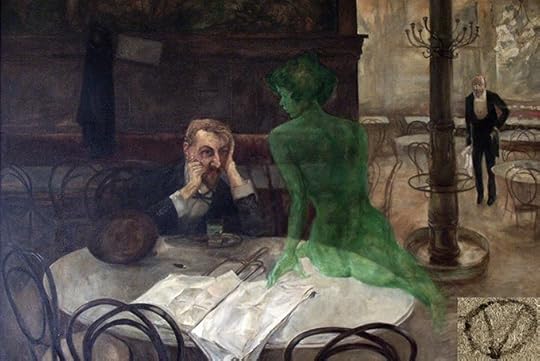
Absinthe was often referred to as The Green Fairy (see painting below). Famous artists, writers, and other creatives claimed she was their muse, their inspiration. As nearly as I could tell, she was just another excuse for the abuse of multiple substances that led to an early death and/or serious health complications for Baudelaire, Verlaine, Alfred Jarry, Vincent Van Gogh, and many others.
The first two-thirds or so of the book covers the history of absinthe. Then there are chapters dealing with collecting historic absinthe accoutrements, recipes for cocktails and food dishes using absinthe, and a section with reviews of currently available varieties of absinthe to help you get started enjoying products of good quality.
I was primarily interested in the history of absinthe. I wanted to find out what was true and what was myth about its effects. Why was it banned? Was it dangerous? Did it really make people go blind, or go mad, or die? This book gave me just the right amount of history to satisfy my curiosity and help me understand how authentic absinthe was and is distilled.
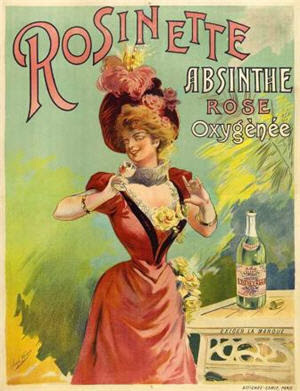
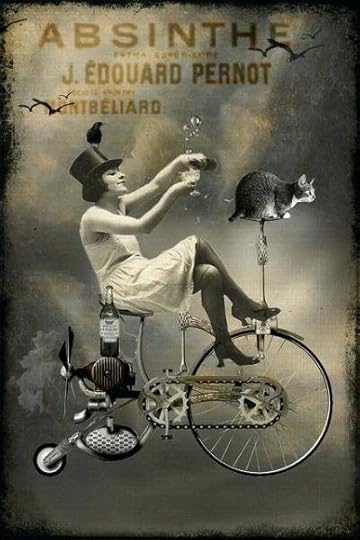
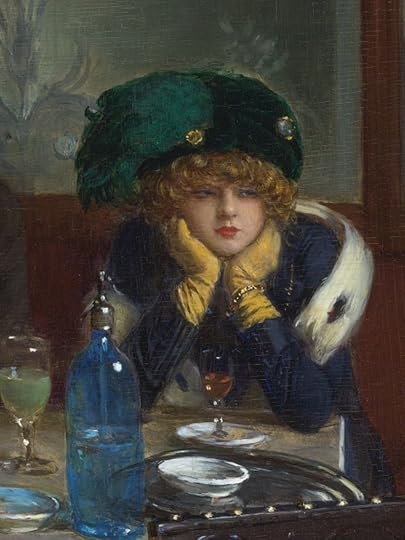
The paintings and photos and advertising art throughout the book made it a delight to peruse. One thing I noticed is that the advertising art shows absinthe users looking ecstatic, whereas the paintings show the real lived experience. Those people in the paintings have the vacant stare that is said to have been common among regular absinthe drinkers.
"Absinthe: The Exquisite Elixir" by Betina J. Wittels and T.A. Breaux offers a fascinating glimpse into the decadent world of absinthe.
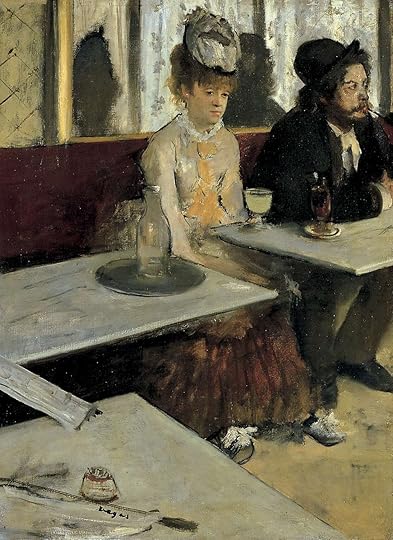
Let’s make it clear, that I have never tried absinthe, but I was always fascinated by the green fairy and her magical presence in the lives of famous Impressionists and Expressionists. A glass or bottle of absinthe is a common theme on many famous paintings. For example, this famous painting "L'Absinthe" by Edgar Degas (1876) via Wikimedia commons:
Absinthe was a drink of artists, poets, painters and in general tortured souls and there was a certain ceremony connected with it and special utensils used for preparing it. The book shares beautiful pictures of antique grille style absinthe spoons, balanciers and other artefacts linked to absinthe drinking.
I was well aware of absinthe’s bad reputation and its troubled history. Absinthe was banned until fairly recently in many countries. There was a certain stigma connected with drinking absinthe. It was supposed to cause madness and murderous fury. In 2001 the absinthe legally returned, when François Guy launched a brand of absinthe, that was the first legally produced absinthe sold in France in almost a century.
Through the whole book you can feel the authors’ passion towards absinthe. They want to make the elitist drink more available. They share the history of absinthe, different cocktails’ recipes and reviews of different kinds of absinthe available on the market. They also share tips how to drink absinthe and how to recognise absinthe of fine quality. Basically, what you need to know about absinthe is that it is supposed to louche (cloud) upon the addition of ice water. This only happens with absinthe of fine quality.
I am still not sure if absinthe is to my taste, but this book was interesting and beautifully illustrated. It also explained a lot about this famous drink.
I received "Absinthe: The Exquisite Elixir" from the publisher via NetGalley. I would like to thank the authors and the publisher for providing me with the advance reader copy of the book.
This is a fascinating and meticulously researched book about all aspects of the infamous “exquisite liqueur” absinthe. The book itself is sumptuous with a multitude of gorgeous illustrations relating to absinthe, its accoutrements and rituals, and the times and milieux in which it flourished. I was given a pdf of this book from the publisher via NetGalley in exchange for an honest review, but before I even got to the end of the first chapter, I knew I had to have a hard copy of my own – and bought one to complete my reading, and to write my review. If I could pick one time and place in history to go to, it would, without a shadow of a doubt, be Paris in 1900. I would visit the Exposition Universelle, watch the first modern Olympics and wallow in the glorious Art Nouveaux. Now, after having reading this book, I would also dally in the Parisian cafés, and delicately sip my perfectly prepared glass of absinthe, nodding politely to the passing artists and literary figures. Absinthe was at the centre of the Belle Epoque – all over Europe, and further afield – but especially in Paris. It was affordable, ubiquitous and very alcoholic. It soon became the drink of the masses, quickly followed by a rash of cheap, adulterated fake absinthes contributing to its tarnished reputation as a conduit to madness and debauchery. In France it was an unlikely coalition of the temperance movement, and of wine producers and aficionados that campaigned against absinthe, and eventually brought about its ban: “the two groups collaborated to fund widely distributed propaganda that portrayed absinthe as a poison and squarely to blame for society’s ills”. The French ban in 1914 (sale and consumption) and 1915 (production) followed bans in Switzerland in 1910 (the other big absinthe producer), Belgium, Brazil and USA (where it was known as the “green curse of France”). Absinthe disappeared from the world stage for nearly a century, until its rebirth around the turn of the new millennium. Interestingly enough it was the wonderful (much maligned) EU, that lifted the bans on absinthe in 1988,when rationalising the European regulations on alcoholic products, though it was not until after 2000 that genuine absinthe began to be distilled and circulated again, with the French ban on production being finally fully lifted in 2009. I have a bottle of absinthe – or at least thought I had. Thanks to this book, I now know it is one of the Czech fakes that bounced into the market in the 1990s. It is green, bitter and very alcoholic, but does not louche (turn opaque when water is added). I used to drink it straight (quel horreur!), in very small amounts, so never noticed. Now, I want the real stuff, a genuine absinthe spoon, and a sugar cube so I can finally enjoy this liqueur as it deserves to be drunk. I am planning a trip to Portobello Market to try and get the right bits and bobs (all outlined in this book, though will probably skip the absinthe fountain). The book has a number of absinthe cocktail recipes and food with absinthe recipes, but frankly, they do seem like a waste of a good drink. However, they are important to include to complete the absinthe story. To end the book, there are reviews of genuine absinthe brands accompanied by pictures of the bottles, so you know what to look out for. I can’t think of anything that this book lacks. It is a real joy to read: a feast for the eyes, brain and imagination. Buy a copy and get hooked (not literally – absinthe is not addictive, and doesn’t drive you insane).
Apart from the nice cover, I wanted to read this book because having read the blurb I immediately thought: true, what do I really know about absinthe? I mean, apart from the fact that anyone who'd dared to drink it when I was in my late teens was a badass?
This book was way more than I thought it would be, though. It doesn't only contain a detailed description of the drink and its history, but also many stories about people who either drank or produced it. People completely unknown by me, but more who were/are famous, and I've heard a lot about. Not these absinthe-related stories, though.
I recommend this book to anyone who wants to know more about absinthe, but would also enjoy a feel of the late nineteenth and early twentieth century through it!
Thanks, #netgalley for the ARC of #absinthetheequisiteelixir
Gorgeous microhistory of absinthe and its pretenders. With beautiful photographs of locations, equipment, and utensils as well as reproductions of pictures and prints to support the concise but intriguing history of the drink, Absinthe: the Exquisite Elixir is bound to compel fans of microhistories, the Belle Epoque, spirits, and counterculture.
ABSINTHE is a surprisingly beautiful book with gorgeous photographs and illustrations and retro ads, filled with every bit of knowledge you could ever want about this historically significant drink. 5/5 for a lush tour of a definitely acquired taste!
Thanks to the author, publisher and NetGalley for the review copy.
I have always had a thing for absinthe. Have I ever tried it? Well, no, I heard it tastes like licorice and just, no... but it just seemed to fit in with my fascination with Belle Epoque Paris, eighteenth-century New Orleans, and Anne Rice. It had the reputation of stoking the creativity of many artists and performers of the time. They called it "the green fairy"! Plus it was illegal - there must be something awesome about it. And the flaming sugar cube on the special spoon just made it seem that much cooler. Well, I found out in this book that the correct way to imbibe absinthe doesn't actually involve fire. Oh well.
Anyway, this book is beautiful; full of Belle Epoque posters, postcards, and advertisements as well as pictures of antique absinthe-ware, including the spoons but also fountains (for dripping the water), special glasses for serving, and bottles specially made for measuring. A brief history of absinthe is woven around the photos.
It also includes some recipes for cocktails and even foods featuring absinthe and winds up with reviews of current brand offerings. Because absinthe is legal now! But it still tastes like licorice, so all romantic ideas aside, I'll probably avoid it.
But the book is gorgeous - I will definitely be looking out for a hardcover when it's released.
Thank you to Netgalley and the publisher for providing a copy of this book to review.
Absinthe: The Exquisite Elixir was a captivating read that encompassed a thorough history of the drink, its preparation and paraphernalia, recommended modern brands, and even recipes. Absinthe has always held appeal for me. I first tried some in the Czech Republic about 15 years ago; although, reading this book, it looks like the one I tried was a cheaper imitation, not the real thing, which makes me all the more interested in finding a traditional version to sample. The book's presentation is beautiful, with plenty of colour illustrations that complement the text, and I would recommend this for anyone interested in the history and culture of this famous beverage.
I received this book as a free eBook ARC via NetGalley.
I am not really a fan of alcohol, but I have always wanted to try absinthe, with its rich history linked to many famous artists, it has a sort of romantic mysticism that most boozes lack. This book is rich in art and history all about this famous green drink, dispelling myths and giving true accounts of what it really is (and no, it won't make you hallucinate) and how best to enjoy it. If you have a passing curiosity in the drink or just want a very specific text on a consumables history, give this book a read!
Check out the editor — dude’s name is Bro, in a fancy French spelling! What, you don’t find this as funny as I do? Perhaps you will after sampling one of the absinthe cocktail recipes found at the back of the book. The Morning Glory Fizz is a good one for scotch fans. Beyond cocktails, there are absinthe infused foods! The pasta was quite interesting. I should check this out again for the potatoes and panne cotta.
I wanted to read this book since I’m studying herbalism (and there’s herbs in absinthe), and as a certified aromatherapist, I’m always interested in distilling processes (and good absinthe is distilled). Plus I’ve always wanted to try it, and thought reading up on it first would be good to see what might be in store for me if I were to drink it.
This book was laid out perfectly. You begin by getting more aquainted with famous people who imbibed, a lot, not only in absinthe, but other alcohol, drugs, and sex. They were rock ‘n roll cool, before that was even a thing.
The sexism ran rampant in regards to only men being writing about in regards to what they were doing, and the ladies were used in advertisements to sell the absinthe. But that is because of the times, and unfortunately, not a lot has changed in that regard. The other thing that really stood out was that almost all of the men died before they were in their fifties, due to their excessive lifestyles… I’m sure we would have found that to be the case with the ladies too, if history deemed them worthy of being written about.
After being introduced to the people, we get a lot of history about absinthe that was actually very interesting to read about. It was intersperced with photos, paintings and ads, which helped the history to read even smoother. The author shared that in the past absinthe was not set on fire, which is a great thing to know, so you don’t look like an ass and request it this way. It was also interesting, but not suprising, to see it was banned due to what basically comes down to money. The absinthe makers having it, and the winemakers wanting it.
If you are interested in collecting the bar war, there is a good section on the various pieces and the prices they have been known to go for. I really enjoyed seeing pictures of the items, and perhaps if I start drinking absinthe, I’ll look into getting some.
There is also a wonderful section with cocktail recipes and food recipes. It completely makes sense to me that absinthe was marketed as a stomach remedy since the herbs in it are still used today for that purpose. And if you are to look at what food recipes the abisnthe is added to you can recognize how this would be bitters added to your food in order to help digestion. That part I really enjoyed, and I don’t usually make recipes out of books, but I might give some of these a try to increase my herbal education.
A bunch of reviews for absinthe are also included, and the way they are written are informative not only for a novice, but someone who has been drinking it for awhile. They are well detailed, and have some great descriptions.
The book ends discussing the various places that had absinthe banned and no longer do. Some of it because of the research and effort that T.A. Breaux has put into the cause. It also takes a look at the future of absinthe and what they hope becomes of it.
What started out as wanting to do more research for my herbal training, led me to discover a rich history of absinthe, not only in the U.S. but around the world. And with all the great reviews of various absinthes included in the book, it has given me more confidence to finally try it.
My thanks to Fulcrum Press for a review copy via NetGalley of ‘Absinthe: The Exquisite Elixir’ by Betina J. Wittels and T.A. Breaux in exchange for an honest review.
Absinthe is a spirit with a fascinating history, notorious for being banned in a number of countries for over a hundred years including Switzerland and France, where the chief distilleries were located. The ban was lifted in the early years of the 21st Century and now previously illegal distillers have obtained licences and those that had abandoned distilling absinthe have resurrected it, recreating traditional recipes.
This fascinating book presents an overview of this history, including insights into the controversy that led to the ban and those cultural changes that saw its revival.
The book is filled with colour reproductions of classic lithographs, posters, advertisements, and cartoons as well as famous works of art depicting absinthe drinkers. It also contains short accounts of its famous (or infamous) connoisseurs, including Vincent van Gogh, Oscar Wilde, Ernest Hemingway, and Pablo Picasso. The drink known as the Green Fairy certainly has a mystique.
The authors also have included details and photos of the accessories associated with absinthe: antique glassware, spoons, and serving fountains. They also provide guidance on purchasing antiques as well as modern reproductions.
The final part of the book includes a variety of cocktail recipes and reviews of existing absinthe brands, as well as absinthe’s contemporary culture and ritual. It is a book intended for confirmed absinthe drinkers and collectors; as well as guidance for neophytes and the curious.
I am definitely in the neophyte category and found the book very helpful in terms of increasing my knowledge of the history of absinthe and a greater understanding of its cultural aspects. The reviews aided me in selecting a good quality brand for my first experience of absinthe.
Highly recommended for those looking for a comprehensive history and guide to this exquisite elixir.
Absinthe: The Exquisite Elixir by Betina J Wittels and edited by T.A. Breaux is both a history of and a tribute to absinthe.
Just looking at this book makes me feel like I am ready to enjoy some good company and some absinthe, and make no mistake, absinthe is best shared with good company. It is tempting to say that the pictures are beautiful, which many are (even, or maybe especially, those of equipment for the making of absinthe), but that is just part of the appeal. The pictures are chosen and displayed to accompany the text wonderfully with historical pictures displayed strategically.
The history covers the basic story with an eye toward correcting myths and misunderstandings about the drink. The story of absinthe is fascinating, both in itself and with its reception by so many famous people.
There are also some wonderful recipes, both cocktail and food. I am eager to try the Absinthe Vegetarian Linguini. Finally, there is a review section that reviews many of the brands available, how best to enjoy each and what to expect from each.
I would recommend this to people who enjoy books about food and spirits, as well as anyone curious about absinthe in particular. It would make a great coffee table book. All in all this book is a great resource as well as a nice looking book.
Reviewed from a copy made available by the publisher via NetGalley.
A big thank-you to NetGalley, the author, and publisher for giving me a copy of this book for an unbiased review.
3/5 - Liked it.
This is the book to read if you want to learn absolutely everything there is to know about absinthe. The topics range from the culture of La Belle Époque during which absinthe gained cultural relevance, the ways in which absinthe inspired art and writing from this era, the history of absinthe production, the bans on absinthe which were lifted only recently, and even the pricing of antiques related to absinthe.
I thoroughly enjoyed the book and the information it offered. Some parts were a little repetitive and I found some information excessive - the antiques chapter stands out in this category. But this is a great book to read and to own if you would like to learn more about this liqueur or if you are curious about Bohemian culture and history. The illustrations are quite beautiful and add charm to the presentation.
This was a fantastic brief guide written for nearly everyone, from individuals who are present day imbibers to those curious souls who are wondering what absinthe is and why it has the reputation it has. I fall into the second group with very little knowledge about this mysterious and unique liquor that has entices and enthralls many throughout history. This book explores how absinthe is part of creating wondrous art, literature and music, to becoming the ruin of lives therefore becoming itself banned. It was interesting to see how absinthe could inspire (or become obsessed for) many people of the literature and the art world. A few I found really exciting were Oscar Wilde, Ernest Hemingway, Vincent Van Gogh and Pablo Picasso. This pretty booklet had sections of important facts marked through-out, along with artwork to illustrate the history of absinthe, from the beginning of it's creation to present day. I highly enjoyed it, and marked a few interesting facts to look up at a later date.
When a book is perfect in everyway there is little that can be said but read it. If you love to read the history of beverage alcohol, about the European social life of the 19th and 20th century or the history of high art and commerce this book is a must. Poetry, music and painting have all had their hand in paying homage to the glory of this very strong and unique tasting beverage Absinthe. This book runs the entire length of the history of the product and touches on every aspect of it. Absinthe, the bête noir of the beverage alcohol world, comes out for the shadows and delights the reader. This book combines great writing and beautiful pictures.
Absinthe by Wittels and Breaux was a visual homage to one of the distillery world’s most mysterious drinks. Beautiful photos alongside stories, explanations and history gives a robust look for beginners to wet their whistle. Drinking the once forbidden spirit is an experience in itself. Doing it correctly gives a whole new meaning to “hair of the dog.” This book gives you everything for all of this, including where to go for the best locales to enjoy the beverage. There is a lot of misinformation regarding this fascinating pour out there but you won’t find any of that In this book, only a real good time.
Thanks to Netgalley for sending a free copy in exchange for an honest review.
It was a fairly interesting read. My issues were the strange quotes of Oscar Wilde about absinthe, I don't think those are accurate. He did have something to say about absinthe and what was listed there wasn't it. Also in regards to Vincent van Gogh's assault, it was his friend (so-called) Gauguin who drew out his sword and cut off van Gogh's ear, van Gogh was also the victim of a terrible mugging by some dissolute youth whom also shot him. That aside the book is worth a read if you can get past the non-factual evidence of these two great men, there may be other non-factual items I missed.
I really found this book to be an interesting look through the history of Absinthe, and through its informative side of dispelling old myths, etc. I loved that Wittels and Breaux took the time to explain their relationships with Absinthe so that you knew in advance where their views and interest was coming from, but also because it showed that there was a hands on background (it's hard to take a history lesson from someone with no past).
What an amazing journey into the story of Absinthe. the book is filled with color reproductions of classic and current lithographs, posters, cartoons, as well as photos of antiques, glassware, and other tools of the absinthe drinker, this new and comprehensive guide explains and illustrates the history, culture, and mystique of the drink known as the Green Fairy.
This book was provided by Netgalley in exchange for my honest opinion. It was a fascinating book and one I highly recommend.
Wonderful, Quick read with excellent sources(more to read next!)
While the information presented was brief and the book shorter than expected, the author(s) managed to give the reader a passable amount of knowledge for someone new to the category. I was shocked to see food recipes for absinthe as well as the expected cocktails which I think is exceptional! The references used and given have been added to my reading list to get a bit more in depth.
I madly adored this cute little walk through the green world of Absinthe. I picked this one up on a lark, full of curiosity for the subject, and awe in the verdant cover. I wasn't disappointed and it was a great diversion for an afternoon. I think people who imbibe it might get more out of it, but for the casual observer it was a quaint little piece of education on the unknown.
I could definitely see this as a "coffee table" book for a bar. A very trendy, short sectioned, visually stimulating text about ALL things Absinthe. I've got to say I had many of the same misconceptions and stereotypes associated with absinthe that the author was trying to clear up. Maybe just maybe I'll give the green fairy a try!
An easy to read overview of the go-to drink of the turn of the last century, then forbidden, now returning. Seems there is a lot of not so good Absinthe out there, so read this book, find the good stuff, and have a green fairy imagining you are at the Moulon Rouge.
I really enjoyed this book and think it would make an excellent gift for a few of my friends. The illustrations were lovely and my favorite parts, the history and biographical sketches were fascinating.
I just reviewed Absinthe by Betina J. Wittels and T.A. Breaux. #Absinthe #NetGalley
One interesting book about one rarely mentioned, and loved, beverage, Absinthe. With so many references from famous people who tasted and appreciated this drink, this book clearly broaden my universe.
What an incredibly fascinating book! This is one of the most well-researched and well-written books I have read in awhile. I absolutely loved it!
I have always been fascinated with absinthe. The mystery behind the Green Fairy has intrigued me, especially its influence on writers like Ernest Hemingway and Oscar Wilde. I was also surprised to read that so many other writers and artists like Pablo Picasso were seduced by the green elixir.
My only knowledge of absinthe before reading this book was that you drink it with a flaming sugar cube and it makes people go crazy. I’m so glad to learn that these myths are untrue. Many of the lovers of absinthe were also lovers of other alcohol and drugs, which combined made many act crazy. And as for the flaming sugar cube, as seen is many movies like From Hell where Johnny Depp burns a sugar cube over a green drink, it is simply not true.
One of the reasons I enjoyed this book so much was the authors’ writing style. Their writing is almost poetic, drawing you into the dark world of absinthe and its connoisseurs. From the early 1800’s in Paris, France to the roaring 1920’s of New Orleans, Louisiana, this book takes you through absinthe’s short, but exciting and mysterious life.
The cover and photos are also breathtaking. I love the mysterious and almost spooky looking green, black, and gold cover. Those colors continue throughout the book, along with color photos of the people, places, and paintings associated with absinthe.
I thoroughly enjoyed this book and give it 5 out of 5 stars. I would recommend this book to lovers of food and drink and anyone who wants to learn more about the “Exquisite Elixir.”
Thank you to NetGalley for sending me an advanced reading copy in exchange for my honest review!