Chicago Writers Association Nonfiction Book of the Year (2017) Society of Midland Authors Literary Award in Biography (2017)
A tireless champion of the downtrodden, Nelson Algren, one of the most celebrated writers of the 20th century, lived an outsider’s life himself. He spent a month in prison as a young man for the theft of a typewriter; his involvement in Marxist groups earned him a lengthy FBI dossier; and he spent much of his life palling around with the sorts of drug addicts, prostitutes, and poor laborers who inspired and populated his novels and short stories.
Most today know Algren as the radical, womanizing writer of The Man with the Golden Arm , which won the first National Book Award, in 1950, but award-winning reporter Mary Wisniewski offers a deeper portrait. Starting with his childhood in the City of Big Shoulders, Algren sheds new light on the writer’s most momentous periods, from his on-again-off-again work for the WPA to his stint as an uninspired soldier in World War II to his long-distance affair with his most famous lover, Simone de Beauvoir, to the sense of community and acceptance Algren found in the artist colony of Sag Harbor before his death in 1981.
Wisniewski interviewed dozens of Algren’s closest friends and inner circle, including photographer Art Shay and author and historian Studs Terkel, and tracked down much of his unpublished writing and correspondence. She unearths new details about the writer’s life, work, personality, and habits and reveals a funny, sensitive, and romantic but sometimes exasperating, insecure, and self-destructive artist. biography The first new biography of Algren in over 25 years, this fresh look at the man whose unique style and compassionate message enchanted readers and fellow writers and whose boyish charm seduced many women is indispensable to anyone interested in 20-century American literature and history.
Nelson Algren lived his life as an infracaninophile, the most appropriate word I could find to describe him, a word of dubious origins, derived from pseudo-Latin with a Greek suffix that characterizes someone in constant support of the underdog. In fact, Algren so identified with the underclass, that he rather desperately lived his life as one of its most dedicated denizens.
Mary Wisniewski's biography, Algren: A Life chronicles the life of the Chicago-based author's love-hate relationship with the city he knew & revered but which he felt never loved him or gave him its full measure in return. However, it seemed that Algren never really comprehended how offensive his behavior could be in spurning most of the qualities that those in power wanted to see glorified.
Instead, Algren spent his time in dingy saloons & at racetracks, befriending gamblers, drug addicts, corrupt politicians, barflies, hustlers & prostitutes, often losing whatever money he had while playing cards. As Algren famously described his relationship to Chicago, "loving Chicago is like loving a woman with a broken nose; you may find lovelier lovelies but never a lovely so real."
And as Mary Wisniewski paints the often irascible Algren, "he was much better at making enemies than friends. And when Nelson burned bridges, he did a thorough job of it--not even the pilings were left behind."
Algren graduated from the University of Illinois with a degree in journalism in the midst of the depression & couldn't find a job anywhere, instead hitching to New Orleans & then riding freight trains to Texas.
There, at one point he was jailed for stealing a typewriter from Sul Rose College, perhaps an early sign of his priorities. For much of his life Algren lived in a bare 2 room flat, with limited cooking facility & a bathroom down the hall, a desk, typewriter & some old photos on the walls his only treasured possessions.
Eventually, the WPA hired him as a writer, with Algren using its relaxed work schedule to his advantage. In the process, he met fellow authors Richard Wright (who was then working on Native Son), Frank Yerby, Katherine Dunham, Saul Bellow & Studs Terkel. Algren's authorial output with the WPA included a book of ethnic recipes, America Eats and also a history of Haym Solomon, a Sephardic Jew from Poland, who as a successful American helped finance the Revolutionary War.
Although his heritage was Jewish, Algren seemed to identify with Chicago's Polish community, according to Wisniewski using the Chicago Polish ghetto as a surrogate for the Jewish ghetto he had rejected.
However, when Algren's early book Never Came Morning was published, the Polish Roman-Catholic Union & other groups lambasted Algren for portraying the Polish underclass (including prostitutes) & demanded that the book be banned, a reaction that colored the author's attitude of Chicago for the rest of his life. He blamed the hostile reception to his book on "Polish Babbitskis".
In the military during WWII, Algren seemed "on a mission to be the worst soldier in history", being shipped overseas but seeing no battlefield action. Later, Algren's intersection with Simone de Beauvoir, both in Paris & during her time in America proved an enduring but tempestuous relationship. Long after their love had withered, he spent his last day alive talking about her, while she went to the grave wearing a ring that Nelson had given to her. Algren's work was much acclaimed by Sartre, de Beauvoir's longtime beau.
Curiously, Mary Wisniewski comments that the relationship between Nelson Algren & Simone de Beauvoir "could never work because of her lack of convention & what would turn out to be Algren's surprising excess of it."
When The Man With The Golden Arm was published in 1949, greeted with great reviews, the first National Book Award and lauded by Hemingway & other writers, later becoming an Otto Preminger film starring Frank Sinatra, it appeared that Algren was on the road to an enhanced life, becoming "a champion at last" as Wisniewski put it. However, it proved to be a high-point without equal, with his books eventually falling out of print later in the author's life.
Although largely apolitical, Algren was haunted & hounded by the FBI for early sympathies for radical causes, even being denied a passport by the State Department at a time when he longed for a reunion in Paris with de Beauvoir. Life magazine was pressured not to publish material already contracted for, causing Algren a heightened sense of alienation. While Algren once declared that "comedy was tragedy + time", he never rendered grievances obsolete.
Curiously, Algren often tied the hard luck characters in his prose to Catholic icons, merging Christianity with Chicago cadences. He saw the drug addict as the ultimate rebel against 1950s society & its sacrificial Christlike victim, dying for societies many sins.
Late in life, Algren seemed to spiral downward. Short of money, he began recycling old stories & sending them off to publishers in poor condition. A longtime friend called Algren a "smiling cobra" and he became increasingly abusive, even more distempered as he aged.
Ultimately, he left Chicago for Patterson, New Jersey before eventually alighting at a small house at Sag Harbor on Long Island, far from his Chicago roots. He seemed to finally feel appreciated & celebrated anew, especially by other authors on Long Island.
In 1981, just as the clouds perpetually hanging over his life appeared to diminish, newly elected to the American Academy of Arts & Letters, Nelson Algren died of a heart attack at age 72. In fact, Algren died on the morning of the day he was to throw a party, with a young Salman Rushdie among those planning to gather at Algren's Sag Harbor home.
Mary Wisniewski's biography of Nelson Algren provides an excellent overview of the life & times of the author, while at the same time encapsulating most of his prose. Algren was an archetypal literary figure who seemed to sense that the only way in which to capture underclass characters was to become one of them.
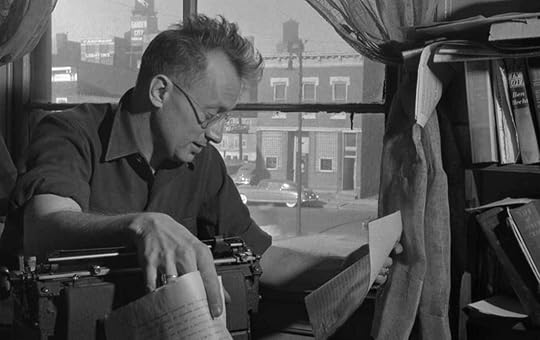
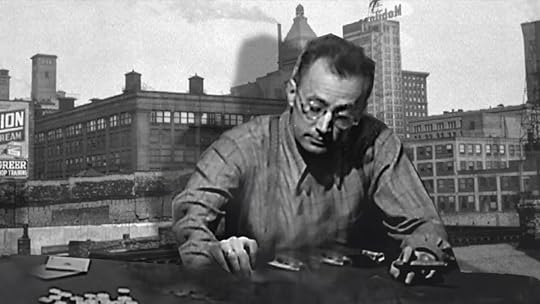
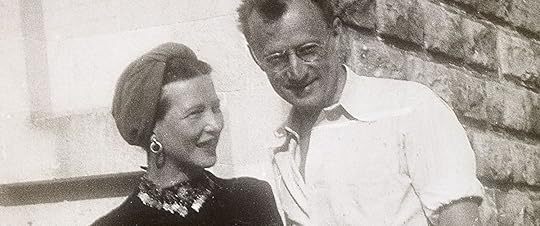
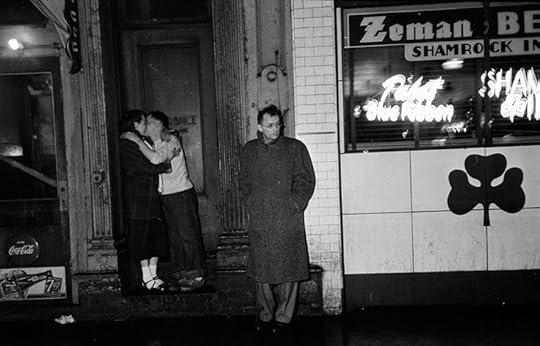
*Within my review are 4 images of Nelson Algren, including one with Simone de Beauvoir.
I've never read Bettina Drew's 1991 biography of Nelson Algren, so I can't say how it compares to this new one; but certainly this second-ever biography of the famed Chicago-based social realist writer is a delight, both informative and chummy while written in a wry, conversational style that makes you feel like you're hearing gossip out of school around a bar table. And there's a good reason for that -- a veteran of the blue-collar Chicago journalism industry herself, Wisniewski is friends in real life with most of the people still alive who were friends of Algren, giving this biography a kind of authenticity that a lot of books of this type don't have.
It's hard to deny that Algren's story is ultimately a pretty heartbreaking one. A sympathetic chronicler of the real ins-and-outs of working-class Great Depression Chicago, including the petty crimes and drug addictions such people would regularly find themselves embroiled in, he eventually won the very first National Book Award ever given out, just to be rejected by the exact Polish-Americans he championed in his books (for daring to suggest that not every poor immigrant is a flower-selling paragon of holy virtue), aided by a resentful, conservative Chicago Tribune that spent literally thirty years taking a dump on every book Algren ever published (making it the height of irony that this same newspaper now gives out an annual literary award named in Algren's honor); then in the 1950s his work started getting rejected by the public at large, the shiny youth of Mid-Century Modernism having no time or patience for the grimy, lumpen-worshipping work of the dour, aging Communist sympathizers of the Rooseveltian era, leaving Algren a penniless, forgotten refugee from his own hometown by the time of his 1981 death, his entire body of work out of print for another twenty years until finally undergoing a career reassessment in the late 1990s.
Wisniewski covers all of this in her lively, fast-reading book, including the psychological troubles that came with this turmoil, his famous affair with French feminist pioneer Simone du Beauvoir, his checkered relationship with Hollywood, and an unvarnished acknowledgement of Algren's sometimes ugly side, a warts-and-all biography that does a much greater service to Algren than a hagiography would've. A must-read for anyone interested in the literary history of Chicago, or for those like me who are fascinated with the ugly, sometimes violent transition from Early Modernism to Mid-Century Modernism this country's artistic community went through in the years after World War Two.
The attraction isn't Algren so much. My experience with his work is limited. The primary interest is Simone de Beauvoir, with whom Algren had a long-distance romance for several years during the '40s and '50s involving visits back and forth between Chicago and Paris for both of them. As in the case of her legendary relationship with Jean-Paul Sartre, she's the stronger magnet.
Wisniewski tells the de Beauvoir relationship well. I think she understood them both and therefore explains their genuine love for each other as well as the relationship's dissolution into acrimony at the end caused by what they expected from the other and what she wrote about their amour. Their collection of letters--Algren kept all of hers in a metal tobacco tin--calls it a Transatlantic love affair, and it fills up a huge chunk in the middle of Wisniewski's biography.
But she makes Algren fascinating, too. She provides in-depth examinations of his well-received novels of the underbellies of Chicago and New Orleans and characters disadvantaged by drugs and gambling and prostitution who live in the margins of such places. Wisniewski's treatment of A Walk on the Wild Side, which I haven't read and haven't been tempted by in many years, convinces me it's time that I become acquainted with it. So out of a search through additional information about one writer comes a renewed interest in another.
Algren: A Life This was a competent and comprehensive biography. That's praise and blame.
Wisniewski's coverage of Nelson Algren came off as bloodless. Despite the book blurb, excitement for Algren the writer and Algren the man was missing.
What drew Wisniewski to write about Algren and why write about him now? Why publish this biography now? Was it because we have a philistine in the White House, whose only reading stops at 140 characters and who seems as anti-truth as the McCarthy cabal? Did Wisniewski write it b/c her family came from the same neighborhood as Algren? (There were several quotations from Wisniewskis sprinkled throughout the biography, though perhaps it's not an uncommon Polish name.) No preface to explain the choice of subject; no afterword.
I did not read it for the Simone de Beauvoir portion. Nor for the sad revelation of his inept self-defeating human relationships. I read it for insight into him as a (primarily fiction) writer during a tumultuous economic, political, and artistic era in our country (USA.) Some of this Wisniewski did exceptionally well.
I also found Wisniewski's presentation thorough and informative of Algren's lousy negotiating skills vis a vis Hollywood, where money rather than taste or integrity is king, and to some extent with his publishers and editors in New York. I think Wisniewski supported her thesis that Algren inflicted his own wound that led to creative demise at about 40 by being cruel to his lovers and backstabbing his fellow writers and friends.
The best biographies, particularly of writers and poets, give the reader carefully chosen ingredients that faithfully show the subject. Wisniewski prepared and served the ingredients, but left out the flavor - the spirit of the man - maybe because she left out her own passion for him as well.
Frankly, I knew little about Nelson Algren before picking up this book. I decided to read it after meeting the author, Mary Wisniewski when she was reviewing my book, The Crash Detectives which was published this fall.
Like the movie, Amy, which I saw before actually hearing any of Amy Winehouse's music, Algren: A Life also presents the writer's work within the context of the events shaping his perspective at the time.
Algren's fixation on the American underclass which began during the Great Depression seems entirely relevant today. One example of many comes from page 61, where Wisniewski is writing about the character Stub McKay from Algren's Somebody in Boots.
"He despises the Mexicans living all around them, and takes Cass out of school because a new teacher was half Mexican. He is an archetypal American character-the ignorant bigot who thinks other poor members of the working class are trying to take from him what little he has, a type that would be drawn to Fascists and demagogues."
Mary's structured and chronological approach was particularly effective in telling the story of a writer as professional and personally unstructured as Algren. Her familiarity with the Chicago neighborhoods where Algren lived and about which he set his stories, also shines through.
Algren: A Life is more than a biography it is a readers’ guide and a stimulating analysis of the ways America’s social structure evolves while staying the same. All of which Wisniewski handles skillfully.
Informative, clearly written biography of Chicago author Nelson Algren. I enjoyed reading about Chicago in the early part of the twentieth century and Algren's relationship with Simone de Beauvoir.
I knew little about Algren prior to reading this. My first apartments were in Humboldt Park and then Bucktown, and I have an interest in the city’s and humanity’s underbelly, so this was on my list for a while. I loved The Man with the Golden Arm in its classic yet edgy style. I wanted to know more about the man and the world he lived in that led to its creation.
This biography was useful for a beginner like me. It kept my interest in his somewhat rise and fall, but like his work, it seems like he never quite made it all the way. I enjoyed the work immensely. Wisniewski is steering me to want to check out some of Algren’s other work, which is something a good biography makes me do: Seek out more about the subject.
Nelson Algren was Hemingway with a left hand, Steinbeck on the concrete sidewalks of Chicago. The man deserves to be read. So does this brilliantly researched, beautifully told biography by Mary Wisniewski.
A biography of the Chicago author who wrote The Man with the Golden Arm and A Walk on the Wild Side.
Book Review: Algren: A Life, like its subject, gets the job done. This is a solid biography, fair and balanced (a sometimes forgotten necessity), hitting all the major details and giving the reader all the required basics. Mary Wisniewski gives (too) long summaries of Algren's novels, but her analysis is to the point. The reader comes away knowing enough, without any big gaps or questions.
A friend to Richard Wright, lover of Simone de Beauvoir (author of The Second Sex), admired by (the often jealous) Hemingway, known for writing sexy potboilers. Algren felt he had to live where he was writing about, and cared about the people he was writing about. People liked him. How can you not admire an author who spent time in jail for stealing a typewriter? Because that fact is emblematic of Algren, who wrote not of the working class, but the class beneath that, those living in the shadows, the world of petty criminals, prostitutes, poverty, pimps, pushers, and addicts. Mentally damaged veterans. The wretched and confused. Those not employable in the traditional sense. But unlike most chroniclers of the underclass, his work was more literary than simply sensationalist, he had concern and compassion for those he wrote about. Algren may not have been a feminist, but his influence on The Second Sex, his recognition of the hypocrisy of those patronize hookers only to blame the women, and his take on the Playboy empire are all spot on. He also recognized the hypocrisy and corruption of "politicians who believe the poor can take care of themselves while the rich need government help."
Reading Algren: A Life I had no major complaints, but a number of smaller ones, though none that detracted from the essential value of the book. Wisniewski refers to Algren almost uniformly as "Nelson" throughout the book, sounding like an elderly aunt talking about her nephew. But this habit is not unique to Wisniewski, about half the biographies on my shelf do so; it just seems somehow unprofessional to me. More unprofessional is that the sentences sometimes sink to the elementary school level: "Nelson got so mad he threatened to tell the postal authorities on Wallie." "Got so mad," "tell on"? Editing or proofing could have helped: characters change names for no apparent reason and some sentences resist repeated reading. The Polish in Chicago get a fair amount of screen time, and the author very nicely quotes her dad. I've not read the 1989 biography, Nelson Algren: A Life on the Wild Side by Bettina Drew (35 ratings, 3.9 on Goodreads), so I can't compare them. But Algren: A Life was a quick, informative, and valuable read if you're interested in this little known and largely forgotten American author. [4★]
Nelson Algren was a champion of the disenfranchised and he would have a lot to say about America today. He would undoubtedly be outraged by the division among the classes that is our current reality. I read this book primarily because Nelson Algren is my great-uncle (my mother's uncle) and I am always interested in works about and by Algren. I think the book provides an honest perspective on his genius and his struggles. I am a little surprised that Mary Wisniewski didn't reach out to my mother for more family information, as the producers of both documentaries did in 2015.
This superb biography does an amazing job of integrating Algren’s writing and his life within the theme of a great, but nowhere near fully realized talent. It shows the writer as the master storyteller of a specific slice of American urban life at a particular time in the 20th century, with a unique voice, breaking barriers around language and subject matter. Algren’s fascination with those at the bottom of society is told with an astute understanding of his admiration of their resilience, as well as his recognition that were it not for his talent he might be one of them. The determination of his early writing life, that culminates with the classic The Man With The Golden Arm, is presented as his pinnacle. After this, he quickly descends, his shocking literary revelations no longer in fashion, as he reworks his older stories over and over. A particularly interesting part of his bio is his love affair with French writer Simone de Beauvoir—a kindred spirit of lesser talent but greater vision. Certainly, she had a clear-eyed practicality around what it would take to live the life she required to support her work, and it wasn’t to be sucked down with Algren, though she’s buried with his ring on her finger, a detail that hits no less poignantly because it is well known. Algren’s final years are recounted with affection and regret. A sad but spellbinding story, as he would tell of one of his doomed rascals.
Excellent Book. Could have been proofread a bit better. The Clutter Slayings were in Kansas, not Iowa. A few instances where she was leading the witness (reader) with "this is sexist behavior." The reader should make those distinctions for his/her self. But overall paints Nelson in a fair light.
I won this in a Goodreads first reads giveaway...thank you! Sorry, I didn’t read this...passed it on to another reader, as I decided it wasn’t for me. But she said it was a very good book.
I have not read much Algren, nor did I know much about his life, but I've carried an interest in him over the years as I've knocked around some of the same streets he did. Mary Wisniewski's biography leaves an impression, as she presents the facts of his life in a journalistic style without stepping on them or the narrative that breathes beneath, this guy who seemed to spend his life electrocuting himself that he might catch some of it in a bottle.
When I moved to Chicago, reading Nelson Algren was like getting a Marshall Field's credit card. It signified that you were clued in to the local culture--or in the case of Algren's characters, a noir subculture. Algren's addicts, hoods and hookers were locked into grim fates that could made reading a slog. Like Algren, though, Mary Wisniewski brings compassion and humor to her subject. She sees him clearly as a self-destructive dreamer like one of his antiheroes, with flashes of nobility and brilliance.
Wisniewski pulls together Algren's walks on the wild side--freighthopping through the South, befriending Chicago barflies, playing house with feminist Simone de Beauvoir--with the kind of through line that Algren sometimes struggled to find in his picaresque novels. She frames the de Beauvoir romance from the start as ill-fated: "He spent part of his last day on Earth yelling about her, and she went to her grave with his ring on her finger." Algren's dark vision has faded even in his old neighborhood, but Wisniewski deals us back in with the dexterity of backroom card dealer Frankie Machine.
This entire review has been hidden because of spoilers.