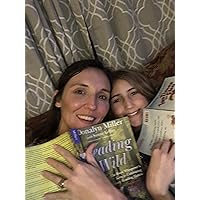
I feel like I’ve drawn the short straw on this book and I’m now going to have to argue against empathy – hmm, won’t that be fun.
I’m not totally sure if the thing that put me off this book first of all was the almost gormless tone. This is my second self-help style book in a row now and this one was a particularly poor example of the genre. The problem here was that she has a Ph.D. – so, I wasn’t expecting this to be quite so simpleminded, in fact, I was expecting quite another kind of book here. A bit like you might feel if you read ‘Men are from Mars and Women are from Venus’ thinking, well, the author’s called Dr…
This is one of those books based around the telling of an endless series of feel-good stories of children who have overcome remarkable hurdles or been little shits, but then saw the errors of their way, or who do something heart-warming in a room full of adults who then find that they are unable to hold back the tears, so proud and moved and overwhelmed are they… You get the style. Ironically enough, this sort of thing drains my soul of every last drop of empathy – weird, I know.
My disgust peaked with the idea of a family meeting (make it fun, have pizza) where everyone sits around and discusses their core family values and then develops this into a values statement or mantra, that can be, just as one family did, hung on their refrigerator, “where it’s remained for twenty-five years.” Having spent far too many team meetings doing this crap, the idea of creating ‘our family mission statement and KPIs’ – almost reduced me to violence.
Look, empathy is a very important skill to have, and this book suggests that empathy is something that is basically in freefall in the US. I suspect, like so much else in this book, that this is nonsense, and I particularly think that when she says things like, “One study showed youth bullying increased a whopping 52 percent in just four years (2003 to 2007)”. Beware statistics, particularly ones that seems remarkably ‘accurate’ – I don’t quite know how you go about measuring bullying, but surely whatever measuring stick you might use simply can’t be accurate enough to mark off down to 52%. And this was immediately after she told us narcissism had increased by 58% and on the next page of the 72% of Americans who say moral values are ‘getting worse’ – presumably they are referring of the lax moral values of the other 28%...
The problem is that I want to agree with this woman in quite a few places – but she makes it so incredibly difficult for me. Firstly, we need a reason for this precipitous decline in the moral and empathetic nature of the American public/young people. And that she finds is all too obvious – something they have now that we didn’t have back in the halcyon days when everyone was incredibly moral and even righteous. And that mystery element is the mobile devices. Mobiles are rewiring children’s brains so that they are selfish, self-obsessed and self-destructive.
I understand that there are many bad things about mobile devices – but these are communications devices, so, to claim that they stop people communicating is a bit of a stretch. I just can’t accept that they are completely evil and the cause of all social ills. I think she really needs to consider the growing individualisation of our societies – but that is hardly something she can do, because ultimately, this is a book about individuals.
For a book about empathy, it is remarkably how this is almost entirely centred on the individual. There is only one story told in this that I can think of that involved groups of people – a camp where the children were divided into two groups. Mostly, if there is a group of people elsewhere in the book, they are responding to the wonderful idea of some single kid who had the brains, or the courage, or the good taste, or the empathy, to do something that changed the world. And good on them – there should be more of it – more strength to their elbow. But what is never discussed is how groups of people come together without such a ‘leader’ and actively work together to change something. Together is the key word here. This is a book on empathy, and nearly every example is some single person affecting change – never together. This book is set in America – the world’s second most religious nation after Iran, by all accounts (I more or less made that up) – and yet she doesn’t even talk about churches working together to bring about change. This is a book about empathy and it is a book about leaders and followers. All of which strikes me as a very American form of empathy.
One of the examples that particularly got up my nose was her discussion of a boy called Trevor who set up a campaign to help the homeless. Now, this is a really good thing to do, nothing highlights the gross social inequities in our societies quite as starkly as homelessness. It is an appalling indictment and any action to alleviate the suffering of the homeless is an act of kindness, something that should be praised. But the bit that got up my nose was this:
“Two years later, the thirteen-year-old was spearheading a 250-person operation that brought food and blankets to the homeless. President Ronald Reagan introduced him to millions during his State of the Union address and described Trevor and those like him as “heroes of our hearts . . . the living spirit of brotherly love.”
Homelessness is a social issue and it ought to be addressed socially, and as such it is a political issue, one caused by how we decide to allocate scarce resources in our economic system – and as such it ought to be addressed by governments, not by children. That Reagan did much to cut welfare programs ought to have disqualified him from praising the compassion of others – but that’s the point, you see. The point is to make these issues matters of individual charity, rather than of welfare – and of charity that is individually based (certainly not collectively based) and never something that is run by citizens. This book presents instance after instance of individuals doing things – never citizens coming together and acting together and changing things forever through their collective action upon their elected representatives. Rosa Parks is discussed - the Civil Rights Marches, not. Empathy isn’t only something individuals have or do, it is something that can be done by organisations, nations, groups. By always individualising empathy this book is supporting one of the problems that helps produce the empathy gap in the first place. Empathy grows by human interaction – and that interaction requires community, something else she hardly ever mentions.
I am going to end with one more thing that really annoyed me – she would repeatedly talk about ‘your child’and then she would invariably refer to that child as ‘him’. For example: “Self-regulation will help your child learn to manage strong emotions and reduce personal distress so he (sic) can help others.” Really? Using the masculine pronoun as the universal? And she is going to tell me about empathy? Dear god.