After beating breast cancer in her late forties, Eva Saulitis again faces the shadow, knowing this time the result will not end well. Saulitis revels in the nostalgia and secret pleasures that come from knowing it's all fleeting. She searches for answers from European poets and Buddhist scholars, from women in treatment chat rooms, from family, from routine; she looks out into the wilderness, at the salmon dying in the river without the ease of morphine, at stone structures broken from water freezing, expanding inside. Becoming Earth is the account of a woman living life in the presence of death, trying to make sense of a world that will keep going, even though she won't.
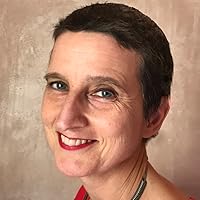
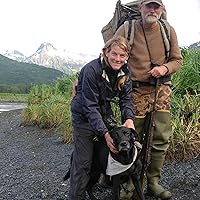
Eva Saulitis was the author of the forthcoming book, "Into Great Silence: A Memoir of Discovery and Loss among Vanishing Orcas," (Beacon Press, 2012). She has studied whales in Prince William Sound, the Kenai Fjords, and Alaska's Aleutian Islands for the past twenty-four years. In addition to her scientific publications, her essays, poems, and reviews have appeared in numerous national journals, including Orion, Crazyhorse, and Prairie Schooner. The author of the essay collection Leaving Resurrection and the poetry collection Many Ways to Say It, she taught at Kenai Peninsula College, in the low-residency MFA program at the University of Alaska, and at the Kachemak Bay Writers' Conference. She lived in Homer, Alaska.
Eva Saulitis has written a beautiful and poignant memoir. In 2010, when she was 45 years old, she discovered a lump in her breast which turned out to be stage 2 breast cancer that had spread to some lymph nodes. She had spent the last 20 years of her life in Alaska working as a marine biologist, "obsessive about the purity of what I ate and drank". There was no history of breast cancer in her family. She had a complete and brutal treatment to fight the cancer - radiation, chemotherapy and a mastectomy. She knew, however, that there were no guarantees. Two and a half years later, the cancer struck again. This time it was metastatic. "As soon as breast cancer forms in the body, no matter how thorough and harsh the treatment, there are no guarantees it won't come back, sometimes in other forms, sometimes years or decades later". In Eva's case, her cancer returned in the pleura of her lungs.
The author interjects the writing off poets into her own struggles with cancer. She looks to the natural world to gain perspective on life and death. In beautiful prose, she explores her love of life and her inevitable death. "Death is nature." She believes that, ultimately, she will know how to die just as she knew how to live "and though I die, though I lose my life, nature wins. Nature endures. It is strange, and it is hard, but it is comfort, and I will take it."
I read this book in one sitting and wished I had known the author. Her wisdom and voice touched me deeply.
I heard about this book on a podcast - What Should I Read Next - This is a group of essays in a memoir fashion. The author, a marine biologist - writer - poet..., shares with you her life and her relationship with the environment - the land, water and plants - and how they interact with her - how they impact her. Her relationships with her husband and family. It was all very good. My favorite is the first essay discussing her growing up in Northwestern New York. It is a roller coaster of emotions and I enjoyed the trip. It is sad that this is published after her passing. I think it is best to leave details to the reader. It is not a long read, but it is packed with some great observations. If you love memoirs. If you love environment. If you love stories that impact. This si a great read. I fully enjoyed it though it is sad.
This memoir was given to me as a gift soon after my own metastatic breast cancer diagnosis. From the start, Saulitis’ account was eerily similar to mine. We grew up 10 minutes away from each other, in Western NY, eating the same foods and drinking the same water. We both became naturalists drawn to Alaska. And we both had the same killer cells inside of us.
When chemo made me so ill that my Dr. ceased treatment for fear of killing me, I had reached the point in the book where Eva’s cancer came back. While her outcome needs no spoiler alert, I was so angry for us both that I had to stop reading. At the time, I swore books about cancer weren’t meant for people living with it. I thought they were best suited to educate people with no idea about what it’s like.
I’ve since read every last word, relating to and honoring so much of what was said. I am glad to have forged ahead. Eventually, I found comfort, validation, and, as I continue with multiple treatments, I met a new friend sharing tremendous perspective on living while dying from her place in the great beyond.
These autobiographical essays by a marine biologist about breast cancer and nature were a difficult read at times: having breast cancer myself, knowing that the book didn’t have a happy ending, and being unsure what direction my own treatment was taking me in, I had to take long breaks between sections. But I was always drawn back to Saulitis’s fiercely delicate reflections, ranging from her youth in her home state of Michigan, where she grew up feasting on pesticide-coated fruit; and her work in Alaska, where she and husband observed a pod of orcas that hasn’t calved since the Exxon Valdez oil spill; to her own body in its state of rapid decay. Thanks perhaps to Saulitis’s involvement with Buddhism, the dominant mood is not anger, though, but elegy and acceptance. Whatever its cause, cancer, an overgrowth of cells, is not itself a pollutant but an entirely natural process – an insight Saulitis evokes in the image of a glut of dead salmon. “We have no dominion over what the world will do to us,” she wrote. “We have no dominion over the wild darkness that surrounds us.… Death is nature. Nature is far from over . . . In the end—I must believe it—just like a salmon, I will know how to die, and though I die, though I lose my life, nature wins. Nature endures. It is strange, and it is hard, but it’s comfort, and I’ll take it.” I've had a reprieve from the illness, but whatever the cause of my eventual death I hope I can find such stoic eloquence when my time comes.
Former marine biologist and essayist Eva Saulitis writes about her diagnosis with breast cancer, contemplating what it would mean to die and return to the earth. She wonders if it’s necessary for any of us to “make a mark,” if instead we could make peace with dying and leaving no trace; “. . . since my cancer diagnosis, I obsess about what traces, if any, we leave behind. There are worse things that could happen than disappearing without a trace, aren’t there? Some birds live out their whole lives never having been observed by a human being. Don’t they matter?”
She reflects on how hard it is to be satisfied only with the present and how isolating it can be to be dying in a death-phobic culture. But in nature, in the wilderness, Saulitis was comforted. She could see how death was part of life, and it consoled her to know that she would eventually become earth, become part of the ecosystems she so treasured. If you are grappling with your mortality and find nature to be a balm for your fears, you will love “Becoming Earth.”
“Death is nature. Nature is far from over. In the end, the gore at the creek comforts more than it appalls. In the end – I must believe it – just like a salmon, I will know how to die, and though I die, though I lose my life, nature wins. Nature endures. It is strange, and it is hard, but it is comfort, and I’ll take it.”
An amazing book, from an amazing mind, an amazing heart, and an amazing voice. Eva Saulitis reminds us that whatever troubles, illnesses, and woes come along, even cancer, if we wish to, we can learn, grow, and heal. I picked this book up in Alaska - Parnassus Books in Ketchikan, I think, or maybe Old Harbor Books in Sitka. The title, Becoming Earth was such a draw. I didn’t make the time to read, and so it sat on my shelf, until the ashes of my dear friend, Maria, showed up in a box that fit perfectly next to my unread stack. I slid the book into my backpack, along with the ashes, when I headed west, to Salt Lake, and Alaska, and then, finally, to a mountain on the coast of Oregon, where I pour the ashes out, and Maria became the mountain. And tonight, as I finished this amazing story, I discover that Eva, too, imagined her body becoming a mountain, becoming one with the mountain. No difference. Amazing to have selected this book from the collection of Alaskan authors while Maria was alive, to find solace from it after her passing. Thank you for writing through the bardo so that we all could become. 🙏🏻
A collection of essays by Alaskan writer and marine biologist Eva Saulitis that confront her diagnosis of breast cancer. It is a meditation more on life than on death, though the latter is a persistent shadow. She side-steps sentimentality, finds grounding in the natural world of which she is a part, for however brief an interval.
Her writing struck deep. Many passages resound with a powerful imagery. I will cite two:
"As I write, two swans fly past. Their long necks stretched out. I want, I want. I want to be the earth. They vanish into the broken light, urging me toward the place they are surely headed."
"There is a future, and it is not us. It is the mountain. It is the earth."
One cannot help but mourn the loss of such a wise, observant and eloquent voice.
This is a really beautiful collection of essays contemplating mortality, and coming to terms with one's life. It is honest and, at times raw. I think it is recommended reading for ANYONE, but I could see it as being a very heartfelt gift to someone going through terminal cancer or someone caring for someone going through it. It does not rely on platitudes. It faces death as a part of life head-on, but in a loving, smart, generous way. We lost quite a light when Saulitis died and I am so thankful she shared so much of her journey to the end with us.
Such a beautiful book! It was an honor to read the beautiful writings of Eva Saulitis as she documented her journey with breast cancer, her relationship with the land of Alaska's Prince William Sound, Hawaii and the Lake Erie area where she grew up. This book is so eloquently and beautifully written and rich with her reflections on life and death, including poems and influences from various other writers. I savored this book and found I needed to take breaks often to dry my tears.
This is a story and also a series of essays, one woman's thoughts as she fights what will be a losing battle with breast cancer. Although I've used the war-like terminology we often use when we discuss cancer, the story itself, through the eyes of this author, is more peaceful. I found the book eye-opening, beautiful, sad and inspiring. It is a book I would enjoy discussing with others. It is also a book I will keep to read again.
A beautiful, haunting, and at times, a painful book. In her final collection of essays, naturalist Eva Saulitis finds solace in nature as she faces terminal breast cancer. Her lyrical language almost makes the reader forget the author's real struggles with living day by day in the face of death. A stunning read.
It may seem an oxymoron that a book about one's journey with terminal breast cancer could be uplifting. This book is transformative. Exquisite writing. Deep, intense connections with the earth, life, and loss. A powerful story in a short 130 pages. RIP Eva.
“All words about death are a lie, since all hopes are a lie. Words are futile hopes. A clump of earth, a stone, a greedy strip of green: these don’t lie”
One of the most pungent and powerful memoirs. Her writing lives in that sweet duality of existence.
Eva Saulitis’s collection of stories, Becoming Earth Becoming Earth, took my breath away--again and again. A scientist and a poet, her writing is honest and clear even in the face of death. She shares the chill of the moment in Alaska when she discovers the lump, her reflections on childhood tainted by the knowledge that innocent exposures decades earlier may have lead to her cancer. Yet the depth of understanding and curiosity that lace this biologist’s last months of life do not make her stories morose. Instead, her book is a lyrical tribute to life cycles and a deep celebration of all she loves, especially her family and Alaska, driven by the knowledge that she, too, is "a thing of nature, responding to natural laws, like any wild being, be it river or sparrow or cloud." Eva Saulitis sets a high bar for how to leave this Earth with grace and wisdom.
Eva Saulitus’s collection of stories, Becoming Earth Becoming Earth, took my breath away--again and again. A scientist and a poet, her writing is honest and clear even in the face of death. She shares the chill of the moment in Alaska when she discovers the lump, her reflections on childhood tainted by the knowledge that innocent exposures decades earlier may have lead to her cancer. Yet the depth of understanding and curiosity that lace this biologist’s last months of life do not make her stories morose. Instead, her book is a lyrical tribute to life cycles and a deep celebration of all she loves, especially her family and Alaska, driven by the knowledge that she, too, is "a thing of nature, responding to natural laws, like any wild being, be it river or sparrow or cloud." Eva Saulitis sets a high bar for how to leave this Earth with grace and wisdom.
Beautiful book. Eva Saulitis was a biologist who spent most of her life studying orcas in Alaska. At a first glance, this book follows her diagnosis of breast cancer and the progression of her illness. Yet it is an extremely poetic book, a deep reflection on life and death, and how we are connected to Earth. Highly recommended.