

What do you think?
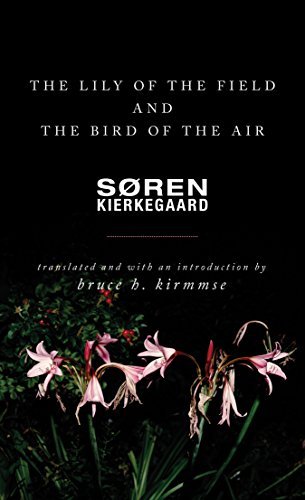
The Lily of the Field and the Bird of the Air: Three Godly Discourses
In the Sermon on the Mount, Jesus tells his followers to let go of earthly concerns by considering the lilies of the field and the birds of the air. Soren Kierkegaard's short masterpiece on this famous gospel passage draws out its vital lessons for readers in a rapidly modernizing and secularizing world. Trenchant, brilliant, and written in stunningly lucid prose, "The Lily of the Field and the Bird of the Air" (1849) is one of Kierkegaard's most important books. Presented here in a fresh new translation with an informative introduction, this profound yet accessible work serves as an ideal entree to an essential modern thinker.
"The Lily of the Field and the Bird of the Air" reveals a less familiar but deeply appealing side of the father of existentialism--unshorn of his complexity and subtlety, yet supremely approachable. As Kierkegaard later wrote of the book, "Without fighting with anybody and without speaking about myself, I said much of what needs to be said, but movingly, mildly, upliftingly."
This masterful edition introduces one of Kierkegaard's most engaging and inspiring works to a new generation of readers.
"The Lily of the Field and the Bird of the Air" reveals a less familiar but deeply appealing side of the father of existentialism--unshorn of his complexity and subtlety, yet supremely approachable. As Kierkegaard later wrote of the book, "Without fighting with anybody and without speaking about myself, I said much of what needs to be said, but movingly, mildly, upliftingly."
This masterful edition introduces one of Kierkegaard's most engaging and inspiring works to a new generation of readers.
120 pages, Kindle Edition
First published January 1, 1849
About the author
Søren Kierkegaard
1,161 books6,773 followersSøren Aabye Kierkegaard was a prolific 19th century Danish philosopher and theologian. Kierkegaard strongly criticised both the Hegelianism of his time and what he saw as the empty formalities of the Church of Denmark. Much of his work deals with religious themes such as faith in God, the institution of the Christian Church, Christian ethics and theology, and the emotions and feelings of individuals when faced with life choices. His early work was written under various pseudonyms who present their own distinctive viewpoints in a complex dialogue.
Kierkegaard left the task of discovering the meaning of his works to the reader, because "the task must be made difficult, for only the difficult inspires the noble-hearted". Scholars have interpreted Kierkegaard variously as an existentialist, neo-orthodoxist, postmodernist, humanist, and individualist.
Crossing the boundaries of philosophy, theology, psychology, and literature, he is an influential figure in contemporary thought.
Kierkegaard left the task of discovering the meaning of his works to the reader, because "the task must be made difficult, for only the difficult inspires the noble-hearted". Scholars have interpreted Kierkegaard variously as an existentialist, neo-orthodoxist, postmodernist, humanist, and individualist.
Crossing the boundaries of philosophy, theology, psychology, and literature, he is an influential figure in contemporary thought.
Ratings & Reviews
Friends & Following
Create a free account to discover what your friends think of this book!
Community Reviews
Displaying 1 - 30 of 281 reviews

August 11, 2021
Crescendos absolutely wonderfully, with a long sequence on stillness and time and beauty - not his most elevated work, but a striking, illustrative short.

December 14, 2025
الزنبق وهي نبتة تُسمى بالإنجليزية "ليلي" وهي مشهورة بشكلها البصلي ورائحتها الجميلة، يُشّبه الفيلسوف كيرككورد هذه النبتة بالسلام الداخلي، حيث تمنو بالحقل بكل هدوء وجمال، والطائر الذي يطير في السماء هو حر يحلق يرتفع ويهبط، والذي يسيّر هذا كله هو الله -تعالى- دون تدخل أي قوة أخرى، يدعو الفيلسوف بأسلوبه هذا إلى التأمل في مخلوقات الله بهدوء وصمت والصلاة له بهدوء وخشوع، والتأمل والوقوف عند اللحظة، وأخيراً بالشعور بالسعادة من غير تعليقها بمسببات.
هذه هي الرسائل أو الخطابات الثلاثة المذكورة في النص: والذي ألخّصه بأسلوبي؛ التأمل بصمت والصلاة والإيمان بالله و تأمل الطبيعة حيث استشهد بـ (الزنبق والطير) وعلاقة المخلوق بالخالق وعلاقة (إما/أو) ٢- فهم اللحظة وفهم ما يترتب عليها والتخلص من الخوف ٣- فهم شعور السعادة وأنها غير مربوطة بشيء.
نص جميل وتُرجم بمهارة. والكاتب اعتمد على الزهرة في الأرض والطير في السماء واستشهد من العهد القديم والجديد لإيصال أفكاره.
هذه هي الرسائل أو الخطابات الثلاثة المذكورة في النص: والذي ألخّصه بأسلوبي؛ التأمل بصمت والصلاة والإيمان بالله و تأمل الطبيعة حيث استشهد بـ (الزنبق والطير) وعلاقة المخلوق بالخالق وعلاقة (إما/أو) ٢- فهم اللحظة وفهم ما يترتب عليها والتخلص من الخوف ٣- فهم شعور السعادة وأنها غير مربوطة بشيء.
نص جميل وتُرجم بمهارة. والكاتب اعتمد على الزهرة في الأرض والطير في السماء واستشهد من العهد القديم والجديد لإيصال أفكاره.

May 11, 2016
The Lily Of The Field And The Bird Of The Air, by the Danish philosopher Søren Kierkegaard, is a slim volume of 90 pages. It consists of three discourses, all reflections on Matthew 6:24-34, a portion of the Sermon on the Mount:
I. “LOOK AT THE BIRDS OF THE AIR; CONSIDER THE LILY OF THE FIELD”
II. “NO ONE CAN SERVE TWO MASTERS, FOR HE MUST EITHER HATE THE ONE AND LOVE THE OTHER, OR HOLD FAST TO ONE AND DESPISE THE OTHER.”
III. “LOOK AT THE BIRDS OF THE AIR; THEY NEITHER SOW NOR REAP NOR GATHER INTO BARNS”––UNCONCERNED ABOUT TOMORROW. “CONSIDER THE GRASS OF THE FIELD –– WHICH TODAY IS.”
In my copy the titles of the discourses are capitalized and include italics so I have tried to reproduce them hee as printed. They are also, of course, quotations taken from the scripture. This is a brand new translation by Bruce H. Kirmmse, just published in 2016.
Kierkegaard was specific in calling these writings discourses, and distinguished them from his more scholarly philosophical writings. So it might not hurt to get a little more clear on what, in the literary world, a discourse is. A later philosopher, Michel Foucault, defines discourse as: “Systems of thoughts composed of ideas, attitudes, and courses of action, beliefs and practices that systematically construct the subjects and the worlds of which they speak.” Well that is pretty technical, but it comes close to capturing the kind of writing we find in Bird and Lily. However I think Kierkegaard would take issue with the idea that he is constructing either the subject or the world he is writing about. He would probably say he is employing the imperfect tool of language to get at something that not only pre-exists language but will exist long after human language has passed from use.
In fact the first discourse has a lot to say about how human language is an obstacle to experiencing the unvarnished truth, the kind of truth the lily and the bird are in touch with every moment of their short lives. This discourse reflects on the value of silence before God, one of the lessons we learn from the lily and the bird. “Let us now look more closely a the lily and the bird from whom we are to learn. The bird keeps silent and waits: it knows, or rather it fully and firmly believes, that everything takes place at its appointed time. Therefore, the bird waits, but knows that it is not granted to it to know the hour and the day; therefore it keeps silent.”
It is amazing how much Kierkegaard can write on the subject of silence. And yet the book somehow doesn’t seem boring or even annoyingly repetitive; rather it is lulling, peaceful, and meditative. As I read the words I received their messages not once and for all, but once and then gradually on a successively deeper level. I wish I had an audio version because I think this book would work well as an guided meditation. I’d love to hear someone with a rich sonorous voice read it to me as I lay with my eyes closed in a dim room. Candles would work too.
In the second discourse, we get into some deep water indeed: the issue to choosing to be with God or without God. The lesson of the lily and the bird here, is that in reality there is no in–between state: either God or no God. It is easy for humans with our rationalizations, distractions, busyness, and most of all speech, to believe we can sort of have God but also go about our lives as though God did not exist. “Thus: either/or. Either God, and as the Gospel explains it, either love God or hate him…..But indeed, as a body falls with infinite speed when placed in a vacuum, so also does the silence out there with the lily and bird, the solemn silence before God, cause these two opposites to touch and repel one another at exactly the same instant––either to love or to hate.”
The second discourse also includes an interesting analysis of the Lord’s prayer, in which Kierkegaard shows that the prayer is entirely consistent with the message about learning the unconditional obedience of the lily and the bird. In part Kierkegaard writes that from the lily and bird “…you have learned to serve only one master, to love him alone, and to hold fast to him unconditionally in everything. Then, the prayer (which, it is true, will be fulfilled in any case) would be fulfilled by you when you pray to God: ‘Your will be done on earth as it is heaven,’ for in unconditional obedience, your will is done through you on earth as it is in Heaven.”
The third discourse is the shortest and is the one I enjoyed the most. It is about learning to be fully present in the joy of moment, not worrying about what will happen tomorrow. Kierkegaard writes that the lily and the bird are not joyful because they are free of suffering. They do suffer. All of nature withers and perishes. They simply live in the eternal moment fully experiencing the gift of existence, casting their sorrow upon God.” “Marvelous dexterity! To be able to take hold of all one’s sorrow at once, and then to be able to cast it away from oneself so dexterous lay and hit the mark with such certainly! Yet this is what the lily and the bird do, and therefore they are unconditionally joyful at that very instant. And of course this entirely in order, for God the Almighty bears the whole world all the world’s sorrow––including the lily and the bird’s––with infinite lightness.”
I am only starting my study of Kierkegaard, so I am no expert. With The Lily of the Field and the Bird Of The Air, I know I have only dipped my index finger into the vast and deep sea of Kierkegaard. I see that he writes about the things that most interest me in the universe, so I am very excited about continuing my study. What I understand, from this book and my background research, is that Kierkegaard explores the nature of human existence––what human beings really are in body, mind, and soul in the larger scheme of the universe. He is considered the first existentialist philosopher. He wrote in first half to middle years of the great 19th century and was influenced by the Romantic movement. I get the impression he was one of those lone meteoric philosophers who do not fit neatly into the going school or cultural movement.
Kierkegaard wrote both "aesthetic" or scholarly philosophy, often using pseudonyms, as well as more overtly religious "discourses" such as Bird and Lily. He liked to write both types of books as companion pieces, looking at the same subject from different perspectives. In the introduction of this book Bruce H. Kirmmse explains that Kierkegaard liked to say he offered his aesthetic writing with his left hand and his religious discourses with his right. The aesthetic companion to Bird and Lily is the second edition of Either/Or. So Either/Or is the next Kierkegaard on my list.
I. “LOOK AT THE BIRDS OF THE AIR; CONSIDER THE LILY OF THE FIELD”
II. “NO ONE CAN SERVE TWO MASTERS, FOR HE MUST EITHER HATE THE ONE AND LOVE THE OTHER, OR HOLD FAST TO ONE AND DESPISE THE OTHER.”
III. “LOOK AT THE BIRDS OF THE AIR; THEY NEITHER SOW NOR REAP NOR GATHER INTO BARNS”––UNCONCERNED ABOUT TOMORROW. “CONSIDER THE GRASS OF THE FIELD –– WHICH TODAY IS.”
In my copy the titles of the discourses are capitalized and include italics so I have tried to reproduce them hee as printed. They are also, of course, quotations taken from the scripture. This is a brand new translation by Bruce H. Kirmmse, just published in 2016.
Kierkegaard was specific in calling these writings discourses, and distinguished them from his more scholarly philosophical writings. So it might not hurt to get a little more clear on what, in the literary world, a discourse is. A later philosopher, Michel Foucault, defines discourse as: “Systems of thoughts composed of ideas, attitudes, and courses of action, beliefs and practices that systematically construct the subjects and the worlds of which they speak.” Well that is pretty technical, but it comes close to capturing the kind of writing we find in Bird and Lily. However I think Kierkegaard would take issue with the idea that he is constructing either the subject or the world he is writing about. He would probably say he is employing the imperfect tool of language to get at something that not only pre-exists language but will exist long after human language has passed from use.
In fact the first discourse has a lot to say about how human language is an obstacle to experiencing the unvarnished truth, the kind of truth the lily and the bird are in touch with every moment of their short lives. This discourse reflects on the value of silence before God, one of the lessons we learn from the lily and the bird. “Let us now look more closely a the lily and the bird from whom we are to learn. The bird keeps silent and waits: it knows, or rather it fully and firmly believes, that everything takes place at its appointed time. Therefore, the bird waits, but knows that it is not granted to it to know the hour and the day; therefore it keeps silent.”
It is amazing how much Kierkegaard can write on the subject of silence. And yet the book somehow doesn’t seem boring or even annoyingly repetitive; rather it is lulling, peaceful, and meditative. As I read the words I received their messages not once and for all, but once and then gradually on a successively deeper level. I wish I had an audio version because I think this book would work well as an guided meditation. I’d love to hear someone with a rich sonorous voice read it to me as I lay with my eyes closed in a dim room. Candles would work too.
In the second discourse, we get into some deep water indeed: the issue to choosing to be with God or without God. The lesson of the lily and the bird here, is that in reality there is no in–between state: either God or no God. It is easy for humans with our rationalizations, distractions, busyness, and most of all speech, to believe we can sort of have God but also go about our lives as though God did not exist. “Thus: either/or. Either God, and as the Gospel explains it, either love God or hate him…..But indeed, as a body falls with infinite speed when placed in a vacuum, so also does the silence out there with the lily and bird, the solemn silence before God, cause these two opposites to touch and repel one another at exactly the same instant––either to love or to hate.”
The second discourse also includes an interesting analysis of the Lord’s prayer, in which Kierkegaard shows that the prayer is entirely consistent with the message about learning the unconditional obedience of the lily and the bird. In part Kierkegaard writes that from the lily and bird “…you have learned to serve only one master, to love him alone, and to hold fast to him unconditionally in everything. Then, the prayer (which, it is true, will be fulfilled in any case) would be fulfilled by you when you pray to God: ‘Your will be done on earth as it is heaven,’ for in unconditional obedience, your will is done through you on earth as it is in Heaven.”
The third discourse is the shortest and is the one I enjoyed the most. It is about learning to be fully present in the joy of moment, not worrying about what will happen tomorrow. Kierkegaard writes that the lily and the bird are not joyful because they are free of suffering. They do suffer. All of nature withers and perishes. They simply live in the eternal moment fully experiencing the gift of existence, casting their sorrow upon God.” “Marvelous dexterity! To be able to take hold of all one’s sorrow at once, and then to be able to cast it away from oneself so dexterous lay and hit the mark with such certainly! Yet this is what the lily and the bird do, and therefore they are unconditionally joyful at that very instant. And of course this entirely in order, for God the Almighty bears the whole world all the world’s sorrow––including the lily and the bird’s––with infinite lightness.”
I am only starting my study of Kierkegaard, so I am no expert. With The Lily of the Field and the Bird Of The Air, I know I have only dipped my index finger into the vast and deep sea of Kierkegaard. I see that he writes about the things that most interest me in the universe, so I am very excited about continuing my study. What I understand, from this book and my background research, is that Kierkegaard explores the nature of human existence––what human beings really are in body, mind, and soul in the larger scheme of the universe. He is considered the first existentialist philosopher. He wrote in first half to middle years of the great 19th century and was influenced by the Romantic movement. I get the impression he was one of those lone meteoric philosophers who do not fit neatly into the going school or cultural movement.
Kierkegaard wrote both "aesthetic" or scholarly philosophy, often using pseudonyms, as well as more overtly religious "discourses" such as Bird and Lily. He liked to write both types of books as companion pieces, looking at the same subject from different perspectives. In the introduction of this book Bruce H. Kirmmse explains that Kierkegaard liked to say he offered his aesthetic writing with his left hand and his religious discourses with his right. The aesthetic companion to Bird and Lily is the second edition of Either/Or. So Either/Or is the next Kierkegaard on my list.
March 24, 2022
Danimarkalı teolog ve filozof Søren Kierkegaard'ın, İncil'de bulunan "Dağ Vaazı" bölümünü temel alarak oluşturduğu Kırdaki Zambak ve Gökteki Kuş (Üç Dini Sohbet) kitabını okudum ve bitirdim. Bununla birlikte ben de bittim. Epey doyurucu, anlam ve mesaj yüklü bir eser ancak -Kierkegaard konuşurken ağırlığını söylemezsem olmaz- ağırlığını, ruhunuzun her yanına yansıtıyor.
50 sayfa olan bu kitabı okuduğunuzda adeta 1000 sayfalık felsefi bir metni okumuş gibi hissediyorsunuz. Ben açıkçası bu durumdan memnunum, şikayetçi değilim. Kierkegaard ile tanışmamış olanlar için ufak bir bilgi vermiş olayım böylece. Hazırlık yapmadan Kierkegaard okumanızı tavsiye etmiyorum :)
Søren Kierkegaard, "Kırdaki Zambak ve Gökteki Kuş" başlığı adı altında İncil'deki Dağ Vaazını temel alıp, kendi minvalinde yoğururken, insanın varoluşsal gerçeklerini ve yaşam koşullarını da açığa çıkarıyor. İnsanın "karşılaştırma" ile kendi içinde yarattığı "karşılaştırma huzursuzluğu" (yetersizlik) durumuna değinerek, kırdaki zambaktan ve gökteki kuştan örnekler vererek eleştiriler sunuyor. Eleştirilerin ortak noktası ise sessizlik ve sükut içinde oluş.
Başlıkta yer alan iki canlının ortak özelliklerini "sükut" ve "itaat" olarak belirleyip (Fazla lafın, çenebazlığın sıkıntılı bir duruma götürdüğünü düşünüyor), dinsel (Kierkegaard'ın kendisi dindar bir Hristiyan) yönden ağır basan eleştirel bir düşünceye yol gösteriyor.
Hem ironik, hem de ciddi bir tavırla yapıyor bunları Kierkegaard. Bizler de nokta atışı mesajlarını yakalıyoruz.
Anlaşılan, insan olarak bu iki canlıdan çok şey öğreneceğiz.
Keyifli okumalar diliyorum.
50 sayfa olan bu kitabı okuduğunuzda adeta 1000 sayfalık felsefi bir metni okumuş gibi hissediyorsunuz. Ben açıkçası bu durumdan memnunum, şikayetçi değilim. Kierkegaard ile tanışmamış olanlar için ufak bir bilgi vermiş olayım böylece. Hazırlık yapmadan Kierkegaard okumanızı tavsiye etmiyorum :)
Søren Kierkegaard, "Kırdaki Zambak ve Gökteki Kuş" başlığı adı altında İncil'deki Dağ Vaazını temel alıp, kendi minvalinde yoğururken, insanın varoluşsal gerçeklerini ve yaşam koşullarını da açığa çıkarıyor. İnsanın "karşılaştırma" ile kendi içinde yarattığı "karşılaştırma huzursuzluğu" (yetersizlik) durumuna değinerek, kırdaki zambaktan ve gökteki kuştan örnekler vererek eleştiriler sunuyor. Eleştirilerin ortak noktası ise sessizlik ve sükut içinde oluş.
Başlıkta yer alan iki canlının ortak özelliklerini "sükut" ve "itaat" olarak belirleyip (Fazla lafın, çenebazlığın sıkıntılı bir duruma götürdüğünü düşünüyor), dinsel (Kierkegaard'ın kendisi dindar bir Hristiyan) yönden ağır basan eleştirel bir düşünceye yol gösteriyor.
Hem ironik, hem de ciddi bir tavırla yapıyor bunları Kierkegaard. Bizler de nokta atışı mesajlarını yakalıyoruz.
Anlaşılan, insan olarak bu iki canlıdan çok şey öğreneceğiz.
Keyifli okumalar diliyorum.

July 5, 2020
Kierkegaard was the hero Christianity needed and definitely didn’t deserve. These three discourses (sermons, really) reveal how much he is still needed.

Read
May 11, 2025Confieso que lo escogí sin contexto y no sabía que se trataba de una interpretación del Sermón de la Montaña, pero sin duda la filosofía teológica puede ser bellísima. En este caso, Kierkegaard habla de aprender de los lirios del campo y las aves del cielo su silencio y alegría para llevar una existencia plena y feliz. Lo resumo (muy) burdamente en "no thoughts, just vibes" jeje.
Hubo muchas frases preciosas, comparto esta no por ser la más bella pero es la primera que vi ahorita que volví al texto y me gustó:
"...el lirio y el pájaro, los alegres maestros de alegría, que precisamente porque son incondicionalmente alegres son la alegría misma."
Total, me queda aprender a ser silenciosa y apacible como el lirio del campo, confiada y desapegada como las aves del cielo.
Hubo muchas frases preciosas, comparto esta no por ser la más bella pero es la primera que vi ahorita que volví al texto y me gustó:
"...el lirio y el pájaro, los alegres maestros de alegría, que precisamente porque son incondicionalmente alegres son la alegría misma."
Total, me queda aprender a ser silenciosa y apacible como el lirio del campo, confiada y desapegada como las aves del cielo.
May 23, 2022
so awesome

May 4, 2023
Søren Kierkegaard'ın bu 55 sayfalık, bolca mesaj yüklü kitabı ağırlığını hemen her sayfasında hissettiriyor.
Zambak ve Kuş sessizliği, sükûtu temsil ediyor ve bu durum insanoğlunun ulaşması gereken bir mertebe olarak anlatılıyor. Bu mertebe ile insanoğlunun gerçekten 'sevinç' ile dolacağı; bu sevinç kavramıyla dolu olmanın ise ancak bugün var olmakla, bunun da sükût ve koşulsuz itaat ile mümkün olacağı dökülüyor sayfalara Danimarka'lı filozof tarafından.
Dindar bir Hristiyan olan Kierkegaard’ın karşılaştırdığı kavramlar açısından oldukça özgün bulduğum bu kitabı, ruhumu bir parça zorladı sanırım.
'' O hâlde yarın için kaygılanmayın, Yarının kaygısı yarının olsun. Her günün derdi kendine yeter.''
'' Zira konuşma elbette ki insanı hayvana ve eğer öyle isteniyorsa pekala tamam, zambağa da üstün kılar ama konuşabilmek bir meziyettir diye, bundan susabilmenin bir hüner olmadığı, veya basit bir hüner olması icap ettiği sonucu çıkmaz. Aksine, tam da insan konuşabiliyor diye, tam da bunun içindir ki, susabilmek bir hünerdir ve insandaki bu meziyet onu o kadar rahat ayartabildiği için de, susabilmek büyük bir hünerdir.''
Zambak ve Kuş sessizliği, sükûtu temsil ediyor ve bu durum insanoğlunun ulaşması gereken bir mertebe olarak anlatılıyor. Bu mertebe ile insanoğlunun gerçekten 'sevinç' ile dolacağı; bu sevinç kavramıyla dolu olmanın ise ancak bugün var olmakla, bunun da sükût ve koşulsuz itaat ile mümkün olacağı dökülüyor sayfalara Danimarka'lı filozof tarafından.
Dindar bir Hristiyan olan Kierkegaard’ın karşılaştırdığı kavramlar açısından oldukça özgün bulduğum bu kitabı, ruhumu bir parça zorladı sanırım.
'' O hâlde yarın için kaygılanmayın, Yarının kaygısı yarının olsun. Her günün derdi kendine yeter.''
'' Zira konuşma elbette ki insanı hayvana ve eğer öyle isteniyorsa pekala tamam, zambağa da üstün kılar ama konuşabilmek bir meziyettir diye, bundan susabilmenin bir hüner olmadığı, veya basit bir hüner olması icap ettiği sonucu çıkmaz. Aksine, tam da insan konuşabiliyor diye, tam da bunun içindir ki, susabilmek bir hünerdir ve insandaki bu meziyet onu o kadar rahat ayartabildiği için de, susabilmek büyük bir hünerdir.''
Read
August 2, 2024I find it hard to look past the notion of submission to God. And submission to a God who will not accept anything less then sole and total devotion at that. As Kirkegaard says, to not love god is to hate him. I also find it strange to believe that an all powerful God would have my praise as his first demandment. Seems petty.
But the if I do put that aside I love the notion of joy. The picture of the Lily and the bird is a beautiful illustration of a mode of living that I aspire to.
I recently went to a 10 days meditation retreat and this book ressonates well with that. Find silence and work for today. If you get stuck in yesterday and tomorrow you do not really exist. Even tho you might create great plans it dont matter if YOU are not there to experience them.
But the if I do put that aside I love the notion of joy. The picture of the Lily and the bird is a beautiful illustration of a mode of living that I aspire to.
I recently went to a 10 days meditation retreat and this book ressonates well with that. Find silence and work for today. If you get stuck in yesterday and tomorrow you do not really exist. Even tho you might create great plans it dont matter if YOU are not there to experience them.

October 17, 2020
This was an odd one. Maybe I needed more context or a different frame of mind. I think it landed on my list after reading an interview with Knausgaard. Some nice reflections on the Sermon the Mount. But mostly some mildly coherent exhortations from an antique Danishman who writes like he's smoking something exceptional.

January 16, 2017
This "godly discourse" of Kierkegaard's is a didactic text - it seeks to teach a lesson. But Kierkegaard is not the teacher; he is merely the poetic medium who speaks in words the silent lesson of the bird of the air and the lily of the field. Their lesson is on how to live, and they teach by living. How can we live in joy, on the side of God? Look to the lily and the bird - to their silence and their obedience which coalesces in joy. This shall be, perhaps, a different reading, a heterodoxical interpretation of Kierkegaard's second-hand lesson (or was it his right hand message?).
To begin to seek God's kingdom - the infinite joy of life's unfolding, of existence and occurrence - we must become silent. Through silence might a difference speak - the beginning of something different. An other beginning. But we get ahead of ourselves (as we always do, we suspended-transcenders). First there must be silence. We must be silent. Or rather, we must become silent. As Kierkegaard writes, "beginning is this art of becoming silent, for there is no art in keeping silent as nature is" (17). It is not about a simple not speaking that we are concerned with here, but the art of becoming silent.The art of becoming silent - is this not poetry, the art that silences the universal, subversively attempting the speaking of singularity, the silenced difference? The artful silencing of the self - no empty silence, but an overfull effusion, mutely spilling over. Silence, pregnant with a different speech: the speaking of difference: a speaking that is no speech. And the poet, the one who is "self-contradiction" (12), who speaks to become silent.
(The poet haunts this discourse, ever speaking from its margins, emerging with its opening and returning near its close, all the while intermittently coming forth throughout before fading back into silence. Is Kierkegaard not taking up the mantle of poet here, writing this discourse? He carries no religious authority, and he speaks only to disappear, allowing the titular biblical duo to speak forth. And beside this point, though not separate from it, is that the poetry alluded to in this writing differs from Kierkegaard's expressed understanding of the poet and the poem. This different thought of poetry still haunts the words that Kierkegaard writes, does it not? Is not language ever haunted by a coming resurrection of a possible, different speaking? But we are drifting from the discourse of the text; let us leave the poet at the margins and return to silence. With the close of this parenthetical remark, the poet too shall return to silence.)
What is important is not being silent, but becoming silent - casting away the static speaker, the garrulousness of the self; losing oneself amidst the infinite becoming that moves in silence. This beginning that occurs through becoming silent is not a backwards movement, from speaking to not speaking, some return to an originary silence. It is a different movement - ahead, outside, towards that which is ever coming, opening the space for an other beginning that is ever on the verge of arriving. Through poetic sacrifice, transformation, may we open, becoming silence. Becoming silence, we open the space for the beginning - the unfolding of the divine joy through our lives.
Why is this necessary for joy; why must we become silent to experience the depths of life (which are also at once the heights as well; the vertiginous enfolding of life and death)? Kierkegaard writes that it is due to our separation from God and the infinite creation of existence by what he terms our "double essence," as in the entry from his journals that is excerpted in the Introduction of this volume, pg. xxiii. We are the reflective being that creates or forms itself and its world over and apart from God's creation. The self reflects the earth through the mirror of itself, the speculative concept. We speak, whereas God's was before the only creative utterance. We sin, speaking out against God; putting ourselves before God. Through our worlding (of which language is the abstracting power) we set and hold ourselves apart from the divine, rendering an unmediated relation (and thus a relation unparasitized by the self - the all-consuming concept. In its speculative mirror, all that is reflected to the self is itself - an empty world of reflection) with it impossible. We have spoken, and with but a word we have enclosed ourselves inside our own self-constituted prison; our world abstracted from all life; the static world of concepts or of the Forms. The world is thus, for us, an other-world or hinter-world. We are lost to the divine earth and the life that flows through it, as it, though it ever haunts us still. Lost to us is the existence of the lily and the bird - the innocence of creation (an ever unfolding profusion of differences). In order to re-invoke the divine paradise of the earth in our lives, to live in joy, as joy, we must revoke our speech - we must shatter the mirror of the self, dismantling the concept and all of its attendant constructs. We may perhaps do this by learning from the lily and the bird - in becoming silent. Only in silence may the coming of what is to come ever occur. Only in silence may we hear the divine word once more.
Kierkegaard writes that the silence, the becoming-silent, that he speaks of is a listening. Might it be brought forth again - that poetry which might be an attempting-movement, a speaking-becoming-silent? This poetry, alluded to before, which speaks as listening, the voice of the self becoming silent in order to listen to and let speak the silent, silenced voice of the other - the other voice; the divine voice of God; the silenced voice of difference; all which wish to speak endless volumes, infinite conversations, endless varieties of singularities. Poetry - the speaking that, in its becoming-silence, listens to the silence and opens it up to speak. This poetry, which in another register, according to a different mode of existence, might be called prayer. Prayer is our listening to the silence that it itself grants, that we are becoming, through our hearts. Through the silent life of the heart's flow, the singular blood that silently screams through every fiber of our existence, we might listen for God, the divine alterity - the absolute other.
And it is here that we come upon the second lesson of the titular lily and bird - obedience. In silence might we listen to the other, to all others before oneself, to the silent word of God that whispers through each existence. This is obedience to God - listening to the divine, we grant the other the space that the self monopolizes in its hierarchical ordering of the world. We thus affirm alterity, allowing each different, singular existence to express itself, and thus further proliferate the diversity of life and difference. This is how we grow near to the earth - in this way might we move near to the moment of existence's unfolding, to God's infinite creation. This affirmation can only come about if there is silence, if we become silent in obedience to the divine dictate that asks us to silence every voice, "that is, every voice other than that of God, which around you and within you speaks to you through the silence" (47). For the voice of God speaks from out of all things, even us - but we must silence our own voice if we are to listen to it, to hear the silent cry that calls out to us from great distances and yet sounds so near, to allow it to speak through us in the active-passivity of our listening, and thus transform our lives.
Through this silent obedience, which renders the divine voice of difference discernible, may we be opened up to the life of joy - may we be joyful. The lesson of the lily and the bird - of existence outside of selfhood - is of how to live in joy; how to become joy itself. Ad their teaching is a performative teaching: they teach by living in joy, as joy, for "the teacher of joy has nothing other to do than to be joyful himself, or to be joy" (71). The bird and the lily teach us that our existence too must become joy itself - through silence and obedience to become an overspilling outpouring of energy, of possibility, of further life. Our being must become this unfolding becoming-joy; we must be the emptying geyser of life.
This is the way to joy, to abiding in the abundant unfolding of the divine. If we can get outside of the self and its binding limitations then we too could exist as the unfailing joy of eternity that the lily and the bird express through their singular manifestations. Each its own expression of difference, joyfully casting the threads of possibility about the earth in the endless play of its joyous relations with God, with all that is divine. We too could exist in this paradisiacal earth, "this very day" (90), if only we could do away with the ingrained and instituted self-reproduction and self-replication which our incessant speech constitutes, propagates and perpetuates. Only through a silent transformation might we live the ecstatic existence of the passionate life outside of the confines of the self. Only thus might we abide in God.
To live as joy would be to abide in God, in and as the infinite movement of divine unfolding of creation and expression. We seek to a-bide - to wait, to tarry, to delay (gebidan), but not a static waiting, for this waiting and delaying tarries, dragging its feet, leaving a mark as it wanders on. The a- denotes movement, occurrence, and the bidan speaks also of our dwelling. Our dwelling is a wandering, opening further differences, awaiting what comes, all the while infinitely delaying any final end or definition. No capstone, no signature. No final word. Perhaps this would be to abide in God, dwelling on the side of difference as a tarrying with others as a different other, in a space that belies the finality of any name. Such an abiding, perhaps, is the joy of existence - the joy that the lily and the bird are, and that they teach.
To begin to seek God's kingdom - the infinite joy of life's unfolding, of existence and occurrence - we must become silent. Through silence might a difference speak - the beginning of something different. An other beginning. But we get ahead of ourselves (as we always do, we suspended-transcenders). First there must be silence. We must be silent. Or rather, we must become silent. As Kierkegaard writes, "beginning is this art of becoming silent, for there is no art in keeping silent as nature is" (17). It is not about a simple not speaking that we are concerned with here, but the art of becoming silent.The art of becoming silent - is this not poetry, the art that silences the universal, subversively attempting the speaking of singularity, the silenced difference? The artful silencing of the self - no empty silence, but an overfull effusion, mutely spilling over. Silence, pregnant with a different speech: the speaking of difference: a speaking that is no speech. And the poet, the one who is "self-contradiction" (12), who speaks to become silent.
(The poet haunts this discourse, ever speaking from its margins, emerging with its opening and returning near its close, all the while intermittently coming forth throughout before fading back into silence. Is Kierkegaard not taking up the mantle of poet here, writing this discourse? He carries no religious authority, and he speaks only to disappear, allowing the titular biblical duo to speak forth. And beside this point, though not separate from it, is that the poetry alluded to in this writing differs from Kierkegaard's expressed understanding of the poet and the poem. This different thought of poetry still haunts the words that Kierkegaard writes, does it not? Is not language ever haunted by a coming resurrection of a possible, different speaking? But we are drifting from the discourse of the text; let us leave the poet at the margins and return to silence. With the close of this parenthetical remark, the poet too shall return to silence.)
What is important is not being silent, but becoming silent - casting away the static speaker, the garrulousness of the self; losing oneself amidst the infinite becoming that moves in silence. This beginning that occurs through becoming silent is not a backwards movement, from speaking to not speaking, some return to an originary silence. It is a different movement - ahead, outside, towards that which is ever coming, opening the space for an other beginning that is ever on the verge of arriving. Through poetic sacrifice, transformation, may we open, becoming silence. Becoming silence, we open the space for the beginning - the unfolding of the divine joy through our lives.
Why is this necessary for joy; why must we become silent to experience the depths of life (which are also at once the heights as well; the vertiginous enfolding of life and death)? Kierkegaard writes that it is due to our separation from God and the infinite creation of existence by what he terms our "double essence," as in the entry from his journals that is excerpted in the Introduction of this volume, pg. xxiii. We are the reflective being that creates or forms itself and its world over and apart from God's creation. The self reflects the earth through the mirror of itself, the speculative concept. We speak, whereas God's was before the only creative utterance. We sin, speaking out against God; putting ourselves before God. Through our worlding (of which language is the abstracting power) we set and hold ourselves apart from the divine, rendering an unmediated relation (and thus a relation unparasitized by the self - the all-consuming concept. In its speculative mirror, all that is reflected to the self is itself - an empty world of reflection) with it impossible. We have spoken, and with but a word we have enclosed ourselves inside our own self-constituted prison; our world abstracted from all life; the static world of concepts or of the Forms. The world is thus, for us, an other-world or hinter-world. We are lost to the divine earth and the life that flows through it, as it, though it ever haunts us still. Lost to us is the existence of the lily and the bird - the innocence of creation (an ever unfolding profusion of differences). In order to re-invoke the divine paradise of the earth in our lives, to live in joy, as joy, we must revoke our speech - we must shatter the mirror of the self, dismantling the concept and all of its attendant constructs. We may perhaps do this by learning from the lily and the bird - in becoming silent. Only in silence may the coming of what is to come ever occur. Only in silence may we hear the divine word once more.
Kierkegaard writes that the silence, the becoming-silent, that he speaks of is a listening. Might it be brought forth again - that poetry which might be an attempting-movement, a speaking-becoming-silent? This poetry, alluded to before, which speaks as listening, the voice of the self becoming silent in order to listen to and let speak the silent, silenced voice of the other - the other voice; the divine voice of God; the silenced voice of difference; all which wish to speak endless volumes, infinite conversations, endless varieties of singularities. Poetry - the speaking that, in its becoming-silence, listens to the silence and opens it up to speak. This poetry, which in another register, according to a different mode of existence, might be called prayer. Prayer is our listening to the silence that it itself grants, that we are becoming, through our hearts. Through the silent life of the heart's flow, the singular blood that silently screams through every fiber of our existence, we might listen for God, the divine alterity - the absolute other.
And it is here that we come upon the second lesson of the titular lily and bird - obedience. In silence might we listen to the other, to all others before oneself, to the silent word of God that whispers through each existence. This is obedience to God - listening to the divine, we grant the other the space that the self monopolizes in its hierarchical ordering of the world. We thus affirm alterity, allowing each different, singular existence to express itself, and thus further proliferate the diversity of life and difference. This is how we grow near to the earth - in this way might we move near to the moment of existence's unfolding, to God's infinite creation. This affirmation can only come about if there is silence, if we become silent in obedience to the divine dictate that asks us to silence every voice, "that is, every voice other than that of God, which around you and within you speaks to you through the silence" (47). For the voice of God speaks from out of all things, even us - but we must silence our own voice if we are to listen to it, to hear the silent cry that calls out to us from great distances and yet sounds so near, to allow it to speak through us in the active-passivity of our listening, and thus transform our lives.
Through this silent obedience, which renders the divine voice of difference discernible, may we be opened up to the life of joy - may we be joyful. The lesson of the lily and the bird - of existence outside of selfhood - is of how to live in joy; how to become joy itself. Ad their teaching is a performative teaching: they teach by living in joy, as joy, for "the teacher of joy has nothing other to do than to be joyful himself, or to be joy" (71). The bird and the lily teach us that our existence too must become joy itself - through silence and obedience to become an overspilling outpouring of energy, of possibility, of further life. Our being must become this unfolding becoming-joy; we must be the emptying geyser of life.
This is the way to joy, to abiding in the abundant unfolding of the divine. If we can get outside of the self and its binding limitations then we too could exist as the unfailing joy of eternity that the lily and the bird express through their singular manifestations. Each its own expression of difference, joyfully casting the threads of possibility about the earth in the endless play of its joyous relations with God, with all that is divine. We too could exist in this paradisiacal earth, "this very day" (90), if only we could do away with the ingrained and instituted self-reproduction and self-replication which our incessant speech constitutes, propagates and perpetuates. Only through a silent transformation might we live the ecstatic existence of the passionate life outside of the confines of the self. Only thus might we abide in God.
To live as joy would be to abide in God, in and as the infinite movement of divine unfolding of creation and expression. We seek to a-bide - to wait, to tarry, to delay (gebidan), but not a static waiting, for this waiting and delaying tarries, dragging its feet, leaving a mark as it wanders on. The a- denotes movement, occurrence, and the bidan speaks also of our dwelling. Our dwelling is a wandering, opening further differences, awaiting what comes, all the while infinitely delaying any final end or definition. No capstone, no signature. No final word. Perhaps this would be to abide in God, dwelling on the side of difference as a tarrying with others as a different other, in a space that belies the finality of any name. Such an abiding, perhaps, is the joy of existence - the joy that the lily and the bird are, and that they teach.

September 18, 2026
Happy Birthday Book!!
I am always redeemed and encouraged by Kierkegaard. His Godly Discourses—a new style to read him in—are direct in application for upbuilding the faith; they speak with the right hand as opposed to the left. And, they are even better having read so much of him and noticing his compounding terminology!
Be silent, looking only (and unconditionally) at God, and be satisfied, seeking first the Kingdom of God.
Be obedient, accepting (unconditionally) the love and will of God as your sole master, for in this you must choose the either/or, in this your life will be simple and light.
Be joy, yes, joy itself, embracing today as it is, as the moment which holds at the intersection the eternal and the temporal, which is the day of delight, the present day.
Thanks be to God!
I am always redeemed and encouraged by Kierkegaard. His Godly Discourses—a new style to read him in—are direct in application for upbuilding the faith; they speak with the right hand as opposed to the left. And, they are even better having read so much of him and noticing his compounding terminology!
Be silent, looking only (and unconditionally) at God, and be satisfied, seeking first the Kingdom of God.
Be obedient, accepting (unconditionally) the love and will of God as your sole master, for in this you must choose the either/or, in this your life will be simple and light.
Be joy, yes, joy itself, embracing today as it is, as the moment which holds at the intersection the eternal and the temporal, which is the day of delight, the present day.
Thanks be to God!
February 15, 2026
In these three short discourses on Matthew 6, Kierkegaard seeks to break through to a simpler relation before God, by the expanding on the examples of the lily of the field and the bird of the air. I love his concision in this case, and I think these reflections are devotionally superb. O that I could genuinely be today - that I could submit myself to that silent inner movement of joy the lily displays before God.

July 6, 2026
The words within this book I will keep close to my heart. Second perhaps only to the Words of God Himself. Indeed, what better teacher does one require than the one who despite bearing infinite sorrow yet remains unconditionally joyful, indeed is joy itself? Silence. Obedience. Joy.

January 21, 2021
Son yıllarda okuduğum en derin Metin
5🌟verdim ama yetersiz kaldı , ilerleyen zamanlarda tekrar tekrar okunacaklardan
5🌟verdim ama yetersiz kaldı , ilerleyen zamanlarda tekrar tekrar okunacaklardan

November 27, 2024
A better work of theology than all the learned schoolmen hence. Silence - Obedience - Joy. Abide as do the lilies and the birds, and it really will all be added unto you.

January 21, 2022
Fantastic read. My first of Kierkegaard and given to me at the perfect time. From this book I am reminded of the necessity of trust in our own personal well being. I am also reminded of our relationship with nature and the beauty it possesses in showing us the endless cycle of death, life, destruction, and regeneration. There is an eternity found in the temporal with Kierkegaards work on the Three Godly Discourses.

July 30, 2025
Kaip ir “Baimė ir drebėjimas”, ši trumpa knyga yra filosofinė meditacija bibliniais motyvais. Paimtas pasažas iš Biblijos ir nušviestas įvairiais svarstymais iš įvairių pusių. Jaučiama romantizmo epochos įtaka, bet skirtingai negu Nietzsche atveju, kuris irgi rašė panašiu laikotarpiu - visai nėra pykčio. Man Kierkegaard asocijuojasi su kitu danu - Hansu K. Andersenu, juos sieja liudesys ir gerumas.

October 6, 2025
الزنبق في الحقل
والطّير تحت السّماء
لاب الوجودية سورن كيرككورد.
كهذا الكتب اللطيف قائم على ثلاث نصوص إنجيلية،
أُنْظُرُوا إِلَى طُيُورِ السَّمَاءِ: إِنَّهَا لاَ تَزْرَعُ وَلَا تَحْصُدُ وَلَاَ تَجْمَعُ إِلَى مَخَازِنَ، وَأَبُوكُمُ السَّمَاوِيُّ يَقُوتُهَا.
أَلَسْتُمْ أَنْتُمْ بِالْحَرِيِّ أَفْضَلَ مِنْهَا؟
—
وَمِنْ مِنْكُمْ إِذَا اهْتَمَّ يَقْدِرُ أَنْ يَزِيدَ
عَلَى قَامَتِهِ ذِرَاعًا وَاحِدَةً؟
—
وَلَاذَا تَهْتَمُّونَ بِاللَّبَاسِ؟ تَأَمَّلُوا
زَنَابِقَ الْحَقْلِ كَيْفَ تَنْمُوا لا تَتْعَبُ وَلَاَ تَغْزِلُ.
إنجيل متى الإصحاح ٦ من اية ٢٦ إلى ٢٨.
فحين نتامل زهرة الزنابق و الطير فإننا نتامل خلق الله وكيف تسير الحياة فالطير يتالم و يتعب لكنه يصبر و يستيقض كل يوم في الصباح وينام في المساء فهو كائن لديه غرائز معرفية تجعله يرى الحياة بشكل صحيح بحيث انه يسعد حين يبيض بل انه يعرف انفي وقت من العام لابد عليه من الهجرة او المغادرة و العودة في وقت آخر فهو كائن يرى الحياة بجبليته النقية التي خلقه الله عليها فهو مثال في المكافحة و العمل الجاد.
و اما الزنابق فهي زهرة تعلم الفرد الكثير فحين تتغير الاوقات تذبل هذه الزهره و تسقط أجزائها ولكن هي تعلم ان الربيع قادم بعد الشتاء و الخريف وحين يأتي الربيع فهي سوف تزهر مرة اخرى.
وحين نتامل اهمية السعادة و الفرح الغير مشروطين .
نرى الحياة بشكل رائع فكل صغيرة في الحياة من الممكن تبهجنا وتجعل يومنا لطيف وطيب مثل الابتسامة او التحية على عباد الله او رؤية قط او غيرها من امور صغيره عارضه وليس مشروطة.
الصمت وأهميته فهو شيء رائع ولابد على الفرد ان يتعلم متى يصمت ومتى يتحدث وفي اي موقف واي موضع بل يقول الكاتب ان الشعرية غير عن الحديث العام و الصمت فهو عمق وجداني و روحي.
وأما عن اما او فهي قاعدة عدم اجتماع النقيضين و عدم ارتفاعهم فيقول الكاتب اما على الفرد ان يؤمن باله خير او لا و اما ان يجعل الامور بشروط او لا فهي قاعدة أولية لدى الانسان يدركها منذ نعومة أظافره إلى ان يفنى.
و اعتقد الكلام اني كمسلم انظر للموضوع بهذي الرؤية
(يَوْمَ يَقُومُ الرُّوحُ وَالْمَلَائِكَةُ صَفًّا ۖ لَّا يَتَكَلَّمُونَ إِلَّا مَنْ أَذِنَ لَهُ الرَّحْمَٰنُ وَقَالَ صَوَابًا * ذَٰلِكَ الْيَوْمُ الْحَقُّ ۖ فَمَن شَاءَ اتَّخَذَ إِلَىٰ رَبِّهِ مَآبًا).
سورة النبأ.
(قُلْ سِيرُوا فِي الْأَرْضِ فَانظُرُوا كَيْفَ بَدَأَ الْخَلْقَ ۚ ثُمَّ اللَّهُ يُنشِئُ النَّشْأَةَ الْآخِرَةَ ۚ إِنَّ اللَّهَ عَلَىٰ كُلِّ شَيْءٍ قَدِيرٌ).
سورة العنكبوت.
(إِنَّ فِي خَلْقِ السَّمَاوَاتِ وَالْأَرْضِ وَاخْتِلَافِ اللَّيْلِ وَالنَّهَارِ لَآيَاتٍ لِّأُولِي الْأَلْبَابِ * الَّذِينَ يَذْكُرُونَ اللَّهَ قِيَامًا وَقُعُودًا وَعَلَىٰ جُنُوبِهِمْ وَيَتَفَكَّرُونَ فِي خَلْقِ السَّمَاوَاتِ وَالْأَرْضِ رَبَّنَا مَا خَلَقْتَ هَٰذَا بَاطِلًا سُبْحَانَكَ فَقِنَا عَذَابَ النَّارِ).
سورة العمران.
(وَلَمَن صَبَرَ وَغَفَرَ إِنَّ ذَٰلِكَ لَمِنْ عَزْمِ الْأُمُورِ).
سورة الشورى.
فالرؤى الألهية غالباً ما تتشابه في النتيجة رغم اختلف المقدمات.
والطّير تحت السّماء
لاب الوجودية سورن كيرككورد.
كهذا الكتب اللطيف قائم على ثلاث نصوص إنجيلية،
أُنْظُرُوا إِلَى طُيُورِ السَّمَاءِ: إِنَّهَا لاَ تَزْرَعُ وَلَا تَحْصُدُ وَلَاَ تَجْمَعُ إِلَى مَخَازِنَ، وَأَبُوكُمُ السَّمَاوِيُّ يَقُوتُهَا.
أَلَسْتُمْ أَنْتُمْ بِالْحَرِيِّ أَفْضَلَ مِنْهَا؟
—
وَمِنْ مِنْكُمْ إِذَا اهْتَمَّ يَقْدِرُ أَنْ يَزِيدَ
عَلَى قَامَتِهِ ذِرَاعًا وَاحِدَةً؟
—
وَلَاذَا تَهْتَمُّونَ بِاللَّبَاسِ؟ تَأَمَّلُوا
زَنَابِقَ الْحَقْلِ كَيْفَ تَنْمُوا لا تَتْعَبُ وَلَاَ تَغْزِلُ.
إنجيل متى الإصحاح ٦ من اية ٢٦ إلى ٢٨.
فحين نتامل زهرة الزنابق و الطير فإننا نتامل خلق الله وكيف تسير الحياة فالطير يتالم و يتعب لكنه يصبر و يستيقض كل يوم في الصباح وينام في المساء فهو كائن لديه غرائز معرفية تجعله يرى الحياة بشكل صحيح بحيث انه يسعد حين يبيض بل انه يعرف انفي وقت من العام لابد عليه من الهجرة او المغادرة و العودة في وقت آخر فهو كائن يرى الحياة بجبليته النقية التي خلقه الله عليها فهو مثال في المكافحة و العمل الجاد.
و اما الزنابق فهي زهرة تعلم الفرد الكثير فحين تتغير الاوقات تذبل هذه الزهره و تسقط أجزائها ولكن هي تعلم ان الربيع قادم بعد الشتاء و الخريف وحين يأتي الربيع فهي سوف تزهر مرة اخرى.
وحين نتامل اهمية السعادة و الفرح الغير مشروطين .
نرى الحياة بشكل رائع فكل صغيرة في الحياة من الممكن تبهجنا وتجعل يومنا لطيف وطيب مثل الابتسامة او التحية على عباد الله او رؤية قط او غيرها من امور صغيره عارضه وليس مشروطة.
الصمت وأهميته فهو شيء رائع ولابد على الفرد ان يتعلم متى يصمت ومتى يتحدث وفي اي موقف واي موضع بل يقول الكاتب ان الشعرية غير عن الحديث العام و الصمت فهو عمق وجداني و روحي.
وأما عن اما او فهي قاعدة عدم اجتماع النقيضين و عدم ارتفاعهم فيقول الكاتب اما على الفرد ان يؤمن باله خير او لا و اما ان يجعل الامور بشروط او لا فهي قاعدة أولية لدى الانسان يدركها منذ نعومة أظافره إلى ان يفنى.
و اعتقد الكلام اني كمسلم انظر للموضوع بهذي الرؤية
(يَوْمَ يَقُومُ الرُّوحُ وَالْمَلَائِكَةُ صَفًّا ۖ لَّا يَتَكَلَّمُونَ إِلَّا مَنْ أَذِنَ لَهُ الرَّحْمَٰنُ وَقَالَ صَوَابًا * ذَٰلِكَ الْيَوْمُ الْحَقُّ ۖ فَمَن شَاءَ اتَّخَذَ إِلَىٰ رَبِّهِ مَآبًا).
سورة النبأ.
(قُلْ سِيرُوا فِي الْأَرْضِ فَانظُرُوا كَيْفَ بَدَأَ الْخَلْقَ ۚ ثُمَّ اللَّهُ يُنشِئُ النَّشْأَةَ الْآخِرَةَ ۚ إِنَّ اللَّهَ عَلَىٰ كُلِّ شَيْءٍ قَدِيرٌ).
سورة العنكبوت.
(إِنَّ فِي خَلْقِ السَّمَاوَاتِ وَالْأَرْضِ وَاخْتِلَافِ اللَّيْلِ وَالنَّهَارِ لَآيَاتٍ لِّأُولِي الْأَلْبَابِ * الَّذِينَ يَذْكُرُونَ اللَّهَ قِيَامًا وَقُعُودًا وَعَلَىٰ جُنُوبِهِمْ وَيَتَفَكَّرُونَ فِي خَلْقِ السَّمَاوَاتِ وَالْأَرْضِ رَبَّنَا مَا خَلَقْتَ هَٰذَا بَاطِلًا سُبْحَانَكَ فَقِنَا عَذَابَ النَّارِ).
سورة العمران.
(وَلَمَن صَبَرَ وَغَفَرَ إِنَّ ذَٰلِكَ لَمِنْ عَزْمِ الْأُمُورِ).
سورة الشورى.
فالرؤى الألهية غالباً ما تتشابه في النتيجة رغم اختلف المقدمات.

October 1, 2020
A great place to start with Kierkegaard if you simply want to appreciate his spiritual insight. The prose could not be more different from his philosophical writings.
He asks questions of the passage that I hadn’t thought to ask. After reading, I really do consider the Lily and the Bird to be teachers.
"What is joy, or what is it to be joyful? It is truly to be present to oneself"
― Søren Kierkegaard, The Lily of the Field and the Bird of the Air, p. 77
He asks questions of the passage that I hadn’t thought to ask. After reading, I really do consider the Lily and the Bird to be teachers.
"What is joy, or what is it to be joyful? It is truly to be present to oneself"
― Søren Kierkegaard, The Lily of the Field and the Bird of the Air, p. 77

April 23, 2016
Christian transcendental philosophy, sometimes eloquently stated, but always filled with neat tautologies that must not be questioned, and hence, highly annoying and disturbing. Give up everything that makes you human, that drives you to better your lot in life. Submit to divine will and be joyful in today, just as the lily of the field or the bird in the air. I just saved you a couple of hours.

August 13, 2025
من اجمل الكتب التي قرأتها في فلسفة العيش …
ان تعيش اليوم …ان تختبر الطاعة اللا مشروطة ..
ان تقف امام الله مثل زنبقة في حقل او طير في سماء معتمداً تماماً على الله ..قابلاً لكل نعمة ..فرحاً لكل بأساء…تُزهر و انت تعرف ان مصيرك هو التنّور (الهلاك)…
كتاب جميل جداً
و يبدو ان سورن كيرككورد أخذ مكاناً في قلبي.
ان تعيش اليوم …ان تختبر الطاعة اللا مشروطة ..
ان تقف امام الله مثل زنبقة في حقل او طير في سماء معتمداً تماماً على الله ..قابلاً لكل نعمة ..فرحاً لكل بأساء…تُزهر و انت تعرف ان مصيرك هو التنّور (الهلاك)…
كتاب جميل جداً
و يبدو ان سورن كيرككورد أخذ مكاناً في قلبي.
February 17, 2016
Truthfully, this book was hard to follow at first. But after reading 30 pages, his words start to sink in. I loved the third part, where I feel like he ties everything up well and he leaves you smiling.
December 30, 2025
que lindo pelo amor de jesus cristo
atualização: fiquei aos prantos no aeroporto lendo esse livro. o kierkegaard era um cara muito sofrido e apesar disso eu já achava ele um exemplo de cristão porque em um livro que nem Fear and Trembling fica muito claro que o excesso dele era em querer MUITO ser um cristão de verdade, até em reação ao estado da igreja dinamarquesa na época etc etc. e eu achava isso muito admirável mesmo que ao mesmo tempo minha impressão era que o cristianismo que ele defendia era um muito duro, até consigo mesmo. mas esse livro é lindo na simplicidade do que ele propõe: olhemos para o lírio e para a ave porque elas são exemplos de obediência incondicional, e por isso são excelentes professores. ele traz uma imagem linda que eu acho que sintetiza muito bem a mensagem dos discursos daqui: se um lírio nasce em um lugar inóspito, se o lírio sabe que vai ser desenraizado logo após florescer, ou que vai florescer sem sequer ser visto por alguém no futuro, o lírio ainda assim floresce porque ele não pode fazer nada além de florescer. e nessa obediência (e kierkegaard já antevê o argumento de que "mas o lírio não tem consciência!" e a resposta dele é "ainda assim o Cristo manda você aprender com ele!") o lírio é pura "joy" (contentamento), paz e obediência. sejamos como o lírio! floresçamos sem preocupação com o amanhã, sem pensar em qualquer coisa além do presente momento que já é razão para gratidão e amor independentemente do que vier depois ou do que veio antes
atualização: fiquei aos prantos no aeroporto lendo esse livro. o kierkegaard era um cara muito sofrido e apesar disso eu já achava ele um exemplo de cristão porque em um livro que nem Fear and Trembling fica muito claro que o excesso dele era em querer MUITO ser um cristão de verdade, até em reação ao estado da igreja dinamarquesa na época etc etc. e eu achava isso muito admirável mesmo que ao mesmo tempo minha impressão era que o cristianismo que ele defendia era um muito duro, até consigo mesmo. mas esse livro é lindo na simplicidade do que ele propõe: olhemos para o lírio e para a ave porque elas são exemplos de obediência incondicional, e por isso são excelentes professores. ele traz uma imagem linda que eu acho que sintetiza muito bem a mensagem dos discursos daqui: se um lírio nasce em um lugar inóspito, se o lírio sabe que vai ser desenraizado logo após florescer, ou que vai florescer sem sequer ser visto por alguém no futuro, o lírio ainda assim floresce porque ele não pode fazer nada além de florescer. e nessa obediência (e kierkegaard já antevê o argumento de que "mas o lírio não tem consciência!" e a resposta dele é "ainda assim o Cristo manda você aprender com ele!") o lírio é pura "joy" (contentamento), paz e obediência. sejamos como o lírio! floresçamos sem preocupação com o amanhã, sem pensar em qualquer coisa além do presente momento que já é razão para gratidão e amor independentemente do que vier depois ou do que veio antes

June 10, 2026
This book is a masterclass on the Sermon on the Mount. What did Jesus really mean when he tells his followers to consider the lilies of the field or the birds of the air? Can we realistically let go of earthly concerns? Can we be silent, obedient, joyful in all things God gives us?
Kierkegaard says, “yes - of course we can.”
The final pages of this short, rich book is ultimately a case for why Christ followers should marked by joy.
“Unconditional joy is precisely joy over God, over whom and in whom you can always unconditionally rejoice. If you do not become unconditionally joyful in this situation, the fault lies unconditionally in you, in your clumsiness in casting all your sorrow upon him, in your unwillingness to do so, in your conceitedness, in your stubbornness- in short, it lies in your not being like the lily and the bird.”
The whole book reads like the paragraph above. Not exactly a light and breezy beach read, but here we are. My copy has sand in the creases and poorly marked notes to which I will undoubtedly return.
Kierkegaard says, “yes - of course we can.”
The final pages of this short, rich book is ultimately a case for why Christ followers should marked by joy.
“Unconditional joy is precisely joy over God, over whom and in whom you can always unconditionally rejoice. If you do not become unconditionally joyful in this situation, the fault lies unconditionally in you, in your clumsiness in casting all your sorrow upon him, in your unwillingness to do so, in your conceitedness, in your stubbornness- in short, it lies in your not being like the lily and the bird.”
The whole book reads like the paragraph above. Not exactly a light and breezy beach read, but here we are. My copy has sand in the creases and poorly marked notes to which I will undoubtedly return.

August 30, 2026
After a weekend seminar initiated an existential crisis, I turned to the only rational way out: spending my afternoon reading the work of a 19th century Danish philosopher.
Kierkegaard suggests humans do three things: unconditionally accept the circumstances that God gives you, unconditionally obey God’s Will, and learn to live forever in the present moment. This, he says, is the recipe for living life with unconditional joy, as do the lilies of the field and the birds of the air.
Kierkegaard is not suggesting that we ignore responsibility or throw away our future. In fact, he admonishes ambivalence, saying that in ambivalence is there temptation lies. Instead, he calls for us to live fulling in the moment, trusting the our suffering, pain, and exhaustion with be understandable in hindsight. Therefore, to live in the present is to live with joy.
I needed this today. I am glad to have found this book in the library, and I intend to read much more Kierkegaard in the days to come.
Kierkegaard suggests humans do three things: unconditionally accept the circumstances that God gives you, unconditionally obey God’s Will, and learn to live forever in the present moment. This, he says, is the recipe for living life with unconditional joy, as do the lilies of the field and the birds of the air.
Kierkegaard is not suggesting that we ignore responsibility or throw away our future. In fact, he admonishes ambivalence, saying that in ambivalence is there temptation lies. Instead, he calls for us to live fulling in the moment, trusting the our suffering, pain, and exhaustion with be understandable in hindsight. Therefore, to live in the present is to live with joy.
I needed this today. I am glad to have found this book in the library, and I intend to read much more Kierkegaard in the days to come.

August 17, 2021
Then cast away your sorrow with compliance and hold on to the joy with all your might and strength. Learn from the Lily of the Field and the Bird of the Air, "Silence" and " Obedience". for they are joyful in their silence and obedience. witness The Lily of the Field and the Bird of the Air for in their silence they are meek and mighty and so they are the sheer representation of beauty and peacefulness. Human beings think of their ability of speech as a superiority over every creature in the universe but this very ability is, of course, nothing but garrulousness. let us learn from The Lily of the Field and the Bird of the Air Silence or learn to be silent. for when the moment comes and of course, it comes at complete silence without any trace or sound, yes, when the moment comes, and it comes softly , if one is even uttering a single word, one cannot be aware of it then. The Lily is silent so it never misses the precise moment which comes in absolute silence and The Bird also becomes aware of the moment, understands it, and uses it properly. so in silence, we are to find joy and grasp the moment of existence just like The Lily and The Bird.

July 21, 2025
I like how Kierkegaard uses the term ‘Godly discourses’ rather than sermons for these brief writings, since he wasnt a clergyman but had opinions on the Gospel. Knowing that he was one of the first proponents of Christian existentialism helps to digest these writings, which are pleasant to read and yet very individualistic in their approach towards the Christian life. I think when I read spiritual (Catholic) literature I am used to authors relating between the two great commandments, demonstrating love for neighbour even from a text that could be construed as relating more to the personal faith journey.
It definitely made me meditate more about this passage from Matthew, and I would like to return to more Kierkegaard in the future.
It definitely made me meditate more about this passage from Matthew, and I would like to return to more Kierkegaard in the future.

March 28, 2026
“Oh you profound teachers of simplicity, should it not also be possible to encounter “the moment” when one is speaking? No. Only by keeping silent does one encounter the moment. When one speaks, even if one says only a single word, one misses the moment. Only in silence is the moment…
Even though it is pregnant with rich significance, the moment does not send forth any herald in advance to announce its arrival; it comes too swiftly for that; indeed, there is not a moment’s time beforehand. Nor, no matter how significant it is in itself, does the moment come with commotion or shouting; no, it comes softly, on lighter feet than the lightest tread of any creature, for it comes with the light step of the sudden; it comes stealthily. Therefore one must be utterly silent if one is to perceive that “now it is here”.
Pg. 24-25
“What is joy, or what is it to be joyful? It is truly to be present to oneself; but truly to be present to oneself is this “today”, this to be today, truly to be today. And the truer it is that you are today, the more you are entirely present to yourself in being today, the less does tomorrow, the day of misfortune, exist for you”.
Pg. 77
Even though it is pregnant with rich significance, the moment does not send forth any herald in advance to announce its arrival; it comes too swiftly for that; indeed, there is not a moment’s time beforehand. Nor, no matter how significant it is in itself, does the moment come with commotion or shouting; no, it comes softly, on lighter feet than the lightest tread of any creature, for it comes with the light step of the sudden; it comes stealthily. Therefore one must be utterly silent if one is to perceive that “now it is here”.
Pg. 24-25
“What is joy, or what is it to be joyful? It is truly to be present to oneself; but truly to be present to oneself is this “today”, this to be today, truly to be today. And the truer it is that you are today, the more you are entirely present to yourself in being today, the less does tomorrow, the day of misfortune, exist for you”.
Pg. 77
August 13, 2024
Kierkegaard's religious works are an excellent response to his philosophical works. The angst of texts like Either/Or and Fear and Trembling are answered by the silence and faith of the lily and the bird. I'm sure a theologian could pick apart his analysis, but Kierkegaard's approach to take the text literally and meditate upon its natural metaphors produces an existentially fulfilling call to consider the lily of the field and bird of the air.
Displaying 1 - 30 of 281 reviews