

What do you think?
Teorie Współczesnego Teatru
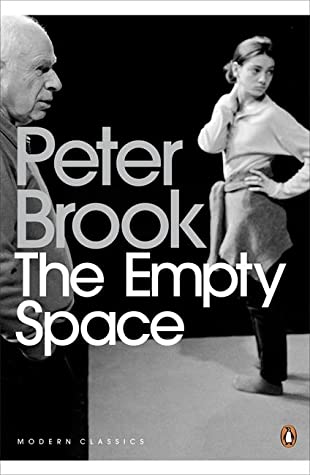
The Empty Space
Adapted from a series of four lectures, originally delivered as the first of the Granada Northern Lectures Peter Brook's The Empty Space is an exploration of four aspects of theatre, 'Deadly, Holy, Rough and Immediate', published in Penguin Modern Classics.
'I can take any empty space and call it a bare stage'
In The Empty Space, groundbreaking director Peter Brook draws on a life in love with the stage to explore the issues facing any theatrical performance. Here he describes important developments in theatre from the last century, as well as smaller scale events, from productions by Stanislavsky to the rise of Method Acting, from Brecht's revolutionary alienation technique to the free form Happenings of the 1960s, and from the different styles of such great Shakespearean actors as John Gielgud and Paul Scofield to a joyous impromptu performance in the burnt-out shell of the Hamburg Opera just after the war. Passionate, unconventional and fascinating, his book shows how theatre defies rules, builds and shatters illusions and creates lasting memories for its audiences.
Peter Stephen Paul Brook CH CBE (b. 1925) is a highly influential British theatrical producer and director. During the 1950s he worked on many productions in Britain, Europe, and the USA, and in 1962 returned to Stratford-upon-Avon to join the newly established Royal Shakespeare Company. Throughout the next the 1960's he directed many ground breaking productions for the RSC before in 1970 forming The International Centre for Theatre Research in Paris.
If you enjoyed The Empty Space, you might like John Berger's Ways of Seeing, also available in Penguin Modern Classics.
'A brilliant book ... should be read by the many besides the passionate few to whom it will be required reading'
Daily Telegraph
'I can take any empty space and call it a bare stage'
In The Empty Space, groundbreaking director Peter Brook draws on a life in love with the stage to explore the issues facing any theatrical performance. Here he describes important developments in theatre from the last century, as well as smaller scale events, from productions by Stanislavsky to the rise of Method Acting, from Brecht's revolutionary alienation technique to the free form Happenings of the 1960s, and from the different styles of such great Shakespearean actors as John Gielgud and Paul Scofield to a joyous impromptu performance in the burnt-out shell of the Hamburg Opera just after the war. Passionate, unconventional and fascinating, his book shows how theatre defies rules, builds and shatters illusions and creates lasting memories for its audiences.
Peter Stephen Paul Brook CH CBE (b. 1925) is a highly influential British theatrical producer and director. During the 1950s he worked on many productions in Britain, Europe, and the USA, and in 1962 returned to Stratford-upon-Avon to join the newly established Royal Shakespeare Company. Throughout the next the 1960's he directed many ground breaking productions for the RSC before in 1970 forming The International Centre for Theatre Research in Paris.
If you enjoyed The Empty Space, you might like John Berger's Ways of Seeing, also available in Penguin Modern Classics.
'A brilliant book ... should be read by the many besides the passionate few to whom it will be required reading'
Daily Telegraph
160 pages, Paperback
First published January 1, 1968
About the author
Peter Brook
102 books135 followersPeter Brook is a world-renowned theater director, staging innovative productions of the works of famous playwrights. A native of London, he has been based in France since the 1970s.
Peter Brook's parents were immigrant scientists from Russia. A precocious child with a distaste for formal education but a love of learning, Brook performed his own four-hour version of Shakespeare's Hamlet at the age of seven. After spending two years in Switzerland recovering from a glandular infection, Brook became one of the youngest undergraduates at Oxford University. At the same time he directed his first play in London, a production of Marlowe's Dr. Faustus. Brook made his directing debut at the Stratford Theatre at the age of 21, with a production of Love's Labours Lost.
Over the next several years, Brook directed both theater and opera, as well as designing the sets and costumes for his productions. He eventually grew disillusioned with opera, calling it "deadly theater." He directed prominent actors, including Laurence Olivier in Titus Andronicus and Paul Schofeld in a filmed King Lear. He also directed a film adaptation of Lord of the Flies. In 1962, he was named a director of the Royal Shakespeare Company.
Despite his popular successes, Brook sought out alternative ways to create vibrant, meaningful theater. He directed a season of experimental theater with the Royal Shakespeare Company, inspired by Antonin Artaud's "Theatre of Cruelty." He sought to turn away from stars and to create an ensemble of actors who improvised during a long rehearsal period in a search of the meaning of "holy theater."
Out of this search came Brook's finest work. In 1964 he directed Genet's The Screens and Peter Weiss' Marat/Sade, for which he received seven major awards and introduced Glenda Jackson to the theater. Influenced by Brecht and Artaud, Marat/Sade shocked the audience with its insane asylum environment. In 1966 he developed US, a play about the Vietnam experience and the horrors of war. Jerzy Grotowski, one of the most important theater directors of this century and a man who profoundly influenced Brook, came to work with the company during this production. Brook also did an adaptation of Seneca's Oedipus by poet Ted Hughes, a who continued to collaborate with him for many years. The culmination of this phase of Brook's work was his production of A Midsummer Night's Dream (1970). Using trapezes, juggling, and circus effects, Brook and his actors created a sense of magic, joy, and celebration in this interpretation of Shakespeare's play.
After this, Brook moved to Paris and founded the International Center of Theatre Research. He wanted to find a new form of theater that could speak to people worldwide--theater which was truly universal. He also wanted to work in an environment of unlimited rehearsal time in order to allow for a deep search-of-self for all involved. The first production that came out of this phase was Orghast (1971), which employed a new language developed by Ted Hughes. This production, performed at the ruins of Persepolis in Persia, used actors from many different countries.
Peter Brook's parents were immigrant scientists from Russia. A precocious child with a distaste for formal education but a love of learning, Brook performed his own four-hour version of Shakespeare's Hamlet at the age of seven. After spending two years in Switzerland recovering from a glandular infection, Brook became one of the youngest undergraduates at Oxford University. At the same time he directed his first play in London, a production of Marlowe's Dr. Faustus. Brook made his directing debut at the Stratford Theatre at the age of 21, with a production of Love's Labours Lost.
Over the next several years, Brook directed both theater and opera, as well as designing the sets and costumes for his productions. He eventually grew disillusioned with opera, calling it "deadly theater." He directed prominent actors, including Laurence Olivier in Titus Andronicus and Paul Schofeld in a filmed King Lear. He also directed a film adaptation of Lord of the Flies. In 1962, he was named a director of the Royal Shakespeare Company.
Despite his popular successes, Brook sought out alternative ways to create vibrant, meaningful theater. He directed a season of experimental theater with the Royal Shakespeare Company, inspired by Antonin Artaud's "Theatre of Cruelty." He sought to turn away from stars and to create an ensemble of actors who improvised during a long rehearsal period in a search of the meaning of "holy theater."
Out of this search came Brook's finest work. In 1964 he directed Genet's The Screens and Peter Weiss' Marat/Sade, for which he received seven major awards and introduced Glenda Jackson to the theater. Influenced by Brecht and Artaud, Marat/Sade shocked the audience with its insane asylum environment. In 1966 he developed US, a play about the Vietnam experience and the horrors of war. Jerzy Grotowski, one of the most important theater directors of this century and a man who profoundly influenced Brook, came to work with the company during this production. Brook also did an adaptation of Seneca's Oedipus by poet Ted Hughes, a who continued to collaborate with him for many years. The culmination of this phase of Brook's work was his production of A Midsummer Night's Dream (1970). Using trapezes, juggling, and circus effects, Brook and his actors created a sense of magic, joy, and celebration in this interpretation of Shakespeare's play.
After this, Brook moved to Paris and founded the International Center of Theatre Research. He wanted to find a new form of theater that could speak to people worldwide--theater which was truly universal. He also wanted to work in an environment of unlimited rehearsal time in order to allow for a deep search-of-self for all involved. The first production that came out of this phase was Orghast (1971), which employed a new language developed by Ted Hughes. This production, performed at the ruins of Persepolis in Persia, used actors from many different countries.
Ratings & Reviews
Friends & Following
Create a free account to discover what your friends think of this book!
Community Reviews
Displaying 1 - 30 of 315 reviews

November 28, 2012
A stage space has two rules: (1) Anything can happen and (2) Something must happen.
The Empty Space ~~ Peter Brook
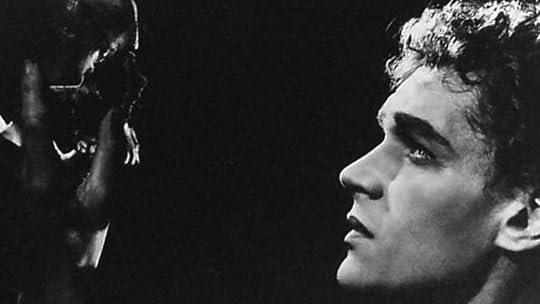
Paul Scofield as Hamlet
I first read Peter Brook's The Empty Space when I was an undergrad. It was required reading for all theatre students on a directing tract. I devoured the book, but I'm not certain I digested the book. On re-reading this book, I not only digested the theories Brook set forth, but found it to be prophetic. Brook anticipated the decline of and problems professional theatre would encounter ~~$1,000.00 a seat tickets anyone?
The Empty Space was published in 1968 and it’s never been out of print since. What Peter Brook does is apply his very cool, analytical judgment to theatre as it is. He breaks theatre down into four different categories ~~ and these terms have now become standard. Those four types ~~ Deadly Theatre, Holy Theatre, Rough Theatre, & Immediate Theatre.
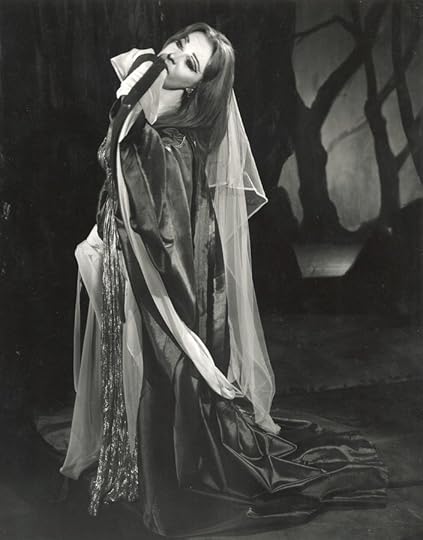
Vivien Leigh in Titus Andronicus
Deadly Theatre: Brook criticizes this form of theatre for being lifeless and uninspired. It often adheres to outdated traditions and fails to engage or challenge the audience. Deadly Theatre is prevalent in commercial productions that prioritize profit over artistic integrity.
Holy Theatre: This type of theatre aims to make the invisible visible, seeking to transcend everyday experiences and touch on deeper, spiritual truths ~~ think Angels in America.
Rough Theatre: This is characterized by its accessibility and connection to the audience, often using humor, satire, and direct engagement. Rough Theatre thrives in informal settings and is unafraid of vulgarity and spontaneity.
Immediate Theatre: This form of theatre emphasizes the present moment and the direct relationship between actors and audience. It is about creating a shared experience that is alive and responsive to the audience’s reactions. Immediate Theatre requires a high level of sensitivity and adaptability from the performers.
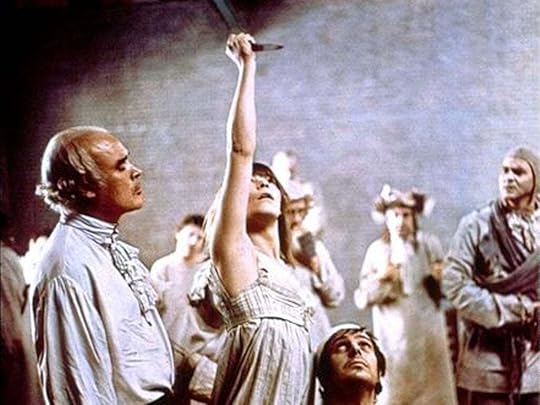
Glenda Jackson in Marat/Sade
But The Empty Space doesn’t just contain insights about making drama. It also has passages about, quite literally, the business of drama.
There’s a marvelous passage where Brook talks about being in New York and seeing young people queuing up at the Museum of Modern Art, paying next to nothing to get in. He looks at those people and thinks, Why are they queuing up for a gallery but not theatre? Brook concludes we have to make theatre not just simpler in style but also cheaper, and so more accessible. We have to find a way of discovering and encouraging that new audience. I think it’s a lesson theatre has not yet learnt ~~ every organization I know is breaking its back at the moment to find ways of getting a new audience in, but the cost is still out of control.
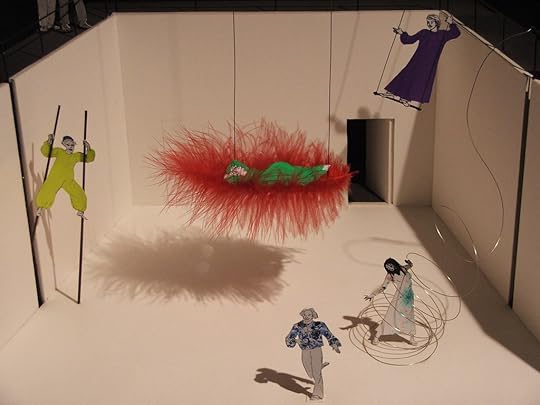
Brook’s Ground Breaking Production of A Midsummer Night’s Dream
As a director Peter Brook was a pioneer; what he’s done in The Empty Space is to set out fundamental questions and principles, asking what is the act of theatre, why do we continue with it, what can it offer us that other mediums can’t? I think these questions are ones we’re still debating today. This is an essential book for any practitioner of theatre. Highly recommended.
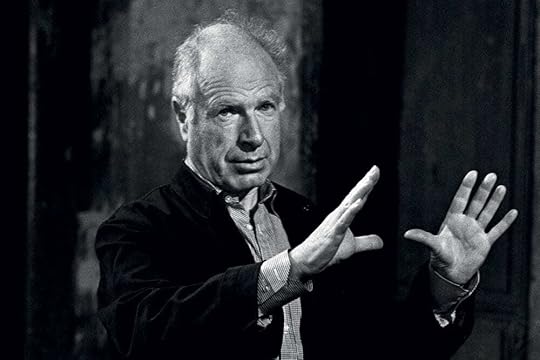
Peter Brook
The Empty Space ~~ Peter Brook
Paul Scofield as Hamlet
I first read Peter Brook's The Empty Space when I was an undergrad. It was required reading for all theatre students on a directing tract. I devoured the book, but I'm not certain I digested the book. On re-reading this book, I not only digested the theories Brook set forth, but found it to be prophetic. Brook anticipated the decline of and problems professional theatre would encounter ~~$1,000.00 a seat tickets anyone?
The Empty Space was published in 1968 and it’s never been out of print since. What Peter Brook does is apply his very cool, analytical judgment to theatre as it is. He breaks theatre down into four different categories ~~ and these terms have now become standard. Those four types ~~ Deadly Theatre, Holy Theatre, Rough Theatre, & Immediate Theatre.
Vivien Leigh in Titus Andronicus
Deadly Theatre: Brook criticizes this form of theatre for being lifeless and uninspired. It often adheres to outdated traditions and fails to engage or challenge the audience. Deadly Theatre is prevalent in commercial productions that prioritize profit over artistic integrity.
Holy Theatre: This type of theatre aims to make the invisible visible, seeking to transcend everyday experiences and touch on deeper, spiritual truths ~~ think Angels in America.
Rough Theatre: This is characterized by its accessibility and connection to the audience, often using humor, satire, and direct engagement. Rough Theatre thrives in informal settings and is unafraid of vulgarity and spontaneity.
Immediate Theatre: This form of theatre emphasizes the present moment and the direct relationship between actors and audience. It is about creating a shared experience that is alive and responsive to the audience’s reactions. Immediate Theatre requires a high level of sensitivity and adaptability from the performers.
Glenda Jackson in Marat/Sade
But The Empty Space doesn’t just contain insights about making drama. It also has passages about, quite literally, the business of drama.
There’s a marvelous passage where Brook talks about being in New York and seeing young people queuing up at the Museum of Modern Art, paying next to nothing to get in. He looks at those people and thinks, Why are they queuing up for a gallery but not theatre? Brook concludes we have to make theatre not just simpler in style but also cheaper, and so more accessible. We have to find a way of discovering and encouraging that new audience. I think it’s a lesson theatre has not yet learnt ~~ every organization I know is breaking its back at the moment to find ways of getting a new audience in, but the cost is still out of control.
Brook’s Ground Breaking Production of A Midsummer Night’s Dream
As a director Peter Brook was a pioneer; what he’s done in The Empty Space is to set out fundamental questions and principles, asking what is the act of theatre, why do we continue with it, what can it offer us that other mediums can’t? I think these questions are ones we’re still debating today. This is an essential book for any practitioner of theatre. Highly recommended.
Peter Brook
January 28, 2009
Alternately brilliant and boring. I think that Peter Brook is actually a profound man, but his writing on the theory of theatre gets tedious when he starts soliloquizing and forgets to include any means for the reader to put his abstractions into practice. At those times the book gets a self-infatuated tone, and loses believability. I spent most of the book slogging through, one paragraph at a time. That said, there are penetrating insights lodged within, and many times I felt he had unearthed a real gem.

March 3, 2011
This book is excellent, but it's hampered by two things. One is Peter Brook's fault and one isn't:
1. It's a book about the current state of theater, written in 1968. As I was born in 1984, the author has literally no knowledge of any performance I have ever seen in my life, nor have I seen any of the performances he describes. So it's hard to relate his opinions about the state of theater to today, not knowing if I agree with his assessment of 1968.
2. The book is inscrutable and high-minded to a fault. I can't decide if I agree with him if I can't understand what the hell he's saying.
Still, it's a book about aiming high, so he's not going to dumb down his language for the groundlings. If you can fight your way through it and you're in the mood for some griping about theater, give it a shot. Of course, the book offers a lot of criticism without any suggestions for improvement (other than what basically amounts to "do better"), so you might just end up frustrated at the end. But I found myself wanting to highlight certain passages, and I never do that. He hits a lot of important points, and I'd love to read an updated version for 2011.
1. It's a book about the current state of theater, written in 1968. As I was born in 1984, the author has literally no knowledge of any performance I have ever seen in my life, nor have I seen any of the performances he describes. So it's hard to relate his opinions about the state of theater to today, not knowing if I agree with his assessment of 1968.
2. The book is inscrutable and high-minded to a fault. I can't decide if I agree with him if I can't understand what the hell he's saying.
Still, it's a book about aiming high, so he's not going to dumb down his language for the groundlings. If you can fight your way through it and you're in the mood for some griping about theater, give it a shot. Of course, the book offers a lot of criticism without any suggestions for improvement (other than what basically amounts to "do better"), so you might just end up frustrated at the end. But I found myself wanting to highlight certain passages, and I never do that. He hits a lot of important points, and I'd love to read an updated version for 2011.

November 9, 2015
This was suggested reading for my acting class and I was told it would probably be too deep for our standards but I actually really enjoyed it and got a lot from it. I must read for any fellow drama nerd.

Read
May 19, 2011I like my theater like I like my men: deadly, rough, holy, and immediate.

March 2, 2012
Having seen Brook's televised "The Tragedy of Hamlet," and his filmed version of "King Lear," not to mention, the idea of his most recent "Love is My Sin," I take his word for what it is: clear thoughts from one perspective of what the theater could be, how it should be, and what is should not be.
Brook separates theater into four slices: Deadly, Holy, Rough, and Immediate. In doing so, he opens up possibilities for the Dramatist and gives us a solid grounding in the more metaphysical aspects of the theater. He shows us how these modes overlap and divide, gives numerous examples, and spills his thoughts on the page as a master to a student.
I am most interested in Brook's interpretations of Shakespeare and this book expostulates on the possibilities of what a Shakespearean play could be or how it could be staged, or how it so often, to the chagrin of Brook, falls into the realm of Deadly Theater (gaudy, costumes, overly heightened, etc.) and how to move away from that. Taking Brook on his own terms and then reading Shakespeare will transform your understanding of Shakespeare, at least it did to me. If anyone knows of any other great imaginers of the Bard, please do let me know.
Brook leaves us with a simple formula for what theater could be. This is a man that believes in the power of the stage, the infinity of a moment, and the saving grace of theater, but is also well aware of the pitfalls, too. He's been there. He's still out there. For that, I'm glad.
Brook separates theater into four slices: Deadly, Holy, Rough, and Immediate. In doing so, he opens up possibilities for the Dramatist and gives us a solid grounding in the more metaphysical aspects of the theater. He shows us how these modes overlap and divide, gives numerous examples, and spills his thoughts on the page as a master to a student.
I am most interested in Brook's interpretations of Shakespeare and this book expostulates on the possibilities of what a Shakespearean play could be or how it could be staged, or how it so often, to the chagrin of Brook, falls into the realm of Deadly Theater (gaudy, costumes, overly heightened, etc.) and how to move away from that. Taking Brook on his own terms and then reading Shakespeare will transform your understanding of Shakespeare, at least it did to me. If anyone knows of any other great imaginers of the Bard, please do let me know.
Brook leaves us with a simple formula for what theater could be. This is a man that believes in the power of the stage, the infinity of a moment, and the saving grace of theater, but is also well aware of the pitfalls, too. He's been there. He's still out there. For that, I'm glad.

August 7, 2021
A brilliant book that peers deeply into the heart of modern theatre. It's somewhat less systematic than the subtitle, with its hint of a rigorous typology, might lead us to expect. More a string of reflections that gravitate towards three main themes: the Context of modern theatre (Deadly Theatre), its Core Contribution (with Holy and Rough offering two complementary energies infusing life in theatre), and finally issues of Craft (wrapped into observations about Immediate Theatre). Brook's perspicacity is phenomenal. And his way of communicating these insights is very authoritative. There is much to learn also for readers who are not directly involved in theatre, but are dealing with challenges in teamwork and complex partnerships, or are, alternatively, involved in performances of all sorts.
January 17, 2023
“Pole kahtlustki, et teater on väga eriline paik. Ta on nagu suurendusklaas ja ühtlasi nagu vähendav lääts.”

February 19, 2020
Actual rating: 1.5 out of 5 stars
Although there were some useful tidbits of information, at this point, I want to move past historical examples and ravings of directing in the field and just learn some tips directly. Despite an interesting format, theatre divided by four types, Brook broke too much down and made me uninterested. These historical texts don't seem right for me, and I feel like I'm kind of done with older white men ranting about their experiences in theatre when they could be much more meaningful from people of color and other marginalized groups.
Although there were some useful tidbits of information, at this point, I want to move past historical examples and ravings of directing in the field and just learn some tips directly. Despite an interesting format, theatre divided by four types, Brook broke too much down and made me uninterested. These historical texts don't seem right for me, and I feel like I'm kind of done with older white men ranting about their experiences in theatre when they could be much more meaningful from people of color and other marginalized groups.
August 9, 2026
4.5/5
Not a theatre man myself but I thoroughly enjoyed what Peter Brooks laid out here. There were many very interesting passages relating to theatre which were also relevant to other creative mediums of which I do partake that made it very fun to read.
Definitely left me with more questions than answers about theatre but i think perhaps this was the intention. I feel like this is the beginning of my journey towards becoming snobby about theatre 🙏 bless
Not a theatre man myself but I thoroughly enjoyed what Peter Brooks laid out here. There were many very interesting passages relating to theatre which were also relevant to other creative mediums of which I do partake that made it very fun to read.
Definitely left me with more questions than answers about theatre but i think perhaps this was the intention. I feel like this is the beginning of my journey towards becoming snobby about theatre 🙏 bless

November 6, 2019
More weighty than its page count would indicate, this slim volume is divided into the four sections indicated by the subtitle. Too long to be chapters, they're almost like long essays. What is good theatre? What is bad acting? There were some parts where I rolled my eyes to myself and thought "what hippy -dippy hooey is this?" , but by the end of the book I was left feeling like I'd just read a textbook, a learned treatise on the science and art of communicating inner truths. Peter Brook wrote this in the 60s, but it feels like it was written yesterday. Contrary to his closing words, this book is not going out of date. It never will. A must-read for those involved in the theatre.

Read
October 2, 2017I am abandoning this. Nothing to do with the book or Brook's erudition, though - I am stuck in a reading slump and this is not the ideal book for revival.
Not rating It, either.
Not rating It, either.
February 9, 2024
As a great director, Peter Brook is unquestionably an authority on theatre, but The Empty Space doesn’t reflect his artistic talent and comes across as an unsuccessful attempt at philosophy, full of platitudes and anecdotes which carry little theoretical value. Still, this book has merit as an intentionally poetic reflection on the life and career of a passionate lover and defender of drama as a medium.
Despite its aesthetic claims and artistic prescriptions, this book is not theoretical, as Brook says in the beginning of the fourth and final chapter. “But if anyone were to try to use it as a handbook, then I can definitely, warn him- there are no methods… anyone who attempts to reproduce them from my description is certain to be disappointed.”
The book begins with a chapter on ‘Deadly Theater,’ the author asserting that the theater needs to be ‘reborn’; it can no longer approach “the classics from the viewpoint that somewhere, someone has found out and defined how the play should be done.” This is vague and means only that theatre requires innovation. His following example will reveal the lack of meaning that the exhortation carries.
In a certain unknown opera, put on by two rival Operas, one from Formosa and the other from Pekin, “nothing was reborn” in the Formosan performance which made it a failure, compared to the rival, Pekin Opera which was “creating its ancient patterns afresh each night.” The discussion ends here, and what that could mean is unclear, however poetic it might be.
The gist of his argument is that theatre requires innovation, and for the same play to have vitality, it must experience change in attitude, rather than merely in scenery, costumes, and music.
“Grand opera, of course, is the Deadly Theatre carried to absurdity.” For the reason that it resists all change. What is needed in theatre is ‘experimenting’ and ‘real risk’- advice which lacks application.
Much consideration is given to economic factors unrelated to the theory of theatre. Consider his discussion of John Arden’s Sergeant Musgrave’s Dance which had received much bad press and offered free performances, attracting such enthusiastic crowds that the actors, “cheered by the warmth of the house, gave their best performance, which in turn earned them an ovation.” Are we to believe that actors performing at the Athenee are so emotionally volatile that the strength of their performances depends on the enthusiasm of the spectators?
Apparently so, and I have no authority against his experience, to dispute this claim, but it hardly makes sense. “In a sense there is nothing a spectator can actually do” and we agree, but he says “and yet there is a contradiction here that cannot be ignored, for everything depends on him.”
He tries on page 24 and 25 to explain the role of the audience in crafting the performance that the actor gives. He relays an ‘experiment’ done in an acting lecture he delivered. The book is full of these anecdotal experiments. What he ends up describing is merely a change in the actor’s emphasis when reading his lines after being advised to do so in front of his peers. Nothing is proven about the nature of the audience, nor is there shown to be an interaction between the audience and the actor.
He discusses how Stanislavsky’s method has proven dominant, but “In America today, the time is ripe for [Vsevolod] Meyerhold [‘biomechaniscs’] to appear, since a naturalistic representation of life no longer seems to Americans adequate to express the forces that drive them.” An interesting theoretical topic, but discussion ends immediately without elaboration.
On page 34. Without using the term, there is a discussion of French dissatisfaction with monologism in the novel, but Brook will never actually get to the point of discussing dialogic imagination and the hint is only there available to readers who are aware of other critics like Bakhtin who explain this shortcoming of the form of drama.
Brook suggests a dialectic between what we see and what we apprehend is captured by Shakespeare, which makes him the Bard par excellence. But is there really such a dialectic? How is this dialectical? There is no explanation.
Common are aphorisms not strictly related to the topic and too abstract to carry meaning, such as “If you just let a play speak, it may not make a sound. If what you want is for the play to be heard, then you must conjure its sound from it.”
“We may make a personality cult of the conductor, but we are aware that he is not really making the music it is making him- If he is relaxed, open and attuned, then the invisible will take possession of him; through him it will reach us.”
He asserts that “theatre Is the last forum where idealism is still an open question” but this isn’t justified.
The Holy Theatre that Brook describes is a drama which can convey the sublime and deliver a transcendent experience. But it's not clear how that might come. He offers more aphorisms of little meaning: “the theatre working like the plague, by intoxication, by infection, by analogy, by magic, a theater in which the play, the Event itself, stands in place of a text.”
Praising Artaud, and surrealism as a means by which the theatre could become Holy again, he says Artaud ” wanted an audience that would drop all its defenses, that would allow itself to be perforated, shocked, startled and raped so that at the same time it could be filled with a powerful new charge.” The implication is a functionalist analysis of theatre and that it is shock, in this case, which ‘makes the invisible visible.’ He goes to give examples of three ‘visionaries’ who practice this manifestation, concluding that “we have exposed the sham [that the sublime isn’t the aim of the theatre, and that theatre must convince its audience that the art is holy rather than becoming holy] but we are rediscovering that a holy theatre is still what we need. So where should we look for it? In the clouds or on the ground?”
But who has ever said that theatre should not attempt to realize the sublime? With whom is he polemicizing?
The ‘Rough Theater’ is the anti-bourgeois and anti-decadence theatre that saves the day. This is a theme running through the book. Theatre, apparently, has been corrupted by a class of people who enjoy and augment the stuffiness and inaccessibility of the form. “The popular theatre, freed of unity of style, actually speaks a very sophisticated and stylish language” meaning that it somehow disarms its foolish audience and presents “what to regular theatregoers was incomprehensible.” Anarchy has freed the otherwise locked imagination.
The Holy and Rough Theatres reach for different, base, and infinite, energies in man’s soul.
The suggestion that Shakespeare is exceptional because he, and seemingly only most fully he, can “present man simultaneously in all his aspects: touch for touch, we can identify and withdraw.” The meaning of this statement is unclear, unfalsifiable, and certainly not justified by the immediately preceding analysis. The book is filled with lines like these. He ends the third chapter with another cryptic statement with no immediate relation to what he had been discussing: “To [capture the attention of the audience and compel its belief] we must prove there will be no trickery, nothing hidden. We must open our empty hands and show that really there is nothing up our sleeves.” This means nothing.
The fourth chapter is the least disagreeable and the most personal. Brook’s experience as an accomplished director to rub elbows with other greats is interesting by its lonesome.
The book carries infectious enthusiasm for theatre in its vignettes of stages across the world, actor and audience types, and shows gone right and wrong, but what it teaches is unclear and it has limited value to a person attempting to understand drama.
Despite its aesthetic claims and artistic prescriptions, this book is not theoretical, as Brook says in the beginning of the fourth and final chapter. “But if anyone were to try to use it as a handbook, then I can definitely, warn him- there are no methods… anyone who attempts to reproduce them from my description is certain to be disappointed.”
The book begins with a chapter on ‘Deadly Theater,’ the author asserting that the theater needs to be ‘reborn’; it can no longer approach “the classics from the viewpoint that somewhere, someone has found out and defined how the play should be done.” This is vague and means only that theatre requires innovation. His following example will reveal the lack of meaning that the exhortation carries.
In a certain unknown opera, put on by two rival Operas, one from Formosa and the other from Pekin, “nothing was reborn” in the Formosan performance which made it a failure, compared to the rival, Pekin Opera which was “creating its ancient patterns afresh each night.” The discussion ends here, and what that could mean is unclear, however poetic it might be.
The gist of his argument is that theatre requires innovation, and for the same play to have vitality, it must experience change in attitude, rather than merely in scenery, costumes, and music.
“Grand opera, of course, is the Deadly Theatre carried to absurdity.” For the reason that it resists all change. What is needed in theatre is ‘experimenting’ and ‘real risk’- advice which lacks application.
Much consideration is given to economic factors unrelated to the theory of theatre. Consider his discussion of John Arden’s Sergeant Musgrave’s Dance which had received much bad press and offered free performances, attracting such enthusiastic crowds that the actors, “cheered by the warmth of the house, gave their best performance, which in turn earned them an ovation.” Are we to believe that actors performing at the Athenee are so emotionally volatile that the strength of their performances depends on the enthusiasm of the spectators?
Apparently so, and I have no authority against his experience, to dispute this claim, but it hardly makes sense. “In a sense there is nothing a spectator can actually do” and we agree, but he says “and yet there is a contradiction here that cannot be ignored, for everything depends on him.”
He tries on page 24 and 25 to explain the role of the audience in crafting the performance that the actor gives. He relays an ‘experiment’ done in an acting lecture he delivered. The book is full of these anecdotal experiments. What he ends up describing is merely a change in the actor’s emphasis when reading his lines after being advised to do so in front of his peers. Nothing is proven about the nature of the audience, nor is there shown to be an interaction between the audience and the actor.
He discusses how Stanislavsky’s method has proven dominant, but “In America today, the time is ripe for [Vsevolod] Meyerhold [‘biomechaniscs’] to appear, since a naturalistic representation of life no longer seems to Americans adequate to express the forces that drive them.” An interesting theoretical topic, but discussion ends immediately without elaboration.
On page 34. Without using the term, there is a discussion of French dissatisfaction with monologism in the novel, but Brook will never actually get to the point of discussing dialogic imagination and the hint is only there available to readers who are aware of other critics like Bakhtin who explain this shortcoming of the form of drama.
Brook suggests a dialectic between what we see and what we apprehend is captured by Shakespeare, which makes him the Bard par excellence. But is there really such a dialectic? How is this dialectical? There is no explanation.
Common are aphorisms not strictly related to the topic and too abstract to carry meaning, such as “If you just let a play speak, it may not make a sound. If what you want is for the play to be heard, then you must conjure its sound from it.”
“We may make a personality cult of the conductor, but we are aware that he is not really making the music it is making him- If he is relaxed, open and attuned, then the invisible will take possession of him; through him it will reach us.”
He asserts that “theatre Is the last forum where idealism is still an open question” but this isn’t justified.
The Holy Theatre that Brook describes is a drama which can convey the sublime and deliver a transcendent experience. But it's not clear how that might come. He offers more aphorisms of little meaning: “the theatre working like the plague, by intoxication, by infection, by analogy, by magic, a theater in which the play, the Event itself, stands in place of a text.”
Praising Artaud, and surrealism as a means by which the theatre could become Holy again, he says Artaud ” wanted an audience that would drop all its defenses, that would allow itself to be perforated, shocked, startled and raped so that at the same time it could be filled with a powerful new charge.” The implication is a functionalist analysis of theatre and that it is shock, in this case, which ‘makes the invisible visible.’ He goes to give examples of three ‘visionaries’ who practice this manifestation, concluding that “we have exposed the sham [that the sublime isn’t the aim of the theatre, and that theatre must convince its audience that the art is holy rather than becoming holy] but we are rediscovering that a holy theatre is still what we need. So where should we look for it? In the clouds or on the ground?”
But who has ever said that theatre should not attempt to realize the sublime? With whom is he polemicizing?
The ‘Rough Theater’ is the anti-bourgeois and anti-decadence theatre that saves the day. This is a theme running through the book. Theatre, apparently, has been corrupted by a class of people who enjoy and augment the stuffiness and inaccessibility of the form. “The popular theatre, freed of unity of style, actually speaks a very sophisticated and stylish language” meaning that it somehow disarms its foolish audience and presents “what to regular theatregoers was incomprehensible.” Anarchy has freed the otherwise locked imagination.
The Holy and Rough Theatres reach for different, base, and infinite, energies in man’s soul.
The suggestion that Shakespeare is exceptional because he, and seemingly only most fully he, can “present man simultaneously in all his aspects: touch for touch, we can identify and withdraw.” The meaning of this statement is unclear, unfalsifiable, and certainly not justified by the immediately preceding analysis. The book is filled with lines like these. He ends the third chapter with another cryptic statement with no immediate relation to what he had been discussing: “To [capture the attention of the audience and compel its belief] we must prove there will be no trickery, nothing hidden. We must open our empty hands and show that really there is nothing up our sleeves.” This means nothing.
The fourth chapter is the least disagreeable and the most personal. Brook’s experience as an accomplished director to rub elbows with other greats is interesting by its lonesome.
The book carries infectious enthusiasm for theatre in its vignettes of stages across the world, actor and audience types, and shows gone right and wrong, but what it teaches is unclear and it has limited value to a person attempting to understand drama.

June 15, 2010
I've only been trying to get around to reading this book for 7 or 8 years...
Brook explores his experience of theatre, though is very specific to state that it is only his experience so far and that everything will change, as theatre is always changing. He breaks theatre down into 4 categories, Deadly, Holy, Rough and Immediate. These, of course, can overlap and interplay at any time. Deadly theatre is theatre that is predicable, set in its ways, repetitive, passionless. It is theatre that does not speak to its audience and that the performer takes for granted. Brook says this is most theatre. Holy theatre is that theatre that touches something in its audience that causes them to experience ritual. In this section he speaks of Grotowski and Beckett. Rough theatre is the theatre of the masses. It is improvisation as well as theatre that allows for direct interaction with an audience. This is theatre that revels in sharing the room with its audience. He also includes most comedy and musical theatre in this section. He also discusses Brecht and his method of alienation of constantly reminding the audience that they are in a theatre. The Immediate theatre, Brook is less clear about. The importance of his immediate theatre is its nowness and its reaction to those watching it. He says theatre will only succeed when it becomes necessary in the lives not only of those who perform but those who watch. He gives the example of psychodrama.
Brook explores his experience of theatre, though is very specific to state that it is only his experience so far and that everything will change, as theatre is always changing. He breaks theatre down into 4 categories, Deadly, Holy, Rough and Immediate. These, of course, can overlap and interplay at any time. Deadly theatre is theatre that is predicable, set in its ways, repetitive, passionless. It is theatre that does not speak to its audience and that the performer takes for granted. Brook says this is most theatre. Holy theatre is that theatre that touches something in its audience that causes them to experience ritual. In this section he speaks of Grotowski and Beckett. Rough theatre is the theatre of the masses. It is improvisation as well as theatre that allows for direct interaction with an audience. This is theatre that revels in sharing the room with its audience. He also includes most comedy and musical theatre in this section. He also discusses Brecht and his method of alienation of constantly reminding the audience that they are in a theatre. The Immediate theatre, Brook is less clear about. The importance of his immediate theatre is its nowness and its reaction to those watching it. He says theatre will only succeed when it becomes necessary in the lives not only of those who perform but those who watch. He gives the example of psychodrama.

July 29, 2016
Brook organiza sus ideas sobre el teatro con una metafísica de entrecasa. La aprovecha muy bien. No se molesta en aclarar si lo mortal, lo sagrado, lo tosco y lo inmediato son etapas o aspectos. Pero no le impide apelar a casos, y algunos de esos elementos se pueden llevar a otras formas de expresión. Lo mortal, por ejemplo, parece un peligro al que está expuesto el principiante que imita, y el profesional asimilado a un capital cultural decadente. Escribiendo desde el corazón de la tradición shakespearana, Brook conoce muy bien delgada pero crucial zona de exclusión entre ser conservador y ser reaccionario. Por eso, lo mortal tal como él lo define no es algo especifico del teatro. es algo que se traslada muy fácilmente a la música, la escritura y la política. También se pueden encontrar correspondencias para las dos categorías siguientes. La relación complicada entre lo mortal y lo tosco, por ejemplo, es una forma metafísica (y en este caso muy superior) de repensar la diferencia entre cultura de masas y cultura popular discutida en ciencias sociales. El último capítulo es donde Brook intenta encontrar lo específico del teatro. Habla de la posibilidad que ofrece de explorar contrafácticos, de volver a empezar, de borrar la pizarra de lo vivido. Concluye que en definitiva "una obra de teatro es juego".

October 30, 2018
It is very difficult, maybe even impossible, to write a book like this and not sound pretentious at times. I rolled my eyes quite a bit along the way; but the final chapter, in which Brook finally admits he doesn't actually have any answers, but that he's just trying to ask the right questions, managed to endear itself to me. It turned what could easily have been a dated, forgettable book into an essay on the wonder and magic of the theatre. It reminded me of why I fell in love with it in the first place. And I really needed that today.
November 27, 2018
Pats autorius ir knyga su visom nuorodom į teatro pasaulio grandus gal ir nėra iš lengvųjų, ypač žmogui, tiesiog įšokusiam į teatro teorijos lauką, bet knyga visai susiskaitė. Gal buvo kiek sudėtinga relate'inti, nemačius kokių tai klasikinių pastatymų ir vertinti autoriaus įžvalgas. Ir ne tik dėl to, kad jaučiuosi gan žalia teatro reikaluose, bet ir todėl, jog parašytos prieš pusę amžiaus tos įžvalgos gali pasirodyti nebe tokios auktualios. Bet vis dėlto, įstrigo kai kurie momentai, liečiantys grynai jausminį ir psichologinį išgyvenimą atliekant ar dalyvaujant teatro pasirodyme, aktoriaus santykį su savo amatu, draminiu kūriniu, publika. Tai va, visai nais.
February 17, 2026
it's one of those books where more details reveal themselves each time, it's something of a bible
this time I particularly enjoyed commentary on:
- acting as a career with little professional development opportunities along the way (unlike singers, dancers and athletes who have trainers) so there is stress for all discovery to happen at drama school when young, or magically, on a job - though not every job makes an actor feel like they can take risks
- repetition is deadly. better slightly rough and immediate than polished but hollow. theatre is live and one of our only remaining rituals/ceremonies - otherwise why make the piece theatre at all and not another type of media?
- we are embarrassed by silence and need to lean into it
- truth vs reality - this is something I'm always gripped by because naturalism has its limits and some of the most emotionally satisfying work comes from what's impossible but has complete integrity (eg hermione's statue, moments of metamorphoses, animal puppetry etc)
- ^ linking that with Absurd - type of theatre that 'sensed the absence of truth in our everyday exchanges, and the presence of the truth in the seemingly far-fetched' - (brook's 'holy') theatre offers visibility and liberation from reality into truth, as the actor 'lays bare what lies in every man'
- longing to return to a theatre of 'poetry, nobility, beauty, magic' (though we've got to be careful of deadly nostalgia)
- 'every attempt to revitalise the theatre has gone back to the popular source' - the theatre of circus, bearbaiting, satire - cyclical evolution
- all theatre needs some level of distancing (gets carried away), not necessarily to brecht's extremes, but to ground the piece and remind the audience why they are there, what the function will be after the performance has finished. for directors and actors: risk of being TOO sincere and earnest - some detachment, self criticism necessary
- 'useless information absorbed our attention at the expense of something more important' - mike Alfreds' stripping of artistic waste, theatre of economy over hollow lavishness, too much set etc
- rhetorical: to what extent should an actor have tunnel vision on their role? how much should they analyse story's themes and philosophies? understand other characters' perspectives that don't concern theirs? understand the rest of the machine in which they are only a cog?
- arena for political potential - look at history of censorship. use this power before it's taken away!
- considering the set design as endgaming the geometry of the play - don't restrict future rehearsal discoveries
- acid test to measure production's success - when performance is over, what remains?
- french word assistance for audience - j'assiste une piece (excuse no accents) - suggesting they have a role in it as aren't passive
... and much more...
I do agree with the criticism that the book would benefit from more practical tips, as it's massively theoretical to a point where you want to skip over some of the historical examples and ask... ok and what for??
And in terms of the writing - as a 1920s baby he is linguistically androcentric which unfortunately now just reads as exclusive... and he could do with more paragraph breaks because some signposting of key examples and messages is lost.
There is also a lack of practical foresight in some of Brook's messages and this would be ok if he recognised it- he says in terms of production design 'the later he (the director) makes his decisions the better' ... in real working environment this isn't fair on production team who actually need to put the work into fruition!! and later - 'it is better to have the time and conditions in which it is possible to take risks' - forgetting the centrality of money in theatremaking. perhaps this is a context that has worsened since he wrote the book, or else he is writing from a place of privilege as a known name in the industry. he also says one should never let their actors/company know if it is your first production... is this morally right? can a process start from deceit?
this time I particularly enjoyed commentary on:
- acting as a career with little professional development opportunities along the way (unlike singers, dancers and athletes who have trainers) so there is stress for all discovery to happen at drama school when young, or magically, on a job - though not every job makes an actor feel like they can take risks
- repetition is deadly. better slightly rough and immediate than polished but hollow. theatre is live and one of our only remaining rituals/ceremonies - otherwise why make the piece theatre at all and not another type of media?
- we are embarrassed by silence and need to lean into it
- truth vs reality - this is something I'm always gripped by because naturalism has its limits and some of the most emotionally satisfying work comes from what's impossible but has complete integrity (eg hermione's statue, moments of metamorphoses, animal puppetry etc)
- ^ linking that with Absurd - type of theatre that 'sensed the absence of truth in our everyday exchanges, and the presence of the truth in the seemingly far-fetched' - (brook's 'holy') theatre offers visibility and liberation from reality into truth, as the actor 'lays bare what lies in every man'
- longing to return to a theatre of 'poetry, nobility, beauty, magic' (though we've got to be careful of deadly nostalgia)
- 'every attempt to revitalise the theatre has gone back to the popular source' - the theatre of circus, bearbaiting, satire - cyclical evolution
- all theatre needs some level of distancing (gets carried away), not necessarily to brecht's extremes, but to ground the piece and remind the audience why they are there, what the function will be after the performance has finished. for directors and actors: risk of being TOO sincere and earnest - some detachment, self criticism necessary
- 'useless information absorbed our attention at the expense of something more important' - mike Alfreds' stripping of artistic waste, theatre of economy over hollow lavishness, too much set etc
- rhetorical: to what extent should an actor have tunnel vision on their role? how much should they analyse story's themes and philosophies? understand other characters' perspectives that don't concern theirs? understand the rest of the machine in which they are only a cog?
- arena for political potential - look at history of censorship. use this power before it's taken away!
- considering the set design as endgaming the geometry of the play - don't restrict future rehearsal discoveries
- acid test to measure production's success - when performance is over, what remains?
- french word assistance for audience - j'assiste une piece (excuse no accents) - suggesting they have a role in it as aren't passive
... and much more...
I do agree with the criticism that the book would benefit from more practical tips, as it's massively theoretical to a point where you want to skip over some of the historical examples and ask... ok and what for??
And in terms of the writing - as a 1920s baby he is linguistically androcentric which unfortunately now just reads as exclusive... and he could do with more paragraph breaks because some signposting of key examples and messages is lost.
There is also a lack of practical foresight in some of Brook's messages and this would be ok if he recognised it- he says in terms of production design 'the later he (the director) makes his decisions the better' ... in real working environment this isn't fair on production team who actually need to put the work into fruition!! and later - 'it is better to have the time and conditions in which it is possible to take risks' - forgetting the centrality of money in theatremaking. perhaps this is a context that has worsened since he wrote the book, or else he is writing from a place of privilege as a known name in the industry. he also says one should never let their actors/company know if it is your first production... is this morally right? can a process start from deceit?
January 20, 2025
I am finishing all the half read books that i started on my kindle at the end of the year, maybee to make room for me to read a real life book. This is part 1 out of 4
I don’t have much that i can say without sounding like a wanker, so i’ll say this: thought provoking, well written, bit boring, outdated.
I don’t have much that i can say without sounding like a wanker, so i’ll say this: thought provoking, well written, bit boring, outdated.
December 8, 2025
valuable stuff, love all the writing on the audience
August 24, 2026
The Daily Telegraph blurb on the back of the Penguin Modern Classics edition reads “A brilliant book ... should be read by many besides the passionate few to whom it will be required reading”. Ironically, when I bought this book five years ago, it was because it was indeed required reading in one of my Humanities courses—and then I didn’t get around to reading it until I randomly picked it up this summer. Nevertheless, I have read and studied my fair share of Drama and Literary theory, and my general opinion regarding The Empty Space was that it could have been vastly better. The first section made several captivating points and was genuinely enjoyable, but the rest was extremely tenuous and scattered. I would have expected several authoritative references such as Diderot or other major dramatic theoreticians, which remained missing; more than that, the writing style itself became more and more tedious as this progressed. By the fourth section, I was mostly skimming.
It’s still not an uninteresting book and it does have the merit of having rekindled my interest in attending theatrical performances live, which I hope I’ll be able to do again soon.
It’s still not an uninteresting book and it does have the merit of having rekindled my interest in attending theatrical performances live, which I hope I’ll be able to do again soon.
March 31, 2024
pole veel vist piisavalt teatriinimene, mõte oli lugemise ajal pidevalt udus

April 18, 2026
Peter Brook, The Empty Space
“[A]ny space in which theatre takes place.” “I can take any empty space and call it a bare stage. A man walks across this empty space whilst someone else is watching him, and this is all that is needed for an act of theatre to be engaged.”
From the opening lines of Peter Brook’s essays on the nature of theatre, you know you are dealing with someone who has thought deeply about how art is created. And this is the strength of the essays for contemporary readers. Yes, he’s talking about the state of theatre in the late 60s, but he is getting the communal value of art that seems more valuable today in the age of isolating social media and at-home media.
As a basic structure, Brook divides theatre into four categories—deadly, holy, rough, and immediate.
First comes the “deadly theatre”: the theatre of mechanical repetition, most often found in commercial productions that can run for ten or twenty years. This is theatre that happens because it is scheduled to happen, because performances hew to the way they have always been done, or to the way people think they ought to be done.
Then comes the “holy theatre”: “it could be called the theater of the invisible made visible. The notion that the stage is a place where the invisible can appear has a deep hold on our thoughts. It not only presents the invisible but the conditions that make its perception possible.” Brook has in mind work like Grotowski’s, created in isolation, almost monastically, away from the distractions of daily life.
Then there is the “rough theatre,” which embraces vaudeville, music hall, comedy, and popular entertainment, and has all the rowdy vitality we associate with them.
But what Brook most wants is a synthesis of the holy and the rough, in what he calls the “immediate theatre.” This is theatre in which idealism and spirituality are joined to an ability to reach an audience directly. For Brook, Shakespeare is the supreme example of immediate theatre, because Shakespeare’s plays combine these elements in the most extraordinary way.
Brook is not a snob. “If we find that done is a good fertilizer. It is no use being squeamish if the theater seems to need a certain crude element; this must be accepted as part of its natural soil.” He praises and criticizes nearly every form of theatre, showing how easily even the most vital styles can harden into convention. Theatre of the absurd, for example, did not seek the unreal for its own sake. It used the unreal to make certain explorations because it sensed the absence of truth in our everyday exchanges and the presence of truth in what seems far-fetched. Yet it, too, quickly became stale and formulaic.
Throughout, Brook offers some of the most sensitive and astute analyses of playwrights, plays, and productions—Beckett, Brecht, Chekhov, and especially Shakespeare. He loves these playwrights and their work, but he sees their value in ways that are never dutiful or merely academic. For example, he rebuts the trope that Chekhov is a naturalist:
“It is an easy mistake to consider Chekhov as a naturalistic writer, and in fact many of the sloppiest and thinnest plays of recent years called 'slice of life' fondly think themselves Chekhovian. Chekhov never just made a slice of life - he was a doctor who with infinite gentleness and care took thousands and thousands of fine layers off life. These he cultured, and then arranged them in an exquisitely cunning, completely artificial and meaningful order in which part of the cunning lay in so disguising the artifice that the result looked like the keyhole view it never had been.”
But Brook’s essay transcends these specific judgments. It becomes a meditation on how art is created, and on how it gains—or loses—meaning and relevance. What resonates most is his conviction that theatre should be a shared experience, something communal rather than solitary. In a time of social media and streaming, Brook provides both an emotional and an intellectual defense of public art in public spaces.
Take the first paragraph of the book cited at the begining of this review. What matters there is not only the actor, but the watcher. Theatre is not made by performance alone, but by the meeting between performer and audience. The audience does not merely receive the play; it is an essential part of the creative act.
Brook illustrates this in his account of a production of Lear in still Soviet-controlled Eastern Europe, where
“an experience of life in Europe in the last years that enabled them [the audience] to come directly to the play's painful themes. The quality of the attention that this audience brought expressed itself in silence and concentration; a feeling in the house that affected the actors as though a brilliant light were turned on their work. As a result, the most obscure passages were illuminated; they were played with a complexity of meaning and a fine use of the English language that few of the audience could literally follow, but which all could sense. The actors were moved and excited and they proceeded to the United States, prepared to give to an English-speaking audience all that this focus had taught them. I was forced to go back to England and only caught up with the company a few weeks later in Philadelphia. To my surprise and dismay, much of the quality had gone from their acting. I wanted to blame the actors, but it was clear that they were trying as hard as they could. It was the relation with the audience that had changed.”
Perhaps the most moving section is his account of an experiment with untrained readers:
“But the volunteer was too struck and too appalled by what he was reading to react with the sheepish grins that are also customary. Something of his seriousness and concentration reached the audience, and it fell silent. Then, at my request, he began to read out loud. The very first words were loaded with their own ghastly sense, and the reader's response to them. Immediately, the audience understood. It became one with him, with the speech— the lecture room and the volunteer who had come on to the platform vanished from sight— the naked evidence from Auschwitz was so powerful that it took over completely. Not only did the reader continue to speak in a shocked, attentive silence, but his reading, technically speaking, was peraqfect— it had neither grace nor lack of grace, skill nor lack of skill— it was perfect because he had no attention to spare for self-consciousness.” (Emphasis added).
That passage clarifies Brook’s deepest belief: theatre is not the text, or the director, or the actors alone, but all of those things brought into relation with an audience. Out of that relation, something transcendent can emerge.
Brook’s definition of theatre at its best could stand as a definition of art itself: to “bring the pattern of events in the outside world, the inner events of complex men, isolated as individuals, the best tug of fears and aspirations into open conflict. Drama was exposure. It was confrontation. It was contradiction and led to analysis, involvement, recognition, and eventually to an awakening of understanding.” Brook’s sensitive readings, enthusiastic intelligence, and lucid prose make the drama of drama come alive.
“[A]ny space in which theatre takes place.” “I can take any empty space and call it a bare stage. A man walks across this empty space whilst someone else is watching him, and this is all that is needed for an act of theatre to be engaged.”
From the opening lines of Peter Brook’s essays on the nature of theatre, you know you are dealing with someone who has thought deeply about how art is created. And this is the strength of the essays for contemporary readers. Yes, he’s talking about the state of theatre in the late 60s, but he is getting the communal value of art that seems more valuable today in the age of isolating social media and at-home media.
As a basic structure, Brook divides theatre into four categories—deadly, holy, rough, and immediate.
First comes the “deadly theatre”: the theatre of mechanical repetition, most often found in commercial productions that can run for ten or twenty years. This is theatre that happens because it is scheduled to happen, because performances hew to the way they have always been done, or to the way people think they ought to be done.
Then comes the “holy theatre”: “it could be called the theater of the invisible made visible. The notion that the stage is a place where the invisible can appear has a deep hold on our thoughts. It not only presents the invisible but the conditions that make its perception possible.” Brook has in mind work like Grotowski’s, created in isolation, almost monastically, away from the distractions of daily life.
Then there is the “rough theatre,” which embraces vaudeville, music hall, comedy, and popular entertainment, and has all the rowdy vitality we associate with them.
But what Brook most wants is a synthesis of the holy and the rough, in what he calls the “immediate theatre.” This is theatre in which idealism and spirituality are joined to an ability to reach an audience directly. For Brook, Shakespeare is the supreme example of immediate theatre, because Shakespeare’s plays combine these elements in the most extraordinary way.
Brook is not a snob. “If we find that done is a good fertilizer. It is no use being squeamish if the theater seems to need a certain crude element; this must be accepted as part of its natural soil.” He praises and criticizes nearly every form of theatre, showing how easily even the most vital styles can harden into convention. Theatre of the absurd, for example, did not seek the unreal for its own sake. It used the unreal to make certain explorations because it sensed the absence of truth in our everyday exchanges and the presence of truth in what seems far-fetched. Yet it, too, quickly became stale and formulaic.
Throughout, Brook offers some of the most sensitive and astute analyses of playwrights, plays, and productions—Beckett, Brecht, Chekhov, and especially Shakespeare. He loves these playwrights and their work, but he sees their value in ways that are never dutiful or merely academic. For example, he rebuts the trope that Chekhov is a naturalist:
“It is an easy mistake to consider Chekhov as a naturalistic writer, and in fact many of the sloppiest and thinnest plays of recent years called 'slice of life' fondly think themselves Chekhovian. Chekhov never just made a slice of life - he was a doctor who with infinite gentleness and care took thousands and thousands of fine layers off life. These he cultured, and then arranged them in an exquisitely cunning, completely artificial and meaningful order in which part of the cunning lay in so disguising the artifice that the result looked like the keyhole view it never had been.”
But Brook’s essay transcends these specific judgments. It becomes a meditation on how art is created, and on how it gains—or loses—meaning and relevance. What resonates most is his conviction that theatre should be a shared experience, something communal rather than solitary. In a time of social media and streaming, Brook provides both an emotional and an intellectual defense of public art in public spaces.
Take the first paragraph of the book cited at the begining of this review. What matters there is not only the actor, but the watcher. Theatre is not made by performance alone, but by the meeting between performer and audience. The audience does not merely receive the play; it is an essential part of the creative act.
Brook illustrates this in his account of a production of Lear in still Soviet-controlled Eastern Europe, where
“an experience of life in Europe in the last years that enabled them [the audience] to come directly to the play's painful themes. The quality of the attention that this audience brought expressed itself in silence and concentration; a feeling in the house that affected the actors as though a brilliant light were turned on their work. As a result, the most obscure passages were illuminated; they were played with a complexity of meaning and a fine use of the English language that few of the audience could literally follow, but which all could sense. The actors were moved and excited and they proceeded to the United States, prepared to give to an English-speaking audience all that this focus had taught them. I was forced to go back to England and only caught up with the company a few weeks later in Philadelphia. To my surprise and dismay, much of the quality had gone from their acting. I wanted to blame the actors, but it was clear that they were trying as hard as they could. It was the relation with the audience that had changed.”
Perhaps the most moving section is his account of an experiment with untrained readers:
“But the volunteer was too struck and too appalled by what he was reading to react with the sheepish grins that are also customary. Something of his seriousness and concentration reached the audience, and it fell silent. Then, at my request, he began to read out loud. The very first words were loaded with their own ghastly sense, and the reader's response to them. Immediately, the audience understood. It became one with him, with the speech— the lecture room and the volunteer who had come on to the platform vanished from sight— the naked evidence from Auschwitz was so powerful that it took over completely. Not only did the reader continue to speak in a shocked, attentive silence, but his reading, technically speaking, was peraqfect— it had neither grace nor lack of grace, skill nor lack of skill— it was perfect because he had no attention to spare for self-consciousness.” (Emphasis added).
That passage clarifies Brook’s deepest belief: theatre is not the text, or the director, or the actors alone, but all of those things brought into relation with an audience. Out of that relation, something transcendent can emerge.
Brook’s definition of theatre at its best could stand as a definition of art itself: to “bring the pattern of events in the outside world, the inner events of complex men, isolated as individuals, the best tug of fears and aspirations into open conflict. Drama was exposure. It was confrontation. It was contradiction and led to analysis, involvement, recognition, and eventually to an awakening of understanding.” Brook’s sensitive readings, enthusiastic intelligence, and lucid prose make the drama of drama come alive.

January 29, 2013
Many people can easily go through life reading nothing but novels. I admit that is better than not reading at all, of course, but it wouldn’t do for me. While the novel is still my favourite genre, I always need to mix it with other reading matter: history, travel, short stories, graphic novels, essays, drama. I don’t think I’ve ever read a collection of essays on theater before, though.
The empty space is apparently an essential text for drama students; I’d never heard of it. Its idea is simple, to give an overview of the position of theatre at the end of the 1960’s. Writer Peter Brook, a celebrated director who worked with many famous actors and companies, divides his topic into four parts:
Read the rest of my review here
The empty space is apparently an essential text for drama students; I’d never heard of it. Its idea is simple, to give an overview of the position of theatre at the end of the 1960’s. Writer Peter Brook, a celebrated director who worked with many famous actors and companies, divides his topic into four parts:
Read the rest of my review here

February 3, 2018
What I found most interesting was Brook's examination of the role of the audience/spectator in theatre and how a "good house" can empower and participate with performers while a "bad house" can spoil a performance. While much of the book is more advice for actors and directors from the performance side, the parts which spoke to the connection between performers and audience members helped me to imagine what can be socially constructed between both groups within and during a live performance.

March 17, 2021
This book is mind-blowing. Brook builds a vivid conception of what theatre is and what it could be. As Brook describes the Deadly Theatre, he lays out a pointed critique of art under capitalism, and the rest of the book is masterfully imagining what play could be instead: play. I have a feeling I will be coming back to this again and again in my life.
March 31, 2014
Libro clave para entender todo el teatro desde los 60 hasta nuestros días.
December 28, 2023
"igapäevases elus on 'kui' fiktsioon, teatris on 'kui' eksperiment."
January 6, 2024
Holy shit. Holy shit. Read it read it.
“To play needs much work. But when we experience the work as play, then it is not work any more.
A Play is a Play”
“To play needs much work. But when we experience the work as play, then it is not work any more.
A Play is a Play”

June 7, 2022
I first read this book decades ago, and have only dipped into it now and again since. In 1980 I thought this was the theatre book to end all theatre books; the most essential read. Now I think such a thing doesn't exist (and Brook suggests the same at the end). This remains one of not-very-many essential reads for thinking about theatre. It is of its time - the mid-twentieth century - and yet Brook uncovers archetypal conceptions of theatre that are indispensable. In the chapter on "Rough Theatre" his reading of Shakespeare's Measure for Measure, Winter's Tale, and Lear are piercing and insightful. In the chapter on "Holy Theatre" his selection of Merce Cunningham, Samuel Beckett, and Jerzy Grotowski are good examples of writing "of its time" and also "beyond its time." And his reflection on the relation of stage to audience, and the question of the living audience, in the final chapter remains, as he says, the most essential concern of the theatre of the future. Mostly I'm struck by how profoundly human Brook's approach to art and artists is. Is it the best book about theatre ever written? There's no such thing. Is it one of the best books about theatre ever written? It absolutely is.
Displaying 1 - 30 of 315 reviews