Fifteenth-century Spain was a terrifying place. It was the time of the Inquisition a time of torture, betrayal, and unexpected courage. The Muslim world was struggling to keep the West in an economic vise, the Christian world was fighting back against their control of its trade routes, and the Jews were caught in the middle tortured if they assimilated, expelled or killed if they clung to their heritage. Into this turbulent scene step a unique combination of strong-willed characters, brought to life with stunning realism by award-winning novelist Newton Frohlich.
Cristoforo Colombo, ingenious sailor and explorer with one foot in the Jewish world and one in the Christian, is determined to reach the East via the West—if only he can find a way to finance his voyage. His Christian wife, Filipa, offers him social acceptance and valuable contacts while the beautiful and talented Beatriz rekindles in him the spark of his true identity—one he's been forced to hide. The influential Santangel family, converted Christians, risk their fortunes to finance the voyage of discovery—and risk their lives when they resist the Inquisition. And the imperious Queen lsabel, who holds the power to change all of their lives, must choose at last whether to sponsor the grand scheme set before her.
A vivid tapestry of passion and political intrigue, fanaticism and economic ambition, 1492 depicts a crucial moment in world history with sobering parallels to today when human tragedy and human triumph were inextricably intertwined.
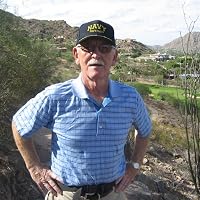
Newton Frohlich is the award-winning author of the historical novel The Shakespeare Mask as well as 1492: A Novel of Christopher Columbus, the Spanish Inquisition & a World at the Turning Point and Making the Best of It: A Common-Sense Guide to Negotiating a Divorce. A former lawyer in Washington, D.C., he has also lived in the south of France, and Israel and now makes his home on Cape Cod with his wife, Martha, a musicologist.
It took Newton Frohlich some eight years to research and write his epic “1492: A Novel of Christopher Columbus, The Spanish Inquisition, and a World at the Turning Point,” a lengthy title perhaps evoked by the extensive information found within its pages. It’s an enormous voyage, perhaps only slightly less dramatic than Columbus’ actual trip to the New World.
This story is not about the actual journey. It’s about the laborious efforts Columbus went through to get ready for the trip. Indeed a lesser man might have wilted under the lengthy preparations, the disheartening search for funding, and the endless negotiations with a stubborn Queen Isabella. He could have settled for the quieter life of a farmer or a merchant.
Sometimes it’s difficult to grasp the intricacies of Frolich’s narration and characterizations. However, this complicated account of the search for acceptance of Columbus’ innovative exploration survives its tangle of events and personalities by never losing sight of what is being portrayed. A resolute dreamer, stubborn and mercenary, pursues the means of attaining his vision by seeking the support of a distracted and equally stubborn monarch who has problems of her own. Isabella’s treasury is insolvent, she’s in the midst of an Inquisition that is decimating her population, and her advisors strongly reject Columbus’ plans. The King, Ferdinand II, with his own distractions, is of no assistance. Their interaction in an equal responsibility marriage is fascinating, as is the Columbus attempt to gain their support.
Other circumstances contributing to the organizational problems, including the undercurrent of the Spanish Inquisition, are vividly detailed. Tomas de Torquemada, the cruel Grand Inquisitor, is particularly well portrayed, as is Queen Isabella as as the overwhelmed monarch who performs her duties surprisingly well under grinding conditions.
Despite its complexities, I found this book immensely interesting. The research is tenacious and the writing is exemplary. I highly recommend it.
‘Cristoforo Colombo sat on a stool at a tavern in Lisbon, sipping red wine in the afternoon sun, waiting.’
1492. The Iberian Peninsula. Isabella of Castile and Ferdinand of Aragon (later termed The Catholic Monarchs by Pope Alexander VI in 1494), are determined to expel all non-Christians. Even those who had converted to Catholicism were not safe: many were accused of secretly practicing Judaism or Islam. The Muslim world controls many of the trade routes, the Christian world is looking to break this control, the Jewish people are viewed with suspicion.
Enter Cristoforo Colombo, convinced that he can reach the East by sailing West. He looks for a backer to finance his voyage. Colombo is viewed with suspicion by some who consider him overconfident. Colombo is also viewed with suspicion by those who believe that he is a ‘New Christian’ (as a convert from Judaism). His plan is brought to the attention of Queen Isabella, and he has to wait for her to make up her mind whether or not to support him.
In the meantime, the Inquisition is underway, and many lose their lives. Then in 1492 Isabella and Ferdinand issued the Alhambra Decree, which gave the Jews in their kingdoms four months to either convert to Catholicism or to leave.
In this novel, while Cristoforo Colombo is the major character, it is his life before 1492 rather than his voyages that is the focus. His wife, Filipa, is a Christian who provides him with valuable contacts as well as social acceptance. Later, Beatriz reminds him of his past. And there’s a tension here: will Isabella support his voyage if she knows he is a New Christian? Will he ever get to make the voyage given the parlous state of Ferdinand and Isabella’s finances?
I enjoyed this novel. While it gave me a new and different look at Cristoforo Colombo, it also reminded me of the less comfortable aspects of the 15th century history of the Iberian Peninsula. It’s not a novel about Cristoforo Colombo’s voyages, instead it’s more about the reasons why those voyages were undertaken. And who wouldn’t want to escape the Inquisition?
Note: My thanks to Blue Bird Press and NetGalley for providing me with a free electronic copy of this book for review purposes.
I received a free copy of this book via NetGalley in exchange for an honest review. DNF.
1492 is a novel chronicling the story of several influential figures in the world that year told through different points of view. The historical facts in this book are well-researched, and this book portrays a vivid picture of the state of the world at the time.
While I tried to push through to give this book a fair chance, awkward writing made it difficult for me. I do love historical fiction, but I did not find that the characters were engaging, and dialogue seemed forced, so I did not finish the book.
Though this book did not work for me, I do not want to it give the impression that it was terrible. I could see it being a good fit for readers who are interested in this time period, exploration, the Spanish Inquisition, and Muslim-Christian relations in 1492. It also may be a good fit for lovers of multi-POV historical fiction.
Immagino che l'autore abbia fatto un immenso lavoro di ricerca per scrivere questo romanzo, e per questo mi dispiace molto dover dire che non mi è piaciuto per niente. Io sono un'appassionata di romanzi storici, ma anche un'appassionata di storia e una grande lettrice di romanzi, ed è proprio la parte romanzo che mi ha irritato. Non so se di sua propria iniziativa, o su consiglio di qualcuno che gli ha detto che insistendo su certi tasti il lettore sarebbe stato più intrigato, ma quello che ne esce è una storia con lo stesso spessore delle 50 sfumature, ambientata ai tempi di Colombo. Forse questo modo di procedere può risultare gradito al lettore americano, ma io sono europea, e non mi è piaciuto per niente. Peccato. Ringrazio Blue Bird Press e Netgalley per avermi fornito una copia gratuita in cambio di una recensione onesta.
I imagine that the author has made an immense research to write this novel, and for that I am very sorry to say that I did not like it. I am fond of historical novels, but also fond of history and a great reader of novels, and the novel is the part that irritated me most. I do not know whether on his own initiative, or on the advice of someone who told him that insisting on certain keys the reader would be more intrigued, but what comes out is a story with the same thickness of the 50 shades, but set the time of Columbus. Perhaps this approach may be acceptable to the American reader, but I'm European, and I did not like at all. What a shame. Thank Blue Bird Press and Netgalley for giving me a free copy in exchange for an honest review.
This novelization of the events leading up to the “discovery” of the Americas was originally published in 1999. Alas, the years have not worn gracefully on the work. From the beginning, I found the depiction of the Muslim world stereotyped. Works such as Amin Maalouf’s The Crusades Through Arab Eyes (1984) and Carole Hillenbrand’s The Crusades: Islamic Perspectives (2006) portray another picture. Even setting aside the preconceptions of nearly two decades ago, I found the portrayals of the various historical personages emotionally distant. To anyone unfamiliar with the time period, the connections between the Inquisition, the political ambitions of Queen Isabella, and the increasingly desperate need of the Jews for a safe haven, will provide thoughtful insights. However, it pales compared to the lively, vivid Jewish Pirates of the Caribbean, by Edward Kritzler (2008).
Whether you’re a fan of history presented precisely as it was or more engaged with a revisionist or reinterpreted depiction of history, you will be fascinated by this story of the forces impressing upon Queen Isabella of Spain, Christopher Columbus or Cristoforo Colombo as he is called herein, the infamous Torquemada who headed the Inquisition, the Santangel banking family and the Arab rulers vying for ways to hold onto Spain and other European areas. It’s a terrible time for Columbus to be seeking funds for his plan to travel the seas on a new route to discover new lands with new treasure. He’s got one foot in Christianity as a converted Jew and one foot in the old Jewish world of his origins. For Isabella is convinced that it is the presence of Jews that is bringing a curse upon her nation and so is conducting a campaign to arrest, torture and kill all Jews, even the converted ones whom she believes are actually still conducting their Jewish customs in secret. Rewards are dispensed for those who spy and report on secret Jews and this in turn sets off a flurry of “mob mentality” behavior where jealousy spawns reporting of Jewishness so that lands and monies may be claimed as a reward. Muslim leaders attack Spain with astonishing brutality and lack of mercy. However, Arab leaders do not trust each other and even begin to fight against each other. This lack of unity will prove to be their undoing in spite of random victories. The decimation of the Jewish population is believed to be a sign of victory over the Muslims and indeed one wonders how the two are tied together, if at all. The Santangel family has Jewish origins but are so necessary to the financial health of the Spanish kingdom that more attention is paid to the family’s remarkable skills in investment and savings. One son in particular doesn’t understand this and so he becomes a viable threat to the family and therefore kingdom’s prosperity. Christopher Columbus’ wife, Filipa, brings him contacts and connections that will eventually finance his famous journey to the New World. Although he will become a rich man, he cannot deny his Jewish background enhanced by his friendship with Beatriz. It’s a thin line between the two worlds but one Colombo masters and which parallels the lives of far too many conversos in 15th Century Spain. Newton Frohlich has crafted a dynamic, exciting, tension-filled novel about this paramount period of European history, a frenetic journey that was to shape not only the time covered in this novel but the future of Europe and the New World. Well done, indeed, and highly recommended historical fiction!
1492: A Novel of Christopher Columbus, the Spanish Inquisition, and a World at the Turning Point by Newton Frohlich is a fascinating read. Its title tells all. It retells the years of the Spanish inquisition under Queen Isabel who truly ruled the roost. Her husband, Kind Fernando of Aragon, was in charge of the military and therefore of going to war with the Muslims that had occupied Spain for over 600 years. Isabel's objective was to unite a Christian Spain which resulted in the massacre of the Muslims and the Inquisition which ordered the imprisonment or death of the Jews. Many Jews converted to Christianity and were called the New Christians. But even they were not spared the evil hand of Isabel. The book is very readable and a compelling story of what life in Spain was like in the late fifteenth century. Definitely worth a detour.
This was an interesting novel that tells what happens in Spain during the years leading up to When Christopher Columbus sails to the Americas. This is about how Christopher Columbus finally gets the right to try to find his way west to get to the East. How did Isabel live with herself when she okayed the Inquisition. I enjoyed reading this book. i received a copy of this book from Smith publicity for a fair and honest opinion.
Me atrapó. Este libro hizo que me aficionara a la novela histórica. Cuenta las peripecias de Cristóbal Colón desde su nacimiento hasta su muerte, pero además narra la vida de toda la gente que influyó directa o indirectamente para que lograra ser quien fue. La reina Isabel, Rodrigo Ponce de León, los moros, y sobre todo, la interesantísima vida de los "marranos".
History at its finest. I really liked this book. Very interesting that this event in history is very different than what we learned. Hard to believe that there is still all the fighting between religions even hundreds of years earlier. Very interesting perspectives. Highly recommend reading.