Jump to ratings and reviews
Rate this book

În umbra Europei: două războaie reci şi trei decenii de călătorie prin România şi dincolo de ea

Rate this book
Robert D. Kaplan a venit prima oară în România în anii ’70, în plin Război Rece, pe când era un tânăr jurnalist cu spirit de aventură, iar ţara era un colţ întunecat al Europei comuniste, ignorat de presa occidentală. Vizitele care au urmat, în anii ’80, în anii ’90 şi, mai recent, în 2013 şi 2014, au fost marcate de dialoguri revelatoare cu personalităţi precum Neagu Djuvara ori Horia-Roman Patapievici şi de lectura unor cărţi fundamentale din şi despre cultura română, prin intermediul cărora i-a cunoscut pe Mircea Eliade, Emil Cioran sau Mircea Cărtărescu. Aceste întâlniri sunt completate, în ţesătura complexă a cărţii, de analiza fină a vieţii de zi cu zi, surprinsă în scene cu aer cinematografic, pe al căror fundal se proiecteazã fie sordide oraşe de provincie uitate de vreme, fie splendorile arhitectonice din Braşov, Iaşi sau Bucureşti.

În umbra Europei este deopotrivă memorial de călătorie, eseu jurnalistic şi analiză istorică — opera unui scriitor care, vreme de treizeci de ani, a căutat să înţeleagă destinul unei ţări şi să-şi împlinească propria vocaţie. Pornind de la istoria României, dar şi de la atenta analiză a unor ţări vecine, precum Republica Moldova, Bulgaria şi Ungaria, Robert D. Kaplan abordează subiecte mai largi, precum jocurile marilor puteri, Războiul Rece sau Holocaustul. Rezultatul este povestea unei frontiere geografice şi ideologice a continentului nostru — punct de întâlnire între marile imperii — şi o carte esenţială pentru înţelegerea crizei prin care trec astăzi Rusia şi Europa.

352 pages, Paperback

First published February 1, 2016

228 people are currently reading
2518 people want to read

About the author

Robert D. Kaplan

52 books1,266 followers
Robert David Kaplan is an American journalist, currently a National Correspondent for the Atlantic Monthly. His writings have also been featured in The Washington Post, The New York Times, The New Republic, The National Interest, Foreign Affairs and The Wall Street Journal, among other newspapers and publications, and his more controversial essays about the nature of U.S. power have spurred debate in academia, the media, and the highest levels of government. A frequent theme in his work is the reemergence of cultural and historical tensions temporarily suspended during the Cold War.

Ratings & Reviews

What do you think?
Rate this book

Friends & Following

Create a free account to discover what your friends think of this book!

Community Reviews

5 stars
341 (24%)
4 stars
566 (41%)
3 stars
353 (25%)
2 stars
95 (6%)
1 star
22 (1%)
Displaying 1 - 30 of 175 reviews
Profile Image for Michael.
1,094 reviews1,966 followers
March 6, 2016
This is a highly readable and thoughtful tour of Romanian history, culture, and current situation by a respected journalist who became enthralled with its people and history as a foreign correspondent in Eastern Europe and the Mideast over the decades since the 70s. I hate how ignorant I am of history and geography so I often keep my eyes out for books that can help elucidate the character of people and counties over time (recent examples include works on Greenland and Paraguay). My interest in Romania was already whetted from recent reads on the history of World War 1 (Strachan’s “The First World War”) and historical fiction that featured events there in World War 2 (Bolano’s “2666”; Furst’s “Blood of Victory”). As I’d already appreciated Kaplan’s mind and methods from his combined travel and historical portrait of the American West, “Empire Wilderness,” and could see he has a string of respected volumes on the Middle East, Turkey, the Balkans and North Africa, it was an easy step to take this book in hand.

Kaplan’s approach on two extended stays in Romania is to travel from province to province experiencing its geography, architecture, and art while talking to significant cultural, academic, religious, and political figures. In the process, he forges an analysis of the county’s past, present, and future in the context of his readings of its history and literature. His method leaves him short of perspectives of ordinary people. Still, his choices of whom he did talk to appear sufficient broad enough for me to trust he has captured some significant truths and paradoxes about the character this country and its peoples.

From the start he makes it clear how much geography is destiny for Romania. It has long been a buffer zone at the intersection of great empires, which in recent centuries means the Russian and Ottoman empires and varying configurations of Hapsburg kingdoms. Like Poland, Romania may be seen to lie clearly on the path from Russia to Western Europe and vice versa. Despite the obvious negative aspect of lying at a dangerous transition zone between great powers, Kaplan’s analysis finds that Romania also benefitted from being prized as a buffer, as that led it to be accorded various levels of independence for long periods since the Middle Ages.


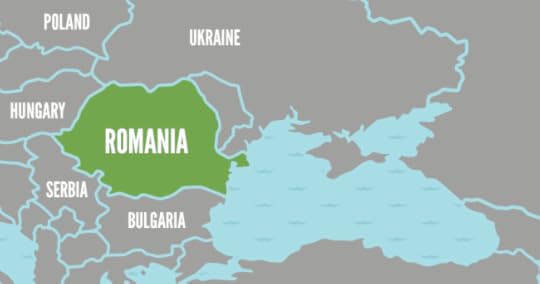
Romania’s position on the Black Sea and nested position in relation to Eastern Europe, Russia, and the Balkan states on the black sea

His lens for looking backward is from points of visits to the county at times in the 70s and 80s when it was under Soviet hegemony, a point in 1989 soon after the communist dictator Ceaușescu was overthrown through a violent democratic revolution, and a recent interval when their economy was flourishing and they had achieved full membership in the European Union. The flowering of life and culture after nearly 50 years of oppression, first under fascism of Antonescu’s regime starting in 1940 and then under communism, is somewhat undermined by the large diaspora of emigration made possible by EU membership and recently by wariness from the specter of Putin’s effective annexation of Crimea in the Ukraine.

Coming out from under outside dominance, the people take recourse in their distinctive cultural identity, one that closely relates to its Romance language that binds them to the West and a predominantly Orthodox Christian religion that ties them to the ancient East. The language arose when a tribal people on the Black Sea, the Dacians, were conquered by the Romans. The religion came there through the Byzantine Empire, whose emperor converted to that religion in the 4th century AD. When the Ottoman Empire replaced Byzantium in the 15th century, the future parts of Romania and Greece, in contrast to the Muslim shift of other Balkan states of like Serbia and Bulgaria, retained enough autonomy to keep their mainly Orthodox faith.


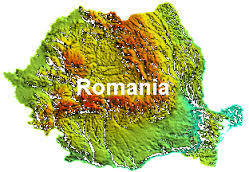
Geographical map, which shows the Transylvanian and Carpathian mountain ranges that contribute to the demarcation of Transylvania from Moldavia and Wallachia. Historical map showing the country’s three core provinces at the beginning of World War 1 and the dated additions and subtractions of smaller surrounding regions to yield its current extent, as demarcated in red.

Three big provinces of current Romania emerged from regional leaders into small kingdoms: 1) to the south the largely flat Wallachia on the plains above the Danube and across from Bulgaria, and containing the delta on the Black Sea and the national capital Bucharest; 2) the province of Moldavia to the east, with a rougher and more forested terrain, including the north-south running Carpathian mountains at its west and bounding the Republic of Moldava, once a portion of the same principality but lost in the settlement of the Russo-Turkish in 1812; 3) Transylvania, which contains a large forested valley to the west of the Carpathians and the east-west running range of the Transylvanian Mountains (stunningly beautiful). For much of the Middle Ages, Transylvania was part of the Kingdom of Hungary while Wallachia and Moldavia became frequent allies during many wars with shifting alliances with respect to the Ottoman Empire and Russia. (Stoker, who never visited Romania, made up his fable of Count Dracula based on a warlord of this era known as Vlad the Impaler). In 1600 there was a very brief period of unification between them and Transylvania, a precedent for their union in the independent state of Romania in 1878 at the end of another Russo-Turkish War, for which Romanians fought for the winning Russian side.

The period of unity and relative stability all went to hell with World War 1. After joining the side of France and Britain, Romania was invaded by the Austria-Hungary and German and was the staging ground for many battles, losing nearly 750,000 in military and civilian deaths. In the post-war settlement, it gained small Romanian-speaking portions from Hungary, Austria, Bulgaria, and Russian. When the third Reich came into power in the 30’s, the conservatives in power led them into an alliance, and they became a major resource for agriculture and oil for the war effort. Against the tolerance of large sectors of the population, Antonescu did participate in the Holocaust, one that was concentrated on the portions of Romania taken back from Russia after the previous war, with a death toll exceeding 300,000. Despite the leverage of Nazi dependence on Romania for food and oil, they got tapped for sending close to a million soldiers into the fateful Russia, with a huge cost of lives. When Russia started bouncing back with a vengeance and was on the verge of invasion when Romania's king led a coup and a scramble to join the Allies. Even though they lost over 100,000 men fighting against Hitler, the Soviets were quite punitive to them after the Iron Curtain came down and their puppet put in charge especially brutal.

As Romania look forward to a seemingly bright future, Kaplan expresses fervent hope that they don’t go too far down the path of reactionary nationalism based on a mythos and identity tied up ethnicity, religion, and race rather than drawing on a cosmopolitan multiculturalism he sees as a strength for the nation. He faults the cultural philosopher Mircea Eliade for contributing to that danger in a history he published in the 40’s which painted Romania as a perpetual outpost of a civilized Hellenic-Roman hybrid people that continually sacrificed themselves as a bulwark against the Slavic and Asian barbarian hordes. The experts Kaplan talks to don’t really know the racial origin of the Dacians mentioned in Eliade’s weak source of Herodotus and doubt any significant racial distinctions from Slavic peoples could persist over the centuries of life among them. Kaplan understands the value of a combined racial and ethnic identity to keep a unified courage up with a Russian bear liable to wake up hungry again. But he fears limits to Romania’s potentials if the current conflicts in the Middle East revive an old sense of Romanian people being Europe’s pitbull in the conflict of Christians against Muslims.

Romania’s unique blend of East and West in its art, architecture, and literature, its natural beauty, and dynamic flowering of spirit after emergence from prolonged oppression makes the county an attractive place to visit by reading or perhaps in person someday. Meanwhile, Kaplan helps dispel a lot of awkward gaps in my understanding and helps me appreciate both the accomplishments and unfortunate compromises its leaders have made in history in the face of its challenging geographical context amid contending empires.

This book was loaned by the publisher as an e-book through the Netgalley program.


Profile Image for Emma.
1,010 reviews1,212 followers
February 2, 2016
4.5 stars

I read Kaplan's Balkan Ghosts: A Journey Through History when I was at University studying Eastern European history, and immediately appreciated his vivid style. He provides a totally immersive experience for the reader, no detail is considered irrelevant (Kaplan knows the names of the streets he's walking down, the plaza's he sips coffee in, every river he crosses...), and his gaze flits from one subject to another with equal attention. It was clear that he had a passionate interest in the area, which is again evident in his depiction of Romania throughout this book. We find out that, on leaving the Israeli Defence Force in 1981, his choice to visit Bucharest was due, in parts, to the experiences of a 1973 three month journey through Communist Europe; to a book he found by chance in a secondhand bookstore; to the lack of journalistic endeavour in the region; and to the idea that he could fast-track his career by turning up and submitting his copy to various newspapers. It seems strange now that flashing an American passport and declaring your role as a journalist could enable you to get interviews with important politicians and diplomats, yet that is precisely what Kaplan did. His contacts are manifold, built from that time, and he makes use of these interviews, conversations, opinions to provide localised information.

His writing is evaluative, at times, partial. That is not a criticism. This book is part history, part travelogue, part cultural and political commentary; most of all it is the collected musings and reflections of a man whose writing is fundamentally enhanced by personal experience. Nevertheless, Kaplan's breadth of research is clear, the book is filled with quotes/examples from fiction, history, politics, poetry, and more. It is fascinating to see how he has interwoven such variety into the fabric of his book. One of my favourite aspects of his writing is in the connections he makes between his reading and the weather; the idea that the setting he found himself in directly influenced his choice of reading material and what he took from it. His writing is funny too, with piercing observations and judgements on historical figures: Carol I was 'an anal-retentive Prussian' whose memorial statue looks like 'a mass produced lawn sculpture’.

Kaplan provides a timely consideration of a country that continues to occupy a precarious position in Europe. He offers an alternative picture to that which seems prevalent in some parts of the British media: that of the supposed hordes of benefit scroungers desperate to take advantage of our healthcare and financial support systems. Do a search on 'Romanians' and 'Daily Mail' for some wonderful examples of journalism. Romania's border with Ukraine and proximity to Russia, so significant in WWII and since, remains problematic. This is not just a book about the past, but one which is relevant to European politics now.

I found it fascinating and thoroughly enjoyed it.

Many thanks to Robert D. Kaplan, Random House, and Netgalley for this copy in exchange for an honest review.


Profile Image for Sherwood Smith.
Author 168 books37.5k followers
Read
February 3, 2016
Copy provided by NetGalley.

One of the most interesting developments in journalism, or so it appears to me as a reader, is the reintroduction of “I.” Travel memoirs of old were presented up front as such, the better ones full of historical context and observation, with reference to how the ordinary person of a given area sees their world.

At least when I was young, there was this emphasis on being objective. I don’t believe anyone is truly objective. There are degrees of obviousness in the writer’s perception. And trying too hard for a robotic objectivity frequently leads to government-speak (“it was decided” convolutions) and just plain dullness.

Kaplan is very aware of that as he discusses at length his approach for this book—beginning with his own limitations. You don't grow up gradually. You grow up in short bursts at pivotal moments, by suddenly realizing how ignorant and immature you are. Bucharest, as I rode in from the airport and saw the ashen, moldy faces of the bus driver and other Romanian support, crushed in their overcoats and winter hats with earmuffs and their worries, made be instinctually aware of all the history I had been missing the last half decade.

The best travel writer since Herodotus to my mind is Patrick Leigh Fermor, whose superlative writing and profound insights and historical awareness are mentioned often enough in this book that I suspect that Kaplan was trying for a similar approach. And that’s no bad goal.

He has this to say about travel writing: For the real adventure of travel is mental. It is about total immersion in a place, because nobody from any other place can contact you. You are alone. Thus your life is narrowed to what is immediately before your eyes, making the experience of it that much more vivid and life transforming.

The dilemma, therefore, is how to generalize without going too far, and yet at the same time to describe honestly what one has experienced — and draw conclusions from it — without being intimidated by a moral reprimand. I have failed in this regard in the past, and have struggled for years trying to find the right balance. And I am more and more unsure of myself as I get older, even as I know that there is a vast distance between describing obvious cultural peculiarities and provoking the specter of both racism and essentialism.


He then segues to journalism, and its strengths and pitfalls.

By learning to be a journalist, I do not mean learning the commonplace but crucial mechanics of accurate note-taking, newswriting, or developing sources, which I had been taught in elementary form earlier in college and at a small newspaper. Instead, I refer to understanding the true character of objectivity.

For what is taught in journalism schools is an invaluable craft, whereas properly observing the world is a matter of deliberation and serious reading over decades in the fields of history, philosophy, and political science. Journalism actually is not necessarily, whatever the experts of the profession may claim, a traditional subject in its own right.

Rather, it is a means to explore and better communicate subjects that are, in fact, traditional areas of study: history and philosophy as I've said, but also government, politics, literature, architecture, art, and so on. I've never altogether trusted what journalists say about themselves. As Robert Musil, the great early twentieth century Austrian novelist, observes: "High-mindedness is the mark of every professional ideology."


The result is partly memoir, history, partly travelogue, partly journalistic reportage, and partly meditation, adding up to an absorbing, never boring, but seldom easy, read. Opinions are upfront: for example, twice Kaplan states that the ultimate purpose of human existence is to appreciate beauty.

The mention of writers such as Fermor, and Elias Canetti, and Mersea Eliade, with sharply observed examinations of the works of the two latter, made me reach for my pen to jot down names and titles of works of which I hadn’t heard.

The short summary is this: Kaplan returns to Romania and adjacent regions after visits in the eighties and nineties during tumultuous change. He does linger on some of the more stomach-turning aspects of history, very old ranging to not too long ago. But he veers from sensationalism for its own sake, trying to provide context, with such observations as this, after a tense visit, during which he occupied himself by reading Joseph Conrad: Because the future lies inside the silences — inside what people are afraid to discuss openly among themselves, or at the dinner table — it is in the guise of fiction that a writer can more easily and relentlessly tell the truth.


His premier point seems to be that Western indifference and ignorance of areas such as Moldova—tucked up against the Ukraine—could endanger the relative peace of Europe.

I then began acquiring the habit of separating myself from the journalistic horde, looking for news in obscure locations, that is. For example, on a later trip to Bucharest in 1984, Latham casually told me that Ceausescu was blasting a vast area of the capital into oblivion, with security forces plundering and then blowing up whole neighborhoods of historic Orthodox churches, monasteries, Jewish synagogues, and nineteenth century houses: 10,000 structures and all, many with their own sylvan courtyards. Residents were given hours to clear out with their life possessions before explosive charges were set.

Along the way Kaplan offers vivid word pictures of places and people he met, many of them leaders (it was apparently surprisingly easy for journalists to gain access to powerful people thirty years ago), but there are at least a few some snaps of ordinary folk.

This is where my interest caught the most. When I was young, the map of Europe was dominated by the vast pink swathe of the USSR. Names like Romania and Moldavia belonged only to ancient histories. When I traveled as a student in 1971-2, I couldn’t get past the Iron Curtain: everyone said it took money, and in those days I got around by hitchhiking, eating once a day, or less. Ever since then, I’ve read whatever I could about those mysterious areas so closed off.

And Kaplan takes me there, beginning about the time I was in Europe, for he was a year younger, his reach much farther than mine.

Worked in among the chapters on his travels are historical meditations, ranging from the fourteenth and fifteenth century voivodes up to the crucial work Metternich did at the Congress of Vienna in laying down a pattern for relative balance of power that more or less lasted for the following century.

Metternich, that farsighted reactionary, was a man of peace — contra Napoleon, that endemic progressive, who was a man of war. Metternich believed in legal states, not in ethnic nations. States are sanctioned by bureaucratic systems governed by the rule of law; ethnic nations are ruled by blood and soil passion, the very enemy of moderation and analysis.

Toward the end of the work he brings us to the present, with an essay about the importance of the region, and of Western awareness of what is going on there. Group consciousness is all very well and good as long as it defends the rights of the individual — regardless of origin or political tendency. Only with that in mind does nationalism have legitimacy. Though people from time to time still fought vaguely and wistfully, with their eyes half closed, about Greater This or Greater That, their immediate concerns were for the safety and predictability in their own lives.

There’s a lot of food for thought here, as well as a fascinating excursion into an area few of us English-speakers have reached.
Profile Image for Ana.
811 reviews718 followers
June 7, 2017
As a certified born and bred Romanian, I was very pleased with this work. To me, it seems like Kaplan knows his stuff when it comes to my country. This work also sparked my desire to travel to some places that I haven't seen in years, because Kaplan's descriptions of the rural areas are beautiful.
Profile Image for Brian Griffith.
Author 7 books335 followers
March 8, 2025
This is an almost perfect blend of autobiography, history, and travelogue. It gets rambling, but the introduction is almost irresistibly alluring. The many long discussions of literature, geopolitics, folk religion, or social transformation can get intellectual, but they're also sensory and full of insight, often provided by others. I think I’ll give a few good lines:

“Metternich believed in legal states, not in ethnic nations. States are … governed by the rule of law; ethnic states are ruled by blood-and-soil passion, the very enemy of moderation and analysis.”

“When a country is being subverted; it is not being outfought; it is being out-administered. Subversion is literally administration with a minus sign in front.” – Bernard Fall

Concerning young adults, a Turkish community leader explains, “They are less interested in traditions than in global culture, which offers everything and diminishes everything at the same time.”

“The identification of religious faith with an ethnic-national group, I find, is a moral heresy.”

In traveling across Romania and into Hungary and Moldova, Kaplan is keenly perceptive of gradations in culture. He describes a Westernized, individualized sense of identity slowly displacing collectivized loyalties of the past. He sees life and vitality in the advance of European culture, and a heritage of trauma in the eastern regions. It’s clearly a cultural bias, but it comes from directly encountering people’s differences in quality of life. He fears that if Russia regains domination of Ukraine, Moldova is next.
Profile Image for Bill.
308 reviews300 followers
April 30, 2016
I have to say that I knew absolutely nothing about Romania before reading this book. That has now been rectified to some extent.

This book is sort of a combination of history combined with a travel memoir. The author sort of skims over the early history of the country, and that is probably the most boring part of the book, as it consists mainly of listing dates and events. By far the greater part of the book is focused on the years since World War II. The author visited the country numerous times but draws mainly on two trips, one in 1981 and one in 2013.

Starting almost immediately after the second world war, Romania was ruled by two successive Communist dictators, both of whom were mini-Stalins, with the attendant executions, repression, loss of religious freedom and the fact that it wasn't good to be an intellectual of any sort. This continued until 1989, when the population finally revolted and executed the extremely brutal Nicolae Ceausescu and his wife.

When the author went to visit Romania in 2013, the country had turned itself almost completely around. There was relative prosperity, tourists in abundance, and the locals wore hip clothing and everyone had a smartphone.

Foreign Policy magazine has twice named the author one of the world's Top 100 Global Thinkers, so it is to his credit that he has managed to write a very readable book that was of great interest to this layman.

So if you are interested in Romania or just want to read a very enjoyable work of history, you might want to give this a try.
Profile Image for Virginia Cornelia.
195 reviews115 followers
December 12, 2021
M-am intalnit intamplator cu Robert Kaplan in urma cu cateva luni, pe Scribd, in audiobookul " Razbunarea Geografiei ", o carte ce mi s-a parut deosebit de interesanta prin felul in care autorul vede lumea, adica prin ochii geopoliticii. Ochii geopolitici, mintea analitica si harul de povestitor s-au imbinat perfect intr-o lectura captivanta ; mai ca m-as fi inscris simultan la Facultatea de Istorie si la cea de Geografie!

Hotarata de aloc lunile urmatoare unor lecturi despre comunism, am pornit spre Humanitas si am luat mai multe carti, printre care si aceasta.

Pentru cei mai putin familiarizati cu autorul- Robert D Kaplan ( citez Humanitas: " este unul dintre cei mai importanţi analişti de politică externă americani şi un specialist de renume în istoria Războiului Rece. Revista Foreign Policy l-a inclus de două ori în „Top 100 Global Thinkers“, iar The New York Times l-a nominalizat printre cei mai influenţi analişti ai epocii de după cel de-al Doilea Război Mondial, alături de Francis Fukuyama, Paul Kennedy şi Samuel Huntington. (...) este în prezent senior fellow la Center for a New American Security; a lucrat ca analist geopolitic pentru agenţia Stratfor, a fost profesor invitat la United States Naval Academy şi membru al Departamentului Apărării al Statelor Unite. A consiliat mai mulţi preşedinţi, seretari de stat şi miniştri ai apărării americani. "

Cartea, pe care inca nu am terminat-o, este in parte o carte "multilateral dezvoltata".

O de calatorie -autorul merge la Bucuresti, la Iasi-capitala Principatelor Unite, la Constanta- la casa de protocol a lui Nicolae Ceausescu, la Barlad -atat pe urmele lui A. I Cuza, dar si Gheorghiu-Dej, la Scornicesti- dupa urmele lui Ceausescu , in Bucovina ( am aflat de la el ca numele regiunii inseamna padure de fagi ), dar si peste Prut .

O carte de memorii -compara transformarile oraselor, oamenilor si atmosferei pe care a cunoscut-o cu prilejul primei vizite in Romania , in 1973 cu ceea ce se intampla in tara in urma cu cativa ani -2013- bucurie mare, desi mohoratele cladiri comuniste , basmalele si mocirlele exista inca, la fel de bine progresul a fost evident.

O carte despre trecutul Romaniei - abordeaza atmosfera din Romania interbelica, fascismul intelectualilor romani, le consacra un spatiu generos lui Cioran si Eliade , trateaza antisemitismul romanesc -pogromul de la Iasi, ambivalenta regimului Antonescu ( refuzul de a trimite in Polonia cei 375 000 de evrei din Moldova, Tara Romaneasca si sudul Transilvaniei si totodata uciderea directa sau prin infometare a 300 000 de evrei din Transnistria, Basarabia si nordul Bucovinei) si continuarea politicii antisemite de catre Gheorghiu-Dej si Ceausescu. La fel, exista si observatii interesante despre Ceausescu si cateva despre Revolutie.

O carte despre prezentul si viitorul Romaniei- si aici mi-a placut in mod deosebit, pentru ca apare in diverse capitole discutia despre Rusia, Ucraina, Moldova si Romania - sub forma unor reflectii/ analize ale autorului, dar si discutii pe care le-a avut cu Ion Iliescu, Neagu Djuvara, Mircea Geoana, Traian Basescu, Victor Ponta si altii.

Las mai jos cateva citate, si recomand cu caldura cartea celor interesati .

" Comunist reformator ( daca a existat asa ceva in perioada ceausista ), Iliescu a fost presedintele Romaniei intre anii 1990-1996 si apoi din nou din 2000-2004. Mandatul indelungat l-a transformat in cea mai importanta figura a istoriei Romaniei postdecembriste. Pentru ca a batut pasul pe loc si a amanat in mod repetat reformele institutionale din timpul primelor sale mandate prezidentiale , el a fost acuzat ca n-a modernizat tara in anii ametitori de dupa caderea Zidului Berlinului, o perioada cand celelalte state din Europa Centrala membre ale Pactului de la Varsovia s-au dezvoltat economic. In prima jumatate a anilor 90, sub conducerea lui Iliescu , Romania n-a devenit un stat capitalist, ci mai degraba unul comunist liberal , dupa modelul Gorbaciov, dupa ce fusese un stat stalinist vreme de mai multe decenii, mai ales dupa vizita lui Nicolae Ceausescu in Coreea de Nord. Toate accestea rezulta din presupusul ajutor pe care Uniunea Sovietica condusa de Gorbaciov , l-ar fi acordat in toamna anului 1989 lui Ion Iliescu, Silviu Brucan si altor comunisti reformatori care se opuneau lui Ceausescu. Din cauza stalinismului ceausist, revolutia din Romania a fost singura din Europa de Est sprijinita fara rezerve de Uniunea Sovietica.

O alta interpretare spune ca politica foarte prudenta a lui Ion Iliescu , impreuna cu accentul pus la inceputul anilor 90 pe securitatea regimului, a salvat Romania de la soarta Iugoslaviei , care a trecut printr-un razboi civil interetnic in primii sase ani ai lui Iliescu ca presedinte".

" Oamenii acestia aflati in cele mai importante pozitii din stat (Ponta, Basescu ) stiau ca romanii de rand nu vor accepta niciodata sa aiba granita cu Rusia, dar si ca , daca Ucraina avea sa fie subjugata, Romania urma sa aiba aceeasi soarta"

" Situata intre Marea Neagra si Carpati, Republica Moldova este la fel de importanta pentru securitatea Ucrainei, cum este Ucraina pentru securitatea Rusiei. Daca Republica Moldova ar ajunge pe maini rele, Ucraina ar fi amenintata, caci Republica Moldova si Transnistria alcatuiesc ceea ce eu numesc Culoarul Pontic , hinterlandul Marii Negre, care ofera o ruta de acces spre Balcani si spre Mediterana. Exact cum in campia de nord europeana- Polonia, Belarus si tarile baltice - se afla ruta nordica de legatura intre Rusia si Europa, in Culoarul Pontic se afla cea sudica.

Drobul de sare.
Atat cat imi permit cunostintele actuale este cel legat de antisemitismul lui Ceausescu si faptul ca a vandut evreii Israelului si Occidentului pe valuta.
Sunt alte surse care sustin ca banii solicitati au fost strict o recuperare a investiției statului roman in formarea respectivei perosoane. Pentru un doctor atatia bani, pentru un strungar atatia bani. Practic nu au fost vandute persoane, cum sustine autorul, ci a fost vorba de contravaloarea scolarizarii mici, medii sau superioare.
Profile Image for Liviu.
2,520 reviews705 followers
December 9, 2015
Partly travel memoir (while the book is mainly based on the author's visits to Romania in 2013-4, his earlier visits in the 1980's and 1990 are integrated well in the narrative), partly history, partly meditation on the role and responsibilities of the outside observer, partly a look at how one's views change as he ages (the young and unknown journalist-to-be Robert Kaplan of 1981, just released from a stint in the IDF, using Israel's ties to Romania - unique at the time with a Warsaw Pact country but still fraught with difficulties and uncertainties - to go there and then reverting to his US passport so he could access the considerable US diplomatic resources there at the time as well as travel to other East European countries, and then becoming really, really interested in the country contrary to his expectations of just using Romania as a springboard into the Iron Curtain world, and the Robert Kaplan of today, acclaimed journalist consulted by the US government and with immediate access to all the important Romanian politicians and other public figures are quite different, but the trajectory and the thoughts of the two are very clearly seen) this is an excellent book that should be read not only by people interested in Romania, but as a general template on how to write about the topics above.


A few notes - as a Romanian (living abroad for 25 years now but still keeping in touch and visiting last in the same period of the author), I found the Romanian essence of the book excellent; maybe a bit too skewed on talking with important people rather than with the "regular" person, but accurate and to the point, while the history is impeccably presented with lots of material from quite a few recent academic books (some which i also read); the generally hopeful vision about the country (compared with the dark 1981 and even the after the fall of communism 1990, the changes are tremendous) is accurate in my opinion too (though the book caveats apply - if a general economic crisis in Europe which is still a possibility happens or a political one as today's headlines may lead to, all bets are off, while the anxieties of the large majority of the population as the treadmill of modern capitalism and competition doesn't admit let-up though it led to the massive progress in well being that one can see visiting pretty much any part of the country, are not touched upon too much due to the talking with the important persons aspect)

- the general stuff (meditations on this and that as above) is excellent and raise this book above a simple "book about a less well known country" genre and into a more elevated level which is more common from European writers than US ones (Claudio Magris' Danube is a book like that recently read by me, while others such appear in the text)

- while the 1981 (and the later 1980's visits to Romania before he was banned for writing about the brutal demolitions in Bucharest and the countryside to make way for Ceausescu's megalomaniac constructions) belong more to his earlier travel books, they are generally accurate and avoid the sensationalist Western reporting trap about the Ceausescu's era which so annoys me, though they still err a bit on the dark side - not that it wasn't bad but it wasn't the Stalin era (there were no mass arrests, executions, public humiliations with very few anti-regime activities, mostly from people somewhat protected by having relatives abroad, while most everyone who could just voted with their feet and got out, so the regime's relations with the Federal Republic and Israel being mainly a means for Ceausescu to sell ethnic German and Jewish Romanians for hard cash and good public relations in the west at least for a while) or the fall of Berlin and ruins under bombardment either; just a suffocating atmosphere in which immediate survival was the priority and where nobody really cared or believed in communism or the "Leaders" - including the infamous securitate or secret police or the party activists for that matter - only formal obedience being required and the "they pretend to pay us and we pretend to work' principle in effect

- the book is a real page turner that kept me up till very late to finish it

- there is travel to Moldova (the former Soviet republic, once the Eastern half of the Romanian province of Moldavia) and the complexities of history and current situation are superbly presented though the outlook there is quite bleaker, while a little of Hungary is presented too at the end

- overall excellent stuff, highly, highly recommended
Profile Image for Fiona.
982 reviews527 followers
February 1, 2017
3.5 stars. In Europe's Shadow covers much of the ground of Balkan Ghosts in which Kaplan returned to Romania in 1989/90 to witness the changes there and in neighbouring countries since his first visit in the early 1970s. He returns again in 2013/14 for the same reason. Although there is a lot of new material, there is a lot of 'old' material too as he again explains the complex history of the region.

"Time is a moving sea of fog, rent with holes that reveal intense, sacred moments of memory, even as all the rest is dim." That's how I felt about this book. In parts it's very interesting and illuminating, particularly when he demonstrates how Putin now exerts Russia's influence over neighbouring countries by stealth, i.e. by taking over banks and other institutions, buying up land, owning airport rights, creating a dependency on Russian oil and gas, rather than invading with armies, with the unfortunate exception of Ukraine of course. For me, there is too much self indulgent wallowing in his own love of Romania though, with too much tedious detail about past history and architecture. He acknowledges the poverty in the countryside - many farmers still travel on horse and cart and use manual tools rather than modern machinery - but I felt he ignored the poverty in Bucharest. In 2012, I travelled to and from the Bulgarian border to Bucharest and was appalled at the desolation and poverty in the countryside but was not much less appalled at the living conditions on the outskirts of the city. Housing blocks literally crumbling away, packs of emaciated dogs on the streets, and a poorly dressed population scouring poorly stocked shops, reminiscent of the Communist or Ceaucescu eras. Kaplan doesn't mention this because he concentrates on central Bucharest and I feel that creates a false picture of the city as a whole.

The last few pages are exemplary Kaplan. His in depth knowledge provides an insightful short essay on the current situation in Europe, the continuing threat that Russia poses, the importance of the EU as a beacon of light to countries trying to shake off a difficult past, the return of Hungary to an authoritarian regime and the dangers that poses to the region as a whole. If only more of the book had been written in the same way, I would have found it a much more rewarding read.
Profile Image for Stela.
1,073 reviews439 followers
August 1, 2024
România, dragostea mea

Îmi place mult Kaplan. Nu știu sigur dacă-mi place pentru că-mi gîdilă un orgoliu național pe care nu credeam că-l mai am, sau pentru talentul lui istorico-literar, sau din amîndouă motivele, dar pot spune că m-am delectat cu eseul În umbra Europei la fel de mult ca_cu Fantomele Balcanilor și că e mereu interesant să-ți vezi confirmate părerile de către cineva care, tocmai pentru că s-a aflat la marginea și nu în mijlocul evenimentelor, le judecă mai curînd rațional decît afectiv.

E drept totuși că relația autorului cu România este una specială, adică nu sută la sută rațională, căci aici și-a făcut ucenicia de jurnalist, și de aceea îi trece adesea cu vederea defectele și-i scoate cu entuziasm în evidență, uneori exagerînd, realizările.

De exemplu, politica dezastruoasă a țării din anii ’30 și eșuarea ei în comunism este văzută mai curînd ca o consecință a trădării Europei occidentale și a Americii decît ca o dovadă de imaturitate politică, în contextul în care, de-a lungul istoriei, românii, așa cum observă și contesa R.G. Waldeck în Athénée Palace, au „supraviețuit mai degrabă datorită unei maleabilități inteligente decât grație eroismului”, avînd „marea capacitate de a primi relaxați loviturile sorții.”

De aceea, principala lor formă de rezistență a fost perfecționarea corupției, ceea ce l-a făcut pe autor să asemene România anilor 80 cu „un fel de tiranie de tip latin, un amestec de I.V. Stalin și Juan Peron, captivă undeva în pântecele Europei Centrale.”

Kaplan încearcă să justifice acțiunile și alegerile românilor și prin poziția lor geografică ingrată, la marginea Europei, în calea tuturor năvălitorilor, chiar dacă atît Patapievici cît și Geoană (ha, ha, ce bizarăalăturare de nume) îl contrazic, considerînd că, cel puțin la ora actuală, principalul dușman al țării noastre e ea însăși, ca „o națiune de supraviețuitori și descurcăreți fără standarde suficiente”.

Mica lucrare de tinerețe a lui Mircea Eliade, Românii: O scurtă istorie (publicată în 1943, în Spania lui Franco, pe când era atașat cultural al României din partea regimului fascist al Gărzii de Fier și al lui Antonescu), „cu tonul ei romantic și plin de empatie”, este, după părerea autorului, fundamentală pentru înțelegerea modului de gîndire al intelectualilor noștri. Modelul dominant, comun multor altor istorii naționaliste este transformarea figurilor istorice, din căpetenii modeste, motivate de propriile interese și fără viziune națională, în capete luminate care au pus conștient bazele viitorului stat național: voievozii Dragoș și Bogdan în Moldova și Basarabii în Țara Românească ar fi întemeiat două principate „superioare politic micro-regatelor medievale” care au ținut piept „amenințărilor turanico-slave” de la Răsărit, salvînd astfel Occidentul căruia prin sacrificiul lor i-au dat „răgazul necesar ca să-și pregătească hegemonia viitoare.” Eliade minimalizează așadar atît importanța rezistenței rușilor presați de Hoarda de Aur mongolă cît și rolul factorilor interni (Renașterea, Iluminismul și Revoluția industrială) în dezvoltarea Occidentului, dezvoltare în care aportul României a fost doar periferic.

Pînă la urmă,
Eliade face parte dintr-o tradiție îndelungată și bogată care avea tendința de a mitologiza trecutul concentrându-se pe luptele pline de eroism ale unei populații creștine de țărani împotriva musulmanilor, slavilor și a altor asiatici. De aici până la antisemitism e doar un pas. Într-adevăr, după încheierea Războiului Rece, pericolul naționalismului radical-populist și antisemitismului a apărut din nou pe firmamentul intelectual românesc, după cum ne-o arată interesul reînnoit față de scrierile de extremă dreaptă și rasiste ale filozofilor interbelici Nae Ionescu și A.C. Cuza.

Și totuși eterna noastră Românie continuă să-i fascineze pe străini cu sprințarele ei contradicții sociale, intelectuale, și sau politice. De exemplu, alegerile din 1990, așa dezastruoase cum au fost, au avut și partea lor bună, căci se presupune că „politica foarte prudentă a lui Iliescu, împreună cu accentul pus la începutul anilor ’90 pe securitatea regimului, a salvat România de la soarta Iugoslaviei, care a trecut printr-un război civil interetnic în primii șase ani ai lui Iliescu ca președinte.”

Sau, în aceeași ordine de idei, Antonescu a fost în același timp un mare criminal și un erou, salvînd vreo 375 000 de evrei de pe teritoriul României atunci cînd i-a decimat pe legionari, dar fiind în același timp „responsabil de moartea prin înfometare și de uciderile în masă a aproximativ 300 000 de evrei bucovineni, basarabeni și transnistreni”. Deciziile lui au făcut ca România să ocupe locul doi (după Finlanda) ca rată de supraviețuire a populației evreiești în interiorul granițelor, și exact aceeași poziție (dar după Germania) ca rată de mortalitate în afara granițelor.

Cît despre simpatiile cel puțin reprobabile ale intelectualității noastre în perioada interbelică, o figură singulară face Cioran, care trebuie „să fi suferit de depresie și să fi rămas cu un sentiment de vinovăție și profundă consternare toată viața pentru că a susținut Garda de Fier în tinerețe, tocmai pentru că nu era la fel de sigur pe el ca Eliade.”

Alte cîteva idei de ținut minte:

-Marta Petreu crede că viziunea de tinerețe a lui Cioran a fost realizată în linii mari de Ceaușescu, prin combinarea industrializării accelerate, a colectivizării și a naționalismului-fascist cu o politică externă așa-zis independentă din anii ’70-’80, care i-a creat prestigiul internațional visat de autorul Schimbării la față a României. În plus, a purificat etnic România prin vinderea evreilor si a germanilor, chiar dacă pentru Cioran evreii erau „doar o „problemă periferică” a României, nu cauza nefericirii acesteia.”

-istoricul și disidentul polonez Adam Michnik i-a spus lui Havel că marea realizare a ideologiei comuniste a fost faptul că „a reușit într-un mod foarte simplu [...] să explice oricărui idiot complexitatea lumii.

-Băsescu îi spunea autorului că spre deosebire de Bulgaria și Ungaria, dependente de „imperiul Gazprom”, care „este mai periculos decât armata rusă”, România are resurse proprii, și învinuia Occidentul de eșecul proiectului Nabucco („gazoduct proiectat să transporte gaze naturale din Afganistan în Balcani și Europa Centrală prin Anatolia”), fiindcă a cedat șantajului financiar și sabotajului Rusiei.

-președintele Consiliului Județean din Iași, Cristian Mihai Adomniței, e de părere că Putin e urmașul acelui mic număr mic de conspiratori bolșevici care au pus stăpânire pe Moscova și Sankt-Petersburg în noiembrie 1917, pentru că „(ș)tie că poți cuceri teritorii întinse fără o armată numeroasă.”

-deși de dimensiuni reduse, Republica Moldova joacă un rol important în geopolitica actuală (ca și în trecut: unirea sudului Basarabiei cu România după Războiul Crimeii a fost umilitoare pentru țarul Alexandru I), mai ales pentru securitatea Ucrainei. Împreună cu Transnistria ea formează, după autor, „Culoarul Pontic, hinterlandul Mării Negre, care oferă o rută de acces spre Balcani și Marea Mediterană. Exact cum în Câmpia de Nord Europeană – Polonia, Belarus și țările baltice – se află ruta nordică de legătură dintre Europa și Rusia, în Culoarul Pontic se află cea sudică”.
Cât despre Ucraina, ea este statul-pivot care poate schimba Rusia de unul singur.

-naționalismul este considerat de autor (și nu numai) o formă de modernism, pentru că a înlocuit credința în Dumnezeu, deci în propria nemurire, cu „nemurirea colectivă.” După spusele lui Andrei Pleșu, el „nu este rău în sine, ci doar în măsura în care își socotește propriile valori mai presus de toate celelalte.”

În încheiere, o profeție cel puțin neliniștitoare, și care pare a se adeveri pe zi ce trece:
Ce va aduce, așadar, postmodernismul? Să sperăm că nu vom ajunge niciodată la grozăvia cea mai mare a secolului XX – acea „sinteză barocă” de comunism și fascism întruchipată de regimul ceaușist, ca să-l cităm pe Vladimir Tismăneanu.
Profile Image for Wijnand.
346 reviews7 followers
January 16, 2018
In a rather tiring way, Kaplan describes his passion for Romania. He starts this book preaching to journalists how they should work, to historians how they should write, and with too much self adoration looking back on his career. Kaplan discusses a mosaic of historiographic study material mostly a number of old and somewhat obscure books from his extensive library. Every other page he laments on some quote, landscape or historic detail that reminds him of something he once read. This book has to be written, as he tells us, so he can finally clear out his library. It’s an annotated travel diary that he should have kept to himself. I live in Romania and this is not my first book on the country. Despite the interesting parts, it is also a book with obvious mistakes, subjective interpretations, hence a book I will not recommend to other newcomers to this country.
Profile Image for Staci.
2,298 reviews667 followers
March 15, 2022
Interesting details about the history and current state of Romania. This is definitely one that could be read/listened to a second time. The narrator did a great job. The prologue in particular pulled me in and was well done.
Profile Image for Alexander Lobov.
11 reviews21 followers
June 30, 2017
Kaplan is pretty good at weaving a well-written and historically informed travelogue, sort of like a latter day Patrick Leigh Fermor. If he stuck to that, things would be fine. But it seems the supposed influence he has enjoyed in policy circles during the 90s and 00s has gone to his head. So this book has plenty of maddening high level thinking about geographical determinism and simple great power politics. I'd sum it up as: "Romania is fucked because it's always been fucked but look at these plucky Byzantine Latins and their exotic religion".

Somehow this political analysis fails to include any mention of the rampant corruption that his interviewees - Iliescu, Ponta and Basescu - are accused of or the kleptocratic state they have spent their political careers developing. Gotta protect your access, right Rob?

Also, if Kaplan could do without humping the Orthodox Church ("the prayers are so beautiful") every few pages and constantly expressing surprise that Romanians own smartphones and wear nice clothes, that'd be great.
Profile Image for Peter Tillman.
4,039 reviews476 followers
June 22, 2019
I read about 20% and it was -- just OK. Travels he made as a young man, in bleak Communist Romania. Then back after the fall of Ceasescu. Along in there, my interest faded, the book went back on the shelf, and there it stayed, until it came due.

I can't say I have any real desire to go on, given the size of my TBR. Abandoned unfinished. 2 stars for the part I read.
Profile Image for Lee.
1,125 reviews37 followers
July 29, 2018
Kaplan sometimes writes beautifully, particularly when he talks about the joy and knowledge that comes from reading books, but for too much of this work, I felt like the book was weighted down with too many biblio-sins.

First, the book often has the feeling of a term paper of students I have graded, where it presents long lists of things said by people Kaplan has read. If I wanted to read them, I would just have picked up their book, not yours. Please learn to own what you right. A collection of quotes from books you read does not make the book your own unless you tell us what they mean.

Second, Kaplan never really establishes a good narrative. I am never really sure what it is about. It tries to be a travelogue, but sometimes it is just a history of Romania, then again, maybe it is just a brief history of the Ottoman or Byzantine Empire. Just when it feels like I am settled into the narrative he is talking about, he jumps to a completely different narrative thread. It's very discombobulating.

The book's subtitle "Two Cold Wars and a Thirty-Year Journey through Romania and Beyond" is not accurate, but instead reflect the way this book cannot decide what it is about. He did not make a thirty year journey, but instead, made a handful of journeys over a period of thirty years. The second cold war he refers to is the one between Russia and the West that he argues is occurring over the period he is putting the book together, in 2016. He tries to claim that his travels, the Cold War and his concocted cold war are somehow related, but he never really sufficiently explains how. Instead, he takes as apparent that they are related. Again, if he connected the dots for the reader, it could have been a great book. But as it is, it just a bunch of separate vignettes stapled together.

I read much of this book, dealing with these biblio-sins, but what killed it for me is when he mentioned the way Stalin murdered the Romanovs ("Like Stalin's murder of the Czar's family in 1918..."). Of course, this may be the single murder in the history of the Russian empire that someone has credited to Stalin that he could justly say he had nothing to do with. At that point, I gave up. If you are going to write about Eastern Europe, get your Soviet history straight.

Read 50%.
Profile Image for Razvan Zamfirescu.
534 reviews81 followers
November 13, 2016
Profile Image for Leftbanker.
999 reviews468 followers
December 12, 2018
This was completely all over the place, but that’s OK because I knew almost nothing about the subject. I probably could have written everything that I knew about this country on the back of a postage stamp. I’ve never even really heard Romanian spoken. Since I speak Spanish and French I would think that I could at least follow along a little bit.

He starts out way back in the communist era when Romania was a sort of European North Korea. My biggest complaint about the book is that I really get no feel of what the country is like today.

His history and analysis really helps to focus on the current situation that is unfolding between the West and Putin’s Russia. We seem to be making the same mistakes—by “we” I mean the USA—as we did at the onset of WWII when we basically did nothing in Eastern Europe so countries had little choice but to lean towards Hitler and fascism.
Profile Image for Rafa.
188 reviews3 followers
March 23, 2024
Un buen libro de viajes salpicado o espolvoreado con interesantes notas históricas.
Atractivo también porque nos lleva a una zona a la que no nos suelen llevar y un país que está condicionado por muchos tópicos y prejuicios (yo el primero).
Sugerente además porque trata un tema tremendamente candente en la actualidad, la amenaza de la Rusia de Putin, que ya se veía allá por los años 2013-14 en que fue escrito y que aquí en España no vimos hasta que nos estalló en la cara y que en Europa se ignoró pese a las claras señales y advertencias y que seguimos sin querer ver inmersos en nuestras nimias pugnas y que ojalá no termine de expandirse nunca.
Profile Image for Steve Greenleaf.
242 reviews113 followers
March 23, 2016
When my wife accepted a position to teach in Bucharest, Romania, I went online to look for books on Romania, and at the top of the list I found Robert D. Kaplan's In Europe's Shadow: Two Cold Wars and a Thirty-Year Journey Through Romania and Beyond (2016). I hadn't known about it, but I certainly knew of Kaplan. I'd read his The Coming Anarchy (2000) and Warrior Politics (2001) and thought very highly of them both. I'd also read parts of The Ends of the Earth (2001) and Monsoon (2010). What a wonderful discovery! I dove in, and part way through I recommended it to my wife as we were running errands on our e-bike around Suzhou.

"Do you know this guy?", she asked.
"Yes, I've read his stuff. He's good. He's also written books about the Indian Ocean and India, and about China, Vietnam, and the South China Sea."
"Is he following us?"
"I don't know!"

In checking the publication dates of Monsoon (2010)) and Asia's Cauldron (March 2014), I determined that we were following him. Anyone acquainted with Kaplan won't be surprised at this. He must need a new 50-page passport every couple of years just based on the published accounts of his travels. (I wonder where he vacations?) No, we're just very lucky, especially with this book.

We're especially fortunate to have this book because Kaplan hasn't just passed through Romania or considered as just another piece on the geopolitical chessboard. He's been traveling to Romania since the 1970's, and he's seen it transformed from a gray, Stalinist backwater, racked by poverty and fear, into a what is now a vibrant society that holds membership in the EU and NATO. Romania seems to have found a good place for itself. As Kaplan describes it: "History surely had not ended here, but it had for the moment become more benign." Kindle Locations 3916-3917. Kaplan displays a genuine affection for this nation, and this spurs his interest in its history and its present, as well as prompting him multiple visits to contemplate its unique place in the busy world of Eastern Europe.

Kaplan first traveled to eastern Europe as a student in the early 1970s, and then he came a bit later to Romania as a young reporter. Trips back included a stint just after the Christmas Revolution in 1989 that toppled the hated Ceausescu regime and led to the summary trial and execution of Nicolae Ceausescu and his wife, Elena. His most recent trip back was in 2014, when he observed the changes that have occurred in Romania after it has mostly-completed the transition to democracy and a market economy. This long history of personal involvement allows Kaplan to include not only his trademark travel writing, history, and geopolitical analysis, but it also serves as a bit of a memoir. For instance, his observations and assessment of the brutality and waste of the Ceaucescu regime prompted him to support the Iraq War, a judgment that he reports that he has come to regret. (A pointed reminder of the limits of historical analogy for decision-making.) As he notes, he didn't foresee the subsequent Sunni-Shia civil war that would break out after Saddam's demise.

Romania is a fascinating country, and Kaplan's draws on the distant past, the recent past, and the present to create his portrait of this country. Romania is a Westen outpost in eastern Europe. Romanian is a Romance language, closely related to Italian and Spanish (and, I'm thrilled to report, not very difficult to learn). Romania identifies with the West, yet the thread of culture passes via the Romanian Orthodox Church, anchored in the tradition of Byzantium and the cultural heritage of Orthodoxy. Also, the Ottoman, Russian, and Hapsburg empires have exerted influences on this land through which the Danube flows to reach the Black Sea. Kaplan explains that the intellectual class, including prominent figures that reached maturity in the 1930s, such as Mircea Eliade and E.M. Cioran, were attracted to the political Right, not the Left, unlike most western European intellectuals. Romania suffered the influence of the Iron Guard, a fascist movement that helped prompt Romania to ally with Hitler in the early period of war. Its authoritarian (but not truly fascist) leader, General Antonescu, both protected some Jews (Romanians) and helped ship others to the death camps. Romania committed over a half-million troops to Hitler's war against the Soviet Union. But before the end of the war, Antonescu led Romania to switch sides and aid the Soviets against the Nazi regime. All of this intrigue didn't do Antonescu much good. He was executed immediately after the war.

Through Kaplan's efforts in ancient, medieval, and modern history, we obtain a sense of the complexities of this culture and its political fortunes. His tour of the country, as well as neighboring Moldova (also Romanian speaking) and a foray into Hungary (now under a regime administering a "diet of low-calorie Putinism") gives us a further historical perspective. But also, in the tradition of great travel writing, Kaplan provides an intense sense of the present. (Among the several travel writers he mentions, Patrick Leigh Fermor gets a special mention, "that craftsman of irreducible godlike essences whose every sentence belongs in a time capsule". Kindle Locations 732-734). I've now begun Fermor's Between the Woods and the Water--just the prompt that I needed to uncork this champaign of travel writing.) From churches and monasteries to castles and homes, we get an engrossing sense of these places and the people who inhabit them. When my wife and I travel in Romania, we'll consult my Kaplan as much as our Lonely Planet.

In all, the publication date of this work (February 9, 2016) could not have been better timed or more welcome. Kaplan's complex layering of history, personal observation, and geopolitical analysis creates the perfect primer for anyone wanting to explore this fascinating nation and its environs. Or it's a treat for anyone who simply wants to enjoy the work of a master of observation and analysis. As Kaplan writes of Fermor, so I would of Kaplan: "to call him a mere travel writer is to diminish him." Id.
Profile Image for Alexandru.
438 reviews38 followers
November 17, 2020
This book is a cross between a memoir, a travel book, a history book and a geopolitics book all wrapped in one. It uses the author's trips in Romania in the 1980s, 1990s and 2013 as a backdrop of explaining the historical and political context of Romania (and to a small extend Moldova). It is a fantastic read and I found that I could not put this book down!

The main narrative thread is represented by the difference between the drab and repressed communist Romania first visited by the author in 1981 and the rejuvenated vibrant society of 2013.

Chapters usually start with geographic descriptions of an area followed by the history of a certain period, starting from ancient times going up to the medieval times, the struggle against the Ottomans and modern times with WW1, WW2, the holocaust, communism and post-communism. Being of Jewish descent the author takes an interest in the country's terrible holocaust record as well as the dual nature of the Antonescu regime in WW2 which killed masses of Jewish people in the occupied territories but protected all of the Jews within the old borders.

The author also has several interviews with local politicians including former presidents as well as local intellectuals that explain the history and make up of the culture and the people. Throughout the narrative the impact of geography and the proximity of Russia is used to explain why Romania and Russia will always be on opposite sides of conflicts. The book was written just after the invasion of Crimea as such there is considerable space dedicated to this latest Russian encroachment and the future impacts on the geopolitics of the area.

The only criticism goes back to the fact that the book tries to be too many things at once. But that can happen with this type of structure.
Profile Image for Scott Whitmore.
Author 6 books35 followers
April 30, 2016
Robert D. Kaplan is one of my favorite authors and I’ve read all his books and many of his magazine articles. I especially enjoy the way he examines a region or locale by blending history, current events, politics, and interviews with residents ranging from government officials to clergymen — all the while in the guise of a curious traveler.

In Europe’s Shadow: Two Cold Wars and a Thirty-Year Journey Through Romania and Beyond marks Kaplan’s return to Europe after an extended run of primarily focusing on Asia. In many ways this is a bookend to his breakout Balkan Ghosts, as he explains how he came to travel through the region in the first place. I have Romanian in my ancestry, but admit to knowing less about the country than I would like. I greatly enjoyed filling in some of the blanks with Kaplan as my guide.

Other reviewers have noted Kaplan’s strong, vocal support of the US invasion of Iraq in 2003 and expressed the opinion that his stance effectively disqualifies him from serving as any kind of expert on foreign affairs. I’d counter that he has repeatedly acknowledged he was wrong about Iraq and his recent writing, especially this book, demonstrates a determination to identify and inform on emerging trends and locations of potential interest without drawing too many conclusions. In my (obviously biased) opinion, he is too valuable a source to ignore; whether I agree with his views or not, I always learn a lot from him.

NOTE: I don’t spend as much time on reviews of traditionally published books as I do for Indie authors.
Profile Image for SG.
126 reviews
April 11, 2016
Kaplan slaagt er meesterlijk in om de gelaagdheid van een land als Roemenië om te zetten in een uiterst leesbaar werk. Voor het lezen van dit boek was mijn kennis over het land beperkt tot Nicolae Ceaușescu en Vlad Dracula, de 15de eeuwse heerser die de basis vormde voor het meesterwerk van de hand van Bram Stoker. De auteur schildert een soms fraai, vaak beklijvend maar steeds respectvol portret van een land dat we als gemiddelde Europeaan haast niet kennen, maar dat duidelijk toch een belangrijke rol gespeeld heeft (en nog steeds speelt) binnen de geografie en cultuur van het Westen. Het boek houdt het midden tussen een geschiedkundig werk, politieke schets en een reisroman, een oefening die de auteur schijnbaar weinig moeite kost en die daarom ook nergens geforceerd aanvoelt. Ik kan, na het definitief dichtklappen, enkel uitermate veel sympathie en medevoelen koesteren met een volk dat zo divers is, vaak onderschat, maar klaarblijkelijk nooit de leiders heeft gekregen die het verdiende.
93 reviews26 followers
August 22, 2017
This was one helluva big disappointment. I'd been wanting to read this book from when it was available only as a very expensive hardcover. I waited and ended up very disappointed.

The book is more 'very boring travel book' than a lesson in geopolitics/history. Whatever history there is is either terribly boring or rarely interesting. Or maybe its just Romania and the dreary Balkans. I didn't like his earlier book Balkan Ghosts either.

Profile Image for niste eroi.
154 reviews39 followers
May 19, 2016

Cartea lui Kaplan este un fel de Who’s Who (geopolitic,ideologic)adus la zi dupa vizita lui din anii 90 ,reia pasaje si “personaje “ din La rasarit, spre Tartaria. Calatorii in Balcani, Orientul Mijlociu si Caucaz Polirom, Iasi,2002 dar asta pentru a intelege parcursul dureros de greu al Romaniei spre Europa .Pentru cine nu a citit vreodata articolele lui Brucan de analiza din Libertatea (1991-1993) consideratia fata de acesta a lui Kaplan va contraria pe multi de aceea am ales sa incep cu urmatoarele citate.

“Gradina Cismigiu, decorul bine ingrijit din lucrarea Oliviei Manning din timpul celui de-al Doilea RSzboi Mondial, Trilogia balcanica, era in paragina: caini maidanezi, buruieni, graffiti pe banci cu scanduri lipsa si oamenii care, desi nu erau fara adapost, hoinareau fara tinta. Silviu Brucan a prezis in 1990 ca va dura o generatie ca Romania sa isi revina dupa dictatura lui Ceausescu. Atunci oamenii au fost socati de pesimismul lui, dar s-a dovedit ca avea dreptate.”


“Mi-am amintit din nou ce-mi spusese Silviu Brucan inainte sa moara: ca America nu era nicaieri cand Occidentul a abandonat Europa Centrala si de Est la Munchen, in 1938; ca militarii americani n-au aparut in inima Europei pana la Ziua Z.”


(„Voi nu erati nicaieri", imi spunea mai tarziu Silviu Brucan, batranul intelept al comunismului romanesc, referindu-se la faptul ca Statele Unite au fost complet absente din Europa Centrala pana in anul 1944” pag 51.
Flashuri despre Romania comunista si cea postcomunista asa cum apare acum in vizita din 2014 :

Un fost diplomat roman, Ioana Ieronim, mi-a spus in 1998: ,Asa eram si in perioada interbelica, in anii ’30. Suntem descurcareti, adaptabili, excesivi, niste emigrant pseudo-cosmopoliti intr-o noua lume globala. Un fel de clone unidimensionale, latin-orientale ale Vestului.“
Horia-Roman Patapievici, filozof si eseist, a adaugat: „In momentul in care cumparam calculatoare, CD-uri si imbracaminte, ne insusim consecintele materiale ale Vestului, fara sa intelegem valorile fundamentale care au generat aceste tehnologii." In apartamentul sau ticsit de carti si cu holul scarii plin de maidanezi, Patapievici, imbracat cu blugi si halat de casa, insuma tot ceea ce ma fascina la Romania, o tara ca un film noir senzual si macabru, mereu captivant si uneori chiar stralucit.pag 70
„TOATE SOCIETATILE POSTCOMUNISTE sunt dezradacinate, caci comunismul a dezradacinat traditii, asa ca nimic nu se mai potriveste cu nimic", imi explica Patapievici. Cu 15 ani in urma, cand l-am intalnit ultima data, ma avertizase:
„Sarcina Romaniei este sa consolideze un stil public bazat pe reguli impersonale, caci altfel afacerile si politica vor deveni un cuib de intrigi si mi-e teama ca traditia noastra ortodoxa rasariteana nu ne va ajuta prea mult in acest sens. Romania, Bulgaria, Serbia, Macedonia, Rusia, Grecia - toate natiunile ortodoxe ale Europei - au institutii slabe. Asta din cauza ca ortodoxia este flexibila si contemplativa, fundamentata mai mult pe traditiile transmise pe cale orala de tarani decat pe texte scrise. Exista asadar o paradigma a zvonului, a lipsei de informare, a conspiratiei si a intrigii..."
Astfel definea Patapievici in 1998 politica romaneasca, cum inca se mai practica un deceniu si jumatate mai tarziu. Dar, in 2013, a adaugat: „Nimeni nu isi asuma vina pentru ce s-a intamplat in trecut. Biserica n-a facut nici un progres, in pofida sansei enorme de a fi separata de stat de aproape un sfert de secol. Identificarea unei credinte religioase cu un grup etnic-national imi pare o erezie morala."pag 78


Desi deziluzionat, nu era pesimist cu privire la situatia din tara. „S-au facut progrese extraordinare de cand ne-am vazut ultima oara, in 1998. Nu exista criminalitate mafiota ca in Bulgaria, nici jumalisti asasinati precum in Rusia.“ Iar economia nu s-a prabusit ca in Grecia; n-au existat episoade de anarhie ca in Bulgaria si Albania in epoca de dupa caderea Zidului Berlinului. Romanii si maghiarii au evitat un razboi civil. Cat despre absenta unor valori filozofice reale printre politicienii de frunte din Romania, acesta era un lucru mai putin romanesc, cat universal. Patapievici mi-a explicat:
„Veti vedea, valorile acestea vor disparea si in tara dum-neavoastra. Pentru a avansa in cariera, politicienii vor afisa tot mai mult convingeri pe care de fapt nu le au. Valorile sunt o reflexie a spiritului. Si, cand spiritul se ofileste, oamenii nu mai au nevoie de valori. Spiritul se ofileste treptat prin inlocuirea imaginatiei cu tehnologia: telefoanele si jucariile inteligente, multimea de electronice din malluri, toate fac in- teligenta spiritului mai putin necesara. Heidegger avea drep- tate, progresul a fost in problemele esentiale lipsit de scop. Homer a inzestrat omenirea cu un spirit bogat. Acum tehnologia a saracit spiritul atat in spatiul public, cat si in politica. In unele privinte", a continuat, „spiritul este inlocuit de obsesia pentru corp. Ati vazut reclamele din revistele de moda in ultima vreme? Tinerii, in special, nu mai au nevoie de spirit, ci doar de senzualitate. Deja tehnologia constru- ieste imagini pentru noi. In viitor, tot mai multe functii ale creierului vor fi preluate de tehnologie. Muschii mintii se vor atrofia. Politica va continua sa se degradeze".

Jenant ca dupa un astfel de etalon intelectual trebuie sa alatur un citat din carte in care vorbeste un inchipuit precum Geoana:

“Probabil ca Rusia nu va mai invada niciodata Romania, dar va incerca s-o submineze, daca Romania nu construieste institutii puternice. Adevaratul dusman al Romaniei, sugera Geoana, ar fi mai putin geografia, cat mai degraba „o lipsa de transparenta: o natiune de supravietuitori si descurcareti fara standarde suficiente“ de comportament public si privat. Astfel, Geoana era de acord cu Patapievici.

O analiza foarte buna a lui Kaplan despre ratacirile lui Eliade:


Un text de capatai pentru a intelege sistemul cu care intelectualii romani au operat pana tarziu in secolul XX este lucrarea lui Mircea Eliade Romanii: O scurta istorie. Este o carte relativ putin cunoscuta si nu foarte mare, de numai 62 de pagini in editia mea ieftina, in traducere engleza. Este un produs al perioadei imature a lui Eliade, o lucrare scrisa pe la 35 de ani, inainte ca el sa devina marele filozof universal de mai tarziu. Eliade a publicat carticica in 1943, in Spania dictatorului de dreapta Francisco Franco, pe cand se afla in Portugalia dictatorului Antonio Salazar ca atasat cultural al Romaniei regimului fascist al Garzii de Fier si al lui Antonescu. Eliade fusese trimis ca diplomat in Marea Britanie, dar la izbucnirea celui de-al Doilea Razboi Mondial, cand alti diplomati romani de la Londra au trecut de partea Aliatilor, Eliade a luat decizia de a pleca in Portugalia dictatoriala, ideologic apropiata, unde putea reprezenta in siguranta interesele Romaniei pronaziste. Dupa razboi, Eliade a trait la Paris si in 1956 s-a stabilit la Chicago, unde a devenit profesor de istoria religiilor.” Pag 106
Iata si un citat bun:
“Desi unele parti ale istoriei lui Eliade au fost criticate pentru naivitatea lor (de exemplu, afirmatia potrivit careia Zalmoxis, zeul pagan al antichitatii romanesti, ar fi favo- rizat drumul catre monoteism), cartea sa, pe alocuri bizara, este esentiala pentru cine vrea sa inteleaga de ce romanii s-au considerat un popor aparte, eroic si oprimat.”

Prezumtia cartii este parcursul Romaniei spre Europa ca o intoarcere la izvorul Iluminismului de aceea Kaplan vorbeste fara echivoc de Antonescu ,Pogromul de la Iasi si toata aceasta mostenire dureroasa a regimului Antonescu pentru a o exorciza cu o calatorie in Transilavania unde el explica de ce aici este Europa si cum a fost cladita de Imperiul Austro-Ungar:


Traversand Carpatii spre nord, spre Europa Centrala, voiam foarte mult sa ma gandesc la cel care s-a opus, practic si filozofic, monstri- lor istorici cu care a trebuit sa ma confrunt la sud si la est de Carpati. Si astfel m-am gandit la Metternich, omul de stat austriac care a stiut sa apere fragilul statu-quo de conducatorii revolutionari care voiau sa-1 rastoarne; aceasta era, in fond, cea mai buna metoda de a proteja minoritatile slabe.
Vizionarul reactionar Metternich era pacifist, spre deosebire de Napoleon, militar si progresist innascut. Metternich credea in statele constitutionale, nu in natiunile formate pe criterii etnice. Statele sunt sisteme birocratice legitime, gu- vernate de suprematia legii; natiunile constituite pe criterii etnice sunt manate de patima sangelui si a pamantului, inamicul suprem al moderatiei si al analizei. Metternich nu a fost un mare erou precum Churchill. Constitutia lui a fost mai putin spectaculoasa, dar intr-un fel mai necesara, a reprezentat ceva la care ar trebui sa aspire birocratii de top care se straduiesc sa mentina viabilitatea Uniunii Europene: protectia neobosita a ordinii pancontinentale existente, bazata pe compromis. Data fiind situatia actuala a Europei, cu partidele nationaliste de dreapta batand cu putere la poarta unei Uniuni Europene fragile, eforturile lui Metternich de a conserva statu-quoul sunt cu atat mai relevante.
In poemul The Age of Bronze (Epoca Bronzului) (1823), lordul Byron l-a denigrat pe Metternich, numindu-1 „parazitul de frunte al puterii". Ceea ce Byron nu putea sti era exact faptul ca, exercitandu-si astfel puterea, Metternich avea sa apara, dintr-o perspective istorica mai tarzie, ca facand mai mult decat oricare alt om de stat pentru a oferi Europei urmatorului secol o perioada de pace. Profesorul Kann, care a predat la Rutgers University si la Universitatea din Viena, considera ca Austria lui Metternich a repurtat un succes „de mare rasunet si de doua ori mai impresionant, avand in vedere ca si-a inceput actiunile in 1809 din postura unui stat invins“. Tanarul Kissinger scrie: „Iluminismul si-a pastrat pana tarziu in secolul al XlX-lea ultimul aparator, care judeca actiunile dupa criteriul adevarului, si nu dupa cel al succesu- lui, un sustinator al ratiunii intr-o epoca de materialism filozofic, care n-a renuntat niciodata la convingerea ca moralitatea poate fi cunoscuta si ca virtutea poate fi predata."
Metternich intruchipa principiul, elaborat mai tarziu de geograful si strategul britanic Halford Mackinder, conform caruia o lume guvemata de o putere echilibrata are mai multe sanse de a fi pasnica. Iar pentru a pastra acest echilibru, Metternich credea ca discretia era cea mai putemica arma a diplomatiei. El a inteles ca negocierile dificile de care de- pind pacea si evitarea tragediilor le impuneau oamenilor de stat sa poarte cele mai directe dialoguri fara a fi expusi privirilor publicului - si ridicolului public. Metternich sustinea „primatul conversatiilor confidentiale" in fata atentiei din partea presei. In zilele noastre, presa, care isi are pro- priile interese, face apel zgomotos la transparenta, desi toc- mai aceasta deschidere ocupa din spatiul de lucru aflat la dispozitia diplomatilor.
Metternich credea in ordine, nu in romantism. Pentru el, emotia era dusmanul capacitatii de analiza. In vreme ce romantismul poate duce la haos, ordinea duce la predicti- bilitate (sa ne amintim ca Hitler a fost numit de Kissinger un „nihilist romantic"). Oamenii simpli au nevoie de predictibilitate ca sa traiasca in liniste. In zilele noastre, ordinea are o conotatie negativa, din cauza asocierii cu fascismul si comunismul, ale caror urmari dezastruoase sunt, la nivel istoric, inca prezente. Dar trebuie sa stim cu totii ca ordinea, in forma sa normala, comuna in democratic si in sistemele autocratice moderate, este preferabila riscantelor experimente populiste. Metternich a vazut indeaproape, student fund, ororile Revolutiei Franceze. Pentru a putea prospera si a deveni un stat normal, Romania are nevoie de acea ordine continentala pe care a girat-o candva Metternich.
Metternich a fost un mare european - un uneltitor. Era pregatit sa se alature altor state europene contra lui Napoleon, dar n-avea nici o intentie, dupa cum afirma biograful Alan Palmer, sa devina un instrument" al politicii rusesti sau prusace. Uneltirile lui nu urmau sa fie dezvaluite in co- municate de presa prietenoase. Nu urmareau sa apere „binele“ de „rau“, nici sa obtina o victorie incontestabila. Mai degraba aveau in vedere recunoasterea limitelor de natura geografica, economica si demografica ale unui stat si, ca ur- mare, obtinerea unui rezultat favorabil pe cai ocolite. Unel- tirea este subtila pentru ca asa este si geopolitica. Citirea corecta a unei harti nu duce la judecafi in alb si negru, intru- cat geografia celor mai multe state ofera atat avantaje, cat si dezavantaje. Uneltirea pretuieste mai mult echilibrul decat dominatia.”Un tur de forta intelectual cum numai Robert Kaplan poate produce.


Incheiere:


„In cele din urma, institutiile putemice ne vor proteja de agresori. Dar aderarea la Uniunea Europeana a fost numai un succes partial. Guvernele care s-au succedat de-a lungul anilor nu au interiorizat niciodata procesul reformei. Au considerat ca avem o alianta cu Uniunea Europeans, ceea [pag 283 ]ce nu e adevarat. Am devenit parte din Uniunea Europeans si trebuie sa ne ridicam la nivelul acesteia. Au considerat ca fondurile pentru dezvoltare de la UE sunt un ajutor financial si nu o investitie pentru a realiza reforma institutionala. Banii primiti de la UE ar fi trebuit investiti, nu cheltuiti. Pentru ca toate partidele si gruparile au gresit, trebuie precizat ca de vina este cultura noastra politica in general, care nu e tocmai occidentala si nu e mai buna acum decat era in perioada interbelica, excluzand, bineinteles, ororile din politica externa a acelei perioade.“
Vasile Puscas, titular al catedrei Jean Monnet Ad Personam si profesor de relatii intemationale la Universitatea Babes-Bolyai.
251 reviews3 followers
January 7, 2025
Deeply informative travelogue/political analysis/memoir about Romania that is marred by a condescending, egotistical narrative voice.

Robert D. Kaplan became obsessed with Central Europe as a young journalist and has visited Romania three times, once in 1980 at the height of the Communist regime, 1990 just after the Ceausescu fell and in 2014. He tracks the history of the country, highlighting its unfortunate location on the European map, the ethnic make of of Romania and how that plays out in is culture and architecture and then sketches out its politics.

I, again, want to stress there is a lot of interesting information here. Kaplan is well read and an excellent reporter. Unfortunately, his narrative voice is one of snooty superiority, the type of intellectual elite even liberal intellectuals like myself want to drown out with any other type of noise. I quickly learned that Kaplan loves classical music and architecture (fine enough, who doesn't) but hates smartphones, loud clothing and post-industrialist capitalist hotels (who knew they existed? Robert Kaplan does, and boy does he hate them.) He also really hates Communism. Really, really hates it. But frankly, we agree on that point.

At one point, he visits a town in Transylvania that he had visited in 1990, and he notices how much has changed. There are cafe's, coffee shops, bars with TV's playing sports inside (TV is also the devil) and there's a carnival going on that makes a lot of noise and irritates him, though he grudgingly concedes that the kids in the village are probably happy.

Reading this is like talking to your really smart, well-informed aunt or uncle whose taste is way better than yours and is only really talking to you to make you aware of all the smart things they thinks rea important, not necessarily because you're his, you know, nephew or niece.

Profile Image for Karen.
2,141 reviews55 followers
April 5, 2016
Robert Kaplan is a journalist that fell in love with Romania, and took many trips over the years to Romania and Eastern Europe. This book is the result of his latest trip to the region and he compares what he saw in 1981, to the Romania of today.

To be honest, I wanted to love this book, but I found the book confusing, it was as if he expected us to know the region (and its politicians) and at times I was not quite sure where he was or what time period.

I did enjoy the quotes from Historians, travel authors, and politicians, but it was almost too much of a good thing. I will be reading more about Romania and Eastern Europe.
Profile Image for Love.
433 reviews3 followers
June 22, 2018
Kaplan is back! Over 20 years after his classic Balkan Ghosts, my all time favorite book, Kaplan is yet again writing about the balkans. This time his focus is on Romania and to some degree Moldova.

Recommend for anyone with an interest in European history, geopolitics or south eastern europe.

Edit: I reread this book in 2018 while contemplating a journey to Transylvania. It's still a great book but pales in comparison to his earlier Balkan Ghosts.
Profile Image for Liz Wager.
232 reviews8 followers
January 1, 2017
Interesting if rather rambling account of visits to Romania. Part travel book, part journalism and political analysis. An excellent read for our trip to Romania but I'm not sure I'd have enjoyed it otherwise. Kaplan occasionally lapses into rather purple prose when he tries to be a travel writer (and I felt patches would have been improved by some trimming and editing) but his political writing is interesting and it's worth reading for anybody interested in Romania.
Profile Image for J.
112 reviews
December 14, 2016
When Robert Kaplan points with his index finger on a map, we better pay attention and start to understand what is likely to happen tomorrow, what will be news in the mainstream media. Throughout his work he has been able to sit in the front seat of history, indicating the directions. He is currently looking at Europe...
Profile Image for Laura.
1,679 reviews39 followers
December 9, 2015
Parts of this book were quite interesting and I think Kaplan is a solid writer, but the book felt a bit disorganized to me. It would've been more interesting if it had flowed better.


Received from NetGalley.
Displaying 1 - 30 of 175 reviews

Can't find what you're looking for?

Get help and learn more about the design.