Jump to ratings and reviews
Rate this book

This Old Man: All in Pieces

Rate this book
Roger Angell, the acclaimed New Yorker writer and editor, steps up with a selection of writings that celebrate a view from the tenth decade of an engaged, vibrant life. Whether it’s a Fourth of July in rural Maine, the opening game of the 2015 World Series, editorial exchanges with John Updike, a letter to a son, or his award-winning essay on aging, “This Old Man,” what links the pieces is Angell’s unique perceptions and humor, his utter absence of self-pity, and his appreciation of friends and colleagues encountered over a fruitful career unlike any other.

320 pages, Paperback

First published November 17, 2015

187 people are currently reading
1005 people want to read

About the author

Roger Angell

53 books113 followers
Roger Angell (b. 1920) is a celebrated New Yorker writer and editor. First published in the magazine in 1944, he became a fiction editor and regular contributor in 1956; and remains as a senior editor and staff writer. In addition to seven classic books on baseball, which include The Summer Game (1972), Five Seasons (1977), and Season Ticket (1988), he has written works of fiction, humor, and a memoir, Let Me Finish (2006).

Ratings & Reviews

What do you think?
Rate this book

Friends & Following

Create a free account to discover what your friends think of this book!

Community Reviews

5 stars
220 (34%)
4 stars
245 (38%)
3 stars
137 (21%)
2 stars
24 (3%)
1 star
3 (<1%)
Displaying 1 - 30 of 142 reviews
Profile Image for Fergus, Weaver of Autistic Webs.
1,270 reviews18.4k followers
March 14, 2025
The great Roger Angell died yesterday, Friday, May 20, 2022. Glad I have his books to remember him by!

Funny - I'm a bit of an old guy myself - but I have quite a lot more mileage to register in this old jalopy of my life before I can boast of pushing 102 years young, as Mr Angell could.

So for me the most attractive trait of this centenarian's geezerhood is his incredible, and oh-so-human, joie de vivre!

Wow. What chutzpah.

While I lag far behind him most days in young-at-heart ebullience and zest, I must say he gives hope to my predominantly sagging psyche. You could say it's in his literary genes - stepson of the wonderfully trenchant E.B. White, and son to a pace-setting female editor - they both unwittingly determined young Angell's chosen metier:

I mean his lifetime prominence as yet a third family New Yorker alumnus and eminence grise.

And if you as rarely tire of the Literary talent contained in that magazine as in my own case (except at my darkening times of pessimism or feeling out of sorts with the world) you will relish his writing!

His style is polished and urbane as you would expect from the New Yorker, and a New Yorker par excellence he remains throughout.

He loves that city. And one of the more touching moments in this book comes from reading his writing as a child...

Already he was as caught up in the sheer musical noise of the Big Apple as any adult, and he tells (in a kid's words) of the colourful New York of Fiorella la Guardia, and how he nabbed an interview with that outspoken legend of a politician.

What a preteen scoop!

Throughout the book you will find your spirits lifted again and again.

And, Mr Angell, I think that sleepless, gargantuan metropolis you call home is the reason for your effervescent unpredicability:

An unpredictability that is so full of life, because it is its Vast Life itself.

And even though, wonderful senior friend, I'll probably never see my own centennial year as you have -

I hope to someday find that Magical Manhattan Elixir which is at the heart of your munificent vibrancy!
Profile Image for Quo.
343 reviews
May 23, 2022
Roger Angell's This Old Man: All in Pieces serves as a kind of memoir that also contains elements of an elegy for a time long past in America, while at the same time evoking an abiding hope for the future as well.


And who would be a better spokesman for the last 100 years than someone who hit the century mark on September 19th, 2020. In fact, Roger was born 5 years prior to the founding of the the New Yorker magazine, a place where he has spent a large portion of his professional writing career.

I suspect that to really enjoy This Old Man, it is necessary to have at least a foothold in the game of baseball, as well as the New Yorker, if only so very many of the references are drawn from Mr. Angell's lifelong love of baseball and his tenancy at the magazine. However, anyone who enjoys encounters with the English language used well, would very likely also find the book of interest.

The author of this anthology of recollections, musings & selections from his own articles, just happens to be the son of Katherine White & the stepson of E.B. White (yes, the authors of Charlotte's Web), while also the son of a lawyer who headed the Civil Liberties Union for 20 years.

This Old Man is at times wistful but it is always full of imagination, occasionally merged with empathy, a consideration of life's broader picture. Thus, Roger Angell almost sees the game of baseball as a seasonal morality play, finding meanings well beyond the game itself. Even when walking his fox terrier in Manhattan and coming upon a grown man crying on a stone ledge, this lifelong New Yorker is filled with a complex sense of compassion, wanting to reach out to the man, while also observing a New Yorker's "code of privacy". And so, this articulate soul & his dog walk on before eventually doubling back, only to find the fellow has vanished. But in the interval, he muses...
What rotten news had come his way? His mother had died. His girlriend--they'd been together for 3 years--had gone away to Sào Paulo for good, leaving a note on the kitchen table. His cat Max unaccountably fell down the airshaft. His lover, who runs an art-moving business, had been hit by a bike on Greenwich Avenue & required neurosurgery.

His job--he was an anesthesiologist; an associate curator; a cloud-computer analyst & designer; a private school gym teacher--had been terminated due to budget considerations. His father, a retired oboist needs a live-in companion with experience in dementia.

I did not know or need to know but I had patronized this sidewalk neighbor with my imaginings. His loss was his own & unimaginable. The dog & I resumed our tour but I was surprised by unexpectedly remembering what crying is like.
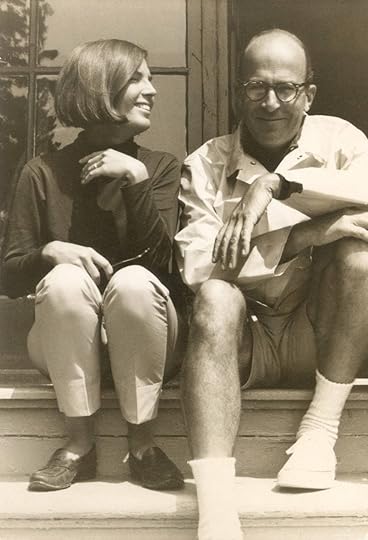
Not everyone cares to be a virtual participant in the grief of others but Roger Angell, while perhaps seen as an elite & even effete New Yorker by some, has known grief following the death of his beloved wife Carol and the suicide of a daughter as well. I was reminded of a short story by Chekhov in which a man whose role is that of a horse carriage driver endures the death of his son and after futilely attempting to explain his intense grief to others, ultimately shares it with his horse.


Roger Angell is a master of words & tells the reader that his stepfather E.B. White was the first writer he ever watched at work. In The Elements of Style White, revising the classic work of his former teacher, Prof. Strunk, tells would-be writers to "write in a way that comes naturally," "Revise & rewrite," "Do not explain too much," and above all to "Be clear". This typifies the prose style of Roger Angell, who took over editing the likes of John Updike & others from an editorial "past master", William Maxwell, also the author of classic novel, So Long, See You Tomorrow & other works.

Among the tributes is one to the British author, V.S. Pritchett, called "a Man of Letters" & given a lordship by Buckingham Palace, though the eventual "Sir Victor" had exceedingly humble origins. Pritchett, a fellow writer who died at the age of 96, was a personal friend of Angell & is described in a 1997 tribute thusly...
There was a strain of workaday London practicality about him, and the surprise was that this avidity should be directed toward books & stories, instead of the tradesman's ledger. His cheerfulness--friends, relatives & other writers in particular could be seen standing near him whenever the chance came along, as if they were warming themselves at an old-fashioned coke-burning fireplace--no doubt derived from a resiliency developed during an unpeaceful childhood.

In a piece about Mark Twain, Pritchett suggests that "The particular power of American nostalgia is that it is not only harking back to something lost in the past, but the tragedy of a lost future." And in assessing John Updike, Pritchett infers that "he has a preoccupation with the stillness of domestic objects, rather like in writing, of the Dutch genre painters, to whom everything in the house, in nature, or in the human posture, had the gleam of usage on it, without which a deeply domestic culture could not survive its own boredom."
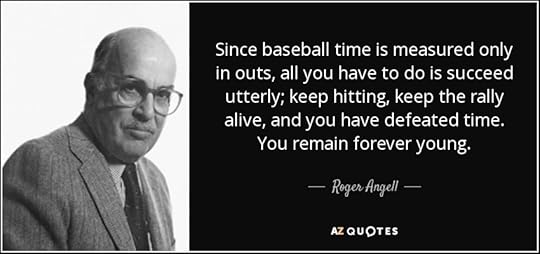
The final piece within this anthology is titled "This Old Man" (as is the book itself) and is of course the most self-absorbed but also perhaps the most fetching, at least for older readers. Roger Angell catalogues the many frailties, including arthritis & partial hearing loss that come with aging, written as it was when he was 94 & feels as if he'd been the catcher of Hall of Fame pitcher Candy Cummings, the inventor of the curveball, who retired from the game in 1877.


Roger Angell's relationship with baseball, while not quite going back to the time of Candy Cummings, does embrace many legendary players, including Babe Ruth, Lou Gehrig & Bill Dickey, seen when Roger was a child attending games at Yankee Stadium, as well as Johnny Mize, Cal Hubbell, Mel Ott & a bit later in his life, Willy Mays at the old Polo Grounds in New York.

Beyond those legendary figures, he shows special affection for iconic characters like Earl Weaver, Casey Stengel & Don Zimmer. Like many, the author lists Carleton Fisk's home run at Fenway Park in game 6 of the 1975 World Series as a hallowed baseball moment & reveres John Updike's New Yorker story about Ted Williams final game, "Hub Fans Bid Kid Adieu", as do almost all who have read the story, with Williams hitting a home run in his final at bat at Fenway & quickly running around the bases, "like a feather caught in a vortex".


While Angell asks himself why he doesn't think more about death at his advanced age, referencing W.C. Fields's "man in the bright nightgown" & although he has scaled back his schedule & isn't attempting to learn Mandarin or practice the viola, he has begun to memorize the shorter poems of Auden, Donne, Ogden Nash & others, reciting these to himself as he walks his dog "Andy", the replacement fox terrier for "Harry" who jumped out an open window at his Manhattan apartment & perished at about the time his wife Carol died. And in thinking of his late wife, he reflects on the many things she now doesn't know about, including the reelection of Barack Obama.

This Old Man is a very reflective work by a writer who even at an advanced age, writes with great craftsmanship, having been "caught by a passion for words, as an alcoholic is caught by the bottle." And to that notion, many at Goodreads will say, Amen!

Alas, after a very productive lifespan that extended into numerous post-retirement extra-innings, Roger Angell exited the game at the age of 101 years & 8 months, on May 20th, 2022. Farewell to an old friend who treated baseball & the English language with a rare kind of reverence.

*Among the images within my review are: Roger Angell & his dog "Andy" in Central Park; the author & his late wife Carol; a baseball quote from R.A.; in his office at the New Yorker.
Profile Image for Shawn Mooney (Shawn Breathes Books).
707 reviews719 followers
May 20, 2022
RIP, Roger Angell (1920-2022)

I first encountered Roger Angell's gorgeous prose in the pages of the New Yorker perhaps 15 or 20 years ago, back when he was in his mid-70s to early-80s: a veritable spring chicken. I think I was first drawn to his charming reminiscences of his mother Katharine Angell White and his step-father EB White.

Roger Angell is primarily known for his stellar sports essays; the highest compliment I know how to pay to his writing is that he's one of my favorite essayists in spite of the fact that I hate all sports.

Now 95 years old, he's still going strong; many of the pieces in this latest collection were written in the last couple of years and they are crisp and fresh in a way I can't describe. He's been on staff at the New Yorker magazine since the mid-50s, and his first New Yorker piece was published a decade before that. And he's still writing. Still writing breathtakingly beautiful sentences.

A sizable minority of the pieces in this book are sports related; I enjoyed them, but gravitated more towards his literary essays. He has introduced me, here, to the writers and writings of V.S. Pritchett and Donald Barthelme in such a way that I am both eager to finally read their books, but also feel already rather deeply acquainted.

The masterpiece in the collection is the title essay, "This Old Man," an incredible personal account of what it's like to be entering your tenth decade. I read it in the magazine when it came out a couple years ago, when he was 93; I loved it so much, and read the two off-color jokes he included therein to my at-the-time 93-year-old grandmother, who guffawed appropriately. It's perhaps Angell's best; certainly, his most celebrated.

The collection is a little overstuffed; perhaps 10 to 15% of it should've remained tucked away in a shoebox in his closet. But most of what's here is an absolute joy to read. I cannot recommend the writings of Roger Angell highly enough.
Profile Image for Kasa Cotugno.
2,755 reviews587 followers
May 21, 2022
Roger Angell is the only person in the Baseball Hall of Fame as well as in the American Academy of Arts and Letters. Taken as a whole, this collection of pieces reveal his life as well as his passion for baseball. Well known for his literary New Yorker pieces on the sport, his association with the magazine that spans almost its entire history and his fellow editors and contributors. E. B. White was his stepfather. Personal observations such as the insight into John Updike are gems on their own. Particularly wonderful is his memorial written for Carol, his wife of over 40 years, a eulogy like no other. The piece that gives the book his title reminds the reader that despite the fact Mr. Angell is, as he puts it, living his tenth decade, the one component of his being, his brain, is as sharp as ever. I loved re-reading his annual Christmas rhyme (which he has since passed on to others), and, being a Giants fan, the piece on Madison Bumgarner whose name he anagrammed into NAME GRABBED OUR MIND. The same could be said of Mr. Angell.
Profile Image for Chad.
401 reviews8 followers
December 29, 2015
One of my English teachers in college made us subscribe to the New Yorker and also made us write a weekly review of each edition for an entire 15 week semester. I had a hard time relating overall, though I really enjoyed a lot of the articles, and appreciated them for their well-written styles. I came to love a couple of authors, John Updike and Roger Angell. Mr Angell won me over with his frequent talk pieces about baseball, a sport he loves as much as I do. I bought this book, hoping it would be filled with his great baseball anecdotes and short stories about his amazing experiences with baseball. The book had a good share of these, and I was pleased to read them. There was a lot I didn't expect as well, including a long tribute piece about Updike, as well as other snapshots from his long life of writing. I love his writing style. I love his subject matter. I especially love his unique experiences with MLB and its stars that he writes about so magnificently. I have read a few of his books, which I also love. Between Angell, Updike, and my other favorite New Yorker Alum- Malcolm Gladwell- there are quite a few books to keep a reader busy!
Profile Image for Jeff.
119 reviews
January 29, 2020
In a literary sense, I have known Roger Angell for a very long time. On a road trip to Niagara Falls in the spring of 1973, I picked up a copy of his The Summer Game at a roadside rest stop. Once I started reading, I was mesmerized. Here was someone writing about baseball in a way that was intelligent and thought-provoking and… well… very personal. Not a baseball sportswriter, but a gifted writer whose subject (in this case) was baseball.

From that moment forward, I stopped being just a Pirates fan and became a baseball fan. I've read more of Mr. Angell's baseball books over the years and very much appreciated his contributions to the Ken Burns Baseball series. And I've always secretly envied his talent, his turn of a phrase, his keen sense of observation.

Which brings us to This Old Man, published in 2015. Mr. Angell was 95 at the time (and, in fact, he is still with us and will turn 100 later this year) and my curiosity was immediately piqued in anticipation of what else he had to offer. And, once again, Roger Angell did not disappoint.

This is not a book about baseball, even though there are some baseball stories and names throughout; this is a book about life, most notably Mr. Angell's life and times. I cannot begin to summarize all of the stories he tells because the book is, as advertised, "All in Pieces," but suffice it to say that he has had a great ride. And, along the way, I've found out so many things about Mr. Angell that I am embarrassed to say I never knew. For example…

• His father, Ernest, was an attorney who became head of the American Civil Liberties Union.

• His mother, Katharine Sergeant Angell White, was the first fiction editor of The New Yorker.

• His step-father was E. B. White.

• Mr. Angell himself spent many years as an editor at The New Yorker and edited the works of such luminaries as John Updike.

Reading This Old Man opens up this world and makes it very personal. Mr. Angell includes letters and articles and poems (he seems to like haiku) and reminiscences and one ends up feeling as though s/he has been sitting at Mr. Angell's side as he tells you about his life. And he is just as erudite and insightful and surprising as he has ever been in any of his other writings.

In the end, I found myself transformed, just as I had been back in 1973. Only this time, I went from being fond of Mr. Angell's work to being intensely fond of Mr. Angell himself. I'm sorry that I didn't "meet" him sooner and am especially sorry that I've never had an opportunity to spend an afternoon with him. But I know him a little better now and perhaps that is enough. And I suspect that I will pick the book up again someday soon when I need to spend time with an old and trusted friend.
Profile Image for Mike.
1,553 reviews27 followers
October 1, 2016
As a boy, my father used Roger Angell's baseball pieces in The New Yorker magazine as a Trojan horse to introduce me to a new way of appreciating the finer things in life and letters. Knowing, and loving Angell as I did through his erudite and luminous ruminations on the National Pastime, I came through the marvels of osmosis to read Bartheleme, and Updike, and Joseph Brodsky.

This Old Man: All in Pieces is above all a series of Angell's appreciations. Tucked in these pages are paeans to his late wife, stepfather E.B. White, and his mother, as well as fond remembrances of the old NYC phone exchanges, the mugging days in New York City, and meetings on the street with Harry Truman and Alfred Kazin. There is baseball in these pages, to be sure, but what this collection is most of all is an appreciation of a life and intellect well-lived and even better expressed. I couldn't recommend this book more.
Profile Image for Lorilin.
761 reviews233 followers
November 15, 2015
I wasn't familiar with Angell's work before reading this collection of his stories and essays. I've since learned that he wrote for The New Yorker often (and still contributes somewhat, though he's 95). He has a huge fan base and is seen by many as a national treasure, of sorts.

So I have a feeling some people aren't going to like it when I say that this book is...well...fine. Some stories I enjoyed: Over the Wall, Storyville, and This Old Man (the essay after which the book is named)--in other words, the ones where Angell gets personal. I wish I could further describe these gems as unflinchingly honest or raw, but, sadly, they just aren't.

And, ultimately, I think that's why I didn't care for Angell's writing. He is always, always restrained and drearily polite. He talks about feelings the way people who don't really talk about their feelings talk about their feelings. Over and over again, from subject to subject, he is muted, civil, considerate, soft. Oh, how these polite confessions bored me. So many times I mentally shrieked at him, "I get it, Angell! You are the gentleman's writer. But c'mon: reveal yourself, man! Or please, dear God, stop trying."

I did finish the book, though. And while there is no denying Angell's writing ability--or even his easy accessibility and appeal to many readers--I just can't forgive that he barely made me FEEL anything. What is the point of reading (or writing, for that matter) something so, so reserved? I wanted more, you know? Give me the whole enchilada or don't bother coming to dinner.

See more of my reviews at www.BugBugBooks.com!
Profile Image for Ryan.
1,181 reviews62 followers
August 24, 2020
On V.S. Pritchett:

A short, strong-looking man, with thick shoulders and an uptilted gaze, he appeared at times to be standing behind an invisible pub counter, or perhaps about to oversee the unloading of a shipment of crocuses or greyhounds. There was a strain of workaday London practicality about him, and the surprise was that this avidity should be directed towards books and ideas, instead of the tradesman’s ledger. His cheerfulness—friends and relatives and other writers (writers in particular) could be seen standing near him whenever the chance came along, as if they were warming themselves at an old-fashioned coke-burning fireplace...

Why wouldn’t you want to read a whole book of short pieces just like that?
Profile Image for Simon Robs.
505 reviews101 followers
August 19, 2022
A fine baseball writer and staff writer/editor for "The New Yorker" who knew eveybody so it seemed [in and out of baseball] and who everybody liked back.
Profile Image for Jill.
836 reviews11 followers
October 20, 2015
"This Old Man" is a collection of stories, musings, articles and essays from 95 year old Roger Angell, a regular contributor to The New Yorker. As Angell wrote in the introduction to the book, the collection is a "dog's breakfast", a "melange, a grab bag, a plate of hors d'oeuvres, a teenager's closet, a bit of everything". And like a hungry dog, I have scarfed down the bits and am licking my chops looking for more!

Whether he's writing about baseball, movies, life in New York, celebrities or an anecdote from his youth, Angell entertains and informs with rich, colorful language and a wry voice and point of view that makes you feel like he's someone you'd want to invite to your next dinner party. He is one of us, but with a fine-tuned ability to observe and describe sometimes mundane and ordinary events and make them special and memorable.

In the title essay "This Old Man" he writes that he is 93 and feeling great, in spite of arthritis, macular degeneration, nerve damage, arterial stents, and a host of other physical onslaughts and that he enjoys sneaky pleasure from his survival at long odds. He writes of a study that finds that the majority of people over 75 keep surprising themselves with happiness. This gives us all hope.

After perusing Angell's essays, you get the feeling that after 75 years of observing and writing that he could retell a visit to the dentist and make it interesting and memorable. This is a very entertaining collection, and whether you read it from cover to cover or just dip in and pick one at random, you'll be sure to find something to make you laugh, smile or just sigh. Angell connects with each of us in some way. He's Everyman, but certainly a unique version.
Profile Image for John of Canada.
1,122 reviews64 followers
March 25, 2017
"Anyway,all I want to say is that the book is a very quick read,because of its pleasures and surprises,and also a slow one because you want to stop and go back and think about some of the things going on there."
Roger Angell letter to Daniel Menaker

When I was a kid,back in the stone age,I read two baseball books;The Boys of Summer by Roger Kahn,and The Summer Game by Roger Angell.I liked them both,but it was Angell that I came back to.He is the kind of person that I would love to meet and spend time with.I also learned an awful lot from him.Read this book.The above quote summarizes the book perfectly.
Profile Image for Mack .
1,497 reviews57 followers
November 20, 2016
Very enjoyable. Lots of anecdotes about writing and famous writers, plus some of the best baseball writing I've ever seen. I'll be buying one of his baseball books. Angel does write with grace, clarity, and insight.
Profile Image for Susan.
1,523 reviews56 followers
May 20, 2018
The subtitle “All in Pieces” pretty much sums up the book. Here is a grab-bag of 90 mostly short pieces, including everything from essays, inter-office memos, book introductions, reviews, letters to authors, and light verse, about an array of subjects—literature, authors, writing, sports, life in New York City, memoir, getting older, and life at 93. Quite a few pieces are about baseball, and other reviewers will have to speak to those ;). Generally, this is well-written, entertaining, and polished as one would expect from a long-time editor and writer, and my two favorite pieces were one about being a fiction editor at the New Yorker and the title essay about getting older. The occasional illustrations were a nice touch.
Profile Image for Doubleday  Books.
120 reviews713 followers
August 24, 2015
“What a treat to have so much Roger Angell in one place! As a fan of baseball, I’ve long been familiar with Roger Angell’s sports writing. As a fan of The New Yorker, I’m absolutely aware of Roger’s prowess as an essayist and a practiced observer of life. I didn’t realize that his childhood was filled to the brim with the stuff of literary dreams—his mother, Katharine White, was the first fiction editor at The New Yorker and his stepfather was E.B. White—but how delightful to have these reminenses peppered in throughout the book. This Old Man is an utterly charming and immensely rewarding read. I tore through his odes to authors, chuckled at the best of his annual New Yorker Christmas poems, and relished his quippy thoughts on baseball and life in New York City. This is a book to keep in a prominent place in your home, for house guests to enjoy and for you to dive into in frequent bursts.”
- Sarah E. Doubleday Marketing Department
Profile Image for Kevin Parsons.
168 reviews11 followers
September 21, 2015
I had read the title essay when it came out in the New Yorker, but it was great to revisit it and also the other essays and short works in this collection. Angell is a treasure who I have been reading most of my life and hope that he lives to be 100 and comes out with another collection.
Profile Image for Hapzydeco.
1,591 reviews14 followers
February 12, 2016
My all-time favorite The New Yorker editor at 93 gathers his thoughts on aging. The highlights are his inclusion of baseball insight and his melding of humor. You feel that is smiling when he quotes Casey Stengel, “Most of the people my age is dead. You could look it up”.
Profile Image for Nancy.
470 reviews
May 27, 2017
I won this in a Goodreads giveaway.
A very enjoyable book. There were a few essays that were not interesting to me but there were plenty of others that were.
Profile Image for Dan.
215 reviews14 followers
January 16, 2016
A relaxing ride through an unfamiliar landscape, one I'd enjoy seeing again.
Profile Image for Budd Bailey.
38 reviews8 followers
January 15, 2021
The number of people whose writing on baseball borders on the title of literature is a rather short one. Most of the work is basic and to the point, reflecting the task involved in the process. In other words, it's tough to craft memorable work when the deadline is the final out.

Luckily for us, a select few people have had the time and inclination to ponder bigger pictures. Baseball can do that, with its relaxed rhythms and the lack of a deadline for a nightly conclusion. Its most serious practitioner over the years might be Roger Angell, who - it's good to report - is still out there as of this writing.

Angell probably will say he was an unlikely candidate for that distinction, and he was right. Angell served as a writer and editor for the New Yorker for many years, which is hardly a breeding grounds for literary works concerning horsehide. But he pulled it off, somewhat in his spare time since he was the fiction editor

In 2015 Angell was in his 90s, looking back on a career that featured contributions to the famous magazine in 1944 and saw him go on the masthead in 1956. He's still writing a bit even now, but "This Old Man" is a collection of articles and other work from the later stages. To put it in appropriate terms, Angell still had a pretty good fastball when after his peers had stopped working. Think of Nolan Ryan.

Those who come to this book from reviews like this will find satisfaction here, since baseball plays a key role in the collection. Angell's best work on baseball came when he was just starting to write about the sport and thus on the anonymous side. Go read "Five Seasons" and "The Summer Game" to see what I mean. He had some distance from the subjects. For a while there he was so celebrated it was difficult to have enough space to get some necessary perspective. But now that he's sitting back and reflecting again, there's a wisdom that ropes in the reader. Some of it was shown over the fuss made when Barry Bonds approached the all-time record for home runs. Angell argues that such records matter little because of changes in the sport over the years - a refreshing viewpoint considering the whole did-he-or-didn't-he saga about Bonds and steroids.

But there's other stuff here as well. Angell includes work on other writers in his life, his summer home in Maine, notes to friends, etc. I'm not about to tell you that I understood all of the references here, or even recognized the names. But that doesn't mean the beauty of how the words in those stories were collected and distributed can't be enjoyed by those who think Vladimir Nabokov is a defenseman for the San Jose Sharks.

And every so often Angell turns a phrase that is so precise, so perfect, that you feel like poking the person next to you so you'll have the pleasure of reading it aloud. Comedy writer Bill Scheft has a phrase for this - get out of the business good. As in, you'll never write like this so why try?

Those who like his work probably have him installed as a national treasure as his 98th birthday approaches. Others will only read the baseball parts, wondering why they should care about New Yorker founder Harold Ross. And that's fine. A baseball team needs a few players to fill roles in order to be successful. But some superstars need to be part of the mix as well, and Angell has had that role covered for decades.
Profile Image for Len Knighton.
742 reviews5 followers
December 29, 2021
As of the writing of this review, Roger Angell, the author of THIS OLD MAN, is, in round numbers, thirty years older than this reviewer. That may not sound extraordinary by itself, but when one considers that this reviewer is seventy-one years old, the gap in years is astounding, even more so when one realizes that, just three days prior to the beginning of the year 2022, the author is still alive.
A few days ago I called myself an old man and it was not in jest. Physical and occasional mental setbacks have brought me to this conclusion, albeit with some resistance. Perhaps that is why I chose to read this book, to gain some wisdom and insight to this inevitable condition. In addition to the above benefits, the book has also delivered some inspiration, if only that the final chapter was written when Angell was ninety-five years old. It brings to mind an exchange between the Professor and the angel Dudley in the motion picture THE BISHOP’S WIFE, in which the Professor, (Monty Woolley), an old man, asked Dudley (Cary Grant) if he would have time to write a history of ancient Rome. Dudley replied,
“You’ll write your history, Professor. You’ll have time.”
As for this book, Roger Angell’s often poetic prose dazzles the reader on a variety of subjects. He excels in memorials to recently deceased colleagues and baseball players. His chapter on Harold Ross, co-founder and editor of The New Yorker, was read at an ironic moment, for I was struggling with the issue of buying more of them, of renewing my subscription. Angell’s writing in this book nearly convinced me, but I decided to decline because I need the time to read the 215 books still on my Want to Read list.
Not surprisingly, his chapters on baseball are gems that add value to the literary treasure of the American Diamond.
Speaking of treasures, his chapter on life in his tenth decade, which has extended to an eleventh, is truly a masterpiece reflecting on mixed blessings. Anyone who has lived so long has ridden more than his/her share of emotional waves, yet amid those troughs Angell finds crests from which to give thanks.
I want to share one passage that brought one of many smiles Angell’s writing produced. Over the years I have silently endured the plaudits bestowed upon what Tom Brokaw called THE GREATEST GENERATION. Indeed, that term grates me like fingernails on a blackboard. Here is what Roger Angell has to say about it:
AT NINETY, I BELONG TO THE GENERATION THAT WAS CALLED INTO SERVICE ALMOST EN MASSE, SIXTEEN MILLION OF US, IN 1942 AND 1943, AND WENT OFF TO WAR. WE HAD TO GO, NO TWO WAYS ABOUT IT, AND, BITCHING AND GROANING, WE LEFT SCHOOL OR QUIT OUR JOBS, SAID GOODBYE TO OUR PARENTS AND WIVES OR GIRLFRIENDS, AND WENT AND GOT THE GREAT BLOODY BORING THING DONE, AND CAME HOME AGAIN, MOST OF US. MINE WAS AN EASY WAR, AND I’VE ALWAYS FELT A BIT AWKWARD WITH THAT “GREATEST GENERATION” WREATH THAT TOM BROKAW GENEROUSLY DRAPED ON US. NOT FOR ME, THANKS, IF YOU PLEASE…

Four stars waxing
70 reviews1 follower
February 18, 2021
For me, the 'signal to noise ratio' for this book was too low. There were some good passages, but also too much stuff in which I have no interest: the problems of writers and editors (poor cry-babies), the joy of finding a new fiction writer. I'd hoped for more baseball.
OK, he deserves reading because he's so old, and most of us want to emulate at least that aspect of his life.
"What's gone, and what I miss most ... [is] ... my careless, spongy twelve-year-old mind, which saw time stretching away endlessly ahead and plenty of room in it every day for something absolutely astonishing."
One more:
"I did a reading, went to some comp[osition] classes, met [the professor's] bright and talented students . . . well, a few were talented. . . . open house . . .I finally said, "Let's say you're a lawyer or an architect or a veterinarian, and there's this little something you can take that will make you not just a better lawyer, architect, or veterinarian, but the best one in the world. It's illegal but if you take it nobody will know. How many of you would take it - put up your hands.
"About half the bunch put up their hands - almost all of them faculty or staff types, folks in their thirties or forties. When I asked the other question - who would never, never take the elixir, all the kids stuck up their hands vehemently. This poll depressed me at first, but thinking about it later I decided that what we'd seen wasn't about idealism and its loss as much as innocence: young people with no idea yet about how tough and grungy the world was going to turn out to be for them.
Profile Image for Ken Heard.
755 reviews13 followers
February 20, 2021
Roger Angell, perhaps, is best known for his baseball writing. All fans have copies of "Season Ticket," "Five Seasons" or "Game Time" somewhere in their baseball collection. I do.

But Angell also spent decades writing for the New Yorker and much of the pieces in This Old Man are from that magazine, along with other publications not baseball-related. There are some sports stuff.... he writes on the passing of Earl Weaver and a eulogy to the retirement of Derek Jeter. He also senses changes in baseball, from when he watched Jackie Robinson at Ebbets Field in Brooklyn to now.

There are some nice features on various New Yorker employers, including my favorite on cartoonist William Steig. His essay on the passing of his wife, Carol, was heartbreaking, too.

But this is somewhat a repetitive book if read in one or two sittings and instead should be enjoyed over a longer period of time. For lack of a more tasteful way of putting this, This Old Man is a good bathroom book. Read a couple of essays and move on. Return to the book later.

If you're looking for baseball, try his other stuff. If you want a nice collection of his other writings and a bit of a bio on him, this is the one to read.
Profile Image for Thomas Bodenberg.
43 reviews2 followers
January 17, 2023
I was lucky enough to have met Roger Angell during summers in Maine. He'd be walking his dog along the stony beach at Eggemoggin Reach, where we have a home several miles westward from his. My only wish is that we should have met years earlier - we did, in a way, through the pages of the New Yorker, and in old issues of Holiday (I confess, I am a sucker for magazines issued in the 1950s- years before social media, let alone broadcast mass media, still in its infancy.) The spouse of a former colleague is a professor of French and Linguistics (Emerita) at a very respected college in metro Boston. She considers herself very "asportual", but would read Roger's baseball accounts feverishly, such the power and grace of his writing.
But I digress.
This book is a collection of notes, pieces, tributes to his former and then-current colleagues (writers he did and didn't edit), but chiefly, observations on a long life, well-lived. A life of dignity. Yes, even grace. And he faces the prospect of his own death with similar scrutiny and humor (even!). The reader should know he died in 2022. It's our loss, and I find it hard to locate a replacement, obv. Well worth your time, fellow readers.
Profile Image for Bob.
544 reviews14 followers
August 4, 2019
If you love good writing, if you love the flavor of colorful, tasty descriptions of people, places, events and things, if you love both baseball and literature just about in equal measure, find "This Old Man" and read it cover to cover.
Roger Angell's collection of (some of) his writing through seven decades (he was 93 when this book was published in 2015) can be savored in short snacks, but one you start nibbling on the way he can turn a phrase, once you get caught up in the language he employs to tell such interesting stories, you may end up reading six or eight or 18 of his pieces.
Some may find the breadth of this work offers a history lesson of sorts, snapshots of American culture through a goodly part of the 20th century and Instagrams of some of the 21st. It's all good.
Profile Image for Karen Richardson.
463 reviews1 follower
April 8, 2024
The author lived to be 101 - remarkable! (1920-2022) This book came out when he was in his 90s and amazingly active still.

The title piece, "This Old Man," was my favorite - as he describes macular degeneration in practical - even humorous - terms, for example.

I also liked his coverage of interactions with stepfather E.B. White and the process of editing/working with authors.

The book is VERY New York, which didn't appeal to me as much - and neither did his poems or letters or other fluff. The piece on Nabokov's LOLITA - seduced at age 12 by Humbert - complete with creepy quotes from the book - is very very creepy.

The book is also VERY white male - such as when writing about great authors. Really - such a tiny universe.
Profile Image for Sean O'Brien.
66 reviews
April 27, 2023
This book was fairly entertaining. I am a big fan of the New Yorker. In that regard, it reads a little more like a Greatest Hits of the New Yorker for me. I am also a huge fan of baseball. I have read some of Angel’s essays on baseball in recent years. I imagine, given how prolific he was, it must have been a tall order to select the ones within “This Old Man.” Simply put, I suppose I was looking for more baseball stories. I recall that some of his pieces that I have read in the New Yorker were more poignant than what is included in this book. It does give you a touch of a behind-the-scenes perspective of working at the New Yorker, which is worthwhile.
Profile Image for Philip Girvan.
407 reviews10 followers
December 4, 2018
Angell describes this compendium of his New Yorker writings as a dog's breakfast. It's an apt description.

Those are the highlights. The poems are doggerel at best. The selections are quite New Yorker-y and New Yorky and New Englandy, but there are some gems including the homages to Vladimir Nabokov and William Steig. Love the baseball stuff, of course, and the essay "This Old Man" is one of the best accounts of growing old that I've ever read.

Definitely a mixed bag, but the best of it is really quite good.
Displaying 1 - 30 of 142 reviews

Can't find what you're looking for?

Get help and learn more about the design.