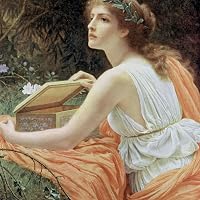
Johann Gottlieb Goldberg is a young servant in the employ of Count Keyserlingk. A talented musician, the boy secretly practices playing the harpsichord at night. When the count discovers Goldberg one evening, he challenges Goldberg to combine all the harpsichord music he's learned--and to throw in a riddle. In a panic, Goldberg turns to Johann Sebastian Bach for the perfect piece of music to appease the count. Stylized illustrations include elements from the baroque period. For families, teachers, and curious music lovers of all ages.
A short children’s book depicting the fanciful series of events surrounding Johann Sebastian Bach’s ‘Goldberg Variations’; Johann Gottlieb Goldberg’s attainment of them and their subsequent use in aiding the ailing Count Keyserlingk in catching those elusive zzz’s.
Christoph Wolff, in his Bach bio, ‘The Learned Musician’, suggests that this whole anecdote, however romantic, is likely apocryphal due to the lack of any formal dedication as required by eighteenth-century protocol, along with Goldberg’s tender age of 14. It’s much more likely that the work constituted a Grand Finale to the overall larger concept of Bach’s Clavier-Übung series. But this fact doesn’t harm this tale which has taken on almost mythological status in the Classical music world and this book only ever claims to be based on true events which grants considerable freedom.
I like the idea of this ‘Once Upon a Masterpiece’ series in introducing extraordinary Classical/Baroque pieces to young kids and there is a small amount about the variations that could be learned from this book, however, very little that wouldn’t require either further explanation from a knowing parent or further research from a lone reader unfamiliar with the work.
Personally, I felt that the story was not told in a particularly compelling way. If you’re going to take liberties with a story than you may as well go all out and make it as absorbing as possible for young readers. I’m fairly sure, though I stand to be corrected, that this book would not hold the attention of many youngins. I didn’t feel that the illustrations of JoAnn Kitchel really helped the cause either. They are described on the sleeve as capturing “elements of baroque art in… beautifully stylized illustrations" but I found them neither particularly beautiful nor of a capacity for recollecting works of the Baroque period. I thought they were fine, and immeasurably better than I could do, but no more than that and I was also left scratching my head over the abundance of Cherubs on almost every page. I presume they symbolise a divine presence or the closeness of Bach’s work to God. After all, Bach himself believed that the ultimate rationale for being a musician was “to make a well-sounding harmony to the honour of God and the permissible delectation of the soul”. Or were they merely cute ornamentation or a means of taking up more page space to eliminate the need for complicated backgrounds? I’m not sure. I’ll read this to my little one eventually and I hope to be proven wrong in all of the above! :)
A mostly true story for school-age children (not tots) that helps even those of us who don't 'get' music appreciate what's going on in at least one piece of classical music. I'm not sure if liked everything about the illustrations, but they were fine, and I liked the story and author's note enough that I want to find more. (The cover says "Once Upon a Masterpiece" as if this is a series.)
It's a long piece, 1.3 hours, I've just started to listen to it now. The first part is certainly easy to listen to....
Johann Gottlieb Goldberg is a young servant in the employ of Count Keyserlingk. A talented musician, the boy secretly practices playing the harpsichord at night. When the count discovers Goldberg one evening, he challenges Goldberg to combine all the harpsichord music he's learned--and to throw in a riddle. In a panic, Goldberg turns to Johann Sebastian Bach for the perfect piece of music to appease the count!! This book is very Interesting!!
Pretty good, especially with the accompanying CD (music only, not story), though the illustrations aren't my style. We enjoyed reading the story together (age 5) and are listening to Bach's piece now. This is a nice resource for composer study/music appreciation in the younger grades.
A picture book introduction to the history of Bach's Goldberg Variations.
Sure to make music history come to life, this book does a good job in the back of distinguishing between the parts that are 100% fact and where the author filled in the gaps. I don't know why the illustrator decided to put cherubs all over the place. It doesn't tie in with the music or the story. It was a weird decorative decision.
The illustrations left something to be desired, as did the prose, although the story line was interesting. Overall disappointing and I’m not sure I’ll read any of the other books in this series
Best for kids ages 6 and up. Early Literacy Skills: Print Motivation, Vocabulary, Narrative Skills
From Cover: It's the fall of 1737, and Johann Sebastian Bach encourages Count Keyserlingk to take in a talented young orphan names Johann Gottlieb Goldberg. Employed aas a servant, Goldberg slips down to the music room late at night to practice playing the harpsichord. The Count, unable to sleep, discovers him one night and orders him to play something new each week. When Goldberg receives his biggest challenge, to combine all the previously played music styles and throw in a riddle, he turns to his mentor Bach for guidance. Based on the true story behind the naming of this famous piece of music.
Sweet illustrations flow through this sometimes a little slow story.
Wow, I feel really silly for including a picture book on Goodreads, but it was such a unusual find that I thought I'd review it anyway. It's about Bach, my favorite composer of all time, and how he came to write the Goldberg Variations, a particularly nuanced and complex composition, even for Bach. The author is a little loose with some of the history, but the story is intriguing, and this seems like a nice (and very accessible) way to introduce classical music to your children. The CD with the recording of the music is a plus. I'd recommend this for kids, parents, and fellow Bach-lovers.
What a wonderful book to introduce children to the history behind the music. This book included a CD of the Goldberg Variations, which is highly intriguing to listen to. This will suit a family well who is willing to let the facts stand and the author fill in some of the more blurry details of the story. I hope this book is one of many we can enjoy that will connect us with the Classics.