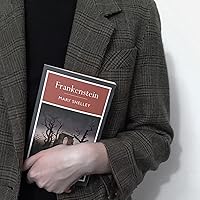
Georg Trakl (1887-1914) was an Austrian poet, born in Salzburg. His work has up until now only been available in anthologies and short selections. This volume contains all his major poetic work including the prose poetry and some prose pieces. Trakl's models were Baudelaire, Rimbaud and Verlaine. His admirers include Rilke, Kafka, Karl Kraus, and the philosopher Ludwig Wittgenstein who was one of his patrons. This is a bilingual edition with German/English on facing pages.
Georg Trakl was born in Austria in 1887. He started writing poetry at a very young age, however he later decided to study pharmacy. After that, he enlisted in the army but never stopped writing. During World War I, he worked as a medical official. He witnessed the harrowing consequences of the war (a battle in Grodek inspired one of his last poems). As he found himself surrounded by wounds and death, his depression – which he suffered all his life – worsened and eventually died of an overdose of cocaine at 27.
Many of these events and the emotions they prompted appear in his poetry, which is gracefully tinged with the colors of Expressionism.
Trakl’s poetry abounds with nostalgic reminiscences, the bleak colors of the evening, the reverberation of silence. But above all, with the images of death. A dark imagery which creates a sad and oppressive atmosphere.
His delectable language, which fluctuates between fragility and strength, brims over with allusions to death. It's definitely hard to explain, but despite the beauty of the language, the considerable amount of references to such theme started to get a little tiresome. After reading a bit about his life, I understand. Nonetheless, I felt like I was reading an obituary. A long, bluish lament that after a few pages became somewhat monotonous. It reminded me of my experience while reading Cioran and his overused concept of darkness. In this sense, I wasn’t able to connect with Trakl’s verse – though I did enjoy his prose, and that explains the 3-star rating:
My levels of enthusiasm varied widely, regardless of my penchant for melancholic poetry (but this was beyond melancholic; I couldn't handle the lack of balance). After a while, the sense of expectancy was gone. I already knew that the next page was going to show me another shade of the recurring theme of this collection. Lethal predictability.
Bluish shadows. O you dark eyes. Which gaze long upon me gliding by. Sounds of a guitar gently accompany autumn. In the garden, dissolved in brown fluids. Death's grave darkling hour is prepared. By nymphen hands; decaying lips. Suck at red breasts and into black fluids. The sun-youth's damp locks glide. ----
Humbly the patient man surrenders to pain. Ringing with melodious sound and soft madness. Look! There's the twilight.
Night returns once more and a mortal thing laments. And another suffers in sympathy.
Shuddering under autumn stars. Yearly the head is bowed deeper. ----
There is an empty boat that at evening drifts down the black canal. In the gloom of the ancient asylum human ruins decay. The dead orphans lie by the garden wall. Out of the grey rooms step angels with mud-spattered wings. Worms drip from their yellowed eyelids. The square before the church is dark and mute, as in the days of childhood. On silver soles former lives glide past. And the shades of the damned descend to the sighing waters. In his grave the white magician plays with his serpents.
Silently, above the place of skulls, God's golden eyes open. ----
Corruption gliding through the rotted chamber; Shadows on yellow wallpaper; in dark mirrors is arched The ivory sadness of our hands.
Brown pearls trickle through the unfeeling fingers. In the silence The poppy blue eyes of an angel are openend. ----
Your eyelids are heavy with poppy seed and gently dream on my brow. Gentle bells tremble through the breast. A blue cloud, Your face has sunk down on me in the twilight.
----
In cool chambers without sense Equipment rots, with skeletal hands Unholy childhood Probes in blueness for fairytales, The fat rat gnaws at door and trunk, A heart Grows rigid in snowy silence. The purple curses of hunger Echo in rotting gloom, The black swords of lying, Like the slamming of bronze doors. ----
Deep is the slumber in dark poisons, replete with stars and Mother's white countenance, one of stone. Bitter is death, the food of the heavy laden; in the brown branches of the stem the earthen faces crumbled grinning. ----
Confound you dark poisons, White sleep! This strangest of gardens Twilit trees Filled with snakes, nightmoths, Spiders, bats. Stranger! Your lost shadow At sunset, A gloomy corsair In the salty sea of dolour. White birds flutter up at night's border Above crumbling cities Of steel. ----
All round is stony solitude. The pallid flowers of death do shudder. On graves that mourn within the gloom. Yet all this mourning knows no pain..
But the memory of those tranquil days filled with sunshine have remained alive in me, more alive perhaps than the noisome present. I shall never again see the little town at the bottom of the valley - yes, I am loath to return to it again. I believe I should be unable to do so, even though I am at times seized by a deep yearning for those ever youthful things of the past. For I know that I should only look in vain for that which is lost without trace; I would no longer find there what lives on in my memory alone - just like the here and now - and what would that bring me but endless torment.
I don't know that I'm fond of this Stillmark translation. Very ponderous and melodramatic. Gothic. Not the almost Symbolist oddities I'd known previously. Even so:
TRUMPETS
Under mutilated willows, where brown children play And leaves are driven, trumpets sound. A graveyard shudder, Scarlet banners storm through the sycamore's grief, Horsemen past fields of rye, empty mills.
Or shepherds sing by night and stags step Into the circle of their fires, the grove's primal grief, Dancers arise from a black wall, Scarlet banners, laughter, madness, trumpets.
CHILDHOOD
Full of fruit the elder bush; childhood dwelt tranquil In a blue cave. Above the path of traversed time, Where brownish the wild grass now whistles, Silent branches ponder; the rustle of foliage
Alike, when the blue water rings in the rock. Gentle is the blackbird's lament. A shepherd Follows the sun speechless, which rolls from the autumn hill.
A blue moment is nothing but soul. By the forest's edge shy game appears and peaceful The ancient bells and gloomy hamlets rest in the valley.
More pious, you know the meaning of the dark years, Coolness and autumn in lonely rooms; And in sacred blueness shining steps ring on.
An open window quietly rattles; the sight of The ruined graveyard by the hill moves to tears, Recollection of legends told; yet sometimes the soul brightens When it ponders joyful people, dark golden days in spring.
I've quite new to poetry. But given all the poetry I've read so far, Trakl's poems most consistently capture and draw me in, allowing for experiences that I didn't know I had needed. These are experiences of utmost suffering illuminated in beauty; not as beautiful themselves -- the representations of these experiences are composed by such images and words, which each connect out to experiences of sublime beauty. This allows for reckoning with suffering -- seeing it as possessing aspects never fathomed before, making peace with and acknowledging it -- in a way that can never happen in ordinary life, in memory or conversation.
Trakl doesn't only deal with suffering. Some poems show how miraculous acts of caring can be; or what it means to remember something; -- other good themes. But most of the poems are about suffering. If one is looking for poetry that deals with more diverse moods, Trakl won't be your guy. This is perhaps objectively a limitation of his work, but for my recent tastes, this is just great.
Here are two arbitrary snippets from this collection of poems (arbitrary in the sense that there are so many that are equally amazing, and I chose these randomly from that set):
"I am the shadow far from sombre villages./ God's silence/ I drank from the spring in the grove./ Cold metal enters upon my brow,/ Spiders seek out my heart./ There is a light that goes out in my mouth/ At night I found myself on a heath,/ Stiff with refuse and dust of stars./ In the hazel-brush/ Crystalline angels sounded again" (De Profundis)
"Black snow that dribbles from the roofs;/ A blood red finger dips into your brow,/ Blue névés sink into the barren chamber,/ That are the lifeless mirrors of lovers" (Delirium)
The only other poetry I've read that feels comparable to this reading experience is Emily Dickenson's and Czesław Miłosz's. I really want to read more poetry like his. If anyone has recommendations, I'd be grateful.
"There is a stubble field into which black rain falls. There is a brown tree standing there alone. There is a hissing wind encircling empty huts. What sadness is this evening."
It is bleak, dark, filled with death and suffering, sadness, and sometimes hard to penetrate, but undeniably worth reading.
He also repeats "Hyacinth" a lot. Fair warning.
Heidegger said of Trakl's work that it could be read as "one continous poem", and while the translator does not agree, I can see why he'd say that. There is a lot of repetition in the subject and language of each poem. Nevertheless, it reads with remarkable fluidity.
The repetition create a mimetic consistency that lends itself to a complete vision.
The language is very clear. He never uses synonyms for colour (brown,blue,yellow,etc) which creates an interesting effect. "And you move your arms lovelier in blueness." He uses colour both descriptively and prescriptively. The simplicity in description masks the complete obscurity of some of the poems subject matter. (I got lost at times.) They can be quite tough to piece together.
But the language is beautiful,
"The ploughed earth sparkles white and cold. The sky is lonely and immense.
And bleak,
Game gently bleeds to death by the ridge And ravens splash in gory gutters. Reeds tremble yellow and erect. Frost, smoke, a pace through empty grove.
All in all, very enjoyable.
"Cold metal enters upon my brow, Spiders seek out my heart. There is a light that goes out in my mouth."
Trakl (1887-1914) is known to me only because he was a beneficiary of money that Wittgenstein asked a literary editor to distribute to needy Austrian writers and artists in 1914. (Rilke was another beneficiary.) Then Wittgenstein tried to visit Trakl in a military hospital in November, but Trakl had died (perhaps suicide) before he arrived. Wittgenstein hadn't known his poems, but after reading some he wrote "I don't understand them. But their tone delights me. It is the tone of true men of genius." Perhaps that approximates my own reaction. Almost all the poems here have a dark and depressive tone, and are told as a series of dream-like non-sequiturs. The main thing I noticed was how much colors figure in his descriptions--especially blue. A frequent term to appear in the poems (including the title of 2) was "lament"--which is special to me because the German for "lament" is "Klage". (Growing up I was told "klage/klagge" meant complaint. But I'll take "lament". BTW Martin Luther translated the Biblical book of Lamentations as "Klagelieder.") I have to say that the pieces I understood best were the 4 prose pieces at the end, which were narratives. These were written in 1906--when Trakl was only 19! As for not understanding Trakl's poems, I think he was mainly trying to convey a feeling, rather than an understanding. Anyway, I was glad to get to know some of his work.
I love Trakls's dark poetry. It is unbelievable and perfect. Sorry can not give much more detail than that. It is the nature of poetry, you either like it or hate it and everyone has personal tastes. IT is all aout language and how certain words strike you and various rhythms work for you.
What I will say is that this is by far the best translation of his work in english. I have compaired it with many other and then lyricism is the best. Talking with a german friend on mine who is also quite fond of Trakl he agreed that this was quite good.
A sample of the fine work from this tome...
Melacholy (third version)
Bluish shadows. O you dark eyes Which gaze long upon me gliding by. Sounds of a guitar gently accompany autumn In the garden, dissolved in brown fluids. Death's grave darkling hour is prepared By nymphen hands; Decaying lips Suck at red breasts and into black fluids The sun-youth's damp locks glide.
Georg Trakl was an “autumn soul,” like the title of one of his poems. His language is unquestionably gorgeous, dark and brooding and sensual, obsessed with dissolution and decline. One can bask in it, reading the words slowly and letting the weird lovely images float in one’s mind. It is regrettable that most of his poems, in this translation anyway, leave only a slight impression in themselves; they appeal, but they are like obscure dreams that quickly dissolve. They all share a tone (Rilke spoke of lines of silence “like fences in a flat land”), and it is hard to remember anything about particular poems in the collection; reading his oeuvre can feel like drinking wine sediment, and its unyielding seriousness risks monotony. Still, if one is content to watch Trakl’s magic picture show unfold, there is much to be gotten. Trakl expresses a mood; cavernous melancholy draws one into his search for comfort amid naked trees, red clouds, and starless nights. His last poems such as “Grodek” and “The Sunflowers” hint at the mature artistry cut down by war, melancholy, and morphine. Individually the lines may fade, but together they leave a powerful and dear impression of presence, constant, vulnerable, “yearning for distant beautiful things.”
A criminally underrated German Poet. Sometimes it's difficult to deal with his pessimistic register, but his poetic skill is wonderfully refined- oweing as much as it does to the premier Romantic HÖLDERLIN. a lot of Trakl's poems are image-driven in the simplest sense. He gradually builds a scene or a mood, peice by peice, using certain elements that on their own appear simple- a colour, a flower etc.- but when brought together they create a rich and mysterious atmosphere. Overall, it's Trakl's technique rather than any individual poem that really stands out. Trakl is a true poet in the way he is able to use every broken line to parallax the proceeding lines. He seems to be using the line breaks much as a printer or aquatint painter applies layers to an image. Every additional layer transforms the layer beneath it, by furnishing it with a new implication or narrative twist. Again, sometimes it's hard to deal with his bleak outlook on life, but I find the simple (but by no means simplistic) elegance of Trakl's poems to be irresistable. Forget the poorly broken rants of Paul Celan- it's Trakl who deserves the title of Germany's Authentic Modern Poet.
Bitter snow and moon! A red wolf strangled by an angel. Striding on, your legs ring out like blue ice and a smile full of mourning and pride has petrified your countenance and your brow grows pale from the rapture of the frost; or it is bent in silence over the sleep of a guard who sank to earth inside his wooden hut. Frost and smoke. A white shirt made of stars scorches the burdened shoulders and God’s vultures tear apart your metallic heart.
Trakl often mixes in my mind with other young dead poets from this bit of time (especially the slightly later Celan) but now that I've read him the differences are clear. Trakl was much less grim and dark than I was led to believe, and more like Eliot and Stein in his handling of classic forms (the rhyme especially). Definitely a great poet, though I wonder if there isn't a better translation somewhere.
Apparently not the best translation, but it was free. Strangely I found it most evocative focusing on the language rather than imagining images. Interesting fellow.
Trakl´s writing is not lofty, it is not opaque-It is sort of dream-like, but only in the way that most poetry is dreamlike (symbolism, multi-dimensional...), I unfortunately found a translator who thinks just the opposite and makes efforts to translate these poems into unnecessary turbidity, doing this art a tremendous disservice. Fortunately this edition comes with the German originals, side-by-side with Stillmark´s English translations. So, if I were you, I´d keep on the left side of the page if possible, dictionary in hand, because clarity leads to depth, and Stillmark´s translation is anything but clear. Or better yet, skip this edition totally and go with the Richard Bly translations, 20 or so of his best. And I mean 3 stars for this edition and translation, the original is off the charts, 5 stars certainly.
Reading poetry in translation is always a bit sketchy to me, especially since I can't read German and can't speak to how “good” the translations are (and oh how loaded a phrase that is). But I can speak to what I got from the translations, which is to say a set of apocalyptic visions that would make T.S. Eliot at his most anxious blush, set in a grim Teutonic umwelt of black lakes and wintry twilights. Trakl gets referenced a lot by a number of morose Germans I admire, and now I get why.
I didnt get into these poems or the style of writing at all. I like the use of layering multiple images over one another or weaving them or letting them move together or take on a life of their own. But Trakls are too abrupt to resonate or integrate with one another. The thoughts too choppy. I felt like I had to do an incredible amount of work to understand these poems.
Intense perfection. Pick it up in a dark mood & the rigorous, profound language will swirl your emotional state into a rapturous black; pick it up at a light moment and thrill to the exuberant bittersweetness of our melancholically brief existence. These translations are poems to spend a lifetime with, but failing that, many half-remembered afternoons.