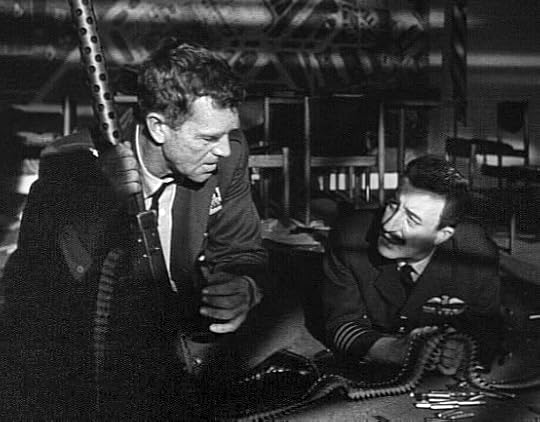
Peter Bryan George was a British author, most famous for the 1958 Cold War thriller novel Red Alert, first published under the title Two Hours to Doom and written under the pen name Peter Bryant. The book was the inspiration for Stanley Kubrick's classic film Dr. Strangelove or: How I Learned to Stop Worrying and Love the Bomb.
His best-known novel, Red Alert was written while serving as a RAF officer and published with the pseudonym Peter Bryant.
Due to interest in nuclear themes sparked by Stanley Kramer's film version of On the Beach in 1959, the film rights to Red Alert were sold that year, only to be handed around until Stanley Kubrick bought them in 1962, reportedly for as little as $3,500.
Peter George co-wrote the screenplay for the film with Kubrick and Terry Southern. After the film was released, he wrote a novelisation of Dr. Strangelove and dedicated it to Kubrick.
George later wrote another novel to denounce the use of nuclear weapons, entitled Commander-1.
George committed suicide in 1966.
Bibliography
As Peter George: Come Blonde, Came Murder (T. V. Boardman, 1952) Pattern of Death (T. V. Boardman, 1954) Cool Murder (T. V. Boardman, 1958); reissued in paperback by Bryan Peters (Mayflower, 1965) The Final Steal (T. V. Boardman, 1962) Dr. Strangelove or: How I Learned to Stop Worrying and Love the Bomb (Corgi/Transworld, 1963): novelisation of George's own screenplay/original story Commander-1 (Heinemann, 1965)
As Peter Bryant: Two Hours to Doom (T. V. Boardman, 1958); published as Red Alert in US (Ace, 1958), later retitled as such in UK
As Bryan Peters: Hong Kong Kill (T. V. Boardman, 1958) The Big H (T. V. Boardman, 1961)
Several of his novels were translated into French and published as by Bryan Peters.
This is the novelization of a screenplay for a famous Stanley Kubrick film which was written by Kubrick, George, and Terry Southern. The screenplay was based on a novel published both as Two Hours to Doom in 1958 and as Red Alert in 1959 as by Peter Bryant, except the French edition appeared as by Bryan Peters, but those were both pseudonyms of Peter George. It's very complex and convoluted and improbable, which is kind of the whole point of the story... except with nuclear weapons. It's a fairly loose adaptation of the screenplay (some of Southern's best lines are missing), which was a fairly loose adaptation of the Peters-George-Bryant novel to begin with. It is very funny, if you like dark satire, and I recommend it highly to fans of M*A*S*H, Catch-22, and such other classics. Remember also that it's a story from a time when humor and society was different and equality wasn't in high regard. See the movie first. Remember that you can't fight in the war room.
Let me see if I’ve got this straight. Peter George wrote a novel called ‘Red Alert.’ Stanley Kubrick made a movie loosely based on it, calling in both George and Terry Southern to help with the screenplay. Then George wrote another novel called ‘Dr. Strangelove,’ based on that screenplay. This is that book. What’s remarkable about this is how bad this is. ‘Dr. Strangelove’ just might be my favorite film, so I must assume Peter George had little to do with its excellent screenplay. And, even curioser, is this: the screenplay’s best line, “Gentlemen, you can’t fight in here. This is the War Room,’ is printed on the dust jacket of this novel. Yet, George excised it from his novelization, along with the recall code from the film, OPE.
From BBC radio 4 Extra: Thermonuclear war erupts in Kerry Shale's award-winning dramatisation of the apocalyptic black comedy, playing multiple roles.
'Dr. Strangelove' came to prominence in the 1964 film directed by Stanley Kubrick. Based on the novel 'Red Alert' by Peter George, it famously starred Peter Sellers in multiple roles.
As well as the dramatisation, Kerry Shale also takes several roles: Dr Strangelove, Lieutenant Kivel, Lieutenant Barney Goldberg, Lieutenant Lothar Zogg, Group Captain Lionel Mandrake, General Jack D Ripper and President Merkin Muffley.
With William Hootkins as the King, Sean Barratt as General Buck Turgidson, Stuart Milligan as Gwarne, Nigel Anthony as the Soviet Ambassador, , Peter Whitman as Staines, William Roberts as Gap and John Baddeley as Ball. Alexei de Sadesk and Teresa Gallagher as the Narrators
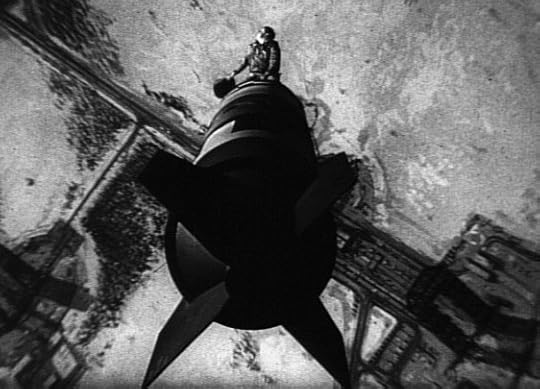
The bomb explodes, and life on Earth's surface will be extinct in ten months due to the Doomsday Machine. Dr. Strangelove recommends to the President that a group of about 200,000 people be relocated deep in a mine shaft, where the nuclear fallout cannot reach them, so that the USA can be repopulated afterwards. Because of space limitations, Strangelove suggests a gender ratio of "ten females to each male, "with the women selected for their sexual characteristics, and the men selected on the basis of their physical strength, intellectual capabilities and their importance in business and ... doesn’t it sound perfect? بر اساس این رمان، استانلی کوبریک فیلمی ساخته که در بسیاری تصاویر با رمان متفاوت است . بنظر می رسد کوبریک برداشت و منظور دیگری از این طنز سیاه داشته است.
This is unique - a novelization of the screenplay to Kubrick's great film (probably the most brilliant, darkly comic anti-war film ever made), written by one of its screenwriters. So obviously the story is great, but unfortunately the book doesn't add much that the film didn't already cover, and also misses the unforgettable performances of Peter Sellers, George C. Scott and Sterling Hayden. And for some reason the book omitted my two favorite lines from the film: "Gentlemen, you can't fight in here! This is the War Room!" and "You're gonna have to answer to the Coca-Cola Company." An entertaining read, but minus the film's striking visuals and sharp acting performances, it's mostly for Strangelove fanatics only.
Interesting book. Would have been a whole lot scarier reading it in 1982, when I was 12 years old and living just across the river from Offutt Air Force Base in Omaha. We knew that was a target for Russian missiles. Glad I didn't know about this book then or I wouldn't have slept for weeks.
'Destino la luna' es la historia de cómo tres cargos dentro de un proyecto de gobierno Americano: un director y doctor jefe, un vicealmirante y el jefe de la compañía de aviación Barnes deciden simular el largamente postergado lanzamiento de un cohete piloto a la luna, cuando en realidad lo efectuarán. No sin toda una serie de problemas de por medio, que se irán acrecentando conforme de desarrolle su soñado propósito.
Ésta obra del maestro toca, cómo ya hizo con anterioridad pero en otra vertiente, el tema de los pioneros - conquistadores, el de los locos visionarios que arriesgaron sus vidas y se lanzaron al vacío (nunca mejor expresado) en búsqueda de la primera imprenta del hombre (y de un estado) en un astro intacto aparentemente. Sin ‘darse la mano’ con ‘Historia del futuro’, ‘Granjero de las estrellas’ y’ La luna es una cruel amante’, sí confluye casi a la perfección en el universo argumental Heinleniano espacio- temporal y nos remite (especialmente a los avanzados en Heinlein, con guiños, entre otros, acerca de la ocupación atómica en el espacio y el emplazamiento del cohete,; todo en las obras anteriormente comentadas además de en ‘Cadete del espacio’) a los albores de sus deliberaciones acerca de ésta temática imprescindible para el desarrollo de la Sci fi en su globalidad. Y ahí, al origen es dónde nos encontramos con lo que podría ser un tratado histórico del primer proyecto llevado a cabo por parte de tres sacrificados y audaces Colón (sí, a él se le menciona, obvio) en lo que sería una cruzada necesaria pero de no retorno, y que abriría la veda para la posterior consecución de ése y otros astros (¿de verdad alguien cree que todo fue tan perfecto en el primer contacto del hombre en la luna en 1969?..si es que lo hubo, claro). Bajo una capa de narración jovial, ágil, directa, pero fascinante en lo referente a todo el conflicto del alunizaje y los problemas de desviación de la nave en su trayectoria (con un tratado de física y matemáticas llevado con la excelencia de la pedagogía liviana en pos de la particular historia), además de la exactitud del estado mental y físico de unos cuerpos ajenos dentro de un transporte en constante cambio gravitatorio- atmosférico. Heinlein introduce muchos temas y nos los pone sobre la mesa para que reflexionemos sobre todo ello. Éste se decidió a hacer un auténtico ‘repaso’ al ser humano y su desconocimiento, pero también a su arrojo, que lo puede catapultar a lo más grande o a la mayor de las miserias, según se vea. Así que en ésta engañosa baraja de desarrollo (por su aparente simplicidad), el decano trata acerca de la burocracia, del gusto por la dominación de los Estados Unidos de América (con otra critica hacía la bomba atómica), el sabotaje, los medios de comunicación (especialmente visionaria la escena en la cual uno de los tripulantes decide dar en exclusiva una entrevista a un rotativo a cambio de gananciales), la tercera guerra mundial y los fantasmas humanos que la rodean, sobre la paz y la posibilidad de unificación espacial por el bien global, la seguridad de una nación y el sacrificio de unos llamados para el avance del universo (siempre que sea llevado a cabo por el lado correcto): “[...]Eso es lo importante, no nosotros. El hombre muere, la sociedad perpetúa[...]”
Grande Heinlein una vez más, qué decir que no haya dicho anteriormente, salvo que su obra lo engrandece, y especialmente, engrandece a éste maravilloso pero tantas veces, pedante género que se va por las ramas y olvida lo importante: al hombre y l todo ser vivo y las consecuencias de sus actos dentro de un aún maravilloso y misterioso universo que nos rodea y nunca muere, por mal uso que hagamos de él y sus fuentes de sabiduría.
Nota : Si le pongo un tres, es por que al haber leído y releído tanto de Heinlein, yo siempre hago media escalativa al otorgar entre todas sus obras, pero igualmente está realmente bien escrito (cómo siempre, por otra parte).
You probably don't know much about Stanley Kubrick unless you have seen 2001 or A Clockwork Orange or The Shining, but those ain't no matter. This fun flick came several years before each of those. Stanley Kubrick, as you oughta know by now, is one of the most influential and revolutionary film directors, up there with George Lucas and Ridley Scott. But I reckon it's about time you learn to stop worrying and love this film, as well as its fun novelization, which I have to say everyone oughta read at least once. It's time we fans of Kubrick oughta step out of the space odysseys and the dystopian clockwork color worlds and the haunted hotels and get ready for something more fun and humorous and closer to home.
So it's basically this: An American Brigadier puts the world on the verge of a nuclear catastrophe, when he deploys a B-52 bomber on the Russians, without informing his superiors.
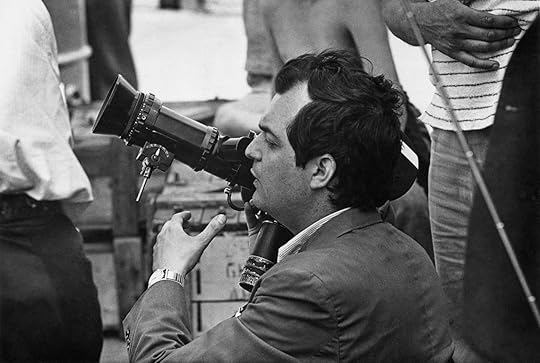
This awesome black-and-white "hot-line suspense comedy" is one of the very first to have preservation for its importance in the National Film Registry, and you are about to see why, that is, if you have either read this novelization, or seen the film...or both. First things first, do any of you remember the 1950s and the 60s very well? The era of the baby boom generation? The era of Commie phobias? Well, back then, the threat of nuclear annihilation, especially World War III, was a very real possibility, and nuclear gamesmanship became a preoccupation for Kubrick, especially after the Cuban Missile Crisis. He was especially interested in Peter Bryant's Red Alert, which introduced a delusional Air Force officer who tried to instigate a nuclear war with Russia. When writing the screenplay, Kubrick eventually decided to tell the story as a (black) comedy (that's my favorite way I see humor), as while researching the world of thermonuclear war and the accidental ways in which one might start, he found that many of the possibilities were so preposterous as to be comical. Aside from being drawn to the ironies of how you could root for the crew of a B-52 to simultaneously succeed and fail, Kubrick is also energized by the possibility of juggling three separate storylines at once.
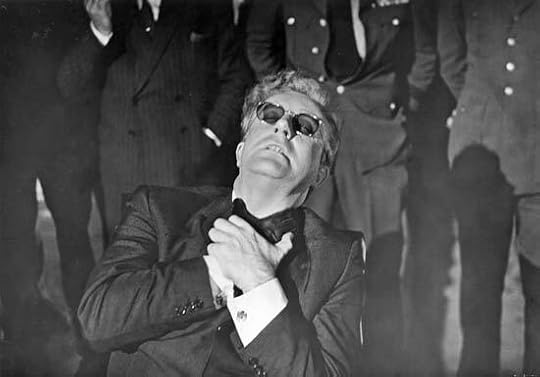
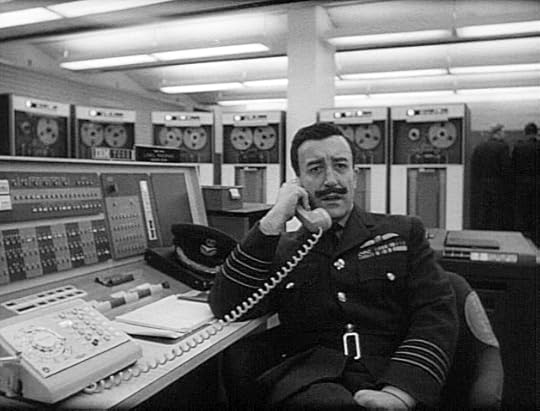
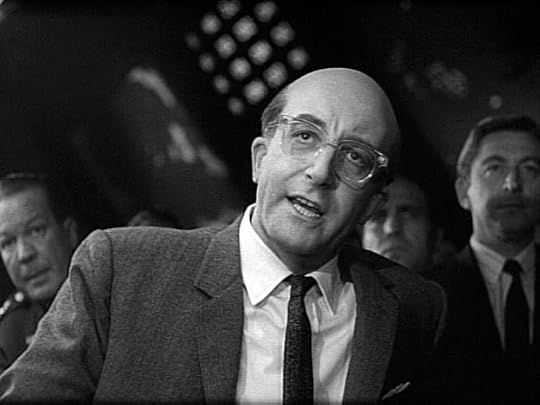
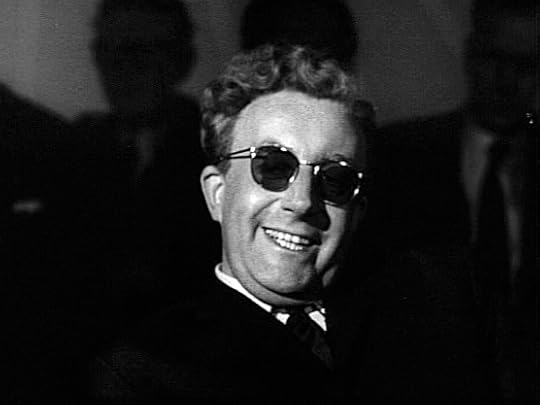
Englishman Peter Sellers performs three different roles in the film shockingly well: -Group Captain Lionel Mandrake is a by-the-book English officer psychologically damaged by an injury from World War II; -President Merkin Muffley is an Adlai Stevenson type statesman, the film's blandly rational voice of reason; -And the titular Dr. Strangelove is a crippled crypto-Fascist with a voice modeled from famous photographer Arthur "Weegee" Fellig.
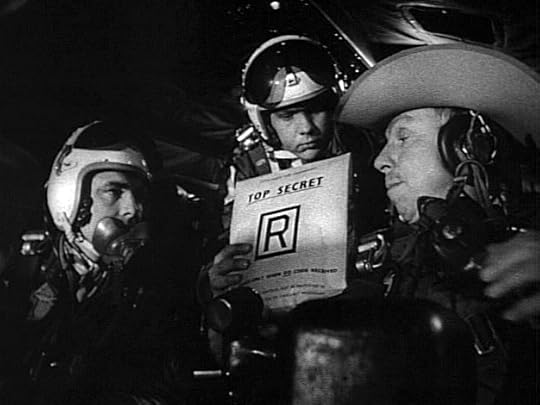
Additionally, some of the other actors play their roles well too: -Slim Pickens, a mainstay of Hollywood, played B-52 fighter jet pilot "King" Kong (wearing the 10-gallon hat) without a trace of irony – exactly what the part needed. -And of course American George C. Scott was manipulated by Kubrick into giving an over-the-top performance that speaks for itself.
It all remains fresh and relevant because of that satirical approach, which makes it as much a wry commentary on war, those who wage it, and the military machine in general as it is a reflection of the paranoia of a specific era. It’s also still relevant because not only could much of its scenario have happened in 1963, but the risk of an accidental or unauthorized nuclear detonation is still possible. In other words, the film showcases the insanity of a policy of Mutual Assured Destruction, while never bogging down into the particulars of right and wrong, or United States vs. Russia.
The heart of the humor lies in its tension between reality and absurdity, starting with the title sequence where day military planes engage in midair refueling to the strains of “Try a Little Tenderness,” with unmistakable and hilarious sexual overtones. There are also members of an active bomber crew doing card tricks, reading Playboy, and trading an air-force helmet for a cowboy hat, all with deadpan seriousness. Scenes of ground combat outside the air base are shot newsreel-style which kind of reminds me of the old cinematic newsreels of the 1930s and 1940s and are not funny in and of themselves, though the scenes inside the base between Peter Sellers and Sterling Hayden reach the height of black comedy. It shifts from chilling reality to crazy satire and back again. This easily proves that it's also realistic fiction, which I have enjoyed as well. The deadpan tone has influenced countless modern filmmakers from the Coen Brothers to Quentin Tarantino. In fact the film adequately pokes fun of the absurdity of modern politics in a way that is digestible to the average viewer rather than it being done in a preachy, overly passionate way that might turn some heads.
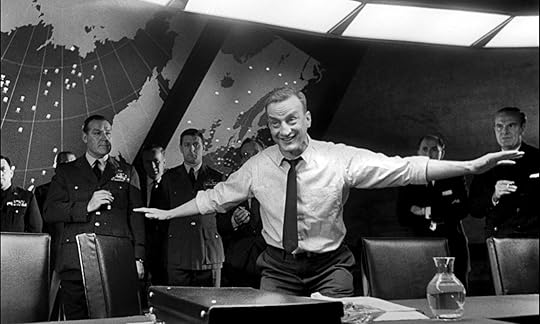
It's filled with various enduring moments, such as Jack D. Ripper about a Communist plot “to sap and impurify all of our precious bodily fluids”; or, Turgidson taking a phone call from his mistress in the middle of a vital war meeting to the president admonishing the now famous line, “Gentlemen! You can't fight in here; this is the war room!"
The cockpit of the B-52 was constructed from photos the art director found, with the exterior of the plane being a series of models filmed over second unit footage. Production designer Ken Adam’s magnificent war room set is as much a star of the picture as Peter Sellers. The idea was to make it feel like an underground bomb shelter, with reinforced concrete walls and ceiling—along with an overall triangular shape—projecting strength and rigidity. The table at the center was made circular to resemble a poker table. Kubrick's desire for as much practical a source of light as possible inspired Adam to design the round light fixture that hangs above the table and indeed provides most of the scene’s lighting. The light ring, as well as the dramatic “big board,” an electronic Jumbotron-esque map of the world taking up massive, inclined walls, make the room feel practically claustrophobic.
Kubrick also borrows effects from outside sources. The opening credits play over stock footage of refueling planes, closing with stock footage as well. He adds an extra veneer of reality by using brand names such as Coca-Cola and Bell Telephone. It may seem like product placement, but it's not, really. A narration adopts the tone of a serious, government-sponsored piece of propaganda; footage inside the B-52 could have been taken from a military training film. An attack on an airfield is shot with handheld telephoto lenses that mimic battleground documentaries—or reports to come from Vietnam. Whatever his influences, Kubrick’s technique is extraordinary throughout the film. He shows an explosion inside an airplane with eight shots in ten seconds, allowing the soundtrack to distort and the film stock to flare before adding a tracking shot that pulls viewers into the action, letting them sense what is happening even if they don’t absorb all the details. It’s a sequence that filmmakers are still copying.
And, finally, Dr. Strangelove left an enormous impact on compensatory viewers. While certain viewers may be amused by the smudgy names and jokes about orgasms, the film’s best parts move with the inexorable drive of Paths of Glory, and the deadpan brilliance of a Buster Keaton short.
Now you can see its essence. Now you know what it's about. Now you know Kubrick from the beginning. And now you can even easily see that you have stopped worrying and why we don't need a World War III. I mean, two World Wars...isn't that just enough?
Mentre leggevo mi scorrevano davanti le immagini del film, cosicché ho mantenuto un'espressione ghignante durante la lettura di questo fantastico libretto che va già liscio liscio e che ti lascia alla fine un'espressione soddisfatta e un po' inebetita per lo spasso. in alcuni passaggi poi, il mezzo sorriso esplode in una risata spontanea, tipo a ripensare a quando il Dottor Stranamore sbraca e perde il controllo della propria mano mutilata, tendendo il braccio in un pieno saluto nazista che non lascia più dubbi sul suo passato; oppure all'esilarante telefonata del presidente americano con il premier sovietico evidentemente sbronzo (Dimitri, non pretenderete davvero che vi lasciamo distruggere Detroit per rappresaglia?!?). per queste ragioni uno di quei casi in cui il film supera il libro (ma pur trovandosi già ai ""piani alti"") proprio per la fedele trasposizione e (scusa se è poco) per l'impegno di due mostri come Stanley Kubrik e Peter Sellers.
After seeing this darkly funny movie at Park Ridge's Pickwick Theatre, I went off to the bookstore near the Post Office to purchase the novelization, not knowing that the film had been based on a previous novel by the same primary author, George, entitled Red Alert. The book did not disappoint as it followed the screenplay very closely.
Both Seven Days in May and Failsafe, two other movies about the threat of global war, were released at about the same time, not long after the Kennedy assassination. I also saw them and also bought the books associated with them. Such were the times. Such were some of the influences working on the minds of thirteen-year olds.
My first reaction when I got to the ending was - what the hell?! The point supposedly is the farcical nature of life at times and how worrying serves no purpose. With that end, it serves its purpose. And does it well!
This was an okay novelization; while not the worst, definitely not the best, either. Probably what strikes me as "the most funny" is this - it is a novelization of a movie that is based upon (inspired by) the book Red Alert!, which is also written by the same author and essentially the same story. In any case, it was a fast read.
There are some minor differences between the novelization and movie that I recognized (it as been a while since I last watched the movie) .
I don't know that the novelization really adds anything to the movie or the overall story; it is more of a "play-by-play, line-by-line" rendition of the movie. Thus, no character development.
There are still humorous moments in the book, but they are not nearly as funny as in the movie, sadly, so there is obviously something to be said for movies versus a movie (scene) being translated into a novelized (or written) format. While I would not recommend this took to anybody, it was an okay read. I suppose in terms of wanting to read it to see how it compares to the movie, I am glad that I read it, but I can't say that it was worth the time to read it. I would probably rate it 1.4 - 1.6 stars, generously rounded up to 2 stars (as I "liked" it more than I disliked it). Red Alert! was a much better story, and I wish I had not lost my copy of that book.
Specyficzna książka, czytająca się wciąż dobrze, choć zarazem w jakimś stopniu rozczarowująca.
Przede wszystkim jest to przednia satyra na amerykańską paranoję antykomunistyczną przełomu lat 50. i 60., z galerią świrów uważających, że ewentualna wojna nuklearna może i mocno przetrzebi populację USA, ale będzie to cena warta zapłacenia w zamian za zniszczenie ZSRR. Praktycznie jedyną rozsądną osobą jest tutaj brytyjski oficer, no ale to raczej oczywiste, skoro autor pochodził właśnie z Wysp Brytyjskich. Splot rozmaitych przypadków i wzmagające się komplikacje bardzo ładnie oddają ducha tamtych czasów, tym bardziej że opisana sytuacja wcale nie jest tak abstrakcyjna i niemożliwa do zaistnienia, jak dzisiaj mogłoby się to nam wydawać.
Tu jednak należy poczynić jedną uwagę - wydana w Polsce książka jest beletryzacją scenariusza filmu Kubricka. I o ile film jest genialny i wciąż potrafi wywrzeć solidne wrażenie, to książka jest w jakiejś mierze jedynie jego bledszym cieniem. Tu jednak robi się dziwnie, bo scenariusz filmu został oparty na własnej powieści Petera George'a pt. "Red Alert", z grubsza opisującej ten sam ciąg zdarzeń, ale mimo wszystko trochę bardziej optymistycznej w ogólnej wymowie (samolot zostaje w ostatniej chwili zestrzelony). W sumie wolałbym więc mieć po polsku oryginalną powieść, która zauważalnie odbiega od "Doktora Strangelove'a", a nie beletryzację, którą przeczytać niby można, ale równie dobrze - i chyba korzystniej -można sięgnąć po film. Bo w sumie treściowo to to samo, ale do tego mamy kilka świetnych ról i mnóstwo ocierających się o genialność scen. A tego książka nam już nie da.
Since this is the book that led to my favorite film of all time, I cannot give this atomic war novel anything but 5 stars.
Red Alert is the original title of Peter George's work on which the film Dr. Strangelove was based. He and Stanley Kubrick and Terry Southern wrote a script for the film which was farcical, unlike the original. The farce is slightly heavy handed for today's times with character names like Jack Ripper, Buck Turgidson, and Premier Kisoff.
This edition is the novelization of the script for the film so retains the farcical quality and adheres rather closely to the script.
If you have seen the film you will appreciate the color this provides and will both recognize some favorite lines and note that others are not here.
Because Peter George was in the RAF he had technical insight into nuclear bombers and the associated strategic methodology. At the time of this novel the nuclear deterrent was based much more heavily on bombers as opposed to the land-based missiles and submarine missile launchers of the nuclear triad.
The whole concept of a recall code and suspense built over hours of flying time is much less relevant for a missile launched from a ground-based or sea-based platform.
Although I read this assuming it was the book the movie was based on, I didn't realize until starting the book that it is basically a novelization or a "book of the film." As such its basically just the movie in book form, and it doesn't really offer anything that the film doesn't.
Interestingly, the same author wrote a different book (Red Alert), which was the inspiration for Kubrick's film, though follows a different plot. The book was adapted into the film, which was then re-written as this book...
This was riveting, and I'm glad I didn't remember the end of the movie because it keeps you on your toes the whole way. The worst part is the crew of the plane did an absolutely admirable job, one they never should have been sent to perform.
The development of well rounded characters in the midst of such blatant political commentary was delightful, and the scene swapping between the plane, Air Force base, and War Room helped draw such a terrible and engaging picture, I had trouble putting this down!
Now rather dated, this was a classic "moon" story some 70 years back. If you read it with the time-period in mind, you will be amazed at Heinlein's forsight in predicting a nuclear-powered rocket. This is possibly the inspiration that many of the engineers working on the current project may have used to start their careers (as it was one of his early novella's and a precursor to Rocketship Gallileo).
Be advised. If you wanted to read this and see the iconic and hilarious scenes from the film play out on the page; almost all of those scenes have different dialog or are missing their A+ punchlines.
Conspicuously missing: You can't fight here, this is the war room! You're gonna have to answer to the coca cola cumpney. Mandrakes 'pre-versions' Mein Fuhrer! I can walk! It's good to be fine.
This is one of the rare times in which the movie is far superior to the book. While oddly charming, it cannot convey the insane genius of Peter Sellers' multiple performances in the film. In many ways the book comes across as an okay novelization. Fun, but I prefer the movie.
This was my 2nd - or maybe 3rd - reading of it. I have see the film probably twice as many times. I'm never tired of it, always astonished at the dark humor and the sheer creativity, wit, and insights in the story.
A play by play of the end of the world, and it’s all fueled by stupidity and nuclear weapons. A great book for a great movie, with some nice insight into Dr. Strangelove as a character