"Легенда за царица, покорена от велик владетел и отрупана с богатства, преди да се завърне в своята земя. Това е историята, на която са ви накарали да повярвате. Но всъщност голяма част от нея е лъжа. Истината е много по-невероятна, отколкото разказвачите могат да измислят. Богатствата са много по-безценни. Тайните – по-гибелни. Любовта и предателството – по-страстни и по-опустошителни. "
Легендите разказват за красивата млада принцеса, наследила от баща си трона на приказно богатото Савейско царство преди три хиляди години. При управлението й народът живее в мир и изобилие, а търговията със злато и екзотични подправки процъфтява. Скоро обаче ключовите търговски пътища, от които зависи благоденствието на царството, са заплашени от север. Там, в земите на израилтяните, новият цар Соломон отказва да се кланя на чужди богове и да се съобразява с чужди владетели, дори това да е владетелката на най-богатото царство.
Така се ражда легендата за срещата на Савската царица и Соломон, която векове наред вълнува хората. Противоречивият образ на тази загадъчна жена – обрисувана и като демон, и като основателка на царски династии – остава неразгадана енигма. За пръв път гласът й долита до нас през вековете в тази красиво написана история, която ни пренася в древни дворци и прохладни оазиси.
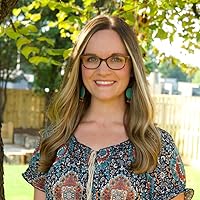
She is the recipient of three International Book Awards, Killer Nashville's Silver Falchion, ECPA Book of the Year, and the Nebraska Book Award, and has finaled for numerous others including the Library of Virginia People's Choice Award, the High Plains Book Award, a second Silver Falchion, a second ECPA Book of the Year, and the Christy. The Line Between was a Goodreads Choice Awards semifinalist for Best Mystery/Thriller of 2019.
You can find Tosca at ToscaLee.com, on social media, or hanging around the nearest snack table. To learn more, please visit ToscaLee.com
For book release news and giveaways, join Tosca Lee's Nocturnal Cafe.
“What is love, but to hold dear without expectation? What is love, but first given devotion? What is love . . . But freedom.” ― Tosca Lee, Legend of Sheba: The Rise of a Queen
My review:
Wow. I am struggling here with what to say. I honestly do not think words alone can do this book justice.
I am one who went into this book knowing little to nothing. Oh I had heard of Bilqis,Queen Sheba and King Solomon, king of Israel. But really I had no knowledge of their story.
Although this is Biblical History, I chose it because of the Historical story. I have always adored reading about great Monarchs. This book seemed to me, one that I would enjoy.
But I was not prepared for how deeply, movingly, bitter sweetly and beautifully TOUCHING the story would be. Nor was I prepared to read Prose that treated every word as..for lack of a better term..a celebration. Words are to be celebrated and this book is word upon exquisite word. The writing stunned me with it's deep poignancy and ravishing beauty.
So Bilqis ruled over Saba and Solomon ruled over Israel. This is their story although it is told from Sheba's point of view and we do not meet Solomon for awhile.
We are introduced to Bilqis as she is a young girl. She grows up with so much tragedy. Losing her mother at such a young age and then the violent rape that takes place. It would have been enough to break many people.
We watch her rise to power and her introduction to the far away King who would ultimately change the course of both their lives.
I do love Historical Fiction so much. As a child, I sat in my school's library and devoured books about Historical Figures. And my second favorite book of all time is "I Cleopatra" a masterpiece and incredible work of art about Queen Cleopatra.
The writing here reminded me of that book. I mean it when I say every word is a celebration. It is so lyrically written and so uncompromisingly beautiful, that it is deeply lovely even before the letters.
The letters.
I think I fell in love with King Solomon myself, reading those letters. Watching the two fall in love via scroll was beautiful. If ever one wants to see what makes up the word "soulmate", they need look no farther than this book. We, the readers, are taken into a very precious arena, where we watch two brilliant but lonely people slowly remove the masks they wear to the public and let themselves be known.
The letters between the two are electrifying. So too is the journey the queen undertakes to meet Solomon. I had thought I'd not like that and would have to skim . I generally do not enjoy action oriented aspects to books. But this journey itself was it's own character and a joy to read. It was a festival, a party. And we, the readers, are there. Or we long to be. It feels so classically REAL. And honestly , I loved that aspect of the book. It was fascinating and once again, CELEBRATORY. I will not forget it.
And than there is the end. Of the book. I did not expect my reaction which was visceral and came with tears. I do not often weep at books. Sometimes but not frequently. I wept at this. The bittersweet aspect went so deep and I was amazed at how emotional I got.
So, yes I'd recommended this tantalizing and enthralling story. I have read so many excellent Historical reads this year, including The Tiger Queens, a book about the women of Genghis Khan.
Many times I praise a writer and say I plan to read more from them but never get around to it, simply because my TBR list is so long. In this case however, I KNOW I will get around to it. While reading this book, I found out there is a short prequel about Sheba's mother. This will be read by me, most likely in the next few weeks. Sheba's mother was one of my favorite characters. She was only in the story for such a short time but her character was so VIVID and fully realized.
So..to sum up..if one likes Historical Fiction..this one is a must read. I found about it because I saw a GR friend reading it. I'd like to thank them but cannot recall which friend it was so thank you nameless friend!
And thank you Tosca Lee for painting such a beautiful portrait of love, of sorrow, of triumph and of freedom. I will never forget this book.
Wow. Just, wow. I'm so thankful the Lord chose Tosca Lee to write about Eve (Havah), Judas Iscariot (Iscariot), and now the Queen of Sheba and King Solomon (The Legend of Sheba). The amount of research and imagination she weaves into her novels is the work of an inspired artisan, and I so appreciate the care with which she handles God's Word. That being said, however, I will warn you that Tosca's writing is edgy, and she doesn't mask the hard truths about the ancient cultures explored in this book. We first meet the Queen of Sheba--Bilqis--as a young girl, loved and protected. But when her innocence is stolen, wheels are set in motion that shape a lifelong search for a real God and the true meaning of love. The Legend of Sheba is, in my opinion, more of a character-driven novel than plot-driven, meaning you don't experience the riveting, action-packed storyline, but rather delve deeply into the heart and mind of the fascinating characters. And no one "delves" more beautifully than Tosca Lee with her lyrical style of writing. Honestly, I'm not sure I've ever read anything more beautiful than chapter twelve! I'm talking serious goose-bumps! Again, this is not a puffy clouds and lollipops story. It's gritty and real and raw, revealing the harsh and pagan realities of ancient cultures of tenth century BC. Bilqis was an unmarried queen who saw a husband as a threat to her throne but needed an heir to succeed her. Solomon was one of the (if not THE) single most enigmatic characters in the Bible--his sensual passions unequaled in word (Song of Songs) and in women (700 wives and 300 concubines, 1 Kings 11:3). I didn't find any explicit love scenes or profanity in this book, however, it isn't a novel I'd recommend for young teens because of the mature contemplations of both Solomon and Bilqis. What pre-teen or even early teen would fully embrace this internal dialogue from Bilqis: "Who am I? Daughter, princess, victim, exile, lover, queen, priestess...all identities in relation to someone else--until that other person was gone. And Solomon, the voracious prince...this man missing the first blush of romance with his God who chased it with the concubines, wealth, wives, and treaty." As adults, we understand the identity crisis Bilqis is working through, and as Christ-followers, we realize that we will one day appear before Him alone--with no one else to lean on or blame. Also as adults, we might identify with the emptiness Solomon experienced when his relationship with Yahweh was hindered by sin. He undoubtedly tried to fill the void with women, wealth, and power as many do today. The Legend of Sheba has at its core an overarching theme. I believe it's the thing that drives every human being to seek some form of companionship, and I believe we have this natural yearning--this craving--because we were created in God's image--though God experiences the desire perfectly and without sin, of course. What is this desire? I hope you'll read The Legend of Sheba to discover it for yourself. I think you'll agree with me that Tosca Lee has captured the human spirit magnificently. BTW...be sure to check out her extensive Author's Note at the end of the book for fascinating insight into her research process. If you're a biblical history junkie like me, you'll be astounded by her research journey!
Loved this fascinating reframing of a controversial biblical character. Lee fleshes out Sheba as a brilliant and powerful queen, but also a lonely woman who meets a kindred spirit in King Solomon. Their sexy battle of wits makes for excellent reading! Fans of historical fiction will be riveted.
This historical fiction is about Bilqis, also known as the Queen of Sheba, the Queen of the South, and Makeda. She is found in religious literature such as the Bible, the Koran, etc. These books tell of her hearing tales of King Solomon and his wisdom and making a journey to observe him for herself. Lee has spun a story which expands the life of Bilqis and her journey.
I enjoyed the book which was filled with adventure, intrigue, and romance.
In the Bible, the Queen of Sheba’s visit to King Solomon’s court is thirteen verses long. It is a mere occurrence in the reign of Solomon, and yet, what would have it ben like for the queen of the opulent county of Saba to meet Israel’s wise king? Queen Bilqis, comfortable in her sequestered life in a neighboring country, becomes queen, but at great personal sacrifice; her soul to the priests of Saba’s gods and her heart to a harsh desert battle. When King Solomon demands a tribute that Bilqis refuses to bestow, tensions between their two countries and their trading allies threaten Saba’s future. Rather than sending an emissary, Bilqis decides to travel to Israel herself to meet with the king. As imagined by Tosca Lee, this meeting is at once explosive, passionate and spiritually challenging in ways they never could have dreamed.
Prior to reading The Legend of Sheba, I was already a whole-hearted fan of Tosca Lee, so I was sure that I would relish the story of Sheba’s famous queen. Not only did I savor this story, but I was blown away it; it completely exceeded my expectations. There is a gritty aspect to Tosca’s writing that always captures my attention, and in her usual style, she does not make things easy for her characters. Queen Bilqis is at times tough as nails, and at others, she is all too aware of her vulnerability as a woman in what is typically a man’s role. I loved the backstory that Tosca created for her; it was painful at times and always fascinating. Though she had been removed from the royal courts as an adolescent and was safely sequestered away for many years, she rises to the occasion when those loyal to her father wish to make her queen. Though a queen and worshiped by all as a high priestess, Bilqis is detached from fervent worship of the moon god, one of the many gods revered by her people, and yearns for something more.
Over the course of the first few years of her reign, Bilqis corresponds with Solomon, a man who both captivates and infuriates her. Sparks fly with each missive received, and yet his words stir something in Bilqis’s heart – not just from the words of Solomon, but what he says about his God. As their words reach a boiling point, the political tensions between Saba and Israel reach one as well. I love the set-up of them finally meeting. Tosca creates tension like very few can, and by the time Saba’s enormous caravan reached Israel, I was brimming with anticipation.
The ancient world is exquisitely painted. I could smell the incense in the air, feel the hot sun on my back and the sands shift around me. The writing is at times lyrical, and yet every word is finely placed, not wasting any time with unneeded descriptions. The plot seemed to gain speed as the meeting approached, and I was engrossed in the inner workings of Saba’s court. Bilqis’s search for more, for something higher than herself, is relevant to today. The secondary characters add a great depth to the story; I especially loved her Nubian guard, loyal even facing death. His character, and those of her close advisors, adds a wonderful perspective to the story.
The social customs and political and religious practices of both Israel and Saba were fascinating, but what most compelled me were the inner workings of Bilqis and Solomon. There are no watered down spiritual discussions here, but rather, a frank look at Solomon’s faults. Though he was the epitome of wisdom, we know from the Bible that God was not pleased with Solomon giving his heart to many wives, especially those for whom he built temples for their own gods. I loved the view that we get of his court and how utterly impossible it was for him to please all of his wives and the many treaties and relationships that resulted from these marriage alliances, and the spiritual consequences for both himself and Israel because of them. Tosca’s portrayal of this correlated well to scripture. Through all of this, is the inexplicable pull she feels toward Solomon, and more pressing, her growing questions about the Lord. Bilqis’s spiritual awakening, though slower in developing, is subtle but powerful and suited to her character.
The events prior to the Queen of Sheba’s visit to King Solomon’s court are not revealed in the Bible; however, Tosca’s story is a realistic, creative blend of the biblical story and ancient tradition. Readers that want simplistic tale or sweet romance will not find that here, but rather an honest portrayal of Israel’s wisest king and the courageous queen who traveled across a vast desert to meet him. It’s a story about a queen who expected to encounter a king, but instead is simply Bilqis, a woman overwhelmed by an encounter with the God that becomes her own.
Would that I could make as many treaties by marriage and never give up a portion of my throne! Yafush had been right all those months ago: a woman could not rule like a man. No, we must be far more clever.
Ever since I read this novel's prequel, with its apt and intriguing call to "Seek wisdom, and rise," I looked forward to reading The Legend of Sheba: Rise of a Queen by author Tosca Lee.
Even with this story's biblical link to one of the most famous kings of Israel, Solomon was not the major draw for me here. I chose this novel specifically for her, to read of the rise of the Queen of Sheba, otherwise known as Bilqis and Makeda. Different aspects of Bilqis's account reminded me so much of Elizabeth and Elizabeth: The Golden Age, stunning films about Elizabeth I of England.
Indeed, a queen—an unmarried one, at that—must be exceedingly strong and clever to rule.
Besides the interesting weight of politics and some of Bilqis's adversity as a woman that struck me, I much appreciated this story's exploration of worship. I think the question of whether one's faith observance is "nothing but the brokering of deals" in hopes of receiving blessings from God is a relevant question for many.
Now, albeit King Solomon wasn't my focus, and he doesn't really enter this tale until halfway through or so, I knew the love story would be inevitable, of course. While this isn't a type of romantic storyline I particularly enjoy, I do realize you can't demand a relationship like that of this queen and king to match an accepted, modern, Western one. And though the additionally inevitable jealousy and bickering got a mild eye-roll from me, it's good that this love story isn't a simplistic fairy tale.
Lyrical prose, lavish depictions, and moving reflections on the heart, intellect, and spirit—a worthwhile read for fans of historical fiction.
This was a pretty great read. I enjoyed the writing of course! You could tell that Tosca studied the Word and history. Her writing for me is always lyrical and smooth to read. Such poetic writing.
Bilqis is a a strong and stubborn woman. She was dealt a sad hand after the death of her mother, but she overcame it all. I enjoyed her sassiness! She never allowed a man to keep her down or make her feel less than. I adored how she ruled, but I felt that she was a bit whiny and childish at times.
The romances where all interesting outside of the main romance with the first guy. Seeing Bilqis navigate romance after hardships was interesting.
King Solomon was a bit aggravating with his overly poetic words. I wanted to jump through the page at times and slap some sense into him.
Overall, this was a good retelling. I would definitely recommend it to others to read.
Loved it. Vividly portrayed, romantic, and inspirational. Official review will be published in August's Library Journal along with my interview of Tosca Lee (who is absolutely hilarious on Twitter -- you should follow her).
Ok, this book was amazing. I didn't know exactly what to expect. I was looking for a historic book type, but it was historic fiction which makes it better. Especially since this queen is a myth, if I'm not mistaken. I'd recommend it to anyone. It's very well rounded.
I don't often read books of this genre but something about this book called to me, perhaps it was the eyes on the cover that lured me in like they did so many a man that Bilqis(Sheba) came across.
I love so much of this book, I don't think I have a single bad thing about this book that I could come up with other then I want more!
It was like reading the pages of the girls diary or being right there next to her and experiencing all the beauty her world had to offer and all the pain that hid behind their veils.
One of the things that will draw a reader to this book is a strong independent woman who is a ruler in a time when women where nothing more then cattle to be bartered off. They thought they were going to get a Queen they could manipulate and marry off easily and instead they got Bilqis. A strong woman who conquered men without revealing her face.
I love that the ending is both a happily ever after and a heart breaker. I didn't want to root for a happy ending because I get sick of always reading them but this ending was one that satisfied every part of my readers soul.
I like that they fell in love with their words before ever setting eyes on one another. And people think online dating is a new thing. HAH! Bilqis and Solomon where pro's.
Seriously one of the best books I have read in months and that surprised me but once you read it you will understand why this is a must have on your shelves.
Finally, I've had a chance to read this book. My word, I am so impressed. My only short account of Tosca's writing was with the novella about Ismeni and I must say I am thoroughly blown away with the way this book turned out.
This story is my first biblical fiction and now that I've sampled it, I know I'll be trying out a few more authors.
The legend of Sheba boasts in beautiful descriptions and is rich in its historical background. The grandeur of a radiant queen traveling north to meet with King Solomon, a King who's wisdom rivals many and is famous throughout many kingdoms in that time period.
This intricately woven tale graces us with first person point of view (Bilqis). It demonstrates the emotions and thoughts of Queen Sheba. Her turmoil. Her choices. Her reasoning. Her character is admirable as she stood to wits with Solomon. Testing his professed wisdom time and time again.
I loved that Songs of Solomon 8:6-7 was quoted!
"Set me as a seal upon your heart, As a seal upon your arm; For love is as strong as death, Jealousy as cruel as the grave; Its flames are flames of fire, A most vehement flame. Many waters cannot quench love, Nor can the floods drown it...."
I absolutely love this scripture.
This is a brilliant retelling of the tale between Queen Sheba and Solomon. I recommend this and can certainly afford 5 stars on this one! I loved every second of reading this! Definite Reread!
I have been enchanted by a solo. The most devastatingly, beautiful, soul stirring, achingly poignant lyrics I have ever witnessed. A song of a life of splendor masking evil, of beauty on the outside covering the ugliness of the bare bones within, of fake perfection hiding all the brokenness. The life of each, a Queen and a King, neither meant to wear the crown, neither desiring it, both seeking what they can never have. I have read several versions of Sheba. Tosca Lee has raised the standard not only for this story but for every story I will ever read.
The historical accounts of King Solomon and the Queen of Sheba has been told often from the perspective of Solomon. In “The Legend of Sheba: Rise of a Queen” author Tosca lee has woven an exquisite, lush, and beautiful account of Solomon and Sheba from the famous Queen’s perspective. The result is a fascinating and exciting read that takes the reader on a enthralling journey of a young princess who rises to legendary status as a famous Queen and her relationship with the Israelite king, Solomon. The story beautifully details Sheba/Bilqis/Makeda's rise to power, her navigating political intrigue, her love for her country, and the savvy move to seek diplomatic ties with King Solomon.
Tosca Lee is a gifted author who excels at character development. I felt transported back in time to antiquity, it was as if I were walking with Sheba and Solomon during Old Testament times. This story was so well researched and beautifully told that I could feel the very heartbeat, thoughts, and emotions of Sheba as she navigated political and inner conflicts that surrounded her. That is what makes this story so believable and poignant.
The author has painted realistic and believable portrait of ancient history that gives the reader a new perspective on biblical characters who have been historically undermined and vilified. I loved this story from beginning to end and look forward to more stories by Tosca Lee.
I enjoyed this intriguing historical roman. I received this book for free and I voluntarily chose to review it. While that time period is harder to verify certain facts, the bible was one of the sources for this author. She cleverly wove facts and fiction for this story which was very entertaining. I've given this a 4.5* rating. Younger readers might like to compare some to the old testament of the bible. This story did pull me in quickly and I recognized a few tidbits here and there. There was a bit to learn about that time period also.
This was a pretty great read. I enjoyed the writing of course! You could tell that Tosca studied the Word and history. Her writing for me is always lyrical and smooth to read. Such poetic writing.
Bilqis is a a strong and stubborn woman. She was dealt a sad hand after the death of her mother, but she overcame it all. I enjoyed her sassiness! She never allowed a man to keep her down or make her feel less than. I adored how she ruled, but I felt that she was a bit whiny and childish at times.
The romances where all interesting outside of the main romance with the first guy. Seeing Bilqis navigate romance after hardships was interesting.
King Solomon was a bit aggravating with his overly poetic words. I wanted to jump through the page at times and slap some sense into him.
Overall, this was a good retelling. I would definitely recommend it to others to read.
Step into the decadent world of ancient middle eastern culture and intrigue. In her new release,The Legend of Sheba: Rise of a Queen, author Tosca Lee lifts the veil of luxury and extravagance to reveal the heart of a queen. Like King Solomon, you too will be captivated by the Queen. Lee’s impeccable research and passionate writing bursts forth from every page. She delivers a story that will delight your senses and rend your heart.
Queen Bilqis of Saba proves to be a mystery worthy of discovering. From her turbulent youth to her ascension to power, Tosca Lee plumbs the depths of history to share the story of this remarkable woman. The first chapter knit my heart to this character because of the abuses and losses that she suffered. I was compelled to read on to discover how her pledged allegiance to her mother’s god Almaqah would play out. He had delivered her, or so she thought, from her tormentor. Following the death of her father, she credited Almaqah for her ascension to the throne. The cost of which cast a pall over her victory and left her feeling isolated. Shortly afterwards, a new challenge came from the North in the form of an upstart king name Solomon. Would her god help her match wits with the renowned king of wisdom? She must decide whether she will be fearless or reckless in her dealings with this king whose nameless and formless God has earned him both power and prestige.
I chose this book because there is very little mentioned about the Queen of Sheba in the bible other than the accounts of 1 Kings 10. Throughout the book and additionally in the afterword and author’s note Lee shares fascinating details about the queen and the Ethiopian legends that sprung from her visit to Jerusalem. As an avid consumer of biblical, historical fiction I wholeheartedly recommend The Legend of Sheba and award it 5 stars.
Tosca Lee's powerful writing plucked me from my armchair and transported me back to a long ago era where Solomon sat on his throne and the Queen of Sheba beguiled him from afar. I was swept up into the moving story from the first chapter, and soon scenes were racing across my mind with vivid clarity, painted there by Lee's talented pen. I have gained a whole new appreciation for the Queen of Sheba, and Tosca Lee has clearly done her research with this novel as it breathes with historical authenticity. As I read through the pages, I felt immersed in the culture and traditions of Sheba's time, wishing that I could step into the story and feast my eyes upon the world in which Sheba lived.
Much of Sheba's story is unknown, and yet Lee has done a fantastic job at fleshing out who this person may have been, and what the relationship between Solomon and Sheba may have looked like. The characters are wonderfully developed, with real depth and human emotion that will have you caring deeply about who they are and the choices they make. The characters are far from perfect, but you will appreciate them all the more for it, perhaps seeing yourself reflected in some of the mistakes that they make. But what is real is the love that is shown, not only the love between the characters, but the love of God shown to his people, for all who would call him by name.
"The Legend of Sheba" is Tosca Lee at her best, with simply beautiful prose, rich characters, and a celebration of deep love. I enjoyed this book from beginning to end, and award it a full 5 out of 5 stars.
A copy of this book was provided by the publisher, Howard Books ((Simon & Schuster Canada), for the purposes of this unbiased review.
The absolutely stunning tale Tosca Lee weaves through The Legend of Sheba renders me breathless with its intricacy and rich, detailed beauty.
Framed by eloquent descriptions and fueled by romance, The Legend of Sheba will transport you across ocean and land to the oasis of the land of Saba and to a young woman named Bilqis. Her journey to become queen is fraught with turmoil, hurt, passion, and an overwhelming sense of destiny. It is a tale that will touch your very soul.
I thoroughly enjoyed The Legend of Sheba! You can tell the historical background was thoroughly researched, and yet it flows so smoothly that you experience the setting as if it is native to you. The characters are deep and the emotional connection to them is immediate. The plot draws you in and at once submerges you in the land of Saba.
I highly recommend this novel to all. If you enjoy historical fiction it is a must - but, even if you don't, it's still a recommendation because of the skill with which Tosca Lee writes. She is at once a storyteller and a magician of words and descriptions, creating a world her readers can enjoy and experience.
I received a free copy of this book for review purposes, but was under no obligation to read the book or post a review. I do so under my own motivation and the opinions I have expressed in this review are honest and entirely my own.
Powerful, vibrant, saturated in history, The Legend of Sheba was doubtless one of the best books I have read this year. I have never read anything by Tosca Lee before. However, after looking her up and seeing what she had written, I very much wanted to. The Legend of Sheba shocked me in its beauty and depth. The research it took to write this book is incredible. The characters were so very real that I could almost touch them, see what they were seeing, feel what they were feeling. I have not read a book like this since Redeeming Love by Francine Rivers. Now that I’ve read one of Tosca Lee’s books, I want to read them all.
The one thing about the book that I found was that the lines of morality were blurred. King Solomon had hundreds of wives and didn’t seem to feel guilty about it. Nor was it pointed out that having hundreds of wives was not right in God’s eyes. Bilqis—the Queen of Sheba—and Solomon committed immorality, hardly taking into account that they were not married. However, because the book was set in the pagan culture of Sheba, it was realistic.
This book gripped me from the very first page, which is very rare. I have never read anything quite like it. Now that I have tasted Tosca Lee’s writing, I very much wish to read more. It’s a very deep and beautiful read. I have no doubt that I will re-read it one day.
The Legend of Sheba follows the story of the queen who ruled Sheba (modern day Ethiopia) during the reign of King Solomon. While we learn a lot about the country and their social, religious, and political beliefs in this book, what will draw Christian readers is the conundrum of King Solomon. But be warned, although we honor King Solomon as the wisest of kings, he did not obey God's commands and his kingdom crumbled because of his disobedience. He took hundreds of wives and allowed them to worship their foreign gods. It is the true story of an honored biblical hero who could have been so much more than he turned out to be.
What Tosca Lee explores in this epic piece of historical fiction is the reasons King Solomon might have fallen away from God's teachings; how and why King Solomon might have rationalized his choices.
This book is a creative adaptation of biblical characters drawn from the Bible and other ancient writings. It is realistic and rings of truth. And it is beautifully written.
I received an advanced copy of this book from the publisher in exchange for my honest review.
I received a copy of this book in exchange for an honest review. I have loved Tosca Lee's retelling of biblical characters. From the nefarious Judas Iscariot, to now this barely-mentioned Queen of Sheba, whom is given a mere 13 verses ( 1 Kings 10: 1-13). I've never understood this pagan queen whom goes before Solomon and delivers this rousing speech about how wonderful the Lord of Israel is. She never seemed to convert, wasn't she afraid of her own gods' jealousies and spite? This book however delves into the fictional account of what may have been this queen's life in such detail and exquisite writing. The relationship between King Solomon and the Queen of Sheba is detailed as a great love story, ending with the separation of the two lovers for political reasons. From 13 verses, the author weaves an incredible story that lasts over 300 pages and immerses the reader into such fantasy! I did not realise that there was a House of Solomon, the Imperial House of the Ethiopian Empire that traced back their lineage to this love child between King Solomon and Queen Sheba.
I really can't say enough about The Legend of Sheba by Tosca Lee. This book is so well written and beautiful. I have been a fan of Tosca's work for a few years now, and I was very excited to read this newest book. I was not disappointed. Once again Tosca proves her ability to weave words together to create a vivid story and take you with it, never lessening its hold. I was spell bound for 18 hours. Completely enraptured! As soon as I finished I wanted to start it again right away. If you like historical fiction even the smallest bit, you will love this! Fan of romance? I would direct you to this book. Suspense? This book again! It really has it all I think. A little of something for anyone. That's what I love so much about Tosca's work, she delivers everything you need in a book and then some! She is truly talented and devoted to her work. I will be buying this book in all formats and recommending it to everyone! It is a magical tale, so artfully woven together.
I read this in 3 days which is unusual for me. I was pulled in by the beautiful language and writing and I immediately found myself invested in the character if Bilqis (Sheba). I love historical fiction, but occasionally I will get so curious about the actual events or time period, my attention wanders from the story in front of me. This didn't happen here, although as soon as I finished I started googling all kinds of things to learn more about this fascinating Queen. I really enjoyed the mental jousting between Bilqis and Solomon and I love a 'love story' than isn't clean and easy. If you're a fan if historical fiction or strong female characters...this is a must read! It doesn't come out until September so call your local bookstore to pre-order it today.
Wow. Just, wow. I finished this book yesterday, and am still reeling.
The ancient world, a painting come to life. The queen of Sheba, as real to me as if I knew her. Her love affair with Solomon, tender and excruciating. History, alive and bursting with color.
This book is legendary, exquisite, captivating.
The only thing I didn't like about it was that the blasted thing ended. I could have lived in that world for endless days!
I can't even remember the last time I read a book and immediately wanted to read it again. In fact, excuse me. I have some reading to do! :)
I’m in awe at how Tosca Lee recreated the ancient world, it felt so real and accurate and epic! The first half was especially exciting and wonderful, but the second half fell a bit short for me, there were a lot of discussions between the queen and Solomon, and unfortunately I really didn’t care for them and couldn’t really see the cleverness mentioned. Even though that’s probably caused by my brain fog, they did slow down the story quite a bit. I did love the story though and recommend this book!
За мен беше наистина много интересно да чета за период преди 3000г. Да науча неща, за които само бегло съм срещала. Книгата е прекрасна екзотика,но можеше малко повече интриги да вплете и на места по дълбоко да развие,но си има и силните моменти.Съчустваш и разбирашни двамата царе.
The biblical story of the Queen of Sheba is covered in thirteen verses in 1 Kings (and retold almost word for word in twelve verses in 2 Chronicles). In addition, she (the queen of the South) is mentioned by Jesus in Matthew and Luke. But more is told about her in other religious literature. Lee uses both Scripture and legend to tell this story. I was intrigued from the beginning and stayed hooked until the end.
Robin’s Ratings 5🌟 = Out of this world. Amazing. Unforgettable. A personal favorite. 4🌟 = Excellent read. Couldn’t put it down. Will recommend to others. 3🌟 = Liked it. Glad I read it. Engaging/entertaining/interesting. 2🌟 = The book was okay, but I’ve enjoyed other books so much more. 1🌟 = For whatever reason, I didn’t like it and can’t recommend it.
I loved the premise and the idea of a historical figure. But I absolutely could not get into the book no matter how hard I tried. And I wanted to love it soooo bad. I read the first pages and I was waiting to get connected to the character and the storytelling but it just never happened. The writing is the main issue. It's tremendously laborious and I could hardly tell what the story was about. The writing was just so over the top and difficult. Ruined the story. Also there was nothing natural about the dialogue and nothing to distinguish the characters.
This is my first book by author Tosca Lee, but it certainly won’t be my last! In The Legend of Sheba: Rise of a Queen, the author takes us on a journey starting from Bilqis as a child, to her rise as Queen and beyond. The descriptions of the settings are so vividly painted that I (and probably any reader) could see them clearly in my mind’s eye. The story is emotionally captivating…at times one is left breathless wondering what comes next. There is such depth and richness to her words. I can’t wait to dive into more works by this author!
I loved this book. Beautifully written, insightful, and well researched! I will never read the Song of Songs the same. That said, I tend to like biblical reimagining but have had some jarring disappointments over the years. That made this one even more delightful as I kept hoping I’d like the ending and yes! I think the reason I like historical fiction is that fiction, while recognizing, it is imagined and takes liberties, it puts flesh on the bones of the individuals that history often remembers in an austere number of words. When successful (and for me this was), fiction changes and hopefully deepens the way you think and interact with real world knowledge. Highly recommend.