

What do you think?
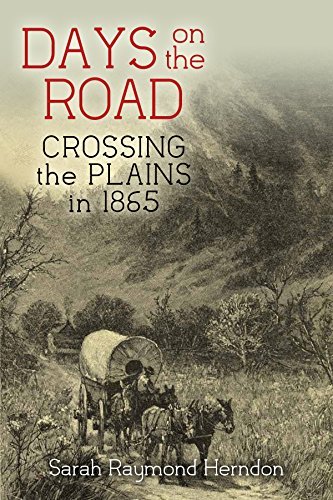
Days on the Road: Crossing the Plains in 1865
“Why are we here? Why have we left home, friends, relatives, associates, and loved ones, who have made so large a part of our lives and added so much to our happiness?”
On May 1, 1865, Sarah Raymond mounted her beloved pony and, riding alongside the wagon carrying her mother and two younger brothers, left war-torn Missouri and headed west.
With the sole motive of bettering themselves, the Raymonds began their journey undecided as to whether California or Oregon would be their ultimate destination.
By the middle of June, however, they had been persuaded that Montana was in fact the place to make for and the train altered path accordingly.
As they passed through Iowa, Nebraska and Wyoming towards the Rocky Mountains, they faced all manner of perils in experiencing the harsh reality of life on the Great Plains.
After four months and four days, the wagon train finally arrived in Virginia City, Montana in early September, and they set about beginning their new lives.
Unvarnished and evocative, Days on the Road is an extraordinary journal of what it was really like on the trail for the many who emigrated west in a bid to start over.
Sarah Raymond Herndon (1840-1914) arrived in Montana at the height of the Gold Rush in 1865. After teaching there for one school year, she married James M. Herndon in 1867. In addition to Days on the Road she also kept a diary of her experiences in Virginia City.
On May 1, 1865, Sarah Raymond mounted her beloved pony and, riding alongside the wagon carrying her mother and two younger brothers, left war-torn Missouri and headed west.
With the sole motive of bettering themselves, the Raymonds began their journey undecided as to whether California or Oregon would be their ultimate destination.
By the middle of June, however, they had been persuaded that Montana was in fact the place to make for and the train altered path accordingly.
As they passed through Iowa, Nebraska and Wyoming towards the Rocky Mountains, they faced all manner of perils in experiencing the harsh reality of life on the Great Plains.
After four months and four days, the wagon train finally arrived in Virginia City, Montana in early September, and they set about beginning their new lives.
Unvarnished and evocative, Days on the Road is an extraordinary journal of what it was really like on the trail for the many who emigrated west in a bid to start over.
Sarah Raymond Herndon (1840-1914) arrived in Montana at the height of the Gold Rush in 1865. After teaching there for one school year, she married James M. Herndon in 1867. In addition to Days on the Road she also kept a diary of her experiences in Virginia City.
290 pages, Kindle Edition
First published April 1, 2003
Ratings & Reviews
Friends & Following
Create a free account to discover what your friends think of this book!
Community Reviews
Displaying 1 - 30 of 181 reviews

June 18, 2023
This is a very good depiction of settler emigration to the western U.S.
Taken from the diary of 24 year old Sarah Raymond, of Missouri, it describes the trials and tribulations of the brave Americans who moved west to hopefully find a better life for themselves.
Although the paths to many western locations from Missouri had been well traveled by 1865, there were still many hardships that had to be endured. Sarah's family's trek to their destination in Montana took place from May 1 to September 6, and at that time, the Native Americans were to be contended with.
I really enjoyed this private look into the day-to-day experiences of what it was like to pick up your family and venture west in those well-known covered wagons.
It was repetitious at times due to the monotony of travel, but it opened so many informative windows into the personal life during the western expansion of the U.S.
Taken from the diary of 24 year old Sarah Raymond, of Missouri, it describes the trials and tribulations of the brave Americans who moved west to hopefully find a better life for themselves.
Although the paths to many western locations from Missouri had been well traveled by 1865, there were still many hardships that had to be endured. Sarah's family's trek to their destination in Montana took place from May 1 to September 6, and at that time, the Native Americans were to be contended with.
I really enjoyed this private look into the day-to-day experiences of what it was like to pick up your family and venture west in those well-known covered wagons.
It was repetitious at times due to the monotony of travel, but it opened so many informative windows into the personal life during the western expansion of the U.S.

September 6, 2023
This was not the most interesting book that I have read about the pioneers. Sarah and her mother decide to head out from Missouri to California, They changed their mind and Went to Virginia city, Montana. They arrived on September 6, 1865. I finished this book on September 6, 2023. That is the most interesting thing about this book how we finished on the same day..
It was actually her riding that made the book so boring, but what can anyone expect. It was just a journal, and she was not a real writer.
It appears to me that by the time she took this trip, the west was won, or should I say it was lost as the native people would say. It was almost like crossing the prairie in an old model T.. Roads had Been made, towns had been built, and there were homesteads along the way. When they reached the western states, Indians Had been Killing the pioneers. She found them repulsive, and intern, I found her repulsive. Let's just say, She did not like them begging for food, and I did not like the reason why they had to bake for food.
It was actually her riding that made the book so boring, but what can anyone expect. It was just a journal, and she was not a real writer.
It appears to me that by the time she took this trip, the west was won, or should I say it was lost as the native people would say. It was almost like crossing the prairie in an old model T.. Roads had Been made, towns had been built, and there were homesteads along the way. When they reached the western states, Indians Had been Killing the pioneers. She found them repulsive, and intern, I found her repulsive. Let's just say, She did not like them begging for food, and I did not like the reason why they had to bake for food.

December 30, 2019
A daily journal written by 24-year-old Sarah Raymond Herndon while her family was part of a wagon train headed out west in 1865. The journey took four months from start to finish.
For a primary source from 1865, I was surprised at how easy it was to read this. Super easy to understand and visualize. Sarah has an obvious love of nature and weather, and of her horse Dick. She was surprisingly positive throughout the entire journey and it truly seems like she enjoyed every day riding and camping on the trail. There are only a few accounts of tragedy on this journey-I expected to hear more in the way of very hard circumstances. Excellent read for those interested in first-hand frontier life.
For a primary source from 1865, I was surprised at how easy it was to read this. Super easy to understand and visualize. Sarah has an obvious love of nature and weather, and of her horse Dick. She was surprisingly positive throughout the entire journey and it truly seems like she enjoyed every day riding and camping on the trail. There are only a few accounts of tragedy on this journey-I expected to hear more in the way of very hard circumstances. Excellent read for those interested in first-hand frontier life.
August 26, 2022
I just thought for a 24 year-old woman in 1865, she was very childish and snobby.
It is not very exciting. I expected more-more details about the hardships, the relationships, the murder trial. I wish there were more details about the trial or other "unladylike" things, but it is what it is.
Also, I really hated how racist she was (which is expected for 1865- but still awful to see) towards the natives-especially when one day she is complaining about how "uncivilized" they are and then a few days later she sees a couple of them at a fort trying to be "civilized" and it is still not good enough for her.
It is not very exciting. I expected more-more details about the hardships, the relationships, the murder trial. I wish there were more details about the trial or other "unladylike" things, but it is what it is.
Also, I really hated how racist she was (which is expected for 1865- but still awful to see) towards the natives-especially when one day she is complaining about how "uncivilized" they are and then a few days later she sees a couple of them at a fort trying to be "civilized" and it is still not good enough for her.

November 16, 2018
This first person account tells the story of Sarah Raymond Herndon crossing the plains in 1865. Sarah, her mother, and brothers decided to leave war-stricken Missouri for the west in hopes of improving their circumstances. Sarah was twenty-four years old when her family began the long trek which would lead them to Virginia City, Montana, a mining town. She was well-educated and kept a diary with a clear account of what happened on the four-month journey.
Sarah viewed life through the lens of a strong Christian whose beliefs reflect those of the mid-nineteenth century faithful. Through this lens we see her appreciation for the beauty of God’s creation and her great compassion for her fellow travelers. Also in the pages of the book is Sarah’s love of riding her pony, Dick, her care and nurturing of those who fall sick, and her admirable love and loyalty for her friends.
So many of Sarah’s stories reveal details and events one would scarcely imagine. Two weeks into the journey, one of the men in the wagon train is shot and killed accidently by a gun that was believed to be inoperable. The funeral was held at a local Presbyterian Church and Sarah has this to say about the Presbyterian faith of the mid-nineteenth century:
“What a precious, what a comforting, satisfying faith the Presbyterian faith must be … According to their belief one never dies, nothing ever happens without God’s providence, approval and foreknowledge that it will happen in just that way. I wish I could accept such a faith, and believe it, but I cannot. I do not believe it was ordained that Mr. Milburn should die in that way and at that time. I believe it was an accident that might have been prevented by the most trivial circumstance. The laws of nature are inexorable. If a bullet is shot into a vital part of the body it kills.”
When the wagon train progressed to the area of Fort Kearney in south central Nebraska, it passed the graves of eleven men that were killed the previous August by the Indians. Fourteen people made up the party of twelve men and two women who were wives of two of the men. When one of the men was away fetching water from a creek, the other eleven men were killed and the two women were taken hostage. The remaining man reported the incident to a nearby station. Soldiers pursued the Indians and rescued the women. One of the women had seen her husband killed and was insane. She died a short time later. The other woman was the wife of the man who had been at the creek. That couple was from St. Joseph, Missouri
Excitement could crop up in the blink of an eye. Mr. Morrison’s team ran away one afternoon after being frightened by an ant hill. The ant hill was the size of a chicken house. Several men were nearby and caught up with the runaways, stopping them just as the front wheels went over the bank of a river. Sarah says Mrs. Morrison did not scream or try to jump out, nor did she allow any of her four children to do so. Instead, she acted “like the sensible woman that she is.”
Sarah was a keen observer of the beauty along the way and did her best to put it into words. Here is a glimpse of what she saw on July 18. “The masses of fleecy white clouds, with the brightness of the morning sun shining upon them as they floated around and over the top of the mountain, made an ever-changing, beauteous panorama that I cannot describe. As the clouds rose higher and higher, they seemed to mass over the top of the mountain, as in benediction, glittering in the sunshine until they seemed to melt away.”
Neelie, one of Sarah’s dear friends on the move west, came down with “mountain fever”. Rocky Mountain spotted fever is caused by ticks which introduce bacteria. Nowadays it is easily treated if the treatment begins soon after the symptoms appear (fever, headaches, aching muscles, rash). Sarah wondered what caused the fever and whether it was contagious, an indication of how little was known at that time. Sadly, Neelie died three weeks before the end of Sarah’s journey.
About two weeks before the end of the journey, one of the Raymonds’ oxen became poisoned by a weed he ate. Sarah’s brothers tried to treat the animal to no avail. Sarah and her mother put on their big aprons and began their work to save Joe. They melted a quart of lard and put it in a long-necked bottle. They cut up a lot of fat bacon into strips, and took a bucket of cold water. When they got to Joe, they put the bottle of lard in his mouth to pour it down his throat. Sarah put her hand way down Joe’s throat so he would swallow the strips of bacon fat. Then they poured water on his nose, which was burning hot. The animal began to improve and the next morning, he was grazing and seemed as well as ever.
The next day Sarah sold her beloved pony, Dick. Payment was in the form of gold dust worth $125. Sarah was heartbroken, but the money was badly needed and the pony was not.
On the outskirts of Virginia City, Sarah met a woman whose husband was a miner. After they had talked for a while, Sarah overheard the woman call across the street to her neighbor so Sarah could hear. The woman said, “Some more aristocrats. They didn’t come here to work. Going to teach school and play lady.” Sarah wrote, “I laughed at the first impression made, and tried to realize that teaching is not work.”
In Virginia City, Sarah’s family moved into a log cabin with two rooms that they rented for eight dollars per month, and that is where her story ends.
This book was truly riveting from cover to cover. For anyone interested in the pioneers moving west during the 1860’s, it is a must-read. The author’s upbeat can-do view of life comes through on every page and serves as a sterling example of what strong women in the mid-nineteenth century could do.
Sarah viewed life through the lens of a strong Christian whose beliefs reflect those of the mid-nineteenth century faithful. Through this lens we see her appreciation for the beauty of God’s creation and her great compassion for her fellow travelers. Also in the pages of the book is Sarah’s love of riding her pony, Dick, her care and nurturing of those who fall sick, and her admirable love and loyalty for her friends.
So many of Sarah’s stories reveal details and events one would scarcely imagine. Two weeks into the journey, one of the men in the wagon train is shot and killed accidently by a gun that was believed to be inoperable. The funeral was held at a local Presbyterian Church and Sarah has this to say about the Presbyterian faith of the mid-nineteenth century:
“What a precious, what a comforting, satisfying faith the Presbyterian faith must be … According to their belief one never dies, nothing ever happens without God’s providence, approval and foreknowledge that it will happen in just that way. I wish I could accept such a faith, and believe it, but I cannot. I do not believe it was ordained that Mr. Milburn should die in that way and at that time. I believe it was an accident that might have been prevented by the most trivial circumstance. The laws of nature are inexorable. If a bullet is shot into a vital part of the body it kills.”
When the wagon train progressed to the area of Fort Kearney in south central Nebraska, it passed the graves of eleven men that were killed the previous August by the Indians. Fourteen people made up the party of twelve men and two women who were wives of two of the men. When one of the men was away fetching water from a creek, the other eleven men were killed and the two women were taken hostage. The remaining man reported the incident to a nearby station. Soldiers pursued the Indians and rescued the women. One of the women had seen her husband killed and was insane. She died a short time later. The other woman was the wife of the man who had been at the creek. That couple was from St. Joseph, Missouri
Excitement could crop up in the blink of an eye. Mr. Morrison’s team ran away one afternoon after being frightened by an ant hill. The ant hill was the size of a chicken house. Several men were nearby and caught up with the runaways, stopping them just as the front wheels went over the bank of a river. Sarah says Mrs. Morrison did not scream or try to jump out, nor did she allow any of her four children to do so. Instead, she acted “like the sensible woman that she is.”
Sarah was a keen observer of the beauty along the way and did her best to put it into words. Here is a glimpse of what she saw on July 18. “The masses of fleecy white clouds, with the brightness of the morning sun shining upon them as they floated around and over the top of the mountain, made an ever-changing, beauteous panorama that I cannot describe. As the clouds rose higher and higher, they seemed to mass over the top of the mountain, as in benediction, glittering in the sunshine until they seemed to melt away.”
Neelie, one of Sarah’s dear friends on the move west, came down with “mountain fever”. Rocky Mountain spotted fever is caused by ticks which introduce bacteria. Nowadays it is easily treated if the treatment begins soon after the symptoms appear (fever, headaches, aching muscles, rash). Sarah wondered what caused the fever and whether it was contagious, an indication of how little was known at that time. Sadly, Neelie died three weeks before the end of Sarah’s journey.
About two weeks before the end of the journey, one of the Raymonds’ oxen became poisoned by a weed he ate. Sarah’s brothers tried to treat the animal to no avail. Sarah and her mother put on their big aprons and began their work to save Joe. They melted a quart of lard and put it in a long-necked bottle. They cut up a lot of fat bacon into strips, and took a bucket of cold water. When they got to Joe, they put the bottle of lard in his mouth to pour it down his throat. Sarah put her hand way down Joe’s throat so he would swallow the strips of bacon fat. Then they poured water on his nose, which was burning hot. The animal began to improve and the next morning, he was grazing and seemed as well as ever.
The next day Sarah sold her beloved pony, Dick. Payment was in the form of gold dust worth $125. Sarah was heartbroken, but the money was badly needed and the pony was not.
On the outskirts of Virginia City, Sarah met a woman whose husband was a miner. After they had talked for a while, Sarah overheard the woman call across the street to her neighbor so Sarah could hear. The woman said, “Some more aristocrats. They didn’t come here to work. Going to teach school and play lady.” Sarah wrote, “I laughed at the first impression made, and tried to realize that teaching is not work.”
In Virginia City, Sarah’s family moved into a log cabin with two rooms that they rented for eight dollars per month, and that is where her story ends.
This book was truly riveting from cover to cover. For anyone interested in the pioneers moving west during the 1860’s, it is a must-read. The author’s upbeat can-do view of life comes through on every page and serves as a sterling example of what strong women in the mid-nineteenth century could do.

March 26, 2024
"While there is life there is hope" was a nice quote from this work. But in all honesty I'm not entirely sure why I read this. There is and has been a lot of suffering and I can't help but try to think about the countless other instances of suffering that have fallen into the past, receded from memory, and are now unrecoverable. People have lived very difficult lives and this is a good historical document that testifies to that. The descriptions of mountains and nature were very beautiful as well.
My problem with it, is that the author is a hypocritical racist. And while I understand that this may not be her fault, but rather the circumstances of her life etc, that is no reason to induce me to like the work. It is effectively a story of land theft. So while I do not regret reading it, as it is a valuable peek into 19th Century US history, it is not something I will hold especially dear to my soul.
My problem with it, is that the author is a hypocritical racist. And while I understand that this may not be her fault, but rather the circumstances of her life etc, that is no reason to induce me to like the work. It is effectively a story of land theft. So while I do not regret reading it, as it is a valuable peek into 19th Century US history, it is not something I will hold especially dear to my soul.

July 29, 2013
Days on the Road is a rare first-hand account written by a plucky, pious young girl emigrating across the great, wild American plains from Missouri to the foundling West during the last stages of the civil war.
Much of that stretch was Injun' country in 1865 and the threat of being scalped was very real, with countless fresh tales and graves along the way to underline the risks.
Still, despite her tender years, Herndon has her faith to draw courage from and before the convoy moves out she shows scorn for those too afraid to make the journey with her:
'God can, and will, take care of us on the plains as anywhere. He is leading us through unknown paths. We can trust him. Heaven is as near one place as another'.
A simple, sweet-natured narrator, her "heart aches" at the sight of suffering, such as captive Confederate soldiers miles from their families, and when a gifted guitarist refuses to play for the company she muses:
'If I was gifted with a talent, with which I could give pleasure to people, I would certainly do so whenever opportunity was afforded. I would be glad to promote the happiness, and dispel as much sorrow as possible, in this sorrowful world'.
Still, it's just this sweet quality that prohibits any thrills or grit that may have enlivened the account. Herndon must have seen and heard a lot more than she is willing to write but her youth and prudery keeps it off the page.
She is not impressed with some of the "Becky Sharp" type women she meets along the way, and when she finally meets the 'noble red man' the Indian fails to interest her as he had 'no feather, beads nor blankets' and 'was as ugly as sin'.
There are fatalities along the way, but not from the expected source. Illness ravages the emigrants at various times as they suffer from malnutrition and the dust and heat of the relentless plains. The only gun-shot wound is self-inflicted, a Mr. Milburn being tragically killed when a shot gun sitting on a wagon discharges when the wheels hit a rut.
Mr. Milburn was a Presbyterians, which was not Herndon's faith. To her the death was just an accident, but in a particularly touching diary entry she reveals how she can understand the comfort in believing that 'nothing ever happens without providence, approval and foreknowledge that it will happen in just that way'.
For that moment and one or two others Days on the Road was worth a read.
But if, like me, you are expecting an insightful look into an incredible journey where you can feel the prairie wind and taste the chewing tobacco, forget it.
Much of that stretch was Injun' country in 1865 and the threat of being scalped was very real, with countless fresh tales and graves along the way to underline the risks.
Still, despite her tender years, Herndon has her faith to draw courage from and before the convoy moves out she shows scorn for those too afraid to make the journey with her:
'God can, and will, take care of us on the plains as anywhere. He is leading us through unknown paths. We can trust him. Heaven is as near one place as another'.
A simple, sweet-natured narrator, her "heart aches" at the sight of suffering, such as captive Confederate soldiers miles from their families, and when a gifted guitarist refuses to play for the company she muses:
'If I was gifted with a talent, with which I could give pleasure to people, I would certainly do so whenever opportunity was afforded. I would be glad to promote the happiness, and dispel as much sorrow as possible, in this sorrowful world'.
Still, it's just this sweet quality that prohibits any thrills or grit that may have enlivened the account. Herndon must have seen and heard a lot more than she is willing to write but her youth and prudery keeps it off the page.
She is not impressed with some of the "Becky Sharp" type women she meets along the way, and when she finally meets the 'noble red man' the Indian fails to interest her as he had 'no feather, beads nor blankets' and 'was as ugly as sin'.
There are fatalities along the way, but not from the expected source. Illness ravages the emigrants at various times as they suffer from malnutrition and the dust and heat of the relentless plains. The only gun-shot wound is self-inflicted, a Mr. Milburn being tragically killed when a shot gun sitting on a wagon discharges when the wheels hit a rut.
Mr. Milburn was a Presbyterians, which was not Herndon's faith. To her the death was just an accident, but in a particularly touching diary entry she reveals how she can understand the comfort in believing that 'nothing ever happens without providence, approval and foreknowledge that it will happen in just that way'.
For that moment and one or two others Days on the Road was worth a read.
But if, like me, you are expecting an insightful look into an incredible journey where you can feel the prairie wind and taste the chewing tobacco, forget it.
January 21, 2021
Hard to rate books like this.
On May 1, 1865 Sarah Raymond, her mother, and others set off on a wagon trail to a new life. It is not entirely clear why. It is also not clear how old she is. Lucky for us, she kept a journal, which was decades later published as a book in 1902 after she died.
The fact she intended to write a journal and not a book is significant. Journals often are meant to be read by the author only. Books are meant for a larger audience. Ms. Raymond did not intend at the time of writing to share her journal with us. She had no need to explain her mother's motives for seeking a new life. She writes honestly, from the heart, and at times uncomfortably.
I was surprised during the first half of the book how organized the journey was. I was expecting them to be entering into the wilderness from the start. Instead, they stop at towns and stay at hotels.
This is an easy read. Its value is this is an eye-witness account of a wagon journey from Missouri to Montana in 1865. It is not very exciting. I expected more. Attacks from the natives, more details about the hardships suffered, the relations between the people traveling together. I did feel as if I was traveling with them at times. The toll bridge collectors, sellers of overpriced vegetables and other rip offs angered me. The story was repetitive with some interesting incidents. Which I suppose is just as it happened.
On May 1, 1865 Sarah Raymond, her mother, and others set off on a wagon trail to a new life. It is not entirely clear why. It is also not clear how old she is. Lucky for us, she kept a journal, which was decades later published as a book in 1902 after she died.
The fact she intended to write a journal and not a book is significant. Journals often are meant to be read by the author only. Books are meant for a larger audience. Ms. Raymond did not intend at the time of writing to share her journal with us. She had no need to explain her mother's motives for seeking a new life. She writes honestly, from the heart, and at times uncomfortably.
I was surprised during the first half of the book how organized the journey was. I was expecting them to be entering into the wilderness from the start. Instead, they stop at towns and stay at hotels.
This is an easy read. Its value is this is an eye-witness account of a wagon journey from Missouri to Montana in 1865. It is not very exciting. I expected more. Attacks from the natives, more details about the hardships suffered, the relations between the people traveling together. I did feel as if I was traveling with them at times. The toll bridge collectors, sellers of overpriced vegetables and other rip offs angered me. The story was repetitive with some interesting incidents. Which I suppose is just as it happened.
June 3, 2016
A nice little diary. Short but a perspective of crossing from Missouri to the west that is unique. The author, Sarah, leaves much unsaid, and much that was said was done very politely and with an amazingly positive perspective. To me it displays the prim and 'stiff upper lip' attitude that her family seems to observe for every situation whether thrilling or catastrophic. She doesn't give details of their suffering just stated facts concerning the journey and all they struggled through. So, although it was interesting to read and I would recommend it to anyone who has a fervor for diaries and accounts of the western trek but because the author is true to the times she lived in the details of the rigors fo the trip are left to our imagination.

January 20, 2023
Such a different mindset than today...
Isn't it amazing that one only needs open a book to hear the thoughts and words of one long dead? This book is one such. An excellent read. Still, keep in mind the utter hypocrisy of the Bible-thumping Christian mindset. She wishes there was a preacher available for Sunday services and with the same breath says the Indians are sub-human, filthy beggars. I'm sure she used the N-word regularly when she was in the company of blacks. If you can look past these indiscretions I think you will enjoy and get a true feeling of what it was like crossing the plains for four months in a covered wagon.
Isn't it amazing that one only needs open a book to hear the thoughts and words of one long dead? This book is one such. An excellent read. Still, keep in mind the utter hypocrisy of the Bible-thumping Christian mindset. She wishes there was a preacher available for Sunday services and with the same breath says the Indians are sub-human, filthy beggars. I'm sure she used the N-word regularly when she was in the company of blacks. If you can look past these indiscretions I think you will enjoy and get a true feeling of what it was like crossing the plains for four months in a covered wagon.

November 27, 2016
I've read a lot of westward expansion literature.
This one just doesn't cut it.
Dry reading, snobby author.
Not much new under the sun with this one and there are definitely better diaries out there.
This one just doesn't cut it.
Dry reading, snobby author.
Not much new under the sun with this one and there are definitely better diaries out there.

April 1, 2024
Nothing gives a better peek into the past than diaries and that's what this is. The details aren't often enough to satisfy this curious heart, but now and then they surprise and delight. This book reminds us that the gold rush didn't only happen in California, and that danger from Indians was still a problem during the time of the Civil War. It's not an exhaustive history or account but well worth the glimpses of life in a wagon train crossing the West.
March 11, 2019
Interesting Biography
This is an interesting story. Considering the time it was written, I feel the author did a good job of writing it. Very good use of the English language. Just a bit boreing.
This is an interesting story. Considering the time it was written, I feel the author did a good job of writing it. Very good use of the English language. Just a bit boreing.

May 9, 2025
It's so funny how much you learn and are brought into another world and another time by reading a historical journal. At the end I gasped when they had to pay $10 to cross a road. I wouldn't have blinked an eye if that had been at the beginning of the book, I would have had no context for what anything cost.
Loved this book.
Loved this book.
January 5, 2021
Sarah Raymond Herndon was 25 when her widowed mother and two of her brothers left Missouri for California. They joined a wagon train and began the long journey to California in 1865. Halfway through the j0urney, the family jointly decided to go to Montana instead. Her family, along with the rest of the wagon trained assigned her to keep a diary of the journey and this book is her diary. It's a fascinating look at day-to-day life in a wagon train when the Indians were still very much active. The diary starts with their departure and ends with their arrival in Virginia City, Montana. Sarah would remain in Virginia City for the rest of her life, dying in 1914.
She jumps right into her diary without even really introducing herself or her family, so the reader has to sort of figure it out as they go along. Some things that stood out to me after I finished the book:
1. Her genuine faith in God. The diary is full of references to God and the glory of the creation around her and her joy in him. Indeed, in some ways it reads quite contemporaneously, especially if you are a follower of Christ. She understood the dangers they faced, but did so realistically, she writes:
"We would not like to be scalped and butchered by the Indians, but it does seem so cowardly to run away from a possible danger. “The everlasting arms are underneath.” God can, and will, take care of us as well on the plains as anywhere. He is leading us through unknown paths. We can trust Him. Heaven is as near one place as another."
2. The common dangers of the road. The first tragedy while they are still in Iowa, one of the settlers is tragically killed by a rifle that was sitting in a wagon without a percussion cap on it. It should not have gone off, but the wagon hit a rut and the gun fires and struck the man in the chest and killed him within an hour. Without being morbid at all, Sarah comments again and again about the fresh graves they pass enroute, here a mother and infant (died in childbirth?), there a couple of graves of settlers caught by Indians and killed. Illness strikes the wagon train and one of her best friends gets ill and dies, though after Sarah's family had split off for Montana. Death was an ever present danger.
3. Her sparkling character. Sarah is 25 and single when she crosses the plains and seems quite independent and even funny at times, especially when pursued by unwanted male attention. About one of her erstwhile suitors she writes: "Dr. Howard gave me the bouquet he gathered on Elk Mountain, which was most beautifully arranged, and asked me “To keep it until it falls to dust.” I have put it between the leaves of a book and will perhaps never think of it again."
4. The day-to-day lives of settlers. When Sarah writes the diary, she really isn't thinking that someone will be reading it 150 years later and so her writing has this sort of fresh, immediacy to it that makes it interesting reading. She is concise, she is clear, she writes longer on the important events and shorter on the normal ones.
I'll end this review with one of my favorite passages. One of her brothers with some other men have to spend the night with the cattle 5 miles away from the wagon train so that they have a place to feed and they are in the very heart of the country where Indians are attacking and killing settlers left and right. She writes eloquently of that long night:
"Oh, the anxious watching, the prayerful longing for day that we must endure this night, because of loved ones exposed to danger. What a precious privilege that we can go to the Mercy-seat with the assurance that if we ask aright our petitions will be granted. How do people live without Christ and a Mercy-seat? What can they do, when suffering anxiety, grief, or bereavement, if they cannot go to Jesus with their sorrows? Precious Saviour, what a refuge in time of trouble, what a joy to carry everything to God in prayer."
Good book.
She jumps right into her diary without even really introducing herself or her family, so the reader has to sort of figure it out as they go along. Some things that stood out to me after I finished the book:
1. Her genuine faith in God. The diary is full of references to God and the glory of the creation around her and her joy in him. Indeed, in some ways it reads quite contemporaneously, especially if you are a follower of Christ. She understood the dangers they faced, but did so realistically, she writes:
"We would not like to be scalped and butchered by the Indians, but it does seem so cowardly to run away from a possible danger. “The everlasting arms are underneath.” God can, and will, take care of us as well on the plains as anywhere. He is leading us through unknown paths. We can trust Him. Heaven is as near one place as another."
2. The common dangers of the road. The first tragedy while they are still in Iowa, one of the settlers is tragically killed by a rifle that was sitting in a wagon without a percussion cap on it. It should not have gone off, but the wagon hit a rut and the gun fires and struck the man in the chest and killed him within an hour. Without being morbid at all, Sarah comments again and again about the fresh graves they pass enroute, here a mother and infant (died in childbirth?), there a couple of graves of settlers caught by Indians and killed. Illness strikes the wagon train and one of her best friends gets ill and dies, though after Sarah's family had split off for Montana. Death was an ever present danger.
3. Her sparkling character. Sarah is 25 and single when she crosses the plains and seems quite independent and even funny at times, especially when pursued by unwanted male attention. About one of her erstwhile suitors she writes: "Dr. Howard gave me the bouquet he gathered on Elk Mountain, which was most beautifully arranged, and asked me “To keep it until it falls to dust.” I have put it between the leaves of a book and will perhaps never think of it again."
4. The day-to-day lives of settlers. When Sarah writes the diary, she really isn't thinking that someone will be reading it 150 years later and so her writing has this sort of fresh, immediacy to it that makes it interesting reading. She is concise, she is clear, she writes longer on the important events and shorter on the normal ones.
I'll end this review with one of my favorite passages. One of her brothers with some other men have to spend the night with the cattle 5 miles away from the wagon train so that they have a place to feed and they are in the very heart of the country where Indians are attacking and killing settlers left and right. She writes eloquently of that long night:
"Oh, the anxious watching, the prayerful longing for day that we must endure this night, because of loved ones exposed to danger. What a precious privilege that we can go to the Mercy-seat with the assurance that if we ask aright our petitions will be granted. How do people live without Christ and a Mercy-seat? What can they do, when suffering anxiety, grief, or bereavement, if they cannot go to Jesus with their sorrows? Precious Saviour, what a refuge in time of trouble, what a joy to carry everything to God in prayer."
Good book.

August 28, 2017
5/1/1865, Sarah Raymond Herndon (24), Dick, Cash, Mr. Kerfoot, Mrs. Kerfoot, Neelie, (Cornelia), Sittie (Henrietta), Sim Buford, Ezra, Frank, Winthrop, Emma, & Delia were in the wagon train.
5/12/1865, it was Brother Hillhouse birthday.
The funeral services for Mr. Milburn were held at the Presbyterian Church.
He was buried shortly after.
Other loaded down wagon trains would come join & then go their own ways.
So far there had been no problems with the Indians.
7/4/1865, at Fremont's Orchard the Lathan's Ferry was taken.
Next stop the La Porte corral in the Black Hills.
At Rock Creek, the Indians had killed several travelers.
Dr. Fletcher (Walker’s stepbrother) is in love with Ms. Sallie.
Hosstetter was arrested for Frasier’s murder & taken to Port Bridger for trial.
For some the final destination Virginia City.
Others will move on & branch out.
I did not receive any type of compensation for reading & reviewing this book. While I receive free books from publishers & authors, I am under no obligation to write a positive review. Only an honest one.
A very awesome book cover, great font & writing style. A very well written Civil War era (journal) book. It was very easy for me to read/follow from start/finish & never a dull moment. There were no grammar/typo errors, nor any repetitive or out of line sequence sentences. Lots of exciting scenarios, with several twists/turns & a great set of unique characters to keep track of. This could also make another great Civil War era movie, or better yet a mini TV series. A very easy rating of 5 stars.
Thank you for the free author; EBookDaily; Enhanced Media Publishing; Amazon Digital Services LLC.; book
Tony Parsons MSW (Washburn)
5/12/1865, it was Brother Hillhouse birthday.
The funeral services for Mr. Milburn were held at the Presbyterian Church.
He was buried shortly after.
Other loaded down wagon trains would come join & then go their own ways.
So far there had been no problems with the Indians.
7/4/1865, at Fremont's Orchard the Lathan's Ferry was taken.
Next stop the La Porte corral in the Black Hills.
At Rock Creek, the Indians had killed several travelers.
Dr. Fletcher (Walker’s stepbrother) is in love with Ms. Sallie.
Hosstetter was arrested for Frasier’s murder & taken to Port Bridger for trial.
For some the final destination Virginia City.
Others will move on & branch out.
I did not receive any type of compensation for reading & reviewing this book. While I receive free books from publishers & authors, I am under no obligation to write a positive review. Only an honest one.
A very awesome book cover, great font & writing style. A very well written Civil War era (journal) book. It was very easy for me to read/follow from start/finish & never a dull moment. There were no grammar/typo errors, nor any repetitive or out of line sequence sentences. Lots of exciting scenarios, with several twists/turns & a great set of unique characters to keep track of. This could also make another great Civil War era movie, or better yet a mini TV series. A very easy rating of 5 stars.
Thank you for the free author; EBookDaily; Enhanced Media Publishing; Amazon Digital Services LLC.; book
Tony Parsons MSW (Washburn)

October 4, 2011
I'm always fascinated to read of earlier times, and Sarah left a very interesting diary chronicling her three-month wagon journey from Iowa to Montana in 1865. Her portrayal gave me a different picture of wagon-train journeys than I had previously had, but I also realize that her travel was toward the end of the Great Migration, and conditions had changed considerably from those heading west in the late 18th and early 19th centuries. Reading this book while vacationing in Glacier National Park and other areas of Montana and Idaho added to my experience.
April 26, 2016
This is one of three books I read for a class "East of Here," about the westward expansion. Of all 3 books I liked this one the best. It's an authentic diary of a woman on a wagon train in 1865. I appreciated Sarah's appreciation of the beauty of Nature as she traveled, as well as her descriptions of personalities along the way. What surprised me is how relatively uneventful the four-month journey was. She was a strong young woman who was independent and calm. I enjoyed the book. Was it awesome? No. But I'm still glad I read it.

July 3, 2017
I'm a pretty big history buff, so when I found this book while sorting through books at a thrift store I was volunteering at I was super excited. When I finally sat down to read it I was not disappointed. Some might find it boring, but I was intrigued at how Sarah saw life on the road. She seems to enjoy as much of it as she can. Her optimistic attitude shines out even when tragedy happens on her journey.

July 5, 2020
I liked this, but felt it was pretty light on content. Also, it seemed to me that it had been written after the event - anyway, who has time to write diaries when the rain is pouring and you're busy trying to scrabble around getting dinner and wash clothes and ensure your horses and oxen have enough to eat etc....? It makes sense that it would have been written up afterwards, probably from short scribbled notes written at the time. But it read more like a light story than anything else.
June 16, 2020
Diary/journal. Again, a book that I wondered what happened after the book ended. How did she get on in the rough 1865 Montana territory, especially since I got the impression she was not impressed with the environment they settled in.
September 16, 2016
True diary account of pioneer journey. Most interesting! Small book, easy read.
September 26, 2016
Excellent diary of a young women's journal across the Great Plains in 1865.

September 2, 2017
Journaling was the blog of it's day. I was totally taken aback by the story as I expected the story to be totally different. Sarah and her family were so cheerful and full of excitement. Never wavering from their positive outlook! I'd always thought that traveling by covered wagon would be a major drudgery that was endured because it was just the way to travel in 1865. As someone who grew up in Montana.. I now understand why there is a hatred of toll roads! lol. Everything about their journey to the West was positive. Deaths were just a way of life. Especially short lives. Plant'em.. say a few words.. and settle back in the knowledge that y'all will be reunited as man's life is rather short.. no matter how long one lives.
When I finished the book, I immediately went searching for a sequel. Drats. Sarah Herndon never had another book published. :( I would have loved to have followed her life's journey in addition. She had such a powerful trust in her faith. It brought her a great deal of comfort. And, comforted so many who traveled with her. I had to laugh when she met an older woman in her nineties.. who was so excited to be moving to Oregon! It made Sarah see her own "aging" mother in a different light. As they shortly celebrated her mother's 53rd birthday. Sarah was able to see that her mother had many, many, MANY years before her as long as she remained healthy.
I was surprised to hear how many folks left the territories shortly after arriving. Folks literally died of home sickness. I don't understand folks that don't have a strong will to live. Sarah seemed to be just as surprised. What a fantastic book! I highly recommend it to anyone. The story is timeless! I'm so glad that I happened to stumble upon it! Though, I imagine.. in life's journey.. we are given exactly what we need.. when we're ready to receive it. :)
When I finished the book, I immediately went searching for a sequel. Drats. Sarah Herndon never had another book published. :( I would have loved to have followed her life's journey in addition. She had such a powerful trust in her faith. It brought her a great deal of comfort. And, comforted so many who traveled with her. I had to laugh when she met an older woman in her nineties.. who was so excited to be moving to Oregon! It made Sarah see her own "aging" mother in a different light. As they shortly celebrated her mother's 53rd birthday. Sarah was able to see that her mother had many, many, MANY years before her as long as she remained healthy.
I was surprised to hear how many folks left the territories shortly after arriving. Folks literally died of home sickness. I don't understand folks that don't have a strong will to live. Sarah seemed to be just as surprised. What a fantastic book! I highly recommend it to anyone. The story is timeless! I'm so glad that I happened to stumble upon it! Though, I imagine.. in life's journey.. we are given exactly what we need.. when we're ready to receive it. :)

June 24, 2024
Put down Laura Ingalls Wilder and read this book. I absolutely loved it! It’s a diary that doesn’t read like a tediously long boring diary, but instead captivates the reader and narrates the trip across the great American West, fraught with floods and Indians and hunger and shootings and danger and laughter. One month after the Civil War ended, twenty-five-year-old Sarah Herndon, her widowed mother, and her two younger brothers set off on a trek across America to better their lives. Missouri was ravaged by war, and Montana was the place to be! Their small wagon train both grew and lessened in numbers as more joined, but others then departed for California. They baked and they froze, they outsmarted the hucksters and were ripped off by others. They had horses stolen and stole them back. They watched friends die from disease and accident along the trail. Sarah rode most of the journey on her faithful horse, Dick, keeping account almost every day of the things that occurred, in a perfectly engaging tale. Others saw the value in her chronicling the narrative, and they took over her share of tasks so that she could write the history of the trip. They finally reached Montana in early September, and there the story ends. Sarah and her family set up housing in a small house in Virginia City, Montana, a boomtown full of miners and business opportunities for the entrepreneurial. Whole-heartedly recommend this book. I listened on Librivox, and it’s also available on Project Gutenberg for a good free read.
November 19, 2022
Two stars. It was okay. I certainly expected more from ‘Days on the Road’. For example, hardships, Indian raids, disease, fording dangerous streams, more hardships. Instead, I read a journal by a 24-year-old girl, going on 16 where not much happened. They were basically camping out when the weather was right and they failed to come across hotels, ranch houses, and waystations. The author was judgmental toward anyone that wasn’t like her and her family. Yet they were constantly ripped off by Europeans at toll ferries. She didn’t like Indians. They were like beggars and ‘dirty as sin’. She also didn’t like the unladylike women in some of the other wagons, although that is not explained. I guess they were not ‘refined’ enough.
Some of her fellow travelers were deathly afraid of the noble savage. And yet on the entire trek more wagon train occupants were killed by fellow travelers (1) than by Indians. In fact, nothing dramatic happened on the trip worse than not finding wildflowers at times and the most challenging decision was whether to wear their ‘emigrant clothes’ or their ‘street suits and last summer’s hats’. A boring trip.
Some of her fellow travelers were deathly afraid of the noble savage. And yet on the entire trek more wagon train occupants were killed by fellow travelers (1) than by Indians. In fact, nothing dramatic happened on the trip worse than not finding wildflowers at times and the most challenging decision was whether to wear their ‘emigrant clothes’ or their ‘street suits and last summer’s hats’. A boring trip.

October 23, 2024
It was fascinating and sobering to read this diary by Sarah Raymond Herndon that covered her covered wagon trip from Missouri to Montana from May 1 to September 6, 1865 with her mother and two younger brothers. Sarah was 24.
Her daily diary entries recounted the challenges and risks of driving across rivers, up mountains, through driving rain and ferocious winds, and with an eye out for the threat of Indians. This is a collection of events, every one requiring courage, dependence on others in the wagon train, ingenuity, the ability to find food and water, all amid the constant presence of potential death from injury or illness. No matter the challenge, Sarah always had time to marvel at the beauty and majesty of the wilderness in front of her.
Her diary was written at a time when the aftermath of the Civil War was driving many people West, looking for a fresh start, a new tomorrow. Sarah and her family were willing to gamble their grit and survival skills for just that and they succeeded.It was a bit difficult to keep straight all of the people from the wagon train that were part of Sarah's story, but it was amazing that she had the discipline to write each day.
Her daily diary entries recounted the challenges and risks of driving across rivers, up mountains, through driving rain and ferocious winds, and with an eye out for the threat of Indians. This is a collection of events, every one requiring courage, dependence on others in the wagon train, ingenuity, the ability to find food and water, all amid the constant presence of potential death from injury or illness. No matter the challenge, Sarah always had time to marvel at the beauty and majesty of the wilderness in front of her.
Her diary was written at a time when the aftermath of the Civil War was driving many people West, looking for a fresh start, a new tomorrow. Sarah and her family were willing to gamble their grit and survival skills for just that and they succeeded.It was a bit difficult to keep straight all of the people from the wagon train that were part of Sarah's story, but it was amazing that she had the discipline to write each day.

March 4, 2023
Despite the glowing intro that praised this as an outstanding narrative of a wagon train's journey to the West, I found myself wincing a lot. Yes, Sarah was a good descriptive writer--but I hardly think this was your average crossing, seeing as she spent so much time gazing at mountains and going for walks with groups and gathering wildflowers. (I assume her mother was meanwhile doing all the cooking, wagon driving and generally the majority of the hard work.) She effused about the wonders of God's creation, yet she wrote the Indians (word of that time) off as "they seemed lazy, dirty obnoxious looking creatures" and referred to to their living on their own land as "infesting" it. She seemed to play down any discomfort (and you know their had to be many)--such as driving for days with dust coating everything and everyone as "rather disagreeable". I've read a lot of emigrant stories. I don't think they were quite the mobile picnic Sarah put in her journal.
January 25, 2021
Compared to some of the other books I've been reading about pioneers crossing the plains, this was rather bland, and taken from her perspective, she made it seem like a walk in the park. Any book written authentically in the 1800's has some merit but I think the fact that Sarah was around 14 definitely colored some of her writings. She was pretty judgmental and came across as somewhat of a snob, but she wrote about her surroundings descriptively.
I felt very bad when she finally sold her pony (a pony is under 14.2 hands high, so I wondered if she just called all horses ponies, otherwise it would seem rather small for a man to ride) that she was attached to and so proud of. I also found all the names of people rather confusing, but since she didn't really define any characters much, I didn't really care. I would say, pass on this book.
I felt very bad when she finally sold her pony (a pony is under 14.2 hands high, so I wondered if she just called all horses ponies, otherwise it would seem rather small for a man to ride) that she was attached to and so proud of. I also found all the names of people rather confusing, but since she didn't really define any characters much, I didn't really care. I would say, pass on this book.

January 25, 2024
Days on the Road by Sarah Raymond Herndon 1/5/2024 Kindle
This book is the personal account of a young woman’s wagon trip from Missouri to Montana, in 1865. While this historical memoir isn’t for everyone, I very much enjoyed reading it. There are no real surprises, but the simplicity of the day to day happenings, or oft times boring, seemed much more honest than thrilling fictional accounts of similar journeys. From a factual point, I found many interesting tidbits.
Even this early in our migration west, farms and small settlements were scattered along much to the journey. Even the bad guys found profit in ruining shallow crossings to charge tolls for their hastily constructed bridges. Simple pleasures prevailed, like a rope swing from a tree giving pure joy.
History comes in many pieces but this straight forward account was a simple pleasure to read.
This book is the personal account of a young woman’s wagon trip from Missouri to Montana, in 1865. While this historical memoir isn’t for everyone, I very much enjoyed reading it. There are no real surprises, but the simplicity of the day to day happenings, or oft times boring, seemed much more honest than thrilling fictional accounts of similar journeys. From a factual point, I found many interesting tidbits.
Even this early in our migration west, farms and small settlements were scattered along much to the journey. Even the bad guys found profit in ruining shallow crossings to charge tolls for their hastily constructed bridges. Simple pleasures prevailed, like a rope swing from a tree giving pure joy.
History comes in many pieces but this straight forward account was a simple pleasure to read.
Displaying 1 - 30 of 181 reviews