

What do you think?

Aria #3
Aria Volume 3: The Enchanted Collection
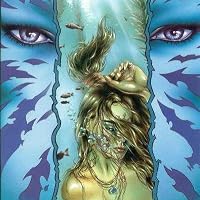
The Kingdom of Enchantment, a roadside theme park that flourished in the 1950s, has sat abandoned for decades. When a mysterious invitation literally drops into Kildare's lap, she is lead to a remarkable discovery - a genuine magical kingdom hidden away in the Catskill Mountains. But a dark and terrible secret lies buried at the heart of this fairytale land, a reminder of the dangers of getting what you wish for.
Collects Aria (vol 3) The Uses of Enchantment and The Summer Spell 1-2
Collects Aria (vol 3) The Uses of Enchantment and The Summer Spell 1-2
144 pages, Paperback
First published August 18, 2004
About the author
Brian Holguin
422 books20 followersAmerican writer who writes comics, novels and animation. Some of his works include "Aria", "Savior," "Spawn" "The Dark Crystal: Creation Myths," "Godslayer" and "Kiss: Psycho Circus".
Ratings & Reviews
Friends & Following
Create a free account to discover what your friends think of this book!
Community Reviews
Displaying 1 - 9 of 9 reviews

August 4, 2016
Pese a la desastrosa traducción y a los incontables errores de edición y corrección, esta historia ha conseguido emocionarme como ya lo había conseguido el primer volumen hace años (el cual es uno de mis cómics predilectos en la vida). No voy a castigar a la historia por culpa de quién no ha sabido acercarla bien al público en castellano, como ocurre demasiadas veces con demasiadas cosas... por desgracia.
Pero mi Kildare es lo mejor de la vida y eso es indiscutible.
Pero mi Kildare es lo mejor de la vida y eso es indiscutible.

October 1, 2024
Apparently, this is the third of three graphic novel collections of 'Aria' stories, but I had no idea as I went into it and, having discovered it after the fact, found that it didn't make any difference. The two stories here are fully formed and it's easy to pick up the characters immediately, even without any background in who they are and what they've done in previous volumes. The only question I've got is what 'Aria' actually means, because it's not a name used anywhere in either story.
It seems that the first 'Aria' was published in 1999 as a comic book series, with the lead character, a nine-hundred-year-old Faerie princess, running an esoteric bookshop in New York. A year later, she appeared in a crossover with Angela from 'Spawn', though that had to be redone after Image lost the rights to Angela in a court case. Then came 'The Soul Market' in 2001, in which Kildare battles Goodfellow, a.k.a. Puck from 'A Midsummer Night's Dream', who appears here, too; in a prose story at the end of the book. 2002 saw 'Summer's Spell', the last two-thirds of this book, while 2003 had a final story, 'The Uses of Enchantment', which constitutes the first two-thirds.
There's no obvious reason given, but I'd guess that it's just the better story, one that starts out as a non-clichéd character walking into a clichéd situation, but which then grows substantially into an almost shockingly emotional piece. A young lady named Joyce crashes her car in the Catskills and is rescued by a shadowy bulk of a monster and carried into the Kingdom of Enchantment, which is a long-abandoned mediaeval theme park. Fast-forward and a smartly dressed hedgehog who goes by Hans is preparing for a feast, preparations that include sending an invitation to Kildare via an old-school homing pigeon.
Kildare's not far away at her bookstore in Manhattan, and she can't resist the invitation, not least because it comes from King Oberon II, who shouldn't exist because King Oberon left no heirs, and is addressed to "the fairest in the land". What she finds is, at once, fairy tale romance perfect and subtly off. The king is all sweetness and light until someone mentions the outside world and then he erupts in a sudden rage. Kildare is emphatically welcomed but she gradually realises she's not allowed to leave. And something is very wrong with Queen Joyous, who feels far more like Queen Melancholy.
This is primarily a solo adventure for Kildare, though there are early appearances by a number of supporting characters who are series regulars. I have no idea how they usually play but they seem to be here only to help kick the story into motion, at which point they promptly leave it. The most endearing characters are new to this story: not just Hans, who is impeccably cute, but Ember, who is somehow on fire all of the time, and the mysterious Beast, who languishes in the dungeons and in frustrating anonymity. Of course, we eventually reach explanations during a blissfully capable finalé. This story is an excellent primary story in a larger book, but it would have served as a killer comic book.
I wasn't as fond of the second story, 'Summer's Spell', but it's decent enough. While the opener is presumably contemporary, so set just into the new millennium, even if its location is a theme park from the fifties, this one is clearly set in London during the swinging sixties. It's a romance, one in which Kildare remains our protagonist but arguably takes a backseat to guest character Thomas, who appears out of nowhere and practically takes over. He's an old lover of Kildare in Faerie and he's eager to pick up where they left off, having sought her for centuries.
There really isn't much more of a story than that, author Brian Holguin content to let an immense culture clash run its course to an unsurprising conclusion, while having fun with real figures of the day. There's Syd Barrett in a scene that gives Kildare a Forrest Gump-esque moment of inspiration that's as cute but as unnecessary as anything in that movie. Like he couldn't conjure up a title all on his own? Three months in, Thomas is chilling with Mick Jagger and Marianne Faithfull over the World Cup final results. How English can you get?
I really have no complaints about 'The Uses of Enchantment' because it does what it does exactly as it ought to do it. If I was forced to, I might suggest that the beautiful artwork of Len Medina is a little too realistic. Because we're mostly focused on beautiful people, it sometimes seems like it's built out of non-porn scenes from a porn comic. Everyone knows how to pose just so and I felt that they were doing so deliberately to tease us rather than just being captured from their daily lives by an unseen artistic eye. It's gorgeous art but I found that I preferred the less realistic approach taken in 'Summer's Spell'.
Otherwise it's a lesser story that's simpler, shorter and far less substantial. There's emotion in the final scenes, just as in the first story, but it's more focused and more expected but less impactful. I also want to know who Alfie is. He's a supporting character, a wannabe magician who's learning to do some impressive things but is clearly a novice hanging with experts whose backgrounds he only gradually learns. It felt like he ought to be based on a real historical figure, one I simply failed to recognise, but I don't think he is. I think he's just a character.
And, with the tough short prose story about Puck and Oberon to wrap things up, we're done. I liked this but the two graphic stories felt very different in quality. They're the final two in the series, so I'd like to check out the earlier stories, especially as 'Aria' and 'The Soul Market' became books of their own, without being combined with anything else, so I must assume they're more substantial, longer pieces. I'm more familiar with, but less interested in, Holguin's other work, as he wrote a lot of issues of Todd MacFarlane's 'Spawn', starting before 'Aria' and continuing after it. I'm far more interested in one of Lan Medina's other titles, a series for DC's Vertigo called 'Fables', written by Bill Willingham, that throws characters from folklore into the modern day.
Originally posted at the Nameless Zine in March 2023:
https://www.thenamelesszine.org/Illus...
Index of all my Nameless Zine reviews:
https://books.apocalypselaterempire.com/
It seems that the first 'Aria' was published in 1999 as a comic book series, with the lead character, a nine-hundred-year-old Faerie princess, running an esoteric bookshop in New York. A year later, she appeared in a crossover with Angela from 'Spawn', though that had to be redone after Image lost the rights to Angela in a court case. Then came 'The Soul Market' in 2001, in which Kildare battles Goodfellow, a.k.a. Puck from 'A Midsummer Night's Dream', who appears here, too; in a prose story at the end of the book. 2002 saw 'Summer's Spell', the last two-thirds of this book, while 2003 had a final story, 'The Uses of Enchantment', which constitutes the first two-thirds.
There's no obvious reason given, but I'd guess that it's just the better story, one that starts out as a non-clichéd character walking into a clichéd situation, but which then grows substantially into an almost shockingly emotional piece. A young lady named Joyce crashes her car in the Catskills and is rescued by a shadowy bulk of a monster and carried into the Kingdom of Enchantment, which is a long-abandoned mediaeval theme park. Fast-forward and a smartly dressed hedgehog who goes by Hans is preparing for a feast, preparations that include sending an invitation to Kildare via an old-school homing pigeon.
Kildare's not far away at her bookstore in Manhattan, and she can't resist the invitation, not least because it comes from King Oberon II, who shouldn't exist because King Oberon left no heirs, and is addressed to "the fairest in the land". What she finds is, at once, fairy tale romance perfect and subtly off. The king is all sweetness and light until someone mentions the outside world and then he erupts in a sudden rage. Kildare is emphatically welcomed but she gradually realises she's not allowed to leave. And something is very wrong with Queen Joyous, who feels far more like Queen Melancholy.
This is primarily a solo adventure for Kildare, though there are early appearances by a number of supporting characters who are series regulars. I have no idea how they usually play but they seem to be here only to help kick the story into motion, at which point they promptly leave it. The most endearing characters are new to this story: not just Hans, who is impeccably cute, but Ember, who is somehow on fire all of the time, and the mysterious Beast, who languishes in the dungeons and in frustrating anonymity. Of course, we eventually reach explanations during a blissfully capable finalé. This story is an excellent primary story in a larger book, but it would have served as a killer comic book.
I wasn't as fond of the second story, 'Summer's Spell', but it's decent enough. While the opener is presumably contemporary, so set just into the new millennium, even if its location is a theme park from the fifties, this one is clearly set in London during the swinging sixties. It's a romance, one in which Kildare remains our protagonist but arguably takes a backseat to guest character Thomas, who appears out of nowhere and practically takes over. He's an old lover of Kildare in Faerie and he's eager to pick up where they left off, having sought her for centuries.
There really isn't much more of a story than that, author Brian Holguin content to let an immense culture clash run its course to an unsurprising conclusion, while having fun with real figures of the day. There's Syd Barrett in a scene that gives Kildare a Forrest Gump-esque moment of inspiration that's as cute but as unnecessary as anything in that movie. Like he couldn't conjure up a title all on his own? Three months in, Thomas is chilling with Mick Jagger and Marianne Faithfull over the World Cup final results. How English can you get?
I really have no complaints about 'The Uses of Enchantment' because it does what it does exactly as it ought to do it. If I was forced to, I might suggest that the beautiful artwork of Len Medina is a little too realistic. Because we're mostly focused on beautiful people, it sometimes seems like it's built out of non-porn scenes from a porn comic. Everyone knows how to pose just so and I felt that they were doing so deliberately to tease us rather than just being captured from their daily lives by an unseen artistic eye. It's gorgeous art but I found that I preferred the less realistic approach taken in 'Summer's Spell'.
Otherwise it's a lesser story that's simpler, shorter and far less substantial. There's emotion in the final scenes, just as in the first story, but it's more focused and more expected but less impactful. I also want to know who Alfie is. He's a supporting character, a wannabe magician who's learning to do some impressive things but is clearly a novice hanging with experts whose backgrounds he only gradually learns. It felt like he ought to be based on a real historical figure, one I simply failed to recognise, but I don't think he is. I think he's just a character.
And, with the tough short prose story about Puck and Oberon to wrap things up, we're done. I liked this but the two graphic stories felt very different in quality. They're the final two in the series, so I'd like to check out the earlier stories, especially as 'Aria' and 'The Soul Market' became books of their own, without being combined with anything else, so I must assume they're more substantial, longer pieces. I'm more familiar with, but less interested in, Holguin's other work, as he wrote a lot of issues of Todd MacFarlane's 'Spawn', starting before 'Aria' and continuing after it. I'm far more interested in one of Lan Medina's other titles, a series for DC's Vertigo called 'Fables', written by Bill Willingham, that throws characters from folklore into the modern day.
Originally posted at the Nameless Zine in March 2023:
https://www.thenamelesszine.org/Illus...
Index of all my Nameless Zine reviews:
https://books.apocalypselaterempire.com/

April 25, 2020
the artwork is simply GORGEOUS. this was my introduction to Aria and now i'm curious to read the first two volumes.

November 12, 2021
Really good mixture of classic fae story with modern mixed in. Interesting twist.

Read
October 28, 2011Vuelven a estar disponibles en librerías y tiendas especializadas los tres tomos publicados en España de las aventuras de Aria. Devir reunió en tres cómics La magia de Aria, Aria: El mercado de las almas y Aria: Reino del Encantamiento, los 14 primeros tomos de la colección y podemos volver a disfrutar de ellos.
Lady Kildare, princesa de las hadas residente en Nueva York, es la protagonista de los tres arcos argumentales que se nos presentan. Kildare lleva una cómoda vida como propietaria de una tienda de antigüedades y artilugios místicos en la Gran Manzana durante el día y como alma de todas las fiestas por las noches. A través de las páginas de los cómics acompañaremos a Kildare y a sus amigos, Chato, Ginny, Ondina o Rolando entre otros por los diferentes planos de la realidad en sus mágicas aventuras. Desde alzamientos de señores oscuros, a mercados negros en los que se trafica con almas y fantasmas, pasando por hermosos reinos de fantasía que resultan ser un auténtico infierno. => Sigue leyendo la reseña en http://www.eltemplodelasmilpuertas.com
Lady Kildare, princesa de las hadas residente en Nueva York, es la protagonista de los tres arcos argumentales que se nos presentan. Kildare lleva una cómoda vida como propietaria de una tienda de antigüedades y artilugios místicos en la Gran Manzana durante el día y como alma de todas las fiestas por las noches. A través de las páginas de los cómics acompañaremos a Kildare y a sus amigos, Chato, Ginny, Ondina o Rolando entre otros por los diferentes planos de la realidad en sus mágicas aventuras. Desde alzamientos de señores oscuros, a mercados negros en los que se trafica con almas y fantasmas, pasando por hermosos reinos de fantasía que resultan ser un auténtico infierno. => Sigue leyendo la reseña en http://www.eltemplodelasmilpuertas.com

September 6, 2009
Not in the least bit what I expected, and I'm not in the least disappointed. This is volume 3 in the series, but it felt very much like a new story. I wasn't lost or left behind, and very much enjoyed the fantastical story. The atmosphere reminded me of a place called the Enchanted Forest--an outside recreation of various fairy tales and fables in a forest--that I went to as a kid. Great nostalgia and fun storytelling.
October 20, 2008
my first introduction to the GORGEOUS artwork of Jay Anacleto... I saw this used on the shelf w/other trade comix and thought WOW... then read it and more wow... loved the Aria stories
April 24, 2012
six star book
this is the one to loan when somebody asks why you read comics as an adult. because maybe once every year or two you can find a book this beautiful, this perfectly written.
this is the one to loan when somebody asks why you read comics as an adult. because maybe once every year or two you can find a book this beautiful, this perfectly written.
July 3, 2012
16.95
Displaying 1 - 9 of 9 reviews