"the freedom of the elite from democratic restraint limits other people's freedom from hunger, poverty, and brutal conditions of employment. it limits free access to health and education; freedom from industrial injuries; freedom from pollution, addiction, loan sharks and confidence tricksters. freedom for the financial sector means speculative chaos, economic crises and bailouts for which the rest of us must pay."
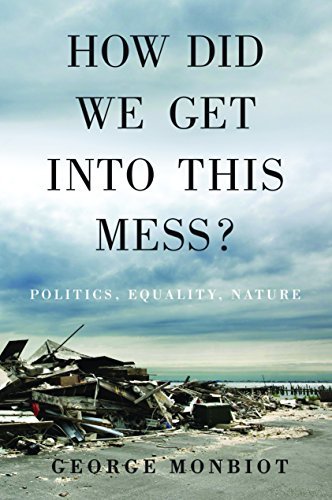
i am not going to write a full review for this, for the very simple reason that the book was a collection of many articles written by george monbiot between 2007 and 2015, and if i were to try to share my thoughts on all fifty-one of them, it would take several hours, and even then, i doubt i would be able to sufficiently explain the importance of monbiot's outspoken leftist activism. what i will say is that how did we get into this mess? serves as an accessible introduction to social justice, environmentalism, and anti-capitalism, touching on many complex academic topics with a journalist's flair and fondness for satire, and is therefore an asset to anyone wanting to learn more about the state of the world, where many of its problems lie, and subsequently explore ways of doing something about it. this did mean that very little of what monbiot discussed was new to me, and i likely would have benefitted more from reading feral or regenesis, but equally, i understand that many of his potential readers will not have degrees in geography, and will be able to gain a lot from his matter-of-fact discussions on environmentalism and equitable social systems.
the book was pleasant to read, insofar as essays on global inequality, discrimination, environmental crises, and poverty can ever be pleasant to read, both because of the writing style and because caring about these issues in a capitalist society can so often feel isolating and almost damning, but the unapologetic dedication monbiot has to the subject matter is reassuring. this book is proof that people are fighting for a better world, with the tools available to them, and that for every aspiring fascist or budding ceo, there are a dozen regular people trying to rebuild their community, or plant an orchard, or set up food banks and donation centres for those in need, or protest against the neoliberal regime. it is proof that yes, we do live in a world which has been pushed beyond its limits, but so long as people care, there will always be hope for something better, and hope may well be where change begins. and i say this as someone who does not have an optimistic bone in his body. i am, for lack of a better term, a cynical realist when it comes to the state of society, but i refuse to let go of the hope for something better, and be like many of monbiot's old friends who fell into the cyclical trap of capitalism just to survive. hope is a daunting thing, as evidenced by the plethora of global issues touched on in these three hundred pages alone, but giving up is dangerous. and i will continue to support george monbiot, his writing, and his activism, because this world needs more people willing to use their platforms and income for widespread public good.
the problems he was discussing in the late 2000s and early 2010s are still present today (he made a comment on the occupation of gaza back in 2014 which only hit harder given the current genocide, but this review is not the place for me to talk about that particular horror), and maybe that would lead to some people arguing that these articles are not doing anything, but i would beg to differ. many academics say that education and awareness raising are the first steps to tangible impact, which is precisely why i would recommend this book to those who do not share my educational background, but care about people and the planet. the purpose of this book, i think, is to further prevent the crimes of the elite, the blindness of the general public, the destruction of our ecosystems, and the crises of supply and demand from continuing to go unnoticed. and maybe his words will give more people something to believe in, and fight for.
"to be at peace with a troubled world: this is not a reasonable aim. it can be achieved only through a disavowal of what surrounds you. to be at peace with yourself within a troubled world: that, by contrast, is an honourable aspiration."