Jump to ratings and reviews
Rate this book

North Korea's Hidden Revolution: How the Information Underground Is Transforming a Closed Society

Rate this book
The story of North Korea's information underground and how it inspires people to seek better lives beyond their country’s borders

One of the least understood countries in the world, North Korea has long been known for its repressive regime. Yet it is far from being an impenetrable black box. Media flows covertly into the country, and fault lines are appearing in the government’s sealed informational borders. Drawing on deeply personal interviews with North Korean defectors from all walks of life, ranging from propaganda artists to diplomats, Jieun Baek tells the story of North Korea’s information underground—the network of citizens who take extraordinary risks by circulating illicit content such as foreign films, television shows, soap operas, books, and encyclopedias. By fostering an awareness of life outside North Korea and enhancing cultural knowledge, the materials these citizens disseminate are affecting the social and political consciousness of a people, as well as their everyday lives.

312 pages, Hardcover

Published November 15, 2016

36 people are currently reading
746 people want to read

About the author

Jieun Baek

4 books10 followers

Ratings & Reviews

What do you think?
Rate this book

Friends & Following

Create a free account to discover what your friends think of this book!

Community Reviews

5 stars
137 (30%)
4 stars
180 (40%)
3 stars
113 (25%)
2 stars
14 (3%)
1 star
4 (<1%)
Displaying 1 - 30 of 60 reviews
Profile Image for Lisa.
30 reviews
March 24, 2017
As someone who studies Korean culture, I have read numerous books about North Korea, defectors, and the deplorable acts of the North Korean regime. Despite heartfelt content, after a while, all these books start to blend together due to similar content. This was the first book I have read about North Korea/defectors that I felt was truly different and original from what has already been published. Baek did an amazing job interviewing defectors, NGOs, and North Korean scholars in order to depict a perfect image of how information is being transported into North Korea and changing their society. I was really moved by the empowering stories told in this book, and it has given me more appreciation for the power that information can have as "soft power" in politics.

"People say mountains change in about ten years. If something as stubborn and mammoth as a mountain can change in a decade, the hearts of ordinary North Koreans can change. I'm sure of it. I'm living proof." --Ha Young, a North Korean defector interviewed in Jieun Baek's book
Profile Image for Queralt✨.
803 reviews288 followers
October 2, 2024
I started reading this to pretend I was working on my PhD and Baek Jieun delivered because she literally had chapters and diagrams of stuff I needed but couldn't find for my research. I would hug her if I could and, who knows, maybe I will be able to one day.

Also, it is rare for me to read a book or anything about NK and actually LEARN stuff. New stuff. Not information that has been recycled again and again from different sources. This was a really nice read and very informative about information dissemination from NK defector-led organizations (mostly, and specially radios) to NK. Really cool.

"North Koreans are humans too, you know. Just like you, me, and the reader. North Koreans can and will adapt to newer, better circumstances. I’m sure of it."
Profile Image for Marian.
285 reviews217 followers
May 30, 2020
This was a great book on North Korea, far more encompassing than I expected. It aggregates many personal accounts into a cohesive but careful picture of life in North Korea today, focused especially on how foreign media is smuggled into the country. The policy and psychological analysis were truly fascinating, and I felt the author tried to present a balanced viewpoint while maintaining her thesis, that new information empowers long-term change. One of my favorite reads of the year so far! Watch the full video review on my YouTube channel.
Profile Image for Cav.
908 reviews207 followers
February 18, 2021
"A North Korean citizen has one freedom, which is the freedom to be born. Every event that occurs after an infant’s birth is officially determined by the state..."

This was a very informative and interesting book.
The Democratic People's Republic of Korea (or DPRK). You couldn't cram more irony into a single sentence if you tired...
North Korea's Hidden Revolution is DPRK 101; this book would make both an excellent primer to the naïve reader, as well as a great reference guide to those somewhat familiar with The Hermit Kingdom.

Author Jieun Baek is a researcher and author. She is currently a fellow at the Belfer Center at Harvard Kennedy School, and is the founder/co-director of the nonprofit Lumen.
She mentions early-on that her grandfathers escaped the DPRK.

Jieun Baek:
Screen-Shot-2019-11-08-at-12-34-23-PM

I found the writing here to be very well done. The book also has great formatting; it is broken up into chapters, and each chapter into segmented writing with headers at the top. Formatting like this makes for effective communication, and allows the material presented to be absorbed by the reader in an easily-digestible manner.
Baek also presents many case studies of individual defectors here; covering stories from their lives in the DPRK. This worked well here, and helped drive home the human aspect of this broader story.

There are many excellent quotes presented here by Baek. She tells the reader about the Kim dynasty, and some of their incredible accomplishments. "Below are some “facts” about their leaders that North Koreans are expected to believe:
• Kim Jong-Il was born on Paektu Mountain, the highest mountain on the Korean Peninsula, with a glowing star and a double rainbow heralding his birth. The creation myth of Korea centers on this mountain, where the mythical figure Dangun Waonggeom was born in 2333 BCE and became the founder of Gojoseon, the first kingdom of Korea. Soviet records, however, indicate that Kim Jong-Il was in fact born in the Siberian village of Vyatskoye.4
• Official North Korean records state that Kim Jong-Il learned to walk when he was three weeks old, and talked fluently by the time he was eight weeks old. By the age of three, he was able to shoot bull’s-eyes on targets with a gun. State media reported in 1994 that the first time Kim played golf, he shot a thirty-eight-under-par round on North Korea’s only golf course, including eleven holes-in- one.
• The state newspaper, Rodong Sinmun, reported that Kim Jong-Il’s suits, made of a North Korean fabric called vinylon (a blend of anthracite and limestone), became a global fashion icon. This is simply not true."

Baek tells the reader about the South Korean Government's efforts to help refugees from the North:
"Each year, the South Korean government spends $70 million for North Korean refugee resettlement. For every North Korean refugee, approximately $100,000 is spent on the investigation and settlement process. Some people receive free housing; others are offered apartments at half the market price. Many NGOs in South Korea help with the resettlement and assimilation process for North Koreans once they graduate from Hanawon."
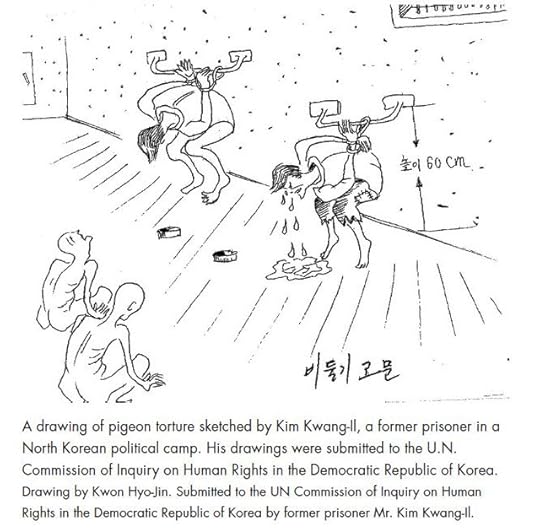
Most of the stories relayed here will likely shock and horrify the average reader, especially those of us who live in the West. The lives of the average citizens of the DPRK presented here tell snippets of a broader story of wholesale human misery; meted out by one of the worst regimes in the world today...
ef-ef-ef

North Korea's Hidden Revolution is an important book, that was very well written, edited, formatted, and presented. I would definitely recommend this one to anyone interested.
4.5 stars.
Profile Image for Marsha Altman.
Author 18 books134 followers
December 31, 2017
I was a little disappointed with this one, but it might just be that I've gotten picky about my books about North Korea because I've read so many so recently. It's a very recent book, so the defector stories are about people who were born during or after the famine and grew up with some free market economy, but the author jumps around never goes deep into their stories. There's also a lot of time spent on speculation about the future, which is not as interesting when you've read a lot of books on the topic. But it's not a bad book.
Profile Image for Anatl.
516 reviews59 followers
May 9, 2022
This book would pair well with The Real North Korea, it shows how capitalism has infiltrated the North, with most people resorting to doing business in order to survive. The book interviews many North Korean defectors about the effects of watching foreign entertainment secretively and how it influenced their lives, and whether it encouraged them to defect. It seems that most households especially near the borders are more open to foreign influences than imagined. And they are less closed off than we assume with many operating phones and making phone calls even to the south or having defectors transfer money back to their families in the North.
Profile Image for Jacob.
179 reviews31 followers
April 19, 2018
Up until I read this book I hadn’t really put any overly critical thoughts into how North Korea functioned. I had pretty much painted the entire country as a giant prison camp and local life was basically just A Day in the Life of Ivan Denisovich, which may not be wrong for an absurdly large percentage of the approximately 25 million people who, after doing something desperately evil in a previous life, call this place home, but it hardly handles the strange and utterly genius underground economy Baek’s book covers.

As all oxygen for the body must be pushed from the heart, all goods must come from Pyongyang. The problem is Pyongyang’s heart is arrhythmic and murmured to the point you're lucky if anything outside your chest does anything but turn necrotic, especially during the famine of the mid to late nineties. So, say what you will of capitalism, the market, uh, found a way. Suddenly food, cloth, and eventually tech came flooding into the country for anyone who had cash in hand. Of course, most didn’t and hundreds of thousands to million still died, but the building of the Underground Silk Road that seems to have functionally defined the country’s internal economy. Doctors send patients to these merchants to buy painkillers and antibiotics during illnesses, children use it to personally request the latest episodes of their favorite dramas, thieves fence stolen coal and anything else they happen to find that could make them a won.

The stories Baek gets from the defectors from North Korea are varied and harrowing and give the book a nice personalibility towards it. Realizing that the book is about how the invasion of foreign media is causing the book’s titular ‘Hidden Revolution’ I would have gladly spent more time with the defectors who get together at buffets for meetings. These people, some of whom share nothing but the same country of birth, getting together venting, adapting, and processing the previous week/month/year in context to their previous experiences, I wanted more of that. This isn’t even a critique anymore I just want a book like that. Maybe I can get Adam Johnson to do it? He did something similar in one of his short stories in Fortune Smiles, so maybe.

The book is well enough in its writing and excellent in its research and each part builds a larger and larger mosaic of how defectors and critics interact as a sort of open secret. The problem is Baek doesn’t seem to want to assume you’ve read any part of the book besides what you are reading. She tells you and tells you and tells you some more. Which is great, but, I, I guess, what do you call it? Retain? I retain things when I read, maybe not forever put certainly over the small jump of the partition separating the book’s parts. I understood the first time you told me that people used USB drives filled with foreign dramas they bought on the black market. I understood it again when you told me that one of the defectors decided to defect to South Korea after viewing a USB drive full of dramas he’s gotten on the black market. And again when you told me that the USB drives filled with an audiobook of the Bible read in the North Korean dialect were sent via balloons into North Korea were likely picked up by black market merchants and reformatted to house foreign dramas because they could be sold for more. Why not just say more lucrative media instead of including a variation of the same fact we’ve already learned. Things like this happen frequently and allow the book to function as a series of excerpts which might be helpful if one were putting together a thesis or something, but having read it in a handful of sessions it was downright grating at time. A little creative flair in the writing and all this backchannel repetition could have been disguised or at least shunted.

As a first book about North Korea I think it did really well bringing you into the contemporary world of North Korea. If you can get past, or perhaps not even notice the things that bothered me, then this book is a phenomenal look at the strange authoritarian (or as Baek calls it: Socialist) failure North Korea seems so hell-bent on preserving. Frankly, I just would have given up once cellphones and the internet came along. Sure, you guys can have a vote, but I’m going to sponsor all of the candidates and reserve the right to have you murdered or imprisoned if you piss me off (Hurray, Oligarchy). Hell, just let Jesus in and say that he told you were the new him and the North Korean Quaternity is born! I’m rambling at this point, but seriously, authoritarianism just sounds so hard and after reading this book, just so much like clenching sand in your fist, but then I suppose so people will do anything to avoid to having to listen the plebs grouse about such tawdry things as food.
Profile Image for Mary.
198 reviews4 followers
December 21, 2016
This book is a fascinating read. Probably the most in depth look into modern North Korea that I've come across so far.
Profile Image for Biblio Curious.
233 reviews8,254 followers
May 5, 2018
What can I possibly say about this one? My conclusion is simple, the North Koreans are geniuses. They've been limited in thought, but human curiosity has turned them into efficiency.

I think Baek was raised outside of Korea, but her insights and research tell a different story. She tells this story in such a culturally sensitive way and takes time to explain the nuances of Korean culture to help foreigners have a deeper understanding of why some things work the way they do. Both North & South stem from the same culture and of course some aspects have changed radically for the past 65 years.

With all of this in mind, Baek begins her narrative giving some insights into the mindset of North Koreans and their cultural social structure. Some of this is a blending of their shared traditions with the South and enforced culture from jong un. These insights give a great platform for the rest of her narrative. She builds on this by explaining how outside information is being smuggled into the country. She goes through a brief history of this information smuggling and brings us right up to the present time.

She includes many stories that remind us these are people just like us that she's talking about, but there is always something different about the North Koreans. They share the same qualities as us, such as love of family, concern for our children, dreams of education, capacity for a deep respect, but also the intelligence to begin questioning the reasons for giving that respect. She brings up the subtle point that a revolution may not be happening aggressively in North Korea, but there could be a much deeper, thoughtful one happening.

Finally, after reading this book, I have name to call him when speaking about him. And this is one of the final points in her book. Culturally, it's very disrespectful & she explains why, so well.
27 reviews
January 13, 2024
This book was informative in certain aspects, but it was also just a repeating of what most North Korea watchers already know: information leaks in via DVDs and USBs, many North Koreans have experience with foreign media, and that while it is affecting the country, it hasn't caused any sort of uprising.

I enjoyed reading the defectors' perspectives, and particularly why North Koreans may want to stay, even knowing that they are being lied to, particularly about the outside world; ironically, I felt this was best captured by Jieun who was quoting another individual who wasn't North Korean:

A Syrian American friend who has extended family in Damascus told me anecdotes of middle-class uncles who refused to leave Syria despite the ongoing civil war. “Of course they know that they can travel to different countries and leave all the chaos, death, and violence behind. They certainly can afford it. But how could they leave? Their roots are in Damascus. The air, the land, the dirt, the people, the chaos—all of it created the essence of who they are.” (p. 211)


My biggest fault with this book was that it was overly repetitive -- for example, when it came to how things like USBs or DVDs get into the country, I read (in detail) several times about how this went over the Tumen River.

I sincerely believe if this book was half the number of pages, it would be more effective because it would be more focused, and more to the point and would have received a four-star rating than the three-star that I gave it.
Profile Image for Chantelle Tuffigo.
280 reviews4 followers
December 11, 2023
I consider myself very well educated on North Korea already and I still learned a ton from this book! I'm surprised it's not more highly rated.
Profile Image for Wren.
1,218 reviews148 followers
December 16, 2025
Baek covers some of the same information that I have read in other books about North Korea. However, she focuses on the way North Koreans acquire information that is forbidden. It's interesting to read about how information is smuggled in and how USB drives play a role in this information economy now. Also of note is how the country has informal capitalism with people buying and selling forbidden items and services. The government used to provide more jobs, goods, and services. However, life there is a lot more impoverished overall. Many family members who have escaped through China or South Korea (and then may or may not still live in these neighboring countries) find ways to send funds to help their starving relatives.

It's heartbreaking to see people living with scant resources and a very low level of human rights. People can be so cruel, but people can also be incredible courageous and resourceful.
Profile Image for Rebecca H..
9 reviews7 followers
August 15, 2017
A hopeful, optimistic and informative read. Jieun Baek intelligently tackles a topic I’ve been dying to explore: the dissemination of Western media and thought in North Korea through technology, and whether there is hope for mobilizing internal psychological revolution against Kim Jon Un’s regime or even for nonviolent diplomacy. Spoiler alert: it’s penetrable, but it’s a process, and I think there’s a lot of really fascinating and ultra relevant cultural study here that anyone working in east Asian diplomacy or policy would do well to know.

“Civil society organizations and possibly government-agency-powered efforts to increase the flow of information into North Korea may well be the most reasonable, sustainable, cost-effective, and peaceful way of creating positive change inside North Korea. Information dissemination is significant because North Koreans are demanding it, and an informed citizenry has more data points from which to determine its future. Access to more information gives North Korean people the agency, self-determination, and knowledge to write their own future and destiny as a nation.”

Of course, there’s no easy answer to ending the current regime in North Korea or even tackling our current nuclear standoff. Baek does the extensive work of getting to know dozens of defectors with varying stories: it is important to know how black market media, defectors, some tourism, and intense efforts at radio and psychological propaganda from outside the border have slowly started cracking borders. North Korea’s no Arab Spring revolution: the history and culture and regime are completely different from any other model and these things take time. As Baek points out, no one is going to be convinced to defect from North Korea because they watched a James Bond movie, for example. North Korea is certainly not a monolith, and different defectors with different backgrounds hold different philosophies on how to move forward. But the overwhelming firsthand intelligence proves that infiltrating the barricaded Hermit Kingdom with expanding technology combined with a large Millennial generation with different attitudes and willingness to take risks has become a more feasible option. She also discusses the feat of organizing the nearly 30,000 North Korean defectors now living abroad and whether they can be a force for revolutionizing against the regime. Then again, NGOs and mobilizing escaped defectors presents their own challenges, and South Korea has to be willing to shoulder a huge amount of cost and social change that opening borders would present. All of this requires strategy, budgeting, and a willingness on both sides to work through and toward such a drastic economic change. But all of these ideas are explored, with a variety of North Koreans.

The main philosophy that sets North Korea apart from any dictatorial governance is its self-created Juche: or self-reliance, based loosely on found Kim Il Sung’s own Christianity as well as ideological hatred of Imperialist invasion and annexation by countries like Japan and the US. In brief, it’s the twisted idea that North Korea’s isolationism is the best thing for it: relying on itself without diplomacy, trade, or interaction increases power and insulates supremacy above corrupt Imperialists (basically, the rest of the world). This is not socialism, and this obviously hasn’t worked for North Korea, instead, the government has set up a rigid system of rules in order to stoke neighbor’s distrust of each other and to force them to put trust only in the regime-government itself. In this way, revolution has been a long time coming, because there is little trust or ability to mobilize at local levels. Perhaps the country is run by a mad man, but it’s all very much based on a deeply mapped philosophical system and warped bitterness toward their enemies and invaders of the past (and present).

One concern I do have with the book is Baek’s tendency to over glorify free market capitalism as the key to North Korea’s freedom and democracy. Given her background in double-degrees from Harvard, this is not too surprising but also I feel is a little too generous and not nuanced enough in terms of how capitalism isn’t an altruistic means to democracy. She spends a fair amount of time laying out the evolution of small black market capitalistic ventures which have arguably saved the lives of thousands of North Koreans who have been forced to survive on their own wits and illegal activities, particularly since the Great Famine of the 90s. Certainly, one of the great benefits of such underground capitalist-style commerce has been a higher demand for Chinese, South Korean, and Western media, which, compounded over time, has proven key in beginning to dismantle the Juche regime and opening North Korea’s borders. However, Baek tends to reiterate homage to capitalism frequently as an economic savior of human rights and social liberty. But simply using examples of black market trade isn’t sufficient for making claims to the supremacy of pure capitalism, which she doesn’t admit. She does explain juche, but goes on to continually reference North Korea’s “socialism,” implying that North Korea operates like a socialist country which it doesn’t: there are very few government programs beyond the military, there are simply rules. Hence the starvation and forced black market that citizens use to merely survive.

It also felt often as if she was repeating information, or paraphrasing differently. A little more theory or deeper analysis in addition to the varied firsthand accounts would have been nice; nonetheless I haven’t seen many books that weave narrative with media analysis and propaganda as this one does. It’s the freshest on the market and I do highly recommend it.

. “…A broad population breakdown forwarded by several South Korean professors who have been interviewing North Koreans and studying the country for over two decades suggests that about 25 percent are intellectuals and people who have traveled abroad who basically know how the world works but continue to remain loyal; another 25 percent or so of people don’t care about anything beyond their own households and are able to generally get by; and about 25 percent of people quietly criticize the North Korean government and have grievances against the state.”

What Baek thoughtfully captures is a version of the North Korean people outside the governing authority that is not ignorant of the horrors around them or traumatized into simplicity by the terror of defecting. They’re not all victims, either: even some who defect have sordid histories of complicity with the regime and assisting torture or death of their fellow Koreans. They’re as complex as the rest of us: the people of North Korea are resilient, smart, multifaceted, and very under a rigid, fear-based control of an extreme regime. The visionaries are able to move beyond that: a lot rests on them now. As political theorist Gene Sharp is quoted: “Dictatorships are never as strong as they think they are, and people are never as weak as they think they are.”
Profile Image for Bartley Sharkey.
82 reviews5 followers
April 5, 2017
Yes, this is a good eye opener for anyone curious about the North Korean regime although it read like a college dissertation, with quite a lot of fluff and little flair. It also comes across as a book that continually reinforces the view of the author that North Korea is to be pitied and looked down upon, when there is actually strong reason to believe that many citizens are quite satisfied and proud of the way they run their country. What's more, she skims over the issue of reunification and the potential push back from South Koreans. Family ties have grown weaker over the years to the extent that the South now has quite a strong tendency to look North with distain and little desire to entertain the idea of cooperating to help "liberate" them from their mistakes.

With those gripes off my chest, I actually think this was a fascinating read with some very worthwhile tales from North Korean defectors. While some stories were surely overblown by those telling them and others were simple repetitions, there were a number of intriguing accounts that indicated what it is like on a day-to-day basis in that secretive country.
Profile Image for KC.
233 reviews9 followers
September 12, 2018
I traveled to North Korea with the group organized by the author, Jieun Baek, and it was fun to see that some anecdotes from our travels made it into the book.

The real strength of the book is found in the stories from defectors, describing not only their lives in North Korea, but the mindsets, feelings, and personal/intellectual breakthroughs achieved through, at least in part, access to forbidden information. It's hard to tell if we are seeing the cracks in the society, of we are just getting stories from a non-representative sample. Is the level of information leakage tolerated at it current scale, maybe something like how VPN usage is tolerated in China? If so, what we learn from these interviews may not be overly significant. On the other hand, dams can break swiftly and surely, and a breaking point may very well be in the DPRK's future.

The broader picture found in the discussion of reunification was also valuable. It is both fascinating and frightening to contemplate such futures, but even more astonishing that such a country with such conditions actually exists in 2018.
Profile Image for Brian.
5 reviews4 followers
March 20, 2018
This book oddly never seems to address its own title, focusing mostly on how foreign media sparks interest in defection and giving most of the credit for transformation of North Korean society to the breakdown of the state’s ability to provide for its citizens following the famine. The prose is difficult to wade through; it often reads like a high school essay. A number of crucial political terms are used without much thought: the author refers to starving peasants selling goods to survive as “capitalists” or “capitalistic” and uses “communist” where the intent seems to be “authoritarian” or “totalitarian.” Surely the objection to the North Korean dictatorship has more to do with human rights than economics, as none of the defectors interviewed in this book talk about risking their lives for the freedom to incorporate.
Profile Image for Callista.
373 reviews6 followers
May 23, 2017
This (audio) book was tough. I felt I was just listening to the same information over and over again, worded ever so slightly differently. I do feel awful about the state of North Korea and desperately wish it were different. I feel so terribly for the people suffering under that regime. I'm thankful for the book informing me- I just wish it was presented differently. It is a tough subject though.
Author 15 books81 followers
May 6, 2017
An interesting look into how films, TV shows, pop culture and other media is finding its way into the Hermit Kingdom. Will this be enough to transform the society? Probably not, but it's a start. Lots of insights from interviews with defectors from NK, all from an author who has roots in the country.
Profile Image for John Stanifer.
Author 1 book12 followers
September 12, 2021
For me, one of the most fascinating aspects of studying North Korea is learning about the flow of outside information into the country.

Coming across an entire book devoted to that topic is a treat! I listened to the audio version of "North Korea's Hidden Revolution" but also own a physical copy, which includes pictures, sources, and several other items not in the audio.

This would be a decent intro for anyone who has NOT studied North Korea before, since it gives an overview of the Korean peninsula's history before diving into the book's main topic.

On the other hand, even with all the other books and articles I've read on North and South Korea, I still managed to learn several things I hadn't known before. For instance:

1. I knew about the ridiculous level of intensity surrounding South Korea's college entrance exams for high school students . . . but I didn't know that much of the country basically shuts itself down on the day of the college exams so students can have the streets free to make transportation to their exams easier . . . and that even the police are called in to give students a ride if they're running late.

2. Author Jieun Baek shows a little more attention to North Korea's relationship with Christianity than most, probably because she admits to coming from a Christian family herself. For me, one of the most heartbreaking portions of the book was when she describes what a typical church service of North Korean defectors living in SOUTH Korea is like. Everyone who attends church in the U.S. has heard the typical prayer requests that people make in a service, most of them related to illness and/or finances.

What you probably will NEVER hear in an American church service is something like this: "Please pray for my mother to be released from prison camp in North Korea." Or how about "I'm having suicidal thoughts again -- please pray." While the latter isn't unheard of here in the States, the suicide rate in South Korea is higher than nearly any other developed country, and the suicide rate among North Korean defectors is allegedly up to three times HIGHER than the rate for South Koreans. So hearing a defector admit to suicidal thoughts in church is . . . not uncommon, sadly! I feel that attending a church service made up of NK defectors would be eye-opening and humbling.

Of course, the book's primary draw for most will be its insight into North Korea's black market for information. People are literally willing to risk execution to listen to foreign radio or watch James Bond movies and South Korean dramas, no matter how many threats the government makes.

How privileged we are in America and in other "first-world" countries by comparison. For now. Unfortunately, we cannot afford to take those privileges for granted.

VERY highly recommended.
Profile Image for Megan.
201 reviews
February 7, 2017
Audiobook.

Interesting look at how outside media is entering and impacting North Korea, based on interviews with defectors resettled in South Korea. Baek's interview participants come from a variety of North Korean backgrounds, whereas many of the defector accounts that I have read come from those who suffered the worst of North Korea,those who were sent to work camps/gulags. Though clearly based off academic research, there is not a lot of theoretical discussion in the book; the meat of the book is the interviews.

Broadly speaking, I would have liked a bit more theory, analysis, and policy discussion, as this would connect the accounts more. While the book never felt disjointed, there was not a lot of connective tissue between interviews - the overarching themes that organize interviews (audiobook format may have impacted this).

Interviewees differ on their level of closeness and trust with others - one account early in the book suggested that friendship and trust was impossible, a later one presents this as a universal human experience. A comparison of these two individuals - when they defected, their songbun statuses, their relative wealth, the level of law enforcement in the area, their perception of the proliferation of outside media in their hometowns - would have been beneficial.
Profile Image for Casey.
926 reviews54 followers
April 6, 2024
A fascinating audiobook about recent changes in North Korea. During the famine in the 1990s, an informal (and illegal) market economy arose, as seen by many small shops, tables, and blankets laid out along roads with goods for sale, such as homegrown produce. The government tolerates this market. And lately, North Koreans have increased access to outside media that is smuggled in, such as movies from South Korea.

There are about 29,000 North Korean defectors in South Korea and they struggle to adapt to the foreign culture. For example, they are shocked to see couples holding hands in public, which is simply not done in the north. The defectors are hard-working but struggle to compete in college entrance exams.

The author also discusses the possibility of unification someday and its many challenges.

Recommended to anyone interested in a non-fiction overview of modern North Korea and its defectors. This book is not as dramatic as some defector stories, but it includes many personal interviews with defectors. It is quite educational and updates the history to the publication date of 2016.
Profile Image for Andrew.
336 reviews1 follower
June 5, 2022
A frustrating read. You would have to assume that such a specialist (for lack of a better word) topic like an underground media and information resistance in North Korea fought with USBs would bring you an audience that has at least a moderate understanding of North Korea, it's dictatorship history, the current leaders etc. So why would you spend the first third of the book giving us the basic history lesson and run down as well as pepper in short recaps of escapee stories? That's what all the OTHER books about North Korea are about. I understand why its important, but your audience knows that already.
By the time it actually did get to parts I wanted to read I was fed up with the pace and writing style (using "South Korea" and "North Korea" every 15 words is taxing. Mix it up! Find other ways to say it!). There isn't much to be learnt from this book that cannot be acquired from a 20 minutes youtube video on the subject. The visuals in the video format make it more interesting as well.
Profile Image for Jason.
1,204 reviews20 followers
March 28, 2021
The good: the stories of the defectors are almost uniquely interesting. The bad: trying to extrapolate their stories into the idea that North Korea's fall might be imminent - as the author flippantly remarks, almost all the defectors come from provinces along the Chinese border, who both have the easiest time defecting and also have more access to black market goods and foreign radio stations.The ugly: the author's projections of the future of North Korea. Very few cogent remarks about the future of a post-Kim North Korea can be made without asking: "What is China going to do about this?" I personally feel like there is no way China is going to let its client state go, and a unified Korea, I believe, has a very strong chance of coming deeply under the Chinese sphere of influence. Which is why a divided Korea might be the reality on the ground for a long time coming.
Profile Image for Raj Agrawal.
185 reviews21 followers
September 13, 2017
Those in information operations, and those looking to make some impact on the information environment in North Korea must include this book in your research and planning. I've studied North Korea extensively as a military strategist and planner, and done a lot of practical application in this area. There are unique insights in this book that the US is generally unaware of, especially on the military side. The approach and tone also matters, and that's addressed quite a bit here.

The writing certainly could have used more editing, and the target audience isn't clear. Still, I'm glad I read this. I highly recommend it to my colleagues.
Profile Image for Tish Jenkins.
28 reviews1 follower
February 22, 2018
Jieun Baek’s grandfathers were both born in N Korea but got out before the Korean War. She is an American who studies N Korea and has many N Korean defector friends. The book includes history of Korea, information from defectors, and observations on how change in N Korea has occurred and can continue to occur via the influx of information from outside N Korea.

I liked the book and found it to be informative and well researched. She is clear that not all N Koreans want to leave and not all those that have left have the same feelings and opinions. Good read for anyone interested in learning more about N Korea.
192 reviews2 followers
February 21, 2021
This book is a well documented study of North Korean defectors and also of organizations seeking to further inform and aid North Korean citizens on a path to defector-ship.

Reading this book, it is amazing to consider that such a brutal yet small dictatorship can persist in the 21st century, a world with a heightened sensitivity to human rights, and where information is so easily shared.

It is encouraging to see the many external efforts to send information across the North Korean borders. A war, or an assassination plot could certainly bring down the regime, but could result in greater instability. An informed citizenry just might be the most potent weapon against the Kim family.
Profile Image for Jack Harrison-Quintana.
17 reviews1 follower
Read
January 8, 2022
Relative to most other countries, we have regrettably little information about what life is like inside North Korea. It is one of my longest term hopes that someday the regime will fall and those of us on the outside will suddenly begin to hear the stories of bravery and resistance from all these years of extreme oppression. Thanks to Jieun Baek’s work, though, we don’t have to wait to start learning about some of the puzzle pieces that make up the bigger picture today. I especially enjoyed her focus on information technology and the ways the spread of information have changed in recent times.
210 reviews
June 10, 2017
This excellent book tells what life is really like in North Korea and how the citizens are becoming aware of life outside their country through illicitly smuggled films, TV shows, and literature. They are becoming dissatisfied with the lies and almost unbelievable repression and brutality of the Kim regime through grandfather, father, and now, son. The book springs from the PhD dissertation of the author. She has interviewed many North Korean defectors and her research is thorough. The result is both anecdotal and informative.
Displaying 1 - 30 of 60 reviews

Can't find what you're looking for?

Get help and learn more about the design.