

What do you think?

Star Wars: Rogue One
Star Wars: Guardians of the Whills
Baze and Chirrut used to be Guardians of the Whills, who looked after the Kyber Temple on Jedha and all those who worshipped there. Then the Empire came and took over the planet. The temple was destroyed and the people scattered. Now Baze and Chirrut do what they can to resist the Empire and protect the people of Jedha, but it never seems to be enough. When a man named Saw Gerrera arrives with grand plans to take down the Empire, it seems like the perfect way for Baze and Chirrut to make a real difference and help the people of Jedha. But will it come at too great a cost?
234 pages, Hardcover
First published May 2, 2017
About the author
Greg Rucka
1,527 books1,952 followersGreg Rucka, is an American comic book writer and novelist, known for his work on such comics as Action Comics, Batwoman: Detective Comics, and the miniseries Superman: World of New Krypton for DC Comics, and for novels such as his Queen & Country series.
Ratings & Reviews
Friends & Following
Create a free account to discover what your friends think of this book!
Community Reviews
Displaying 1 - 30 of 372 reviews

May 5, 2017
Yes this book is aimed a younger readers, but I don't care. It gives me exactly what I wanted. More insight into the minds of 2 of my favorite characters from Rogue One Chirrut Imwe, nothing to do with him being played by Donnie yen of course ;-), and Baze Malbus. We also get insight into why the Rebels Alliance said Saw Gerrera's tactics were too extreme even for them. The book starts a few months to a year and finishes possible a couple of months before Rogue One. The book is the same format as the Before the Awakening books that proceeded the Force Awakens. There a few illustration scattered through the book, and each chapter starts with a Force poem/saying/philosophy.
This is a good introspective of both Guardians. They are the total odd couple Chirrut is neat tidy, philosophical, and possible due to faith had a connection to the force, or his connection in the force is the cause of his faith. Baze is unkempt, smash mouth, has lost his faith in the force but not in his friend. With the Imperials putting the squeeze on Jedha, the people are getting more and more desperate. Baze and Chirrut engage in small Rodin Hood style strikes against the Empire, however soon this brings them to the attention of both the Empire and a new Insurgent leader on Jedha. There are bits of good action in the book, but this is more a character story on these two, that just left me hungry for more.
This is a good introspective of both Guardians. They are the total odd couple Chirrut is neat tidy, philosophical, and possible due to faith had a connection to the force, or his connection in the force is the cause of his faith. Baze is unkempt, smash mouth, has lost his faith in the force but not in his friend. With the Imperials putting the squeeze on Jedha, the people are getting more and more desperate. Baze and Chirrut engage in small Rodin Hood style strikes against the Empire, however soon this brings them to the attention of both the Empire and a new Insurgent leader on Jedha. There are bits of good action in the book, but this is more a character story on these two, that just left me hungry for more.

August 24, 2017
3.5 Stars
Chirrut Îmwe and Baze Malbus were two of my favorite characters from Rouge One movie, mostly because of the great performances and unique chemistry of the actors Donnie Yen and Jiang Wen. Furthermore, these two Guardians were the only connection we had to the force in Rouge One.

This Star Wars tale features Chirrut & Baze and their life in the holy city of Jedha after the days of imperial occupation and before meeting Jyn Erso and joining with her. That reason alone was enough for me to pick this book up!
The city of Jedha is hurting.

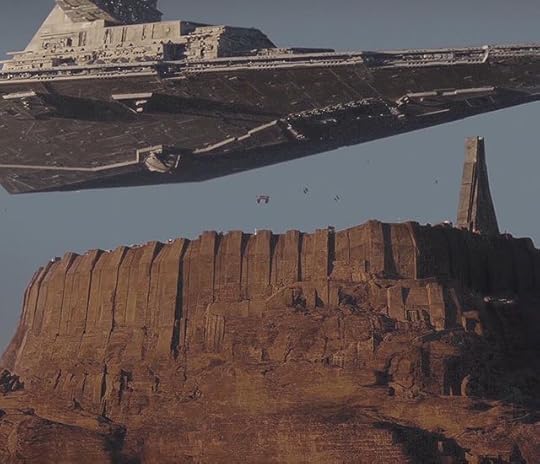
The Empire has taken a special interest in this world because of the presence of mysterious Kyber crystals. The Empire has placed a Star destroyer on the orbit of the planet and a legion of Stormtroopers on the ground to control the holy city. In this city lives Chirrut and Baze, former guardians of the holy temple: the same guardians who were thrown out of the temple by Empire when they sealed the place down; the same guardians who have failed to protect the people when Stormtroopers came charging and moreover, they are the guardians who stayed back in the city.
What the story lacks is ambition. It restrains itself with a limited number of characters and plot elements. Yet, this Star Wars tale is a winner for me because it manages to portray Chirrut's faith in the force and Baze's faith in his friend beautifully. The tale also introduces the relationship between Saw Garrera and the guardians as well as the Insurgent movement of Jedha.
To be short, Even though story lacks ambition, it has a heart. A light and enjoyable read.
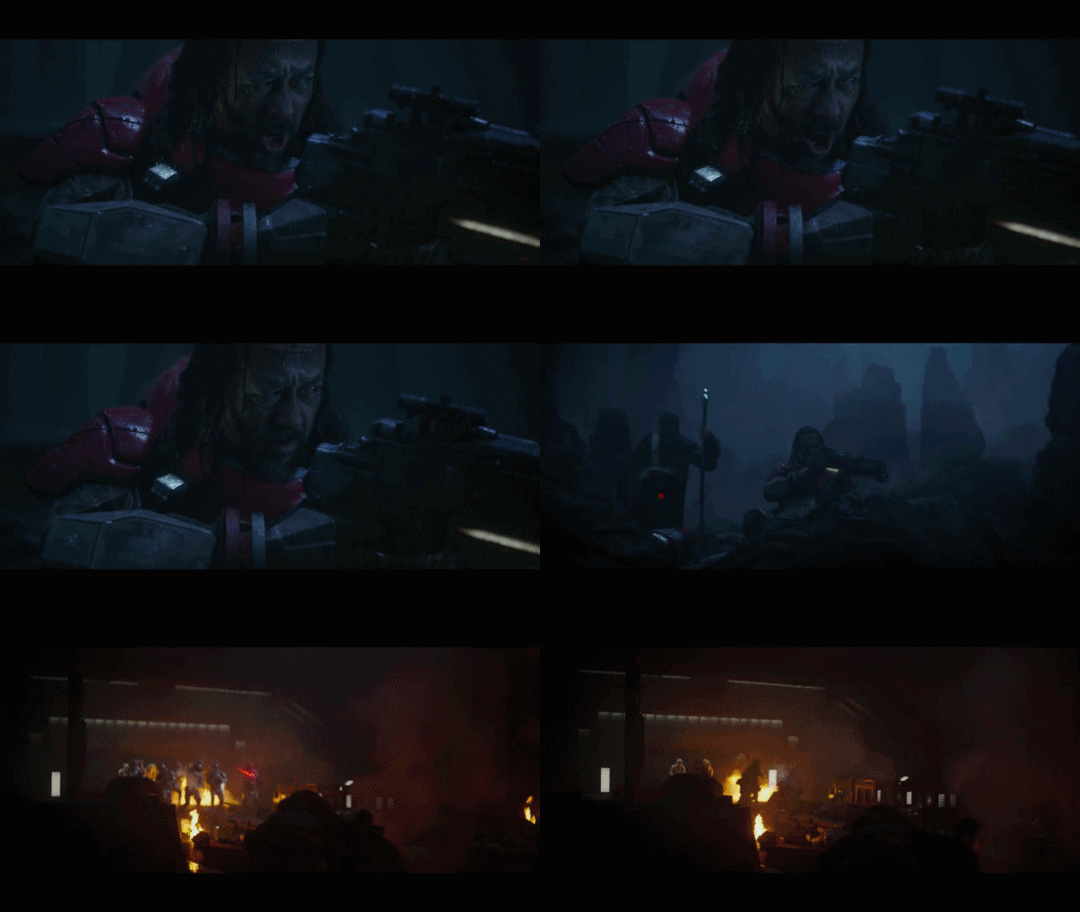
Oh, Wait! The story also reveals how Baze got his big ass gun!
Chirrut Îmwe and Baze Malbus were two of my favorite characters from Rouge One movie, mostly because of the great performances and unique chemistry of the actors Donnie Yen and Jiang Wen. Furthermore, these two Guardians were the only connection we had to the force in Rouge One.
This Star Wars tale features Chirrut & Baze and their life in the holy city of Jedha after the days of imperial occupation and before meeting Jyn Erso and joining with her. That reason alone was enough for me to pick this book up!
The city of Jedha is hurting.
The Empire has taken a special interest in this world because of the presence of mysterious Kyber crystals. The Empire has placed a Star destroyer on the orbit of the planet and a legion of Stormtroopers on the ground to control the holy city. In this city lives Chirrut and Baze, former guardians of the holy temple: the same guardians who were thrown out of the temple by Empire when they sealed the place down; the same guardians who have failed to protect the people when Stormtroopers came charging and moreover, they are the guardians who stayed back in the city.
What the story lacks is ambition. It restrains itself with a limited number of characters and plot elements. Yet, this Star Wars tale is a winner for me because it manages to portray Chirrut's faith in the force and Baze's faith in his friend beautifully. The tale also introduces the relationship between Saw Garrera and the guardians as well as the Insurgent movement of Jedha.
To be short, Even though story lacks ambition, it has a heart. A light and enjoyable read.
Oh, Wait! The story also reveals how Baze got his big ass gun!

April 5, 2021
This book is a novella that follows characters from the movie Rogue One. This is a prequel to that movie and we follow Chirrut and Baze. The Empire is on their home world of Jedha and this book details that occupation and how it affects the inhabitants of the planet.
There is nothing new here as there are plenty of written works about the Empire being on a planet and stripping it of its resources. That being said, I like how this book handled it. It shows the occupation and how people handle it. Fighting back just escalates the Empire's actions and it is a vicious circle. The ones that are affected the most are the bystanders as these warring sides continue their actions. I liked how this book showed this and its development in a novella. The highlight of this book is the banter between the two main characters. We saw some of it during the movie and this book really highlights the banter. They made me laugh out loud on several occasions.
I have put off reading this book for a long time because the title and the cover did nothing for me. I was wrong and once again you cannot judge a book by its cover. It was a quick, likeable read that offered nothing new but a nice take on this concept. I would recommend this if you are looking for something quick to read.
There is nothing new here as there are plenty of written works about the Empire being on a planet and stripping it of its resources. That being said, I like how this book handled it. It shows the occupation and how people handle it. Fighting back just escalates the Empire's actions and it is a vicious circle. The ones that are affected the most are the bystanders as these warring sides continue their actions. I liked how this book showed this and its development in a novella. The highlight of this book is the banter between the two main characters. We saw some of it during the movie and this book really highlights the banter. They made me laugh out loud on several occasions.
I have put off reading this book for a long time because the title and the cover did nothing for me. I was wrong and once again you cannot judge a book by its cover. It was a quick, likeable read that offered nothing new but a nice take on this concept. I would recommend this if you are looking for something quick to read.
October 12, 2020
As is so often the case, particularly with Star Wars books, some very deep themes lurk beneath the banner of "Junior Novel."
In this case we get a fantastic and intense in situ story of the occupation and rapid decline of the Holy City of Jedha, with the story centred around the familiar figures (for those who have seen the Star Wars: Rogue One film, at least) of Chirrut Îmwe and Baze Malbus and their efforts to keep their heads above water and support a growing impromptu orphanage in the shadow of the Empire's menace.

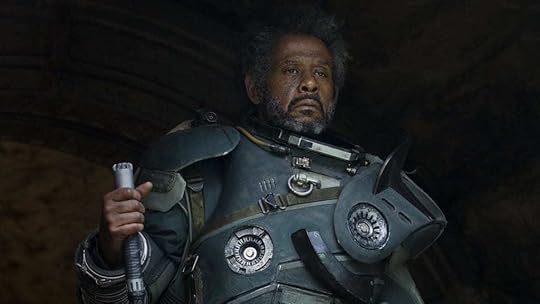
How to resist overwhelming oppression? Is violence self-defeating? At what price freedom? This novella takes a practical approach to all of these questions that for people in peaceful societies are merely theoretical as Baze and Chirrut scramble to make the best of a very bad and continually worsening situation. Saw "The General" Gerrera makes a few memorable appearances along the way to offer a different path of resistance, and how our protagonists relate to him really informs their personal journeys.
For fans of the movie and the saga in general I recommend this one very highly. You might not get massive amounts of lore or Galaxy-shaping events, but you will understand the stakes facing everyday people under the heel of the Empire and what they might be willing to do to just strike back.
In this case we get a fantastic and intense in situ story of the occupation and rapid decline of the Holy City of Jedha, with the story centred around the familiar figures (for those who have seen the Star Wars: Rogue One film, at least) of Chirrut Îmwe and Baze Malbus and their efforts to keep their heads above water and support a growing impromptu orphanage in the shadow of the Empire's menace.
How to resist overwhelming oppression? Is violence self-defeating? At what price freedom? This novella takes a practical approach to all of these questions that for people in peaceful societies are merely theoretical as Baze and Chirrut scramble to make the best of a very bad and continually worsening situation. Saw "The General" Gerrera makes a few memorable appearances along the way to offer a different path of resistance, and how our protagonists relate to him really informs their personal journeys.
For fans of the movie and the saga in general I recommend this one very highly. You might not get massive amounts of lore or Galaxy-shaping events, but you will understand the stakes facing everyday people under the heel of the Empire and what they might be willing to do to just strike back.

April 23, 2017
I have nothing but good things to say about Guardians of the Whills. Honestly. Greg Rucka tells a lovely little story about Chirrut and Baze in the months leading up to the events of Rogue One and helps flesh out not only their characters but the complex situation on Jedha. When I first finished the book and went to rate it on Goodreads, I wavered between 4 and 5 stars before realizing that no, this book really did deserve the perfect rating. Did it blow my socks off like Bloodline did last year? No, but that wasn’t the point. This was a smaller story that perfectly did everything it set out to do therefore it gets a 5 star rating. I love how Rucka shows us more of the relationship between Chirrut and Baze and how they try and do what they can for the people of Jedha City and I also loved loved how we get to see their relationship with Saw and his Partisans. It adds ton of new meaning to the film and I can’t wait to watch it again with this history in mind. This is a genuinely great read that all ages can enjoy. Oh. And those aboard the USS Space Married Guardians? Yeah, they’re going to love this.

August 18, 2017
A light backstory on two of my favourite characters in Rogue One, Chirrut Imwe and Baze Malbus. Both are former Guardians of the Kyber temple at Jedha City, and live in poverty and some stress, as they have been raiding the occasional transport for medical and other supplies for an orphanage run by a pair of sisters. The Empire has been cracking down on Jedha residents, and the children have lost parents to accidents and murder, thanks to the Stormtroopers. Into this mix comes Saw Gerrara, making an already tense situation even worse for the residents.
For all that this is aimed at a young audience, the author has drawn a rather grim picture of the situation in place some time before the arrival of Jyn and Cassian. This story concentrates on Chirrut and Baze, and it's good to see these two friends together, and how strong and aring their relationship is. And it's good to also see how capable Chirrut and Baze are together, by themselves, and how the two friends have managed to make tiny dents in the Empire's activities at Jedha.
For all that this is aimed at a young audience, the author has drawn a rather grim picture of the situation in place some time before the arrival of Jyn and Cassian. This story concentrates on Chirrut and Baze, and it's good to see these two friends together, and how strong and aring their relationship is. And it's good to also see how capable Chirrut and Baze are together, by themselves, and how the two friends have managed to make tiny dents in the Empire's activities at Jedha.

June 19, 2017
I was about to give this 2 stars, but in the end Chirrut and Baze had me smiling. I loved those two characters and especially their relationship.
I was not a fan of the story, but it provides a lot of backstory of Saw, Jedha and of course of Baze and Chirrut.
Full Review Later!
I was not a fan of the story, but it provides a lot of backstory of Saw, Jedha and of course of Baze and Chirrut.
Full Review Later!

May 12, 2026
I was really enjoying this one, but it ended way too suddenly. If it hadn't felt so abrupt, I would've given it four stars.

May 28, 2017
"Where you see darkness // I see stars."
For some reason I feel like that line from the book really sums it up. I went in with low expectations as it is written for younger readers, and while the story didn't wow me, I still love it because it's not some super epic, amazing story with an edge-of-your-seat climax. It's a subtle, if not almost gentle account of fighting to preserve hope within a city being terrorized by the Empire. (Also, I mean, Baze and Chirrut. My faves.)
Speaking of Baze and Chirrut, their characters really are true to the film, as other reviews have noted. The book digs into their pasts and why they are who they are now. Also it's deeper than I expected it would be. In one chapter Baze and Gerrera have a significant conversation about the philosophy of the Empire and the nature of hope. As I mentioned, the lowkey-ness of the story is something I love as well. The writing style, while simplistic, was wonderful. Every sentence is crafted carefully and the author knows what information to give directly and what to leave to the readers to figure out for themselves. There's also a couple illustrations throughout the book which are pretty neat.
My main issue with the book was that I had trouble getting used to the formatting. Also I felt a little confused as to what was going on sometimes, but it might've been just me getting used to the writing style. I do wish there had been more physical description of the new characters introduced. They were blank faces in my brain for most of the time. The pacing also bothered me. Either a few chapters would be spent on one incident or there'd be a huge gap of time between one chapter and the next.
All in all, I enjoyed this novel, and I'm glad the people at Disney decided it was necessary to write (besides just for money). It's a beautiful, subtle tale of hope, courage, and the choice to do the right thing despite all circumstances. Also it's about Baze and Chirrut, so.
For some reason I feel like that line from the book really sums it up. I went in with low expectations as it is written for younger readers, and while the story didn't wow me, I still love it because it's not some super epic, amazing story with an edge-of-your-seat climax. It's a subtle, if not almost gentle account of fighting to preserve hope within a city being terrorized by the Empire. (Also, I mean, Baze and Chirrut. My faves.)
Speaking of Baze and Chirrut, their characters really are true to the film, as other reviews have noted. The book digs into their pasts and why they are who they are now. Also it's deeper than I expected it would be. In one chapter Baze and Gerrera have a significant conversation about the philosophy of the Empire and the nature of hope. As I mentioned, the lowkey-ness of the story is something I love as well. The writing style, while simplistic, was wonderful. Every sentence is crafted carefully and the author knows what information to give directly and what to leave to the readers to figure out for themselves. There's also a couple illustrations throughout the book which are pretty neat.
My main issue with the book was that I had trouble getting used to the formatting. Also I felt a little confused as to what was going on sometimes, but it might've been just me getting used to the writing style. I do wish there had been more physical description of the new characters introduced. They were blank faces in my brain for most of the time. The pacing also bothered me. Either a few chapters would be spent on one incident or there'd be a huge gap of time between one chapter and the next.
All in all, I enjoyed this novel, and I'm glad the people at Disney decided it was necessary to write (besides just for money). It's a beautiful, subtle tale of hope, courage, and the choice to do the right thing despite all circumstances. Also it's about Baze and Chirrut, so.

June 3, 2017
A decent book in the new canon. As much as I like the characters, I don't really know how much we needed this book, but it was still a good book. I the occasional pictures were really nice and I liked the I guess poems before each chapter (not all of them are poems, that's just the only way I can think to describe it).
I wouldn't say I recommend it, but I wouldn't say skip it either. If you liked the characters, pick it up, but I don't think you'll be missing much to pass on this book.
I wouldn't say I recommend it, but I wouldn't say skip it either. If you liked the characters, pick it up, but I don't think you'll be missing much to pass on this book.

June 19, 2017
Not the greatest read, but the important thing is that I got more Baze and Chirrut for my headcanon.

May 13, 2020
Spending time with Baze and Chirrut is my happy place.

May 2, 2017
Greg Rucka shows us more about the partnership of Baze Malbus and Chirrut Îmwe, considers their struggles for Jedha and against the Empire, and compares and contrasts the Guardians with Saw Gerrera and his militant followers, all while leaving some of the biggest mysteries about their lives -- how Chirrut lost his sight, how Baze lost his faith -- for the fans to ponder. While I would welcome an entire series on these two fantastic characters, this book proved more satisfying than I had dared hope.
Here are just a few of my favorite passages.
“No,” Baze said.
The word was, in so many ways, the perfect embodiment of who Baze Malbus had become, as blunt and as hard as the man himself. No was the word that seemed to define Baze Malbus these days, all the more so since the Imperial occupation had begun. No, and in that word Baze Malbus was saying many things; no, he would not accept this, whatever this might be, from Imperial rule to the existence of a Jedi in the Holy City to the suffering the Empire had inflicted upon all those around them. No, ultimately – and to Chirrut’s profound sadness – to a faith in the Force.
***
“So you have hope, still?”
Baze shrugged, spread his hands on his thighs. They were big hands, and he had done a lot of harm with them, and sometimes he wondered if his hands would not have been better used for gentler work – what it would have been like to have been a painter or sculptor or baker.
“I do not know what I have anymore,” Baze said. “I have a home, and will fight for it. I have those I love, and I will fight for them. I see injustice, and will fight against it. I suppose these are the best reasons to fight.”
***
“Tea?” Baze asked.
Chirrut turned his head in surprise, orienting to the sound of his friend’s voice.
“It’s chav,” Baze said. “Not that wretched Tarine stuff.”
For a second, Chirrut found himself at an utter loss for words. He hadn’t heard Baze’s approach, and Baze was not, generally, a man who did things quietly. More, he hadn’t sensed Baze’s approach, nor even his presence, and if there was a presence that Chirrut Îmwe knew in the Force more than any other – more, perhaps, than his own place in it – it was that of Baze Malbus.
“Well, if it’s chav,” Chirrut said, “I can hardly refuse, can I?”
***
“There is a space between ‘next to impossible’ and ‘impossible.’” Chirrut smiled at something only he knew was there. “This is where we will fit.”
“This guy, do you believe this guy?” Denic said to Baze.
“Yes,” Baze said.
Here are just a few of my favorite passages.
“No,” Baze said.
The word was, in so many ways, the perfect embodiment of who Baze Malbus had become, as blunt and as hard as the man himself. No was the word that seemed to define Baze Malbus these days, all the more so since the Imperial occupation had begun. No, and in that word Baze Malbus was saying many things; no, he would not accept this, whatever this might be, from Imperial rule to the existence of a Jedi in the Holy City to the suffering the Empire had inflicted upon all those around them. No, ultimately – and to Chirrut’s profound sadness – to a faith in the Force.
***
“So you have hope, still?”
Baze shrugged, spread his hands on his thighs. They were big hands, and he had done a lot of harm with them, and sometimes he wondered if his hands would not have been better used for gentler work – what it would have been like to have been a painter or sculptor or baker.
“I do not know what I have anymore,” Baze said. “I have a home, and will fight for it. I have those I love, and I will fight for them. I see injustice, and will fight against it. I suppose these are the best reasons to fight.”
***
“Tea?” Baze asked.
Chirrut turned his head in surprise, orienting to the sound of his friend’s voice.
“It’s chav,” Baze said. “Not that wretched Tarine stuff.”
For a second, Chirrut found himself at an utter loss for words. He hadn’t heard Baze’s approach, and Baze was not, generally, a man who did things quietly. More, he hadn’t sensed Baze’s approach, nor even his presence, and if there was a presence that Chirrut Îmwe knew in the Force more than any other – more, perhaps, than his own place in it – it was that of Baze Malbus.
“Well, if it’s chav,” Chirrut said, “I can hardly refuse, can I?”
***
“There is a space between ‘next to impossible’ and ‘impossible.’” Chirrut smiled at something only he knew was there. “This is where we will fit.”
“This guy, do you believe this guy?” Denic said to Baze.
“Yes,” Baze said.

June 21, 2018
The Force is with me,
and I am one with the Force;
and I fear nothing,
because all is as the Force wills it.
Anyone who watched Rogue One should be familiar with this Guardian's mantra often chanted by Chirrut Imwe. This novel is a nice prequel to Rogue One and depicts the lives in the Holy City of Jedha before and after Saw Gerrera came and made the moon his homebase.
The story of occupation is not new in Star Wars. In Rebels we got the fight for freedom in Lothal from the view of the Ghost's crew. Here, we see the occupation from Chirrut and Baze's eyes. They fought. With their own ways, which were not always peaceful despite of who they were. The novel (or novella) also embodies the morose feel of Rogue One perfectly. I applaud Greg Rucka for capturing the essence of the characters, same like what he did to the new trio in Before the Awakening.
I'd like to see more Saw even though he is already in every medium SW has to offer. I'd like to know more about his men. Leia's Resistance members often fought dirty and did inexplicable things. So did Gerrera's men and women. How do they differ, if at all? We have some glimpses on this topic from the book but I'd like to see more of this debate.
May 4, 2023
"I am one with the Force..."
CHIRRUT & BAZE ARE THE MIDDLE-AGED QUEER UNCLES OF STAR WARS & THEY DESERVED BETTER!!!
CHIRRUT & BAZE ARE THE MIDDLE-AGED QUEER UNCLES OF STAR WARS & THEY DESERVED BETTER!!!

May 25, 2025
Loved getting to see more of Chirrut and Baze, even if the writing wasn't the best.


February 8, 2018
Okay so, the poems in this were quite good. I believed they were both collected poetry from within the universe and religious texts. It is also pretty weird to me that this is a middle grade book, given that it's about two middle aged men confronting ethics and eventual futility or use of an armed insurgency, and also dealing with a loss of faith. That's not EXACTLY the sort of character and theme I think of when I think Middle Grade.

May 19, 2023
This is near-perfect. If this is supposed to be a junior novel, then the labeling is now irrelevant. A short, concise, sweet, sad, lonely book of loss...full of so much unspoken pain and heartbreak regarding all that has passed into history. Chirrut Imwe & Baze Malbus have been ignored in Lucasverse fiction for so long...an insanity that is finally corrected here. In fact, there doesn't need to be any other book about them, as this as beautiful and gentle a statement about who they are that we are ever likely to read.

May 29, 2017
This is one of the best Star Wars books I've ever read. The characters are fantastic, and while the story is short and simple it's well-executed and emotionally grounded. I would read another book about Chirrut and Baze like this in a heartbeat!

June 14, 2017
Is this not a great time to be a Star Wars fan? This book focuses on the Rogue One characters of Baze and Chirrut . Quick and entertaining for anyone 15 to 105 years old who like a good tale of two people making a difference and staying true to oneself.

December 18, 2016
Splendid, I hope we are not through telling stories about these characters and about Jedha.

September 2, 2017
This is a great story and resonates with the force. The poems at the start of each chapter are wonderful.

July 27, 2020
pretty awesome book

April 23, 2022
My Baze and Chirrut feels!!! Lovely little novella with tasty banter, and a confined story laced with gentle warmth.

May 25, 2025
A small look at two undeveloped luminaries from Rogue One, though it will still leave you wanting more…
Star Wars: Guardians of the Whills by Greg Rucka is a tie in prequel set in the years prior to Rogue One…in the Holy City of Jedha.
Don’t read this if you want some nice long backstory on the two Guardians from the film. When the story picks up, they are still in Jedha…somewhat feeling disillusioned and helpless as they help pilgrims and watch over the city as imperial authorities plunder it…
Oddly, the arrival of rebels in the form of Sqw Gerrera’s partisans gives them a chance to get involved…with disastrous results…
The book explores the importance of the Holy City not just to Jedi but many different force traditions…as the Guardians seek other ways to protect without making things worse…
It was what it was…but I liked the hints at various Jedha holy sites and some of the previously unknown force cults…
Star Wars: Guardians of the Whills by Greg Rucka is a tie in prequel set in the years prior to Rogue One…in the Holy City of Jedha.
Don’t read this if you want some nice long backstory on the two Guardians from the film. When the story picks up, they are still in Jedha…somewhat feeling disillusioned and helpless as they help pilgrims and watch over the city as imperial authorities plunder it…
Oddly, the arrival of rebels in the form of Sqw Gerrera’s partisans gives them a chance to get involved…with disastrous results…
The book explores the importance of the Holy City not just to Jedi but many different force traditions…as the Guardians seek other ways to protect without making things worse…
It was what it was…but I liked the hints at various Jedha holy sites and some of the previously unknown force cults…

May 13, 2017
3.5 stars. This is a middle grade book, but not not one that talks down to the reader. I wish that it was explicitly stated that Baze and Chirrut are #spacemarried, but you have to be willfully obtuse not to see it. Their fond bickering was the highlight for me.

May 25, 2022
If this wasn't middle grade this would be so much better. For what it is, however, it's pretty good though. Much like the other SW Middle Grade books though there isn't a super involved plot...just the Empire's siege of Jedha and Chirrut and Baze siding with Saw just to save an orphanage...then deciding neither the Rebels or the Empire are right and they both cause destruction. These are fun characters to follow and Greg did not hold back on the exposition piece along with the emotional weight of war, which was appreciated.

July 1, 2024
"We thought, they have come to crush belief, because belief leads to hope, and hope can topple monsters."
such a good little story :)
such a good little story :)

October 10, 2017
An engaging read, focused on Chirrut Imwê and Baze Malbus prior to the events of Rogue One.
Some activism-related thoughts:
+1 Representation of both ethnicity and species
+1 Anti-ableist representation with the very able Guardian of the Whills Chirrut's blindness treated in a very good way.
-1 I don't find the Force 'religion' particularly grating, I actually like the clear inspiration from real life spiritual currents, but as usual I do fnd religion in general problematic as a brainwashing tool, so just have to mention that xD
+1 There a scene where Chirrut actually critisizes religion as a power tool, though (One did not need to believe in the Force to know right from wrong. Many who held no belief in the Force acted righteously, and he had known more than one sentient who had acted selfishly, even cruelly, and used belief to justify doing so.).
+1 As in Rogue One, there is a less binary approach to the theme of war and 'good' vs 'evil' (there is still some binarism, though). Even though this is a Star Wars book about the Imperial occupation of Jedha, there are also interesting messages of anti-binarism and anti-war, mostly from Chirrut (also sometimes from Baze and other characters). The Imperials are still seen as the main antagonists, but Saw Gerrera's insurgents are not seen a simplistic good light in comparison, and they also are described as acting in a morally dubious way. One of Chirrut's main messages is that in the end (same as in all wars when viewed in a non-fanatic, non-patriotic way, and without any problematic Good vs Evil binary), the effects of both sides - the Empire and Saw Gerrera's rebel insurgents - end up creating pain and destruction to the civilians, in a cycle of violence that can thus be seen in an equally problematic light ("the wrong people are suffering for our actions").
"There can be no peace with [the Imperials]," Wernad said, his voice dropping to a hiss. "There can be no tolerance."
[Chirrut] "You put the innocent in danger. Your pain blinds you to this."
That stormtrooper was not the first sentient Chirrut had separated from his life, and he knew without question he would not be the last. He was at peace with the necessity of their actions, but that did not mean he took pleasure from them.
It was of no small comfort to him that Baze, for all their disagreements, felt the same way.
+1 Also, Chirrut and Baze's main motivations when working for Saw are not particularly pro-war, aiming to care for and protect friends and orphaned children. When Saw's insurgents try to thwart their plan to evacuate the children, both Chirrut and Baze turn their backs on Saw.
+-1 Baze grew up on me after reading this book - in the movie he always struck me as the most violent and fanatic of the team and here we see that he has more empathy and less binarism about him (Baze shrugged, spread his hands on his thighs. They were big hands, and he had done a lot of harm with them, and sometimes he wondered if his hands would not have been better used for gentler work - what it would have been like to be a painter or sculptor or baker.). But his automatic blaster I still find pretty grating :/ The death of Stormtroopers is sometimes also seen in a more binary, lighter way, especially when Baze is responsible...
+1 No relevant sexism issues, which I really appreciate. A series of female characters- none of them sexualized - make an appearance as secondary characters:
-Female bonding and Bechdel test featuring sisters Killi and Kaya Gimm. Their main role in the story is to look after and teach orphaned children (which could be seen as a 'traditional female role', even though they are pretty relevant to the storyline). Kaya is also described as a mechanic, while Killi is a Disciple of the Whills.
-Denic, a former pilot who works in a garage, ends up teaming with Kaya and Killi, so yay for more women working with other women.
-A female Stormtrooper sergeant appears, as well of mentions of other female Stormtroopers. Every time I read about female Stormtroopers in Rogue One-set books I wonder why on earth they didn't bother to add some female voices in the film, the armour's the freaking same it was literally 0% additional work!!
-Other women include a shop owner who befriends and helps the Gimm sisters (Gavra Ubrento), female children (B'aria), more disciples of the Whills (Silvanie Phest), and Steya, a Rodian with 'a particular passion for martial arts' who learned Jedha fighting styles with Chirrut.
Some activism-related thoughts:
+1 Representation of both ethnicity and species
+1 Anti-ableist representation with the very able Guardian of the Whills Chirrut's blindness treated in a very good way.
-1 I don't find the Force 'religion' particularly grating, I actually like the clear inspiration from real life spiritual currents, but as usual I do fnd religion in general problematic as a brainwashing tool, so just have to mention that xD
+1 There a scene where Chirrut actually critisizes religion as a power tool, though (One did not need to believe in the Force to know right from wrong. Many who held no belief in the Force acted righteously, and he had known more than one sentient who had acted selfishly, even cruelly, and used belief to justify doing so.).
+1 As in Rogue One, there is a less binary approach to the theme of war and 'good' vs 'evil' (there is still some binarism, though). Even though this is a Star Wars book about the Imperial occupation of Jedha, there are also interesting messages of anti-binarism and anti-war, mostly from Chirrut (also sometimes from Baze and other characters). The Imperials are still seen as the main antagonists, but Saw Gerrera's insurgents are not seen a simplistic good light in comparison, and they also are described as acting in a morally dubious way. One of Chirrut's main messages is that in the end (same as in all wars when viewed in a non-fanatic, non-patriotic way, and without any problematic Good vs Evil binary), the effects of both sides - the Empire and Saw Gerrera's rebel insurgents - end up creating pain and destruction to the civilians, in a cycle of violence that can thus be seen in an equally problematic light ("the wrong people are suffering for our actions").
"There can be no peace with [the Imperials]," Wernad said, his voice dropping to a hiss. "There can be no tolerance."
[Chirrut] "You put the innocent in danger. Your pain blinds you to this."
That stormtrooper was not the first sentient Chirrut had separated from his life, and he knew without question he would not be the last. He was at peace with the necessity of their actions, but that did not mean he took pleasure from them.
It was of no small comfort to him that Baze, for all their disagreements, felt the same way.
+1 Also, Chirrut and Baze's main motivations when working for Saw are not particularly pro-war, aiming to care for and protect friends and orphaned children. When Saw's insurgents try to thwart their plan to evacuate the children, both Chirrut and Baze turn their backs on Saw.
+-1 Baze grew up on me after reading this book - in the movie he always struck me as the most violent and fanatic of the team and here we see that he has more empathy and less binarism about him (Baze shrugged, spread his hands on his thighs. They were big hands, and he had done a lot of harm with them, and sometimes he wondered if his hands would not have been better used for gentler work - what it would have been like to be a painter or sculptor or baker.). But his automatic blaster I still find pretty grating :/ The death of Stormtroopers is sometimes also seen in a more binary, lighter way, especially when Baze is responsible...
+1 No relevant sexism issues, which I really appreciate. A series of female characters- none of them sexualized - make an appearance as secondary characters:
-Female bonding and Bechdel test featuring sisters Killi and Kaya Gimm. Their main role in the story is to look after and teach orphaned children (which could be seen as a 'traditional female role', even though they are pretty relevant to the storyline). Kaya is also described as a mechanic, while Killi is a Disciple of the Whills.
-Denic, a former pilot who works in a garage, ends up teaming with Kaya and Killi, so yay for more women working with other women.
-A female Stormtrooper sergeant appears, as well of mentions of other female Stormtroopers. Every time I read about female Stormtroopers in Rogue One-set books I wonder why on earth they didn't bother to add some female voices in the film, the armour's the freaking same it was literally 0% additional work!!
-Other women include a shop owner who befriends and helps the Gimm sisters (Gavra Ubrento), female children (B'aria), more disciples of the Whills (Silvanie Phest), and Steya, a Rodian with 'a particular passion for martial arts' who learned Jedha fighting styles with Chirrut.
Displaying 1 - 30 of 372 reviews