

What do you think?

Vanishing Man
In 1845, a Reading bookseller named John Snare came across the dirt-blackened portrait of a prince at a country house auction. Suspecting that it might be a long-lost Velázquez, he bought the picture and set out to discover its strange history. When Laura Cumming stumbled on a startling trial involving John Snare, it sent her on a search of her own. At first she was pursuing the picture, and the life and work of the elusive painter, but then she found herself following the bookseller’s fortunes too – from London to Edinburgh to nineteenth-century New York, from fame to ruin and exile.
An innovative fusion of detection and biography, this book shows how and why great works of art can affect us, even to the point of mania. And on the trail of John Snare, Cumming makes a surprising discovery of her own. But most movingly, The Vanishing Man is an eloquent and passionate homage to the Spanish master Velázquez, bringing us closer to the creation and appreciation of his works than ever before.
"The Vanishing Man is a riveting detective story and a brilliant reconstruction of an art controversy, but it is also a homage to the art of Velázquez, written by a critic who remains spellbound by his genius, as readers will be spellbound by this book" - Colm Tóibín
An innovative fusion of detection and biography, this book shows how and why great works of art can affect us, even to the point of mania. And on the trail of John Snare, Cumming makes a surprising discovery of her own. But most movingly, The Vanishing Man is an eloquent and passionate homage to the Spanish master Velázquez, bringing us closer to the creation and appreciation of his works than ever before.
"The Vanishing Man is a riveting detective story and a brilliant reconstruction of an art controversy, but it is also a homage to the art of Velázquez, written by a critic who remains spellbound by his genius, as readers will be spellbound by this book" - Colm Tóibín
320 pages, Paperback
First published January 7, 2016
About the author
Laura Cumming
7 books212 followersLaura Cumming (born July 1961) the art critic for The Observer. In addition to her career in journalism, Cumming has written well-received books on self-portraits in art and the discovery of a lost portrait by Diego Velázquez in 1845.
Ratings & Reviews
Friends & Following
Create a free account to discover what your friends think of this book!
Community Reviews
Displaying 1 - 30 of 366 reviews

February 26, 2019
(B) 73% | More than Satisfactory
Notes: Like a box too big for its baubles, it's profuse in puffy packing peanuts: padding out vacuities with filler art analyses.
*Check out progress updates for detailed commentary:
Notes: Like a box too big for its baubles, it's profuse in puffy packing peanuts: padding out vacuities with filler art analyses.
*Check out progress updates for detailed commentary:

April 7, 2016
”They were like guests at a surprise party waiting for your arrival and now you have entered the room---their room, not the real one around you---or so it mysteriously seems. The whole scene twinkles with expectation. That is the first sensation on the threshold of the gallery in the Prado where Las Meninas hangs: that you have walked into their world and become suddenly as present to them as they are to you.
And what keeps them here, what keeps them alive, or so the artist implies, is not just the painting but you.”
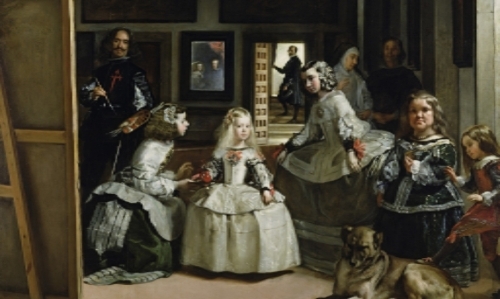
It has been twenty plus years since I was last in the Prado, but I do still remember this painting. It wasn’t a scene that would usually be of much interest to me. At first glance, there is nothing really going on in this painting, barring a princess getting ready for a ball or a dinner party or to meet some dignitaries from another court from another country. It would be easy to pass it by, except for the scale of the painting. It is huge. Instead of scurrying on past, I suddenly found myself trapped under the gaze of the painting. These people, all long dead but very much alive, are looking at me as if I just interrupted their activities by walking in the room. These sensations I felt that day all come back to me when I read Laura Cumming’s description above.
I, without intention, have fallen into 1656. Of course, in real life we can’t stare at people like I stared at the people in this painting. I think that at any second the little girl would lift a hand to her face and giggle, or Velazquez himself would raise an eyebrow at my imprudence. They are so guileless and welcoming. Velazquez has immortalized all these people from the dwarfs to the ladies in waiting, from the artist to the king and queen reflected in the mirror, as if everyone in this painting were, at least in paint, equal.
For Velazquez everyone is unique, and by him showing us their remarkableness, they become indispensible to the rest of us.
”He finds a Venus and a Mars in the humble people around him, sees a king as compellingly ordinary and is able to make an old man selling water seem like an ancient prophet. There is an extraordinary equality to his empathetic gaze.”

If Velazquez had only painted Las Meninas, he would have been immortal, but luckily for the rest of us, he shared his gift in a number of paintings, not enough, mainly because he became so successful in the court of Philip IV that his duties to the king, beyond just painting portraits, were taken up with tasks that would have been better left to others.
The story may have begun in the 17th century, but the second act happened in the 19th century when a bookseller by the name of John Snare bought a painting at a liquidation sale. Take it from me, booksellers are always trouble, and Snare was no exception.
Now just being in the book business, we can assume that Snare was “gently mad.” There is something about art, books, and race horses that take the gently mad to the certifiably insane. This painting, luminescent beneath the grime of dust and smoke, is of the Prince of Wales, the future Charles the first, significant in the fact that he is young, but sports the beard he grew while he was petitioning Philip IV for an alliance with his daughter.
In 1649, Charles is overthrown by Oliver Cromwell and his supporters and very publically beheaded. He wore two shirts to the execution so that a morning chill would not be misinterpreted as a shiver of fear. He put his head on the block and signaled the executioner he was ready by spreading out his arms. Regardless of whether history sees him as a good king or a terrible one, his courage in his last moments was incontestable.
Could the painting be the long lost Velazquez portrait? It could be a Van Dyck, who painted Charles many times. There is something though about the eyes and the deftness of the brush that convinces Snare that it must be Velazquez. He sets out to prove it. Laura Cumming found herself consulting the same exact sources that Snare did almost a hundred and seventy years earlier.
He displays it and makes some money off people coming to see this painting by a Spanish painter rarely seen in England. Snare has a lien that doesn’t exist slapped against the painting by unscrupulous people in an attempt to steal and sell the painting before the court system can prevail. He survived that near parting with his precious; and yes, there is a bit of Gollum in Snare. He is later sued by an estate believing that the painting was stolen from a private collection. He goes bankrupt defending his right to own the painting, but even though he wins the court case, he leaves for America.
He doesn’t run away, like a normal man, with a young doxy. He runs away with a painting.
Snare leaves a wife and children. One child is born after he leaves. His paterfamilia responsibilities are superseded by his responsibility to art.
He could have sold the painting for a handsome sum and avoided bankruptcy. I can imagine he considered it, but who he is, by this time, is so defined by being the owner of this “Velazquez” that he can’t give it up. It would be like selling Secretariat or selling a building with your name on it or selling a Gutenberg Bible. You know that by selling something that precious that you will never be able to own it again.
Cumming not only expanded my knowledge of Velazquez exponentially, but also introduced me to a 19th century, mad as a hatter version of myself whom I understood completely. I knew that Velazquez was an important painter. I learned that at the Prado, when I laid my eyes on Las Meninas, the people of the Spanish court laid their eyes on me. He was such a humanist. He depicted dwarfs and poor people and famous people and royalty with the same deft brush strokes. He held no one up for ridicule, but showed each of his subject with the power of their uniqueness, evident for all to see.
He was a maestro.
”Even now one wonders how he could know where to place that speck of white that ignites a string of flashing glints across pale silk, how to convey the stiff transparency of gauze with a single dab of blue on grey, how to paint eyes that see us, but are themselves indecipherable. How could he lay paint on canvas so that it is as impalpable as breath, or create a haze that seems to emit from a painting like scent, or place a single dab of red on the side of a head so that it perfectly reads as an ear?”

Velazquez sold this painting of The Water-seller, but then when he had the chance, he bought it back and kept it for the rest of his life.
It would have made everything so much easier if Velazquez had signed all of his paintings, but then the more that I get to know the man, the more I realize that he was saying something by not signing them. He was but an instrument of his talent. His paintings belonged to the world.
If you wish to see more of my most recent book and movie reviews, visit http://www.jeffreykeeten.com
I also have a Facebook blogger page at:https://www.facebook.com/JeffreyKeeten
And what keeps them here, what keeps them alive, or so the artist implies, is not just the painting but you.”

It has been twenty plus years since I was last in the Prado, but I do still remember this painting. It wasn’t a scene that would usually be of much interest to me. At first glance, there is nothing really going on in this painting, barring a princess getting ready for a ball or a dinner party or to meet some dignitaries from another court from another country. It would be easy to pass it by, except for the scale of the painting. It is huge. Instead of scurrying on past, I suddenly found myself trapped under the gaze of the painting. These people, all long dead but very much alive, are looking at me as if I just interrupted their activities by walking in the room. These sensations I felt that day all come back to me when I read Laura Cumming’s description above.
I, without intention, have fallen into 1656. Of course, in real life we can’t stare at people like I stared at the people in this painting. I think that at any second the little girl would lift a hand to her face and giggle, or Velazquez himself would raise an eyebrow at my imprudence. They are so guileless and welcoming. Velazquez has immortalized all these people from the dwarfs to the ladies in waiting, from the artist to the king and queen reflected in the mirror, as if everyone in this painting were, at least in paint, equal.
For Velazquez everyone is unique, and by him showing us their remarkableness, they become indispensible to the rest of us.
”He finds a Venus and a Mars in the humble people around him, sees a king as compellingly ordinary and is able to make an old man selling water seem like an ancient prophet. There is an extraordinary equality to his empathetic gaze.”

If Velazquez had only painted Las Meninas, he would have been immortal, but luckily for the rest of us, he shared his gift in a number of paintings, not enough, mainly because he became so successful in the court of Philip IV that his duties to the king, beyond just painting portraits, were taken up with tasks that would have been better left to others.
The story may have begun in the 17th century, but the second act happened in the 19th century when a bookseller by the name of John Snare bought a painting at a liquidation sale. Take it from me, booksellers are always trouble, and Snare was no exception.
Now just being in the book business, we can assume that Snare was “gently mad.” There is something about art, books, and race horses that take the gently mad to the certifiably insane. This painting, luminescent beneath the grime of dust and smoke, is of the Prince of Wales, the future Charles the first, significant in the fact that he is young, but sports the beard he grew while he was petitioning Philip IV for an alliance with his daughter.
In 1649, Charles is overthrown by Oliver Cromwell and his supporters and very publically beheaded. He wore two shirts to the execution so that a morning chill would not be misinterpreted as a shiver of fear. He put his head on the block and signaled the executioner he was ready by spreading out his arms. Regardless of whether history sees him as a good king or a terrible one, his courage in his last moments was incontestable.
Could the painting be the long lost Velazquez portrait? It could be a Van Dyck, who painted Charles many times. There is something though about the eyes and the deftness of the brush that convinces Snare that it must be Velazquez. He sets out to prove it. Laura Cumming found herself consulting the same exact sources that Snare did almost a hundred and seventy years earlier.
He displays it and makes some money off people coming to see this painting by a Spanish painter rarely seen in England. Snare has a lien that doesn’t exist slapped against the painting by unscrupulous people in an attempt to steal and sell the painting before the court system can prevail. He survived that near parting with his precious; and yes, there is a bit of Gollum in Snare. He is later sued by an estate believing that the painting was stolen from a private collection. He goes bankrupt defending his right to own the painting, but even though he wins the court case, he leaves for America.
He doesn’t run away, like a normal man, with a young doxy. He runs away with a painting.
Snare leaves a wife and children. One child is born after he leaves. His paterfamilia responsibilities are superseded by his responsibility to art.
He could have sold the painting for a handsome sum and avoided bankruptcy. I can imagine he considered it, but who he is, by this time, is so defined by being the owner of this “Velazquez” that he can’t give it up. It would be like selling Secretariat or selling a building with your name on it or selling a Gutenberg Bible. You know that by selling something that precious that you will never be able to own it again.
Cumming not only expanded my knowledge of Velazquez exponentially, but also introduced me to a 19th century, mad as a hatter version of myself whom I understood completely. I knew that Velazquez was an important painter. I learned that at the Prado, when I laid my eyes on Las Meninas, the people of the Spanish court laid their eyes on me. He was such a humanist. He depicted dwarfs and poor people and famous people and royalty with the same deft brush strokes. He held no one up for ridicule, but showed each of his subject with the power of their uniqueness, evident for all to see.
He was a maestro.
”Even now one wonders how he could know where to place that speck of white that ignites a string of flashing glints across pale silk, how to convey the stiff transparency of gauze with a single dab of blue on grey, how to paint eyes that see us, but are themselves indecipherable. How could he lay paint on canvas so that it is as impalpable as breath, or create a haze that seems to emit from a painting like scent, or place a single dab of red on the side of a head so that it perfectly reads as an ear?”

Velazquez sold this painting of The Water-seller, but then when he had the chance, he bought it back and kept it for the rest of his life.
It would have made everything so much easier if Velazquez had signed all of his paintings, but then the more that I get to know the man, the more I realize that he was saying something by not signing them. He was but an instrument of his talent. His paintings belonged to the world.
If you wish to see more of my most recent book and movie reviews, visit http://www.jeffreykeeten.com
I also have a Facebook blogger page at:https://www.facebook.com/JeffreyKeeten

May 23, 2017

Two enigmatic men are the subject of this book. John Snare, a bookseller and printer, is an ordinary Victorian man who in 1845 attends an inauspicious auction of artefacts from a boys’ school that has closed down. There he sees a painting which casts a spell over him. It’s a portrait of King Charles I, listed in the catalogue as possibly by Van Dyck. However Charles is so young in the picture that Snare believes it might be the rumoured but never seen painting by Velázquez, executed when Charles visited the Spanish court as a young prince to woo King Philip IV’s daughter. At this point in time virtually no one outside Spain has ever seen a Velázquez. Snare buys the painting for £8. He removes some of the grime from a corner of the picture with a moistened finger and loves what he uncovers. His quest now is to prove to the world it’s the Velázquez painting.
The other subject of this book is the largely mysterious Velázquez himself, a man who left virtually no written account of his life and didn’t even sign his paintings. Velázquez was my old history of art teacher’s favourite painter and I know she would love the eloquence of praise Cummings heaps on the Spanish painter.
The author Laura Cummings does a great job of intertwining the two narratives – Snare’s story is a tale of obsessive, self-destructive love, of the little man fighting the establishment, of class prejudice and inequality. Just as he is beginning to convince the world his painting is the Velázquez it is “repossessed” by its supposed former owners, an aristocratic Scottish family, and a protracted court case begins, in the process of which Snare goes bankrupt and has to auction all his belongings, leaving his wife and children in poverty. The only thing of worth he doesn’t sell is the painting, even though the proceeds would have solved all his financial difficulties. He can’t bring himself to part with the picture. Instead he flees with it to New York. At this point the painting (and his sense of injustice) has become more precious to him than his wife and family.
The outcome of this book’s investigations is a bit of a let-down. We don’t get a happy or tidy ending. No reproduction of this painting exists and the painting which caused John Snare so much suffering has vanished without trace. Rather like Velázquez the man.
I enjoyed this for several reasons. The insights it gave into the snobbery and sense of entitlement of the upper classes in Victorian Britain and the virtually insurmountable obstacles placed in the way of the common man with cultural aspirations were especially fascinating. Also it’s a fabulous detective story at times. It also offers an inspired and inspiring evaluation of the art of Velázquez.

August 1, 2018
Hmm, a nice book.
Chapters mostly alternate between the story of one John Snare, a mid-ninetenth century bookseller, stationer and printer from Reading who bought at auction a painting that he became convinced was a portrait of Charles I by Velázquez, and chapters generally about Velázquez.
If I may be so bold, I like Velázquez, and one of my pleasures is to admire his works as presented in the National Gallery in London, where I might see his Majesty King Philip IV, or Christ visiting Mary & Martha and thanks to this book I learn that many of those pictures are war loot, captured by the Duke of Wellington from the abandoned baggage of Joseph Buonaparte - lately King of Spain after his defeat at the battle of Vittoria (1813), as celebrated by Beethoven, Velázquez was not it seems particularly valued by the Buonapartes, a painting by Leonardo, and some by some other guy I've forgotten were packaged up and sent under escort back to Paris, but not the Velázquezs which had been just dragged from Madrid across country and then abandoned in the town of Vittoria, one might have thought that Wellington would have returned the looted art works to a newly liberated Spain, but good old Albion didn't get the reputation for being perfidious for nothing. So I'm a soft audience for any book about Velázquez and easily impressed. Cumming plainly loves Velázquez too, her writing about his work glows off the page, so much so I am convinced that I could read the book in the dark.
The problem is, the story of John Snare, it is interesting enough and it would make a great five or seven page article in the colour Sunday supplement to your newspaper of choice (forgive me for assuming you are as ancient old as myself and as fond of leafing through a newspaper as me) but there's not enough to it I feel to sustain half a book, so reading I was completely wowed and happy for the first hundred pages, then I met my Waterloo, or Vittoria, and read on with a limp.
It is a tale of Nomen ist Omen John Snare was attracted by an advert for an auction, spotted a picture at a viewing that captivated him, bought it, and caught by it became convinced that it was a portrait of Charles I as Prince of Wales, painted by Velázquez while the Prince was attempting not nearly well enough, to win himself a Spanish royal bride. But at least he left with the painting, and on the rebound picked himself up a French princess instead. Snare had the painting cleaned, he researched it as well he could to establish a provenance for it, exhibited it and had various adventures with it. He is in Cumming's telling mildly obsessed with the painting, sleeping with it (in the same room, not curled up under it or with it in his loving arms ) Cumming eventually disappears, presumably dying in the USA, the painting also disappears - last seen loaned to the Metropolitan Museum of Art in the 1880s. Cumming's thinks that it might have returned to Britain and could have ended up in the vaults of a county bank later bought out by Barclays, in which case it could be in the mega-castle that the Barclays Brothers had built for themselves on the Island of Sark. Then again it could be in the USA or anyway really.
Well I won't spoil the entire story, there are various interesting stories about the lives of paintings, and their misattributions, the leading English expert on Velázquez at the time of John Snare believed that Diago was an artist of such sobriety and dignity that he would never have painted a dwarf, this expert had perhaps seen one genuine Velázquez - it was an age when many paintings were safely getting mildewed in stately homes, there were few reproductions and much less reliable information about artists available than today. There's a nice story of how an art dealer had a picture cleaned to convince an expert (in order to get his endorsement) that a canvas was a Velázquez, but since it was being sold to a wealthy American who had never seen a Velázquez, but had a pretty certain idea of how a Spanish old master ought to look, the dealer then had a restorer tone down the painting so it looked suitably grave.
It's a nice book but I felt the writing about Velázquez was of newspaper Art critic standard, rather than Art historian, which is to say I felt the love, but have my doubts about the expertise, with all due respect to Mme Cumming.
Chapters mostly alternate between the story of one John Snare, a mid-ninetenth century bookseller, stationer and printer from Reading who bought at auction a painting that he became convinced was a portrait of Charles I by Velázquez, and chapters generally about Velázquez.
If I may be so bold, I like Velázquez, and one of my pleasures is to admire his works as presented in the National Gallery in London, where I might see his Majesty King Philip IV, or Christ visiting Mary & Martha and thanks to this book I learn that many of those pictures are war loot, captured by the Duke of Wellington from the abandoned baggage of Joseph Buonaparte - lately King of Spain after his defeat at the battle of Vittoria (1813), as celebrated by Beethoven, Velázquez was not it seems particularly valued by the Buonapartes, a painting by Leonardo, and some by some other guy I've forgotten were packaged up and sent under escort back to Paris, but not the Velázquezs which had been just dragged from Madrid across country and then abandoned in the town of Vittoria, one might have thought that Wellington would have returned the looted art works to a newly liberated Spain, but good old Albion didn't get the reputation for being perfidious for nothing. So I'm a soft audience for any book about Velázquez and easily impressed. Cumming plainly loves Velázquez too, her writing about his work glows off the page, so much so I am convinced that I could read the book in the dark.
The problem is, the story of John Snare, it is interesting enough and it would make a great five or seven page article in the colour Sunday supplement to your newspaper of choice (forgive me for assuming you are as ancient old as myself and as fond of leafing through a newspaper as me) but there's not enough to it I feel to sustain half a book, so reading I was completely wowed and happy for the first hundred pages, then I met my Waterloo, or Vittoria, and read on with a limp.
It is a tale of Nomen ist Omen John Snare was attracted by an advert for an auction, spotted a picture at a viewing that captivated him, bought it, and caught by it became convinced that it was a portrait of Charles I as Prince of Wales, painted by Velázquez while the Prince was attempting not nearly well enough, to win himself a Spanish royal bride. But at least he left with the painting, and on the rebound picked himself up a French princess instead. Snare had the painting cleaned, he researched it as well he could to establish a provenance for it, exhibited it and had various adventures with it. He is in Cumming's telling mildly obsessed with the painting, sleeping with it (in the same room, not curled up under it or with it in his loving arms ) Cumming eventually disappears, presumably dying in the USA, the painting also disappears - last seen loaned to the Metropolitan Museum of Art in the 1880s. Cumming's thinks that it might have returned to Britain and could have ended up in the vaults of a county bank later bought out by Barclays, in which case it could be in the mega-castle that the Barclays Brothers had built for themselves on the Island of Sark. Then again it could be in the USA or anyway really.
Well I won't spoil the entire story, there are various interesting stories about the lives of paintings, and their misattributions, the leading English expert on Velázquez at the time of John Snare believed that Diago was an artist of such sobriety and dignity that he would never have painted a dwarf, this expert had perhaps seen one genuine Velázquez - it was an age when many paintings were safely getting mildewed in stately homes, there were few reproductions and much less reliable information about artists available than today. There's a nice story of how an art dealer had a picture cleaned to convince an expert (in order to get his endorsement) that a canvas was a Velázquez, but since it was being sold to a wealthy American who had never seen a Velázquez, but had a pretty certain idea of how a Spanish old master ought to look, the dealer then had a restorer tone down the painting so it looked suitably grave.
It's a nice book but I felt the writing about Velázquez was of newspaper Art critic standard, rather than Art historian, which is to say I felt the love, but have my doubts about the expertise, with all due respect to Mme Cumming.

May 15, 2016
An excellent overview of the work of Diego Velazquez and his standing among the Old Masters. It's also the story of one man transfixed to the point of monomania by one of Velazquez's works, John Snare, a 19th century bookseller and collector. Highly recommended.

September 28, 2019
“There is something intensely romantic in the fact that while walking up Broadway in the midst of a busy noonday crowd – made up of Bulls and Bears, rattling omnibuses, express wagons, Fifth-avenue carriages, railroad ticket offices, big hotels, big coaches hurrying passengers to steam on water or land – in a few moments, and by passing through a rather slim and dusty hall, you may shut yourself out from the present. In this silent place … may be seen a magnificent painting, a portrait of Charles I painted by the great Vélazquez. This is truly superb." (New York Times, March 1860)
Laura Cumming, art critic and author of this non-fiction book, says: ”Or rather, in the drowsy shadows of a library in winter, I came upon a curious Victorian pamphlet stitched into a leather-bound miscellany between a quaint history of the Hawaiian Islands and a collection of short stories ominously titled Fact and Fiction.” The pamphlet had been written and published by John Snare, a bookseller in Reading, England. It referred to a portrait of Prince Charles, the future Charles I of England, painted in 1623 by Diego Vélazquez. And thus began a quest to discover more about said painting.
This is a story within a story within a story. Ms Cumming renders homage to artist Vélazquez (1599-1660) and provides a biographical sketch of him. Her paean of praise alternates with the story of what the bookseller found, where he found it, how he became obsessed with the find and what the consequences were. Then as the third story we learn about Ms Cumming’s search for further details of the Charles I portrait. All in all an interesting labyrinth of a book.
In fact, it seems that Vélazquez’s personal information is rather sketchy. Ms Cumming suggests that we get to know him through his art and then she discusses several of his works, including the magnificent Las Meninas (1656). However, much is known about Vélazquez’s professional life. A memoir had been written during his own life, and subsequently in 1739 Antonio Palomino’s ‘Works of the Most Eminent Spanish Painters’ had been published. The section on Vélazquez detailed several of his paintings. The artist was an instant success. In 1623 he travelled to Madrid to promote himself and his work, and his portfolio consisted of his painting ’The Water Seller of Seville’. An influential person, Juan de Fonseca, immediately bought the painting, sat for his own portrait to be painted and a day later: tra-laaa - it was ready and met with much acclaim. Before long Vélazquez was the Court painter. A contemporary of “Caravaggio, Rembrandt, Rubens and Poussin” he held his own in exalted company. Artist Édouard Manet was apparently an ardent admirer of Vélazquez’s work.
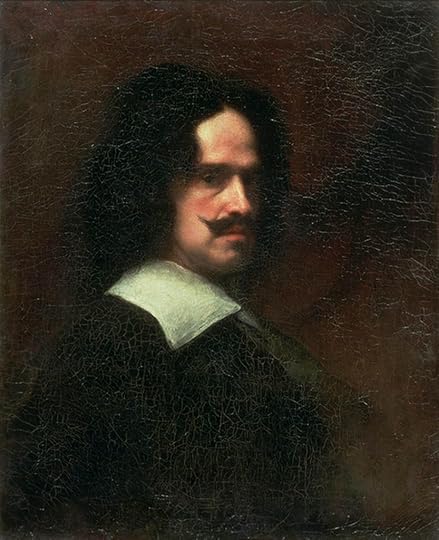
Self-portrait of Diego Vélazquez, 1643
John Snare’s story reads like a thriller. Not much was known in England about Vélazquez at that time (he was referred to as Valasky, Velasco and various other permutations) and the portrait in question had been attributed to Van Dyck. Without going into any details and spoiling the book for you, let me simply mention that Snare ran into all sorts of problems, not least because he was a mere tradesman who was held to merely be dabbling with things that he oughtn’t have bothered with. He was up against money, nobility and a well established art critic, the polymath William Stirling Maxwell.
Ms Cumming brings the stories of Vélazquez and Snare together with that of her own very extensive research. In addition she provides interesting historical snippets, such as the art lost/found when Joseph Bonaparte fled a Spanish battlefield as well as some delightful details about Spanish theatre during the reign of Philippe IV, the Spanish ruler and Vélazquez’s employer. We read that Spanish theatres at that time already had sophisticated lighting and machinery for special effects. There were spectacular productions on the lake at El Retiro Park, and “On a single spring night in 1632 Count-Duke Olivares laid on three productions for the king and queen on temporary stages in the bosky gardens of a villa outside Madrid. A few weeks later, on Midsummer’s Eve, they returned for Francisco de Quevedo’s crackling satire He Who Lies Most Prospers Most, and then progressed through to the gardens of the villa next door to watch Lope de Vega’s Midsummer’s Night.”
Here are some of the paintings discussed: (all pictures courtesy of Art Authority www.artauthority.net)
Old Woman Frying Eggs, 1618

“The whole tableau was visibly made to bewitch, and so it does. But at the quick of it is a feat of staggering veracity: the star-spangled pan of eggs coalescing from translucent fluid to opaque white flux, a moment in which liquid becomes solid, acquires visible form –just like the magical illusion of painting itself.”
The Water Seller of Seville, 1620 (as mentioned above)

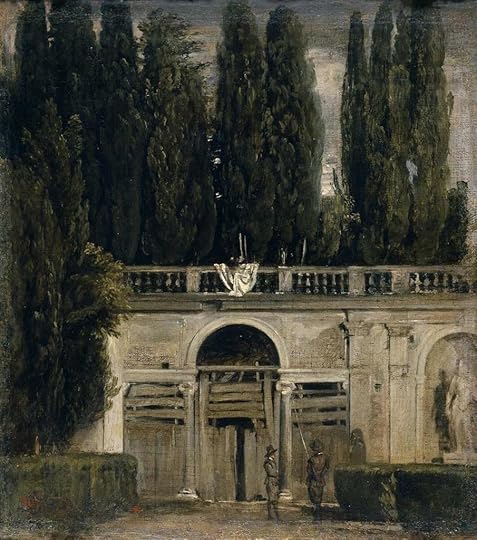
Villa Medici, Grotto-Loggia Façade, 1630 - this was done during one of two trips to Italy.
The Dwarf Francisco Lezcano, 1643-1645

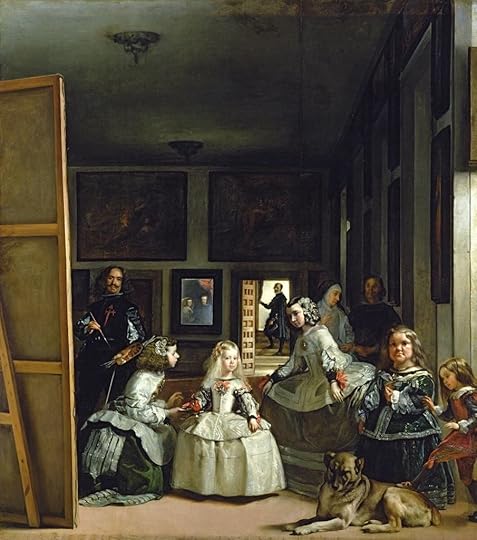
Las Meninas, 1656

January 7, 2016
 BOTW
BOTW http://www.bbc.co.uk/programmes/b06x8vq2
Description: Laura Cumming charts the obsession of a 19th century Reading bookseller with a portrait of Charles I - painted when the Monarch was a young man on a visit to Madrid. The Spanish genius Velasquez painted very few pictures, so did John Snare discover a long-lost treasure? And if so, where is it now?
This is a story about the intense emotions that great art can provoke - passions that sometimes verge on the irrational and which transcend considerations of value. John Snare's conviction about the painting he bought evolved into a dispute with those who had more money, power and influence. In a sense, the missing Velasquez became a battleground for class war and the individual against the establishment. But at the heart of the story lies a work of art, created with such skill and delicacy that it inspired the fiercest of feelings and continues to exert its mysterious pull to this day.
 Episode 1: An auction bargain ignites a humble bookseller with a lifelong obsession2/5: It is 1847 and John Snare invites the public to admire his Velazquez portrait3/5: The Lost Velasquez is put on show in Edinburgh at the beginning of 1849. But soon Snare finds himself having to fend off not just challenges over the portrait's authenticity,but also overownership.4/5: The Velasquez has been restored to Snare but he has now vanished - until the portrait is advertised for show on Broadway in 1860. The Reading bookseller has fled to America.5/5: In 1888 a Velasquez portrait of Prince Charles is reported as being lent to the Reading Art Museum by the widow of John Snare. Somehow the picture has returned to Britain.
Laura Cumming: how Velázquez gave me consolation in grief – and set me on the trail of a lost portrait.

February 7, 2017
An obsession with a work of art led to the ruin of a British man, John Snare. In 1845, Snare purchased an old painting at an auction. He thought it might be a painting of Charles I, painted by Velazquez when the future English king visited Madrid. In this true story, author Laura Cumming tells about Snare's infatuation and eventual financial ruin. He lost his bookstore and print shop, left his family, and devoted his life to researching and showing the painting. The book also discusses Velazquez's artistic gifts, and his life as a painter and a courtier in the 17th Century. Cumming continued Snare's detective work with only written descriptions guiding her. The portrait of Charles I disappeared after Snare's death, and no one knows if it was destroyed or is now in a private collection. The book combines a mystery, a biography, and art history into an interesting story that art lovers should enjoy.

October 29, 2016
In 1845, a humble bookseller named John Snare bought a painting at an auction, which was listed as being "probably a Van Dyck" but which he was convinced was a Velazquez. This book tells the story of how that purchase took over Snare's life, not always for the better! Along the way, Cumming writes a good deal about Velazquez's life and especially his art. It is a very interesting story but where the book excels, for me, are the passages where Cumming writes about Velazquez's paintings. She writes with a love and a reverence for his art, which I found inspiring and moving.
I switched between the hardback edition and the audio for this book. The audio was very ably narrated by Siobhan Redmond, but I was glad to have the book as well, mainly for the beautiful colour plates of Velzquez's paintings, especially the iconic Las Meninas.
I switched between the hardback edition and the audio for this book. The audio was very ably narrated by Siobhan Redmond, but I was glad to have the book as well, mainly for the beautiful colour plates of Velzquez's paintings, especially the iconic Las Meninas.

July 9, 2022
It is always a delight to encounter great Art, especially when the person presenting it is knowledgeable and enchanted by her subject. Cumming has a wonderful way with words. The writing here is excellent. Ms. Cumming tends to repeat herself but does so with new and equally eloquent turns of phrase, so the recapitulations are at least a pleasure to read.
Where the book falls short is in its focus on Mr. John Snare, the eponymous bookseller from Reading who was also passionate about great Art but whose personal story grows vague and wearisome over time. Setting him aside, this homage to Diego Velazquez and his ability to "sketch" both high- and low-born creatures in luminous oil was quite good.
3.5 stars
Where the book falls short is in its focus on Mr. John Snare, the eponymous bookseller from Reading who was also passionate about great Art but whose personal story grows vague and wearisome over time. Setting him aside, this homage to Diego Velazquez and his ability to "sketch" both high- and low-born creatures in luminous oil was quite good.
3.5 stars

December 14, 2024
Not as emotionally compelling as Cumming's Women's Prize nominated Thunderclap, but this is nonetheless a fascinating read brimming with mystery and gorgeous descriptions of famous paintings.

February 15, 2017
I love Velasquez and I like true detective stories but, for me, this book has been a bit overhyped. The basic problem is that, despite all the research Laura Cumming has done, ultimately there is very little known about Velasquez life and background. A masterful painter he may have been but as a personality he's no Carravagio or Van Gogh. Likewise, John Snare, the Reading bookseller, who becomes obsessed with the portrait of the young Charles 1 that he believes to be by Velasquez is also a shadowy figure.
There is rather too much detailed analysis of individual paintings and not quite enough history although the book certainly made me want to revisit Velasquez paintings.
There is rather too much detailed analysis of individual paintings and not quite enough history although the book certainly made me want to revisit Velasquez paintings.

April 25, 2016
A marvelous, intriguing read about the great artist Diego Velasquez, a famous painting and the man who would do anything to prove its worth. If your a lover of historical books, art and a good mystery, I highly recommend you read this, for it has all three. I learned much about this mysterious artist and how the art world today still looks to Velasquez famous paintings for inspiration. Beautifully written and full of history, it kept me hooked from beginning to end.

February 15, 2020
The vanishing Velazquez
Velázquez was always a mystery to me. In art college I remember almost nothing of him except he was a good portrait painter and of course, for Las Meninas (The Maidservants).
I saw this magnificent painting in 2012 and stood amazed. It was really big, but haunting. The artist stared back at the viewer. He was painting a really big painting. In a mirror you could see the Spanish king Philip IV and his queen staring at him. And that odd assortment of maid servants, including that big dog around the princess María Teresa, who looks like a doll. What are they doing? What is going on here? Are they posing, frozen in time. The painting was an act, a slice of royal life, of the painter and the king’s court.
So when I read a fine review of this book I wanted to know more. Velázquez studied under Pacheco and at an early age. He caught the attention of the king and began as the court painter at eighteen. He remained there until he died at age 61. Apart from two trips to Italy, he never left the court. He painted countless portraits of the king until the king himself could no longer handle his own aging look in these paintings. One needs to remember that this was two hundred years before photography.
Velázquez was a very brilliant artist. His portraits evoke such realism that one feels they are looking at you. There were reports of people talking to the painting in low light, mistaken for real people. He stroke was light, almost non existent and his paintings were often done quickly without under paintings, sketches and repainted. Talented for any artist.
The story behind this book is the 19th century bookseller, Charles Snare who came across a painting of the young English King Charles I. It was attributed to Van Dyck. The young Charles had gone to marry the daughter of the Spanish king, but plans went awry. During his stay, the court painter Velazquez captured the young prince, quickly in one sitting. Not an easy feat to do in oil paints.
Laura Cummin, herself an art critic for The Observer, tells the sad story of Charles Snare’s obsession (or is a curse) with the Velazquez painting. A lot happens that seems probable and far fetched. It’s a good yarn. She ties it altogether with the life of Velazquez, which I thoroughly enjoyed.
What I learned from this book was the intermediate period in the life of a painting. You know that part between when artist creates a painting to when that painting ends upon a museum.
During the life of Charles Snare, museums were just in their infancy. In his case, he bought the painting at an estate sale, then charged admission for people to see it. He covered the advertising and got the word out in the papers. People came, then stopped. Then what? Often paintings are sold to museums often to get one out of debt, or sometimes if you are lucky, to make a profit. This was an interesting period for art. Sometimes they sank while crossing the ocean, or burned in a fire. The most notable was the fire of the Alcázar in 1665 when the beloved Las Meninas was thrown out a window to escape the flames, and another of Velzquez’s painting wasn’t so lucky.
A great painting is never considered by the artist. It’s attention draws that name. But how a great painting survives is often just as important as its fame. One can add this book to a better understanding art and its appreciation even more.
It is a funny thing our obsession with canvas and some coloured oils. After I read this book I pulled together a list of Velazquez paintings in various museums that I have seen. One surprised me. The Condesa de Monterey, painted in 1635 hangs in the Gemäldegalerie in Berlin. The countess stands before me, natural her hand rests on the back of a chair. She seems so much at ease. She is a countess but her pose and gaze reveals she is a just another person, like you or me. Nothing fancy. I snapped a photo. I really liked that painting. Perhaps this was the genius of Velazquez.
Velázquez was always a mystery to me. In art college I remember almost nothing of him except he was a good portrait painter and of course, for Las Meninas (The Maidservants).
I saw this magnificent painting in 2012 and stood amazed. It was really big, but haunting. The artist stared back at the viewer. He was painting a really big painting. In a mirror you could see the Spanish king Philip IV and his queen staring at him. And that odd assortment of maid servants, including that big dog around the princess María Teresa, who looks like a doll. What are they doing? What is going on here? Are they posing, frozen in time. The painting was an act, a slice of royal life, of the painter and the king’s court.
So when I read a fine review of this book I wanted to know more. Velázquez studied under Pacheco and at an early age. He caught the attention of the king and began as the court painter at eighteen. He remained there until he died at age 61. Apart from two trips to Italy, he never left the court. He painted countless portraits of the king until the king himself could no longer handle his own aging look in these paintings. One needs to remember that this was two hundred years before photography.
Velázquez was a very brilliant artist. His portraits evoke such realism that one feels they are looking at you. There were reports of people talking to the painting in low light, mistaken for real people. He stroke was light, almost non existent and his paintings were often done quickly without under paintings, sketches and repainted. Talented for any artist.
The story behind this book is the 19th century bookseller, Charles Snare who came across a painting of the young English King Charles I. It was attributed to Van Dyck. The young Charles had gone to marry the daughter of the Spanish king, but plans went awry. During his stay, the court painter Velazquez captured the young prince, quickly in one sitting. Not an easy feat to do in oil paints.
Laura Cummin, herself an art critic for The Observer, tells the sad story of Charles Snare’s obsession (or is a curse) with the Velazquez painting. A lot happens that seems probable and far fetched. It’s a good yarn. She ties it altogether with the life of Velazquez, which I thoroughly enjoyed.
What I learned from this book was the intermediate period in the life of a painting. You know that part between when artist creates a painting to when that painting ends upon a museum.
During the life of Charles Snare, museums were just in their infancy. In his case, he bought the painting at an estate sale, then charged admission for people to see it. He covered the advertising and got the word out in the papers. People came, then stopped. Then what? Often paintings are sold to museums often to get one out of debt, or sometimes if you are lucky, to make a profit. This was an interesting period for art. Sometimes they sank while crossing the ocean, or burned in a fire. The most notable was the fire of the Alcázar in 1665 when the beloved Las Meninas was thrown out a window to escape the flames, and another of Velzquez’s painting wasn’t so lucky.
A great painting is never considered by the artist. It’s attention draws that name. But how a great painting survives is often just as important as its fame. One can add this book to a better understanding art and its appreciation even more.
It is a funny thing our obsession with canvas and some coloured oils. After I read this book I pulled together a list of Velazquez paintings in various museums that I have seen. One surprised me. The Condesa de Monterey, painted in 1635 hangs in the Gemäldegalerie in Berlin. The countess stands before me, natural her hand rests on the back of a chair. She seems so much at ease. She is a countess but her pose and gaze reveals she is a just another person, like you or me. Nothing fancy. I snapped a photo. I really liked that painting. Perhaps this was the genius of Velazquez.

April 16, 2016
From BBC Radio 4 - Book of the Week:
Laura Cumming charts the obsession of a 19th century Reading bookseller with a portrait of Charles I - painted when the Monarch was a young man on a visit to Madrid. The Spanish genius Velasquez painted very few pictures, so did John Snare discover a long-lost treasure? And if so, where is it now?
Episode 2:
The portrait is set before the public and the press in the spring of 1847. Snare is determined that his discovery should be recognised as a work by the great Spanish court painter, but not everybody is willing to agree with him.
Episode 3:
The Lost Velasquez is put on show in Edinburgh at the beginning of 1849. But soon Snare finds himself having to fend off not just challenges over the portrait's authenticity,but also overownership.
Episode 4:
The Velasquez has been restored to Snare but he has now vanished - until the portrait is advertised for show on Broadway in 1860. The Reading bookseller has fled to America.
Episode 5:
In 1888 a Velasquez portrait of Prince Charles is reported as being lent to the Reading Art Museum by the widow of John Snare. Somehow the picture has returned to Britain.
This is a story about the intense emotions that great art can provoke - passions that sometimes verge on the irrational and which transcend considerations of value.
John Snare's conviction about the painting he bought evolved into a dispute with those who had more money, power and influence. In a sense, the missing Velasquez became a battleground for class war and the individual against the establishment.
But at the heart of the story lies a work of art, created with such skill and delicacy that it inspired the fiercest of feelings and continues to exert its mysterious pull to this day.
Read by Siobhan Redmond
Written by Laura Cumming
Abridged by Isobel Creed
Produced by Jill Waters
A Waters Company production for BBC Radio 4.
http://www.bbc.co.uk/programmes/b06x8vq2
http://www.nytimes.com/2016/04/11/boo...
Laura Cumming charts the obsession of a 19th century Reading bookseller with a portrait of Charles I - painted when the Monarch was a young man on a visit to Madrid. The Spanish genius Velasquez painted very few pictures, so did John Snare discover a long-lost treasure? And if so, where is it now?
Episode 2:
The portrait is set before the public and the press in the spring of 1847. Snare is determined that his discovery should be recognised as a work by the great Spanish court painter, but not everybody is willing to agree with him.
Episode 3:
The Lost Velasquez is put on show in Edinburgh at the beginning of 1849. But soon Snare finds himself having to fend off not just challenges over the portrait's authenticity,but also overownership.
Episode 4:
The Velasquez has been restored to Snare but he has now vanished - until the portrait is advertised for show on Broadway in 1860. The Reading bookseller has fled to America.
Episode 5:
In 1888 a Velasquez portrait of Prince Charles is reported as being lent to the Reading Art Museum by the widow of John Snare. Somehow the picture has returned to Britain.
This is a story about the intense emotions that great art can provoke - passions that sometimes verge on the irrational and which transcend considerations of value.
John Snare's conviction about the painting he bought evolved into a dispute with those who had more money, power and influence. In a sense, the missing Velasquez became a battleground for class war and the individual against the establishment.
But at the heart of the story lies a work of art, created with such skill and delicacy that it inspired the fiercest of feelings and continues to exert its mysterious pull to this day.
Read by Siobhan Redmond
Written by Laura Cumming
Abridged by Isobel Creed
Produced by Jill Waters
A Waters Company production for BBC Radio 4.
http://www.bbc.co.uk/programmes/b06x8vq2
http://www.nytimes.com/2016/04/11/boo...

May 18, 2021
Great book!
Cumming winds two biographies together - a 17th-century Spanish painter and the 19th-century English bookseller obsessed with his work. It's kind of a history book inside of a history book which is apparently right up my alley.
This story is wonderfully well-written, and Cumming gives you just what you need to know in the moment and reveals the rest later when it fits the story better. It never felt gimmicky to me and I enjoyed the ride.
As well-written as it is, I think I enjoyed the description and explanation of art even more. I learned a lot.
Cumming winds two biographies together - a 17th-century Spanish painter and the 19th-century English bookseller obsessed with his work. It's kind of a history book inside of a history book which is apparently right up my alley.
This story is wonderfully well-written, and Cumming gives you just what you need to know in the moment and reveals the rest later when it fits the story better. It never felt gimmicky to me and I enjoyed the ride.
As well-written as it is, I think I enjoyed the description and explanation of art even more. I learned a lot.

July 7, 2017
The concept of the book is good but the execution is lacking. Without revealing any particular spoilers I was disappointed by the overabundance of supposition and the author’s excessive portrayal of Diego Velázquez as the greatest painter of all time and Las Meninas as the greatest painting ever. If you’re a big fan of Anthony Van Dyck’s work this book will flat out piss you off; he comes across as Burger King in a world of fine dining.
The John Snare story starts off well enough but there’s not enough written history about him to justify everything the author presents. Snare is portrayed as an obsessive and ultimately tragic figure but I didn’t find this storyline convincing or worth the space devoted to it.
Velázquez gets the superstar treatment both personally and professionally. His body of work speaks for itself but, as she does with Snare, the author surmises he was a lovely man based seemingly on her intuition. The author fills gaps in the story and brings it to book length by devoting several chapters to the life and history of Velázquez but that’s better accomplished in a book simply devoted to a biography of the artist.
The author writes well and her early descriptions of the various paintings she describes are very interesting and thought provoking. Later she just seems to heap one superlative onto another about the greatness of Velázquez’s various masterpieces. (I was most impressed with his portraits of Pope Innocent X and Juan de Pareja.)
For anyone who does decide to read this book or any other book with art illustrations, go with a physical book. I read this in the kindle version and it doesn’t do justice to the pictures.
I have read two books about classic art that I would strongly recommend: The Lost Painting (by Jonathan Harr) https://www.goodreads.com/book/show/2... and The Forger’s Spell (by Edward Dolnick) https://www.goodreads.com/book/show/2.... Harr’s book deals with a possibly lost Caravaggio and Dolnick’s book deals with Vermeer forgeries.
One last word of caution – Don’t bother with Dolnick’s book The Rescue Artist https://www.goodreads.com/book/show/4.... It stinks.
The John Snare story starts off well enough but there’s not enough written history about him to justify everything the author presents. Snare is portrayed as an obsessive and ultimately tragic figure but I didn’t find this storyline convincing or worth the space devoted to it.
Velázquez gets the superstar treatment both personally and professionally. His body of work speaks for itself but, as she does with Snare, the author surmises he was a lovely man based seemingly on her intuition. The author fills gaps in the story and brings it to book length by devoting several chapters to the life and history of Velázquez but that’s better accomplished in a book simply devoted to a biography of the artist.
The author writes well and her early descriptions of the various paintings she describes are very interesting and thought provoking. Later she just seems to heap one superlative onto another about the greatness of Velázquez’s various masterpieces. (I was most impressed with his portraits of Pope Innocent X and Juan de Pareja.)
For anyone who does decide to read this book or any other book with art illustrations, go with a physical book. I read this in the kindle version and it doesn’t do justice to the pictures.
I have read two books about classic art that I would strongly recommend: The Lost Painting (by Jonathan Harr) https://www.goodreads.com/book/show/2... and The Forger’s Spell (by Edward Dolnick) https://www.goodreads.com/book/show/2.... Harr’s book deals with a possibly lost Caravaggio and Dolnick’s book deals with Vermeer forgeries.
One last word of caution – Don’t bother with Dolnick’s book The Rescue Artist https://www.goodreads.com/book/show/4.... It stinks.

January 11, 2019
1623: the Spanish master Diego Velazquez apparently paints a picture of Prince Charles - later to become King Charles I - during the future Stuart monarch's visit to Spain in search of a bride.
1845: Reading bookseller John Snare buys a portrait of Charles I at an auction, convinced he has discovered the lost masterpiece.
These are the dual narratives of Laura Cumming's fascinating account of a great painter, and what may have been a great painting.
We begin by focusing on Snare. After picking up the painting, he begins to show it publicly for profit, but what could have been his fortune becomes a curse. Doubts over its identity, its provenance and the legality of his ownership will dog Snare, and eventually ruin him.
But Cumming also looks at the life of Velazquez - what made his paintings so special, and why they still speak to us today.
That second element is more challenging than it sounds. The biographical detail about Velazquez's life is pretty thin, and Laura Cumming has to do some skilful detective work to conjure up what she can.
What she certainly does though is explain why Velazquez deserves to be considered among the masters. There are reproductions of some of his most celebrated works, and Cumming uses them to make a convincing case for his greatness. It certainly made me want to book a flight to Madrid, and tickets for the Prado.
She also uses all her research skills to reveal the fascinating and rather tragic story of Snare and his royal portrait. There are twists and turns right to the end, as the painting and its owner disappear and reappear.
The result is a fascinating tale, underpinned by scholarly research and Cumming's passion of for a great painter.
I don't think you need much previous knowledge of Velazquez to enjoy the book, but an interest in art helps, just so you can share the passion as well as the intrigue.
1845: Reading bookseller John Snare buys a portrait of Charles I at an auction, convinced he has discovered the lost masterpiece.
These are the dual narratives of Laura Cumming's fascinating account of a great painter, and what may have been a great painting.
We begin by focusing on Snare. After picking up the painting, he begins to show it publicly for profit, but what could have been his fortune becomes a curse. Doubts over its identity, its provenance and the legality of his ownership will dog Snare, and eventually ruin him.
But Cumming also looks at the life of Velazquez - what made his paintings so special, and why they still speak to us today.
That second element is more challenging than it sounds. The biographical detail about Velazquez's life is pretty thin, and Laura Cumming has to do some skilful detective work to conjure up what she can.
What she certainly does though is explain why Velazquez deserves to be considered among the masters. There are reproductions of some of his most celebrated works, and Cumming uses them to make a convincing case for his greatness. It certainly made me want to book a flight to Madrid, and tickets for the Prado.
She also uses all her research skills to reveal the fascinating and rather tragic story of Snare and his royal portrait. There are twists and turns right to the end, as the painting and its owner disappear and reappear.
The result is a fascinating tale, underpinned by scholarly research and Cumming's passion of for a great painter.
I don't think you need much previous knowledge of Velazquez to enjoy the book, but an interest in art helps, just so you can share the passion as well as the intrigue.

January 20, 2023
This book provides a biography of British bookseller John Snare (1808 – 1884) and a tribute to Spanish master painter Diego Velázquez (1599 – 1660). In 1846, Snare purchased an early portrait of Charles I (before he became King), paying very little for it. He believed it was a lost work by Velázquez. This artwork became an obsession throughout Snare’s lifetime. In attempting to prove it was a Velázquez, he displayed it, engaged in a legal battle for it, and suffered financial and domestic misfortune over it. This book documents his many tribulations that were at least in part caused by his passion for this painting. Along the way, the author offers details about the life and artistic vision of Diego Velázquez.
The author is obviously a huge fan of Velázquez. Her praise for the artist occasionally overshadows the story of the bookseller. Few details are available about the ultimate disposition of the painting, which leaves the ending a bit unsatisfying. I enjoyed learning about John Snare, a relatively unknown person of history and the artwork of Diego Velázquez. I think it requires an interest in art or art history to fully appreciate it. The writing is not quite as accomplished as I was expecting but I am glad I read it.
3.5
The author is obviously a huge fan of Velázquez. Her praise for the artist occasionally overshadows the story of the bookseller. Few details are available about the ultimate disposition of the painting, which leaves the ending a bit unsatisfying. I enjoyed learning about John Snare, a relatively unknown person of history and the artwork of Diego Velázquez. I think it requires an interest in art or art history to fully appreciate it. The writing is not quite as accomplished as I was expecting but I am glad I read it.
3.5

April 14, 2016
This is by far the strangest book I have ever read. The tenses switch randomly from past to present and back again. The writing style is almost mystical; the descriptions of the art reverential. Most odd is the elusive subject matter. Was there really a vanished Velázquez painting? Was it all a matter of mistaken identity? If you read the book, I'll let you decide, but I guarantee that you will never look at the artist's self-portrait in "Las Meninas" the same way again.

May 25, 2016
Not my favorite book. The problem starts with the fact that Cumming is an art critic, not a historian. This becomes a problem because she is writing a work of microhistory, namely about John Snare, the Reading bookseller who purchased a Velasquez portrait of Charles I and then spent his life displaying and defending the portrait. It's not easy to write about a private person who was not powerful or famous, as one would need great ability to find and process remote records. This is the sort of thing that PhD history students are trained to do (and part of why I went into law instead of history, as writing microhistory seems like a waste of time, especially when it is pushed by a Marxist bent). It is not something that an art critic is likely to be able to do. Thus, Cumming spends much of her time speculating or writing surface-level descriptions from obvious, public records. There are big gaps in the story, especially with respect to Snare after he went to the US. A professional historian could have teased out those details, but Cumming struggles in that regard. And this really hits home when Cumming introduces a twist at the the end that the 2nd Earl Fife (whose ancestors sued Snare, claiming that he had stolen property) never really owned Velazquez's portrait of Charles I, which is part of the history of the painting that Snare claimed. We are left with no idea as to how the painting went from Spain to the school where Snare bought it for a pittance at an auction.
When she's writing about paintings, Cumming's talent is on display. She's great at describing them. I don't necessarily buy her interpretations, as there is a good amount of bullshit in her prose where she's seeing things and ascribing intent on the part of artists that may well not be there. However, this is her lane and it's certainly stronger than her attempts to tell us what Snare was doing in New York City in the 1860s. Her history of Velazquez is solid and she is adept at describing what makes his paintings so impressive. She also works in quotes from other great painters about how they are in awe of Velazquez's technique, especially his ability to have walls and floors blend into one another.
Cumming is also strong when she is starting and closing the book. She opens with a riveting personal anecdote about how she was left adrift when her father died. She was wandering Madrid and then happened to come upon Las Meninas in El Prado. She describes how it had a profound effect on her, such that she could not stop staring at it. That story grabbed my attention and functioned as a useful description of how art can deeply affect a person. The book ends with a description of Velazquez "emphasizing the dignity of all people" and how he preserves the subjects of his paintings for eternity. "We live in each other's eyes and our stories need not end." That is the last sentence of the book and it closes the loop for Cumming on a project that was born out of her mourning for a dead parent. It had an effect on me as well, thinking about my grandfather who died in November. The rejoinder would be that Snare's story most certainly ended, as he died without a trace and his family did not continue past a couple generations.
Perhaps if I were more of a fan of fine art then I would have liked this book more. A fan of Velazquez or one of the other masters could rate this book as a four- or five-star effort and I wouldn't disagree. I just know that I didn't really enjoy reading it and the main reasons are Cumming's tendency to describe paintings in a way that leads me to call bullshit and her limitations as a historian.
Update: upon reflection, I came back and gave the book an additional star based on the fact that Cumming is willing to admit when she doesn't know something and/or when a person or event has been lost to history. That humility is often lacking in historians.
When she's writing about paintings, Cumming's talent is on display. She's great at describing them. I don't necessarily buy her interpretations, as there is a good amount of bullshit in her prose where she's seeing things and ascribing intent on the part of artists that may well not be there. However, this is her lane and it's certainly stronger than her attempts to tell us what Snare was doing in New York City in the 1860s. Her history of Velazquez is solid and she is adept at describing what makes his paintings so impressive. She also works in quotes from other great painters about how they are in awe of Velazquez's technique, especially his ability to have walls and floors blend into one another.
Cumming is also strong when she is starting and closing the book. She opens with a riveting personal anecdote about how she was left adrift when her father died. She was wandering Madrid and then happened to come upon Las Meninas in El Prado. She describes how it had a profound effect on her, such that she could not stop staring at it. That story grabbed my attention and functioned as a useful description of how art can deeply affect a person. The book ends with a description of Velazquez "emphasizing the dignity of all people" and how he preserves the subjects of his paintings for eternity. "We live in each other's eyes and our stories need not end." That is the last sentence of the book and it closes the loop for Cumming on a project that was born out of her mourning for a dead parent. It had an effect on me as well, thinking about my grandfather who died in November. The rejoinder would be that Snare's story most certainly ended, as he died without a trace and his family did not continue past a couple generations.
Perhaps if I were more of a fan of fine art then I would have liked this book more. A fan of Velazquez or one of the other masters could rate this book as a four- or five-star effort and I wouldn't disagree. I just know that I didn't really enjoy reading it and the main reasons are Cumming's tendency to describe paintings in a way that leads me to call bullshit and her limitations as a historian.
Update: upon reflection, I came back and gave the book an additional star based on the fact that Cumming is willing to admit when she doesn't know something and/or when a person or event has been lost to history. That humility is often lacking in historians.

August 18, 2023
3,5*
Iš vienos pusės galiu tik pagirti autorę, kuri sugebėjo iš tikrai mažai išlikusios informacijos, atkurti dviejų asmenybių biografijas ir jas supinti į vieną istoriją. Iš kitos pusės, tai nėra tos kategorijos non fiction knyga, kur gali paimti nieko nesuprasdamas apie temą ir būti prikaustytas nuo pirmų puslapių.
Vienas iš knygų herojų yra knygų pardavėjas John Snare, kuris 19a šventai tikėjo, kad atrado prarastą Velazquez paveikslą ir paskyrė visą savo gyvenimą, kad įrodytų jo originalumą. Tačiau tais laikais, kai neegzistavo Xray ir kitos technologijos, tai padaryti buvo žymiai sunkiau. Autorė iš gabaliukų pateikia ne tik visą jo gyvenimo istoriją, bet ir paveikslo, kuri yra dar įdomesnė su netikėta atomazga.
Antrasis knygos herojus yra pats Velazquez, apie kurį informacijos yra itin nedaug išlikę, kaip ir jo darbų. Autorei puikiai pavyko suskurti jo portretą, įkvėpti jam charakterio bruožus. Manau, kad tai vienas detaliausių tekstų apie šį meistrą.
Informacijos knygoje gausu, tiek kiek turbūt buvo įmanoma išgauti su dabartiniais resursais, darbo įdėta beproto daug, nėra net abejonės. Autorės aistra menui ir Velazquez'ui pulsuoja iš knygos puslapių. Bet jei nesi matęs jo paveikslo gyvai ar ta aistra užsikrėstum? Abejoju. Informacija pateikta šiek tiek per sausai, vietomis moksliškai, jaučiasi autorės subjektyvumas ir emocijos. Jei knyga orentuota platesnei auditorijai, o ne tik tapybos fanams, ji turėtų būti šiek tiek gyvesnė. Nebūtinai mažiau informacijos ar primityviau parašyta, bet lengviau "suvirškinama" ir pradedantiesiams. Knygoje yra įtraukos spalvotos ir nespalvotos minimų darbų iliustracijos, kas tikrai prideda daug vertės ir malonumo skaitant.
Man teko laimė pamatyti Velazquez darbus Prado muziejuje ir nemeluosiu, kad man kaip labai low level geek šios srities, tai suteikė labai daug džiaugsmo ir pabaigus knygą, išaugo noras sugrįžti ir į viską pažvlegti vėl, bet dabar su turima informacija, kurią sužinojau iš autorės.
Iš vienos pusės galiu tik pagirti autorę, kuri sugebėjo iš tikrai mažai išlikusios informacijos, atkurti dviejų asmenybių biografijas ir jas supinti į vieną istoriją. Iš kitos pusės, tai nėra tos kategorijos non fiction knyga, kur gali paimti nieko nesuprasdamas apie temą ir būti prikaustytas nuo pirmų puslapių.
Vienas iš knygų herojų yra knygų pardavėjas John Snare, kuris 19a šventai tikėjo, kad atrado prarastą Velazquez paveikslą ir paskyrė visą savo gyvenimą, kad įrodytų jo originalumą. Tačiau tais laikais, kai neegzistavo Xray ir kitos technologijos, tai padaryti buvo žymiai sunkiau. Autorė iš gabaliukų pateikia ne tik visą jo gyvenimo istoriją, bet ir paveikslo, kuri yra dar įdomesnė su netikėta atomazga.
Antrasis knygos herojus yra pats Velazquez, apie kurį informacijos yra itin nedaug išlikę, kaip ir jo darbų. Autorei puikiai pavyko suskurti jo portretą, įkvėpti jam charakterio bruožus. Manau, kad tai vienas detaliausių tekstų apie šį meistrą.
Informacijos knygoje gausu, tiek kiek turbūt buvo įmanoma išgauti su dabartiniais resursais, darbo įdėta beproto daug, nėra net abejonės. Autorės aistra menui ir Velazquez'ui pulsuoja iš knygos puslapių. Bet jei nesi matęs jo paveikslo gyvai ar ta aistra užsikrėstum? Abejoju. Informacija pateikta šiek tiek per sausai, vietomis moksliškai, jaučiasi autorės subjektyvumas ir emocijos. Jei knyga orentuota platesnei auditorijai, o ne tik tapybos fanams, ji turėtų būti šiek tiek gyvesnė. Nebūtinai mažiau informacijos ar primityviau parašyta, bet lengviau "suvirškinama" ir pradedantiesiams. Knygoje yra įtraukos spalvotos ir nespalvotos minimų darbų iliustracijos, kas tikrai prideda daug vertės ir malonumo skaitant.
Man teko laimė pamatyti Velazquez darbus Prado muziejuje ir nemeluosiu, kad man kaip labai low level geek šios srities, tai suteikė labai daug džiaugsmo ir pabaigus knygą, išaugo noras sugrįžti ir į viską pažvlegti vėl, bet dabar su turima informacija, kurią sužinojau iš autorės.

March 30, 2025
Have you ever read a book that literary critics call a 'masterpiece' and then you read it and its completely overwritten and pretentious? This is the nonfiction version of that. The story that Cumming tells could be good, but every part of this is unnecessarily overwritten and nothing is said simply. To add to that, the story jumps all over the place in a way that an editor should have fixed. If this book was executed as well as Harr's The Lost Painting: The Quest for a Caravaggio Masterpiece, it could have been something great. Instead, it's a book I wouldn't recommend unless you really love art history and specifically Velazquez.

April 28, 2016
About 35 years ago, I noticed a painting in a window of a local art gallery/semi-curiosity shop in the Chicago suburb where I lived. It was a largish painting of a young girl in Spanish court garb, and looked for all the world like a painting by Diego Velazquez. The painting was priced at $2000 - well-beyond my budget at the time - but I would visit the shop window almost daily for a few months, until it was sold. Could this painting be a Velazquez? For a mere $2000? I never would know but I later found out that several other people had eyed the painting, thinking, "maybe..." Now, I know that I should have found the $2000 from somewhere and bought the painting. Because, even if it wasn't a true Velazquez, it would have taken a large place in my heart. He and Albrecht Durer have long been my favorite painters, both because of their art, but also for the history they portrayed.
British art historian Laura Cumming has written a book, "The Vanishing Velazquez: A 19th Century Bookseller's Obsession With a Lost Masterpiece", about John Snare, who purchased at an auction in 1845 a painting he thinks is a portrait of Prince Charles, painted by Diego Velazquez. Charles, heir to the British crown, made a trip to Spain to - maybe - marry a Spanish princess. The trip, which occurred in 1623, was the only time Charles was known to be in Spain, and Diego Velazquez - aside from two trips to Italy - never left Spain. But John Snare thought the painting was a Velazquez, bought it, and spent the rest of his life in homage to the painting. He displayed his treasure in England and Scotland for years - suffering through law suits - before leaving his family in Reading, and moving, with the painting, to New York City. He continued to show the painting, earning money that kept him in a precarious financial state til his death. He never returned to England and only once was reunited with a son, who was born after he and the painting absconded to the United States. John Snare truly lived his life in thrall of a painting.
Laura Cumming writes about the hunt for both the provenance of Snare's painting, as well as the hunt for the painting itself. It seems to have disappeared into the mists of time and may have been destroyed physically or lost in the back rooms of a museum or in the attic of a country house. She takes the reader on a journey to both the courts of Kings James I and Charles I, as well as that of Spain's Philip IV. It was in this court where the genius of Diego Velazquez was seen in all it's glory; his paintings of court members and commoners alike give the Hapsburg Philip IV its place in history. Cumming describes both Velazquez's subjects and painting style and how that style influenced painters from then on.
Laura Cumming's book is part mystery, part character-study, and part a history of the art and of the times the art was painted. My only complaint - and I'm not sure if its important - is that the display of the art plates in the Kindle version of the book is not great. I guess that most ebooks are lacking in adequate pictorial display. But Cumming's book is marvelous reading for anyone interested in history, art, and how art keeps its place in history.
British art historian Laura Cumming has written a book, "The Vanishing Velazquez: A 19th Century Bookseller's Obsession With a Lost Masterpiece", about John Snare, who purchased at an auction in 1845 a painting he thinks is a portrait of Prince Charles, painted by Diego Velazquez. Charles, heir to the British crown, made a trip to Spain to - maybe - marry a Spanish princess. The trip, which occurred in 1623, was the only time Charles was known to be in Spain, and Diego Velazquez - aside from two trips to Italy - never left Spain. But John Snare thought the painting was a Velazquez, bought it, and spent the rest of his life in homage to the painting. He displayed his treasure in England and Scotland for years - suffering through law suits - before leaving his family in Reading, and moving, with the painting, to New York City. He continued to show the painting, earning money that kept him in a precarious financial state til his death. He never returned to England and only once was reunited with a son, who was born after he and the painting absconded to the United States. John Snare truly lived his life in thrall of a painting.
Laura Cumming writes about the hunt for both the provenance of Snare's painting, as well as the hunt for the painting itself. It seems to have disappeared into the mists of time and may have been destroyed physically or lost in the back rooms of a museum or in the attic of a country house. She takes the reader on a journey to both the courts of Kings James I and Charles I, as well as that of Spain's Philip IV. It was in this court where the genius of Diego Velazquez was seen in all it's glory; his paintings of court members and commoners alike give the Hapsburg Philip IV its place in history. Cumming describes both Velazquez's subjects and painting style and how that style influenced painters from then on.
Laura Cumming's book is part mystery, part character-study, and part a history of the art and of the times the art was painted. My only complaint - and I'm not sure if its important - is that the display of the art plates in the Kindle version of the book is not great. I guess that most ebooks are lacking in adequate pictorial display. But Cumming's book is marvelous reading for anyone interested in history, art, and how art keeps its place in history.

January 22, 2018
I just re-read this for the third time. It is an absolutely spellbinding story of a man without means who dares to buy a Velazquez at a time when collecting masters was an activity of aristocrats. This man becomes obsessed with his picture. And over time he finds his life falling apart. His wife leaves him and he has to go abroad with his picture where he probably died of poverty (all his money used to fight off lawsuits and advertise his most prized possession in exhibitions he put on in the UK and in New York.
This is a detective story. Two stories, in fact. The story of the bookseller and his picture--but also the story of the mysterious Spanish painter==of which not a lot is known about his personality. As I read this book I wondered if it could have been published in the United States. Not because it is an esoteric story but because the clues are so few and despite enormous research by the author--nothing is uncovered. The clues lead nowhere. Nothing new is learned about Velazquez but worse, the man without means (named Snare) and his painting are never tracked down. He and his picture disappear into the mists of time... so in effect, Cumming is describing a painting that she has not seen nor can she even uncover what became of it. No one is even sure if it is a Velazquez or not.
For me, herein was the great beauty of this book (and I am not alone since this was a great best seller and much discussed book!!). The fewer concrete clues she uncovered the more the author relied on her own intuitions about the artist. It is the most moving art book I have ever read. Art can save a person. Cumming was in mourning for her father and the way Las Meninas spoke to her during her period of sadness is unforgettable. In several places in the book, I got tears in my eyes I was so moved by her words and way of describing how art made her feel. I came to treasure this book and have re-read already three times!
This is a detective story. Two stories, in fact. The story of the bookseller and his picture--but also the story of the mysterious Spanish painter==of which not a lot is known about his personality. As I read this book I wondered if it could have been published in the United States. Not because it is an esoteric story but because the clues are so few and despite enormous research by the author--nothing is uncovered. The clues lead nowhere. Nothing new is learned about Velazquez but worse, the man without means (named Snare) and his painting are never tracked down. He and his picture disappear into the mists of time... so in effect, Cumming is describing a painting that she has not seen nor can she even uncover what became of it. No one is even sure if it is a Velazquez or not.
For me, herein was the great beauty of this book (and I am not alone since this was a great best seller and much discussed book!!). The fewer concrete clues she uncovered the more the author relied on her own intuitions about the artist. It is the most moving art book I have ever read. Art can save a person. Cumming was in mourning for her father and the way Las Meninas spoke to her during her period of sadness is unforgettable. In several places in the book, I got tears in my eyes I was so moved by her words and way of describing how art made her feel. I came to treasure this book and have re-read already three times!

July 15, 2022
Picked up as a bit of a punt, this had an interesting premise at the centre of it - telling the story of an ordinary man who bought a 'lost' Velazquez painting in the 19th Century, how this happened, and how it affected his life. Alas this was really only enough to fill a hundred or so pages, and as a consequence the author made long diversions into telling us all about the life of the painter himself. This was all very well researched and plenty of it was interesting, but it did ramble on somewhat and I would perhaps not have chosen to pick up the book had it been just 'a biography of a Spanish painter'.
Disappointing too was the author's failure, in my humble opinion, to meet the claim in the blurb that "..this book shows how and why great works of art can affect us, even to the point of mania..". Cumming's style is excessively florid at times, enthusiastic about art to the point that she just espouses her high opinion about the power and importance of Velazquez and his paintings, and expects us to agree. Theorising based on some pretty limited evidence, I found myself wanting but failing to be convinced in the way that most non-fiction books do succeed.
Disappointing too was the author's failure, in my humble opinion, to meet the claim in the blurb that "..this book shows how and why great works of art can affect us, even to the point of mania..". Cumming's style is excessively florid at times, enthusiastic about art to the point that she just espouses her high opinion about the power and importance of Velazquez and his paintings, and expects us to agree. Theorising based on some pretty limited evidence, I found myself wanting but failing to be convinced in the way that most non-fiction books do succeed.

August 9, 2023
an absolute masterpiece. a topic that would seem niche is brought to life in the most interesting, thrilling and effecting book.
August 4, 2024
Laura Cumming tells the story of two men – one is Diego Velázquez, and the other is an obscure man who hugely admired Velázquez and in 1851, paid a pittance at an auction for a murky, unaccredited portrait of Charles I, that he believed to be by Velázquez. This man was John Snare and the book tells quite a gripping and true story of Snare’s quest to prove that his Valazuez was genuine. The chapters alternate mostly between Valazquez and Snare. The book was also an excellent overview and insight of the work of Velazquez and his standing among the Old Masters.

November 29, 2016
John Snare purchases a portrait of Prince Charles with the suspicion that the artist is Diego Valazquez. As the subtitle of this book suggests that painting became his lifelong obsession and ultimately his ruin.
This book has three main themes; John Snare’s obsession with the painting and the impact it has on his life, art history featuring the times and works of Valazquez and the history between England and Spain. All of them interesting in their own right and the research Ms. Cumming did is obviously extensive. She goes into great detail for all three of the themes. I found each interesting and enjoyed Ms. Cumming’s writing.
The flow of this book is where I had some issues. It jumped around a little too much. I understand wanting to intersperse the history of the painting with Snare’s story but often the information didn’t quite mesh coherently.
That aside it was an interesting read and anyone interested in Diego Valazquez and his works will enjoy this book. I would highly recommend purchasing a physical copy of the book because it does include photographic reproductions of the paintings that an eReader does not do justice. (I ending up reading the book and googling the paintings)
I received this book at no charge from the publisher, Scribner
via Netgalley in the hopes of an honest review.
This book has three main themes; John Snare’s obsession with the painting and the impact it has on his life, art history featuring the times and works of Valazquez and the history between England and Spain. All of them interesting in their own right and the research Ms. Cumming did is obviously extensive. She goes into great detail for all three of the themes. I found each interesting and enjoyed Ms. Cumming’s writing.
The flow of this book is where I had some issues. It jumped around a little too much. I understand wanting to intersperse the history of the painting with Snare’s story but often the information didn’t quite mesh coherently.
That aside it was an interesting read and anyone interested in Diego Valazquez and his works will enjoy this book. I would highly recommend purchasing a physical copy of the book because it does include photographic reproductions of the paintings that an eReader does not do justice. (I ending up reading the book and googling the paintings)
I received this book at no charge from the publisher, Scribner
via Netgalley in the hopes of an honest review.

December 2, 2016
This is just a terrific book, all the way around. On the one hand, it's a mystery, and a tale of destructive obsession, detailing a 19th century man's life with his "lost Velazquez." But it's also the story of Spanish painter Diego Velazquez, lost to us in many ways - we know so little about his life, and how he came to paint in an almost magical way. Many of his paintings have been lost or destroyed, or otherwise disappeared. But what remains - specifically, the great "Las Meninas," have defined art as we know it today.
I was lucky enough to visit the Prado in Madrid a few years ago, and spent hours wandering amongst its many riches, particularly room after room of Velazquez. Cumming's writing makes me yearn to return, to see these paintings again with the additional insights she has given me. This is the very best writing about art - lucid and non-pretentious, and the writer is clearly wide-eyed with wonder. If you didn't already deeply admire Velazquez' work - if you didn't already think he was the greatest painter of all time - Cumming will easily convince you.
I was lucky enough to visit the Prado in Madrid a few years ago, and spent hours wandering amongst its many riches, particularly room after room of Velazquez. Cumming's writing makes me yearn to return, to see these paintings again with the additional insights she has given me. This is the very best writing about art - lucid and non-pretentious, and the writer is clearly wide-eyed with wonder. If you didn't already deeply admire Velazquez' work - if you didn't already think he was the greatest painter of all time - Cumming will easily convince you.
Displaying 1 - 30 of 366 reviews