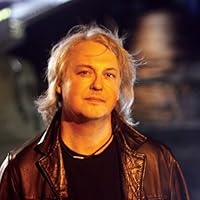
The poems in James Sheard’s remarkable third book are about love and leaving, of how the rift of departure brings on a kind of haunting – of the people involved and the places where they lived – an emotional trace of departed lives and loves. This is what these poems the scars of separation, the spoors of desire. Sheard writes powerfully about loss, about how the vestiges of significance, of sensual heat, are retained by structures – in ghost towns, war-zones, deserted villages or resorts – but also by the human body and ‘for love exists, and then is ruined, and then persists.’ These are poems about permanence and fragility, of being uncertain whether the house you live in is a shell, or if you have become a shell by living there – whether emptiness means loss and abandonment or a clean start and a new beginning. But these are also poems full of the ache of desire, the tart, lingering smell of poems shaped by longing. James Sheard is one of Britain’s most assured and precise lyric poets, and his third collection brings all his considerable strengths to poems as accurate and strange as thermal images.
James Sheard's poems in The Abandoned Settlements are, to me, rather unsettling--most of the poems occupy the liminalities between the then and now, the there and here, the loss and the recovery. Sheard's poems are visitations to neglected environments. Their lyricism adds soul to these ghost towns. Alternatively, the poems could be thought of as the abandoned settlements themselves.
From the opening poem in James Sheard’s debut collection, Scattering Eva, we are confronted with a poet of dislocation, exile and otherness. We meet the poet in Konstanz, on the Bodensee, noting the beauty of an evening walk, calling out to those artists located, embedded in a different world and history; our poet is someone who confronts culture while being separated from it, yet the poem ends with a German doch [but], unscaled. Are the poet’s eyes unscaled, or is the realm of possibility contracted, or is it a signal of what may yet be enlarged and emboldened in the poet’s cultural and political landscape?
What ensues in that debut collection is a kind of travelogue of personas which interrogate, absorb, historicise, reflect and, ultimately, judge the prevailing conditions. The prism of the poems is both culturally exact yet acts as a veneer on contemporary society, driven less by aural syntactical compulsions than by a mitteleuropäisch sensibility. Sheard is never a flâneur, he participates in, even glamorises, the emotional frottage of the poem:
We eat. We make our sounds of contempt, or of sorrow.
We pass towns, cross borders, occupy one another somehow.
Despite the descriptive armoury in Sheard’s fire-cracker lyrics, and their occasionally risky male cadence tackling violence, sexual vagrancy, even mild self-disgust, the poet emerges as someone fundamentally adrift from their habitus (in Bourdieu’s sense):
Such lolling, monstrous mots-justes! Primed with their one note, one sound – the one I lack, the one that gives sense
to the where, the why, the being amidst my gentle, if empty, horizons.
These hesitations, impersonations, detective-work and relocations in Sheard’s more textually dense lyrics finally unite in the dazzling long title poem, where he memorializes a victim of the Hamburg firestorms in the Second World War, taking multiple narrative positions as lover, commentator, historian, and historical reenactor, slowly drawing the reader into a profound moral catastrophe –
I always know how to triangulate my women –
Täter, Opfer, Retter.
(Perpetrator, Victim, Rescuer.)
In Sheard’s second collection, Dammtor, he changes gear offering a new voice, more open and accommodating, but no less severe in its transgressions, regrets and sexual frankness. Sheard, like so many other confessional poets, gets it all in – the dirty, combustible material of life. If Scattering Eva was a brilliant positioning of this remarkable talent, Dammtor allows for fewer personas, less history to dress its wounds. Here, the poet is speaking directly about the personal, the political and the profligate. If that judgemental eye had been cast elsewhere in Europe, now it is firmly cast upon himself.
I am not a man for even light. I like it broken, my shadow partial.
Partial – being both incomplete, in another sense, favouring one side, and in another, having a liking for. A tiny, revealing word choice that has position, judgement and appetites.
These reflexive poems see Sheard’s gallows humour sometimes bitterly deployed at his own expense, sometimes, wistfully and collegially landed, like a blow to the poet’s own arm. Less self-congratulatory, more in recognition of faults and fault lines.
In the closing poems of his second collection, the birth of his son, Nathaniel, sees the poet transformed, in one, tellingly a witness account of the event after the fact, Sheard having left the hospital, addresses a pre-dawn drunk at a bus stop and finds:
In that hour after you were born, I turned a key. And because a house left vacant for the night is always strange the space beyond the opening door felt warmer, richer, changed.
The birth signalling another landscape to occupy after a raw abandonment, another shift of habitus, perhaps an escape from the cultural and historical pressures of those early European lyrics, or more plainly, the painful sexual politics and disintegration of Dammtor:
I found you, love, coiled around a bar-stool and abandonment. Your mouth made moues of various kinds. For all that, I heard only: Hate me. Hate me.
In Sheard’s new collection, The Abandoned Settlements, we are immediately signalled about new forms of exile, and the collection opens with the couplet:
We’re all pilgrims. We’re all more or less aware of that.
However, there’s no need to brace yourself, Sheard has found a new sense of emplacement, and a sense of self-accommodation:
We wanted a land where we could watch the weather – see how one hill drew down the drapes of rain, and how another would flash its skin in a fall of sunlight.
Indeed, the terroir has provided a new climate for the poet. But not quite. Sheard still manages, in poems like ‘Rival’ and ‘Note for You’, to explore marital betrayal and breakdown with a sharp eye for the double self, being both participant and witness. Sometimes, this doppelgänger shows a savage wit:
He’s living it, your shadow life. He owns your flat and fucks your wife. He lives it loose, but holds it tight. He’s loving it, your shadow life.
We have the sense that the poet is merely documenting an arrival elsewhere, sorting through the debris as a new home is being made, yet for a poet so profoundly distanced from any sense of Gemütlichkeit, Sheard can appear to be preparing for some transformation, and it arrives in the poem ‘Fallen’:
on the churned earth the bulk of a fallen beast its side torn open still steaming
I am there I am curled up wet and stained
…
lift me up into the air into the light of you take me into your arms and home and clean me
The bravado of some of the poet’s more rumbustious lyrics is itself cleaned out here, unpunctuated, and filled with beauty, candour and vulnerability. The poet is resurrected, delivered from his preoccupations, his history – both the personal and societal. These abandoned settlements can provide restitution, resolution and reoccupation, for the poet and for the reader. They are rooted in love.
Jim Sheard's poetry is worth a great deal in a world that doesn't reflect or pause. He does both, and writes thoughtful, restrained, but often memorable poems. Worth reading, putting in your pocket, reading again, and taking time for the images and crafted phrases to embed in your mind.
The was the Poetry Book Society's summer choice for 2017. If you ask me instead I would say the verse isn't very rhythmically lively and the imagery didn't especially set my imagination on fire.