Set in a river boat community in Arkansas in the 1930s, this poignant story chronicles Aiyana Weir's spirited determination to break away from a life, like that of the women around her, defined and dominated by brutal patriarchy. Aiyana's voice, unique, hesitant and uneducated, expresses the turmoil of her inner world through the details and rhythms of her beloved river and charts her secret pursuit of literacy - her only means of escape from the abuse of her father and the indifference of the man to whom she is casually given. Her grandmother, a mythical figure steeped in wisdom and folklore, and her brother, Lyle, are Aiyana's only allies in her struggle for survival and as shameless plans to leave the river.
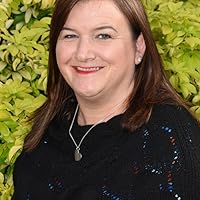
I was born and brought up on the Somerset Levels, the setting for my first novel, The Sweet Track, published in 2007 by Flambard Press.
I left Somerset at eighteen for U.E.A, and a degree in the History of Art, then lived in London where I taught for a couple of years before moving north.
After the move north I travelled in India, Kashmir and Nepal for a while and when I came back I started work as a temporary teacher in a women’s prison HMP Low Newton, on the outskirts of Durham city. I met Writer-in-Residence Wendy Robertson here and that’s when I began writing. Until then I had no thoughts of ever being a writer.
In 2003 I won a Northern Promise Award, from New Writing North.
When the children were up and leaving home, I finally left my job in order to write. I was by this time a Prison Governor with responsibity for learning and skills development. I hadn’t meant to stay at Low Newton for so long but almost from the start I became deeply involved with the women and their lives – read more here and in many ways that never leaves me. I see it creep in again and again, often through the back door, into what I write.
In 2012 I won the inaugural Costa Short Story Award for my story Millie and Bird.
My latest novel, Sometimes a River Song, was awarded The People's Book Prize 2017 best Achievement Award
A copy of this book was sent to me by the publisher. This does not influence my review.
This is an atmospheric and engrossing story featuring one of the most distinct voices I have ever experience from a main character. It's a poetic and vivid coming of age story and I would highly recommend it.
Once in a while, I'm so astounded by a novel that it's really hard to write a review. It's as if I don't want to pin down the magic. But I'm having a go, because people need to know about this stunningly original and beautiful novel published by a small but brave independent.
The mesmerizing voice is mainly that of Aiyana, a 15-year-old living with her family in a riverboat community in 1930s Arkansas. It's a hard life for women - but especially for Aiyana, whose whose father says she 'ain't worth more than another man's dog', has denied her any education, and regularly subjects her to life-threatening cruelty. She needs to escape, even though her father knows 'every inch of this river from mountain to sea'. She also knows there's no hope for her in the world that 'be made of the word' until she can read...
Despite the ever-present sense of danger, there are plenty of moments in which 'my heart felt warm as a new laid chicken egg'. I particularly loved the folkloric protection by her eccentric native American grandmother - and, of course, the beauty in Aiyana's beloved river through the seasons.
It's a short novel, but deep and wide; I was totally swept away. As others have been; it has already won a People's Book Prize (outstanding achievement) award. Read it!
I had high hope for this book, given the setting and the high ratings, but this book fell terribly short. After reading reviews here and elsewhere, it almost feels like I read a different book from everyone else. Though perhaps, it is because most of the reviews I’ve read are not by Southerners or Americans.
This quote by Elizabeth Catte in What You Are Getting Wrong About Appalachia basically sums up the stereotypes in this book; "impenetrable accents, moonshine, ... patriarchal, lawless, prone to violence, uncivilized, stubborn, barely educated or articulate, highly isolated, and alarmingly impoverished." Now, I understand that this is not set in Appalachia, but the tropes still apply to this book, along with stereotypes about Indigenous Americans and Southerners with a mystical connection to nature.
The book, set in the 1930s, is narrated by an illiterate girl, living in a rural, backwoods-type setting (in Arkansas, U.S.), and the style of writing reflects that, which makes it frustrating to read. It also is inconsistent - sometimes "to be" verb forms are used correctly and sometimes they aren't, for instance.
The main character mentions that her boyfriend is half-white, half-black, and that the local Klan doesn't approve of them being together. She says she's white, but then mentions her maternal grandmother is Native American Indian... which would make her mother half, and her a quarter. But apparently the Klan doesn't have a problem with her parents' mixed-race relationship? I find that hard to believe...
At 10%, I still haven't reached any sort of real plot, and with the above problems, I'm just not motivated to continue.
Note: In the first 10%, there are sexual references/content, including allusions to the rape of a child. Also, the names of God and Jesus are misused.
OH MY GOSH THIS WAS SO GOOD! I'm so glad I randomly discovered it years ago and finally just bought it. Aiyana's narrative voice was so strong, it kept the story going, much like the river kept her going (eh, eh, see what I did there). There are things that I could probably nitpick, but I don't want to. It's an impactful story of literacy and freedom and the general power of life that comes from nature. The last chapter had me whooping and hollering, and I randomly almost cried reading the last line.
The more fiction I read the more I find it’s the voice that makes the difference and with this book the voice captivated me from the first page. Aiyana is a teenager living in a community of boat people in Arkansas in the 30s and the river is in her voice as well as her blood. Her words flow in a liquid and hypnotic stream that somehow conveys both her partial literacy and her closeness to nature. Here's how a change of seasons is described "February. Hunger moon. Snow melt, river running high and wild. Sorrow locked inside me." Aiyana’s brothers and sisters go to school but because of her abusive father and a recurring breathing problem she is left at home. She is closest to her maternal grandmother, a native American who alleviates her physical traumas but cannot take away the underlying cause of her suffering. By the time Aiyana learns what the cause is, she has already decided her only hope of escape – and survival - is to learn to read. Against the backdrop of poverty and repression (a coloured boyfriend falls victim to the Klan) Aiyana cleaves to the river while knowing to leave it is her only hope and stands by as her vicious father continues to dictate the lives of the whole family. Part of the story is told by Silas, an apparently cruel outsider who is also a victim of circumstances. Although I was loath to move away from Aiyana's narrative his story gives the novel a wider social context which it would otherwise have lacked and the change in his behaviour to Aiyana adds a redemptive note which counterbalances the unremitting violence of the father. This is a short novel and in some ways I would like to have stayed longer with Aiyana in what I feel to be a much longer journey. But this is principally a coming-of-age story and in its brief compass we see her find her independence and grasp her immediate future. It may be short but this book is vivid, poetic and memorable. I was given a review copy of this book in return for an unbiased opinion.
I've never read anything quite like this. It's written in the first person mostly by the young protagonist Aiyana, who is illiterate... but who uses a rich, evocative vocabulary to describe her life and her need to escape it. It shouldn't work. But it does work, and the result is a gripping story, economically but richly told.
The changes of the seasons are beautifully rendered and I felt I was there on that riverboat, living the life of the river people. Each month is described in terms of its moon. August is moon of Chokeberry; November is Frost Moon. A new baby is described as "...perfect, slipping easily and wet into the desert of our lives..." This is from the other view point character, Silas, a mysterious man who has a tale of his own to share.
Original, unexpected. beautifully written, and a gripping story, brought to us by a talented writer and a publisher clearly not risk averse. Refreshing. More like this please, publishers!
This really is a difficult book. For a start, the subject matter is dark - its depressing beyond words and one wonders what possessed an author to write something with no light at all. The second half does brighten a little and a plot begins to emerge, which was also missing from the first half.
Secondly its written from an illiterate young woman's perspective for the main part, and in her words. 'I be doing this, it be that' just got on my nerves. If I wasn't reading for a book group, I'd have put it down after 2 pages. When another character takes over the narrative its like a breath of air.
Thirdly the inconsistencies. The dialogue of the same main character starts to slip into better English towards the end - has the writer got as fed up with 'it be' as the reader, or is she trying to imply that having learned the basics of reading, she is now more educated? One copy of Mark Twain does not an English professor make. There were other inconsistencies of text and plot too, but I won't deal with them as they would spoil the book.
The second half makes a decent tale, but it is outweighed by the first half and for me, the book did not work. There was no poetry of language, intracacies of plot or even characters I could care about - sympathise with, yes, but not really care.
There are many perks to being a book blogger, especially being contacted by publishers with titles you might not otherwise discover. All this is to say thanks to Linen Press for sending me a copy of Sometimes a River Song by Avril Joy in exchange for an honest review.
When I began reading this short novel and was introduced to the strong and distinct voice of protagonist Aiyana Weir, a young woman living in a river boat community in Arkansas in the 1930s, I was hooked immediately. Her voice was so melodic, her less than perfect English, compelling. The book follows the story of Aiyana and her life with an abusive father in a close knit community. The odd one out in the family, and rumoured to be the child of another man, she has never been allowed to go to school like her brother Lyle, and sister Hetty. She develops a fixation on learning to read in an attempt to gain her independence and free herself from the brutality of her father.
Once I started reading, I couldn't put it down! Avril Joy finds the voice of Aiyana and takes us on an emotional journey through her struggles with life in a community with its own rules and values. Gripping!
4.5 Stars - Set in a riverboat community in 1930's Arkansas, this character-driven coming-of-age story featuring a female main character was completely up my alley. We follow Aiyana, whose abusive father has not allowed her to go to school and refuses to allow her to learn to read. She and her siblings have a tough life, each looking for ways to get out of their home, and Aiyana is convinced that learning to read is the key to her freedom.
I loved how atmospheric this book was. If you enjoyed Where the Crawdads Sing, I would recommend this book to you. The story is mostly told from Aiyana's perspective, and her storytelling reflects her lack of education. That was not an issue for me, though I know it will not agree with all readers. I thought it helped immerse me in the story. I appreciated that while this book handles some dark and disturbing topics, it never felt bleak and without hope. It managed to feel like such a full story with interesting characters despite coming in at under 200 pages.
Sometimes a novel sings. From the first page I knew the music of this book was something I wanted to hear. Aiyana's voice is urgent, poetic and full of longing - and the river. She's a compelling narrator. Personally I was a disappointed by the Silas sections, not only because I missed the rich, individual style of Aiyana but because I couldn't grasp him, see him, quite believe in him. Perhaps that's just another way of saying he's unsympathetic - which he's intended to be - but I applaud the author's attempt to humanise him instead of portraying him simply through his victim's eyes. This is a fine book, full of atmosphere and humanity as well as darkness.
Arrived in the post yesterday - a 'treat myself' punt from independent publisher Linen Press, a method of acquiring often unexpectedly good books I have come to rely on. I began reading this lunchtime, quickly became absorbed and carried on until I finished it, around half ten last night.
It is very much a tale of poignant place and harsh-lived time - Arkansas river and 1930s poverty - told in Aiyana's voice as she seeks to escape the boundaries, the wickednesses of both, the uncertainties of her success creating heartbreak and tension.
Really stunning, beautifully written story of one undereducated young woman's struggle to survive her brutal life in 1930's Arkansas. I can't really praise this book enough, the story is enthralling and well paced, the characters, even the unlikable ones, are all multi dimensional and compelling. The writing style is lyrical, poetic and magical. The only negative thing about this book for me was that it ended too soon, I want to keep reading!
The book is about a girl in a riverside community, growing up within violence and neglect. She strives for independence through literacy. The language mirrors her level of education. There are a couple of twists and turns in this book. It's an enjoyable read overall but not an "I can't put this down" type of book.
*2.5 This is certainly a very atmospheric read and a good choice if you want something dark. However, there are inconsistencies that almost undo all the work the author put into making this feel authentic.
If you love Tim Gautreaux, Ron Rash, Daniel Woodrell, this book is up there with the best of them. A little book with a huge heart. Aiyana’s spirit is unstoppable. Highly recommended
Sometimes A River Song by Avril Joy is a beautiful novella set in a river boat community in Arkansas in the 1930s, which I felt was really unique setting. Most of the narration is from the perspective of a young girl, Aiyana, who grows up in the river boat community. She has a very troubled childhood, an abusive, incorrigible, controlling father figure, who doesn’t allow her to learn to read and write despite her ardent desire to do so and her struggle to escape from it all is the essence of the story.
The writing style is very stream of consciousness and since most of the chapters are narrated from Aiyana’s perspective, the writing emulates that of a young girl who hasn’t been formally educated. The sentences are structured in a broken, slightly disjointed format, but it never feels clunky. In fact, the writing has a very lilting, musical quality to it and it almost reads as prose poetry. There were several sections which were absolutely breathtaking. It takes chapter or two for the style to grow on you and then you start to really appreciate the beauty and authenticity of it. I was in awe of how Avril Joy creates that balance in her writing which I feel is a feat in itself.
Aiyana is such a wonderful character and narrator. The river is a lifeline for the community and the way the daily lives of these people interweaves seamlessly with the flow of the river is captured so beautifully. It is a short read, less than 200 pages so it feels like a novella, but really packs a punch despite its length.
If this description intrigues you, I’d highly recommend you pick it up. It definitely is one of the best experimental pieces of literature that I’ve read and it deserves far more recognition and more people should read it.
This is a beautifully-written, subtly-structured story of a young, illiterate woman who clings to the hope that learning to read will be the key to a brighter future. I found myself drawn in to this strange, waterborne world by the main character's compelling, haunting voice. At times, it almost felt as though I were being gently rocked by Avril Joy's poetic, sparing prose. I can't liken this to anything else I've read, but I highly recommend this book.
Stunning from start to finish and authentic to the core. I loved this book so much I have chosen it for my local book group to read. If you loved Crawdads, you should read this