

What do you think?

Old Records Never Die: One Man's Quest for His Vinyl and His Past
A Hudson Booksellers Best Non-Fiction Book of the Year, with foreword by Wilco's Jeff Tweedy
High Fidelity meets Killing Yourself to Live when one man searches for his lost record collection.
As he finds himself within spitting distance of middle-age, journalist Eric Spitznagel feels acutely the loss of… something. Freedom? Maybe. Coolness? Could be. The records he sold in a financial pinch? Definitely. To find out for sure, he sets out on a quest to find the original vinyl artifacts from his past. Not just copies. The exact same The Bon Jovi record with his first girlfriend's phone number scrawled on the front sleeve. The KISS Alive II he once shared with his little brother. The Replacements Let It Be he’s pretty sure, 20 years later, would still smell like weed.
As he embarks on his hero's journey, he reminisces about the actual records, the music, and the people he listened to it with—old girlfriends, his high school pals, and, most poignantly, his father and his young son. He explores the magic of music and memory as he interweaves his adventures in record-culture with questions about our connection to our past, the possibility of ever recapturing it, and whether we would want to if we could.
"Memories are far more indelible when married to the physical world, and Spitznagel proves the point in this vivid book. We love vinyl records because they combine the tactile, the visual, the seeable effects of age and care and carelessness. When he searches for the records he lost and sold, Spitznagel is trying to return to a tangible past, and he details that process with great sensitivity and impact."—Dave Eggers, New York Times bestselling author of The Circle
High Fidelity meets Killing Yourself to Live when one man searches for his lost record collection.
As he finds himself within spitting distance of middle-age, journalist Eric Spitznagel feels acutely the loss of… something. Freedom? Maybe. Coolness? Could be. The records he sold in a financial pinch? Definitely. To find out for sure, he sets out on a quest to find the original vinyl artifacts from his past. Not just copies. The exact same The Bon Jovi record with his first girlfriend's phone number scrawled on the front sleeve. The KISS Alive II he once shared with his little brother. The Replacements Let It Be he’s pretty sure, 20 years later, would still smell like weed.
As he embarks on his hero's journey, he reminisces about the actual records, the music, and the people he listened to it with—old girlfriends, his high school pals, and, most poignantly, his father and his young son. He explores the magic of music and memory as he interweaves his adventures in record-culture with questions about our connection to our past, the possibility of ever recapturing it, and whether we would want to if we could.
"Memories are far more indelible when married to the physical world, and Spitznagel proves the point in this vivid book. We love vinyl records because they combine the tactile, the visual, the seeable effects of age and care and carelessness. When he searches for the records he lost and sold, Spitznagel is trying to return to a tangible past, and he details that process with great sensitivity and impact."—Dave Eggers, New York Times bestselling author of The Circle
284 pages, Kindle Edition
First published April 12, 2016
Ratings & Reviews
Friends & Following
Create a free account to discover what your friends think of this book!
Community Reviews
Displaying 1 - 30 of 179 reviews

March 19, 2016
"Memory isn't about reality, and neither is music. It's about the comforting reflections we want to hold on to, even if they're mostly bullshit."
~ Eric Spitznagel

I brought them into my mother's house
during the wars of puberty
and played them when she wasn't home --
I had to listen alone.
Boxed sets of LPs gathering dust,
long-playing records long unplayed --
I heard them so many times back then
their grooves got etched into my brain.
Vinyl.
It was certainly a big part of my past. Oh, those lonely teenage nights, spent clutching my hairbrush/microphone, singing along with Bonnie Raitt, Debbie Harry, and Chrissie Hynde. (I even listened to some women whose names didn't end in "ie.") It sounds sort of pathetic now, but honestly . . . I wouldn't trade those nights for anything.
Through the flowering of fertility
coming in waves of panic and shame,
the boxed LPs accompanied me
from dorm to dorm to grungy room
in working-girl apartment, and
from home to home to better home.
I married a man who came with a son.
I still listened, and listened alone.
I'm lucky. I still have the albums that meant the most to me. Many have been sold along the way. Several crates full went bye-bye a few years ago, sold to pay the mortgage one month. (The fact that I had Cheech and Chong's Big Bambú with the rolling paper still intact caused quite a stir in the record shop, and it sold for more than a pretty penny.)

But I managed to hold on to my favorites.
Sound got reduced to zeros and ones
stored in a cloud, played on a phone.
Vinyl's been gone so long it's back,
but the turntable went two moves ago.
Shrinking our lives to apartment size.
I've come to love discarding things.
If it hasn't been used in the past two years,
out it goes! But not the LPs.
Journalist Eric Spitznagel watched his treasured vinyl collection dwindle over the years, sold for those nagging living expenses. But one day, after interviewing Questlove , Eric decided he wanted to revisit the past via the music that he played in his youth. Replacement albums would not do, huh-uh. He wanted the same exact records he used to own. And so began the quest - days spent searching the few remaining record stores, basements, and attics. Would he be able to find his cherished platters . . . all while keeping an eye on his rambunctious three-year-old?
This was a fun ride, tagging along on the search. I enjoyed the thrill of the hunt, and especially the poignant moments near the end of the book where I'd recommend this to anyone wanting to recapture their youth, if only for the length of a special song.
A woman once sang at a microphone.
Her voice cut grooves that caught the sound
and the sound got knitted into my bones.
It held me up. I knew it for truth.
The records sit on a shelf so high.
It takes a real ladder to get them down.
I glance upward as I walk by
and there she is. And here I am.*
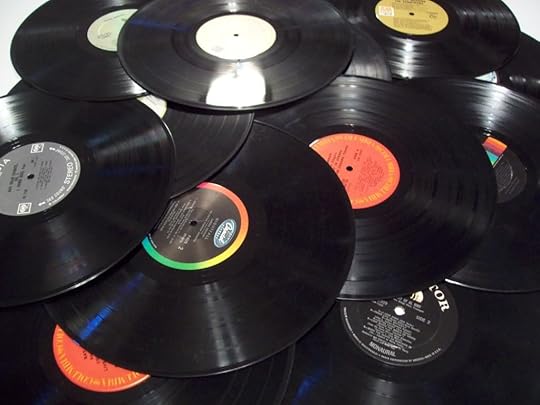
*LONG-PLAYING RECORDS by Marcia Menter
~ Eric Spitznagel
I brought them into my mother's house
during the wars of puberty
and played them when she wasn't home --
I had to listen alone.
Boxed sets of LPs gathering dust,
long-playing records long unplayed --
I heard them so many times back then
their grooves got etched into my brain.
Vinyl.
It was certainly a big part of my past. Oh, those lonely teenage nights, spent clutching my hairbrush/microphone, singing along with Bonnie Raitt, Debbie Harry, and Chrissie Hynde. (I even listened to some women whose names didn't end in "ie.") It sounds sort of pathetic now, but honestly . . . I wouldn't trade those nights for anything.
Through the flowering of fertility
coming in waves of panic and shame,
the boxed LPs accompanied me
from dorm to dorm to grungy room
in working-girl apartment, and
from home to home to better home.
I married a man who came with a son.
I still listened, and listened alone.
I'm lucky. I still have the albums that meant the most to me. Many have been sold along the way. Several crates full went bye-bye a few years ago, sold to pay the mortgage one month. (The fact that I had Cheech and Chong's Big Bambú with the rolling paper still intact caused quite a stir in the record shop, and it sold for more than a pretty penny.)
But I managed to hold on to my favorites.
Sound got reduced to zeros and ones
stored in a cloud, played on a phone.
Vinyl's been gone so long it's back,
but the turntable went two moves ago.
Shrinking our lives to apartment size.
I've come to love discarding things.
If it hasn't been used in the past two years,
out it goes! But not the LPs.
Journalist Eric Spitznagel watched his treasured vinyl collection dwindle over the years, sold for those nagging living expenses. But one day, after interviewing Questlove , Eric decided he wanted to revisit the past via the music that he played in his youth. Replacement albums would not do, huh-uh. He wanted the same exact records he used to own. And so began the quest - days spent searching the few remaining record stores, basements, and attics. Would he be able to find his cherished platters . . . all while keeping an eye on his rambunctious three-year-old?
This was a fun ride, tagging along on the search. I enjoyed the thrill of the hunt, and especially the poignant moments near the end of the book where I'd recommend this to anyone wanting to recapture their youth, if only for the length of a special song.
A woman once sang at a microphone.
Her voice cut grooves that caught the sound
and the sound got knitted into my bones.
It held me up. I knew it for truth.
The records sit on a shelf so high.
It takes a real ladder to get them down.
I glance upward as I walk by
and there she is. And here I am.*
*LONG-PLAYING RECORDS by Marcia Menter

February 20, 2016
Old Records was a pleasure to read. For me, it was full of nostalgia for the good old days of the 1980s and record stores. As Spitznagel says, "...I want the old thrill back, the adrenaline rush of hunting for music the way it's supposed to be hunted."
In the 80s, I worked in 3 different records stores. And if I wasn't working, I was probably zooming to Portland with my friend Rees in his old VW...so we could go to record stores. That's how you made friends back then; all about the music and the hunt for music. My first real relationship was based almost entirely around music (okay, and art).
So reading Old Records led me on my own trip down memory lane at the same time I journeyed with Spitznagel on his quest to recover all the old vinyl he'd sold or given away or lost over the years.
(And he totally GETS The Replacements, okay? And all you bastards of the young who love the Mats, you know who you are, and you know what I'm talkin' about.)
Did I enjoy this book? Hell, yes! (Do you see me throwing rocker horns? Because I totally am.) So read this and go on your own nostalgia trip. Because, yeah, those were the good old days.
(Thank you Plume and Penguin First-to-Read! You rock!)
In the 80s, I worked in 3 different records stores. And if I wasn't working, I was probably zooming to Portland with my friend Rees in his old VW...so we could go to record stores. That's how you made friends back then; all about the music and the hunt for music. My first real relationship was based almost entirely around music (okay, and art).
So reading Old Records led me on my own trip down memory lane at the same time I journeyed with Spitznagel on his quest to recover all the old vinyl he'd sold or given away or lost over the years.
(And he totally GETS The Replacements, okay? And all you bastards of the young who love the Mats, you know who you are, and you know what I'm talkin' about.)
Did I enjoy this book? Hell, yes! (Do you see me throwing rocker horns? Because I totally am.) So read this and go on your own nostalgia trip. Because, yeah, those were the good old days.
(Thank you Plume and Penguin First-to-Read! You rock!)

September 5, 2016
I’m old enough to have lived through a few different commercial music formats and am guilty of having had conversations in the last six months lamenting the change in how we find and experience music. I’m aware of how ridiculous it can sound to younger generations or those who just weren’t into music growing up, but I was happy to discover a fellow believer in Eric Spitznagel and his nostalgic music memoir, “Old Records Never Die”. Spitznagel relates his formative experiences purchasing LPs in a mostly suburban Midwestern setting, tying stories to particular albums (most involved attempts to sway a romantic interest). In typical midlife crisis mode amid the stress of a new child and new job opportunity he chooses to fall down the nostalgia wormhole. He makes a decision to recover these records, mere copies will not suffice, he needs the exact LPs complete with marker scrawl warnings to siblings on the cover art and, most importantly, with scratches in just the right places. We follow him to record swaps, his old college radio station, and a reunion concert by The Replacements on his quest to recover the more important few from his sold-off collection. Of the 581.2 million record units printed between 1983-1985 he’s “pretty sure I could identify five of them from that period, assuming I’m ever in the same room with them.” The basis for his quest isn’t particularly novel but the journey is equal parts thoughtful and funny, Spitznagel is snooty but also self-aware and not afraid to criticize his actions. He spends time and resources far beyond what his family should tolerate and I’m curious to know what the companion book his wife could have written would look like. Still, this was a fun weekend read that I could easily see Cameron Crowe turning into a film.

June 23, 2016
I was very disappointed in this book. The synopsis read so well, but the content did not live up to the expectations. It basically boiled down to a memoir of a man's mid-life crisis and his desire to relive his youth (mostly his sexual exploits) through recovering the records, or songs, that he attached to those moments in time. It could have been good, but I'm afraid it just wasn't.

June 4, 2020
The author, facing a sort of midlife crisis, one day realizes that he must have his old vinyl records back. The treasure trove of 2,000 vinyl LPs, marked on, stepped on, defaced, and smelling vaguely of weed, which he dumped once CDs were the future, suddenly called to him. And no, he didn't want copies or the remastered 180 gram editions (let alone MP3s or FLAACs or whatever there is now) — he wanted, nay needed, the originals, the very same marked on, weed-smelling platters he unloaded way back when. Is this a quest to bush back against the tide of old age? A grab for nostalgia and childhood? A desire to regress to simpler times? Yes, almost certainly. Older and wiser, he crosses and recrosses state lines, digs through crate after crate, braves weather and weirdos, all trying to find his old lost records.
Spitznagel is a smart, incisive writer. He can draw out an uncomfortable scene (and there are more than a few in this book, as his quest is not warmly received by, well, anyone) until the awkwardness explodes into hilarity. He knows that what he's doing is ridiculous, so he piles on the self-effacing humor. He's definitely a nostalgia hound, describing the apotheosis of a rainy, bloody Replacements concert, and inviting his estranged childhood friends to a house no one he knows has lived in for years just so they can have a listening party. He even looks up an old girlfriend (now lesbian) and drinks wine and listens to music with her half the night in an effort to recreate some lost feeling. This kind of backwards-looking impulse is pretty alien to me, and yet even as I rolled my eyes at Spitznagel's helpless addiction to an idealized youth, I chuckled at the warmth and wistfulness of his quest. When he and his wife bond again over the utterly corny "Don't Stop Believin'," he shows the power of music — not how it affects us, but how we imprint ourselves on it. It's almost heart-warming, and if not, it's at least hilarious.
http://recordsneverdie.com/
Spitznagel is a smart, incisive writer. He can draw out an uncomfortable scene (and there are more than a few in this book, as his quest is not warmly received by, well, anyone) until the awkwardness explodes into hilarity. He knows that what he's doing is ridiculous, so he piles on the self-effacing humor. He's definitely a nostalgia hound, describing the apotheosis of a rainy, bloody Replacements concert, and inviting his estranged childhood friends to a house no one he knows has lived in for years just so they can have a listening party. He even looks up an old girlfriend (now lesbian) and drinks wine and listens to music with her half the night in an effort to recreate some lost feeling. This kind of backwards-looking impulse is pretty alien to me, and yet even as I rolled my eyes at Spitznagel's helpless addiction to an idealized youth, I chuckled at the warmth and wistfulness of his quest. When he and his wife bond again over the utterly corny "Don't Stop Believin'," he shows the power of music — not how it affects us, but how we imprint ourselves on it. It's almost heart-warming, and if not, it's at least hilarious.
http://recordsneverdie.com/
April 29, 2016
I was very excited by the premise of this book, but it simply doesn't deliver. I'm a music fanatic who has recently returned to vinyl, and I love searching through used record stores looking for albums I used to own before giving them away during one move or another. The description of Spitznagel's book made it seem like we were kindred spirits, and I looked forward to reading about his quest to recover his missing loves.
Unfortunately, this premise wasn't the focus of the book. Instead, Spitznagel focuses more on the journey to adulthood and how often we fight against new responsibilities (parenthood, a steady income) in favor of past indiscretions (drugs, one-night stands, wasteful spending). What's more, he has little of interest to say in this regard, sharing many of the same platitudes and ideas that have been explored--in far more interesting terms--hundreds (or thousands) of times in the past. The sections where he discusses music are my favorite passages--such as his description of attending a Replacements reunion concert as an adult, or trying to listen to a Misfits album when he's really a Billy Joel fan--but they become less prevalent as the book goes on. Spitznagel also engages in some bizarre activities--moving his old furniture into his old house for a 12-hour listening party with friends, bringing a Replacements album to the afore-mentioned concert in the rain for no apparent reason, smoking multiple joints in the basement of someone's house looking through boxes of albums--and these result in the understanding that instead of being a kindred spirit, I do not identify with him or his mindset. Some writing looks for common ground between the author and reader; Spitznagel seems to enjoy finding the uncommon ground.
The writing itself is serviceable, with occasional analogies that are insightful or hilarious, but there aren't enough of them to warrant a higher rating in my opinion. I wanted to like this book, but it ends up being like an album with one or two good songs with far too much filler. I'd put it back in the bargain bin.
Unfortunately, this premise wasn't the focus of the book. Instead, Spitznagel focuses more on the journey to adulthood and how often we fight against new responsibilities (parenthood, a steady income) in favor of past indiscretions (drugs, one-night stands, wasteful spending). What's more, he has little of interest to say in this regard, sharing many of the same platitudes and ideas that have been explored--in far more interesting terms--hundreds (or thousands) of times in the past. The sections where he discusses music are my favorite passages--such as his description of attending a Replacements reunion concert as an adult, or trying to listen to a Misfits album when he's really a Billy Joel fan--but they become less prevalent as the book goes on. Spitznagel also engages in some bizarre activities--moving his old furniture into his old house for a 12-hour listening party with friends, bringing a Replacements album to the afore-mentioned concert in the rain for no apparent reason, smoking multiple joints in the basement of someone's house looking through boxes of albums--and these result in the understanding that instead of being a kindred spirit, I do not identify with him or his mindset. Some writing looks for common ground between the author and reader; Spitznagel seems to enjoy finding the uncommon ground.
The writing itself is serviceable, with occasional analogies that are insightful or hilarious, but there aren't enough of them to warrant a higher rating in my opinion. I wanted to like this book, but it ends up being like an album with one or two good songs with far too much filler. I'd put it back in the bargain bin.

October 15, 2016
if you love music read this book. more on http://bookwinked.wordpress.com

March 26, 2016
For those of us who came of age in the ’70s or ’80s, the thrill of purchasing that first record, or the memory of locking ourselves in our rooms to listen to one song over and over again, trying desperately not to scratch the delicate surface of the turning disk, is scored into our psyche. The connection between music and memories, especially in our youth, is a powerful one.
“There in the car, driving down Lake Shore and listening to ‘Livin’ on a Prayer,’ I had a moment of intense clarity. It was suddenly so obvious what I had to do. I needed to find that record. Not just any record. The record. The one with Heather’s phone number written on it. The exact copy I once owned, that represented something hugely important to me, some rite of passage into adulthood…And why stop with one record? Why not get all of them?…I wanted my records. My exact records. My literal exact records. I wanted them back. All of them. Or at least as many as I could find.”
And so begins Eric Spitznagel’s odyssey to recover his lost vinyl. Searching for his records, Eric revisits moments from his past, connects with old friends and lovers, and meets strange and wonderful new characters along the way. With laugh out loud humor and moments of brilliant insight, Eric pulls us along on the journey with him. We discover that some memories may have been rewritten, youth can be gracefully surrendered, and the future is wonderful in it’s unpredictability.
You can read my interview with Eric Spitznagel - Music, Memories, and A Modern Odyssey on BookClubBabble here: http://bookclubbabble.com/music-memor...
“There in the car, driving down Lake Shore and listening to ‘Livin’ on a Prayer,’ I had a moment of intense clarity. It was suddenly so obvious what I had to do. I needed to find that record. Not just any record. The record. The one with Heather’s phone number written on it. The exact copy I once owned, that represented something hugely important to me, some rite of passage into adulthood…And why stop with one record? Why not get all of them?…I wanted my records. My exact records. My literal exact records. I wanted them back. All of them. Or at least as many as I could find.”
And so begins Eric Spitznagel’s odyssey to recover his lost vinyl. Searching for his records, Eric revisits moments from his past, connects with old friends and lovers, and meets strange and wonderful new characters along the way. With laugh out loud humor and moments of brilliant insight, Eric pulls us along on the journey with him. We discover that some memories may have been rewritten, youth can be gracefully surrendered, and the future is wonderful in it’s unpredictability.
You can read my interview with Eric Spitznagel - Music, Memories, and A Modern Odyssey on BookClubBabble here: http://bookclubbabble.com/music-memor...

March 3, 2016
With this book, Eric Spitznagel has written a tremendously funny, entertaining and touching story about music, memories and friendship. The idea behind the book - to find the exact copies of the most important records of your teen years - is so outrageous that it shouldn't be possible, and it turns out that in most cases it isn't.
But the journey itself is worth every page due to Spitznagel's hilarious observations about people in his life, musicians, song lyrics, album cover art, and himself in embarrassing and defining moments in his life - carried out with honesty and dripping, self-deprecating irony. I laughed out loud many times throughout the book - resulting in curious looks from my fellow commuters on the train.
The book is basically a super long magazine article about a lot of different music mostly from the 1970s and 80s, and one could doubt that the market for such a book is very big. However, I still recommend it to all who love music and the memories connected to it - be it pop, rock, country or punk. In my view, the book will appeal mainly to male readers that aren't put off by frequent descriptions of sex, drugs and alcohol.
[The book was generously provided as an advance readers copy through the First to Read program]
But the journey itself is worth every page due to Spitznagel's hilarious observations about people in his life, musicians, song lyrics, album cover art, and himself in embarrassing and defining moments in his life - carried out with honesty and dripping, self-deprecating irony. I laughed out loud many times throughout the book - resulting in curious looks from my fellow commuters on the train.
The book is basically a super long magazine article about a lot of different music mostly from the 1970s and 80s, and one could doubt that the market for such a book is very big. However, I still recommend it to all who love music and the memories connected to it - be it pop, rock, country or punk. In my view, the book will appeal mainly to male readers that aren't put off by frequent descriptions of sex, drugs and alcohol.
[The book was generously provided as an advance readers copy through the First to Read program]

October 27, 2020
This was delightful. I love reading people talking about the things they love. The visceral connection to music and records is something I totally understand, even if I've only ever felt that with digital music, one way or another.

September 10, 2017
For me, reading this book was like eating my favourite dessert. Full disclosure - I am a long-time music collector who has never thrown out a record, cassette, CD, music magazine, concert t-shirt or hard drive in the 40+ years I've been collecting. This through many arguments with my mother growing up, and with successive girlfriends, and even two wives (not at the same time, of course!) who have never understood or appreciated my obsessive habit. So it's hard for me to understand why Eric Spitznagel allowed himself to sell off his vinyl collection. But it's completely understandable that to me that he would desire to track down every exact piece of vinyl he gave up in a quest to relive his past.
Spitznagel takes the reader through a quest that many would find ridiculous. His sense of humor, though, is such that you can understand the emotion involved in the search and discovery of these precious mementos of his youth. The reader makes a mistake, though, thinking from the start that this book is about vinyl. Spitznagel's story is about life itself, how it progresses from childhood to adulthood, and how many of us periodically long for those easier, more carefree days of our youth, when the most important thing to us may have been that new Replacements album or getting noticed by the cute girl in Chem class.
His journey fittingly winds up in the house in which he grew up, with some great friends from his youth sharing stories while spinning some of their favourite tunes from the time, on vinyl, of course. It made me long for my own days in my basement bedroom, listening to Pink Floyd with my buddy Colin, or sneaking into my friend Rob's brother's room to listen to Captain Beyond on his quadraphonic stereo system. Colin has passed away, tragically, and Rob lives thousands of miles away from me, and I know I can't go back physically, like Spitznagel did. But reading his book allowed me to go back mentally, and emotionally, to those great experiences that went a long way toward defining who I am today. Thank you, Eric!
Spitznagel takes the reader through a quest that many would find ridiculous. His sense of humor, though, is such that you can understand the emotion involved in the search and discovery of these precious mementos of his youth. The reader makes a mistake, though, thinking from the start that this book is about vinyl. Spitznagel's story is about life itself, how it progresses from childhood to adulthood, and how many of us periodically long for those easier, more carefree days of our youth, when the most important thing to us may have been that new Replacements album or getting noticed by the cute girl in Chem class.
His journey fittingly winds up in the house in which he grew up, with some great friends from his youth sharing stories while spinning some of their favourite tunes from the time, on vinyl, of course. It made me long for my own days in my basement bedroom, listening to Pink Floyd with my buddy Colin, or sneaking into my friend Rob's brother's room to listen to Captain Beyond on his quadraphonic stereo system. Colin has passed away, tragically, and Rob lives thousands of miles away from me, and I know I can't go back physically, like Spitznagel did. But reading his book allowed me to go back mentally, and emotionally, to those great experiences that went a long way toward defining who I am today. Thank you, Eric!

August 30, 2016
For me this book touched home because of two things, one I enjoy collecting and listening to music, and second because of some water damage I lost about 50 or so records that I have been collecting since the 70’s, 80’ and 90’s. Some I don’t think I will be able to replace because they were hard to find back then and now there is a new generation getting into vinyl. This is good and bad for someone like me who has been with the help of my wife lugging my albums, stereo equipment form one move to another since 1978. That in itself is scree. I enjoyed parts of this book and could relate to some of it. I am at a point now where my wife and family have accepted my records, to the point that now people give me some. Which I take with much thanks because you don’t know what you will find in the stack. For each person it is something different and unique. This book has moments where there are funny times and time that make you think back to a move and where some people left or gave away their records I took mine, and my wife would make a face but after are 5th move she just knew I was taking them. We never argued and for us it is memories of high school and dances and of course the parents saying turn down that noise and how can you listen to that. It is not music. For me that is what I got out of this book memories that I am still making and hopefully will pass on to my grandchildren. A good book. I got this book from netgalley. I gave it 4 stars. Follow us at www.1rad-readerreviews.com

January 13, 2018
¿Cuantas veces os habéis preguntado por qué vuelve el vinilo? ¿Por qué algunas personas lo prefieren a otros formatos sin duda más cómodos?
La respuesta es larga, complicada, a menudo confusa, incluso carente de argumentos de peso.
Eric Spitznagel ha tardado 300 páginas en intentar explicarlo.
.
Comparto el profundo amor por el trozo de plástico redondo con esos surcos que mediante el contacto con la aguja hace esos ruidos que me llevan a lugares emocionales tan intensos que acaban formando parte de mi historia.
Sin embargo, el choque generacional entre el autor y yo y su ‘demasiada pasión por lo suyo’ en esto de los discos me ha alejado de la historia. A ratos incluso me ha aburrido.
.
Yo diría que los temas principales que trata el libro son la música, el apego a los objetos físicos y la nostalgia. En cuanto a la música diré que es, seguramente, lo que más me gusta de la vida, pero no la que aparece en este libro. Respecto al apego a los objetos físicos reservo mi punto de vista para mi terapeuta. Y la nostalgia es una sensación que amo, pero no puedo sentirla por algo que no he vivido: el vinilo como única forma de experimentar la música.
.
Con este libro me ha pasado como con esos amigos que ves de vez en cuando y la conversación consiste en contar batallitas del pasado. Sí, es precioso ese velo que poseen los momentos pretéritos, en especial los de la infancia y la juventud, pero quizá si ahora hiciéramos algo, algo nuevo, crearíamos nuevos momentos que vivir en el presente y, por supuesto, recordar en el futuro.
La respuesta es larga, complicada, a menudo confusa, incluso carente de argumentos de peso.
Eric Spitznagel ha tardado 300 páginas en intentar explicarlo.
.
Comparto el profundo amor por el trozo de plástico redondo con esos surcos que mediante el contacto con la aguja hace esos ruidos que me llevan a lugares emocionales tan intensos que acaban formando parte de mi historia.
Sin embargo, el choque generacional entre el autor y yo y su ‘demasiada pasión por lo suyo’ en esto de los discos me ha alejado de la historia. A ratos incluso me ha aburrido.
.
Yo diría que los temas principales que trata el libro son la música, el apego a los objetos físicos y la nostalgia. En cuanto a la música diré que es, seguramente, lo que más me gusta de la vida, pero no la que aparece en este libro. Respecto al apego a los objetos físicos reservo mi punto de vista para mi terapeuta. Y la nostalgia es una sensación que amo, pero no puedo sentirla por algo que no he vivido: el vinilo como única forma de experimentar la música.
.
Con este libro me ha pasado como con esos amigos que ves de vez en cuando y la conversación consiste en contar batallitas del pasado. Sí, es precioso ese velo que poseen los momentos pretéritos, en especial los de la infancia y la juventud, pero quizá si ahora hiciéramos algo, algo nuevo, crearíamos nuevos momentos que vivir en el presente y, por supuesto, recordar en el futuro.

February 25, 2025
I was so excited to read about a fellow vinyl enthusiast on the hunt for the exact records he listened to in his youth. Instead I found a middle aged man having a midlife crisis reliving his youth (mostly, reliving the women he wanted to or did sleep with). The way he writes about women is abhorrent and the way he writes about younger generations is worth more than its fair share of eye-rolls.
How are you 45, married and still writing about the nipples of a girl you wanted to sleep with when you were 17? Do editors not read for tone anymore? In the meanest way possible, this reminded me of so many of my regulars from when I worked at a record store. Now I know what their internal monologue is while they're shopping and I feel creeped out.
Credit where credit is due, when he actually got around to talking about the records and making observations about music, it was pretty poignant. But it wasn't a diamond in the rough kind of situation. It was more like a moissanite in a pile of manure. And it just wasn't really worth all that.
At the end of the day, this felt like a 45 year old man finally realizing he isn't 20 anymore. No one cares.
How are you 45, married and still writing about the nipples of a girl you wanted to sleep with when you were 17? Do editors not read for tone anymore? In the meanest way possible, this reminded me of so many of my regulars from when I worked at a record store. Now I know what their internal monologue is while they're shopping and I feel creeped out.
Credit where credit is due, when he actually got around to talking about the records and making observations about music, it was pretty poignant. But it wasn't a diamond in the rough kind of situation. It was more like a moissanite in a pile of manure. And it just wasn't really worth all that.
At the end of the day, this felt like a 45 year old man finally realizing he isn't 20 anymore. No one cares.

April 30, 2016
4.5*
This made me feel so much wonderful nostalgia. Which I know might sound weird coming from a 22-year-old girl born in the 90s while talking about a book by a 40-something man who grew up with some of the most legendary music out there being in its prime. But I felt the love for music on so many levels. Before booktube, I was this obsessed with music. I still am obsessed with music, even though books have taken the slight lead in my list of obsessions. I am the kind of person who loves vinyl more than any other form of music. But I could also relate to so much he describes. I too download music off iTunes most of the time and listen through my iPod, but still love vinyl more. This story felt so real, along with all the problems and the feelings and the sheer reality of life that it brought with it that I couldn't help but feel nostalgic. It is wonderful, and any fan of especially classic rock should be able to appreciate this a lot.
This made me feel so much wonderful nostalgia. Which I know might sound weird coming from a 22-year-old girl born in the 90s while talking about a book by a 40-something man who grew up with some of the most legendary music out there being in its prime. But I felt the love for music on so many levels. Before booktube, I was this obsessed with music. I still am obsessed with music, even though books have taken the slight lead in my list of obsessions. I am the kind of person who loves vinyl more than any other form of music. But I could also relate to so much he describes. I too download music off iTunes most of the time and listen through my iPod, but still love vinyl more. This story felt so real, along with all the problems and the feelings and the sheer reality of life that it brought with it that I couldn't help but feel nostalgic. It is wonderful, and any fan of especially classic rock should be able to appreciate this a lot.

May 1, 2016
Have to Spaz out here. As for me the book was transcendent. Capturing exactly the emotions and feelings of fandom to a degree.
The paranoia, the obsession the nostalgia the psychosis of collecting and fandom. Expressing it more beautifully and meaningfully as I have ever read and felt about the subject. I believe the book strikes the right cord for those out there. Who are if the same particular tribe be it music, movies, books whatever you find yourself collecting . The poetry and partially pathetic guilt that you sometimes feel afterwards and in trying to explain yourself. And yet still labeled a hipster for caring about something sincerely and having an emotional attachment to it. It might be over analyzing or it could be the autobiography of your life said through other words, but only you can make the connection.
The paranoia, the obsession the nostalgia the psychosis of collecting and fandom. Expressing it more beautifully and meaningfully as I have ever read and felt about the subject. I believe the book strikes the right cord for those out there. Who are if the same particular tribe be it music, movies, books whatever you find yourself collecting . The poetry and partially pathetic guilt that you sometimes feel afterwards and in trying to explain yourself. And yet still labeled a hipster for caring about something sincerely and having an emotional attachment to it. It might be over analyzing or it could be the autobiography of your life said through other words, but only you can make the connection.

February 17, 2016
"...digging through those bins, building a record collection that was like a never-ending scavenger hunt." For those of us at a certain age, who had a certain relationship with music, this is a near-perfect book.
"Memory isn’t about reality, and neither is music. It’s about the comforting reflections we want to hold on to, even if they’re mostly bullshit." Finding the exact copy of his old collection, well... that's a little far-fetched but who'd publish a book about just finding a different copy?
This pairs well with Rob Sheffield's Love Is a Mixtape.
ARC - Penguin - First To Read
"Memory isn’t about reality, and neither is music. It’s about the comforting reflections we want to hold on to, even if they’re mostly bullshit." Finding the exact copy of his old collection, well... that's a little far-fetched but who'd publish a book about just finding a different copy?
This pairs well with Rob Sheffield's Love Is a Mixtape.
ARC - Penguin - First To Read

September 20, 2021
This book should have been an article. A summary: Author gets super-sad about selling his records in his twenties, so spends a year or two of his forties ignoring his family and any/all adult responsibilities while trying to find the exact records that he sold/gave away because he really needs to hear the exact place that his Replacements LET IT BE skips. I've been accused of fetishizing my favorite music and juvenilia in the past, but this man's decision-making is incredibly suspect, and his story-telling is just not very compelling.

April 25, 2017
I loved loved loved this book. Not only did part of it take place in my home state but as someone who is in the same age bracket and situation, I could completely relate to this search. If you are or were ever a true music lover, you live and breathed it then this book is for you!

Read
June 7, 2016Sure to cause you pause, and make you want to hug those closest to you, reach for your closest ABBA album and dance until you can breathe again.

May 14, 2020
This book was probably most impactful because I could relate to what Spitznagel was talking about. It's a great moment when you meet people and find out that they just GET music like you do. I also appreciated Spitznagel's descriptions of the memories associated with his albums, even if many of them followed the trope of "bought album to impress girl I fantasized about". Although the blurb was a little misleading, as I was expecting the book to recount each little journey he made in finding each exact record, sometimes it is nice to be surprised by unexpected content. I just wouldn't have paid the 20 bucks that I did to buy it if I had known that it was mostly going to be about a guy in a mid-life crisis.
This was not the main issue. I had a problem with his attitude towards younger generations and their supposed lack of musical knowledge or integrity. As someone who was born pretty much in that awkward transition between the 90s and 2000s, there is nothing that angers me more than when middle aged men assume that I don't know 'what it's REALLY like to hold vinyl'. Even on the 4th page in relation to talking about viscerally remembering a favourite song from a beloved album, he says "Now, for some of you, what I just asked will make no sense. You think I'm talking gibberish. And that's okay. You're from generation that only knows about music as a digital thing." Yep. Spitznagel has a real problem with youth at record stores, assumes that they are posers and only care about their little digital worlds. That could not be further from the truth.
It's a good book, and something fun to read in a couple of hours. The subject matter isn't too heavy, and it's often equal parts humorous and touching. But I'd only recommend it to those who consciously know that they will be forced to reminisce about a life they may be disconnected to.
Also, he disses Duran Duran. Hence my 3 star rating. It was four. But then I went, nope, let's drop one for the redemption of John Taylor.
This was not the main issue. I had a problem with his attitude towards younger generations and their supposed lack of musical knowledge or integrity. As someone who was born pretty much in that awkward transition between the 90s and 2000s, there is nothing that angers me more than when middle aged men assume that I don't know 'what it's REALLY like to hold vinyl'. Even on the 4th page in relation to talking about viscerally remembering a favourite song from a beloved album, he says "Now, for some of you, what I just asked will make no sense. You think I'm talking gibberish. And that's okay. You're from generation that only knows about music as a digital thing." Yep. Spitznagel has a real problem with youth at record stores, assumes that they are posers and only care about their little digital worlds. That could not be further from the truth.
It's a good book, and something fun to read in a couple of hours. The subject matter isn't too heavy, and it's often equal parts humorous and touching. But I'd only recommend it to those who consciously know that they will be forced to reminisce about a life they may be disconnected to.
Also, he disses Duran Duran. Hence my 3 star rating. It was four. But then I went, nope, let's drop one for the redemption of John Taylor.

April 18, 2017
I LOVE THIS BOOK!
Ok, I’m a record nerd so that makes me biased but this book is a hilarious and poignant journey through one man’s life as he tries to rediscover what he is missing by searching for the exact albums that he had sold off years ago. He’s not searching for some long-lost obscure garage single that’s worth thousands – he’s looking for things like a Bon Jovi record with his girlfriend’s phone number and a copy of the Replacements “Let It Be” that he hid his marijuana stash in.
The book takes us through twists and turns as Eric re-immerses himself into the world of used record stores, shows and collectors. His descriptions of the people at these shows and of flipping through thousands of records are so spot-on that they should be posted on the door of every record store. What starts off as a cool trip into his past quickly becomes an obsession and starts impacting the lives of everybody that is close to him. Eric Spitznagel is a gifted writer who understands the hold that music has on many of us and his observations about bands from the Ramones and the Dead Kennedys to Abba and Kiss are so perfect that they make me believe that he’s been running his own cool record store somewhere in western Michigan.
The crowning jewel of this book occurs when he convinces his brother and a few buddies from his teens to meet at the original house they lived in and listen to these records again. It turns out well for both him and for all of us who read this book.
Come on – give it a shot; it costs less than a new LP now and is just as enjoyable!
Ok, I’m a record nerd so that makes me biased but this book is a hilarious and poignant journey through one man’s life as he tries to rediscover what he is missing by searching for the exact albums that he had sold off years ago. He’s not searching for some long-lost obscure garage single that’s worth thousands – he’s looking for things like a Bon Jovi record with his girlfriend’s phone number and a copy of the Replacements “Let It Be” that he hid his marijuana stash in.
The book takes us through twists and turns as Eric re-immerses himself into the world of used record stores, shows and collectors. His descriptions of the people at these shows and of flipping through thousands of records are so spot-on that they should be posted on the door of every record store. What starts off as a cool trip into his past quickly becomes an obsession and starts impacting the lives of everybody that is close to him. Eric Spitznagel is a gifted writer who understands the hold that music has on many of us and his observations about bands from the Ramones and the Dead Kennedys to Abba and Kiss are so perfect that they make me believe that he’s been running his own cool record store somewhere in western Michigan.
The crowning jewel of this book occurs when he convinces his brother and a few buddies from his teens to meet at the original house they lived in and listen to these records again. It turns out well for both him and for all of us who read this book.
Come on – give it a shot; it costs less than a new LP now and is just as enjoyable!

May 22, 2019
The premise of this book reminds me of a line from written by John Frusciante:
"Sold all my records,
What a stupid thing to do.."
(from "Montreal" by Ataxia)
This is the thought that suddenly strikes Eric Spitznagel in his forties. It wasn't really a conscious decision to sell all of his records, it was just something that happened during the passage of time. Records gave way to CDs, and then the convenience and mobility of digital music. What would be the reason to hold onto these artifacts, especially when a few dollars might needed here or there?
This is the story of a man in search of what his lost. It is a story about getting caught up in the wave of time, drifting along for the ride without giving much thought to the meaning of things. The records Eric searches for are a search for memories, a search for the past and what once was but now is lost. It attempts to answer the question of whether or not we go back and re-capture these things.
The records are more than a metaphor, or a symbol, they act like a talisman...a physical object that awaken something deep inside us. Though Eric is successful in finding some of the records he owned in his youth, he discovers that certain things are lost forever, but that's okay. Memories are a part of life, but life is not meant for living in memories.
It reads like a delightful scavenger hunt for beloved objects and the meaning of life.
"Sold all my records,
What a stupid thing to do.."
(from "Montreal" by Ataxia)
This is the thought that suddenly strikes Eric Spitznagel in his forties. It wasn't really a conscious decision to sell all of his records, it was just something that happened during the passage of time. Records gave way to CDs, and then the convenience and mobility of digital music. What would be the reason to hold onto these artifacts, especially when a few dollars might needed here or there?
This is the story of a man in search of what his lost. It is a story about getting caught up in the wave of time, drifting along for the ride without giving much thought to the meaning of things. The records Eric searches for are a search for memories, a search for the past and what once was but now is lost. It attempts to answer the question of whether or not we go back and re-capture these things.
The records are more than a metaphor, or a symbol, they act like a talisman...a physical object that awaken something deep inside us. Though Eric is successful in finding some of the records he owned in his youth, he discovers that certain things are lost forever, but that's okay. Memories are a part of life, but life is not meant for living in memories.
It reads like a delightful scavenger hunt for beloved objects and the meaning of life.

February 14, 2023
One of the more interesting books I've ever read about record collecting, music, what music means to people, and obsessiveness. Despite the fact that our listening tastes rarely overlap, Eric Spitznagel has written a moving, humorous, insightful, volume about records and music and record-collecting. Unlike many purists, he set out as an adult to find the very records he's sold and otherwise disposed of at the end of his teenage years as things switched over to cd's and mp3's. He realized he loved his records the more scratches and damage they had and deeply missed those specific flaws. The book follows his quest and has tons of accurate observations about record stores, record shoppers, collectors, why things stick in your head, why teenagers like certain music and many other topics. A real treasure trove for music lovers. Jeff Tweedy's introduction is equally laugh-inducing, observant and delightful. A real treat all round. - BH.

February 13, 2020
A fun, easy to read memoir, about a music lovers quest to discover the long-ago-sold records (like, his EXACT records, with the 'cracks and whistles' in all the right places) of his past. Really, it's a story of a man going through a mid-life crisis, trying to discover the music that reminds him, more often than not, of the sleazy sexcapades of his youth, while he tries to avoid the oncoming monotony and responsibility of his near future. It was well written, but lacked substance, and Spitznagel's complete irresponsibility and lack of awareness when it came to his wife and son (right up to the end when his wife wanted to just have a quiet moment together without music but he insisted that what the moment really needed was Talking Heads) annoyed me.

July 17, 2018
Alternately fun and depressing, Shaggy-dog story about a guy (the author) who travels a tri-state area up in the midwest in search of, say, an old, moldy, scratchy copy of a Bon Jovi record. The nature of his search: to find the actual copies of records he had previously lost or sold (having some experience with records, I can tell you this is not as impossible as it sounds). This is more about hoarding than actual record collecting, as it is normally understood (one ordinarily avoids the scratches, wouldn't ya know). To this guy, every scratch has meaning.

November 2, 2019
I understood the author completely, although I never went on a scavenger hunt across the country to find my old music. But when Napster came along, boy did I go crazy and stay up very late chasing down songs from my way back past. Things like Little Sir Echo and Angus McFergus McTavish Dundee. Check and check. I mourned when they shut down Napster.

September 24, 2017
The author strikes me as the music nerd you'd want as a friend: eclectic, with strong convictions and always ready for debate. This was a great ride through '80s rock but also a moving meditation on memory and family. Highly recommended!
June 4, 2022
I am a sucker for these angsty musically driven narratives where invariably the quest ends in some form of salvation or at least self-actualization. This one is exceptionally well done: frustrating (I found myself often asking the author, but why would you do this?), funny and ultimately rewarding.
As a guy with a trunk full of records in my garage, along with an old turntable that hasn't been connected to anything parked right next to it I feel like there are kindred souls out there.
As a guy with a trunk full of records in my garage, along with an old turntable that hasn't been connected to anything parked right next to it I feel like there are kindred souls out there.

January 19, 2021
Im just going to paste this. I guess there are a lot of obsessed middle aged doofus’ , just like me!
As if he ripped a page from my childhood—
Some of these records—the good ones, anyway—have a distinct smell. They might smell like the beach. Or your dad’s cologne. Or when you bought Elton John’s Greatest Hits for two dollars in 1977 at a Lions Club’s garage sale in a recently renovated building that used to be a cherry processing plant, and even a decade after the fact, the record smells like cherries.
Here’s another one. Billy Joel’s The Stranger. I can’t even look at the album cover without smelling Calvin Klein’s Obsession.
*** mine was Glass Houses ^^ not The Stranger. ;-))
As if he ripped a page from my childhood—
Some of these records—the good ones, anyway—have a distinct smell. They might smell like the beach. Or your dad’s cologne. Or when you bought Elton John’s Greatest Hits for two dollars in 1977 at a Lions Club’s garage sale in a recently renovated building that used to be a cherry processing plant, and even a decade after the fact, the record smells like cherries.
Here’s another one. Billy Joel’s The Stranger. I can’t even look at the album cover without smelling Calvin Klein’s Obsession.
*** mine was Glass Houses ^^ not The Stranger. ;-))
Displaying 1 - 30 of 179 reviews