In 2009 Elspeth Muir’s youngest brother, Alexander, finished his last university exam and went out with some mates on the town. Later that night he wandered to the Story Bridge. He put his phone, wallet, T-shirt and thongs on the walkway, climbed over the railing, and jumped thirty metres into the Brisbane River below.
Three days passed before police divers pulled his body out of the water. When Alexander had drowned, his blood-alcohol reading was almost five times the legal limit for driving.
Why do some of us drink so much, and what happens when we do? Fewer young Australians are drinking heavily, but the rates of alcohol abuse and associated problems—from blackouts to sexual assaults and one-punch killings—are undiminished.
Intimate and beautifully told, Wasted illuminates the sorrows, and the joys, of drinking.
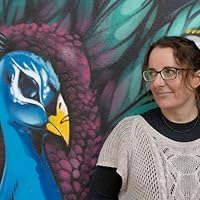
Elspeth Muir is a Brisbane author whose writing has appeared in The Lifted Brow, The Best of the Lifted Brow: Volume One, <>Griffith Review, Voiceworks and Bumf. She is a postgraduate student at the University of Queensland.
Elspeth Muir, a young Australian journalist and writer has chronicled the intense life of her younger brother Alexander. My brother died because he was drunk, and because the drink made him stupid.
I have read many books and resources relating to Australia’s drinking culture, and I was drinker myself. This is a heavy and important topic.
Australian’s drink a lot, and with this comes many problems, problems on a huge scale. Eslpeth tells us about her own family’s struggle and the wider one of our nation. There is much alcohol fuelled violence here and she tells the story of a country rife of systemic problems with alcohol at the core.
She also broached another serious theme – that of female safety while being intoxicated and the prevalence of sexual assault. She shared with alarming honesty her sexual awakening and the role that alcohol played alongside this, and her first experience of sex, told with a remarkable level of candour and honesty.
Elspeth references many incidents and statistics which show how problematic this alcohol use is, and as she mentions in the acknowledgements, this took her years to write. I think she took her time as it was so heavy, but also as she interviewed and travelled the country gathering data. She wants to understand what drives so many Australian’s to drink such copious amounts, while those that drink may be lessening in numbers. She herself was a massive drinker (I don’t know if she stopped, this wasn’t addressed). Her teenage years and those first years of living out of home were crazy. I don’t know how she came through the other side, but she did, and what a great writer she turned out to be.
Alexander was in the cusp of a young and happy life. He was seemingly happy to those who all who crossed his path. He and was extremely likeable and seemed to have some kind of infectious presence. This was mentioned on numerous occasions. This was probably not the true case of Alexander’s make up. Very hard to say of course as he tragically lost his life, but this larrikin of a kid had demons, and in the end, alcohol was the great remover.
At the age of 21 Alexander, a strong swimmer (a squad member) removed his shirt, took off his thongs and left his phone on the Story Bridge. Then he jumped into the water with a blood alcohol reading of 0.238. Almost FIVE times the legal limit to drive a vehicle. What drove him to do this? He had just finished his last uni exams and passed on a lift home from a night of drinking. There are glimpses into a depression from some anecdotes from his sister, but it remains a terribly sad and unknown entity, I felt a lingering or hanging sadness after I put the book down.
I had this book on my shelf for a long time, and as I borrow so many library books and receive so many ARCs, I rarely am able to choose a book from my physical shelf, I knew it was time to pick this one up.
I certainly wasn’t expecting Elspeth to have such a tale of her own, so not only was Alexander’s story hard to read, hers was as well. Their immediate and extended family was loving, full of life, honest and full of those who drank. But their love for one another was clear for all to see.
Elspeth had a rowdy youth, she drank a lot, and partied a lot. As did Alexander and their other brother. Alexander drank from an early age, and the epiphany being was could this not have served as a warning to be headed, rather than joked off? He blacked out SO many times and woke up in places unknown SO many times. This was normal behaviour for Alexander; and he died. A tragic story told with the utmost of eloquence by a proud and loving older sister.
“I wish he hadn’t had the opportunity, liquored up and full of bravado, or sadness, or whatever he was feeling, to fly off the side of the bridge. Because, although I always knew in theory that the inexplicable, untimely death of someone I loved unreservedly would be awful, what was impossible to know until it actually happened was that afterwards there would no longer be a time when I was not a little bit sad. And that my sadness would not be noble and acute – it would be dull, empty, endless, selfish, angry and irritating”
Wasted is the first book by Australian author, Elspeth Muir. Very early one morning, shortly before his twenty-first birthday, Alexander Muir drowned after jumping off Brisbane’s Story Street Bridge. His blood alcohol level was slightly less than five times the legal limit for driving. Muir examines this senseless loss of this life from the perspective of a sibling who has her own intimate knowledge of the effects, both positive and negative, of drinking too much.
“I don’t know why it was so important that there was alcohol, always. To go without just seemed not to be an option. Without it, I would rub up against the elements of the world, and chafe and blister. With it, everything was softer, easier. You had a drink and you slid into nonchalance and from there into conversations and new situations and adventures and forgetfulness”
Muir examines the drinking culture that seems to be the norm in Australia: her shared personal experience give the narrative a validity that an impartial observer might not achieve. “I didn’t think about alcohol, the way I didn’t think about eating or breathing. It was just an essential part of existence. Drugs were big colours – hard ink blots on otherwise pastel routines – while alcohol was everyday”.
Muir looks at alcohol as a factor in sexual assault, in violence, and in accidental death. She considers both sides of the argument over restriction of licencing laws, even speculating on what her brother might have felt about the subject, but concludes: “…alcohol is not an ordinary commodity…. trying to contain its effects at the time of consumption is less messy than dealing with them afterwards, even if harm-prevention measures somewhat constrain our access to aesthetic or sensual pleasure”
Recalling an earlier incident Alexander had with the Brisbane river, Muir says “When I am maudlin, I imagine the long, dirty, licking river, which coils like a snake on hot sand through fatty suburbs along its waterline, tasted my brother that morning, but was thwarted before it could suck him right in. It waited a year, watching, flicking its sunlit scales, laying open the promise of soft depths on dark evenings; then, early one morning, his curiosity drove him close again, and it ate him.
When I am not maudlin, I know he was not the victim of an animistic river, and that his death, by drowning, was not foreshadowed by his love of water except that it explains why he was near a river alone, with a blood-alcohol content of almost 0.25. My brother died because he was drunk, and because the drink made him stupid”
Text have enclosed this outstanding book in a beautiful cover by Chong Weng Ho. Muir’s memoir is honest, thought-provoking and very moving, and this book should be compulsory reading for everyone who drinks to excess on a regular (or even on an occasional) basis.
Powerful, stunning work. Part memoir; part investigation into wider Australian drinking culture. I am going to be recommending this book to anyone who will listen to me.
One recent evening while walking home after dinner and drinks with some colleagues, I came across a young man who was passed out, facedown, on a thin strip of grass beside a busy street in inner-city Brisbane. Removing my earphones, I greeted him and asked if he needed help or if I could call him a taxi. On waking from his slumber, he slurred that he was fine, and began making a call on his phone. Satisfied he was semi-coherent, I bid him farewell and good luck. By the time I had walked to the corner and looked back, the young man was lying facedown once again.
I thought about him a lot while reading Elspeth Muir’s 'Wasted', a book whose pages are practically soaked in the boozy culture that defines the lives — or at least the weekends — of many young Australians. What is it that compels us to consume so much alcohol? This is the central question that energises Muir throughout her memoir, which begins with the death of her younger brother, Alexander, in 2009.
Alexander liked to drink, just like his sister. One night in late 2009, just a few hours after completing his final university exam for the year, he drank through the night, even after his friends had gone home. He had a habit of drinking to the point of blackout, where the camera in his brain would stop recording memories, and he would find himself waking up in strange places. Once, on the morning of his 20th birthday, Alexander woke up on the bank of the Brisbane River, beneath mangroves and a wooden walkway, unsure of how he got there.
On that night in late 2009, Alexander Muir made his way to the Story Bridge, a popular spot for suicides. He took off his shirt and thongs, and removed his phone and wallet from his pockets, leaving them on the walkway. Then he climbed the short barrier and fell 30m to his death, aged 21. When his body was found a few days later, his blood alcohol content reading was 0.238, nearly five times the legal limit for drivers.
This is where his sister’s book begins, with this extraordinary sentence: “It was hot when Alexander was buried, on one of those low Brisbane mornings in November when you might have scooped a fistful of blue from the sky if you’d stretched an arm out.”
There is an easy confidence to Muir’s prose, which above all exhibits a perceptive eye for detail, where cliche is all but absent. I loved vivid imagery such as this:
"When I am maudlin, I imagine the long, dirty, licking river, which coils like a snake on hot sand through the fatty suburbs along its waterline, tasted my brother that morning, but was thwarted before it could suck him right in. It waited a year, watching, flicking its sunlit scales, laying open the promise of soft depths on dark evenings; then, early one morning, his curiosity drove him close again, and it ate him."
Written across several years, 'Wasted' uses Alexander’s death as a narrative point on which to pivot a lens that zooms out to examine broader Australian youth culture, as well as zooming in on the author herself to describe the many foibles and joys that have been experienced with the anesthetising effects of alcohol coursing through her bloodstream.
Deeply personal and unflinchingly honest, Muir’s debut book is among the best long-form explorations of how and why some Australians drink alcohol to excess. High Sobriety, by Melbourne-via-Scotland journalist Jill Stark, was a superb entry into this canon when it was published in 2013. But 'Wasted' is even more involved than Stark’s book because this author has been marinating in this culture since her birth. Its chapters deal with sexual assault, violence, mental illness, regulation and youth-led social movements that seek to stem the tide of getting wasted just because it’s what young Australians are expected to do.
It is an imperfect work; there is some needless repetition, and a few of the shorter chapters feel underdeveloped and extraneous. As an already slim title, its impact could have been strengthened further by some judicious cutting. But, overall, it is a striking work and among the strongest debut books I have read. The final two paragraphs are breathtaking.
Muir’s peers will read and respond to this work because she does not sanitise her words; for instance, page two describes her brother’s “soggy body — fresh from the refrigerator — pickled in embalming fluids, alcohol and river water”. It takes time and distance to write of such a painful thing with such fearlessness. Parents, educators and policymakers must read this book, for it is filled with insights into why we consume so much of a liquid that can make us so ill.
Two things to get off my chest about Elspeth Muir’s memoir, Wasted –
1. This is an extremely important book that examines the impact of alcohol on a family and, in doing so, highlights the fact that drinking to excess is normalised in Australian culture. 2. In my opinion, this book was robbed – it really should have made the 2017 Stella Prize shortlist.
In 2009, Muir’s 21-year-old brother, Alexander, finished his last university exam, celebrated with friends, and then jumped 30 metres from the Story Bridge into the Brisbane River below. His body was found three days later, with a blood-alcohol reading of 0.25. This tragic event provides a starting point for Muir to explore her grief; her own drinking habits; and Australia’s drinking culture.
There’s a practicality to Wasted. A blend of memoir and journalism, Muir shifts between her incredibly honest account of grieving for Alexander and the problem with a ‘socially acceptable’ drug. Of alcohol, she writes –
“It is a germ killer and a poison; an unremarkable but integral addition to meals and a beverage reserved to mark special events; able to enhance social occasions and destroy them; best consumed in moderation, but symbolic of excess. The ability of a person to consume it regularly in great quantities is both the sign of a strong constitution and a symptom of illness… Alcohol’s effects are lauded in sports people, politicians and other high-profile members of society, who are often forgiven for their indiscretions while under the influence, but are considered problematic in minority groups, young people and women, who are blamed for mismanagement.”
There’s always a danger with memoirs that they will read as self-indulgent or judgemental. In describing the trauma that Muir and her family experienced, Wasted could have gone in that direction. But no. Muir writes beautifully and openly, and because her thoughts often buck convention (remember, we all grieve in our own way), the result is startling –
“Frangipani boughs from the tree outside my parents’ kitchen were wired into a messy funeral wreath. Beneath the lid was my brother’s soggy body – fresh from the refrigerator – pickled in embalming fluids, alcohol and river water.”
“I laughed in shock and afterwards, in my apartment, I cried. It was functional crying, like turning on windscreen wipers or a sprinkler…. I wasn’t sure if I was crying because I had to or because I was acting, trying to emulate normal sadness.”
The real power in Wasted comes from Muir’s examination of her own relationship with alcohol. Her candid, direct tone and the quick jump from pouring a glass of wine after a long day at work to blackouts and drowning in the Brisbane River is chilling. And that’s what makes this book brutal – her honesty about her own complicity in the culture that led to Alexander’s death.
“I was a greedy, grasping drunk. I did what I wanted and took what I wanted, and in the aftermath I blamed it on alcohol.”
And through all of this, you can’t help but thrill at Muir’s beautifully written words.
“When we got out of the car, Mim hugged us the same way Mum and all six of her sisters hug, as if they’re koalas and you’re a branch.”
4.5/5 This is an important book and I hope everyone reads it.
‘Wasted barrels headfirst into the alcohol-soaked heart of Australia to report on our fraught love affair with drinking. With this story, which is as complex, bittersweet and rich as youth itself, Muir uses memoir and journalism for a sobering, heartbreaking exploration of what alcohol gives to young people in Australia, and what it robs us of.’ Liam Pieper
‘Intricately crafted…An intimate portrait of a grieving family and a nation unable to reconcile itself to the harmful effects of its drinking culture…Reminiscent of writers such as Chloe Hooper and Helen Garner…This book will help you think critically and compassionately about those who seek solace in alcohol.’ Books + Publishing
‘The prose style of this unheralded writer…is so achingly beautiful and assured, Helen Garner might be pleased to hand her the keys to the creative nonfiction kingdom and ride off into the Carlton sunset.’ Saturday Paper
‘[Muir] gifts readers gorgeously evocative passages which convey a depth of emotion…Wasted is a haunting read.’ Readings
‘There is no lapse in urgency in Wasted; this conversation is a crucial one to have. Five stars.’ Good Reading
‘Elspeth writes beautifully and honestly, documenting the shocking loss of an older brother, in such heartbreaking circumstances.’ Mamamia
‘Muir sifts through her own tattered consciousness, hunting for what has been lost…She concludes of her brother’s death, “What a waste of a life that was.” Yet by determinedly documenting the drinking culture that coddled him, she has opened vital new lines of enquiry into our duty of care towards drinkers. It’s a tragedy, but now, not entirely a waste.’ Lifted Brow
‘Interweaving brilliant reportage with memoir, Wasted delves into Australia’s complicated relationship with alcohol…Timely and eye-opening.’ Canberra Weekly
‘There is an easy confidence to Muir’s prose, which above all exhibits a perceptive eye for detail…Deeply personal and unflinchingly honest, Muir’s debut book is among the best long-form explorations of how and why some Australians drink alcohol to excess…It is a striking work and among the strongest debut books I have read.’ Australian
‘Rough and raw and evocative…Muir is a talented writer who has blended memoir and journalistic inquiry with aplomb.’ Weekly Times
‘A truly insightful piece of work…Wasted is a vital, poignant piece of social commentary, and is essential reading for every Australian who drinks.’ Sydney Morning Herald
‘A thoughtful, heartbreaking work.’ Overland
‘Elspeth Muir’s memoir begins after her younger brother’s night of heavy drinking culminates with him jumping from a bridge and drowning in the Brisbane River. Her handling of the subject is, by turn, heartbreaking, evocative and, in parts, refreshingly weird, and her assured voice makes this a sobering read.’ Readings, Best Non-Fiction Books of 2016
‘This devastating personal story of loss and grief is also an unflinching examination of the damaging drinking habits of young Australians, and of a society that not only permits, but encourages them.’ Junkee
‘A brave, generous and thought-provoking book.’ Unlikely Bookworm
The book is a part memoir, part investigation into the impact of alcohol in Australia. It stemmed from the tragic death of the author's 21 year old brother and traces his (and her) alcoholic antics. There is a bit about the comparison with the drinking habits in South America, a bit more about sexual assaults, schoolies and the cowardly one-punch killings. There was little about domestic violence, health issues caused by excessive drinking. It is a very personnel story but it could have been more powerful if it was told solely as a personnel story. I just felt the investigative study was incomplete.
This feels like two books smashed unsuccessfully into one. Muir tells the story of her brother Alexander and his death, then switches to a discussion of binge drinking related violence in Australia. This section is largely lacking in research and is instead based on conversations with people who run various programs aimed at young people - none of whom have any qualifications in community development, mental health, or alcohol and other drugs. As a youth worker this offended me and has probably tainted my thoughts on the book as a whole.
Plot spoiler - Alexander starts drinking heavily at 12 and eventually is found dead in the river having jumped off Story Bridge. He left his belongings on the bridge and he is a strong swimmer - the autopsy showed no broken bones, and his blood alcohol content suggested he was still conscious. It feels incredibly naive that Muir refuses to acknowledge that Alexander likely died by suicide or at least misadventure - even a random alcoholic she meets in Argentina draws this conclusion as soon as she shares the story. It seems like much of Alexander’s life remains a mystery and by not honestly examining the role alcohol played in it, Muir conflates two stories which are probably unrelated. Alexander’s story seems more likely to be one of mental health and alcoholism, whereas the issues in the media and the programs she investigates relate more to adolescent risk taking behavior and random violence as a result of binge drinking.
Muir and her brothers clearly have issues with problematic alcohol use and while she lays this out in gory detail, she doesn’t really go into any depth as to why this is, besides loosely suggesting a family issue (addiction can be hereditary, but this is not discussed). Probably could have been a decent memoir if Muir focused on this and went deeper into her family’s relationship with alcohol and her own, and what life looks like without Alexander. Language a bit flowery for my taste.
There’s less hope for the other half of the book. Despite looking at deeply problematic programs such as Red Frogs (started by a self-professed youth worker/Christian chaplain/charlatan who has the audacity to charge his volunteers to work) and a motivational speaker spruiking his grief to school kids, which aim to reduce harm and raise awareness of binge drinking, she doesn’t really offer us any solutions towards changing binge drinking culture in an Australian context.
A smart, sad book that combines the upsetting story of the author's brother's alcohol-related drowning death with a clear-eyed look at drinking in Australia - it's pleasures, problems and the efforts being made to reduce some of the damage. Muir is unflinching about her own drinking and her ability to weigh up the risks and pleasures of intoxication is impressive.
This is a story of family and drinking and death and drinking again. It's a memoir of losing a brother and an exploration of drinking. And I have to admit that I have mixed feelings about this book.
Maybe it's the similarities and the differences with my own life. The author and her brothers are similar ages to myself and my sisters. It's a Brisbane story, so I can put images and feelings and experiences to the places. But the differences are stark, maybe starker so given the closeness of our ages and locations.
This memoir is only possible because of privilege - an element the author touched on briefly. The money to go out drinking, skin colour which meant law enforcement looked the other way or matters were dealt with more sympathetically, living in an area where you could walk home completely drunk instead of trying to figure out how to get the last bus or train for the hour long trip home. This story gets published because it happened to an inner-city family with money, not a working-class family from the looked-down-on outskirts of town.
When you're the 'right' kind of person, the stories of alcohol-influenced crime, filthy living and nights where you can't remember what happened might come across as charming or amusing or a little sad but easy to chalk up to being young - even when you're not that young. Most of the time the consequences are mild. Unless things go horribly wrong, like they did for the author's brother, or the victims of violent attacks.
As the memoir parts of the book wind up, there is a look a binge-drinking alcoholism and drinking culture in Australia. It's a look with lots of personal stories and few conclusions, not dissimilar to the many feature articles written on the issues. There's a few moments where I wanted a more in-depth exploration, but it was kind of shrugged off and moved past.
While the content was often frustrating, the writing was both engaging and well done. Is that enough to qualify it for the long-list of a prestigious literary prize? Or is it a story which resonates with people who sit in literary circles? Do we need more conversations about privilege when it comes to writing and publishing in Australia (short answer - yes).
Elspeth Muir's 'Wasted' is a powerful and important exploration into the place of alcohol in Australia, from our backyard barbecues and family celebrations, to the nightclubbing and binge-drinking lifestyle of people in their twenties, to the annual beachside booze-powered romp that is Schoolies on the Gold Coast. Framed by the tragic story of her brother Alexander, who died when he jumped from Brisbane's Story Bridge with a blood alcohol level of 0.238, Muir ponders her and her two brothers' history of drinking. It's a story that many Australians could probably relate to, at least in their youth. At times it's a painfully honest look by Muir at her own behaviour around alcohol, and the difficulties she's had facing up to the fact that her own drinking is borderline dangerous. Although she's never been quite the risk taker that Alexander was, she has ended up in potentially dangerous situations that could have been much worse than they actually were.
Muir writes creative non-fiction with a controlled, pensive voice and delves head first into the difficult issue of addressing the toxic culture that has emerged around drinking, particularly in Australia. She includes a mix of memoir and research, although the strongest sections are her own reflections on her brother, and all the points along the road when something might have been done to prevent his tragic death. Whether he was suicidal is a question the family doesn't have an answer to, but she doesn't think so — rather it was a long history of drunken acts of bravado that led him to fly off the side of a bridge and fall thirty metres into the Brisbane river where he drowned. The researched sections of the book are interesting but sometimes feel like they are just skimming the surface, with occasional statistics or study results included amid the broader story she's trying to tell. (The one that alarmed me most was that 20% of drinkers consume 75% of all the alcoholic beverages consumed in Australia. Extremely heavy drinking might be a small minority of people, but the heaviest drinkers are drinking a LOT.)
The book travels from Brisbane to Melbourne, to Argentina and South Africa, and then back to Brisbane again, with Muir examining episodes from her life where alcohol played a central role. The travel parts provide some contrast for considering the differences between drinking culture in Australia and elsewhere, although I also found it made her narrative a bit less cohesive when she's drifting between places and moving back and forward in time. It's not until the final chapter or so that she ventures an answer as to why the drinking culture (and resulting violence or stupidity) is different in Australia. A lot of it comes down to privilege and freedoms we take for granted. Even when there's no money for other luxuries, alcohol often remains a priority for people here, and the idea of going without is still seen as odd and unconventional in many circles.
Wasted is ultimately an honest and important book about a difficult topic. I hope this book helps start some much-needed conversations about drinking, violence, dangerous behaviour, and the grieving families who are left behind when alcohol-influenced behaviour has tragic consequences.
This book tells the story of Elspeth Muir's grief following her brother's death. He died after jumping into the Brisbane River while incredibly intoxicated.
The main problem with this book is that it doesn't know what it wants to be. The first section is excellent and contains some of the best writing about the searing pain of grief that I have ever read. The author then gets a bit lost. She say she wants to write about drinking culture in Australia but all she really writes about are her own experiences - it's all specific not general. She also has a quite long description of an apparently debaucherous period she spent in Melbourne that reminded me of the pulp song Common People, where a rich girl slums with the poors, knowing that she could go back to her life at any time (Muir comes from a wealthy family and I frankly didn't believe the bit about Melbourne at all).
Your appreciation of the writing will also depend on your tolerance for that particular type of literary memoir writing which tries to be both edgy and beautiful - using "fucking" to describe sex and employing functionless obliqueness for no apparent reason (in one chapter, she refers to a boyfriend as "the man I loved" twenty times a page for an entire chapter but it's the only time he's referred to in the book and she never explains when they dated, for how long they dated and when they broke up. I did not understand why the chapter was even there.)
This review is coming off a bit harsher than I intended. Muir can write very well and there are parts of this book that are really beautiful. I know I refer to this all the time but Muir would have done well to emulate Fiona Wright's Small Acts of Disappearance. She could have used the separate but interconnected chapters to explore all of the different themes she wanted without leaving her reader wanting to map out a time line because of the contradictory stories told.
“I was a greedy, grasping drunk. I did what I wanted and took what I wanted, and in the aftermath I blamed it on alcohol.”
In many ways this is a grim, miserable and scuzzy account, but in others its a deep(ish) dive into the dark heart of alcohol and its role in Australian society and of course its wider impact. The author freely admits to and shares her own long-term problems with alcohol and the ways its made her and those around her suffer.
“I think I do have a problem. But I’ve never really looked at it like that, ‘cause if I have a problem then every single person who I hang out with has the same problem. I guess it’s just the lifestyle that we live.”
This had a bit of a slow and unconvincing start, but it picked up around half-way through and Muir went to some interesting places - both mentally and physically, which gives this a broader and deeper scope. There's some nice writing here and there, though there was also a rough and unfinished feel to this - for instance I thought the author was going to tell us about her giving up drinking - but its unclear if she herself does still drink or not?...
I was so keen to get my hands on this book. Elspeth Muir's essays are excellent, and Text is a publisher to trust. Australia needs to have a discussion about drinking culture and alcohol abuse. However, Wasted was quite uneven and ultimately unsatisfying.
There are sections that are tight and beautifully written -- passages and chapters that have been workshopped and refined, which would stand alone as essays -- and sections that are weakly researched, over-written and not objective (lack of objectivity in the factual sections, i.e. only researching one point of view at a time, rather than lack of objectivity in the memoir sections, which is to be expected). Some of the refined sections are very poetic, but these lush descriptions appear suddenly, and at random -- the style isn't sustained throughout the book. The result is a mixed author voice that is never really balanced.
Blurring the line between memoir and journalism is a fair literary choice, but a choice that ultimately does a disservice to the subject matter. More ruthless, thorough investigation -- answering questions, rather than just posing them, or critiquing the motivations of her interviewees, or actually interviewing people rather than writing about how awkward she would feel about interviewing someone a second time, when her first attempt was a mess of platitudes -- would have lifted this book out of the personal space and made it a more insightful read.
Some of the author's memoir chapters -- parts that focus on her own abuse of alcohol, her self-hate, her pig-sty living conditions, her destructive relationships with friends -- distract from the main threads: the death of her brother, Alex, and Australia's destructive relationship with alcohol. They distract, rather than enhance, because the assumed premise is that all Australian drinkers experience alcohol the way she does: excessively, filthily, uncontrollably. Discussion of pervasive low-level drinking -- wine every night at the table -- is skimmed over in favour of extreme examples of obvious problem drinking.
A number of mistakes that ought to have been caught at proofing stage ('12 p.m. on a school night', 'Mother Energy drink' and other similar accidents) suggest that maybe there wasn't enough time left in the publishing schedule, that the final deadline had loomed and struck while there was still a bit of work to be done. A second/revised edition should resolve these minor issues.
I wanted to love this book! But, sadly, the matter of Australian drinking culture wasn't explored as deeply as it could have been, and the uneven pacing and tone of the book made it difficult to stick with. Stronger, perhaps, as a collection of essays?
If you’ve ever experienced the death of someone very close it’s amazing how it immediately (but maybe temporarily) re-prioritizes everything. I say temporarily because humans have a remarkable adaptability and we seem to normalize almost any life situation if given enough time. But for a while all the clichés about shortness of life and self-examination become tangible and very personal. The time to develop positive new habits or insights as a result of the trauma is during that initial time which of course can be the most difficult thing to do.
For Muir the struggle to make sense of her brother Alexander’s alcohol related death forced her to examine his drinking and her own heavy drinking patterns. She sets this examination in the context of Australian society which leads her to journalistic studies of alcohol use but also internal questions of what was personally best. It’s an issue most of us face – alcohol is everywhere in Western society and there’s as many different responses to the question as there are ways to drink. Muir’s other brother Patrick said that he traced almost every problem in his life back to alcohol but that he also enjoyed it so much – for him it was the great social and mental lubricant. Muir hadn’t resolved the question herself by books end and she’s not the type to go on an anti-substance crusade. Her struggle is balancing freedom with negative impacts. Freedom from addiction would be the ultimate, but concepts of freedom are more nuanced and messy in lived reality.
Binge drinking sucks. I used to do it until I did too many stupid things and had some sense knocked into me. Great book, excellent writing, all binge drinkers (past and present) should read it.
'...That the same liquor that gives people enough strength to live in this world, can also make them brave enough to leave it.' This book by Brissie girl Elspeth Muir gave me chills. It's mostly a personal memoir but opens up into an exploration of Australia's drinking culture at large. Anecdotes of getting blind-drunk and taking risks are cringe-worthy and, too many of us, eerily familiar. Binge drinking is problem behaviour that should raise red flags, but it doesn't. Enough people do it that it seems commonplace - it's created this effect of safety in numbers. Sure, youth is a time to make and learn from mistakes, but alcohol complicates things. And sadly, not everyone gets a second chance. A beautifully told story of a young woman trying to make sense out of loss.
This booked confused me. What was it trying to be? Was it a memoir? Was it a study on grief or alcoholism? Was it a social observation? I feel like a lot of the book was the author just rambling. It jumped all over the place-one minute we were involved in Alexander's life and then we were with the author talking about a trip to South America then we were back in Australia going to schoolies! I think the author really needed to work out what story she wanted to tell.
Ripped through this, drawn to the themes of grief and our booze soaked culture. Very well written, with some extraordinary sentences/ paragraphs throughout. Only occasionally did the book slacken, possibly a result of the long-ish gestation that created the necessary distance to capture loss so evocatively.
3.5 stars – a beautifully written, deeply personal memoir that also blends in elements of reportage, which sometimes teetered on the edge of proselytising. Heartfelt and affecting nonetheless.
I think this book is a very insightful firsthand experience of the alcohol problem/standard in Australia. It paints a clear picture of Brisbane and Melbourne and the wasted days between being a kid and being an adult. It’s a sad story about a pointless death and one that makes you think about your own decisions made when, hopefully, younger.
But the quotes on the cover and on the inside are misleading and unfair to the author. Too often the author is compared to Helen Garner. It is unfair to sell a book written by a student as work that is comparable to Helen Garner. Is it because some of it is set in Melbourne share houses where books like Monkey Grip were set? Is it because she uses the word ‘shit’ a whole bunch? It cannot be compared to Garner’s non-fiction books because those books see the author step out of her comfort zone and get involved in the lives of people who have had their worlds turned inside out by senseless violence. While the subject matter in Wasted is personal and grim, it doesn’t reach the standard set by Garner. Muir is exploring her own thoughts and not so much how these events impact others.
I also think interviewing the Hello Sunday Morning crew about their ‘occasional sobriety but still binge drinking when you do drink’ position is a cop out. At least the author credits the other author, Jill Stark, who wrote about it first in High Sobriety. Hello Sunday Morning seems like a profitable enterprise built on removing the second A from AA. It seems based on the attention-seeking idea to share your personal pain with as wide a group as possible, all the while the founder gets an MBA scholarship to ensure the venture becomes profitable, as if that should be inspiring to binge drinkers.
The book left a bad taste in my mouth - I feel as bad as anyone would about her horrible loss, but it also made me feel like there is no hope for Australia’s boozing habits.
I almost put this book down after the first page had sentences like: ‘Crickets fucked in the bougainvillea’ and I saw that the author had been published in literary journals like the Lifted Brow that published pieces that would not find that phrase unusual. However, I had to read it for a university assignment so I persisted.
In the end there weren’t many more phrases like this and Muir discussed many important aspects of alcohol and Australian society that I found insightful and interesting.
Overall the whole book just made me glad that my parents and my closest friends aren’t drinkers because I think this plays a huge part in the fact that I don’t drink. The book really showed the dangers of drinking and the horrible spiral of negative events that can occur in life as a result.
I found my reading experience was similar to that of Wild by Cheryl Strayed whereby I was shaking my head at the author and her subject’s bad choices from a young age. But unlike Wild there was no hike across miles and mountains so I did not enjoy Wasted as much.
Unfortunately I’m even more convinced that Australia has a horrible relationship with alcohol and that the drastic changes that are needed to change this are coming about too slowly. I want to push this book into the faces of the people I know who drink excessively and shout ‘Wake up. This is not living and you are harming yourselves every Friday and Saturday night for no good reason!’ But alas, people who would rather live off bread for a week to save money for alcohol aren’t likely to spend the time or money on reading the book anyway.
The drinking culture is Australia is always shocking when it's laid out to bear. The statistics - that 15 people per day die from alcohol-related health complications (in 2010), the daily hospital presentations connected to drinking - and yet our young years were/are socialised into drinking until we are drunk, for so many of us.
This memoir recounts Elspeth's youngest brother's death, and his and her drinking lifestyle. It's a mirror up to us all who spent their teen, twenties and beyond drunk, hungover, or planning the next night out.
The consequences of drinking are huge, and the recklessness of the experience. This book not only shares intimate personal stories, but uses them to reflect on the selfishness, the blackouts, the dangerous situations drinking can place us in, the violence it can aid. The important life moments it makes us miss.
There are elements of Elspeth still processing her brother's death, whilst avoiding addressing her own drinking behaviour, but this read is a strong starting point for us all to challenge our additions to alcohol and the drinking to excess scene.
I did enjoy reading this biography, but found it disturbing in some ways. The author sets out to relate the difficult relationship her brother had with alcohol, and how this led to his accidental death. But while telling his story she also reveals her own, uncomfortable relationship with alcohol. Both she and her brother have inherited the gene for alcohol addiction it seems.
What makes the reading uncomfortable is that the author doesn't make it clear whether she is aware that her love of alcohol is affecting her life (and how it might affect others); nor whether she regards herself as responsible for her own drinking. She spends quite some time examining the alcohol-centric nature of Australian culture, but in much the same way as you would pick up an interesting discovery on the beach, turning it this way and that to find out more about the object.
This was a one-night read for me. Muir's book is part memoir, part exploration of her own and her brother's binge drinking, and part an overview of Australia's drinking culture. For me, this was a journey into an unfamiliar landscape, one with cliffs to fall off and boulders to maneuver. I have lived on the margins of young binge drinkers and grew up around several alcoholics. I have read other accounts of the lure of alcohol addiction. Muir's book proved impossible for me to put down, though I read it with horrified fascination. It is curious that alcohol, as pernicious as its effects can be, is still a socially acceptable path to excess and consequent emotional and physical illness. I enjoy it myself, though in moderation. Muir's book is a cautionary tale and an indictment of the culture of excess.
A memoir about Australian drinking culture that began as an essay about the author's brother, who died after leaping off a bridge while drunk. It's not a long read, but it is beautifully written and poignant, particularly the sections about her Queensland childhood with her two brothers, and her years in Melbourne.
I can see that some readers might find it rambling but for me that was part of its appeal - she is a natural storyteller with a great eye for detail and character. It is a book that leaves the impression that when it comes to alcohol and binge drinking there are no simple answers, but government support and social change are both necessary to avoid the kind of tragedy her family went through. I would love to read more of her work.