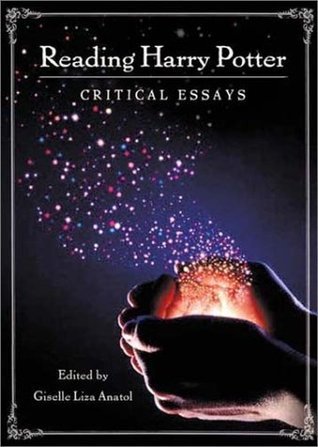
J. K. Rowling achieved astounding commercial success with her series of novels about Harry Potter, the boy-wizard who finds out about his magical powers on the morning of his eleventh birthday. The books' incredible popularity, and the subsequent likelihood that they are among this generation's most formative narratives, call for critical exploration and study to interpret the works' inherent tropes and themes. The essays in this collection assume that Rowling's works should not be relegated to the categories of pulp fiction or children's trends, which would deny their certain influence on the intellectual, emotional, and psychosocial development of today's children. The variety of contributions allows for a range of approaches and interpretive methods in exploring the novels, and reveals the deeper meanings and attitudes towards justice, education, race, foreign cultures, socioeconomic class, and gender. Following an introductory discussion of the Harry Potter phenomenon are essays considering the psychological and social-developmental experiences of children as mirrored in Rowling's novels. Next, the works' literary and historical contexts are examined, including the European fairy tale tradition, the British abolitionist movement, and the public-school story genre. A third section focuses on the social values underlying the Potter series and on issues such as morality, the rule of law, and constructions of bravery.
Giselle Liza Anatol is an Assistant Professor of English at the University of Kansas, Lawrence. In addition to editing two collections of critical essays on the Harry Potter books, she has published a number of scholarly journal articles.
They seemed like they were written by English professors who were mad that people were reading books that weren't "the classics" or edgy abstract novels written for English professors to analyze. They overanalyzed (do you think that the brooms are symbols of feminine domesticity? Or that Gryffindor Tower is a phallic symbol? Or that Ron's brothers working abroad is symbolic of neoimperialism? I don't . . . ), and although that made them rather amusing, they didn't enhance my enjoyment of the books.
I read this while researching Harry Potter and Christianity for a paper. Excellent compendium of essays about the first few Harry Potter books. Essays have various topics and include an analysis of Wizarding Law, a study of child development and Harry Potter, and the significance of Hogwarts students being divided into houses. They make some interesting (and occasionally accurate) predictions for the later novels. This is an incredibly nerdy read but I really enjoyed it.
If you want to analyze the shit out of Harry Potter, this is interesting. I read it for class, and it might be one of the most fun books I've written a paper on.
The essays titled "Safe as Houses"; "Cruel Teachers and Treacherous Texts"; "Cinderfella: JK Rowling's Wily Web of Gender"; and "Hermione and the House-elves" were especially well written and informative. The second and third essay listed were my favorite. Though published before the release of Order of the Phoenix, this book is a great collection for those interested in analyzing the series' major themes.
Kinda feel like this book is only worth reading when you want to or need to write a paper on how Harry Potter represents our society. Most of the essays read like they were written by professors that tend to analyze everything. Nevertheless, I did enjoy reading most of them, but I think that's more due to my enthusiasm towards language than due to my enthusiasm towards Harry Potter. Definitely not a book I would recommend to every Potterhead.
Well I read this in my Harry Potter class. I liked some essays better than others (obviously), but all the essays certainly brought up many points that spring-boarded into our discussions. Recommended for anyone who loves Harry, or professors considering teaching HP in class (please do, the level of discussion and response in our class is like nothing I've ever seen before).
Needed for EE research. I skimmed through most of the essays and only found one useful. In general, it was dumb. Do English majors have nothing better to do than write pointless essays about children's books?
Excellent compendium of essays based around the first half of the series. I particularly enjoyed the predictions about future novels. The organization left nothing lacking and I think any Harry Potter fan would enjoy this compilation.