
What do you think?
Rate this book


162 pages, Kindle Edition
First published April 1, 2016


 Photography by the incredible Dominique Fierro Hair & Makeup: Abigail de Casanova[/caption]
Before you speak,
let your words pass through three gates.
At the first gate,
ask yourself, "Is it true?"
At the second gate,
ask, "Is it necessary?"
At the third gate,
ask, "Is it kind?"
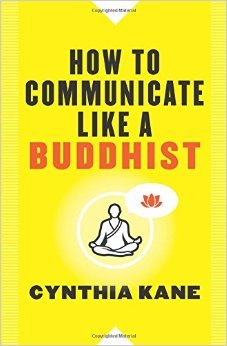 How to Communicate Like a Buddhist covers mindful listening - how to listen to yourself and to others, mindful speech - speak consciously, concisely, and clearly and how to use the language of silence, mindful silence with a great introduction to meditation.
After class, Bryan picked me up. We drove to the grocery store, and I couldn't get the student out of my head as we were shopping. He was asking me questions but I wasn't paying attention. I was thinking more about the girl in class, hoping that she was feeling better. Standing between the broccoli and me, Bryan put his hands on my shoulders and said, "We're in the grocery store now. Whatever happened in class, let it go. We're here now." I looked into his eyes. He was right. This was a new moment I wanted to be present for. I noted the feeling in my body and let it dissipate. I'm here now, I said to myself. This is a new moment. Be here now. We're always noticing, detaching, noticing, detaching. Being present is a constant state of refocusing on the moment at hand.
Remember that a bodhisattva is someone who hears the cries of the world and endeavors to limit suffering. For the purposes of communication, a bodhisattva would choose her words carefully so that her listener may understand and be helped by them.
That being said, it's important to remember that while you do your best in being conscious of which words you choose and how you use them, you are ultimately not responsible for someone else's reaction to them. Your speech is what you control, but you can't control how those words are interpreted.
...
What I have learned is that if someone is having a bad day or a difficult time, there is nothing wrong with trying to make the person feel better, as long as you remember that ultimately it's up to him or her to have the self-awareness to see what the trouble is and then decide what needs to happen in order to feel better. It's the other person's responsibility to learn how to alleviate his or her own pain, but it's not our pain to resolve, nor is it within our power to do so.


