

What do you think?

Rebekah Roberts #3
Conviction
New York City 1992: a year after riots exploded between black and Jewish neighbors in Brooklyn, a black family is brutally murdered in their Crown Heights home. A teenager is quickly convicted, and the justice system moves on.
Twenty-two years later, journalist Rebekah Roberts gets a letter: I didn't do it. Frustrated with her work at the city’s sleaziest tabloid, Rebekah starts to dig. But witnesses are missing, memories faded, and almost no one wants to talk about that grim, violent time in New York City—not even Saul Katz, a former NYPD cop and her source in Brooklyn’s insular Hasidic community.
So she goes it alone. And as she gets closer to the truth of that night, Rebekah finds herself in the path of a killer with two decades of secrets to protect.
From the author of the Edgar-nominated Invisible City comes another timely thriller that illuminates society’s darkest corners. Told in part through the eyes of a jittery eyewitness and the massacre’s sole survivor, Julia Dahl's Conviction examines the power—and cost—of community, loyalty, and denial.
Twenty-two years later, journalist Rebekah Roberts gets a letter: I didn't do it. Frustrated with her work at the city’s sleaziest tabloid, Rebekah starts to dig. But witnesses are missing, memories faded, and almost no one wants to talk about that grim, violent time in New York City—not even Saul Katz, a former NYPD cop and her source in Brooklyn’s insular Hasidic community.
So she goes it alone. And as she gets closer to the truth of that night, Rebekah finds herself in the path of a killer with two decades of secrets to protect.
From the author of the Edgar-nominated Invisible City comes another timely thriller that illuminates society’s darkest corners. Told in part through the eyes of a jittery eyewitness and the massacre’s sole survivor, Julia Dahl's Conviction examines the power—and cost—of community, loyalty, and denial.
312 pages, Hardcover
First published March 1, 2017
About the author
Julia Dahl
8 books551 followersJulia Dahl was born and raised in Fresno, California and currently lives in New York's Hudson Valley with her husband and son.
Dahl began her career as a journalist working as a fact-checker at Entertainment Weekly. Since then, she has been an editor at Marie Claire, a freelance reporter at the New York Post, the deputy managing editor of The Crime Report, and a crime and justice reporter for CBS News.
She now teaches journalism at NYU.
Dahl's first novel, INVISIBLE CITY, was a finalist for the Edgar Award for Best First Novel, and won the Barry Award, the Shamus Award, and the Macavity Award for Best First Novel. INVISIBLE CITY named one of the Boston Globe's Best Books of 2014, and has been translated into eight languages.
Dahl began her career as a journalist working as a fact-checker at Entertainment Weekly. Since then, she has been an editor at Marie Claire, a freelance reporter at the New York Post, the deputy managing editor of The Crime Report, and a crime and justice reporter for CBS News.
She now teaches journalism at NYU.
Dahl's first novel, INVISIBLE CITY, was a finalist for the Edgar Award for Best First Novel, and won the Barry Award, the Shamus Award, and the Macavity Award for Best First Novel. INVISIBLE CITY named one of the Boston Globe's Best Books of 2014, and has been translated into eight languages.
Ratings & Reviews
Friends & Following
Create a free account to discover what your friends think of this book!
Community Reviews
Displaying 1 - 30 of 159 reviews

February 17, 2018
Conviction is a really excellent addition to this beautifully written series featuring Journalist Rebekah Roberts – a character who is highly engaging and easy to get behind.
In this story she is looking into the conviction of a young man for the murder of his adopted family – but DeShawn insists he is innocent and as Rebekah digs into the past she discovers this one might hit closer to home than is comfortable for her.
Conviction is an intriguing and thought provoking crime drama, using both past and present Julia Dahl weaves a tale of assumption, corruption and confrontation, with a fascinatingly clever mystery element and her usual terrific characters coming into play. It is utterly compelling and a real page turner, with a beautifully emotive resolution and some relevant social commentary.
Descriptively speaking Julia Dahl’s novels are rich and immersive, the settings are vivid and authentic and the storytelling is wonderfully emotive on many levels. I’m a fan of this series and would highly recommend it to anyone.
In this story she is looking into the conviction of a young man for the murder of his adopted family – but DeShawn insists he is innocent and as Rebekah digs into the past she discovers this one might hit closer to home than is comfortable for her.
Conviction is an intriguing and thought provoking crime drama, using both past and present Julia Dahl weaves a tale of assumption, corruption and confrontation, with a fascinatingly clever mystery element and her usual terrific characters coming into play. It is utterly compelling and a real page turner, with a beautifully emotive resolution and some relevant social commentary.
Descriptively speaking Julia Dahl’s novels are rich and immersive, the settings are vivid and authentic and the storytelling is wonderfully emotive on many levels. I’m a fan of this series and would highly recommend it to anyone.

March 4, 2018
A new-to-me author, despite Conviction being the third of Julia Dahl’s books to feature spirited and tenacious reporter Rebekah Roberts. Grappling with the weighty issues of race, religion, and justice this proved to be a markedly different, and thought provoking read…
In Rebekah we have a confident, young woman eager to prove herself and progress in her career, and what Dahl captures so well is her flexible, but not always completely unquestioning pursuit of information as a reporter. Instead of Rebekah just being depicted as a cold hearted, unfeeling reporter who will stop at nothing for a story, Dahl introduces in her moments of conflicted interest, and the sometimes very personal conflict that will arise from her investigation. Although we do see Rebekah adopt some little underhanded tricks of the trade to wheedle out the necessary information from people, there is a charm to her as a person that deflects us from condemning her methods on these occasions. Admittedly, she sees her current investigation as a chance to improve her career prospects, but as she delves deeper into what becomes a personal crusade for her to save a man from execution, she endears herself to us even more by making some difficult decisions on the information she must expose. Despite the ramifications for those closest to her, and with the potential to destabilize a recently rekindled relationship with her estranged mother, Rebekah’s navigation of this case kept me enthralled throughout, and I appreciated those small moments of vulnerability balanced with the clear sighted determination that Dahl weaves into her character.
As a depiction of the inherent racial conflicts that have plagued American society, I found this quite an even handed portrayal. Obviously, by exploring the differences between the Jewish and African American communities in New York in 1992 and 2014, Dahl provides a balanced assessment of both changes to, and the continuation of, the underlying resentments between the community of people she focuses on. As a black man convicted of multiple murder with little evidence and a coerced confession, sadly his story is all too familiar in the biased justice system and racial profiling so beloved in the American legal system. Equally, Dahl does not shy away from apportioning blame to the original investigating officers, and the whiff of corruption that pervaded this case from the beginning. I also found the focus on Jewish culture throughout the book extremely enlightening, and liked the no punches pulled attitude of the author to expose the best and worst of people’s behaviour no matter their ethnicity or creed throughout the story. The balance of morality and tenacity in Rebekah’s character to both reveal the tensions, yet applaud the instances of co-operation, between the two communities is firmly echoed by Dahl’s even handed and largely balanced authorial voice.
I enjoyed Conviction very much, and despite the necessary signposts in the book relating to the back story of Rebekah’s previous investigations, and the troubled relationship with her mother, I will definitely catch up with the first two books in the series at some point, having enjoyed the playing out of the story, and Dahl’s interesting dissemination of the issues of race, religion and justice. Recommended.
In Rebekah we have a confident, young woman eager to prove herself and progress in her career, and what Dahl captures so well is her flexible, but not always completely unquestioning pursuit of information as a reporter. Instead of Rebekah just being depicted as a cold hearted, unfeeling reporter who will stop at nothing for a story, Dahl introduces in her moments of conflicted interest, and the sometimes very personal conflict that will arise from her investigation. Although we do see Rebekah adopt some little underhanded tricks of the trade to wheedle out the necessary information from people, there is a charm to her as a person that deflects us from condemning her methods on these occasions. Admittedly, she sees her current investigation as a chance to improve her career prospects, but as she delves deeper into what becomes a personal crusade for her to save a man from execution, she endears herself to us even more by making some difficult decisions on the information she must expose. Despite the ramifications for those closest to her, and with the potential to destabilize a recently rekindled relationship with her estranged mother, Rebekah’s navigation of this case kept me enthralled throughout, and I appreciated those small moments of vulnerability balanced with the clear sighted determination that Dahl weaves into her character.
As a depiction of the inherent racial conflicts that have plagued American society, I found this quite an even handed portrayal. Obviously, by exploring the differences between the Jewish and African American communities in New York in 1992 and 2014, Dahl provides a balanced assessment of both changes to, and the continuation of, the underlying resentments between the community of people she focuses on. As a black man convicted of multiple murder with little evidence and a coerced confession, sadly his story is all too familiar in the biased justice system and racial profiling so beloved in the American legal system. Equally, Dahl does not shy away from apportioning blame to the original investigating officers, and the whiff of corruption that pervaded this case from the beginning. I also found the focus on Jewish culture throughout the book extremely enlightening, and liked the no punches pulled attitude of the author to expose the best and worst of people’s behaviour no matter their ethnicity or creed throughout the story. The balance of morality and tenacity in Rebekah’s character to both reveal the tensions, yet applaud the instances of co-operation, between the two communities is firmly echoed by Dahl’s even handed and largely balanced authorial voice.
I enjoyed Conviction very much, and despite the necessary signposts in the book relating to the back story of Rebekah’s previous investigations, and the troubled relationship with her mother, I will definitely catch up with the first two books in the series at some point, having enjoyed the playing out of the story, and Dahl’s interesting dissemination of the issues of race, religion and justice. Recommended.

April 20, 2018
I'd heard good things about Dahl's mystery writing, but this was the first of her Rebekah Roberts books I tried. I was not disappointed; it's a really good read, full of intriguing situations, an engaging heroine and plenty of interesting supporting characters, and a textured sense of New York City.
Interestingly, it also touches on a topic that was part of one of my favourite crime reads of last year: miscarriages of justice predicated on false confessions. This isn't just a plot twist used by fiction writers, but a troubling real-life issue (see the award-winning IN DARK PLACES). Dahl deals with it extremely well, weaving it into her tale, approaching things from a variety of angles and perspectives so that readers get a good insight into how it can happen and the effects on everyone involved.
But that's just one fine part of a very fine novel.
Dahl was shortlisted for an Edgar for the first in this series, INVISIBLE CITY, and I can see why. Her writing flows and has a few wee extra touches that elevate it from among the masses. There's a sense of rich authenticity to the New York settings, including sides of New York of which regular Law & Order or Sex in the City watchers may not be aware. Big questions of race, ethnicity, social justice, power and politics are threaded in. This is intelligent, thought-provoking crime writing.
Journalist Rebekah Roberts is grafting away as a contributor to a New York tabloid that's both devoured and sneered at by locals. She dreams of bigger things, doing more important things. There are parts of her job she hates, and others she loves. After writing an in-depth criminal justice feature for another publication, she gets an opportunity to look into an old case that arose soon after violent clashes between the black and Jewish populations of Brooklyn, many years ago.
A man convicted of killing his adopted family is proclaiming his innocence. Even those close to him from years ago believe he did it. But something snags at Rebekah, who decides to dig deeper. But sticking your nose into old, 'solved' cases is something almost no-one appreciates. And this particular case could put Rebekah at odds with her own family and long-time friends.
CONVICTION is full of conflict, both between characters and within them. Dahl adroitly juggles ideas with nuance and depth. Things are not black and white, right or wrong. There's a humanity bubbling throughout the tale, a flawed, good-intentions-mistake-ridden realness. Good people do bad things. Bad people may not be as bad as you presumed. 'Certainty' sometimes trumps justice.
An excellent read.
Interestingly, it also touches on a topic that was part of one of my favourite crime reads of last year: miscarriages of justice predicated on false confessions. This isn't just a plot twist used by fiction writers, but a troubling real-life issue (see the award-winning IN DARK PLACES). Dahl deals with it extremely well, weaving it into her tale, approaching things from a variety of angles and perspectives so that readers get a good insight into how it can happen and the effects on everyone involved.
But that's just one fine part of a very fine novel.
Dahl was shortlisted for an Edgar for the first in this series, INVISIBLE CITY, and I can see why. Her writing flows and has a few wee extra touches that elevate it from among the masses. There's a sense of rich authenticity to the New York settings, including sides of New York of which regular Law & Order or Sex in the City watchers may not be aware. Big questions of race, ethnicity, social justice, power and politics are threaded in. This is intelligent, thought-provoking crime writing.
Journalist Rebekah Roberts is grafting away as a contributor to a New York tabloid that's both devoured and sneered at by locals. She dreams of bigger things, doing more important things. There are parts of her job she hates, and others she loves. After writing an in-depth criminal justice feature for another publication, she gets an opportunity to look into an old case that arose soon after violent clashes between the black and Jewish populations of Brooklyn, many years ago.
A man convicted of killing his adopted family is proclaiming his innocence. Even those close to him from years ago believe he did it. But something snags at Rebekah, who decides to dig deeper. But sticking your nose into old, 'solved' cases is something almost no-one appreciates. And this particular case could put Rebekah at odds with her own family and long-time friends.
CONVICTION is full of conflict, both between characters and within them. Dahl adroitly juggles ideas with nuance and depth. Things are not black and white, right or wrong. There's a humanity bubbling throughout the tale, a flawed, good-intentions-mistake-ridden realness. Good people do bad things. Bad people may not be as bad as you presumed. 'Certainty' sometimes trumps justice.
An excellent read.

August 29, 2018
Probably my favorite book in the trilogy because the mystery is so...contemporary? Ugly? Thought-provoking? I'm not sure what to say about it other than there's a lot of unpack here and I think a book club group could chew on this one for days. I hope the author hasn't completely abandoned the idea to continue on with the character, because she opens a new door for Rebekah and I think it could make for some really interesting stories down the road.

December 11, 2022
I recently saw this book advertised on Social Media and it sounded interesting, so I hopped on the Libby app hoping as it was an older book, my library would have an e-copy and they did. One of the things I love reading about is books set within "the innocence project" as it speaks to me as someone who loves true crime, just how many innocent people are sentenced to prison and have to spend most of their lives there before anyone will even listen to them and then that's only if they are lucky that the right person will pick up their case or see their letter as the project receives thousands of letters a day and some of those people are guilty, but you get some that truly are innocent. In Conviction, we meet reporter Rebekah Roberts who has recently won a journalism fellowship and reported about a mass shooting at a Hasidic Jew temple for the American Voice. She is busy working freelance for the New York Tribune and meets Amanda at a fellowship lunch. Amanda is a true crime blogger who has been sent some letters as part of a wrongful criminal conviction story. Rebekah looks into this and comes across one from DeShawn Perkins who back in 1992 was arrested as a 16-year-old for the murders of his foster family. The case is flimsy and DeShawn had an alibi, but it seems the police didn't look further, and was an open-and-shut / slam-dunk case. Now twenty years later, Rebekah is determined to find out the truth and once she does - she will uncover a twenty-year-old mistake and unearth evidence of foul play and negligence in not only the police station but other areas of the justice system. What will happen though when the case and her queries start to hit closer to home in the form of her biological mother whom she has just met - her new husband Saul Katz who was the officer on the scene twenty years ago? Find out in Conviction by Julia Dahl. It is interesting this and the justice system, as the past six months - I have dealt with the court systems and seen it with my brother who was indirectly involved with an incident and has been labelled a Christian extremist, that he did a hate crime, etc and he even supposedly said words he didn't and his case too was a bit of a trial by media and it opened my eyes more to the system rather than just reading about it. Thank goodness and yes I did also pray, my brother was fortunate to have a fair judge and somebody who not only held compassion but the understanding of someone who has mental health and disabilities yet played fair to the justice system and followed the law he pledged an oath to uphold. Armed with the knowledge of my brother's case and then stories like this one which IRL we saw with the Central Park Five, it does make you think and somber at the same time as to how many people in prison are there due to wrongful convictions and no matter how hard they protest their innocence are there till the day they die.

January 3, 2017
Julia Dahl’s Rebekah Roberts’ series is one I’ve had my eye on for a long time; in fact I own the first two in the series, but haven’t yet read them. That didn’t stop me from jumping at the chance to review Conviction, the most recent addition. Now I can’t wait to start from the beginning.
A man imprisoned for murdering his foster family twenty-two years ago contacts New York Times stringer, Rebekah Roberts. He claims he is innocent and asks she look into his case. Backtrack to Crown Heights in July of 1992 when a little boy enters the Glorious Gospel Church covered in blood and in shock. His foster mother, father and sister are found dead and shortly thereafter his foster brother is arrested, eventually charged and convicted of the murders. This is the crime Rebekah Roberts is asked to investigate over two decades later. In doing so she uncovers some disconcerting family connections to the crime and after twenty years brings a killer back to tie up loose ends. The Crown Heights’ riots and tensions between the Hasidic and black communities in the 1990s figure heavily in this novel and provide not only a context, but also a rather unknown part of history to this reader. Towards the conclusion of the book, Isaiah Grunwald asks himself, “Where did what was moral turn into what was immoral?” I think this could be asked of more than one character in Julia Dahls’ novel.
While Conviction can be read as a standalone, I highly recommend starting from the beginning for context. This is a not-to-miss series.
A man imprisoned for murdering his foster family twenty-two years ago contacts New York Times stringer, Rebekah Roberts. He claims he is innocent and asks she look into his case. Backtrack to Crown Heights in July of 1992 when a little boy enters the Glorious Gospel Church covered in blood and in shock. His foster mother, father and sister are found dead and shortly thereafter his foster brother is arrested, eventually charged and convicted of the murders. This is the crime Rebekah Roberts is asked to investigate over two decades later. In doing so she uncovers some disconcerting family connections to the crime and after twenty years brings a killer back to tie up loose ends. The Crown Heights’ riots and tensions between the Hasidic and black communities in the 1990s figure heavily in this novel and provide not only a context, but also a rather unknown part of history to this reader. Towards the conclusion of the book, Isaiah Grunwald asks himself, “Where did what was moral turn into what was immoral?” I think this could be asked of more than one character in Julia Dahls’ novel.
While Conviction can be read as a standalone, I highly recommend starting from the beginning for context. This is a not-to-miss series.

June 12, 2019
excellent crime fiction read! this story of racial division is prescient & could have been ripped from the headlines. the third in this series finds rebekah investigating a possible wrongful conviction. a black teenager is convicted of killing his loving foster family & has been sitting in prison since. he writes a letter to rebekah saying i didn't do the crime. rebekah finds herself moved by his story & begins to investigate the crime deshawn is convicted for. as with the previous books in this series rebekah's background informs her journalism & it is always interesting to see how that plays into whatever it is she is investigating/reporting.
many thanks Julia Dahl; it was great to spend time with rebekah again!
many thanks Julia Dahl; it was great to spend time with rebekah again!

February 12, 2017
Julia Dahl has written two other books in the Rebekah Roberts series. Rebekah is a journalist (alright, she works for a tabloid!) who seems to find cases to investigate that involve the Orthodox Jewish community as well as the wider community in New York. There is good character development, the story moves along quickly, and held my interest throughout as the plot moved back and forth between the time right after the Crown Heights riots in the early 1990s and present (2014) time. I enjoyed this book and when I find the time, will go back and read the prior in the series. I don't think that not having read the previous two books negatively affected my reading of this one.

March 7, 2017
What a great book! I read the first book in this series, Invisible City, a few years ago and was excited to read this book in the series with reporter Rebekah Roberts. I like Rebekah, and how she is persistent when working on a case, even if the people around her are not always supportive of her efforts. The book describes the area of Brooklyn that the story she is investigating takes place in so well that I feel like I can really picture it in my mind. It makes the story come alive for me. I really enjoyed this book.
I voluntarily reviewed an advanced reader copy of this book provided by Minotaur Books.
I voluntarily reviewed an advanced reader copy of this book provided by Minotaur Books.

March 3, 2017
This book is great. It offers all the pleasures you hope for from an urban crime novel, with more than a few extra pleasures you might not be expecting but will certain enjoy. Rebekah Roberts is about as fun a character to hang out with as you're likely to find, and this novel spans time periods, neighborhoods, and communities to give you an excellent sense of the gritty texture New York city, both in the past and now. A brave, smart, tough, engrossing read. I really enjoyed it.

December 20, 2016
The best book in a great series. Julia Dahl just keeps getting better.

April 1, 2023
Another excellent addition to a great series. I am sorry to see that this was the last book, and it was written in 2017. I hope for more from Julia Dahl in this series.

October 13, 2021
I didn't think this was as well written as the previous two books. For one thing, the character who did it wasn't introduced until halfway through the book but it was obvious from his introduction that he was the one who did it. So the first half of the book read like a typical whodunnit, but then none of the suspects actually did it. And the second half of the book was just trying to get Rebekah caught up with the information you already knew. It was a little frustrating. Also, you knew from the start that the character who was in jail didn't do it because it wouldn't make much of a novel if he did do it. Reporter wastes her time confirming 30 year old police case happened like it should have wouldn't make a novel. So it was a little obvious, and contrived, but still an alright story.

July 17, 2024
I enjoyed this book so very much. It has to be one of my favorite books of the year, If not, my most favorite. I will definitely go back, and read books one and two of this series. I like the fact, that I had to do a little research, to remember the cause of the Crowne Heights, Brooklyn riots and the tension between the black and Jewish communities.
The cast of characters were interesting and the storyline was new to me. I was engrossed in the plot from beginning to the end, and nothing was predictable for me. Without pause, I recommend this book as your next read.
The cast of characters were interesting and the storyline was new to me. I was engrossed in the plot from beginning to the end, and nothing was predictable for me. Without pause, I recommend this book as your next read.

June 20, 2017
This book sure wasn't what it seemed at the start. So many twists and turns, Rebekah learning things that I'm sure that she didn't want to and useless loss of life and all for what? A guy with no morals, one who thought he knew best. By the end, I did have hope that maybe a couple of brothers might find their way a happy life.
June 29, 2017
Something about these books just hits the spot for me. Flawed characters who carry with them the trauma of what has occurred in the previous books and a good sense of place. If you are looking for characters who make all the right choices, keep looking, but if you want a good mystery that keeps you turning pages, this is the book for you.

July 23, 2021
This book was chosen for my Mystery/Thriller book club. Not sure how we landed on it, but I'd never heard of this series. This particular book is #3 in the series, which drives my little inner OCD personality mad! Gritting my teeth, I plunged into this one with mixed results.
Rebekah Roberts is a struggling journalist, working at a second rate newspaper with a few side gigs that have gotten her some attention. Because she lives in Brooklyn, and because of friends and family ties, she is hyper-aware of the tensions between the blacks and the Hasidic Jews that have plagued her community for decades. Inspired by a friendly crime blogger, Rebekah decides to start digging into potentially wrongful convictions, and stumbles across one that occurred twenty-two years ago. It was a horrific crime where a mother, father and young foster toddler were shot point-blank in the head. Their teenage foster son is quickly arrested and life moved on. The teenager, now an adult and still in prison, communicates with Rebekah, swearing he is innocent. The crazy coincidence is that the original case was handled by Saul Katz, Rebekah's mother's boyfriend, and his involvement is questionable. The closer Rebekah gets to the truth of this case, the closer she gets to a cold-blooded killer who will stop at nothing to protect his secrets.
Let's be honest, mystery novels are a dime a dozen. I get soooo weary of them because they are often predictable and shallow. So I try to find ways that a novel is different from the rest of them...things that make it unique. In this case, I think the uniqueness comes from the the focus on Hasidic Jews and blacks living in tension in NYC. This is definitely something you don't see in the average thriller. Was this enough to overcome the predictability? Not really. It was a fast listen but I doubt I will pursue the series. Also, even though the author did a decent job of "updating" us on past adventures in books #1 and #2, I felt I was missing a chunk of insight into Rebekah's emotional baggage.
Our narrator for this audio was Andi Arndt, someone I know from Facebook but haven't listen to before (she seems to be involved in a lot of romances, which explains things!). She did do a wonderful job here though...kept the pace going, amped up the action when needed, and delivered the goods.
Rebekah Roberts is a struggling journalist, working at a second rate newspaper with a few side gigs that have gotten her some attention. Because she lives in Brooklyn, and because of friends and family ties, she is hyper-aware of the tensions between the blacks and the Hasidic Jews that have plagued her community for decades. Inspired by a friendly crime blogger, Rebekah decides to start digging into potentially wrongful convictions, and stumbles across one that occurred twenty-two years ago. It was a horrific crime where a mother, father and young foster toddler were shot point-blank in the head. Their teenage foster son is quickly arrested and life moved on. The teenager, now an adult and still in prison, communicates with Rebekah, swearing he is innocent. The crazy coincidence is that the original case was handled by Saul Katz, Rebekah's mother's boyfriend, and his involvement is questionable. The closer Rebekah gets to the truth of this case, the closer she gets to a cold-blooded killer who will stop at nothing to protect his secrets.
Let's be honest, mystery novels are a dime a dozen. I get soooo weary of them because they are often predictable and shallow. So I try to find ways that a novel is different from the rest of them...things that make it unique. In this case, I think the uniqueness comes from the the focus on Hasidic Jews and blacks living in tension in NYC. This is definitely something you don't see in the average thriller. Was this enough to overcome the predictability? Not really. It was a fast listen but I doubt I will pursue the series. Also, even though the author did a decent job of "updating" us on past adventures in books #1 and #2, I felt I was missing a chunk of insight into Rebekah's emotional baggage.
Our narrator for this audio was Andi Arndt, someone I know from Facebook but haven't listen to before (she seems to be involved in a lot of romances, which explains things!). She did do a wonderful job here though...kept the pace going, amped up the action when needed, and delivered the goods.

December 7, 2025
This was fine, but it seemed like I would have enjoyed just reading about the main story instead of having to meet the reporter FMC and whatever personal stuff she has going on between books.

January 4, 2017
http://wordnerdy.blogspot.com/2017/01...
Amazon says this is the final book in Dahl's Rebekah Roberts series, but I really hope that's not the case. Ostensibly a mystery series, these books are really much more about the Jewish community in Brooklyn--and here, how things were with the black community after the Crown Heights riots in the early 90s--and about reporter Rebekah herself, along with her family and professional troubles. I mean, the mystery here barely exists, but I still want to know what issues Rebekah will sleuth out next! If you are into more literary mysteries, this is definitely a series you should be checking out. A-.
__
A review copy was provided by the publisher. This book will be released on January 10th.
Amazon says this is the final book in Dahl's Rebekah Roberts series, but I really hope that's not the case. Ostensibly a mystery series, these books are really much more about the Jewish community in Brooklyn--and here, how things were with the black community after the Crown Heights riots in the early 90s--and about reporter Rebekah herself, along with her family and professional troubles. I mean, the mystery here barely exists, but I still want to know what issues Rebekah will sleuth out next! If you are into more literary mysteries, this is definitely a series you should be checking out. A-.
__
A review copy was provided by the publisher. This book will be released on January 10th.

January 25, 2017
I feel like Rebekah is Nancy Drew all grown up, and i have really enjoyed the mysteries so far. In Conviction in particular, the mystery was interesting, it was well paced, and the characters were fully fleshed out. I'm looking forward to the next book in the series.

May 10, 2017
2.5 stars
Conviction wasn’t as immediately gripping to me as the previous books by Dahl, so it took me a bit of time to work my way through what turned out to be an okay read.
Rebekah is looking for a story to sink her journalistic teeth into, something beyond the simple pieces assigned by her tabloid paper. A new acquaintance invites her to investigate a possible case of wrongful conviction to determine whether or not a black teenager had been railroaded into confessing to the murder of his foster parents and foster sister back in the summer of 1992, a time of great tension between Hasidic Jews and the black residents of the Crown Heights neighborhood. As Rebekah investigates, evidence comes to light that suggests that the convicted man is in fact innocent, and she becomes determined to uncover the truth to right a wrong.
One of the main things that I liked in the earlier books about Rebekah was the way her investigative reporting gave the reader a window into the life of the Hasidim. In this book, though, the focus shifts away from the Hasidic community somewhat, even though it is still related to her investigation. I think that was one of the reasons I didn’t find this novel as compelling as the first two books. It actually might have worked better for me if there wasn’t a connection to the Hasidim at all this time, if that world wasn’t going to be the main focus.
The other thing that lessened my enjoyment of the story was that much of it is told from the perspective of someone other than Rebekah. A fairly large part of the book consists of flashbacks to Saul’s experiences investigating the murder in 1992, and part of the story follows the killer and his experiences. I didn’t care about those sections of the book nearly as much as I did Rebekah’s attempts to investigate what happened.
Dahl did manage to surprise me in a few places, though, enough to keep me reading through the end of the novel to find out what happened next. The final chapters of the book set up a new path for Rebekah, as she is hired to write stories about other possible cases of wrongful conviction. I’m curious where the author is going to be taking Rebekah from this point, so I’ll definitely be checking out the next book in the series.
In my opinion, this isn’t Dahl’s best book, but if readers who liked the first two should give it a try, especially since it does set up Rebekah’s future adventures.
An ARC of this novel was provided by the publisher through NetGalley in exchange for an honest review.
Conviction wasn’t as immediately gripping to me as the previous books by Dahl, so it took me a bit of time to work my way through what turned out to be an okay read.
Rebekah is looking for a story to sink her journalistic teeth into, something beyond the simple pieces assigned by her tabloid paper. A new acquaintance invites her to investigate a possible case of wrongful conviction to determine whether or not a black teenager had been railroaded into confessing to the murder of his foster parents and foster sister back in the summer of 1992, a time of great tension between Hasidic Jews and the black residents of the Crown Heights neighborhood. As Rebekah investigates, evidence comes to light that suggests that the convicted man is in fact innocent, and she becomes determined to uncover the truth to right a wrong.
One of the main things that I liked in the earlier books about Rebekah was the way her investigative reporting gave the reader a window into the life of the Hasidim. In this book, though, the focus shifts away from the Hasidic community somewhat, even though it is still related to her investigation. I think that was one of the reasons I didn’t find this novel as compelling as the first two books. It actually might have worked better for me if there wasn’t a connection to the Hasidim at all this time, if that world wasn’t going to be the main focus.
The other thing that lessened my enjoyment of the story was that much of it is told from the perspective of someone other than Rebekah. A fairly large part of the book consists of flashbacks to Saul’s experiences investigating the murder in 1992, and part of the story follows the killer and his experiences. I didn’t care about those sections of the book nearly as much as I did Rebekah’s attempts to investigate what happened.
Dahl did manage to surprise me in a few places, though, enough to keep me reading through the end of the novel to find out what happened next. The final chapters of the book set up a new path for Rebekah, as she is hired to write stories about other possible cases of wrongful conviction. I’m curious where the author is going to be taking Rebekah from this point, so I’ll definitely be checking out the next book in the series.
In my opinion, this isn’t Dahl’s best book, but if readers who liked the first two should give it a try, especially since it does set up Rebekah’s future adventures.
An ARC of this novel was provided by the publisher through NetGalley in exchange for an honest review.

December 14, 2017
Conviction (Rebekah Roberts, #3) by Julia Dahl is filled with twists and turns. I liked the first two books, which captured a dysfunctional family and how a daughter can repair a relationship with a mother who abandoned her as a child. Rebekah also captures the difficulties of beginning a career as a journalist, when you have to work hard as a stringer and get papers to publish your work. She has much of her own baggage, but the novels also address problems in the industry.
This third book looks at an important issue, the mass incarceration of young Black men, even those convicted as teenagers. Rebekah does a good story on a grant. She also connects with a woman who is following up on the deaths of different people. Amanda has many people writing to her who claim to be wrongfully convicted and Rebekah follows up on a case. DeShawn is not guilty, but most of his life he has been in prison, deprived of family and support. We see the larger context of the problem. The crime in 1992, the murder of a family, is also rooted in the racial tensions of Brooklyn; between Jewish people, still suffering from the holocaust, and the expanding Black community. There are many dimensions, with people reaching out to “protect” something, while a serial killer profits and is able to continue with his crimes. The intersections are important and the complexity of individuals. These were high crime days for Brooklyn, so the context is important and people talk about the contrast between 1992 and 2014.
Rebekah has to confront how the evidence she uncovers about the murders involves the Jewish community. A witness lied and is now ready to tell her story off the record, since she does not trust the system enough to not pay for her own error. Rebekah sees the involvement of a friend, and now boyfriend of her mother, who covered up evidence from the crime. The complexities of the circumstances turn dark and ends with many secrets unaddressed. Yet, we do get progress as someone comes out of prison, someone is still in hiding, but the initial killer is stopped. You can see how you have to see and address evil or mental illness early in the process, since you can face the consequences later.
I look forward to seeing how Rebekah develops with new projects via Amanda. There is much to tell about crime when you have the time and are not rushing for deadlines and dealing with the politics of the newspapers.
This third book looks at an important issue, the mass incarceration of young Black men, even those convicted as teenagers. Rebekah does a good story on a grant. She also connects with a woman who is following up on the deaths of different people. Amanda has many people writing to her who claim to be wrongfully convicted and Rebekah follows up on a case. DeShawn is not guilty, but most of his life he has been in prison, deprived of family and support. We see the larger context of the problem. The crime in 1992, the murder of a family, is also rooted in the racial tensions of Brooklyn; between Jewish people, still suffering from the holocaust, and the expanding Black community. There are many dimensions, with people reaching out to “protect” something, while a serial killer profits and is able to continue with his crimes. The intersections are important and the complexity of individuals. These were high crime days for Brooklyn, so the context is important and people talk about the contrast between 1992 and 2014.
Rebekah has to confront how the evidence she uncovers about the murders involves the Jewish community. A witness lied and is now ready to tell her story off the record, since she does not trust the system enough to not pay for her own error. Rebekah sees the involvement of a friend, and now boyfriend of her mother, who covered up evidence from the crime. The complexities of the circumstances turn dark and ends with many secrets unaddressed. Yet, we do get progress as someone comes out of prison, someone is still in hiding, but the initial killer is stopped. You can see how you have to see and address evil or mental illness early in the process, since you can face the consequences later.
I look forward to seeing how Rebekah develops with new projects via Amanda. There is much to tell about crime when you have the time and are not rushing for deadlines and dealing with the politics of the newspapers.

March 10, 2017
I got this book as an advanced reader's copy.
The author has taken a pretty simple plot line and written it into a fairly complex story line. She did it with a couple of different timelines and perspectives. I'm not a big fan of writing different timelines because it's pretty easy for the author and the reader to get things mixed up. When you have two timelines that don't cross paths, it's like reading two books a few chapters each at a time and it can get annoying but I'm happy to say that in this case Dahl did a pretty good job.
The story is of a modern day (2014) reporter looking into an old (circa 1992) wrongful conviction with the hopes of overturning it. Such a story can be written with only the modern timeline but Dahl chooses to let us see both. The two timelines are mixed with each other and it's only towards the end when you realize how they come together.
But the thing I liked most about this book were the characters and the setting. I thought Dahl did a good job of bringing the characters to life. There were quite a lot of different characters and she managed to make them all feel real. I felt highly sympathetic towards the benign characters. The protagonist (the reporter) was involved in a personal situation with her family and I usually don't like these side stories as they take away from the story line but in this case I felt for her. Even minor characters who only showed up for a single paragraph felt real so Dahl really did a good job here.
Apart from that I also thought Dahl did a good job of bringing the neighborhoods to life. The writing was also easy to read and follow; it was easy to keep reading and hard to stop reading.
I deducted a star for various things I didn't like but mostly because she let the cat out of the bag before the end. That killed the mystery for me. I wish that somehow she would manage to keep us in suspense some more and maybe mix up things some more. That was certainly possible because of all the things that were going on and the number of people who were involved.
But in the end I enjoyed this book and really liked it (4 stars as per GR guidelines). I would certainly read another one from this author.
The author has taken a pretty simple plot line and written it into a fairly complex story line. She did it with a couple of different timelines and perspectives. I'm not a big fan of writing different timelines because it's pretty easy for the author and the reader to get things mixed up. When you have two timelines that don't cross paths, it's like reading two books a few chapters each at a time and it can get annoying but I'm happy to say that in this case Dahl did a pretty good job.
The story is of a modern day (2014) reporter looking into an old (circa 1992) wrongful conviction with the hopes of overturning it. Such a story can be written with only the modern timeline but Dahl chooses to let us see both. The two timelines are mixed with each other and it's only towards the end when you realize how they come together.
But the thing I liked most about this book were the characters and the setting. I thought Dahl did a good job of bringing the characters to life. There were quite a lot of different characters and she managed to make them all feel real. I felt highly sympathetic towards the benign characters. The protagonist (the reporter) was involved in a personal situation with her family and I usually don't like these side stories as they take away from the story line but in this case I felt for her. Even minor characters who only showed up for a single paragraph felt real so Dahl really did a good job here.
Apart from that I also thought Dahl did a good job of bringing the neighborhoods to life. The writing was also easy to read and follow; it was easy to keep reading and hard to stop reading.
I deducted a star for various things I didn't like but mostly because she let the cat out of the bag before the end. That killed the mystery for me. I wish that somehow she would manage to keep us in suspense some more and maybe mix up things some more. That was certainly possible because of all the things that were going on and the number of people who were involved.
But in the end I enjoyed this book and really liked it (4 stars as per GR guidelines). I would certainly read another one from this author.

February 27, 2018
Thanks to Julia Dahl’s Conviction, I feel as if I’ve had a peek beneath the surface of New York and into the heart of a neighbourhood few tourists are likely to have explored.
Conviction, Julia’s third novel but her first to be published here in the UK, finds journalist Rebekah Roberts working of at New York’s sleaziest tabloid but dreaming of bigger things. When she receives a letter from a convicted murdered claiming his innocence, she sees a chance and, with a little investigation, uncovers a story she can’t ignore.
Twenty-two years earlier, in the wake of the notorious Crown Heights riots, when tensions ran high between the black and Jewish communities in Brooklyn, teenager DeShawn Perkins was convicted of the brutal murder of his adoptive family. No one wants to talk about that grim, violent time in New York City – not even Saul Katz, a former NYPD copy and Rebekah’s inside source. But are old wounds the only reason for the silence? As Rebekah investigates, she uncovers a tangled web of corruption, power and denial that may have dangerous implications for more people than just DeShawn.
I knew absolutely nothing about the history of Brooklyn and it’s complex cultural makeup before reading Conviction but Julia Dahl evokes it so well. Writing deftly about race, religion and local politics, she revealed a world that is as gritty and culturally complex as you would expect a melting pot like New York to be, and sheds light on some of New York’s closed communities.
Rebekah Roberts is a heroine made for just such a setting. Complex and nuanced but without falling into the trap of being a ‘strong female lead with issues’, you can’t help but root for her as she digs deeper into DeShawn’s case. By turns funny, sarcastic, morally righteous and world weary, I really felt for Rebekah when, towards the end of the book, she’s caught in a moral quandary between what is right and what is easy, torn between her loyalty to her family and the truth. Backed up by a supporting cast of equally nuanced characters and set amidst a realistic, living version of New York, Conviction is a novel that feels alive from the first page to the last and is highly recommended for anyone seeking a murder mystery for our turbulent times.
This is an edited version of a review that appears on my blog at http://theshelfofunredbooks.wordpress.... My thanks go to the publisher for providing an advance copy in return for an honest and unbiased review.
Conviction, Julia’s third novel but her first to be published here in the UK, finds journalist Rebekah Roberts working of at New York’s sleaziest tabloid but dreaming of bigger things. When she receives a letter from a convicted murdered claiming his innocence, she sees a chance and, with a little investigation, uncovers a story she can’t ignore.
Twenty-two years earlier, in the wake of the notorious Crown Heights riots, when tensions ran high between the black and Jewish communities in Brooklyn, teenager DeShawn Perkins was convicted of the brutal murder of his adoptive family. No one wants to talk about that grim, violent time in New York City – not even Saul Katz, a former NYPD copy and Rebekah’s inside source. But are old wounds the only reason for the silence? As Rebekah investigates, she uncovers a tangled web of corruption, power and denial that may have dangerous implications for more people than just DeShawn.
I knew absolutely nothing about the history of Brooklyn and it’s complex cultural makeup before reading Conviction but Julia Dahl evokes it so well. Writing deftly about race, religion and local politics, she revealed a world that is as gritty and culturally complex as you would expect a melting pot like New York to be, and sheds light on some of New York’s closed communities.
Rebekah Roberts is a heroine made for just such a setting. Complex and nuanced but without falling into the trap of being a ‘strong female lead with issues’, you can’t help but root for her as she digs deeper into DeShawn’s case. By turns funny, sarcastic, morally righteous and world weary, I really felt for Rebekah when, towards the end of the book, she’s caught in a moral quandary between what is right and what is easy, torn between her loyalty to her family and the truth. Backed up by a supporting cast of equally nuanced characters and set amidst a realistic, living version of New York, Conviction is a novel that feels alive from the first page to the last and is highly recommended for anyone seeking a murder mystery for our turbulent times.
This is an edited version of a review that appears on my blog at http://theshelfofunredbooks.wordpress.... My thanks go to the publisher for providing an advance copy in return for an honest and unbiased review.

May 20, 2017
This mystery was well done. I liked it.
Julia Dahl writes about a triple murder in Crown Heights, New York, a year after the riots that deepened the suspicion and enmity between black residents and Hasidic Jews belonging to the Chabad movement. Because of the tension in the city in the early 1990s, when police were stretched thin dealing with a murder a day, the arrest and conviction of a troubled teen were rushed. Dahl takes us back and forth between that time and the present.
Many people take wrong actions in the story, but we get to see the complicated reasons behind most of the wrongdoing. Dahl is good at "complicated." We also get to see what some people learn from their mistakes and whether or not they are successful at making amends. The only bad apple who is not explained seems to have been born vicious into a perfectly nice family. That did not work for me. I want reasons.
I did like the way the plot about freelance investigative reporter Rebekah Roberts is handled. Dahl peels the onion, giving certain details early and adding others when appropriate. The characters are interesting, and several are likable despite major flaws. I also liked that the story had a fairly positive resolution, considering the gruesomeness of the main event. Dahl is the kind of mystery writer who doesn't skimp on brutal realities but also doesn't want the reader to suffer too much.
Would read another by this author.
Julia Dahl writes about a triple murder in Crown Heights, New York, a year after the riots that deepened the suspicion and enmity between black residents and Hasidic Jews belonging to the Chabad movement. Because of the tension in the city in the early 1990s, when police were stretched thin dealing with a murder a day, the arrest and conviction of a troubled teen were rushed. Dahl takes us back and forth between that time and the present.
Many people take wrong actions in the story, but we get to see the complicated reasons behind most of the wrongdoing. Dahl is good at "complicated." We also get to see what some people learn from their mistakes and whether or not they are successful at making amends. The only bad apple who is not explained seems to have been born vicious into a perfectly nice family. That did not work for me. I want reasons.
I did like the way the plot about freelance investigative reporter Rebekah Roberts is handled. Dahl peels the onion, giving certain details early and adding others when appropriate. The characters are interesting, and several are likable despite major flaws. I also liked that the story had a fairly positive resolution, considering the gruesomeness of the main event. Dahl is the kind of mystery writer who doesn't skimp on brutal realities but also doesn't want the reader to suffer too much.
Would read another by this author.
July 8, 2017
#3 in the Rebekah Roberts series. Once author Dahl delves into the Hasidic Jewish community in Brooklyn, NY. Thankfully, this time the inner workings of the Hasidem are treated peripherally as the story in involved with a mass murder of a black family on the fringes of the racial upset between Jews and blacks in 1962. I say thankfully because I did not want to encounter another of author Dahl's novels of familial angst in the Hasidic culture, regardless of her abundant writing talent.
Rebekah Roberts - Brooklyn freelance reporter Rebekah Roberts agrees to help DeShawn Perkins, who claims he's innocent of the crime that sent him to prison at age 16-murdering his foster parents and foster sister in 1992. DeShawn claims that a cop, who unquestioningly accepted a crack addict's ID of him, coerced his confession. The narrative alternates between the original murder investigation in Crown Heights, where riots pitted Orthodox Jews and black residents against each other, and Rebekah's present-day sleuthing in the quickly gentrifying neighborhood. Many of the case's original players are still out there, including Rebekah's formerly Orthodox ex-cop friend, Saul Katz; the woman in line to be the next Brooklyn DA; and the highly dubious eyewitness.
Rebekah Roberts - Brooklyn freelance reporter Rebekah Roberts agrees to help DeShawn Perkins, who claims he's innocent of the crime that sent him to prison at age 16-murdering his foster parents and foster sister in 1992. DeShawn claims that a cop, who unquestioningly accepted a crack addict's ID of him, coerced his confession. The narrative alternates between the original murder investigation in Crown Heights, where riots pitted Orthodox Jews and black residents against each other, and Rebekah's present-day sleuthing in the quickly gentrifying neighborhood. Many of the case's original players are still out there, including Rebekah's formerly Orthodox ex-cop friend, Saul Katz; the woman in line to be the next Brooklyn DA; and the highly dubious eyewitness.
January 8, 2018
Rebekah Roberts, who writes for a New York tabloid newspaper, begins looking into the conviction of a troubled teenager for the murder of his foster parents and young foster sister. He confessed after hours of interrogation, and a witness identified him as the person she saw running from the building. He's already been imprisoned for more than two decades. After all that time, will it be possible to prove that he didn't do it? And if he didn't do it, what has the real murderer been doing in the meantime? What happens when a vulnerable individual is swept up in an overburdened criminal justice system? Why would anyone confess to a horrible crime if he didn't do it? Is uncovering the truth worth endangering many other lives? These are just a few of the issues that this novel explores with intelligence and heart. For me, in a good mystery the setting almost becomes another character, and Crown Heights definitely does that in this book.
I hadn't read either of Julia Dahl's other two novels, but after reading this I immediately read them, too. They're good, but this one is still my favorite.
I hadn't read either of Julia Dahl's other two novels, but after reading this I immediately read them, too. They're good, but this one is still my favorite.

February 3, 2019
I only gave this book 3 stars because I don’t like ‘social justice’ ideology. (The ‘white privilege’ ideology sounds a lot like the anti-semitism from Hitler in the 30s&40s, which is frightening to any historian - and helps shift empathetic feelings to blame & shame. Just see what the media & politicians & famous people attempted to do to teenagers from Covington Catholic High School.... when they didn’t yet have the truth.). But off my soap box.
This gal can WRITE. I didn’t like the SJ aspects, but very much enjoyed the pace, characters, and her descriptions of NYC allowed me to smell & taste it again. Her depictions of what I remember of NYC are spot-on (as I lived there 20 yrs ago) and her depiction of the crime & issues between the black community and Jewish community were accurate. I highly recommend this writer - and I’ll likely try more of her work. Probably deserves 4 stars, but I don’t want to promote non-meritocracy.
The individual must be judged on the whole aspect of that person, not for one dimension of the person: not just for a skin color, race, gender, religion, etc. Human beings and their experiences are multi-faceted.
This gal can WRITE. I didn’t like the SJ aspects, but very much enjoyed the pace, characters, and her descriptions of NYC allowed me to smell & taste it again. Her depictions of what I remember of NYC are spot-on (as I lived there 20 yrs ago) and her depiction of the crime & issues between the black community and Jewish community were accurate. I highly recommend this writer - and I’ll likely try more of her work. Probably deserves 4 stars, but I don’t want to promote non-meritocracy.
The individual must be judged on the whole aspect of that person, not for one dimension of the person: not just for a skin color, race, gender, religion, etc. Human beings and their experiences are multi-faceted.

August 26, 2021
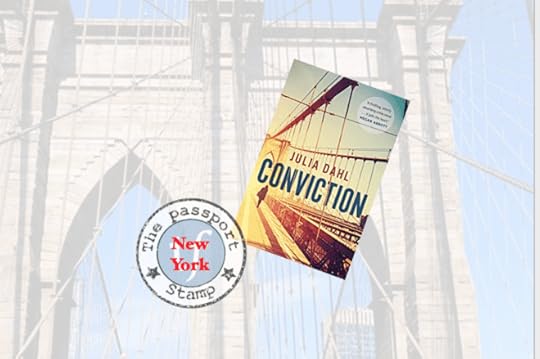
A convincingly penned crime mystery that goes from the 2010s, back mainly to 1994, set against a credibly drawn city, where Brooklyn gets a good look-in.
Rebekah Roberts works on a red top paper and she isn't altogether happy in her work. She needs something more stimulating to get her teeth into. She received a letter from a convicted murderer - an African American man who was jailed for the murder of his foster family in Crown Heights, Brooklyn - claiming he is innocent of the crime and this might just be the opening she needs.
This is very much a character driven novel, focussing on the clashes between the African Americans and the Orthodox Jewish community. It is about people and motivations, some good, some bad but there are consequences to belief systems and actions. The tensions in the suburbs feel very real. Social injustices are a prominent theme in the novel.
The novel transports the reader to areas with which a casual tourist will be unfamiliar.
A very readable novel of New York.
Displaying 1 - 30 of 159 reviews