

What do you think?

Homer's mythological tales of war and homecoming, the Iliad and the Odyssey , are considered to be two of the most influential works in the history of Western literature. Yet their author, 'the greatest poet that ever lived' is something of a mystery. By the 6th century BCE, Homer had already become a mythical figure, and even today the debate continues as to whether he ever existed.
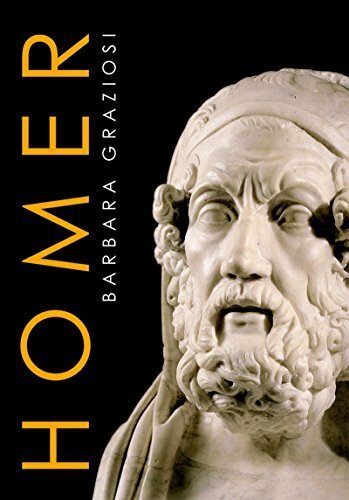
In this accessible and concise introduction, Barbara Graziosi considers Homer's famous works and their impact on readers throughout the centuries. She shows how the Iliad and the Odyssey benefit from a tradition of reading that spans well over two millennia, from the impressive scholars at the library of Alexandria, in the third and second centuries BCE, who wrote some of the first commentaries on the Homeric epics. Summaries of these scholars' notes made their way into the margins of Byzantine manuscripts; from Byzantium the annotated manuscripts travelled to Italy; and the ancient notes finally appeared in the first printed editions of Homer, eventually influencing our interpretation of Homer's work today. Along the way, Homer's works have inspired artists, writers, philosophers, musicians, playwrights, and film-makers. Exploring the main literary, historical, cultural, and archaeological issues at the heart of Homer's works, Graziosi analyses the enduring appeal of Homer and his
iconic works.
In this accessible and concise introduction, Barbara Graziosi considers Homer's famous works and their impact on readers throughout the centuries. She shows how the Iliad and the Odyssey benefit from a tradition of reading that spans well over two millennia, from the impressive scholars at the library of Alexandria, in the third and second centuries BCE, who wrote some of the first commentaries on the Homeric epics. Summaries of these scholars' notes made their way into the margins of Byzantine manuscripts; from Byzantium the annotated manuscripts travelled to Italy; and the ancient notes finally appeared in the first printed editions of Homer, eventually influencing our interpretation of Homer's work today. Along the way, Homer's works have inspired artists, writers, philosophers, musicians, playwrights, and film-makers. Exploring the main literary, historical, cultural, and archaeological issues at the heart of Homer's works, Graziosi analyses the enduring appeal of Homer and his
iconic works.
176 pages, Hardcover
First published January 1, 2016
About the author
Barbara Graziosi
19 books15 followersArts and Humanities director of Durham’s Institute of Advanced Study and Professor of Classics and Ancient History.
Ratings & Reviews
Friends & Following
Create a free account to discover what your friends think of this book!
Community Reviews
Displaying 1 - 30 of 60 reviews

September 30, 2025
A successful "Very Short Introduction." Graziosi provides context, explains just enough about the stories attributed to Homer, addresses the long debate about authorship, analytically examines a limited number of aspects of the Iliad and the Odyssey, and also addresses their reception in Greek and later times. Yes, you read that right, all of this in just over 100 pages, with references and a reader's guide included. As mentioned, a truly successful VSI!

Read
September 30, 2025If it’s good, it should be allowed to say so, I think. And this certainly is an excellent introduction to Homer and the stories attributed to him. Recommended!

June 1, 2019
Excellent. One of the best of the VSI series and a book I’d recommend to both newcomers to and longtime readers of the Iliad and Odyssey without hesitation.

December 31, 2018
311218: well this is surprising, or maybe not. i have never read much but an English prose translation (1968, read 2000s?) of the Odyssey, which is actually years (decade) after trying that famous / infamous modernist bestseller by that Irish guy. i enjoy this more than either of those. i guess what interests me more about these epics are not details of plot that happens, but rather how the poems work. i have not studied homer. i do not even read that much poetry possibly connected to it. i have known the plot, the heroes, its varied story descendants, for years (decades...) but of composition only that there was ongoing dispute about what he wrote, was he single author or many authors, did he even exist... i really enjoy learning more details, more language, more critical assertions, history of literary guides, but for me the best part is about the tragedy of hector...
in the story of the Iliad (never read the poem itself) i was always more affected by hector’s valiant final stand than foretold triumph of achilles or... for me he is the hero any man wants to be: caring, generous, loving, fierce, just, strong, all for everyone else, who alone it seems must face true human futility against that last invulnerable implacable inevitable foe that will destroy everything human, no matter how many heroes contest, that will sing nothing but lament, that does not offer even courtesy of cruel face to curse in these epics: death...
in the story of the Iliad (never read the poem itself) i was always more affected by hector’s valiant final stand than foretold triumph of achilles or... for me he is the hero any man wants to be: caring, generous, loving, fierce, just, strong, all for everyone else, who alone it seems must face true human futility against that last invulnerable implacable inevitable foe that will destroy everything human, no matter how many heroes contest, that will sing nothing but lament, that does not offer even courtesy of cruel face to curse in these epics: death...

June 21, 2020
Good. Learned a lot and gained an understanding of heavier ideas I would have never found without a tour guide. That's exactly what I was looking for.

August 10, 2022
A model VSI: straightforward, clear, insightful.

February 17, 2025
A very nice overview of Homer and his works and relevant scholarship trends. The author’s book, The Gods of Olympus, is a bigger but much more comprehensive and exciting book.

February 20, 2021
Much better to read this after having read both of Homer's poems. Graziosi addresses the two biggest questions I had with these stories.
Regarding the Iliad: I was bewildered not to see any of the major plot points that everyone learns about the Trojan War (Judgement of Paris, Achilles's death, the Trojan Horse) really mentioned at all. Graziosi explains how these stories were captured in other poems that formed a broader cycle. And she answers the next obvious question for me, which was why it's the Iliad that has survived, if few people would tell you what happens in it, without having read it. Graziosi argues that the events of the Iliad mirror those of the broader Trojan War, while focusing on a single plot device, Achilles's wrath, to drive plot. Funny to argue the Iliad has an intricate (doll house) design, when there's so much blood and gore!
Regarding the Odyssey: I struggled getting through the latter half of the book, and in particular the ending, having grown up only knowing the adventure story of the first half. Graziosi cited no less an authority than Aristotle, who in his Poetics, does a much better job of explaining the Odyssey than our current culture. Aristotle emphasizes the latter half, and casts the epic poem as a story of Odysseus's domestic concerns. And it was a relief to hear even Aristotle found the ending (a deus ex machina where gods cause a collective amnesia across Ithaca so everyone forgets that Odysseus and Telemachus just killed a few dozen of the best residents of the island, who had been suitors for the throne in Odysseus's long absence).
Beyond complaining about the ending, Aristotle (and Plato) also debated who exactly Homer was, and what he wrote. How exciting to think that this author was as mysterious to them as he is to us today! It's a reminder of just how long history is, akin to points that we are nearer in time to Cleopatra today (2000 years difference) than she was to the Pyramids of Giza (2500 years difference).
Another fascinatingly foreign point about Homer is that Homeric Greek was never spoken by any actual community, but was a melange of various Greek dialects into one best suited for hexameter form. I suppose this is not uncommon in art, as nobody ever spoke like they do in the KJV / Tyndale Bible.
One last mystery solved about Homer for me.... I was used to hearing the repeated phrases ("wine dark sea", etc), and understood them to be devices to help the poem's recitors, but was surprised when seeing they aren't always exactly the same form (e.g. "luminous Achilles", "swift footed Achilles" or "swift footed, luminous Achilles"). Graziosi explains that these varied length names were just to fit the character's name into various slot lengths needed to complete the line's hexameter. Makes sense!
Regarding the Iliad: I was bewildered not to see any of the major plot points that everyone learns about the Trojan War (Judgement of Paris, Achilles's death, the Trojan Horse) really mentioned at all. Graziosi explains how these stories were captured in other poems that formed a broader cycle. And she answers the next obvious question for me, which was why it's the Iliad that has survived, if few people would tell you what happens in it, without having read it. Graziosi argues that the events of the Iliad mirror those of the broader Trojan War, while focusing on a single plot device, Achilles's wrath, to drive plot. Funny to argue the Iliad has an intricate (doll house) design, when there's so much blood and gore!
Regarding the Odyssey: I struggled getting through the latter half of the book, and in particular the ending, having grown up only knowing the adventure story of the first half. Graziosi cited no less an authority than Aristotle, who in his Poetics, does a much better job of explaining the Odyssey than our current culture. Aristotle emphasizes the latter half, and casts the epic poem as a story of Odysseus's domestic concerns. And it was a relief to hear even Aristotle found the ending (a deus ex machina where gods cause a collective amnesia across Ithaca so everyone forgets that Odysseus and Telemachus just killed a few dozen of the best residents of the island, who had been suitors for the throne in Odysseus's long absence).
Beyond complaining about the ending, Aristotle (and Plato) also debated who exactly Homer was, and what he wrote. How exciting to think that this author was as mysterious to them as he is to us today! It's a reminder of just how long history is, akin to points that we are nearer in time to Cleopatra today (2000 years difference) than she was to the Pyramids of Giza (2500 years difference).
Another fascinatingly foreign point about Homer is that Homeric Greek was never spoken by any actual community, but was a melange of various Greek dialects into one best suited for hexameter form. I suppose this is not uncommon in art, as nobody ever spoke like they do in the KJV / Tyndale Bible.
One last mystery solved about Homer for me.... I was used to hearing the repeated phrases ("wine dark sea", etc), and understood them to be devices to help the poem's recitors, but was surprised when seeing they aren't always exactly the same form (e.g. "luminous Achilles", "swift footed Achilles" or "swift footed, luminous Achilles"). Graziosi explains that these varied length names were just to fit the character's name into various slot lengths needed to complete the line's hexameter. Makes sense!

Read
December 17, 2021Like the entire Very Short Introduction series, this was a great quick read to break the ice for me with Homer as I prepare to read both the Iliad and the Odyssey next year. There is not as much historical background as some books in the series, but an excellent quick summary of both texts gave me plenty to consider when I read them.
May 26, 2024
An enjoyable introduction to Homer, and a few characters of the Iliad and the Odyssey. It made me want to reread the two poems, which is a good sign!

January 26, 2024
This is another fine entry in the Oxford Very Short Introduction series. Barbara Graziosi’s Homer is primarily an analysis of the famous epic poems the Iliad and the Odyssey - the foundational texts of ancient Greece - rather than an analysis of the poet himself. We know nothing of the person called Homer; the “man” may very well have been a series of poets who crafted the works over decades or centuries. Graziosi’s analysis of the poems is insightful, as is her look into how they have gone on to influence culture, literature, art, theatre, and film throughout history.
Quotes:
“Parry and Lord did not prove that the Iliad and the Odyssey were ‘oral poems’ (after all, what we have are written texts), but rather demonstrated that Homeric epic stemmed from a long and sophisticated tradition of oral composition, and recomposition, in performance…
It thus seems best to admit that we know very little about how the Iliad and the Odyssey were composed, and that they are likely to be the result of complicated processes involving both orality and writing, which we can no longer reconstruct in detail.” (pp. 19-20).
*
“In the Iliad we are told that the heroes could easily throw boulders ‘that no two men could lift, such as they are nowadays’. Their diet (a topic that fascinated ancient Homeric scholars) also marked them out as different: the heroes seemed to feed almost exclusively on meat, whereas the diet of real-life Greek communities consisted mostly of pulses, fruit, and vegetables. Agriculture provided what people ate on a daily basis; red meat was primarily consumed at religious festivals, when large animals were sacrificed and then eaten immediately, before the food could spoil. In short, the heroes ate every day what Homeric audiences savoured only on ritual occasions.” (p. 32).
*
“In his grief at the death of his friend, Achilles also resembles the great Babylonian hero Gilgamesh—another parallel that has attracted much scholarly debate, since it suggests Near Eastern influences on Greek narrative traditions. The Epic of Gilgamesh parallels the Iliad not just in some striking details, but in its overall conception.” (p. 66).
*
“Medical evidence confirms that Homeric wounds are accurate: even the weapon that shivers to the heartbeat is documented in modern clinical records. Homeric deaths have their roots in experience, it seems, rather than gruesome fancy. Each man dies in a particular way. Each has a name, a family, and a specific life that has been cut short.” (p. 76).
*
“...although Odysseus is very different from the great and flawed leaders of the Iliad, he too ends up ‘destroying his people’, to use the Homeric formula…
Odysseus’ loneliness is a crucial part of his story: he is a survivor precisely because those around him die. He appears and disappears because he has no company, no one who holds him constantly in his or her gaze.” (p. 105).
*
“Dante’s Divine Comedy is directly inspired by Aeneas’ descent into the Underworld, and likewise offers a structured journey. It is, in fact, a supreme Christian effort of organization, where everything finds its proper place—not in our own secular world, but in Hell, Purgatory, or Heaven. Unsurprisingly, Odysseus ends up in Hell, and more precisely in the eighth circle, together with all those who gave fraudulent advice.” (p. 122).
**
Citation:
Graziosi, B. (2016). Homer: A very short introduction. Oxford University Press. https://global.oup.com/academic/produ...
Title: Homer: A Very Short Introduction
Author(s): Barbara Graziosi
Series: Oxford Very Short Introductions
Year: 2016
Genre: Nonfiction - Literary studies, ancient history
Page count: 154 pages
Date(s) read: 1/24/24-1/25/24
Book #26 in 2024
**
Quotes:
“Parry and Lord did not prove that the Iliad and the Odyssey were ‘oral poems’ (after all, what we have are written texts), but rather demonstrated that Homeric epic stemmed from a long and sophisticated tradition of oral composition, and recomposition, in performance…
It thus seems best to admit that we know very little about how the Iliad and the Odyssey were composed, and that they are likely to be the result of complicated processes involving both orality and writing, which we can no longer reconstruct in detail.” (pp. 19-20).
*
“In the Iliad we are told that the heroes could easily throw boulders ‘that no two men could lift, such as they are nowadays’. Their diet (a topic that fascinated ancient Homeric scholars) also marked them out as different: the heroes seemed to feed almost exclusively on meat, whereas the diet of real-life Greek communities consisted mostly of pulses, fruit, and vegetables. Agriculture provided what people ate on a daily basis; red meat was primarily consumed at religious festivals, when large animals were sacrificed and then eaten immediately, before the food could spoil. In short, the heroes ate every day what Homeric audiences savoured only on ritual occasions.” (p. 32).
*
“In his grief at the death of his friend, Achilles also resembles the great Babylonian hero Gilgamesh—another parallel that has attracted much scholarly debate, since it suggests Near Eastern influences on Greek narrative traditions. The Epic of Gilgamesh parallels the Iliad not just in some striking details, but in its overall conception.” (p. 66).
*
“Medical evidence confirms that Homeric wounds are accurate: even the weapon that shivers to the heartbeat is documented in modern clinical records. Homeric deaths have their roots in experience, it seems, rather than gruesome fancy. Each man dies in a particular way. Each has a name, a family, and a specific life that has been cut short.” (p. 76).
*
“...although Odysseus is very different from the great and flawed leaders of the Iliad, he too ends up ‘destroying his people’, to use the Homeric formula…
Odysseus’ loneliness is a crucial part of his story: he is a survivor precisely because those around him die. He appears and disappears because he has no company, no one who holds him constantly in his or her gaze.” (p. 105).
*
“Dante’s Divine Comedy is directly inspired by Aeneas’ descent into the Underworld, and likewise offers a structured journey. It is, in fact, a supreme Christian effort of organization, where everything finds its proper place—not in our own secular world, but in Hell, Purgatory, or Heaven. Unsurprisingly, Odysseus ends up in Hell, and more precisely in the eighth circle, together with all those who gave fraudulent advice.” (p. 122).
**
Citation:
Graziosi, B. (2016). Homer: A very short introduction. Oxford University Press. https://global.oup.com/academic/produ...
Title: Homer: A Very Short Introduction
Author(s): Barbara Graziosi
Series: Oxford Very Short Introductions
Year: 2016
Genre: Nonfiction - Literary studies, ancient history
Page count: 154 pages
Date(s) read: 1/24/24-1/25/24
Book #26 in 2024
**

May 8, 2024
“There is no possible return, after all: travel is in one direction only — towards death. And yet. For all the difficulties, for all the unlikely tricks and manoeuvres, there is in the Odyssey, in its protagonist and his many incarnations, not just a will to live; but a determination to take pleasure in the tale. And so it is that the “nekyia”, the ancient conversation with the dead, suggests that literature itself may be an inadequate, morally ambiguous, fallibly human, and specifically Odyssean attempt to cheat death.”
Excellent. The best volume of the “Short Introduction” series that I’ve read so far.
Excellent. The best volume of the “Short Introduction” series that I’ve read so far.
This entire review has been hidden because of spoilers.

March 16, 2025
It's hard to say much about Homer, the poet, since little is known about him. As such, he's a perfect topic for a VSI. Graziosi does a good job introducing the reader to Homer's life, age, and the relevant themes of his works. Graziosi wrote this at a more basic level than many other classics entries in Oxford's VSI series, so I fear many readers would benefit from a deeper discussion of thematic concepts like guest-friendship than is included here. Overall, an enjoyable read that will ease one in to the reading of Homer.

June 20, 2024
Really great introduction, covering both Homer as a person (what very little was said about him), interpretations of him from ancient times to new, then both Odyssey and Iliad by content, as well as some critical interpretation and influences.

December 22, 2020
Crisp, clear and engaging introduction to the persona of Homer and his two major epics.

Read
July 15, 2026Barbara Graziosi's contribution to the Very Short Introductions series on Homer is generally good at what it does, but I think it could have done more. We begin with an introduction to the poet and his world, including how we know what we know about Homer, across four chapters. If I have a criticism here, it's that Graziosi talks about the theories and positions on the poems as literature and oral epic without taking a side. Some might consider this a good thing, but I find such equivocation frustrating in an academic, who must ground themselves somewhere in order to move forward. This discussion is then followed by three chapters each on first the Iliad and then the Odyssey, all insightful. There is no overall conclusion or summing up.
In the earlier chapters on the poet Graziosi discusses how, in antiquity, many more poems were attributed to Homer than we now accept. I think it would have been good to have a chapter or two on these works - certainly the Homeric Hymns, perhaps also the rest of the Trojan epic cycle. It might not be 'Homer', but (a) it's contentious to say the Iliad and Odyssey are by the same poet and (b) that doesn't mean they're not interesting. Suggesting to a public interested in the Homeric epics that there might be more ancient literature for them to read can only be a good thing!
In the earlier chapters on the poet Graziosi discusses how, in antiquity, many more poems were attributed to Homer than we now accept. I think it would have been good to have a chapter or two on these works - certainly the Homeric Hymns, perhaps also the rest of the Trojan epic cycle. It might not be 'Homer', but (a) it's contentious to say the Iliad and Odyssey are by the same poet and (b) that doesn't mean they're not interesting. Suggesting to a public interested in the Homeric epics that there might be more ancient literature for them to read can only be a good thing!

July 18, 2026
As the title says...a very short introduction! Even though it has a rather short length, I think that due to the different and quick angles Barbara Graziosi takes every chapter, homer is given a general contextualization for the layperson. I was happy to be informed. It has a interesting selection of further readings at the end of the book too. Atleast that I gather from the titles. The text itself is simple and easy to read, for the most part. I come at this from the angle of someone who is still reading the Illiad. So, maybe I'll change my mind after having read both the Illiad and the Odyssey. Who knows! One criticism I have is that the book does not explain the greek words that it uses throughout the text. It would have been nice to have a kind of place in the back of the book, where each term is given an explanation, so that one does not have to look them up on their own. (what if you don't have internet at the place your reading the short introduction?) Some vocabulary notes would have been nice. Eitherway, cool.

July 25, 2026
As the title says, this is a "very short" introduction to Homer. I read it for a course on reading the Iliad and the Odyssey, and for the most part really liked this book. I've read each of the books several times, but I still found this helpful in understanding some themes in the books. However, what I most find interesting were the sections on how Homer was treated, and translated, throughout history.

December 25, 2020
I really enjoyed reading the short analysis of Iliad and Odyssey

Read
May 21, 2023i am a barb (barbara graziosi stan)

January 15, 2022
Excellent introduction! I really loved this book!

September 10, 2020
Who was Homer? Why does he matter? How do we relate to him now?
This very short introduction mercifully skips the first question almost completely. There is very little we can know about Homer, and even less that we do know. To go into psychoanalyzing Homer by the poems we attribute to him would be a colossal (though unfortunately very common) academic circlejerk. Thankfully, there's none of that here.
Why does he matter?
Well, just read Homer and you'll see why.
How do we relate to him now?
Here, this introduction is quite useful. It tracks the history of how Western scholarship has approached Homer, from the pure linguistics of Petrarch to the archaeological discoveries of the 19th and 20th centuries.
The last several chapters attempt some basic literary criticism, taking themes and selections from the Iliad and Odyssey and discussing Homer's poetics. I found this the most interesting part of the book, because there was clear material to grasp on to and the author never descended into the pretentious language so common to poetic criticism.
The author quotes Homer in Richmond Lattimore's English translation. This provides a nice sample of the sound of Lattimore's Homer.
If you like reading introductions before or along with the actual work then this book is a fine place to start. It's succinct, even-handed, and up-to-date (2019). Though it's not original or even especially insightful, it does what it sets out to do: Encourage you to read Homer.
This very short introduction mercifully skips the first question almost completely. There is very little we can know about Homer, and even less that we do know. To go into psychoanalyzing Homer by the poems we attribute to him would be a colossal (though unfortunately very common) academic circlejerk. Thankfully, there's none of that here.
Why does he matter?
Well, just read Homer and you'll see why.
How do we relate to him now?
Here, this introduction is quite useful. It tracks the history of how Western scholarship has approached Homer, from the pure linguistics of Petrarch to the archaeological discoveries of the 19th and 20th centuries.
The last several chapters attempt some basic literary criticism, taking themes and selections from the Iliad and Odyssey and discussing Homer's poetics. I found this the most interesting part of the book, because there was clear material to grasp on to and the author never descended into the pretentious language so common to poetic criticism.
The author quotes Homer in Richmond Lattimore's English translation. This provides a nice sample of the sound of Lattimore's Homer.
If you like reading introductions before or along with the actual work then this book is a fine place to start. It's succinct, even-handed, and up-to-date (2019). Though it's not original or even especially insightful, it does what it sets out to do: Encourage you to read Homer.

January 5, 2021
So after reading a whole lot of short books in 2020, I decided I would do some long ones in 2021. And having not read Homer in about 40 years, decided to go there. But, needed a bit of background after all these years before I jumped in.
I've have used VSI volumes before, and found them to vary in usefulness, as in any series.
This has been one of the VERY best.
Dr. Grazioso does not presume that you know plot or characters or specific scenes or events. So, in a few short words or lines, she gives you an explanation of who the charactesr are, or a thumbnail sketch of the event/incident in the books. Reading blurbs, it appears she has a reputation for her special knack in making Classical Literature (especially Homer and the Greeks) approachable, and understandable, to all. And yet still share with you her brilliant, and deep, insights into the tomes.
Critical history (going back to ancient times), archeology, who was Homer, print and oral, characters and events - all wonderfully covered here in less than 100 pp!
Plus, she provides the reader with a precise, yet wide ranging, set of Notes and Bibliography.
Really impressive, and helpful! Getting me ready for my dive into Homer - so helpful, and makes me excited to be reading Homer's work once again after all these years.
I've have used VSI volumes before, and found them to vary in usefulness, as in any series.
This has been one of the VERY best.
Dr. Grazioso does not presume that you know plot or characters or specific scenes or events. So, in a few short words or lines, she gives you an explanation of who the charactesr are, or a thumbnail sketch of the event/incident in the books. Reading blurbs, it appears she has a reputation for her special knack in making Classical Literature (especially Homer and the Greeks) approachable, and understandable, to all. And yet still share with you her brilliant, and deep, insights into the tomes.
Critical history (going back to ancient times), archeology, who was Homer, print and oral, characters and events - all wonderfully covered here in less than 100 pp!
Plus, she provides the reader with a precise, yet wide ranging, set of Notes and Bibliography.
Really impressive, and helpful! Getting me ready for my dive into Homer - so helpful, and makes me excited to be reading Homer's work once again after all these years.

October 27, 2024
It's hard to critic a book for being "too short" when the very title states it is a Very Short Introduction. I enjoyed the authors take on the idea of Homer and don't like those like Elizabeth Vandiver who dismiss the idea that Homer was a person. If people after the Iliad and Odyssey were written down said he existed I think it is reasonable to assume he did, but also it would be foolish to state that oral tradition did not play a role in their forming. Anyway, I enjoyed this very much but did come into it with quite a bit of pre-reading about Homer and the Iliad and Odyssey.

December 10, 2020
I had to read this book for my university dissertation. This small introduction to Homer and his epic poems The Iliad and The Odyssey is a clear and concise look into the works. I found it easy to read and understand the points that were made throughout.
January 6, 2025
A scattered investigation into Homer. I enjoyed more than expected the investigations into the structure of the poems, and the short sections on the poems themselves highlight key aspects that may be ignored by someone with little academic knowledge on the poems (I.e. myself)

July 7, 2020
This book arrived recently, and I began to read it because a song from over 50 years ago (Tales of Brave Ulysses by Cream) came to mind while I was writing.
Very Short Introductions are more than useful texts to have, and this is no exception. Barbara Graziosi writes about the possible origins of the work we know as by Homer, how it was performed and how people have responded to it over the ages. I was particularly interested in the meaning associated with various events, particularly the many contradictions around Ulysses.
I read this a chapter or two at a time, although it could be read in a long afternoon or evening, morning too, if it comes to that. I learned a lot and somethings I had known came back into memory.
Very Short Introductions are more than useful texts to have, and this is no exception. Barbara Graziosi writes about the possible origins of the work we know as by Homer, how it was performed and how people have responded to it over the ages. I was particularly interested in the meaning associated with various events, particularly the many contradictions around Ulysses.
I read this a chapter or two at a time, although it could be read in a long afternoon or evening, morning too, if it comes to that. I learned a lot and somethings I had known came back into memory.

July 26, 2026
I liked this, as is the case with most Very Short Introductions. The reason it's not four stars is that I wanted more about Homer the author(s) and textual analysis from that perspective. The other reason is unfair, but still: I listened to this and the English pronunciation of some Greek names just irritates me to an unreasonable degree.
But if you are looking for a decent introduction to the epics of Homer, this works both for beginners and those who already know something (I am pretty well informed when it comes to Greek mythology and the Bronze Age, but from the epics I've read only The Odyssey, not The Iliad.)
But if you are looking for a decent introduction to the epics of Homer, this works both for beginners and those who already know something (I am pretty well informed when it comes to Greek mythology and the Bronze Age, but from the epics I've read only The Odyssey, not The Iliad.)

January 8, 2024
“There is no possible return, after all: travel is in one direstion only—towards death. And yet. For all the difficulties, for all the unlikely tricks and manoeuvres, there is in the Odyssey, in its protagonist and his many reincarnations, not just a will to live, but a determination to take pleasure in the tale. And so it is that the nekyia, the ancient conversation with the dead, suggests that literature itself may be an inadequate, morally ambiguous, fallibly human, and specifically Odyssean attempt to cheat death.”

September 18, 2019
I read this because I wanted to know more about Homer; what he had to do with the telling of the tale of Achilles and the Trojan War. This interest was sparked by Reading Pat Barker's 'The Silence of the girls.' I did learn more, for which I am grateful, but finished - probably naively - with a curiosity as to why it is considered acceptable to copy, rehash or try to improve upon (in some scholarly manner) the fictional work of another. But then I feel the same about fan-fiction.
Displaying 1 - 30 of 60 reviews