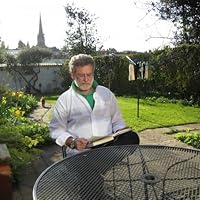
Clive James's reputation as a poet has become impossible to ignore. His poems looking back over his extraordinarily rich life with a clear-eyed and unflinching honesty, such as 'Japanese Maple' (first published in the New Yorker in 2014), became global news events upon their publication.
In this book, James makes his own rich selection from over fifty years' work in from his early satires to these heart-stopping valedictory poems, he proves himself to be as well suited to the intense demands of the tight lyric as he is to the longer mock-epic. Collected Poems displays James's fluency and apparently effortless style, his technical skill and thematic scope, his lightly worn erudition and his emotional power; it undoubtedly cements his reputation as one of the most versatile and accomplished writers.
I do love Clive James’ work. Well, much of it. Though I’m not sure about his own poetry. Some of it sings...some of it leaves me flat. But I found a few snippets below that sang for me. Sometimes, it’s just because he’s resurrected an image from my youth; like the Eternity man. Sometimes because it’s emotionally touching as in the couple of photos about the father he never knew. I only found out today, in reading some biographical material about Clive, that his father died especially tragically. He had survived the war. The war had ended and he was being repatriated in an American plane. But the plane never made it. It went down in a tropical typhoon. The impact on his wife and five year old Clive can only be imagined......I still feel sad. I’ve often thought that much of what Clive wrote was poetry even when it was supposed to be prose. He certainly had a charming way with memorable and funny phrases. And it seems that he always thought of himself, first and foremost, as a poet. Though most of his writing seems to have been prose as a TV critic, or prose for sketches, and dramas, and wonderful works like his “Unreliable memoires”, or “May week was in June”. I have looked in vain for a poem he wrote whilst at Sydney University. It was mentioned by Bob Ellis (another great Australian writer). My recollection was that there was some sort of poetry competition which Bob had entered at the University (maybe for Honi Soit, the newspaper) .....but Bob was deeply impressed and envious of the winning entry, penned by Clive James. And I do remember being impressed by it. But it doesn’t seem to have entered any of Clive’s own anthologies. Somewhere, I’ve read, of a critic comparing him to Walt Whitman. And I think the comparison is apt. In his book, “The fire of joy”, Clive comments on Walt Whitman as: “This is a rare example of poetry by Walt Whitman that actually sounds like poetry. He also wrote the longest poem in the world that doesn’t really sound like poetry even for thirty seconds, yet somehow it is: a great mystery. Most of Leaves of Grass is not only arrhythmic but anti-rhythmic; so unlike poetry that it isn’t like prose either. You can break your jaw trying to recite it. Perhaps the comparison with Whitman is unfair. Clive generally does try for rhythm and rhyme......sometimes too hard. But there is a structure there.
Be that as it may, I liked this book. Maybe not overwhelmed by his verse but enjoyed it. An easy five stars from me. And I’ve captured a few snippets in the following:
Johnny Weissmuller: Dead in Acapulco
There was a chimpanzee at his funeral, Which must have been someone's idea of a smart promotion, And you might say dignity had fled, But when Tarzan dropped from the tall tree and swam out of the splash Like an otter with an outboard to save Boy from the waterfall It looked like poetry to me, And at home in the bath I would surface giving the ape-call. . The Anchor of the Sirius
Triangular Macquarie Place, up from the Quay, Is half rainforest, half a sculpture park Where can be found - hemmed in by palms and ferns, Trees touching overhead - the Obelisk From which, one learns, All Public Roads are Measured Leading to the Interior of the Colony. Skyscraper cliffs keep this green garden dark. ........... Till this free-standing object looms and startles Like a Calder by Duchamp. It stops you cold, The anchor of the Sirius. It hooks you More firmly than the fluke which can't be seen (Because, presumably, buried in the earth) Could ever have snared the bottom of Sydney Cove.
The Book of My Enemy Has Been Remaindered
The book of my enemy has been remaindered And I am pleased In vast quantities it has been remaindered. Like a van-load of counterfeit that has been seized And sits in piles in a police warehouse, My enemy's much-praised effort sits in piles In the kind of bookshop where remaindering occurs. Great, square stacks of rejected books and, between them, aisles One passes down reflecting on life's vanities, Pausing to remember all those thoughtful reviews Lavished to no avail upon one's enemy's book – For behold, here is that book Among these ranks and banks of duds, These ponderous and seemingly irreducible cairns Of complete stiffs.
The Eternity Man
Never filmed, he was photographed only once, Looking up startled into the death-trap flash Like a threatened life form. Still underlining his copybook one-word message With the flourish that doubled back under the initial 'E', He was caught red-eyed with the stark white chalk in his hand Writing Eternity. Before he died in 1967 At the age of eighty-eight He had managed to write it five hundred thousand times, And always in copperplate script. Few streets or public places in the city of Sydney Remained unmarked by the man with a single obsession - Writing Eternity.
Son of a Soldier
My tears came late. I was fifty-five years old Before I began to cry authentically: First for the hurt I had done to those I loved, Then for myself, for what had been done to me In the beginning, to make my heart so cold.
"Had you come home, I would not be what I am, I cried. I could have loved my mother less And not searched for more like her among others, Parched for a passion undimmed by distress While you lay deep behind that looming dam?
The Place of Reeds
Kogarah (suppress the first 'a' and it scans) Named by the locals for the creek's tall reeds That look like an exotic dancer's fans When dead, was where I lived. Born to great deeds
I stripped the fronds and was a warrior Whose arrows were the long thin brittle stem With a stiff piece of copper wire or A headless nail to make a point for them.
The point went in where once the pith had been Before it crumbled. The capillary Was open at the other end. Some keen Constructors mastered the technology
For fitting in a feathery tailpiece, But they made model aeroplanes that flew. Mine didn't, and my shafts, upon release Wobbled and drifted as all missiles do
With nothing at the back to guide their flight. Still, I was dangerous. My willow bow Armed an Odysseus equipped to smite Penelope and let her suitors go.
The creek led through a swamp where each weekend Among the tangled trees we waged mock war. At short range I could sometimes miss a friend And hit the foe. Imagine Agincourt
But on the whole there's some cause to be proud If what one writes makes people laugh aloud. Or so I think when critics in terms drastic Inform the world my feet are half trochaic. It seems my scansion's absolutely spastic. Even my best iambics are spondaic. The poor fool's sense of rhythm is elastic! His diction is archaic Aramaic! As for his rhymes, let's send him back to Kogarah! Hell, The stuff he drivels isn't even dogarahhell!
My Father Before Me Sai Wan War Cemetery, Hong Kong
At noon, no shadow. I am on my knees Once more before your number and your name. The usual heat, the usual fretful bees Fitfully busy as last time I came.
Here you have lain since 1945, When you, at half the age that I am now, Were taken from the world of the alive, Were taken out of time. You should see how.... ......... Of my voice, though it comes out like the cry You heard from me before you sailed away. Your wife, my mother, took her turn to die Not long ago. I don't know what to say –
Except those many years she longed for you Are over now at last, and now she wears The same robes of forgetfulness you do. When the dreams cease, so do the nightmares.
Under the Jacarandas
Under the jacarandas The pigeons and the gulls Pick at the fallen purple That inundates the grass For two weeks in October.
When We Were Kids
When we were kids we fought in the mock battle With Ned Kelly cap guns and we opened the cold bottle Of Shelley's lemonade with a Scout belt buckle. We cracked the passion fruit and sipped the honeysuckle.
When we were kids we lit the Thundercracker Under the fruit tin and we sucked the all day sucker. We opened the shoe box to watch the silk-worms spinning Cocoons of cirrus with oriental cunning.
When we were kids we were sun-burned to a frazzle. The beach was a griddle, you could hear us spit and sizzle. We slept face down when our backs came out in blisters. Teachers were famous for throwing blackboard dusters.
When we were kids we dive-bombed from the tower. We floated in the inner tube, we bowled the rubber tyre. From torn balloons we blew the cherry bubble. Blowing up Frenchies could get you into trouble.
When we were kids we played at cock-a-lorum. Gutter to gutter the boys ran harum-scarum. The girls ran slower and their arms and legs looked funny. You weren't supposed to drink your school milk in the dunny.
When we were kids the licorice came in cables. We traded Hubba-Bubba bubblegum for marbles. A new connie-agate was a flower trapped in crystal Worth just one go with a genuine air pistol. ....... When we were kids a year would last forever. Then we grew up and were told it was all over. Now we are old and the memories returning Are like the last stars that fade before the morning.
Naomi from Namibia
In the Brisbane Botanical Gardens, Walking the avenue of weeping figs, You can see exuded latex stain the bark Like adolescent sperm. A metamorphosis: The trunks must be full of randy boys. ........ At the kiosk, Naomi from Namibia Serves me a skimmed-milk strawberry milkshake. She has come here to lead her ideal life, Like almost all these trees. They get to stay, but she has to go back.
Tempe Dump
Instead, it's Tempe Dump. When we were small My gang went there exploring. Piston rings Lay round in heaps, shiny among the junk Which didn't shine at all, just gave forth wisps Of smoke. The dump was smouldering underneath But had no end in view. This is the fire Within me, though I harbour noble thoughts Of forests under phosphorous attack And in an hour left black, in fields of ash – Not this long meltdown with its leaking heat, Its drips of acid, pools of alkali: This slow burn of what should be finished with But waits for the clean sweep that never comes.
Japanese Maple
Your death, near now, is of an easy sort. So slow a fading out brings no real pain. Breath growing short Is just uncomfortable. You feel the drain Of energy, but thought and sight remain:
Enhanced, in fact. When did you ever see So much sweet beauty as when fine rain falls On that small tree And saturates your brick back-garden walls, So many Amber Rooms and mirror halls? ...... My daughter's choice, the maple tree is new. Come autumn and its leaves will turn to flame. What I must do Is live to see that. That will end the game For me, though life continues all the same:
Balcony Scene
Old as the hills and riddled with ill health, I talk the talk but cannot walk the walk Save at the pace of drying paint. My wealth Of stamina is spent. Think of the hawk, Nailed to its perch by lack of strength, that learns To sing the lark's song. What else can it do, While dreaming of the day its power returns? It is with all my heart I write to you.
What’s my overall take on the book? I like Clive James’ writing and enjoyed this collection of poems (and the annotations at the end, which explained some of the more obscure references). An easy five stars from me.
I greatly admired James's essays, and I enjoyed reading pretty much everything he wrote which didn't concern Princess Di. I wish he'd been a better poet, though. I can't help thinking he simply didn't care enough to spend the time: most of his poems read as if they were written on the fly, exhibiting his intelligence and his wit, but not the patience to work his way to a final draft.
Crumbs that was a marathon. Not sure what to make of it. Uncomfortable at times and just once or twice moved me. But unfortunately made me very depressed and sad at the end where his poems of impending death are concentrated. It was a gift and I’ll keep it for its treasured dedication handwritten in the front from the giver.