Ce se intampla cu sufletul dupa ce paraseste trupul la moarte? In ce stare se afla el de atunci pana la Judecata de Apoi?
Cartea de fata infatiseaza invatatura si experienta de 2000 de ani ale Bisericii Ortodoxe Rasaritene despre realitatea celeilalte lumi, contrastandu‑le si comparandu‑le cu experientele „de dupa moarte” de astazi, pe de o parte, iar pe de alta, cu invatatura si experienta de veacuri ale ocultismului.
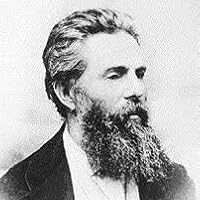
Seraphim Rose, born Eugene Dennis Rose, was a hieromonk of the Russian Orthodox Church Outside Russia in the United States, whose writings have helped spread Orthodox Christianity throughout modern America and the West. They have also been widely read in Russia. Although not formally canonized as of 2008, he is venerated by some Orthodox Christians as a saint in iconography, liturgy, and prayer.
What happens to one's soul after death? By now, over at least the last seven or so decades, there have been many reports of what the after life is like from those who have been medically dead and then returned to life. While many have similarities, many are quite different. For example, some report being above the hospital room, seeing their lifeless body, family and medical staff about, hearing and seeing them there. Others report a bright being of some sort meeting them, and asking them questions, non-judgmentally about past events in their life. Others report having a celestial being leading them to a peaceful bucolic meadow with beautiful trees. A few report seeing terrifying images evocative of Hell. Some Hindus report having encounters with Hindu gods in their near death experiences (NDEs). Other Hindus have reported being attacked by yamdoots, demons of the underworld trying to drag them into the Earth.
What are we to make of all this? Is what NDE survivors report experiencing an accurate picture of what will be encountered after death --- or is it something else altogether?
As is the case of many of his other works, Fr. Seraphim delves into an area that many others in Christianity may fear to tread. A scholar in his own right, he objectively examines these various NDE accounts. He then examines out of body experiences (OBEs) as described by those into spiritism and New Age spirituality. There does seem to be some similarities.
He then examines NDEs as described by Orthodox saints and ascetics who were sent back to give an account of the after life. Clearly, there does seem to be a marked contrast between what they've experienced and what others have.
Long story short, there does seem to be an intermediate state between death and full movement into the after life --- where much is going on --- and this likely explains the varied accounts of NDEs as well as the contrasts between some of those and those of the Christian saints.
Best to read the book to find out more if interested.
This is an outstanding book for those interested in learning more about that transition from life to death to the after life. I highly recommend this book for that purpose.
The reaction this book generated is misleading as to what the book is actually about. Fr Rose was attacked as a Gnostic for affirming that the soul after death passed through a number of aerial toll-houses (twenty, to be precise). On first glance this seems wacky and utterly devoid of patristic and biblical support. However, when one actually reads what the book says and what one means and doesn't mean by "aerial toll-house," it's actually fairly level-headed.
This book is not primarily about "aerial toll-houses." It's a manual on what the Fathers and New Testament teach about angelology, demonology, and answering occultic-claims. And for that reason, it is very useful. Here are the high-points of the book:
The Nature of Angels, both Fallen and Unfallen.
The matter-spirit dialectic of modern man is false. Angels are "an immaterial fire" (25). While angels are limited by time and space, they are not limited in the same way we are. They have bodily form but they are unbounded (e.g., can go through doors and walls). Granted, it's a difficult point and I only bring it up to show the inadequacy of Cartesian metaphysics.
But an Angel Appeared to Me!
One of the most useful aspects of the book is that it gives us good guidelines for "testing the spirits." American Christianity by and large has done a terrible job at this. If someone tells us they had an experience of heaven et al, especially one who was clinically dead and later revived, we often believe them. If they experience "light and pleasantness and feelings of puppies," who are we to say that they are wrong or that their religious experience/tradition is inadequate? I mean, at the hour of death they apparently experienced "heaven." No?
The problem is that research by psychologists across the world, whether ultimately true or not, shows that other religions--Hinduism primarily--can make the same claim. Except that the "after-death meetings" for Hindus are quite unpleasant--there is nothing fun about meeting a Hindu god!
But still it raises a good question: why do most "out of body" experiences feel "warm and light?" Fr Rose has an interesting suggestion: because the soul itself is no longer bounded by the body. He is not saying the body is evil, but the body, by definition since it extends into space and time, is limited by space and time. Out of body experiences, therefore, do not have these limits. Thus one can expect some euphoric experience.
This euphoric experience, however, does not suggest that the person's religious tradition is necessarily correct. It might be, but we need to be careful saying it is correct because then we give legitimacy to some Hindus, most occultists, and many irreligious American experiences.
Fr Rose then goes onto contrast these modern American experiences with the lives of the saints. Fr Rose is not saying that these experiences are merely psychological or fake. He is simply saying they are not necessarily heaven-sent and could be the work of delusions and demons.
Evaluation
Fr Rose's use of sources
Despite many criticisms of Rose on this point, there does seem to be considerable pedigree, both Eastern and Western Christian, of some form of post-death meeting with angels and/or demons. Rose skillfully used a variety of ancient and widespread fathers and holy men on this point. However, I have one criticism of his use of sources: while he was often quoting early Fathers, other times he was quoting the 19th century Russian saint Ignatius Briachninov's quoting of early fathers. It would have been more convincing had Rose himself skipped Briachniov's quotations and gone straight to the patristic sources.
Excellent Response to the Occult
Fr Rose gives a brilliant refutation of today's occultism. He sounds a clear note of warning and gives many guidelines on evaluating the clam that "angels appeared to me."
Are Demons too Powerful?
At the same time, however, one gets the impression that demons are way too strong. Rose tells stories of how seemingly holy men who went to confession, lived piously, seemed to confess Christ were yet dragged to hell by demons over a few sins. I don't deny that some men are hypocrites. While we saw a lot of how demons delude people in this book, we didn't hear too much of how the cross broke the power of hell and shattered the kingdom of darkness. That's troubling, actually.
Re-constructing the toll-houses
Are they literal? A lot of Russian thinkers sometimes say they are. Probably not, though. I suggest, instead, an alternative. Rose mentions CS Lewis in his book. While he has a few criticisms of him, he notes him as an apologist of supernatural Christianity. In the last chapter, after the protagonist dies, Screwtape mentions to Wormwood that the man, while in utter joy, may yet have to experience "pains." It's doubtful Lewis referred to Purgatory, so there could be some overlap with what Rose is trying to say. Other fathers (cf Augustine De Cure pro Mortuis) did believe that "stuff happened after death and the prayers of the pious could in some sense, perhaps, affect the dead," cautioned against reading too much into it. I don't hold to "toll-houses" but I do recommend Rose's work as a good response to occultism and a reliable guide to angels and demons.
I really don't want to criticize this book too much. There is so much in it that was good and helpful. And the possible existence of "aerial toll houses" doesn't bother me that much. What does bother me, though, is that the struggling believer leaves the book with a sense that his faith might not amount to much in the end. That maybe Christ's power isn't strong enough. Yes, I believe in synergy and struggling for salvation,, but the believer doesn't leave the book with much hope.
EDIT: My views have changed somewhat since reading this book, but my point there was that the impression that the demons just might overpower you anyway. Rose doesn't do much to dispel that idea.
Further, he doesn't mention any of the texts that talk about Christ decisively breaking the power of reigning sin and ending the curse of the law. The book is good as a response to the occult, but it is woefully weak when dealing with a host of New Testament texts.
I did not actually finish this book, and perhaps never will. It is not devoid of virtue, far from it, but it is depressing as Hell. Literally in a certain sense, because it left me with the impression that as far as Fr Rose and his God were concerned, I was already certain to go to Hell and there was nothing to do about it, nor did any of the two really have a problem with this. God had pretty much given up this planet and was satisfied to salvage a few elite souls, leaving the rest under the thumbs of demons, the good people with the bad, save only for serious ascetics who also were members of a certified Eastern Orthodox Church. Dystopia is too mild a word for such a scenario. Normally if I don't want to reread a book, I will turn it in to a used-book shop. But the thought of this book falling in the hands of a depressed or sensitive person makes that impossible.
That said, for members of the Orthodox Church who need a serious wake-up call for their spiritual life, I think this book may be very valuable. And if you are completely immune to all things spiritual and read it for some scholarly purpose, I suppose it may also be good. It seems quite well researched and authoritative. Just horrifyingly bleak and unrelentingly denominational.
No book of Fr. Seraphim's has attracted more controversy and condemnation than this book, and I would say this is easily his best work. Everything his critics say of it is untrue.
Most of the teaching that has attracted controversy (the teaching on the toll-houses) is simply a presentation of quotes from St. Ignatius Brianchaninov, who in turn was not inventing anything of his own: all the Patristic tradition witnesses to it. You find it in all the fathers, you find it in all the liturgical tradition of the church, from the Horologion to the Menaion, from the Triodion to the Octoechos. Fr. Seraphim quotes St. Ignatius only because he has given the subject the most thorough treatment.
All the preceding is all the more unfortunate since the toll-house teaching is not the focus of the book. Far more interesting is the investigation of the phenomenon of near-death experiences as published in non-Orthodox litterature. These experiences are taken seriously and carefully considered, and the book as a whole is a very sobering warning against demonic deception which is more rampant today than at any other time in the past.
Talk about a page turner. Fr Seraphim answers many of life’s toughest questions from the Orthodox perspective. While this book was uncomfortable to read at times and incredibly sobering, it is a book that every Orthodox person should read. Fr Seraphim compares and contrasts the near death experiences and out of body accounts from mainstream narratives, psychologists, occultists, and then finally the saints. It is truly prophetic for him to have seen back in the 80s just how normalized occult practices such as astral projection would be today and how eagerly every day people would seek experience with the dead and evil spirits. The subject of this book, is a subject that deserves much meditation and prayers as we come to terms with our own immortal souls. I couldn’t help but feel the extreme weight and gravity of raising immortal souls and playing such a prominent role in what is hopefully their salvation (Lord have mercy). I also felt this overwhelming burden for the dead and to pray for their souls as it brings them relief and can even save them. “Let us take care for those who have departed into the other world before as, in order to do for them all that we can, remembering that "Blessed are the merciful, for they shall obtain mercy."” I will be sitting with this book for a long time and praying that I don’t waste the precious time I have on this earth with vanity and distractions, but with prayer and repentance and faithfulness to Christ.
A very good way to finish the Lenten season. Would not recommend for inquirers or catechumens, but rather those that are already strong in the Orthodox faith.
Cartea Părintelui Serafim Rose aduce o mare claritate în problema vieții sufletului după moarte. Lumea aceasta este umbră și vis. Scopul vieții omului este mântuirea sufletului. Ce folos de toate dacă, Doamne ferește, nu ne mântuim? Autorul a primit un mare har de la Dumnezeu de a înfățișa limpede chestiuni foarte controversate pentru înțelepciunea omenească. (vezi și Ortodoxia și religia viitorului). Am fost uimit să aflu că sufletul după moarte parcurge exact drumul pe care Biserica noastră îl arată de veacuri. Învățătura aceasta nu e o alegorie, cum am fost tentat să cred. Noi ne numim creștini, dar deseori dăm dovadă de puțină credință și multă ignoranță, când vine vorba de chestiuni proprii creștinismului, cum ar fi și problema vieții de după moarte.
Эту книгу прочитать всем, кто все ещё сомневается в существовании ада! А также тем, кто хочет стать лучше и добрее! Чрезвычайно вдохновляет делать добрые дела и рассказывает о самом главном - о процессе перехода в вечную жизнь с Богом! Это самое настоящее руководство по перерождению в новую Жизнь!
Essential reading for anyone who wants to understand the journey the soul will take after death. As St Theophan said “No matter how absurd the idea of the toll-houses may seem to our ‘wise men’ they will not escape passing through them.”
1. Near-death experiencers' testimony, private revelations, angelic visitations, etc., are most likely demonic trickery, so avoid them for the sake of your soul.
2. The concept that the soul visits a series of 'toll booths' after death was revealed to a monk by an angel, so it's totes trustworthy, bro.
At that point, not possessing the intellectual capacity to reconcile that level of illogic, I gave up.
Well, there is, undoubtedly a lot of research in this book, and there is much to learn from it, it is certainly not a view that I share as a Christian about the afterlife in many ways. This book is rooted in Russian orthodox theology, and tends to emphasize the platonic soul more than the Christian view of the afterlife. It is well written, but it is not a book I enjoyed, or that I necessarily subscribe to as one who considers himself orthodox in my faith.
Father Seraphim does not miss! I thought this book was great and full of important knowledge concerning the faith. He quotes Saints new and old a bunch in this text to support the discussion.
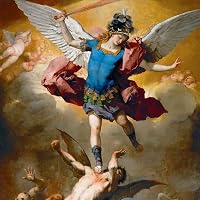
If this doesn't inspire the fear of God, something is very wrong. Many accounts of after-death experiences. Rose distinguishes the occult from the true spiritual ones, showing how the spirits of the air are deceiving people even here, just like supposed aliens and unidentified flying objects are deceptions tailored by demons to fool specifically Modern agnostic atheist types. This part links this work to his other work Religion of the Future. A good part of this book is about toll-houses, and Rose with his sources shows it to be *obviously* Orthodox, while previously I was under the impression that it was somewhat speculative and simply not ruled out (theologoumenon). No, when you put ancient quotes together side by side, you get exactly the view depicted by the Ikon depicted on the cover of this very book, i.e. the requisite post-death pre-final-judgment journey of each soul through the toll houses. True, it is not dogma, but considering it pertains to a very difficult to access /other world/ the subject does not admit of the clarity or precision needed for dogma. The category it falls under is "the tradition of Orthodox piety" says Rose (pg 244). And tradition is very important, as Christ Jesus Himself affirms in the gospels (affirming the institution and even teachings of Pharisees just not their behavior and use of these, denying only "traditions of men," where the ultimate /source/ is man, e.g. heresy, e.g. Sadducee doctrine that there is no resurrection).
Rose offers some guidelines for any unfortunate demonic encounters you may have. He shows the Orthodox doctrine about the body and the soul, and how it's a Modern idea that after death we have no bodies, supposedly like the angels. No. Angels and even souls are spatial, and have a material aspect to them, just matter and space of a different kind he describes here.
Lots of good info here. Lots of fearsome accounts.
Fascinating and important. This helped me to pull back from earthly desires and reassess my own Christianity, which I found to be lacking and I am not at all prepared for what Orthodox Christianity has in store for the soul after death, namely the toll-houses. I've read this book as someone who is drawn to Orthodoxy, and in that spirit did I read it and was open to it. For a long time I have been open to near-death-experiences and out-of-body-experiences and more and more people report such things. There is a large community on reddit of people who practice astral travel. I believe a spirit realm exists but I am not yet fully sure if it is something that is external to man or internal via the subconscious. This book was fairly adamant that the experiences people have had are external, especially given the ability people have of reporting things said and done outside of the room in which they departed. Either way, one must accept on faith that there is an afterlife, and one must equally accept on faith that there is no afterlife. Read this and wager your soul at your own peril.
What happens to the human soul after death? Is there a nothingness or bodiless spirits floating around, is there a hell and a heaven? This is a very important book which goes into modern out of body, near death and after death experiences and puts them up against the scriptures and the writings of the Church Fathers and the saints. What is “the light” described by most? Who is the figure that appears? Is it Christ or could it be someone sinister? What happens to the soul on day 3, 9 and 40? Is there a purgatory? Father Seraphim Rose answers those and many more questions in a simple, non-intimidating way. But bottom line: remembrance of death is extremely important. Our life on Earth is temporary, but the afterlife is forever. In the sobering words of St Seraphim of Sarov: “Oh, if only you could know what joy, what sweetness awaits the souls of the righteous in heaven, then you would be determined in this temporal life to endure any sorrow, persecution, and calumny with gratitude.”
Fr Seraphim Rose proves both his depth of devotion and intellect in this book. Drawing from Scripture, Patristic texts, and Lives of the Saints, he confronts the works of modern scholastics who use their research to disprove ancient truths regarding the efforts of the Prince of Darkness. Modern efforts whether via scientific or occult methods propose that death is not to be regarded as a portal to accountability. Fr Seraphim effectively refutes them in this book with clarity and resoluteness. Thank you, Fr Seraphim for presenting this voice of truth. May we always be blessed with the true Church and her radiant voice that calls us with love toward our merciful Christ.
An extremely sobering and edifying account of the Orthodox teaching of what happens at the moment of death and subsequently, and how Orthodoxy relates to "out-of-body experiences" and other increasingly common, hard-to-explain phenomena. This book is famous for its patristic defense of the "aerial tollhouses," a tradition much maligned by modernists, but extremely difficult to deny when presented with the evidence of its historical acceptance by numerous Saints and Holy Fathers.
I would strongly recommend this book to anyone wanting to take their life and struggle more seriously. This book may cause you to feel a certain fear and discomfort, use this to propel your repentance.
A good summation of the patristic teachings about life after death, with a focus on how the soul departs from the body. The book can be seen as a response to the 1900s trend of post-mortem experiences and their descriptions by people who came back to life by medicine. Fr. Seraphim tries to explain these experiences through an Orthodox lense, simultaneously criticizing extra-ecclesiastical ideas or analyses by the 'spiritualists'. It also has a great number of references in scripture, the Church fathers, theologians and experiences from the faithful and unfaithful alike and it is a great read for whomever is interested in this topic and Orthodoxy in general.
Modern Christianity has been demystified, watered down, and stripped of all its roots, making it unattractive to the modern spiritual seeker. This isn’t a problem for a believer, but someone not of Christ will not even bat an eye at the claims of modern Christianity
After finding Christ and Truth through a personal revelation, I knew the modern Protestant ways were out touch with the true spiritual world.
This book only confirms what I have learned on my journey from being in the new age to coming to Christ.
A must read for people who have been deceived by Satan and his fallen angels on a personal level in the astral realms.
I grew up in the Protestant faith, and I thank God He showed me the apostolic church that has its richness and ancient teaching that comforts me in such a full way that Protestantism just could never do. It's because the Protestant churches have stripped away all the holy traditions and more.
Reading this book is such a big example of the confusion that is taught. It showed me that the the Protestant churches do not prepare one for death. And the explanations given is not clear. Thank God for the holy Orthodox Church ☦️. May God continue to bless it and keep it🙏
Very illuminating on the larger subject of the 'unseen world', as well as a general idea of what to expect immediately after death. Also extremely interesting on how he compares different views. He very clearly refutes some ideas, and presents a much sharper picture of what's actually happening. He makes it clear that what is experienced is pretty objective, but viewed from different cultural lenses and backgrounds.
There are some really good things about the soul itself, and how sensory experience relates between it and the body.
Also, I'm slowly finding out, being written by a monastic, it's very grim in its demeanor. You never really forget that, yes, you will go through this too.
Great book about an seemingly obscure believe in Orthodoxy.
I am a new convert to Orthodoxy and this is my first major exposure to the belief in toll houses. It is very compelling and makes a lot of sense to me especially give in the scriptural and patristic backing Father Rose provides. Some have criticized him for leaning too hard on Russian fathers, but that's not something that bothered me particularly. The book has made me more of a believer, So to that end I would argue it's a good success.
NOT A REVIEW, just an AI-generated "map" of what happens to the soul after death, according to this book as well as the Orthodox tradition. This is purely for my memory and to refer back to:
The Church does not treat every detail as a defined dogma the way it treats the Resurrection; the toll-houses in particular are a long-standing image for the Particular Judgment, not a literal customs office. The outline itself is what the funeral services, the 3rd/9th/40th-day memorials, and many Fathers assume.
1. THE MOMENT OF DEATH Death is the separation of the immortal soul from the body. The soul does not sleep or go unconscious. Its spiritual sight opens—sometimes even before the last breath. You remain yourself: memory, conscience, loves, and sins are intact. You immediately find yourself among spirits, both holy angels and fallen ones. You tend toward those you already resembled in life. If you lived under the influence of certain passions or deceptions, you remain under that influence when you leave the body.
2. ANGELS AND DEMONS AT THE DEPARTURE Angels come to receive and escort the soul. Demons appear to terrify, accuse, and claim it. Holy people often see angels; the unrepentant often see the demons first. The Theotokos herself asked to be spared that confrontation; Christ came in person to take her soul. That is how serious the Church takes the moment.
3. THE FIRST 2 DAYS The soul has a period of relative freedom. Accompanied by its guardian angel, it can still move about the earth and visit places that were dear to it—the house, the grave, people it loved, or the places where it did good. It is like a bird that has left the nest but still circles it. This is why the body is watched and prayers begin immediately.
4. THE 3RD DAY This is the first great turning point, which is why the Church offers the Liturgy and memorial on the third day. The soul is commanded to ascend, in imitation of Christ’s rising on the third day, to worship God. On the way it must pass through the aerial realm—the “air” occupied by the fallen spirits.
5. THE AERIAL TOLL-HOUSES (the Particular Judgment) This is the testing. Demons stand in successive “stations” and accuse the soul of the kinds of sins they themselves incited: idle words, lies, slander, gluttony, sloth, theft, greed, anger, unforgiveness, impurity, heresy, lack of mercy, and so on. Traditional accounts (especially the Life of Blessed Theodora) speak of about twenty such obstacles; the exact number is not the point. Angels defend the soul with its repentance, its good works, and—decisively—the prayers and Liturgies offered by the Church on earth. If the accusations outweigh everything, the soul can be dragged down toward Gehenna at once. If it passes, it continues. The third day is therefore called terrible for the departed, and they especially need prayer then. Rose insists this is not a second salvation-by-works after death. It is the revealing of what the soul already is. The prayers of the living are real help because the Church is one Body.
6. DAYS 4 THROUGH 40 Having passed the testing and bowed before God, the soul spends the remaining 37 days being shown both the heavenly habitations and the abysses of hell. It still does not know where it will wait. This is why the Church prays intensely through the fortieth day.
7. THE 40TH DAY The soul’s place of waiting is appointed until the general resurrection and Last Judgment. Some already taste a foretaste of blessedness; others already taste fear of the coming torment. The state is not yet final. It can still be changed—especially by the Bloodless Sacrifice (commemoration at the Divine Liturgy), memorial services, almsgiving, and the prayers of the faithful. That is why Orthodox practice is so concrete: 3rd day, 9th day, 40th day, then anniversaries, and above all regular mention at the Proskomedia and Liturgy.
8. FROM THE FORTIETH DAY UNTIL THE SECOND COMING The soul waits in that appointed state—conscious, remembering everything that matters, no longer bound by earthly thoughts about houses and business. The righteous rest in light and the presence of God (a foretaste of Paradise). The unrepentant are in a condition of darkness and accusation (a foretaste of hell). Neither is the full, bodily reality yet. The prayers of the Church continue to avail. This is not “purgatory” as a third place of satisfying justice by fire; it is the living Church acting as one for her members who have fallen asleep.
9. THE LAST JUDGMENT AND THE RESURRECTION OF THE BODY At the Second Coming every soul is reunited with its risen body. Then comes the public, final judgment of Christ. What was a foretaste becomes the eternal state: the Kingdom or Gehenna, now experienced by the whole person, body and soul.
That is the Orthodox map Rose is defending: death is not extinction, not soul-sleep, not an automatic “being of light,” and not the end of the Church’s work for you. The decisive things remain what they were in life—repentance, the Mysteries, mercy, and the prayers of the Church—now seen without the veil of the body.
This entire review has been hidden because of spoilers.
This book is about near death experiences, out of body experiences, and the orthodox Christian tradition on the soul after death.
There is some discussion of occult practises and some of the content is extremely disturbing so take care reading. I found the first person accounts from Robert Munroe and Elizabeth Kubler-Ross some of the most horrific stories I've ever read because they are so spiritually deluded.
It's even worse, because from my vantage point, these people are now passed away, without any renunciation of the occult (I hope they had a change of heart before they died). In fact, in Kubler-Ross's case, she called herself a Christian and wondered why God was taking so long to let her die, as she had no fear of death.
For example, Munroe has out of body encounters with a being he takes as "God" in the astral plane. He weeps because he is heartbroken that this God is so cold and impersonal and not the God of his "childhood and the churches". This poor man has somehow never heard about Satan. The description is chilling and recognisable - but not to Munroe - we see music and a being of light.
On the other hand, I have seen people warning against reading this because the reader might be scandalised or incredulous due to the tollhouses stuff.
Some of the same people represented tollhouses as more a "mediaeval" development. And they represented it as some literal belief of simple-minded people.
Now that I have read the book, this seems unfair. It's clearly not mediaeval, because there are all these earlier references. And it's talking about a spiritual thing:
"And therefore one must firmly remember the instruction which the angel made to St. Macarius of Alexandria when he had just begun telling him of the toll-houses: ‘Accept earthly things here as the weakest kind of depiction of heavenly things.’ One must picture the toll-houses not in a sense that is crude and sensuous, but — as far as possible for us — in a spiritual sense, and not be tied down to details which, in the various writers and various accounts of the Church herself, are presented in various ways, even though the basic idea of the toll-houses is one and the same."
The book makes the case that there is a transition period of dying. Where the soul has left the body, but it has not yet had the particular judgement and gone to paradise/Hades to wait for the final judgement. This takes place in the aerial realm of spirits where the fallen angels reside. Near death & out of body experiences also take place in this realm (although some part of them may be natural). The particular judgement is carried out by angels with fallen angels trying to claim the soul as their own due to the sins and passions of the soul (the tollhouses). I hope I have remembered this right.
If people are deceived by the enemy when the soul is with the body, why would that change when the soul has left the body but not yet reached its destination?
If Christians have to struggle with the principalities and powers while the soul is with the body, why would that change when the soul has left the body?
Miscellany:
- you can still get fake demonic angels of "light" even when dying. Like the story of St. Maura having to deal with torture AND liars. - "Death, the Judgment, heaven, and hell. We must have a remembrance of these things all the time" - "Keep your mind in hell and despair not" - need to think about these things