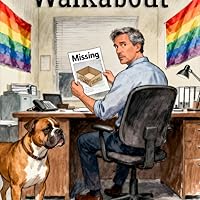
This is the gripping story of the collision between two vastly different human civilisations. One is Earth in the early 21st century, rushing toward self-inflicted nuclear doom. The other is the distant world of Mollan, whose inhabitants have achieved great longevity and the power to transport themselves instantly from star to star.Bob Shaw's novel unfolds a tale which spans thousands of years and the reaches of interstellar space. On Earth's side, there is Denny Hargate, whose indomitable courage drives him to alter the course of history. On their side is the Gretana ty Iltha, working on Earth as a secret observer, who dreams of returning to the delights of her world's high society, but who gets caught up in a cosmic train of events leading to an explosive climax.
Bob Shaw was born in Northern Ireland. After working in structural engineering, industrial public relations, and journalism he became a full time science fiction writer in 1975.
Shaw was noted for his originality and wit. He was two-time recipient (in 1979 and 1980) of the Hugo Award for Best Fan Writer. His short story Light of Other Days was a Hugo Award nominee in 1967, as was his novel The Ragged Astronauts in 1987.
Plenty of ideas I like in this SF novel. I am a sucker for stories that try and provide answers to ancient mysteries and that’s only part of the plot for The Ceres Solution.
This book is set in our near-future. We find out that human beings lifespan on earth of 70-80 years is unusually low compared to the other humans populating the galaxy. Normal humans live for hundreds or years and some for thousands.
Story follows two primary characters, the interesting Gretana and the jerkass Hargate.
There’s a way to course-correct the humans on earth to regain their proper lifespans, which eventually becomes part of the plot.
Shaw’s writing is excellent here, in particular the way Gretana is fleshed out. Superb storytelling.
The story goes a bit into schlocky action-spy territory, but not to the point of spoiling what had been built before.
Bob Shaw, interesting stories with good conclusions but with unpleasant characters and situations. In this one, both protagonists are damaged and self doubting. One is actually physically damaged. Those are only the protagonists. This story is also too wordy and I speed read a lot. Disposable at best.
A handicapped boy sees a woman disappear. The young woman is an observer from another human planet, where people live for centuries, and teleportation is a matter of course. Eventually, they meet, and both learn secrets about their worlds.
Bob Shaw's greatest strength is in his ability to humanize his characters - to make them both engaging and appealing, and to focus the story more on them than on the grand events in the background. In The Ceres Solution, he fails at that key task.
The book starts well. (Actually, it starts and ends with framing paragraphs that add nothing, should have been removed, and can safely be ignored.) We have a young, determined, not very pleasant boy, a run-down Earth, a mystery to solve. Unfortunately, after introducing him, the book almost immediately loses its way. We shift to a mildly interesting young woman in a mildly interesting other-human culture. But after meeting her, we shift into long chunks of expository text. Not only is it not graceful, it's not interesting. It's a very slow start to the book, which never really recovers. The tone is dry throughout, almost clinical, with none of the warm personality that most Shaw books have.
All in all, a middle of the road SF book - mildly interesting with competent writing, but not exciting. Irritatingly, the Gateway edition is marred by very sloppy copyediting. The book was clearly produced via OCR, apparently without much care. There are dozens of errors and artifacts sprinkled throughout. Nothing major, but if you like your books done right, this will get on your nerves. Gateway had a great sale a while back, and I bought many, many books. I hope they're not all as sloppy as this one.
A book I have read and reread several times over the years and each time, i find it as beautiful as before: human civilizations spread across a hundred light years, and most of these humans with lifespans of around 600 or so years. Except for the humans of Earth, and except for the humans of Mollan. Earth: three score and ten, and Mollan, about 5000 years. What did we do wrong? Why us? The discovery of what happened, and the consequences, told in the stories of Gretana, a Mollanian observer, and Denny, a sick and wheelchair-bound Terran*, and Lorrest, a Mollanian determined to do what is right, and Vekrynn, who has been collecting data on Earth for centuries. History will be changed when these people encounter each other.
*Terran: for the non-SF minded, a term used for humans of Earth, from Terra, based on the Latin word for Earth.
Having been impressed with a couple other Bob Shaw books, I was excited to devour this one and was not disappointed. It immediately draws you in with protagonists that have well-conceived inner drives, and then starts its brisk but convincing world-building from there, setting up some great payoffs including what exactly the title of the book means.
A nearly post-apocalyptic earth and a stagnantly advanced alien world are given crisscrossing expositions in the beginning of the novel until the gravitational forces smash together the plot lines in an explosion of mind-bending revelations.
The plot action itself isn't really what kept me turning the pages, but rather the conceptual sci-fi twists and carefully constructed web of character motives that Shaw lays out in clear and clever prose. Along the way we're treated to a smattering of cultural anthropology interspersed with thinly-veiled commentary on the realities of political intrigue, gender politics, disability, and human ambition in its many forms.
The plot structure is probably the weakest point of this book but it's more than made up for by the sci-fi concepts, character and world-building, cultural relevance and all fun Shaw is having with language through this compact and satisfying novel.
A disabled teenage boy and a slightly less than perfect member of a long-lived race of humans have their two disparate stories play out in this wonderful book which circumvents expectations and explores some interesting concepts of humanity. Another gem by this underappreciated sci-fi author.
Quite an enjoyable novel which requires us to believe three things. One is that human beings probably stem from a single source in the universe, specifically the planet of Mollan where the human lifespan is measured in millennia rather than decades and no one suffers from ill-health. Another is that human beings on Earth are affected adversely by the Moon. And the third is that instantaneous travel over thousands of light years is possible thanks to the universe being connected by a number of nodes, each of which has a set of co-ordinates that can be signed by hand.
One such node is on Earth on Cotter’s Hill in the USA near where Denny Hargate, suffering from a wasting disease, lives. At the beginning of the novel, he witnesses the miraculous disappearance from Cotter’s Hill of a beautiful girl in a bottle-green jacket and skirt. The girl, we discover, is called Gretana ty Iltha, and she is a young – decades old – Mollanian who has been sent to Earth by Verkrynn tye Orltha, Warden of Earth, to live among the degenerate human natives.
A particular source of inspiration for Shaw has been the assertion in the Bible of Old Testament men living for centuries. What if they really had? What might have happened that we no longer do so?
So: what is going on? For this we need to be aware of the Mollanian principle of Preservationism. Throughout the universe it is the case that no human civilisation has existed longer than 20,000 years. Since Mollanians have discovered how to increase their life expectancy well beyond their natural human lifespan of 600 years, and have learned how to control their environment to their advantage, the prospects of their living in a civilisation that may well last beyond the universal average are dangerously abnormal. Preservationists are concerned about what they need to do to ensure their civilisation can, realistically, survive.
Standing against the notion of Preservationism is a dissident group, who have members on Earth. They are, in effect, a group who regard Mollanian society as something akin to that of ‘Brave New World’ and are hellbent on undermining Warden Vekrynn’s perpetration of a wicked crime against Earthling humanity.
Now read on.
A load of enjoyable hokum, I felt, but not good enough to deserve comparison with J.G. Ballard, as was Martin Amis’ opinion. Shaw’s style, for a start, is pretty much a generic sci-fi one; Ballard’s is idiosyncratic. It could be that ‘The Ceres Solution’ is not a specially good example of his work. Nevertheless, it passed the time pleasantly enough and hasn’t put me off wanting to try more of his writing.
A tale of interference, or lack thereof, by off-worlders in the development of Earth's civilisation(s). It appears humans inhabit many worlds, unbeknownst to Earthlings, and our world is actually regarded as pitiably benighted. Mollan, humanity's homeworld, seeks to preserve its own civilisation against collapse by covertly studying the fate of doomed planets like ours. Should they offer us help?
Gretana, a Mollanian, is a manipulated pawn sent to spy on Earth. She accidentally reveals her alien powers to Denny, a boy with a degenerative disease, profoundly affecting his life. The two of them are caught in the power play between Mollanian factions favouring either observation or intervention. Mollanians are able to teleport between worlds, so the story builds to an exciting, if a little contrived, world-hopping confrontation.
With older SF, there's always a side-entertainment in noting what aspects of the future the author guessed right. "She rented an electric car... making two overnight recharging stops..." That we barely register that sentence as sci-fi is a credit to Shaw, writing in 1980 about the 2020s. He missed mobile phones and the internet though, but caught live TV rewind. :D
Shaw skates over a few things. Why doesn't the Mollanian's unbroken civilisation have a clear history of how these other worlds were founded? If humans did not originate on Earth, why do they share DNA and biology with the rest of nature? Where do the rebels get their considerable resources? But this is a short, focussed story that engages the reader with ingenuity and relatable characters, the sardonic Denny being particularly compelling.
The Ceres Solution by Bob Shaw receives four stars from me, but 4.5 would be better. Maybe on my second reading, I'll change that rating.
To be given 5 stars from me, the book has to really stand out in some way as being exceptional. This, however, doesn't give me that same feeling. However, this is only my first reading, and I can see that it is rich. There could be room for a nice semiotic reading, a marxist reading, one might even be able to pull out a psyco-analytical reading. Even on a first reading I can see these possibilities. I think it is rich in themes as well.
I loved the theme of self worth and personal appearance, and how that developed in a positive manner. I'd like to have seen more of that, possibly. I like that one or two themes only become clear at the end, which means on a second reading the text should become richer.
I enjoyed the characters, and felt the development was believable. I also like that plot and how Shaw tells the story. Some of the story is told out of order. An event will happen from one characters perspective, but when the narrative focuses on the other character the even comes later. I like that, it added some suspense.
Well written story. Fast paced but not rushed. Just enough to get to know the characters and understand their motivations. Interesting concept. An alien spy novel with an interesting twist at the end. The main characters were interesting so I wanted to know what happened to them at the end. I enjoyed it. Well worth a read.
It's a nice book, but it has some confusing plots and dialogues. I think the intention and creativity of the story was good. There were some parts left unexplained. Some actions performed by the characters weren't fully understood. I liked some plot twists and cliff hangers.
The aliens are amongst us, and their motives are suspect. Nice background and enough information to work out the arc of the story without giving it all away. A mystery, a conspiracy and a rebellion, what more could you want? Enjoyed this one.
Bob Shaw is an acquired taste. In some ways his New Wave style doesn't quite work, but he does always manage to throw interesting characters into a strange world. Strangely, it is all sort of hung together by a little science and a little psychology and a dollop of sociology. I agree with those who say this is one of his best.
Terzo romanzo che leggo di Shaw, dopo "Il cieco del non-spazio" e "Un milione di domani", due ottimi racconti, che soprattutto mi avevano sbalordito per ciò che veniva narrato e per gli spunti riflessivi che alla fine mi avevano lasciato. Questo, "Luna, maledetta luna!", parte con i migliori auspici e fino a tre quarti di libro, si stava incamminando vicino alle 5 stelle, ma poi, purtroppo, la parte finale mi è risultata un po' troppo banale, troppi dialoghi, alcuni addirittura quasi inutili, un peccato perchè l'inizio è stato davvero notevole! Comunque il libro in alcuni punti raggiunge punti di notevole scrittura, poeticità direi: "La volta azzurra del soffitto dell'ufficio di Vekrynn era come un cielo vuoto, e i pochi mobili, privi di ogni personalità, stavano a ricordare che l'occupante nominale della stanza guardava il mondo materiale con un distacco olimpico. Si avvertiva una mancanza di calore che non aveva nulla a che fare con la temperatura dell'aria; semmai, era un senso di freddo che giungeva dalla fine stessa del tempo."
This is my favourite book by Bob Shaw, though I haven’t read many of his. It’s an original and ingenious concept and plot, with a most unusual crippled and bad-tempered hero who comes over as real.
It also contains the Mollanians, who are human but somewhat different from us. They’re less real to me, I don’t find them entirely convincing; but I suppose it would be hard to describe such people convincingly.
Not one of the great big novels of sf, it’s an enjoyable short novel that takes you briskly through the story. I find it refreshingly unusual and good to have in my collection; the characters are flawed as people normally are, but some of them are quite likeable.
This was an enjoyable book, very much in the classic Bob Shaw style: someone has/discovers an Earth/Universe-changing secret, someone else has a vested interest in making sure that the secret doesn't get widely known and a palaver ensues....
The characters seem to be nicely fleshed out - they have realistic problems (within the context of the book), and their drives and motivations seem consistent with what we know about them.
An interesting concept. An alien meets a young boy with multiple peripheral neuritis. They meet again twenty years later, when the moon is about to blown up into smithereens.
The writing style, in my opinion, is quite average, but the premise was good. An enjoyable book, if a bit on the dull side for me.
The ceres solution is a book that I'd never heard of before, but picked up on a whim. I found it to be enjoyable and complete. It took the facts that it assumed were true and just ran with them. It is strange to read because it is in a very different style to modern sci-fi. But it was still fascinating and worth the time.