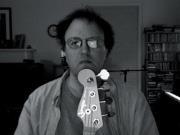
Bruce Thomas was prompted to write Rough Notes when a friend told him: ‘There’s only one history of rock …and pop and you were there!’
It follows his career from the paper-round he did to buy his first guitar and see the Beatles — all the way through to his induction into the Rock and Roll Hall of Fame in 2003 …and beyond.
He recalls his time as bass player with Elvis Costello and the Attractions — setting the record straight on the so-called feud between him and the singer — and includes accounts of working with Paul McCartney, touring on Elton John’s private jet, a day at Johnny Cash’s ranch and dinner with Yoko Ono — as well as encounters with Michael Jackson, Bob Dylan, Bruce Springsteen, Abba, Howling Wolf, John Lee Hooker, Mick Jagger, Jimmy Page, the Who, Freddie Mercury, Pink Floyd, Rod Stewart, Neil Young, Eric Clapton, John Belushi, Michael Hutchence …and a certain Jimmy Savile.
Yet Rough Notes is far more than a personal memoir or catalogue of trivia. It traces the entire story of rock and pop from its beginnings in the 1950s, right through to the present day — despite the fact it’s been said that …’writing about music is like dancing about architecture’.
An excellent book by one of my favorite bassists. Like many Elvis Costello fans, I read this out of curiosity about Bruce Thomas's relationship with Costello and why that soured. There is a lot about that and about the Attractions.
But who knew he led such a rich musical life before he joined the Attractions and about the different musical British musical personalities he crossed paths with before either he or they became famous?
I knew Thomas was a great bassist, but, after reading this, I have a new appreciation for him as a musician and student of the bass and rock, pop, and soul music. It's fascinating to read how he reworked certain James Jamerson and Paul McCartney bass lines into bass lines for the Attractions. (And how he even did some of this on the fly one night when he knew McCartney was in the audience.). I'm not quite certain what Costello was thinking when he let go of Thomas, but he made a big mistake. For a few years there, the Attractions were the best beat band in the world.
I read this book because it came with my Prime subscription, which is a good thing because otherwise I'd have wasted money as well as time on it. Thomas comes across as Alan Partridge should he have chosen to enter the music business. Poorly written, this is clearly the work of an embittered middle aged man whose o my real claim to fame is being Elvis Costello's sideman. Avoid.
Always wanted to hear Bruce's side of the story between him and Elvis Costello after the bridges between them were completely burned after the second stint with the Attractions. Got to hear some of it, but also learned more about his career before the Attractions. Was impressed that he had worked with Steve Howe and Paul Rodgers before they became famous, as well as his experiences with what became known as progressive rock (which as a big prog fan was curious about). I think it was good he avoided describing the debauchery he and his bandmates have experienced, which has been covered in Graeme Thomson's Complicated Shadows.
Was disappointed Bruce didn't go over why he wrote The Big Wheel, which supposedly caused the rift with Costello to go public, and even disavowed it in this book.
More than anyone, Bruce was the reason I became a big Elvis Costello & The Attractions fan. Without him, I lost interest in Costello's work with the Impostors and other projects. I did attend an Elvis Costello & The Imposters concert recently and while it was great they performed mostly the classics, primarily the Imperial Bedroom album, the original recordings of the songs were much better than of the concert.
As a huge Elvis Costello fan--one who was very disappointed in Elvis' own autobiography--I wanted to see the world from his bandmates side. There had been reports of a nasty break between Elvis and Bruce, and when you hear it from Bruce's side---you didn't hear it in Elvis' book---it is very petty and girlfriend-inspired. But since Bruce is a stellar bass player and one who inspired by own bass playing, I was intrigued by the freedom that Elvis gave to him in crafting the bass lines. And was interested in hearing stories that other artists insisted that Bruce keep the bassline simple.
Yes, Bruce is a bit full of himself, but his accounts of being on the road, meeting famous artists--like Paul McCartney--was very entertaining. Anyone who's a fan of British pop music needs to read this book.
Bruce Thomas played bass in an absolutely amazing band. Elvis Costello would be a much lesser figure now without The Attractions and Bruce’s bass was a key component. Bruce was and is a creative bass player of the highest calibre but he is also an excellent writer and he really was there and saw British Rock develop from the mid sixties to the era of digital mixing. You will learn about the biggest acts ever via amusing and telling anecdotes that he heard and saw at first hand. You get a real feel for all the personalities in Elvis and The Attractions. You read about how some all time classic albums were made. It’s told with a self deprecating wit and a determination to remind us that the band he was in could have been right up there with the Springsteen and Dylan if not for a drunken night of lunacy in a certain godforsaken bar
Anyone who appreciates real musicianship, will want to know who played those outrageous baselines, with Elvis Costello and the attractions. Bruce's story, tells it like it was, with the gruelling tours, fall-outs etc But his love of the music, shines through. This is as good as it gets
A brilliant bassist, Thomas is also a witty writer. The book is full of anecdotes of his time with Elvis and the Attractions. Nice to read Bruce's side of things regarding his estrangement from Elvis. Good read.
Like Costello, Bruce Thomas comes over at times as a difficult, irascible bloke, but he is a phenomenal musician with 400 pages worth of fantastic stories covering a long long career including 40 years with the Attractions and 40 countries visited. Right up there with the best music biogs.
A very engaging account of a musical career with a good instinct for a wry anecdote. Held my attention throughout. As so often in music autobiographies, I’m struck that the story is usually much more interesting on the way up rather than the tours during the success years.
Bruce Thomas was essential to the brilliance of early Elvis Costello records, including This Year's Model, which is impossible to imagine without his driving, virtuosic, furious bass lines, and Get Happy. But Costello and Thomas, unlike the other attractions, no longer play together. Knowing that Costello's own memoir was imminent, I ordered Thomas's self-published book to find out why.
The picture he paints of himself and and his times is vivid: Thomas seems to have met everyone in British music from the late 1960s on and playing in bands of every genre. Once he joins Elvis Costello's Attractions, the book really takes off, as the fame and energy of that band brought them all into a world more exhausting and exciting than anything can have been before or since. It quickly becomes clear that, as brilliant a musician as he is, Thomas is both thin-skinned and almost compulsively eager to give offense—a deadly combination. Thomas openly acknowledges his faults to some degree, but he can't resist sticking the knife in to those he's had disagreements with, including his ex-wife and, of course, Elvis Costello, who comes off here as moody, self-important, and a bit cruel. I don't doubt that he has these sides to him. I also don't doubt that there is far more to him than that, including large reserves of generosity and patience, and that if I had had Bruce Thomas in my band, I would have found it at least as impossible to get along with him.
But overall, I found this a worthwhile corrective to the cult of Costello, of which I have often been a member, and an entertaining collection of yarns.
A good, entertaining read for music fans but a must read for fans of Elvis Costello and The Attractions.
Thomas was the hugely inventive bass player in that group and, as the only one who ever challenged Elvis on any doubtful stuff ended up off his Christmas card list and out of the band.
It's clear that Thomas had always been what some might consider abrasive but equally that Elvis was a bit thin-skinned snd never fully valued what he had.
Thomas is an amusing writer but there's nothing here to suggest that his side of events is in any way exagerrated. Indeed, there is much in Costello's memoir to corroborate what is in these pages (often by the absence of things).
EC and the Attractions were the real deal. EC and the Imposters are very good, but they are just that.