When young Cheyne finds things going wrong and a dangerous gang of criminals unpleasantly interested in him, he tries to outwit them on his own.
When things get serious and his life attempted, he goes to Scotland Yard. French comes into the case, and carries out one of his usual investigations of untiring thoroughness directed by flashes of inspiration.
Born in Dublin of English stock, Freeman Wills Crofts was educated at Methodist and Campbell Colleges in Belfast and at age 17 he became a civil engineering pupil, apprenticed to his uncle, Berkeley D Wise who was the chief engineer of the Belfast and Northern Counties Railway (BNCR).
In 1899 he became a fully fledged railway engineer before becoming a district engineer and then chief assistant engineer for the BNCR.
He married in 1912, Mary Bellas Canning, a bank manager's daughter. His writing career began when he was recovering from a serious illness and his efforts were rewarded when his first novel 'The Cask' was accepted for publication by a London publishing house. Within two decades the book had sold 100,000 copies. Thereafter he continued to write in his spare time and produced a book a year through to 1929 when he was obliged to stop working through poor health.
When he and his wife moved to Guildford, England, he took up writing full time and not surprisingly many of his plots revolved around travel and transport, particularly transport timetables and many of them had a Guildford setting.
In retirement from engineering, as well as writing, he also pursued his other interests, music, in which he was an organist and conductor, gardening, carpentry and travel.
He wrote a mystery novel almost every year until his death and in addition he produced about 50 short stories, 30 radio plays for the BBC, a number of true crime works, a play, 'Sudden Death', a juvenile mystery, 'Young Robin Brand, Detective', and a religious work, 'The Four Gospels in One Story'.
His best known character is Inspector Joseph French, who featured in 30 detective novels between 1924 and 1957. And Raymond Chandler praised his plots, calling him "the soundest builder of them all".
Act 1: a stranger offers our hero a random business opportunity, whereupon he is drugged and searched and his house ransacked. Act 2: a different stranger offers our hero a different random business opportunity, this one involving him getting on their boat, to which he says "Righto!", tells nobody where he's going, and is all *pikachu face* when they kidnap him. Act 3: I express the hope they throw him overboard and find a new book.
When young Cheyne finds things going wrong and a dangerous gang of criminals unpleasantly interested in him, he tries to outwit them on his own.
When things get serious and his life attempted, he goes to Scotland Yard. French comes into the case and carries out one of his usual investigations of untiring thoroughness directed by flashes of inspiration.
My Takeaway -
Maxwell Cheyne is too gullible for words and his behavior unbelievable despite my attempt at suspension of disbelief throughout the first third of the book. It's after this point that I started to enjoy this 100-year-old British mystery. The modest suspense and thriller aspects also start to kick in and my attitude toward this book becomes more positive. I've read enough vintage British mysteries and Freeman Wills Crofts books in particular to just sit back, relax, and enjoy the unfolding mystery set in a time when forensic science was limited and deductive reasoning was more heavily presented and relied upon (even if it went beyond what might be considered realistic). All in all, it turned out to be a satisfying read, even after a very rocky start.
This is the second adventure of our hero Inspector French - the first, his “Greatest Case”, proving to be a tough act to follow.
Several observations -
This is more of an international(ish) caper as opposed to a classic mystery.
For those of you unfamiliar with this author Mr. Crofts likes his details, albeit police procedure, blind alleys, room/clothing descriptions, monitoring characters while they think, specifics of meals eaten and much more. Point here is that at least for this reader this extremely observant fly on the wall perspective bogs down the storyline.
Lastly our intrepid Inspector does not show up until almost 2/3 of the way into this tale which means the reader spends way too much time with the eponymous Maxwell Cheney - a man who makes Charlie Brown, (i.e. Lucy & the football), look shrewd. When “Max” is not blowing his stack he is stumbling from one all too obvious predicament to another which unfortunately also proves a detriment to the story.
I have several more of this author’s books on the shelf - hopefully this is a “one off”.
I usually enjoy Crofts old-fashioned, look-for-the-clues mysteries. However, in this one the solid and clever Inspector French doesn't appear until 3/4 of the way through, and we follow a young man of considerable courage and almost no brains at all. Watching him fall for one implausible story after another soon gets annoying.
Inspector French and the Cheyne Mystery (which I never heard of) is a novel written by Freeman Wills Crofts (who I never heard of) and published in 1926. I read it because it is here. I was putting everything back to the various places they go when they are somewhere else at the Christmas season. This book wound up in a pile of books to return to the shelves. I don't know where it came from, but here it is. And since it was not put back in place yet, seeing as I couldn't remember where it was supposed to go, I read it. Now I know where to put it. And now that you know all that stuff about me that you didn't care to know, I'll talk about the book, well, the author first.
Freeman Wills Crofts was an Anglo-Irish mystery author during the golden age of detective fiction. Crofts was born at 26 Waterloo Road, Dublin, Ireland. His father, also named Freeman Wills Crofts, was a surgeon-lieutenant in the Army Medical Service, but he died of fever in Honduras before the young Freeman Wills Crofts was born. His mother, née Celia Frances Wise, remarried the Venerable Jonathan Harding, Vicar of Gilford, County Down, and Archdeacon of Dromore, and Crofts was brought up in the Gilford vicarage. He attended Methodist College and Campbell College in Belfast. In 1912 he married Mary Bellas Canning, daughter of the manager of a local bank in Coleraine.
You got to read all that because I had been wondering how the author got the unusual name of "Freeman" and it turns out his father also had the same name. The name seems unusual to me, I've known some people with that as a last name, but never a first. Anyway, Crofts began working as a Junior Assistant to his uncle, Berkeley Deane Wise, who was chief engineer of the Belfast and Northern Counties Railway. He stayed working at the railroad until 1929 when he abandoned his railway engineering career to become a full-time writer. He had written his first book The Cask in 1920 and continued to write steadily, producing a book almost every year for thirty years. What I can't understand is why he seems to have been forgotten, I've never heard of him before even though he wrote more than thirty novels and I don't know how many short stories. He is best remembered (when he is) for his favorite detective, Inspector Joseph French, who was introduced in his fifth book Inspector French's Greatest Case in 1924. It seems odd that the Inspector starts his career in his greatest case, each one after must have been a disappointment to him. I didn't read "Inspector French's Greatest Case" yet, but I am glad the Inspector showed up in The Cheyne Mystery, or we may still be in the book trying to solve the mystery. And trying to not get killed in the meantime. It wasn't going all that well until the Inspector showed up and solved the mystery for us. And now for the book and Inspector French, although you have to be patient, our hero doesn't show up for a long, long time.
We start with our main character, another hero, Maxwell Cheyne. This is what we know in the beginning of Mr. Cheyne:
Maxwell Cheyne was born in 1891, so that when his adventure began in the month of March, 1920, he was just twenty-nine. His father was a navy man, commander of one of His Majesty's smaller cruisers, and from him the boy presumably inherited his intense love of the sea and of adventure........When Maxwell was nine his father died suddenly, and then it was found that the commander had been living up to his income and had made but scant provision for his widow and son and daughter. Dreams of Harrow and Cambridge had to be abandoned and, instead, the boy was educated at the local grammar school, and then entered the office of a Fenchurch Street shipping firm as junior clerk.
Don't worry about him though, for when he is 20 his mother came in for a legacy from an uncle, and while it wasn't a fortune, it was a substantial competence. So they bought back their home, a small Georgian house standing in pleasant grounds, and Maxwell thereupon threw up his job at the shipping office, followed his mother to Devonshire, and settled down to the leisurely life of a country gentleman. He no longer works, but what he does is write a few novels, only one was published, but that's better than nothing, and he bought a yacht, remember that love of the sea in his blood we read about, and would sail her in fair weather and foul, gaining skill and judgment in things nautical, like shores and tides and currents and things like that. These things came in handy when three years after this return to Devon, the war breaks out and he volunteered and was accepted for the navy. He was wounded in action with a U-boat, returned home and took up his former pursuits of yachting, literature, things like that, and now it is 18 months later and our story really begins.
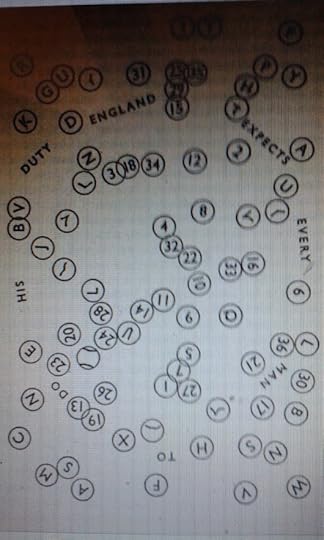
Cheyne (he's always called that, almost never Maxwell) has gone to Plymouth to make some small purchases for his mother and sister, and he wanted to visit his banker. Sitting in the Edgecome Hotel he is approached by a man, Mr. Hubert Parkes, who seems to know a lot of things about him. He tells Cheyne he knew his father, also he knew of Cheyne's love of writing, and wants to discuss a plan of Mr. Parkes writing down his stories, which never sold because his style is too dry (he says) and he would like to give his stories to Cheyne, then Cheyne would "clothe them". Together they would have all the essentials for success. During all this they had been sitting together eating a meal, drinking coffee, and Cheyne, who does fee attracted by the proposal, doesn't seem to be able to respond, he was feeling sleepy, he struggled against it, but finally fell fast asleep. The reason he is asleep is because he was drugged. The reason he was drugged was so Mr. Parkes could look through his pockets, the reason Mr. Parkes wanted to look through his pockets we don't know yet. Everything is looked through, but nothing is missing. Money, everything, it's all still there. We also don't know why, only a few hours later, the home where he lives with his mother and sister is robbed. His mother and sister were lured away with a supposed note from Cheyne, and they come back to find the two servants tied up in the back room. Everything is looked through, nothing is missing. And when Cheyne returns home he is lured to a yacht and is held there without food or water until the people (yes, there are more than just Mr. Parkes) get what they want. It ends up they want an envelope that had been sent to Cheyne some time ago by a friend who was also serving in the navy. Coming with this envelope was a letter telling him to keep it safe and not to open it until he comes home, or until he learns of his death, then he can open it and do whatever he wants with it. He put it in the bank, that's why the bad guys can't find it. We have bad guys, three of them, and a sister of one of them, so that makes four bad guys. They are all looking for the envelope, when the envelope is eventually opened, we spend the rest of the book (most of it) trying to figure out what this is:
It all revolves around that. First Cheyne's friend has it, I'm not going to get into who had it before him, then the bad guys got it from Cheyne, but Cheyne steals it back, or tries to, which gets him left for dead. And he would have died if he hadn't been found by a passing girl named Joan Merrill, who will soon be looking for the thing too. And she does manage to get it, but not only do the bad guys get it back, they take her too. And finally...................Inspector French is called in. We would still be chasing each other around looking for this strange paper if it wasn't for Inspector French and that's all I have to say about it. I'm not going to get close to telling you what it really is. I liked the book, which kind of surprised me since most of the mysteries I like have to do with a dead body found in a bathtub with the door locked and no window, or something like that. I couldn't even find a murder in this at all. A few attempted, but none successful until, well, you'll have to find that out for yourself. Happy reading.
Excited to immerse myself once again in the gritty and noir world of Inspector French, yet 'Cheyne Mystery' falls short in comparison to my prior experiences with him, particularly the outstanding 'Starvel Hollow Tragedy' and 'The Sea Mystery.' There are several reasons for this, one being the late appearance of the esteemed Inspector himself, who only emerges around the halfway mark. The novel's structure deviates from the usual, adopting a more thriller caper style, with the sole mystery element being the motive for the crimes. The revelation at the end and the subsequent deduction elevate the novel, preventing it from receiving an even lower rating. The conclusion is truly fantastic and extraordinary, consistent with the unconventional endings characteristic of most Crofts novels I've read so far.
In addition, the mechanics of this convoluted plot are very sound, following the Croftsian tradition, especially in the technique of drugging another person without causing harm to oneself despite partaking from the same substance. However, the character work, as usual, fails to impress, and the dialogue lacks noteworthy distinction. A contrived romantic intrigue central to the story is thoroughly unconvincing.
My primary concern lies with the main protagonist, Maxwell Cheyne, a retired sailor and mildly successful writer. His bone-headed and foolhardy nature leads to frustration, making it easy for one to believe that if instead of him our protagonist was a person with even mediocre intellect, would this really have been such mystery. The biggest mystery, after the motive for me was that how such a foolish individual could survive into adulthood and carry on with his daily routine. At points in the book, the frustration intensifies to the extent that one feels compelled to enter the novel and impart some sense before Cheyne embarks on another reckless endeavor as part of his 'investigations.' Though not renowned for his character work, but in creating Maxwell Cheyne, Croft inadvertently crafted one of fiction's most infuriating characters with seemingly a death wish.
This one's a little rough—it's an amateur-detective thriller of a type that I only know from very early Agatha Christie but that must have been very thick on the ground in the 20s, given its appearance in Crofts too. Like Christie, Crofts has a sort of kindly paternal perspective on these bright young things, despite his own apparent conservatism—maybe he and Christie saw the boldness and the fashion and the frankness as wild oats being sown rather than a break with continuity.
Anyway, I also have a kindly paternal perspective on these bright young things, but the male lead here, Max Cheyne, is unbelievably dim. Tommy and Tuppence are clever and funny, and get into trouble because their ambition outstrips their skill level; Cheyne repeatedly falls victim to the dumbest tricks imaginable. (He's just been drugged as his house is ransacked by unknown villains; soon after, he agrees to go out onto a boat with a guy he doesn't know to see a secret invention. The guy says "you have to go down into the bottom of the boat, through this door, to see the secret invention." I won't spoil what happens next except to say that this is not a book about secret inventions!)
Near the end of the book Inspector French is finally called in, and we get to see him lay waste to the amateur criminals on behalf of the amateur detective. But it takes a while to get there! (The varying explanations of the McGuffin are pretty good, too, I'll give it that. It's annoying that Cheyne keeps getting fooled by them, but they're very novel.)
After reading the first book in this series, "Inspector French's Greatest Case," I eagerly looked forward to the next book. The Cheyne case was a bit of a disappointment as French does not show up until you've read about 2/3 of the book. The lead character keeps making silly choices even after the the first incident nearly kills him. All Cheyne does is to get himself and more people in trouble with the criminals. Then French comes in and wraps up the case. The 3-stars are for the last third of the book.
1 star means rubbish, 2 it’s okay, 3 I enjoyed it, 4 I loved it, 5 I wish to read it again and again and never leave that world.
This one I enjoyed. Others review it better. It’s my first of this author I think, and certainly the first Inspector French one, so I had nothing to compare with. I liked that it was a mystery different from the usual mould. It was a bit of a romp. Some international travel. Implausible characters. But I was wanting to find out how it ended.
First Insp French I’ve read. He took a while to enter the clever, involved story. No way I guessed any of it nor solved the cipher. Wonderfully old fashioned policemen with their meal breaks. Slightly outdated writing, but it paid to persevere.
(I appreciate the ability to use the new .5* rating.)
This is my eighth review of a Freeman Wills Crofts book. This is an unusual Inspector French book as the Inspector makes his first appearance on Page 176 (out 290 pages). For the first 175 pages of the book we encounter Maxwell Cheyne who has 3 different forms of criminal action turned upon him - after the first attack you would think that the guy would wise up a little and not be as gullible for the next onslaught, however he falls for the traps and gets embroiled in the mystery. Maxwell is for much of the time unaware of why he is the victim of these attacks and decides to investigate the people behind the crimes himself (amateur sleuth style), eventually teaming up with a plucky young woman (Merrill). However as the situation goes from bad to worse he eventually calls in Inspector French - here for the last 100 or so pages we have an efficient police procedural. As always French writes in such an easily flowing readable style - even though he uses some words and expressions that would have been dated even in 1926 (when the book was published). The two amateur sleuths reminded me of Bobby Jones & Frankie Derwent in Agatha's Christie's Why didn't they ask Evans published in 1934 (NOT Tommy & Tuppence who I find mildly irritating). The storyline is written more in the vain of a thriller - however the actual plot of the story is well thought out and an interesting idea. The book is somewhat too long and Crofts does his usual mistake of reiterating the details of the story 2 or 3 times so as not to lose his audience - however this can bore readers who are able to follow his well explained novel and in my opinion unnecessary. The only flaw I found in regards to the story is that Crofts didn't quite play fair with the readers as he suddenly remembers that the sleuths had arranged to photograph the ITEM (I do not want to spoil the story) if they were separated - I couldn't remember or find any reference to this - if that is the case - Crofts magicked this one out the hat. I would give the book 7 out of 10 - pleasant enough to read, good plot but certainly not one of the best. I recommend reading Box Office Murders & The Hogs Back Mystery.
"It is a quite ordinary lunch Maxwell Cheyne sits down to at the inn near his country home ... but somehow during the meal he is drugged. It's his first encounter with a gang of criminals who have a very persistent and sinister interest in him. Cheyne almost gets killed trying to find out just what that interest is and finally turns to Scotland Yard for help. The case is put in the hands of Inspector French, whose brilliant investigation uncovers a strange and desperate conspiracy." ~~back cover
I thought the first part of the book dragged. Cheyne tries to follow the gang & winds up in trouble ... several times. During one escapade he meets a nice young lady -- Joan Merrill -- who joins him in trying to thwart the gang, with disastrous results. But once the case is put to Inspector French, the pace picks up -- to the point that I read this book to the end, compulsively, out of line with the other books I'm currently reading. What an exciting ending! Just when the worst was feared ... well, it's a mystery, so of course it was solved in the end.
A disappointing second outing for Inspector French. More of an adventure story than a detective mystery. Full review at https://murderatthemanse.substack.com...
The main character here (before Inspector French steps in to save his bacon) is so stupid it's difficult to sympathise with him. He manages to fall for the crooks' tricks over and over again and what's more, he's not a very likeable person either (at least, I didn't like him).
It's a very well written book but I couldn't get over Cheyne, and found the ending super unlikely.
This entire review has been hidden because of spoilers.
A classic detective story which can be regarded as a pioneer of the "police procedural" type, though Inspector French, the Scotland Yard detective, doesn't appear until about the 60% mark. The Cheyne of the title is a remarkably gullible man, who's fooled twice by essentially the same scheme and then continues to believe the criminals when they tell him several more ridiculous stories. Still, I found the various adventurous shenanigans entertaining while waiting for him to figure out that he needs to involve the police.
Once French is on the case, he approaches it methodically and makes progress through sound detective work. I wasn't surprised to discover that the author was an engineer; French is, in a way, an engineer of a detective, working steadily and solidly and without much drama. Unlike most fictional detectives, he has no personal peculiarities to speak of, and is happily married (though his wife is only briefly mentioned). He's almost more a plot device than he is a character, at least in this book.
While the plot doesn't constantly rely on coincidence, there are a few lucky chances that keep the dull-witted Cheyne alive despite himself, one of which (a woman happens to find him after he's been injured, and gets help) is never explained; the woman subsequently becomes involved in the case, helping him to investigate, and eventually and inevitably becomes his love interest , but we never find out why she was in that part of town (which wasn't her neighbourhood or anywhere close to it) late at night in the first place.
The conclusion of the book, once French figures out the puzzle, is rather anticlimactic.
It's a curate's egg of a book; parts of it are excellent, mainly the parts where Cheyne is, somewhat ineptly, trying to solve the case himself and doing all kinds of daring, or rather incautious, things in pursuit of that goal. Once French arrives, it becomes less an adventure and more of a puzzle, and after French solves the puzzle, it wraps up rapidly, with any further excitement occurring off-screen and being reported after the fact. I enjoyed it despite its unevenness and the things that didn't make much sense, and would consider reading other books by the author if I was in the right mood, but it's not up to the standard of other classic books of the time.
This author is a puzzlement. Starting in 1920, he produced four mysteries with four different detectives. In 1924, he published "Inspector French's Greatest Case" and had a winner. Inspector French is a combination of brains, toughness, and charm. Crofts MUST have been pleased with the public's reception of the new guy, since he went on to write a long series of Inspector French books that ended only with his death over thirty years later.
So WHY did he follow up "Greatest Case" with a book in which Inspector French doesn't appear until the sixty-five percent mark? The first twelve chapters of the book follow the misadventures of a dim, but spirited young Englishman named Cheyne. The only son of a well-to-do family, he served during WWI and since then has been writing stories (unpublished) and yachting.
A friend still overseas with the Royal Navy sends him an important package, asking him to keep it safe. Cheyne deposits the package in his bank and forgets it. But then he's drugged and his family home burglarized! Then he's kidnapped and held without food or water!
You guessed it. Someone wants those papers. Does young Mr Cheyne go to the police and ask for protection? Of course not! To do so would be to admit defeat and an English gentleman NEVER admits defeat. So our gallant, but idiotic hero takes on a gang of London-based grifters by himself, with predictable results.
For chapter after chapter, Cheyne and the gang duke it out, both sides showing commendable persistence, but little brains or talent. Cheyne is hospitalized, then beaten up and left for dead, then supplied with a bomb that just fails to blow him to smithereens. But that time, I was cursing the gang's incompetence since a little of Cheyne goes a long way.
There's no telling how long this nonsense would have gone on if Cheyne hadn't acquired an attractive sidekick who's eager to help him defeat his enemies. What she does, of course, is end up in the hands of those enemies. At that point (Thank God!) our moronic hero calls in Inspector French.
From Chapter XIII on, it's quite a good book. French swiftly identifies the culprits, although finding them (and the girl) is harder. His search takes him to Belgium and the story takes a sea-faring turn.
The finale is a corker. Crofts' detectives plod along quietly, following traditional police methods, but he believed in a big finish and this one is no exception.
So you get twelve chapters of a romantic thriller. Think Patricia Wentworth, but much sillier and without the wonderful Miss Silver to add wit and common sense. Then you get eight chapters of Inspector French, one of the shrewdest, most likable detectives in fiction.
Buy it if you can get it cheap and have lots of patience. Do NOT let it be your first book in this series, because it's the weakest one I've read so far.
I read this in 2011, and then picked it off the shelf in September 2024 as though I'd never seen it before. I did not remember a word of it. And perhaps this is why: it was not a very interesting story and our hero, Maxwell Cheyne, and his lady-love Joan Merrill, often deliberately put themselves in harm's way through ill-advised burglaries and other such shenanigans. In fact, Cheyne does not even consult the police until after the possibility that Joan is dead. And why he is not arrested for gross negligence for waiting so long escapes me.
The story is complicated, but involves a treasure map and many people vying to find it when the clues are all in an obscure code. Everyone is devious in what they know and tell copious lies. The rule of thumb becomes: don't trust what anyone says.
The one really pleasant discovery was that the author knows about boats and being out in the English Channel as well as on the ocean.
I have to say, I do like Inspector French and I do love the way in which his careful pursuit of a clue plays out. His trip to Belgium in this book is a perfect example.
Author Crofts was considered one of the top writers during the Golden Age of Detective Fiction, although I didn't discover him until a few years ago. This is my second in his Inspector French series and I enjoyed it. Inspector French doesn't show up until the second half of the book, so the first half is the lead up to the expected mystery. I found this part to be slower reading, but once things got rolling I became more engaged. Much of the tale revolves around a puzzle?/cipher? with a possible treasure at the end. So, if you enjoy that sort of the thing, this may satisfy.
We've been watching Foyle's War recently. The two detectives come from similar eras after WWI (1925-1930s at the beginnings). I kept picturing French looking like the actor that plays Foyle, because I picture them as having similar temperaments.
I will definitely be following up with the next case for Inspector French!
I'm beginning to become a bit of a fan of Freeman Wills Crofts who offers a enjoyable adventure story with a feel good ending. Not bad for an old cynic like me. The story begins when Maxwell Cheyne becomes an unwitting pawn in a kidnapping which leads to him to meeting up and working with artist Joan Merrill on the trail of cypher which leads to a stash of sunk during the Great War. Inspector French only enters after Cheyne escapes death one time too often. There are some loose parallels early on with Agatha Christie's 'Secret Adversary' before amiable French gets on the trail. This is a book is not to be taken serious, it's 'Treasure Island' for adults, instead take an enjoyable romp around Europe on the trail a bumbling group amateurs.
This was really the e-book, but it's not listed. Really enjoyed this one. Grabbed me right from the start. Some poor guy is drugged during a business lunch and searched, his mother and sister are lured away from his home which is burgled and searched, but again,nothing is taken. Then he is kidnapped and taken away on a sailboat and finally told a version of why all these things have happened. French doesn't come into it until nearly halfway through the book, but it's all good. Tight plot, good characters and a fun read, especially when the author says things like (about a woman who makes her living as an artist) that "she was coming along in her little hobby". Makes me realise we have come some way from there, but still not far enough.
An enjoyable enough read, but I would have been disappointed if I'd actually paid for it (got it from Project Gutenberg). Like many have noted, the book is in two halves, one with the really thick protagonist, and one with Inspector French. Liked the second half enough that I'll be looking for more Inspector French stories.
Unlike many mysteries, there was no way for me to figure out exactly what was going on ahead of time, and I found the ending a bit anticlimactic. What actually happened, or, to be more exact, didn't happen to one of the characters still puzzles me, but I don't want to give any spoilers.
Freeman Wills Croft is a forgotten writer of the Golden Age of Detective crime and his main hero is Inspector French. In this novel, a gang of criminals plan to retrieve a lost treasure from the sea but they have to acquire a secret map.
The story begins with the gang’s attempt to find the map and in doing so they involve Cheyne , a young man from Devon. He becomes the main protagonist until he realises that he needs the help of the police and Inspector French enters the story.
A clever plot and interesting characters make this an enjoyable read.
I had difficulty with this book. Inspector French doesn't even appear until half way through. Once he does the pace picks up and it gets much more interesting. Luckily I didn't give up. It's an interesting twist on classic mystery style, but because of that I don't think it appeals to everyone. But it did pay off in the end.
It was actually quite good. I felt the last chapter or two were sub-par but don't let that deter you. The first 200 pages or so were good fun. A lot more exciting than many other books in the detective French series.
This tale seemed too scattered and inconsistently written. Most of the story-line was boring punctuated, but briefly, with small bursts of action. You probably have many better things to read than this tale.
I liked the concept at first and didn't mind Inspector French showing up later. But about 40% of the way through the book I stopped enjoying it and started to get annoyed. And I think it was unnecessarily long. But otherwise I enjoyed reading it and the book is overall well written.
It’s readable enough but like other reviewers noted it is deeply hampered by the too stupid to live hero and the fact that Inspector French isn’t much in it. Anyway, this one feels skippable as far as Inspector French mysteries go.
I found this book more a thriller than a who dun it. Inspector French only appears halfway through and at the end everything was sorted a little too easily. An enjoyable caper but not a classic