

What do you think?

Ponderings VII-XI: Black Notebooks 1938-1939
Through these broad and sprawling notebooks, Heidegger offers fascinating opinions on Holderlin, Nietzsche, Wagner, Wittgenstein, Pascal, and many others. The importance of the Black Notebooks transcends Heidegger's relationship with National Socialism. These personal notebooks contain reflections on technology, art, Christianity, the history of philosophy, and Heidegger's attempt to move beyond that history into another beginning.
370 pages, Hardcover
First published March 1, 2014
About the author
Martin Heidegger
542 books3,460 followersMartin Heidegger (1889-1976) was a German philosopher whose work is perhaps most readily associated with phenomenology and existentialism, although his thinking should be identified as part of such philosophical movements only with extreme care and qualification. His ideas have exerted a seminal influence on the development of contemporary European philosophy. They have also had an impact far beyond philosophy, for example in architectural theory (see e.g., Sharr 2007), literary criticism (see e.g., Ziarek 1989), theology (see e.g., Caputo 1993), psychotherapy (see e.g., Binswanger 1943/1964, Guignon 1993) and cognitive science (see e.g., Dreyfus 1992, 2008; Wheeler 2005; Kiverstein and Wheeler forthcoming).
Ratings & Reviews
Friends & Following
Create a free account to discover what your friends think of this book!
Community Reviews
Displaying 1 - 4 of 4 reviews

March 11, 2022
The content of these Ponderings is an attempt to remember and to bring anew into view Being/Beyng; and at the same time to denounce beings, present-at-hand, production, representation, certainty, public opinion, modern notions of nature and history, calculative thinking, sciences, technology, present-at-hand conceptions of the human being like that of “animal rationale”, and of everything that comes with and support these. The style of these Ponderings is something completely unique - not just in the Western thinking but to Heidegger himself; that is an attempt at a non-metaphysical thinking. Below are two such ponderings that point to this unique attempt by Heidegger in this book.
Beings—the solitude of beyng, a solitude gone astray into what is publicly present-at-hand. The present-at-hand: what is available to production and to representation, is sighted in such availability, and is admitted only into the horizon of this sight. The seizing of such beings develops into an institution. Out of the latter arises the certainty of public opinion, which spreads an invisible shield over the present-at-hand and accepts the prevailing of a semblance of being. “Nature” and “history” are incorporated into this sphere of beings, are altogether seen, i.e., explained, only within that sphere, and are made handy for the public hand of calculative instituting. Everything surpassing the things that are proximally present-at-hand and explainable is always only a transfiguration of what is explained. Every reaching out to being, from the publicness of the present-at-hand, extends at any time only to a transfiguration which, as its means become more exciting and captivating, is all the more definitively the blockage of all the paths to something originary. Everything that transfigures descends into the past. Only something originary decides a future of humans and points them toward the bridge to the acceptance of another essence.
These “Ponderings” and all the previous ones are not “aphorisms” in the sense of “adages”; instead, they are inconspicuous advance outposts—and rearguard positions—within the whole of an attempt at a still ineffable meditation toward the conquest of a way for the newly inceptual questioning which is called, in distinction from metaphysical thinking, the thinking of the history of beyng. Not decisive is what is represented and compiled into a representational edifice, but only how the questioning takes place and the fact that being is questioned at all. Equally great in such questioning must be the reverence toward essential thinkers and the renunciation of any sort of imitation. Of such reverence and renunciation the staunchly ongoing “philosophical” literature needs to know nothing, for this literature can secure a market for itself only on the distorted ground of something contrary to its own timeliness.
Original March 11, 2022 review:
Back Notebook X starts with Heidegger's explanation: “These 'Ponderings' and all the previous ones are not 'aphorisms' in the sense of 'adages'; instead, they are inconspicuous advance outposts— and rearguard positions – within the whole of an attempt at a still ineffable meditation toward the conquest of a way for the newly inceptual questioning which is called, in distinction from metaphysical thinking, the thinking of the history of beyng. Not decisive is what is represented and compiled into a representational edifice, but only how the questioning takes place and the fact that being is questioned at all. Equally great in such questioning must be the reverence toward essential thinkers and the renunciation of any sort of imitation. Of such reverence and renunciation the staunchly ongoing 'philosophical' literature needs to know nothing, for this literature can secure a market for itself only on the distorted ground of something contrary to its own timeliness.”
As such, the topic and especially the style of these Ponderings are unique to Heidegger and also within Heidegger's works. Only the thinker and the poet - as mainly exemplified by Nietzsche and Holderlin - can help bring about a new beginning; and thus the new approach to Being/Beyng should be in some way adequate to this formidable task. However, there is no certainty that this approach is adequate; thus these Ponderings are “just attempts”.
First of all - the entire history that started with the ancient Greeks, fell into metaphysics with Plato and Aristotle, and culminated in modern technology - must be denounced, deconstructed, and brought to its final consummation. There is no guarantee of success – as this omnipresence of technology in manipulating beings and the forgetfulness of Being may never pass away; but in an uncanny conjunction entrench itself more and more or even permanently. Subjectivity and desolation are spreading, while gods are dying and no new god appeared for more then two millennia now.
In the previous Ponderings, Heidegger was still deeply entranced in his current events and personal tribulations – but not so much here. This is where he is reinventing himself and settling into a new approach for his remaining life and work – as steward of Being. Silence, meditation, questioning, solitude, and so on are needed in his quest of the much-needed simple words and foundational truths. For example, he does not even bother to publicly protest against the more and more frequent and wild misinterpretations of “Being and Time”: “now the treatise is employed as an opportunity for endless, boring, and oblivious prattle about the 'philosophy of existence' and suchlike.” And not just that, but “Being and Time” along with most of his previous work are given up as a partially flawed project.
Beings—the solitude of beyng, a solitude gone astray into what is publicly present-at-hand. The present-at-hand: what is available to production and to representation, is sighted in such availability, and is admitted only into the horizon of this sight. The seizing of such beings develops into an institution. Out of the latter arises the certainty of public opinion, which spreads an invisible shield over the present-at-hand and accepts the prevailing of a semblance of being. “Nature” and “history” are incorporated into this sphere of beings, are altogether seen, i.e., explained, only within that sphere, and are made handy for the public hand of calculative instituting. Everything surpassing the things that are proximally present-at-hand and explainable is always only a transfiguration of what is explained. Every reaching out to being, from the publicness of the present-at-hand, extends at any time only to a transfiguration which, as its means become more exciting and captivating, is all the more definitively the blockage of all the paths to something originary. Everything that transfigures descends into the past. Only something originary decides a future of humans and points them toward the bridge to the acceptance of another essence.
These “Ponderings” and all the previous ones are not “aphorisms” in the sense of “adages”; instead, they are inconspicuous advance outposts—and rearguard positions—within the whole of an attempt at a still ineffable meditation toward the conquest of a way for the newly inceptual questioning which is called, in distinction from metaphysical thinking, the thinking of the history of beyng. Not decisive is what is represented and compiled into a representational edifice, but only how the questioning takes place and the fact that being is questioned at all. Equally great in such questioning must be the reverence toward essential thinkers and the renunciation of any sort of imitation. Of such reverence and renunciation the staunchly ongoing “philosophical” literature needs to know nothing, for this literature can secure a market for itself only on the distorted ground of something contrary to its own timeliness.
Original March 11, 2022 review:
Back Notebook X starts with Heidegger's explanation: “These 'Ponderings' and all the previous ones are not 'aphorisms' in the sense of 'adages'; instead, they are inconspicuous advance outposts— and rearguard positions – within the whole of an attempt at a still ineffable meditation toward the conquest of a way for the newly inceptual questioning which is called, in distinction from metaphysical thinking, the thinking of the history of beyng. Not decisive is what is represented and compiled into a representational edifice, but only how the questioning takes place and the fact that being is questioned at all. Equally great in such questioning must be the reverence toward essential thinkers and the renunciation of any sort of imitation. Of such reverence and renunciation the staunchly ongoing 'philosophical' literature needs to know nothing, for this literature can secure a market for itself only on the distorted ground of something contrary to its own timeliness.”
As such, the topic and especially the style of these Ponderings are unique to Heidegger and also within Heidegger's works. Only the thinker and the poet - as mainly exemplified by Nietzsche and Holderlin - can help bring about a new beginning; and thus the new approach to Being/Beyng should be in some way adequate to this formidable task. However, there is no certainty that this approach is adequate; thus these Ponderings are “just attempts”.
First of all - the entire history that started with the ancient Greeks, fell into metaphysics with Plato and Aristotle, and culminated in modern technology - must be denounced, deconstructed, and brought to its final consummation. There is no guarantee of success – as this omnipresence of technology in manipulating beings and the forgetfulness of Being may never pass away; but in an uncanny conjunction entrench itself more and more or even permanently. Subjectivity and desolation are spreading, while gods are dying and no new god appeared for more then two millennia now.
In the previous Ponderings, Heidegger was still deeply entranced in his current events and personal tribulations – but not so much here. This is where he is reinventing himself and settling into a new approach for his remaining life and work – as steward of Being. Silence, meditation, questioning, solitude, and so on are needed in his quest of the much-needed simple words and foundational truths. For example, he does not even bother to publicly protest against the more and more frequent and wild misinterpretations of “Being and Time”: “now the treatise is employed as an opportunity for endless, boring, and oblivious prattle about the 'philosophy of existence' and suchlike.” And not just that, but “Being and Time” along with most of his previous work are given up as a partially flawed project.

Want to Read
November 18, 2018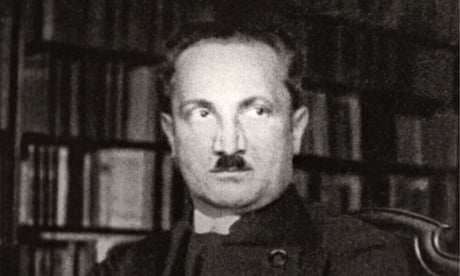
"Heidegger’s silence following the discovery of the horrors of Nazism was well known. (...)
Fortunately, the recent publication of his philosophical journal in the spring of 2014– known within the framework of Heideggerian studies as the Black Notebooks (Schwarze Hefte) – now allows new light to be shed on his level of personal commitment to National Socialism and a reevaluation of the political dimension of his thought."*
However, according to Greg Johnson, not that much anti-semitism in those Ponderings.
https://www.theguardian.com/books/201...
*http://www.heidegger-circle.org/Gathe...
November 12, 2023
Took longer than I wanted to when it came to reading this, but it's pretty good- it converges on things I thought about politics and religion towards the end of college when thinking about the form and content of prayers in church and the area I went to college in. Like how does one take back what they were going to erase anyway. And considering the form and the content of prayers on 1/6 in the Capitol, a lesson has yet to be learned.

June 29, 2018
Excellent source of ideas and thought materials. Perfect for me as an existentialist to add angles and viewpoints to my own ontology. Love Heidegger's mind. Sharp as a razor. I will dig into this for years to come. Indeed.
Displaying 1 - 4 of 4 reviews