

What do you think?

Queering Sexual Violence: Radical Voices from Within the Anti-Violence Movement
Often pushed to the margins, queer, transgender and gender non-conforming survivors have been organizing in anti-violence work since the birth of the movement.
Queering Sexual Violence: Radical Voices from Within the Anti-Violence Movement locates them at the center of the anti-violence movement and creates a space for their voices to be heard. Moving beyond dominant narratives and the traditional “violence against women” framework, the book is multi-gendered, multi-racial and multi-layered.
This thirty-seven piece collection disrupts the mainstream conversations about sexual violence and connects them to disability justice, sex worker rights, healing justice, racial justice, gender self-determination, queer & trans liberation and prison industrial complex abolition through reflections, personal narrative, and strategies for resistance and healing.
Where systems, institutions, families, communities and partners have failed them, this collection lifts them up, honors a multitude of lived experiences and shares the radical work that is being done outside mainstream anti-violence and the non-profit industrial complex.
Queering Sexual Violence: Radical Voices from Within the Anti-Violence Movement locates them at the center of the anti-violence movement and creates a space for their voices to be heard. Moving beyond dominant narratives and the traditional “violence against women” framework, the book is multi-gendered, multi-racial and multi-layered.
This thirty-seven piece collection disrupts the mainstream conversations about sexual violence and connects them to disability justice, sex worker rights, healing justice, racial justice, gender self-determination, queer & trans liberation and prison industrial complex abolition through reflections, personal narrative, and strategies for resistance and healing.
Where systems, institutions, families, communities and partners have failed them, this collection lifts them up, honors a multitude of lived experiences and shares the radical work that is being done outside mainstream anti-violence and the non-profit industrial complex.
288 pages, Paperback
First published April 24, 2016
Ratings & Reviews
Friends & Following
Create a free account to discover what your friends think of this book!
Community Reviews
Displaying 1 - 30 of 39 reviews
September 22, 2017
4.5 Eye-opening Book Stars
IT HAS COME TO MY ATTENTION THAT THIS BOOK IS STILL AVAILABLE IN NETGALLEY. I HIGHLY RECOMMEND PEOPLE TO READ THIS.
Disclaimer: Copy provided by NetGalley and the publisher in exchange for an honest review.
TRIGGER WARNING: All of the triggers you can imagine (violation, homophobia, incest, eating disorders, depression, suicide attempts, sexual abuse, discrimination, etc), this is a non-fiction book so all of the situations described were and are lived in our real world.
I am sorry- not really- this is a long-ass review, but so many thoughts I want to express.
Rating this book is one of the most difficult tasks I have had in my reading experience. I mean, how do I rate the tragic and heartbreaking experiences of fellow humans? Experiences that sometimes ruled their life. Which power do I have to give a 1 to 5-star rating to this book? So here is my explanation on why did I gave it a rating, I did rate this book because I feel it is a must-read book in society. Especially by politicians, doctors, social workers, activists, teachers, lawyers, psychologists and just everyone no matter our profession, religion, sexual orientation or nationality. I feel it needs recognition in the world and is a super underrated book at the moment. I rate not judging the testimonies of people, but the way this compilation was edited and presented to us if it actually implements the impact on society that wanted to have.
I, as a Latino-American, pansexual, 18-year-old woman, cannot hundred percent related to this testimonies, because I have never suffered sexual violence, as rape. Yet, I have heard in my daily life, sexual innuendos that are offensive, sexual discrimination to the queer community, and verbal abuse from both strangers and acquaintances. Reading this book let me live sexual violence, through the eyes of humans from different genders, nationalities, sexualities that are usually overseen, opening my point of view.
This book reminds us of the important fact that all humans can be subjects of sexual violence, without taking importance nowadays we tend to associate sexual violence only from a male to female, and is important to acknowledge that every human can be a subject of it.
“None of us are immune to experience violence, perpetrating violence or to knowing of and not responding to violence”
Is a book that speaks multiple truths, multiple perspectives, and it doesn’t indicate if one is correct and the other is wrong. It lets us be free of deciding which perspective we find more in sync towards our way of thinking. One of the biggest examples is the stereotype of queer people “turning queer due to sexual abuse”. In this book, we encounter a person acknowledging that their abuse was somehow a cause for them not to be heterosexually attracted anymore, while another perspective tells us that their abuse has nothing to do with their sexuality or gender preference. But more importantly, it demonstrates, that each of us has their own truth and that is important to speak out and discuss with the world.
“I am not a lesbian because I was molested and raped. I am a lesbian because I’m emotionally/ physically/ sexually attracted to and love women”
It discusses the terms victim and survivor and invites to a very important debate. I never imagined people who were sexually violated sometimes felt they did not fit in in the “normal conception” of someone who was sexually assaulted. Yet, this book opened my eyes to new perspectives. There are quotes that not only apply to a queer sexual survivor, but they speak universal truths. It is not afraid as well to say that even the LGBTQIA+ community is sometimes perpetrators of this violence by not understanding.
“Victim or Survivor identity are not mutually exclusive after all; shame and pride, weakness and strength, vulnerability and courage can coexist within one person”
There are so much more topics and views discussed, but I will give you the option to discover by yourself because it is a book you should definitely give it a try. No matter if you disagree or agree, it just makes you understand there are many untold or oblivion perspectives in our communities that should be acknowledged.
If you read it, I would love to discuss with you.
IT HAS COME TO MY ATTENTION THAT THIS BOOK IS STILL AVAILABLE IN NETGALLEY. I HIGHLY RECOMMEND PEOPLE TO READ THIS.
Disclaimer: Copy provided by NetGalley and the publisher in exchange for an honest review.
TRIGGER WARNING: All of the triggers you can imagine (violation, homophobia, incest, eating disorders, depression, suicide attempts, sexual abuse, discrimination, etc), this is a non-fiction book so all of the situations described were and are lived in our real world.
I am sorry- not really- this is a long-ass review, but so many thoughts I want to express.
Rating this book is one of the most difficult tasks I have had in my reading experience. I mean, how do I rate the tragic and heartbreaking experiences of fellow humans? Experiences that sometimes ruled their life. Which power do I have to give a 1 to 5-star rating to this book? So here is my explanation on why did I gave it a rating, I did rate this book because I feel it is a must-read book in society. Especially by politicians, doctors, social workers, activists, teachers, lawyers, psychologists and just everyone no matter our profession, religion, sexual orientation or nationality. I feel it needs recognition in the world and is a super underrated book at the moment. I rate not judging the testimonies of people, but the way this compilation was edited and presented to us if it actually implements the impact on society that wanted to have.
I, as a Latino-American, pansexual, 18-year-old woman, cannot hundred percent related to this testimonies, because I have never suffered sexual violence, as rape. Yet, I have heard in my daily life, sexual innuendos that are offensive, sexual discrimination to the queer community, and verbal abuse from both strangers and acquaintances. Reading this book let me live sexual violence, through the eyes of humans from different genders, nationalities, sexualities that are usually overseen, opening my point of view.
This book reminds us of the important fact that all humans can be subjects of sexual violence, without taking importance nowadays we tend to associate sexual violence only from a male to female, and is important to acknowledge that every human can be a subject of it.
“None of us are immune to experience violence, perpetrating violence or to knowing of and not responding to violence”
Is a book that speaks multiple truths, multiple perspectives, and it doesn’t indicate if one is correct and the other is wrong. It lets us be free of deciding which perspective we find more in sync towards our way of thinking. One of the biggest examples is the stereotype of queer people “turning queer due to sexual abuse”. In this book, we encounter a person acknowledging that their abuse was somehow a cause for them not to be heterosexually attracted anymore, while another perspective tells us that their abuse has nothing to do with their sexuality or gender preference. But more importantly, it demonstrates, that each of us has their own truth and that is important to speak out and discuss with the world.
“I am not a lesbian because I was molested and raped. I am a lesbian because I’m emotionally/ physically/ sexually attracted to and love women”
It discusses the terms victim and survivor and invites to a very important debate. I never imagined people who were sexually violated sometimes felt they did not fit in in the “normal conception” of someone who was sexually assaulted. Yet, this book opened my eyes to new perspectives. There are quotes that not only apply to a queer sexual survivor, but they speak universal truths. It is not afraid as well to say that even the LGBTQIA+ community is sometimes perpetrators of this violence by not understanding.
“Victim or Survivor identity are not mutually exclusive after all; shame and pride, weakness and strength, vulnerability and courage can coexist within one person”
There are so much more topics and views discussed, but I will give you the option to discover by yourself because it is a book you should definitely give it a try. No matter if you disagree or agree, it just makes you understand there are many untold or oblivion perspectives in our communities that should be acknowledged.
If you read it, I would love to discuss with you.

April 28, 2016
This is the book I always wanted to read.
This is activism. Ths is cobweb-cleaning. This is how it was. This is who we are now. This is where we go next.
We can't be stopped, we can't be stopped, we can't be stopped.
Read this book.
This is activism. Ths is cobweb-cleaning. This is how it was. This is who we are now. This is where we go next.
We can't be stopped, we can't be stopped, we can't be stopped.
Read this book.

September 8, 2018
Thank you NetGalley and Riverdale Avenue Books for my ebook.
"This book is a vital text for anyone invested in movement when our own truths and communities are the key to creating strategies to prevent sexual violence, interrupt it when it happens, repair relationships harmed by sexual violence and create alternative forms of accountability when harm does happen, in order to inhabit a world in which all our lives matter."
I am a cisgender, straight female in a loving marriage who has never been touched by sexual violence.
"living without experiencing intimate violence is a privilege."
I found this eye opening and a little horrifying as I attempted to place myself in the shoes of each author.
"Storytelling has always played an integral part in revolutionary movements---it is one of the essential places of power that we possess."
Yes, some of the chapters are harsh and gritty and difficult to read, but many of them are also emboldened and inviting and healing as well.
"Because nobody talks about their shit in public. So I decided I would."
My favourite piece was:
Now is the Time to Speak out by: Nitika Raj
"This book is a vital text for anyone invested in movement when our own truths and communities are the key to creating strategies to prevent sexual violence, interrupt it when it happens, repair relationships harmed by sexual violence and create alternative forms of accountability when harm does happen, in order to inhabit a world in which all our lives matter."
I am a cisgender, straight female in a loving marriage who has never been touched by sexual violence.
"living without experiencing intimate violence is a privilege."
I found this eye opening and a little horrifying as I attempted to place myself in the shoes of each author.
"Storytelling has always played an integral part in revolutionary movements---it is one of the essential places of power that we possess."
Yes, some of the chapters are harsh and gritty and difficult to read, but many of them are also emboldened and inviting and healing as well.
"Because nobody talks about their shit in public. So I decided I would."
My favourite piece was:
Now is the Time to Speak out by: Nitika Raj

January 18, 2017
**I received a copy of this book from Riverdale Avenue Books through Net Galley for an honest review**
As you can probably already guess from the title of this book, there are major trigger warnings associated with this. Rape, abuse (sexual, mental, and physical), and incest. There are also a few essays in here that detail BDSM.
Rating this book was really complicated for me. Reading it was, too, if I'm being completely honest. This is definitely one of those much needed books but there were a lot of things that were hard to stomach which I will talk about it more detail.
The things I liked about this book:
1. The fact that this was about sexual violence as it pertains to Queer people. We have a very heterocentric view of sexual violence where the perpetrator is male and the victim/survivor is female. Society is too willing to overlook sexual, physical, and mentally abuse in relationships between same-sex couples and I think it stems from the fact that society doesn't see our relationships as being real. I've talked before about how many m/m stories written by cishet women involve physical abuse and it's written as foreplay because men are expected to be violent with each other. We don't allow men to be soft and in love, and when we have that mentality that they are supposed to be "rough" with each other, it's easier to turn a blind eye to violence between m/m couples. On the opposite end of the spectrum with f/f relationships, abuse between two women is seen as women being typically "catty". It's masturbatory to think of two women who are sexually involved as being mean to each other before turning soft and sexual.
2. It challenges safe centers and crisis hotlines that cater to cishet women but exclude trans women, Queer women, and non-binary people and the fact that there are no spaces for cishet men to talk about their own abuse. The first essay in the book is about a genderqueer individual who could not find a space that would talk to them about their sexual abuse. They were turned away from hotlines and in person meetings because of the notion that victims/survivors are only cishet women.
3. The essays that discussed sexual violence that happens inside families. Incest is such a taboo topic that even most crisis centers tend to shy away from talking about it but it's such a painful for reality for those of us who have survived being sexually assaulted or raped by a family member. The two essays that really stuck out to me was the story of a woman who was forced by her family (who were feminists and human rights activists) to keep silence about the abuse she suffered at the hands of her step-grandfather. The other essay talked about something I haven't seen except in Sapphire's novel PUSH- the abuse of a female child by a female family member. While incest is taboo, sexual assault of a female child by a mother seems to be the ultimate taboo and something society has worked hard to sweep under the rug. I loved the fact that these writers blew the top off of these topics and shed some light on a very painful experience in a way that wasn't shameful. Too many times we look at incest and shy away from the victim because of the implications of incest.
Things I didn't like about this book:
1. Twice in the book it was pointed out that a lot of perpetrators were once abused and that they shouldn't be punished. I disagree with this so vehemently that I actually ranted about it on twitter. I do understand cycling and while I feel for anyone who has been a victim of sexual violence, that victimization is not a free pass to go out and victimize someone else. Everyone has a choice on whether or not they do harmful things. If you choose to harm someone else, there are consequences and the fact that anyone would think otherwise is troublesome.
2. Relating to my above opinion, I also disagreed with how many of the writers believed that abusers should be included in circles with the abused. The one story that stuck out to me was how a woman wanted an abusers to be included in the 'Take Back the Night' festivities on campus so that the abuser "might get an understanding of what they were putting their victim through". Abusers know what they are doing and the only thing that happens when they are included in circles with victims/survivors is that the circle stops being a safe place for victims/survivors.
3. There were no trigger warnings on any of the stories which would have been very useful to navigate this book. I, personally, can't read stories that involve BDSM as a method of dealing with past trauma and it would have been nice to have been able to skip over those stories before I actually started reading them.
4. The insinuation that being Queer comes from sexual abuse. While the next essay disputed this, it was still very troubling to see my sexuality minimized to sexual trauma.
Overall, this was a very informative read. The book was interesting and well put together.
As you can probably already guess from the title of this book, there are major trigger warnings associated with this. Rape, abuse (sexual, mental, and physical), and incest. There are also a few essays in here that detail BDSM.
Rating this book was really complicated for me. Reading it was, too, if I'm being completely honest. This is definitely one of those much needed books but there were a lot of things that were hard to stomach which I will talk about it more detail.
The things I liked about this book:
1. The fact that this was about sexual violence as it pertains to Queer people. We have a very heterocentric view of sexual violence where the perpetrator is male and the victim/survivor is female. Society is too willing to overlook sexual, physical, and mentally abuse in relationships between same-sex couples and I think it stems from the fact that society doesn't see our relationships as being real. I've talked before about how many m/m stories written by cishet women involve physical abuse and it's written as foreplay because men are expected to be violent with each other. We don't allow men to be soft and in love, and when we have that mentality that they are supposed to be "rough" with each other, it's easier to turn a blind eye to violence between m/m couples. On the opposite end of the spectrum with f/f relationships, abuse between two women is seen as women being typically "catty". It's masturbatory to think of two women who are sexually involved as being mean to each other before turning soft and sexual.
2. It challenges safe centers and crisis hotlines that cater to cishet women but exclude trans women, Queer women, and non-binary people and the fact that there are no spaces for cishet men to talk about their own abuse. The first essay in the book is about a genderqueer individual who could not find a space that would talk to them about their sexual abuse. They were turned away from hotlines and in person meetings because of the notion that victims/survivors are only cishet women.
3. The essays that discussed sexual violence that happens inside families. Incest is such a taboo topic that even most crisis centers tend to shy away from talking about it but it's such a painful for reality for those of us who have survived being sexually assaulted or raped by a family member. The two essays that really stuck out to me was the story of a woman who was forced by her family (who were feminists and human rights activists) to keep silence about the abuse she suffered at the hands of her step-grandfather. The other essay talked about something I haven't seen except in Sapphire's novel PUSH- the abuse of a female child by a female family member. While incest is taboo, sexual assault of a female child by a mother seems to be the ultimate taboo and something society has worked hard to sweep under the rug. I loved the fact that these writers blew the top off of these topics and shed some light on a very painful experience in a way that wasn't shameful. Too many times we look at incest and shy away from the victim because of the implications of incest.
Things I didn't like about this book:
1. Twice in the book it was pointed out that a lot of perpetrators were once abused and that they shouldn't be punished. I disagree with this so vehemently that I actually ranted about it on twitter. I do understand cycling and while I feel for anyone who has been a victim of sexual violence, that victimization is not a free pass to go out and victimize someone else. Everyone has a choice on whether or not they do harmful things. If you choose to harm someone else, there are consequences and the fact that anyone would think otherwise is troublesome.
2. Relating to my above opinion, I also disagreed with how many of the writers believed that abusers should be included in circles with the abused. The one story that stuck out to me was how a woman wanted an abusers to be included in the 'Take Back the Night' festivities on campus so that the abuser "might get an understanding of what they were putting their victim through". Abusers know what they are doing and the only thing that happens when they are included in circles with victims/survivors is that the circle stops being a safe place for victims/survivors.
3. There were no trigger warnings on any of the stories which would have been very useful to navigate this book. I, personally, can't read stories that involve BDSM as a method of dealing with past trauma and it would have been nice to have been able to skip over those stories before I actually started reading them.
4. The insinuation that being Queer comes from sexual abuse. While the next essay disputed this, it was still very troubling to see my sexuality minimized to sexual trauma.
Overall, this was a very informative read. The book was interesting and well put together.

July 20, 2017
This anthology is so important, progressive, and motivating.
It’s activism in the form of art.
Do I bother to include a content warning? These stories are VERY real, heavy, and could be triggering …but the intent is to heal. This is more therapeutic than anything.
I honestly want to thank the editor and publishers for putting this together and giving these survivors a platform. It has this strange sort of affect that makes the reader’s voice feel more valuable too; that speaking about your own experiences doesn’t have to be shameful. You don’t have to be a silent victim. And if you aren’t ready to speak, these writers will do so for you.
As for those who have never suffered abuse, there is still plenty of knowledge to gain here.
Empowering read. Books like this bring faith in humanity.
Anyways, the voices that matter the most are in this book, so stop reading this review, get yourself a copy, and listen.
It’s activism in the form of art.
Do I bother to include a content warning? These stories are VERY real, heavy, and could be triggering …but the intent is to heal. This is more therapeutic than anything.
I honestly want to thank the editor and publishers for putting this together and giving these survivors a platform. It has this strange sort of affect that makes the reader’s voice feel more valuable too; that speaking about your own experiences doesn’t have to be shameful. You don’t have to be a silent victim. And if you aren’t ready to speak, these writers will do so for you.
As for those who have never suffered abuse, there is still plenty of knowledge to gain here.
Empowering read. Books like this bring faith in humanity.
Anyways, the voices that matter the most are in this book, so stop reading this review, get yourself a copy, and listen.

November 11, 2016
I've been a volunteer at a domestic violence shelter for years and watched how we have slowly redefined our space to make it more inclusive. This book forced me to challenge myself and the implicit assumptions within me, providing new perspective.

January 25, 2019
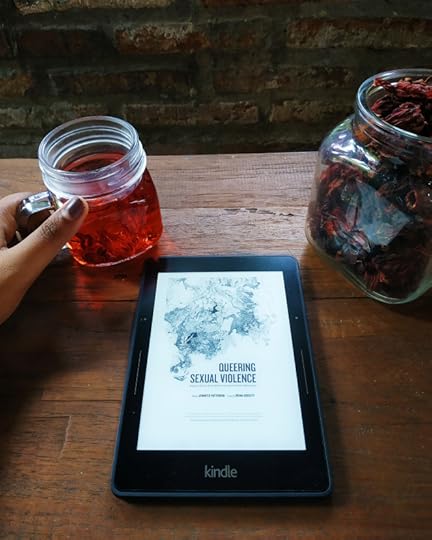
DISCLAIMER: an Arc is provided by NetGalley and the publisher in exchange for an honest review.
TRIGGER WARNING: The book contains of the notion and stories of violation, homophobia, incest, depression, suicide attempts, sexual abuse, discrimination, etc). As this is a non-fiction book, all the situation and condition either described or portrayed were and are real.
"Our bodies are our greatest strength: our sexuality, out senses, our instincts, and our greatest vulnerability: our ability to be not just penetrated and physically violated, but also psychologically abused, damaged, and shamed for our desires and perceived desires. We carry around these hurts, these sometimes invisible scars, these sometimes gaping wounds, into out adult lives and out adult sexualities. out bodies feel good, until we remember what may have been done to them by trusted loved ones or strangers or abusive partners. Out desires feel good, until they don't and we think we should be wanting or feeling some other way and we are ashamed. Most of us don't know what to do with this feelings, this trauma of violation that we have stored in our bones, in our tendons, in our muscles. Sure, there are many ways to escape the memories and history-denial, numbness.But that often means cutting off communication with what our bodies are saying to us. Sometimes the numbness is a small price to pay for not feeling what may be stored in our bodies. Sometimes the work of feeling again means going back into those old memories and working them out - sometimes they may not even be out memories, they may be part of the collective unconscious that for some reason is in storage in our bodies. Maybe for a while we can find somewhere safe, someone safe, to help us hold back the monster memories, but it is temporary. Because wherever we go, there we are: if our minds or our own bodies or our own histories scare us, the best way I know how to deal is to look directly at it and see what is inside. To incorporate, to invite in. To sit down with the monsters for a cup of tea. We cannot erase the past."
there are so many more topics and views to be discussed in this book. I will give you the time to discover it by yourself as this is the book you should give a go and experience to read by yourself. Whether you do agree or disagree, it does not matter. It helps you to understand that there are many things happen surround us which may be hard to explains through words but should be acknowledged. If you have read it, I would love to have a discussion with you.
Full review : https://literatureisliving.wordpress....

June 27, 2018
Real Rating: 3.5 Stars - I received a free copy of this anthology through Netgalley in return for an honest review
Content Notices: pretty much everything you can think of – rape, sexual violence, incest, child abuse, eating disorders, BDSM, institutional violence, suicide attempts, physical violence, racism, racialized violence, neglect, emotional abuse, domestic abuse
Writing this review is incredibly hard because Queering Sexual Violence is such an important book which is packed full of queer people’s lived experiences of sexual violence. How do you even begin to rate and review a book which shares incredibly sensitive, emotional, powerful life experiences of which many of the contributors are sharing for the first time? It’s an almost impossible task and as such, I want to shift the focus of this review away from “reviewing” their stories and focus it instead on the anthology instead – what it’s about, why it’s so important, and my experience of reading the collection as a whole.
“I do not see these aspects of my identity as separate, or separable. They do not exist as isolated truths. Each identity plays into and informs the other…”
I want to start by saying that the importance of Queering Sexual Violence (QSV) should not be understated. As a queer, transmasculine person I have never seen myself reflected within anti-sexual violence discourses or welcomed into sexual survivor spaces and this is often the case for many fellow queer people who are constantly denied access too. QSV brings together a diverse collection of 37 contributions from queer, trans and gender non-conforming survivors from within the anti-violence movement and is organized around four themes; Redefining, Reclaiming, Resisting, Reimagining. It is a space in which they are able to speak, to share, to rage, to cry, to reflect, to organize, and to challenge dominant sexual violence discourse.
“In order to truly address the root causes of sexual violence and move forward… we must abandon the Victim/Survivor and Survivor/Perpetrator binaries. Maybe then we will be better able to embrace our own complex identities, create a truly anti-sexual violence framework… and sustain a powerful and inclusive movement”
One of the main things that I loved about this anthology is that it disrupts so many of the harmful dichotomies which are entrenched within the anti-violence movement and sexual violence discourse such as victim/survivor, victim/perpetrator, male/female, safe/unsafe. Men are always framed as perpetrators of sexual violence, women always as the victims. As one contributor argues, these strict oppositional presentations oversimplify all of the complexities and nuances of individuals, relationships, narratives, and experiences, and which result in the perpetuation of violence against queer people. Abusive female partners are allowed to continue access to those that they have abused, even within “safe spaces”. Abused men are denied access from community support groups and organizing spaces, leaving them isolated and vulnerable to further abuse. People of colour are subjected to further racism and racialized violence, and trans people are left out in the cold with no resources despite both people of colour and trans people (especially QTIPOC) experiencing disproportionate amounts of sexual violence.
“And standing there, I asked myself: am I a Survivor? I had survived my battles – I was alive, after all – but she made it sound like this Survivor was someone in particular, someone unabashed, sweet, optimistic… someone with an obligation. And I knew I could never be that Survivor.”
For the first time, I found myself being able to relate to some of the narratives told throughout this collection. As mentioned before, as a queer, transmasculine person I have been constantly denied access to survivor spaces and from entering into anti-violence discourses because men are always seen as perpetrators of violence and therefore are unsafe. Like many of the contributors, this has meant that I haven’t been allowed the space to share my experiences or even begin to process things that have happened to me in the past, yet countless abusive non-male identified people are welcomed into those spaces and allowed to continue enacting their abusive behaviors upon others. QSV is so, so, so important for not only disrupting these harmful attitudes but also for providing a space for queer people to actually see themselves reflected in the narratives being shared.
“We believe that offering this gender inclusive model of safe space is essential because what we are trying to exclude from a safe space is not a particular form of body… but rather, the potential, will, and habit to do violence in its many subtle and blatant forms”
It would be impossible to truly give an accurate picture of all the things that QSV offers in a way that would do it any kind of justice. All I can do is encourage you all to pick up the anthology, delve into the experiences being shared, and see for yourself. I was first approved for QSV on Netgalley almost a year ago and it took me a long while to work up to it because I was worried that it would be too heavy to read. Of course, the book does deal with very heavy topics including rape, sexual violence against children including parent/child rape, institutional violence, and suicide attempts to name but a few. However, I personally found it not as heavy to read due to the personal nature of many of the stories but there were a few that I did struggle with – especially those that gave graphic details, used ase-exclusive language, or focused heavily on BDSM.
Lastly, the reasons that I gave this anthology a 3.5-star rating rather than 5 stars is for the following reasons:
* Although QSV as a whole speaks of the importance of disrupting gendered discourse around sexual violence, I was very disappointed by the lack of representation of trans-masculine people. As far as I could work out 6 of the contributors were non-binary, 2 male-identified, and the other 29 works were by queer women (both cis and trans). Although it was amazing to see so many radical voices challenging the idea of men as perpetrators it was gutting that there weren’t any contributions that spoke to my experiences as a trans masculine person.
* As far as I’m aware, there wasn’t any inclusion of asexual or aromantic people are their experiences with sexual violence. In fact, several of the works spoke about the importance of consensual sex and/or BDSM practices for being able to work through a history of sexual violence. In one case, it was argued that sex is the only thing that can achieve that fully which I personally found to be very erasive of asexual people.
* Lastly, I loved that QSV is a collection which depicts multiple experiences, identities, and truths which is imperative for challenging discourses around the “right way” to experience and recover from sexual violence. However, I did find the anthology to be a little bit too long and found it difficult to keep going towards the end – simply because I ran out of steam. It would be a great collection to dip and out of though.
Regardless of these few niggly bits, I would really encourage others to read QSV and encourage others to read it to. The positives of the anthology definitely outweigh the negatives by far and QSV is a fantastic resource that should be utilized more both by people within and outside of radical movements. I will definitely be purchasing a physical copy to continue to refer back to, and am incredibly thankful to both the editor, contributors, and publisher for bringing this collection out into the world.
Check out my blog for more reviews!
Content Notices: pretty much everything you can think of – rape, sexual violence, incest, child abuse, eating disorders, BDSM, institutional violence, suicide attempts, physical violence, racism, racialized violence, neglect, emotional abuse, domestic abuse
Writing this review is incredibly hard because Queering Sexual Violence is such an important book which is packed full of queer people’s lived experiences of sexual violence. How do you even begin to rate and review a book which shares incredibly sensitive, emotional, powerful life experiences of which many of the contributors are sharing for the first time? It’s an almost impossible task and as such, I want to shift the focus of this review away from “reviewing” their stories and focus it instead on the anthology instead – what it’s about, why it’s so important, and my experience of reading the collection as a whole.
“I do not see these aspects of my identity as separate, or separable. They do not exist as isolated truths. Each identity plays into and informs the other…”
I want to start by saying that the importance of Queering Sexual Violence (QSV) should not be understated. As a queer, transmasculine person I have never seen myself reflected within anti-sexual violence discourses or welcomed into sexual survivor spaces and this is often the case for many fellow queer people who are constantly denied access too. QSV brings together a diverse collection of 37 contributions from queer, trans and gender non-conforming survivors from within the anti-violence movement and is organized around four themes; Redefining, Reclaiming, Resisting, Reimagining. It is a space in which they are able to speak, to share, to rage, to cry, to reflect, to organize, and to challenge dominant sexual violence discourse.
“In order to truly address the root causes of sexual violence and move forward… we must abandon the Victim/Survivor and Survivor/Perpetrator binaries. Maybe then we will be better able to embrace our own complex identities, create a truly anti-sexual violence framework… and sustain a powerful and inclusive movement”
One of the main things that I loved about this anthology is that it disrupts so many of the harmful dichotomies which are entrenched within the anti-violence movement and sexual violence discourse such as victim/survivor, victim/perpetrator, male/female, safe/unsafe. Men are always framed as perpetrators of sexual violence, women always as the victims. As one contributor argues, these strict oppositional presentations oversimplify all of the complexities and nuances of individuals, relationships, narratives, and experiences, and which result in the perpetuation of violence against queer people. Abusive female partners are allowed to continue access to those that they have abused, even within “safe spaces”. Abused men are denied access from community support groups and organizing spaces, leaving them isolated and vulnerable to further abuse. People of colour are subjected to further racism and racialized violence, and trans people are left out in the cold with no resources despite both people of colour and trans people (especially QTIPOC) experiencing disproportionate amounts of sexual violence.
“And standing there, I asked myself: am I a Survivor? I had survived my battles – I was alive, after all – but she made it sound like this Survivor was someone in particular, someone unabashed, sweet, optimistic… someone with an obligation. And I knew I could never be that Survivor.”
For the first time, I found myself being able to relate to some of the narratives told throughout this collection. As mentioned before, as a queer, transmasculine person I have been constantly denied access to survivor spaces and from entering into anti-violence discourses because men are always seen as perpetrators of violence and therefore are unsafe. Like many of the contributors, this has meant that I haven’t been allowed the space to share my experiences or even begin to process things that have happened to me in the past, yet countless abusive non-male identified people are welcomed into those spaces and allowed to continue enacting their abusive behaviors upon others. QSV is so, so, so important for not only disrupting these harmful attitudes but also for providing a space for queer people to actually see themselves reflected in the narratives being shared.
“We believe that offering this gender inclusive model of safe space is essential because what we are trying to exclude from a safe space is not a particular form of body… but rather, the potential, will, and habit to do violence in its many subtle and blatant forms”
It would be impossible to truly give an accurate picture of all the things that QSV offers in a way that would do it any kind of justice. All I can do is encourage you all to pick up the anthology, delve into the experiences being shared, and see for yourself. I was first approved for QSV on Netgalley almost a year ago and it took me a long while to work up to it because I was worried that it would be too heavy to read. Of course, the book does deal with very heavy topics including rape, sexual violence against children including parent/child rape, institutional violence, and suicide attempts to name but a few. However, I personally found it not as heavy to read due to the personal nature of many of the stories but there were a few that I did struggle with – especially those that gave graphic details, used ase-exclusive language, or focused heavily on BDSM.
Lastly, the reasons that I gave this anthology a 3.5-star rating rather than 5 stars is for the following reasons:
* Although QSV as a whole speaks of the importance of disrupting gendered discourse around sexual violence, I was very disappointed by the lack of representation of trans-masculine people. As far as I could work out 6 of the contributors were non-binary, 2 male-identified, and the other 29 works were by queer women (both cis and trans). Although it was amazing to see so many radical voices challenging the idea of men as perpetrators it was gutting that there weren’t any contributions that spoke to my experiences as a trans masculine person.
* As far as I’m aware, there wasn’t any inclusion of asexual or aromantic people are their experiences with sexual violence. In fact, several of the works spoke about the importance of consensual sex and/or BDSM practices for being able to work through a history of sexual violence. In one case, it was argued that sex is the only thing that can achieve that fully which I personally found to be very erasive of asexual people.
* Lastly, I loved that QSV is a collection which depicts multiple experiences, identities, and truths which is imperative for challenging discourses around the “right way” to experience and recover from sexual violence. However, I did find the anthology to be a little bit too long and found it difficult to keep going towards the end – simply because I ran out of steam. It would be a great collection to dip and out of though.
Regardless of these few niggly bits, I would really encourage others to read QSV and encourage others to read it to. The positives of the anthology definitely outweigh the negatives by far and QSV is a fantastic resource that should be utilized more both by people within and outside of radical movements. I will definitely be purchasing a physical copy to continue to refer back to, and am incredibly thankful to both the editor, contributors, and publisher for bringing this collection out into the world.
Check out my blog for more reviews!
October 27, 2017
I received a copy of this novel from the publisher via Netgalley, in exchange for an honest review.
Note: I will use Queer as an umbrella term because that is the word I use to identify myself and because that is the word used throughout the book.
"Sometimes we forget things. We forget how limiting and exclusionary binaries are: male/female, victim/survivor, survivor/perpetrator, safe/unsafe. We forget about accountability. We forget that our queer partners can abuse us. We forget that even when we try to create "safe spaces", these spaces can be unsafe to members of our community."
Queering Sexual Violence is the kind of book I wish I'd had to guide me during the last couple of years of my undergrad. This book is a conversation, a dialogue, an exposition, an anthology of diverse voices who peel back layers upon layers of a topic we don't usually talk: Queer Violence.
The anthology focuses on different sides, binaries, and stereotypes that have plagued and hindered the Anti-Violence Movement, such as the idealization of the "survivor" (as opposed to a "victim"), the "correct" way of dealing with trauma and violence, the expected perpetrator, the conception of "safe spaces", and the place of queer people in the movement.
To do this, the book is divided into four parts, each of which explores and challenges different aspects of the Anti-Violence Movement. Redefining deals with the misconceptions and essentialization that limit the scope and reach of the movement, such as the "ideal" survivor behavior, the different types of sexual violence people encounter and how they might shape them. It also offers insights into how safe spaces for healing and acceptance are oftentimes not welcoming to people who act or look too "queer" to fit in with their views, even inside the queer community.
Reclaiming deals with what it takes to move on and work towards a collective and personal healing. Reclaiming is taking back the story and everything that's been taken from people, the control of a non-linear and faded narrative that people have tried to wipe clean with bleach and oil, but managed to only spread the pieces apart. This part of the anthology has beautiful poems and heartwrenching stories that have been pieced together with time, and tears, and patience. In a way, Reclaiming is healing.
Resisting is the "fight back" part, where "no means no" and pushing back in the face of rape culture and abuse, is exposed in way better words than I can even pretend to have. Resisting defines and paints a racist, homophobic, stupid, and power high culture that believes itself superior to everything else, and then tells us what needs to change, how we can and need to push back, resist, fight.
Finally, Reimagining takes a look at the what ifs; not the "what if things were different" but "what if we made things different". The authors in Reimagining root their ideas in their past experiences to explain why and how certain aspects could and should be changed, fixed, improved. The tone of the writings starts oftentimes angry, or sad, but they turn back to hopeful, or optimistic in time.
I loved the intimacy of each writing, even though it was painful or shocking to read at times. I was informed, and even challenged by some of the points of views presented, and I learned a lot about other realities and problems to which I might have been blinded by stereotypes, willful ignorance, or just plain misunderstanding. I never felt like I was being spoon-fed ideas, or that the book was supposed to be taken passively. No, Jennifer Patterson framed this anthology in such an artful and careful way that everything builds up and moves you toward something. Maybe you're not supposed to just take what you're being shown, but you will see it. Invisibility is one of our community's (the queer community) biggest flaw and Jennifer Patterson, and every single talented person involved in this book is fighting against that virus. Yeah, we're there but we don't see beyond our "kin", we fight individual battles, pushing for things in a million and one directions because we still believe that we are a homogenous thing that is affected by the same one thing (spoiler: we are not).
This book will make you uncomfortable, it will challenge what you know and think, and feel because at its core this book wants you to think, to see: Why is this book so necessary? Why are we hearing this voices now and not before? Why is this so controversial? What about this makes you uncomfortable? What about this is familiar? Why did we stop listening?
These are the questions you need to ask and answer for yourself because Queering Sexual Violence is an invitation and a discussion that you need to have with yourself.
If not you, who?
Note: I will use Queer as an umbrella term because that is the word I use to identify myself and because that is the word used throughout the book.
"Sometimes we forget things. We forget how limiting and exclusionary binaries are: male/female, victim/survivor, survivor/perpetrator, safe/unsafe. We forget about accountability. We forget that our queer partners can abuse us. We forget that even when we try to create "safe spaces", these spaces can be unsafe to members of our community."
Queering Sexual Violence is the kind of book I wish I'd had to guide me during the last couple of years of my undergrad. This book is a conversation, a dialogue, an exposition, an anthology of diverse voices who peel back layers upon layers of a topic we don't usually talk: Queer Violence.
The anthology focuses on different sides, binaries, and stereotypes that have plagued and hindered the Anti-Violence Movement, such as the idealization of the "survivor" (as opposed to a "victim"), the "correct" way of dealing with trauma and violence, the expected perpetrator, the conception of "safe spaces", and the place of queer people in the movement.
To do this, the book is divided into four parts, each of which explores and challenges different aspects of the Anti-Violence Movement. Redefining deals with the misconceptions and essentialization that limit the scope and reach of the movement, such as the "ideal" survivor behavior, the different types of sexual violence people encounter and how they might shape them. It also offers insights into how safe spaces for healing and acceptance are oftentimes not welcoming to people who act or look too "queer" to fit in with their views, even inside the queer community.
Reclaiming deals with what it takes to move on and work towards a collective and personal healing. Reclaiming is taking back the story and everything that's been taken from people, the control of a non-linear and faded narrative that people have tried to wipe clean with bleach and oil, but managed to only spread the pieces apart. This part of the anthology has beautiful poems and heartwrenching stories that have been pieced together with time, and tears, and patience. In a way, Reclaiming is healing.
Resisting is the "fight back" part, where "no means no" and pushing back in the face of rape culture and abuse, is exposed in way better words than I can even pretend to have. Resisting defines and paints a racist, homophobic, stupid, and power high culture that believes itself superior to everything else, and then tells us what needs to change, how we can and need to push back, resist, fight.
Finally, Reimagining takes a look at the what ifs; not the "what if things were different" but "what if we made things different". The authors in Reimagining root their ideas in their past experiences to explain why and how certain aspects could and should be changed, fixed, improved. The tone of the writings starts oftentimes angry, or sad, but they turn back to hopeful, or optimistic in time.
I loved the intimacy of each writing, even though it was painful or shocking to read at times. I was informed, and even challenged by some of the points of views presented, and I learned a lot about other realities and problems to which I might have been blinded by stereotypes, willful ignorance, or just plain misunderstanding. I never felt like I was being spoon-fed ideas, or that the book was supposed to be taken passively. No, Jennifer Patterson framed this anthology in such an artful and careful way that everything builds up and moves you toward something. Maybe you're not supposed to just take what you're being shown, but you will see it. Invisibility is one of our community's (the queer community) biggest flaw and Jennifer Patterson, and every single talented person involved in this book is fighting against that virus. Yeah, we're there but we don't see beyond our "kin", we fight individual battles, pushing for things in a million and one directions because we still believe that we are a homogenous thing that is affected by the same one thing (spoiler: we are not).
This book will make you uncomfortable, it will challenge what you know and think, and feel because at its core this book wants you to think, to see: Why is this book so necessary? Why are we hearing this voices now and not before? Why is this so controversial? What about this makes you uncomfortable? What about this is familiar? Why did we stop listening?
These are the questions you need to ask and answer for yourself because Queering Sexual Violence is an invitation and a discussion that you need to have with yourself.
If not you, who?

September 9, 2017
Source; Publisher Via Netgalley
Queering sexual violence is a collection of essays, written by members of the LGBT+ (queer) community, that seek to challenge current ideas of; sexual identity, sex, sexual violence, and the current structure of society. Each essay, in its own unique way, speaks of the ways that certain individuals are excluded from both; the mechanisms in place to help survivors of sexual abuse, and the theoretical framework that support these organisations. They speak, poignantly, of; their experiences of violence, the effects of that violence on their lives, their attempts to seek help, the battles to have their pain acknowledged, and the ways that they have found their own unique path to healing.
The writers challenge the way in which we see certain issues and the ways that these issues interact; uncoupling some concepts while highlighting the connection between others. Those who survived sexual abuse firmly state that, while their experiences have shaped their life and sexual choices, they choice of sexuality cannot be wholly explained by their childhood experience of violence. Other writers seek to force the readers to see connections between violence to the individual body and the violence that we inflict on, both; the wider society and the planet that we all share.
This work is a valuable addition to both; the activism and theory surrounding sexual violence, queering, and extending their scope to include more stories and more ways of seeing the world. Moreover, while being an academic work, the general reader would have no difficulty understanding, and being moved by this work.
Queering sexual violence is a collection of essays, written by members of the LGBT+ (queer) community, that seek to challenge current ideas of; sexual identity, sex, sexual violence, and the current structure of society. Each essay, in its own unique way, speaks of the ways that certain individuals are excluded from both; the mechanisms in place to help survivors of sexual abuse, and the theoretical framework that support these organisations. They speak, poignantly, of; their experiences of violence, the effects of that violence on their lives, their attempts to seek help, the battles to have their pain acknowledged, and the ways that they have found their own unique path to healing.
The writers challenge the way in which we see certain issues and the ways that these issues interact; uncoupling some concepts while highlighting the connection between others. Those who survived sexual abuse firmly state that, while their experiences have shaped their life and sexual choices, they choice of sexuality cannot be wholly explained by their childhood experience of violence. Other writers seek to force the readers to see connections between violence to the individual body and the violence that we inflict on, both; the wider society and the planet that we all share.
This work is a valuable addition to both; the activism and theory surrounding sexual violence, queering, and extending their scope to include more stories and more ways of seeing the world. Moreover, while being an academic work, the general reader would have no difficulty understanding, and being moved by this work.
February 15, 2018
A vital critique of the anti-sexual violence movement. This collection of essays illustrates the gaps that continue to exist in services to sexual assault survivors and the layered complexities that trauma brings to our identities. Although there is a listed Editor, these essays appear to be unedited as a conscious choice to allow the most authentic and direct voice of each author. For those survivors in the LGBT community who intend to read this, I encourage you to take your time, take breaks, take care.

February 20, 2018
This book is a necessary read for everyone who is concerned about the epidemic of sexual violence and how to address sexual violence in contemporary culture. It is a compelling book with very solid individual chapters. The fact that we finally have a book that addresses the complex issues of sexual & gender violence for folks who are LGBTQ and the complicated impacts of sexual & gender violence in LGBTQ communities.

March 26, 2017
Finally, an anthology telling the stories of queer and trans survivors. This anthology is close to my heart as a queer survivor of decades of violence, I recommend it to both queer folx and those seeking knowledge expansion and perspective.

May 12, 2017
Less theory and more lived experience, but still a crucial intervention into a lot of the current narrative + conversation on anti-violence work. Very intense and difficult to get through at some moments, but necessary reading for sure; I felt better after having read it than before.

February 13, 2017
This book was amazing and I can't recommend it highly enough. Everyone should read it.
September 16, 2017
A brilliant collection which reflects on the intersectionality and complexity of gender violence and how it affects lgbtq communities.

December 29, 2018
not an easy read, but an important one, especially for anyone who is or will be working with queer survivors of sexual violence

January 24, 2022
Highly recommend this book, it was so insightful and full of nuance. I loved the "Redefining" section the most as it encourages different ways of looking at sexual violence, redefining survivor, victims, and perpetrators, and encourages us to look beyond punishing as a form of justice. Of course the essays, speeches, and poems are heavy and there's no escaping that, but I do wish before each writing that there could have been trigger and content warnings so that we can be prepared for mentions of mental illness, suicide, trauma, and so forth.
Some of my favorite essays were:
- "Fluctuations in Voice: A Genderqueer Response to Traumatic Violence" by River Willow Fagan
- "Removing the Mask: AfroLez®femcntric Silence Breaker" by Aisha Shadidah Simmons
- "Beyond the Binaries: Exclusive Dichotomies in the Anti-Sexual Violence Movement" by Rousse Arielle
- "Infinity & the Construction of Safe Space" by Samantha Barrick
- "A Life of Healing" by Mikaya Heart
- "To My Little Gender Bender" by Angie River
- "No Means No" by Kari Krome
- "Holding the Pattern while Living Our Truth: Ida Hammer Seeking on Violence Against Trans Women, as told to Reina Gossett"
Some passages that stood out to me:
Some of my favorite essays were:
- "Fluctuations in Voice: A Genderqueer Response to Traumatic Violence" by River Willow Fagan
- "Removing the Mask: AfroLez®femcntric Silence Breaker" by Aisha Shadidah Simmons
- "Beyond the Binaries: Exclusive Dichotomies in the Anti-Sexual Violence Movement" by Rousse Arielle
- "Infinity & the Construction of Safe Space" by Samantha Barrick
- "A Life of Healing" by Mikaya Heart
- "To My Little Gender Bender" by Angie River
- "No Means No" by Kari Krome
- "Holding the Pattern while Living Our Truth: Ida Hammer Seeking on Violence Against Trans Women, as told to Reina Gossett"
Some passages that stood out to me:
"So now, looking beyond the conceptual image of spectrum, queer pushes us towards the Infinity of the stars, a metaphor of galaxy that captures the potential for innumerable re-combinations of physical attributes, and social, spiritual, cultural identifiers that we may choose to describe as masculine or feminine or not."
I think of healing as the increased ability to act more spontaneously, appropriately, creatively, candor genuinely in response to the challenges, realities, and pleasures of the present lived moment. I propose that healing diminishes the experience of being trapped by stories of the past or the detrimental narratives that continue to follow us that are no longer based in reality. Part of healing is finding the narratives and images that you want to work with you as you continue to grow. So as queer deconstructs a sense of safety built on the falsehoods of gender and heteronormativity, the crosswinds of this questioning urge us to dispose of other static or harmful narratives of sexual victimhood."
"The benefits of consensual sex are legion: it is the easiest and quickest way for most of us to reach a state of bliss, an enhanced awareness of reality, a sense of one-nesss, an absolutely different level of consciousness that involves a profound experience of delight, truth, beauty, joy, and peace. It uses the body to take us far beyond the body, enabling us to experience other realms of existence."
September 18, 2021
3.5 stars
Most of these works are both devastating and wonderfully written, but it is a little hard figuring out how to evaluate this collection as a whole. I did really like how eclectic the different pieces were and how vast the connections that were being made, for example the description of the book states that pieces touch on: "disability justice, sex worker rights, healing justice, racial justice, gender self-determination, queer & trans liberation and prison industrial complex abolition through reflections, personal narrative, and strategies for resistance and healing". It was very refreshing reading own voices as well. Overall really informative and strong read.
book given in exchange for honest review
Most of these works are both devastating and wonderfully written, but it is a little hard figuring out how to evaluate this collection as a whole. I did really like how eclectic the different pieces were and how vast the connections that were being made, for example the description of the book states that pieces touch on: "disability justice, sex worker rights, healing justice, racial justice, gender self-determination, queer & trans liberation and prison industrial complex abolition through reflections, personal narrative, and strategies for resistance and healing". It was very refreshing reading own voices as well. Overall really informative and strong read.
book given in exchange for honest review
May 21, 2026
Absolutely incredibly anthology. This book was recommended to me by a facilitator of a sexual violence crisis-training I took, and WOW this is ESSENTIAL READING.
By including a wealth of perspectives (30+ authors!) it really gets to the heart of not only sexual violence, but CSA, and how all of this impacts not only dominant cultures but queer, POC, communities. Tough at times, but very well done. Excellent read.
By including a wealth of perspectives (30+ authors!) it really gets to the heart of not only sexual violence, but CSA, and how all of this impacts not only dominant cultures but queer, POC, communities. Tough at times, but very well done. Excellent read.
April 25, 2025
Some of the readings i REALLy enjoyed and others i really had to skim. Very 50/50. I like how it went into kink as a therapeutic concept
April 15, 2017
This was difficult to read at times but illuminating! Such lived experience around queer sexual violence is crucial! As a social worker, I look forward to incorporating these insights.

January 24, 2022
To see more reviews check out MI Book Reviews.
I got an ARC of this book.
I got this book because I have noticed an alarming trend of sexual violence in the gay male community in the area I am in. I get death threats and threats of violence for being open about being a trans man. I am told I am worthless and do not belong. I am excluded from pride events because of my status as trans by the organizers. I have reached out to queer groups in the area, only to be turned away again and again. Sexual violence in the norm for a trans man in this area. So I was looking to this book to help me unpack my feelings and start to deal with not only my own experiences of being sexually abused growing up, being raped when I was a teenager, and the multiple times of being molested by partners, but also deal with the fact that I often feel alone and not believed when it comes to my experiences. I am told that what I experience is either completely fake or that I am exaggerating what it is really like to attempt to connect with other “queer” people here by the very community that claims to support me.
This book was able to touch on every single issue I had from the “I can’t call this rape” feelings of my teenage years to “my mother didn’t believe or care when I told her about grandpa” to “there are no services for someone that is queer like me to deal with this”. This book is tremendously powerful just in the bravery it takes the queer people to put their names on the stories because of how queer people are treated when they are honest about experiencing sexual violence. The book covers a range of what sexual violence can be from what people view rape as to people who were clearly violated, but were unsure what to do or feel because of how their lives were.
The stories are intensely personal and necessary. No one wants to believe these stories are possible, but they are. There was not a single moment where doubt went through my mind. That may be because of my own status as a “survivor” since it seems rare that someone is believed when it comes to sexual violence. I listen to how people talk about it in the jail where I volunteer. I work with kids who actively brag about how they will rape and kill someone or how they watched a girl get raped but how the guy doesn’t deserve to be in jail because he is attractive. There is so much disconnect between what is happening and what people see. It scares me. It sickens me. This book touches on those feelings and took me further.
The pieces range from the academic/theory of word choices (survivor vs victim) to graphic stories of abuse. It was just the right mixture. It allowed there to be logic and emotion. It allowed the book to feel alive and breathing. It allowed for all stages of healing to be represented. It allowed all ways of healing to be seen. Not everyone can afford therapy or find a therapist. Not everyone is allowed to have a community because of who the person was who attacked them. Not everyone has or wants to cut off ties with who committed the violence. Not everyone wants to admit that queer sexual violence in a thing. It is harder for people to admit that a man could be the victim and/or a woman could be the perpetrator. There is so much that people don’t want to see or believe, that people are left behind and are being thrown away. This book covers it all.
I can’t say enough about this book.
I got an ARC of this book.
I got this book because I have noticed an alarming trend of sexual violence in the gay male community in the area I am in. I get death threats and threats of violence for being open about being a trans man. I am told I am worthless and do not belong. I am excluded from pride events because of my status as trans by the organizers. I have reached out to queer groups in the area, only to be turned away again and again. Sexual violence in the norm for a trans man in this area. So I was looking to this book to help me unpack my feelings and start to deal with not only my own experiences of being sexually abused growing up, being raped when I was a teenager, and the multiple times of being molested by partners, but also deal with the fact that I often feel alone and not believed when it comes to my experiences. I am told that what I experience is either completely fake or that I am exaggerating what it is really like to attempt to connect with other “queer” people here by the very community that claims to support me.
This book was able to touch on every single issue I had from the “I can’t call this rape” feelings of my teenage years to “my mother didn’t believe or care when I told her about grandpa” to “there are no services for someone that is queer like me to deal with this”. This book is tremendously powerful just in the bravery it takes the queer people to put their names on the stories because of how queer people are treated when they are honest about experiencing sexual violence. The book covers a range of what sexual violence can be from what people view rape as to people who were clearly violated, but were unsure what to do or feel because of how their lives were.
The stories are intensely personal and necessary. No one wants to believe these stories are possible, but they are. There was not a single moment where doubt went through my mind. That may be because of my own status as a “survivor” since it seems rare that someone is believed when it comes to sexual violence. I listen to how people talk about it in the jail where I volunteer. I work with kids who actively brag about how they will rape and kill someone or how they watched a girl get raped but how the guy doesn’t deserve to be in jail because he is attractive. There is so much disconnect between what is happening and what people see. It scares me. It sickens me. This book touches on those feelings and took me further.
The pieces range from the academic/theory of word choices (survivor vs victim) to graphic stories of abuse. It was just the right mixture. It allowed there to be logic and emotion. It allowed the book to feel alive and breathing. It allowed for all stages of healing to be represented. It allowed all ways of healing to be seen. Not everyone can afford therapy or find a therapist. Not everyone is allowed to have a community because of who the person was who attacked them. Not everyone has or wants to cut off ties with who committed the violence. Not everyone wants to admit that queer sexual violence in a thing. It is harder for people to admit that a man could be the victim and/or a woman could be the perpetrator. There is so much that people don’t want to see or believe, that people are left behind and are being thrown away. This book covers it all.
I can’t say enough about this book.

December 24, 2017
“in order to begin dismantling and transforming these broken systems, we must build a conception of justice that does not simply ask ‘how do we most effectively punish those who commit individual acts of violence?’ but ‘what kind of future do we want, and how do we work to realize it?’” —katherine scott nelson
most of these works are both devastating and wonderfully written, but i don’t really know how to evaluate this collection as a whole. i’m not as well read in this subject (both queer sexual violence and restorative justice) as i’d like to be so maybe that’s why it just felt.. disparate to me. more than once writers insisted on not excluding abusers from the community— which i understand the merits of but have mixed feelings about, and it was a little jarring to see that being said with little to be said about the ones they abused. i also took issue with some writers asserting that individuals can inhabit both the abused and abused role— not because i disagree but because it was said without interrogating personal culpability. i don’t know. on a more nit picky note the editing here was just very lacking... but i bought it off a resale site so who knows, maybe i got an advance copy. i’ll be ruminating and reading more about all this
most of these works are both devastating and wonderfully written, but i don’t really know how to evaluate this collection as a whole. i’m not as well read in this subject (both queer sexual violence and restorative justice) as i’d like to be so maybe that’s why it just felt.. disparate to me. more than once writers insisted on not excluding abusers from the community— which i understand the merits of but have mixed feelings about, and it was a little jarring to see that being said with little to be said about the ones they abused. i also took issue with some writers asserting that individuals can inhabit both the abused and abused role— not because i disagree but because it was said without interrogating personal culpability. i don’t know. on a more nit picky note the editing here was just very lacking... but i bought it off a resale site so who knows, maybe i got an advance copy. i’ll be ruminating and reading more about all this
February 11, 2024
this book did not achieve my therapy homework objectives, but also made me feel uncomfortable things that I needed to feel and really really resonated in ways I did not even expect. fucking difficult and painful to rate the most vulnerable stories of other people’s pain. heterosexism was the word this book gave me that I was looking for to articulate the assumption of a common sv story and how invalidating it is to one’s sexuality to assume the violence that happened you followed some sort of heteronormative script as to what violence should look like. I selfishly wished this covered stories that felt more like representation to me, but I learned so much regardless. all the writing in this collection just really nails the idea of integrating all the parts of yourself both the messiest and beautifulest. I love to embrace the chaos! I hate to embrace the chaos! (favs were: queers don’t do sexual violence do we, welcome effects, sweet release, queering heathy sexuality, page by page, generations, hands, my justice is her justice, and not a good survivor)
This entire review has been hidden because of spoilers.
March 27, 2018
An important read for those providing services for sexual violence survivors and activists in this area. Some interesting discussions around victim/survivor and victim/perpetrator dichotomies, how queer and trans folk are not being served by existing services, and lots of reflections of how sexuality is influenced (or not) by previous sexual violence. I didn't understand the logic by which the book was organised, and it was quite a difficult read with some graphic descriptions of sexual violence.

January 18, 2023
Trigger warning. If you have experienced any type of violence this book may trigger you. This is a book full of personal stories and experiences of those who identify as lgbtqia. You can feel their triumph and pain come through the pages. These essays though some are medical and seem like research, others are stories welcoming you into their world.
Learn from their stories and help others who may be experiencing violence. If you are experiencing violence personally, use their stories to strengthen yourself.
Learn from their stories and help others who may be experiencing violence. If you are experiencing violence personally, use their stories to strengthen yourself.

October 26, 2025
for less than 300 pages this covered a lot of ground. theres criticism of the prison system, the psychiatric system, the social construct of the "perfect victim". theres even some poetry and visual art. lots of variation in quality between different sections, but thats to be expected in an anthology like this and I think when it comes to this particular topic its not a bad thing.
May 27, 2023
This is a book I wish I could have had when I was a teen, or in my early twenties, feeling so lost after my experiences with sexual and emotional abuse.
This anthology was everything I wanted it to be, and maybe even more than that.
This anthology was everything I wanted it to be, and maybe even more than that.

May 17, 2020
read it
Displaying 1 - 30 of 39 reviews