Jump to ratings and reviews
Rate this book

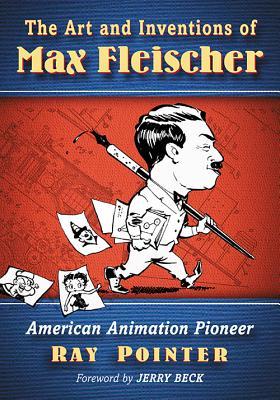
The Art and Inventions of Max Fleischer: American Animation Pioneer

Rate this book
The history of animated cartoons has for decades been dominated by the accomplishments of Walt Disney, giving the impression that he invented the medium. In reality, it was the work of several pioneers. Max Fleischer--inventor of the Rotoscope technique of tracing animation frame by frame over live-action footage--was one of the most prominent. By the 1930s, Fleischer and Disney were the leading producers of animated films but took opposite approaches. Where Disney reflected a Midwestern sentimentality, Fleischer presented a sophisticated urban attitude with elements of German Expressionism and organic progression. In contrast to Disney's naturalistic animation, Fleischer's violated physical laws, supporting his "If it can be done in real life, it isn't animation." As a result, Fleischer's cartoons were rough rather than refined, commercial rather than consciously artistic--yet attained a distinctive artistry through Fleischer's innovations. This book covers his life and work and the history of the studio that bore his name, with previously unpublished artwork and photographs.

320 pages, Paperback

Published January 24, 2017

8 people are currently reading
231 people want to read

About the author

Ratings & Reviews

What do you think?
Rate this book

Friends & Following

Create a free account to discover what your friends think of this book!

Community Reviews

5 stars
6 (25%)
4 stars
12 (50%)
3 stars
5 (20%)
2 stars
0 (0%)
1 star
1 (4%)
Displaying 1 - 3 of 3 reviews
Profile Image for Jim Razinha.
1,525 reviews89 followers
August 22, 2022
I watched the Popeye shorts when I was young and was fascinated with the realism of Gulliver (also seen when I was young, note to self: probably not in 50 years...must remedy). I've only had a tertiary knowledge of Max Fleischer until now. This is less a biography than a history. I knew Fleischer had invented many of the techniques of animation, but I didn't realized how many (the author reproduces quite a few copies of the original patents here.) There is a sad element of how Max (and later in life estranged brother/partner Dave) were marginalized and then ousted by the execs at Paramount. Disney gets all the accolades, with the Warner Termite Terrace crew not far behind, and the MGM animators just behind them, but Max and Dave pushed the boundaries early. They just didn't keep up and were passed by the industry they helped pioneer, much as Winsor McCay (Gertie the Dinosaur) was. And McCay lamented at a 1927 birthday dinner recognizing him as the "inventor of animation":
Animation should be an art. That is how I conceived it. But as I see what you fellows have done with it, is making it into a trade. Not an art, but a trade.

This is obviously a labor of love for Mr. Pointer. Many of the illustrations, copies of documents and more are from his person collection. And yet he still maintained objectivity in his analysis of some of the may problems with different animations, including the full length features. A good view of the studio, the Fleischers, and their work (there is a great comprehensive list of everything produced at the end of the book.)

Disney may have the accolades, and he deserved them. Pointer recounts a story:
For Max, the concern was strictly fluid action for its own sake. Walt Disney was more focused on the context of the action, and the stories of his Sweat Box Pencil Test sessions have become legendary. Fleischer Animator Berny Wolf told of the famous 13 corrections he made for a scene of the Jimmy Durante pelican characters in Elmer the Elephant (1936):

Walt looked at it and said, “Who did that?” I slumped down in the chair and said in a little voice, “I did.” Walt looked back with one eyebrow up, he said, “You know better than that!” So I took my stuff out of the reel and went back to my desk with it. And for the next week I handed in my corrections. And I didn’t know what the Hell was wrong with them. I made 13 corrections on the one scene. I had it back in Sweat Box at least six times. The bulk of the time Walt wouldn’t even pay any attention to it. Jackson directed it. So I said what’s wrong with it? And he said (whispering), “Berny, I don’t know what’s wrong with it.” He’d say “Why don’t you ask ‘so-and-so’”? I asked “so-and-so” and he wouldn’t know. I’m going crazy. The next time in the Sweat Box, Walt says, “When are you going to correct that?” I get back to my desk and take the whole reel out down to my room to see if I can figure what the Hell it was. And I looked at everybody else’s as well as mine, and I finally caught it. It was ever so subtle. The action flow went (left to right). My Durante went (left to right). So I flopped my drawings, re-shot it (with) bottom lights. (Now) he went (right to left). I get it in the reel and Walt says, “Finally! Finally!”
There is something to admire in the ability to notice a small detail that throws everything off.


Displaying 1 - 3 of 3 reviews

Can't find what you're looking for?

Get help and learn more about the design.