What do you think?
Rate this book


240 pages, Kindle Edition
Published April 28, 2016

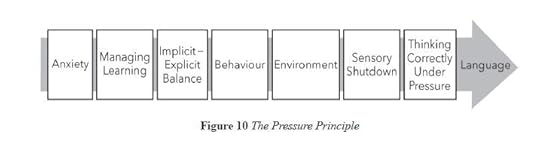
PRESSURE: The interference with the ability to concentrate on a process, consciously or subconsciously, causing deterioration in technique and decreasing the level of performance.
"My hope is that anyone wanting to improve their performance in a pressured environment will be helped by this book. My message is that you are capable of achieving so much more, whoever you are. I don’t have all the answers – I too subscribe to the no-limits mindset and am always learning and keen to improve – but I am about to share the results of my experience as a teacher, a learner and a coach to some of the best in the world in the most pressured environments imaginable."
"The truth is that we can learn a good deal from our youthful approach to challenges. A twenty-nine-year-old man can learn much from a five-year-old in their ability to take on a task with enthusiasm and excitement. Young children get into the ugly zone very easily. They have an instinctive, relentless curiosity and hunger to learn new things and they have none of the fear of failure that inhibits an adult. They love the thrill of learning, and when it gets tough and they fail at it, well, they just try again … and again – attempting to work out what they need to do differently. How much more easily than an adult is a child able to learn to ride a bike, speak a new language or learn to swim?
One would hope that children receive nothing but encouragement from their parents as they try new things, so their self-esteem is high, there is no negative consequence of failure and, once they stop, they’re often mentally exhausted and go to sleep for an hour or so, before waking up and doing it all again with the same enthusiasm and commitment. What a great mindset to bring to learning to perform in a pressure environment!"

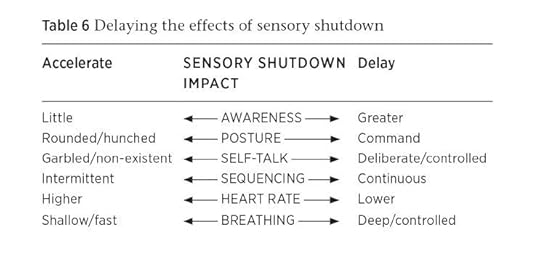
"When we’re under pressure, there is a continual tension between the onset of sensory shutdown and effective performance and decision-making.
Some are more relevant to the likes of a fighter pilot than they are to, say, a golfer, while others might be more useful when driving a car than when playing in a football match, but most are universal.
It is our challenge to implement these techniques to help us delay sensory shutdown, which can debilitate us when we need our wits about us most. The greater our awareness, the more we are able to delay its effects, through taking up command posture to manage the physical impact of anxiety; through self-talk if we need it – either in our heads or out loud – to help us focus; through sequencing the less-critical layers of our performance that we often need to keep aware of even under duress; by doing our best to keep a lower heart rate, whether that’s by going beyond match in your preparation, keeping fit through regular exercise or just taking deep, controlled breaths to take on more oxygen and calm us before we take to the match environment.
In this way we can improve our control in the pressured environments we face, rather than having the environment control us. Through managing these facets and practising them we will navigate, communicate and administrate effectively when flying our own plane..."