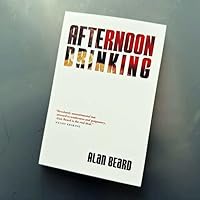
A collection of 13 short stories which offer a humorous study of humanity. The subject matter ranges from a tale of adultery to an analysis of self-doubt and a story on the banality of existence.
Doris Lessing was born into a colonial family. both of her parents were British: her father, who had been crippled in World War I, was a clerk in the Imperial Bank of Persia; her mother had been a nurse. In 1925, lured by the promise of getting rich through maize farming, the family moved to the British colony in Southern Rhodesia (now Zimbabwe). Like other women writers from southern African who did not graduate from high school (such as Olive Schreiner and Nadine Gordimer), Lessing made herself into a self-educated intellectual.
In 1937 she moved to Salisbury, where she worked as a telephone operator for a year. At nineteen, she married Frank Wisdom, and later had two children. A few years later, feeling trapped in a persona that she feared would destroy her, she left her family, remaining in Salisbury. Soon she was drawn to the like-minded members of the Left Book Club, a group of Communists "who read everything, and who did not think it remarkable to read." Gottfried Lessing was a central member of the group; shortly after she joined, they married and had a son.
During the postwar years, Lessing became increasingly disillusioned with the Communist movement, which she left altogether in 1954. By 1949, Lessing had moved to London with her young son. That year, she also published her first novel, The Grass Is Singing, and began her career as a professional writer.
In June 1995 she received an Honorary Degree from Harvard University. Also in 1995, she visited South Africa to see her daughter and grandchildren, and to promote her autobiography. It was her first visit since being forcibly removed in 1956 for her political views. Ironically, she is welcomed now as a writer acclaimed for the very topics for which she was banished 40 years ago.
In 2001 she was awarded the Prince of Asturias Prize in Literature, one of Spain's most important distinctions, for her brilliant literary works in defense of freedom and Third World causes. She also received the David Cohen British Literature Prize.
She was on the shortlist for the first Man Booker International Prize in 2005. In 2007 she was awarded the Nobel Prize for Literature.
(Extracted from the pamphlet: A Reader's Guide to The Golden Notebook & Under My Skin, HarperPerennial, 1995. Full text available on www.dorislessing.org).
Doris Lessing was an amazing writer. This collection of stories wasn't her best work but it was still quite good. Reading her stories and books I get the impression of someone of high intellect and someone who is in total command of her medium.
I think the danger in becoming such a celebrated writer, is people feel drawn to compile everything you've ever touched up into some collection or another, to the point where even points that are shining are buried in a plodding anthology.
My first exposure to Lessing and while overall the book left me lukewarm, at it's best it is among the best literature I've read. The descriptions of Regent's Park are exquisite and the story of the old destitute woman is beautifully poignant. however the final (and longest) story in the collection is perhaps somewhat dated now and doesn't really hit the mark and some of the stories didn't do it for me at all. Well worth reading but best to be selective in which stories are read
A collection of thirteen stories, some of which are duplicates of other collections -- in fact it is identical with The Temptation of Jack Orkney and other stories, which I read twenty years ago, except for containing two more stories, "The Other Garden" and "Not a Very Nice Story. Since both collections were published the same year, perhaps they are the American and British editions, or the Hardcover and Paperback, under different titles, as used to be the norm.
Very well written, as one would expect from Doris Lessing; not quite as consistent as The Habit of Loving -- in these stories she is experimenting with different styles, and so there is a certain unevenness. The stories include three which are not really stories so much as descriptions, perhaps influenced by the nouvelle roman, all three set in a park (or parks?) in London; "Report on the Threatened City", a social-criticism-as-science-fiction story which was my favorite; "Not a Very Nice Story", one of the few good stories I have read on the common theme of adultery (concentrating on the psychology rather than the sex); and "The Temptation of Jack Orkney" on the self-doubts of an aging socialist activist, which struck me as much more insightful than when I read The Temptation of Jack Orkney and other stories.
L'ho comprato due estati fa, in una bella libreria di libri usati a Venezia, un posto molto romantico vicino a Campo dei Miracoli. Il libro non mi aveva chiamato a gran voce. Era una di quelle volte in cui semplicemente mi andava di comprare un libro e allora lo avrei fatto. La copertina era molto bella: un quadro di Lucian Freud, un avvenente ragazzo con gli occhiali dentro un appartamento. E ora farò questa imbarazzante confessione, ma non conoscevo Doris Lessing prima di allora, tant'è che mi ero convinto che l'autore fosse un uomo, me lo immaginavo avvenente proprio simile a quello dipinto da Freud sulla copertina. Ironico, considerando che Lessing avrebbe vinto il Nobel anche per la sua capacità di raccontare la complessità dei personaggi femminili. Detto questo, non sono ancora completamente convinto da questa raccolta. I racconti sulla contemplazione della natura mi hanno un po' annoiato, così come quello sugli alieni: una tortura leggerlo, contavo a ogni pagina quante me ne mancassero alla fine. Quelli che ho preferito sono sicuramente Una lettera d'amore non spedita (wow! in così poche pagine, una donna così vera, tutta la sua complessità nell'amare); La signora Fortescue, carinissimo, forse quello con cui ho fatto meno fatica a concentrarmi; e Vantaggi collaterali di un'onorata professione, forse il mio preferito in assoluto. Ho trovato originalissima la sua struttura compositiva, anche se, arrivato a Spie che ho conosciuto, ho cominciato a sentire una certa ridondanza. E poi, sarà che lì si parla di Rhodesia, di politica, di ideali, di un mondo che Lessing ha conosciuto direttamente, ma mi dispiace: io sono superficiale e preferisco l'amore e gli attori. Una storia un po' spinosa, invece, mi è sembrato forse il racconto più moderno della raccolta. E infine arriviamo a La storia di un uomo che non si sposava, il racconto che dà il titolo al libro e che, sotto sotto, credo fosse stato proprio il titolo ad attirarmi all’acquisto, ancora più della copertina. Beh è stato un po' una delusione. Avevo alte aspettative, che poi, a pensarci bene, erano semplicemente aspettative che quel racconto parlasse di me. Avevo comprato un libro che raccontava di un uomo che rifiutava il matrimonio e quindi, nella mia testa, anche l'amore, durante un'estate a Venezia in cui avevo il cuore spezzato (Insomma, non proprio un acquisto disinteressato). E invece no. O almeno, non nel modo in cui speravo. Devo ammettere di essermi riconosciuto molto, molto di più in Jack Orkney, il protagonista del racconto che chiude la raccolta. Un ottimo dessert, dopo un menù fatto di tanti alti e bassi. La maniera in cui Lessing sceglie questo personaggio per costruire una carrellata lunga, ma mai appiccicosa, di alcuni dei temi fondamentali della vita di una persona mi ha sconvolto. La famiglia, il padre, i fratelli, i figli; la politica, gli ideali, l'amore, il sesso, la religione. Tutto concorre a fare di Jack quello che è. Non è un personaggio che si lascia ridurre a una singola convinzione o a una scelta, ma il risultato di tutti questi incroci, di tutto quello che ha vissuto e di quello che, nel tempo, è diventato. È come se dicesse: sono così, punto. Eppure, mentre lo racconta, Lessing riesce a farti vedere tutte le cose che lo hanno portato a esserlo. Il racconto comincia con la possibilità di un trasferimento in Nigeria e finisce con Jack che si scopre restio ad accettarlo, restio al cambiamento. Ma lui ha 50 anni e io 26..
3.5 overall. This is based on the range of short stories in this collection. Some I loved - The Old Woman and Her Cat, A Not Very Nice Story and Out of the Fountain (5 stars) - and most I did enjoy. However, a couple just did not resonate with me and one I didn’t finish (Report on the Threatened City). Nonetheless, having never read any Doris Lessing previously, this was a good find in the free little library and I look forward to exploring her novels. Her insights of the human condition are remarkable and the variety of topics and behaviours covered in this book are both impressive and provocative.Certainly, plenty to think about after reading these.
My book's cover is worlds more appealing than the cover listed by Goodreads. In fact, I wouldn't have given the book a second look if it had the cover it does on here. Bloody hell. I've admired Dor Les from afar for a long time and this, I believe, is my first actual experience of her work (The Golden Notebook has been on my shelf, unread, for a decade probably), and I enjoyed it on the whole. I particularly enjoyed the stories about parks.
This is difficult to review . I can recognise Doris Lessing is an excellent writer, very observant of human behaviour and social constructs. Her stories are clever, often dark, interesting but not enjoyable to me. They engaged me while reading them but I wouldn't say I enjoyed this book and I probably won't read any more by her as I find her hard work. This is definitely a me problem as she's excellent
(rating for "Out of the Fountain") A good exploration of gifts: what is more real, the object, or the essence? And is the value of an object beyond its market value?
The hook is near the front of the story, and the plot and metaphysics are both captivating thereafter. Reading this kind of story out loud with others is the best way to kick off thinking through these kinds of ideas.
This entire review has been hidden because of spoilers.
I have concluded after reading half the stories in this collection, that i just dont care for her style of writing. I found this when i tried to read another of her books.
The stories can be nebulous and not ver concrete. They encompass the entirety of time rather than focusing in on a particular event or series of events.
My first ever reading of Lessing and I was enchanted by her writing style and totally drawn in through her interesting story telling. Highly recommend for anyone looking for some historical (but fun to read) fiction of the latter 1900s.
Perhaps I had higher expectations, perhaps I didn't like reading stories that could be perceived as making me uncomfortable, but really, when I think of it, the stories didn't make me uncomfortable it was the lilting manner in which they were described that made me anxious. I wasn't surprised by any of the tales, although interesting material was presented, that I managed to read, in fact mainly I knew where the plots were going. The perspectives of the characters were not intriguing enough to capture my attention, and somehow the undertow that was supposed to shock, titillate, eke some empathy out of me or charm me failed, and that's what made me jittery and impatient.
my first Doris Lessing book - picked it up in a bookshop in Cheltenham in 1975 (maybe 76) when I was just starting out as a student. I was very impressed, stories that took me places and into people's heads and were engaging. Set me off on a Lessing jag though I didn't really get on with her sci-fi series and stopped reading her apart from the odd one or two (eg The Fifth Child, her autobiography).
This a fascinating collection of stories with an extraordinary mixture of themes and settings. From the Non-Marrying Man and his rejection of stultifying white African society, to an alien perspective on human nature and behaviour in the face of impending apocalypse, each story is written with Doris Lessing's piercing insight. Going to go back and re-read.