L'île de Bornéo, comme le reste de l'archipel malais dont elle fait partie, comme l'Indochine et les Philippines, a été, on s'en souvient, envahie par les japonais dans les débuts de la seconde guerre mondiale. En 1945, pour préparer la reconquête des Philippines, les Alliés décident de pacifier d'abord Bornéo et d'y envoyer des agents chargés d'entrer en relation avec les indigènes pour organiser un soulèvement. Un capitaine anglais des Forces spéciales (le narrateur) et son adjoint, le sergent radio australien Anderson, sont parachutés en territoire muruts au cœur de l'île. Des guerriers surgis de la forêt les emportent, ficelés comme des saucissons, vers leur chef : rude contact que dément la suite, car le roi des Muruts est un Blanc nommé Learoyd, un Irlandais rescapé d'un naufrage en 1942 et adopté par la tribu, qui accepte de les aider. Alors commence une épopée grandiose et sanglante : l'extermination des troupes japonaises prises au piège de la jungle mais, pour que la mission soit entièrement accomplie, il faut que le royaume de Learoyd, aussi, disparaisse et seule peut y réussir la trahison... Tel est, dessiné de main de maître sur la trame du réel, ce récit puissant auquel le Prix Interallié a été décerné en 1969.
Una storia forse vera e forse no. Che sia vera non l’ho trovato indicato da nessuna parte, epperò suona familiare: s’è già letto L’uomo che volle farsi re di Kipling (e visto il bel film di John Huston), di militari che durante la seconda guerra mondiale finirono dispersi in isole selvagge e hanno continuato a credere che la guerra fosse in corso anche a cose finite s’è sentito (vedi anche il bel film di John Boorman Hell in the Pacific – Duello nel Pacifico). E quindi si è portati a credere che un fondo di verità ci sia. Ma in entrambi i casi importa poco, la verità è quella letteraria ed è sufficiente.
Learoyd è un irlandese di stanza nelle Filippine con le truppe britanniche alleate. Ha alle spalle precedenti penali: a Belfast s’è “macchiato” di qualcosa che ha a che fare con l’IRA. Diserta e con un’imbarcazione raggiunge Borneo. Qui il nemico è sia i giapponesi che la giungla. Ma i suoi occhi grigioazzurri vincono ogni resistenza: i Murut, una delle etnie della giungla, in quel colore riconoscono il mare, che vuol dire il sale, per loro elemento primario. E così, non solo non gli tagliano la testa, pratica abituale, ma lo eleggono re. E Learoyd accetta, impara a sentirsi e comportarsi da re. Apprende la lingua dei Murut, che è solo parlata (gli indigeni non conoscono la scrittura), insegna un po’ d’inglese a qualcuno, prende moglie, fa un figlio, allena gli adulti a combattere e sparare (senza però ostacolare l’uso delle tradizionali micidiali cerbottane dalle frecce avvelenate).
Un giorno arriva in missione un ufficiale inglese (nella vita privata era un botanico) accompagnato da un soldato radiotelegrafista. Si sono lanciati col paracadute. I Murut li hanno presi prigionieri, ma poi re Learoyd li risparmia, diventano amici e alleati. Anche se Learoyd sa che aiutarli vuol dire agevolare quel processo che porterà alla fine del suo regno: via i giapponesi, dentro gli Alleati. E così si apprende di quegli strascichi di guerra, che anche a cose concluse - dopo la morte di Hitler (30 aprile 1945), dopo le bombe atomiche in Giappone (6 agosto a Hiroshima, 9 agosto a Nagasaki), dopo la fine ufficiale della guerra (1 settembre 1945) – strascichi di guerra che includono scontri, e morti. Nello specifico: la ritirata delle truppe giapponesi si protrasse per tutto ottobre, e durante la traversata della giungla, la guerriglia Murut e le forze australiane fanno strage della fanteria nipponica. Al punto che il colonnello e qualche soldato decide di restare e allearsi con Learoyd, riconoscendolo re. Il paragone con il Kurz di Coppola non regge, qui si rimane a livello terra terra e ben meno filosofico, l’anima di Learoyd è buona, vicino alla natura, alla giungla, non conosce i miasmi di quella di Kurz/Marlon Brando.
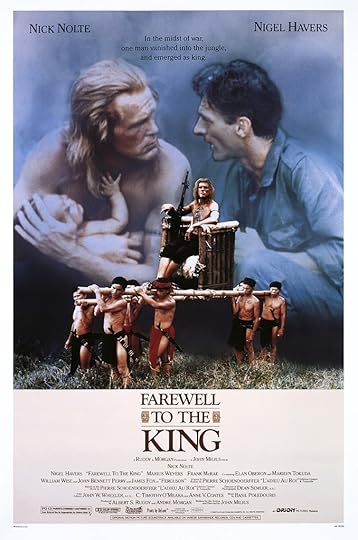
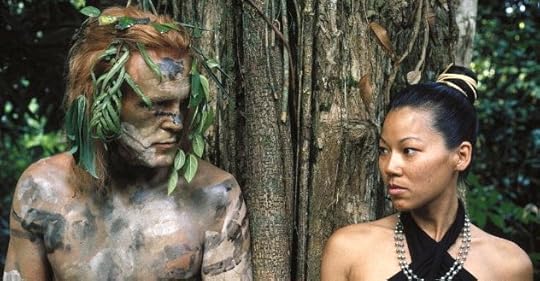
Nick Nolte è Learoyd.
Non è stato facile riconoscere in questo romanzo lo Schoendoerffer che conoscevo: 317° Sezione, sia libro che film, oppure nell’altro magnifico film Le crabe tambour l’ho trovato asciutto, secco. Qui, invece, lo scopro immerso nel genere che ha scelto, quello dell’avventura: aggettivi e punti esclamativi e frasi roboanti spingono nella direzione opposta, verso l’enfasi. Ma va bene così, fa parte del genere.
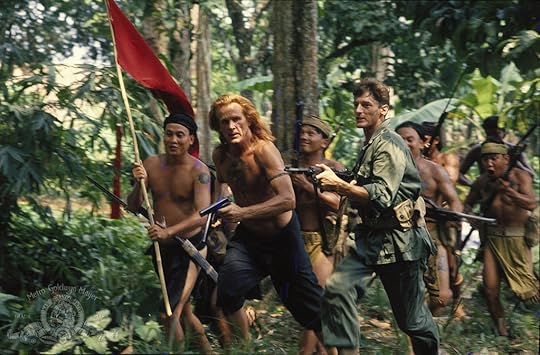
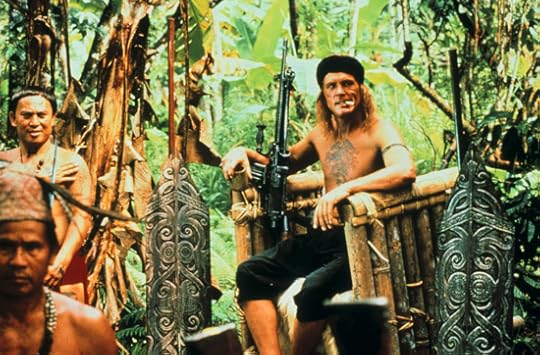
Il film zoppica, non raggiunge la sufficienza. Sono tutti sempre troppo puliti e vestiti - specialmente le donne che nel romanzo indossavano solo un perizoma come gli uomini – c’è una patina di eccessiva finzione e artificiosità a stelle-e-strisce. I Murut di Milius sembrano modellati sul mito del buon selvaggio. L’ufficiale inglese è accompagnato da un radiotelegrafista che però sullo schermo diventa un venerdì africano invece del britannico descritto da Schoendoerffer; Nick Nolte/Learoyd diventa americano invece che irlandese, ed ascoltarlo parlare la lingua murut fa l’impressione che se la stia inventando lì per lì ricalcandola su quella cinematografica degli indiani pellerossa, i nativi americani, e viene da ridere, non è credibile; gli appiccicano anche un passato in prigione in quanto comunista, e in quanto comunista il pubblico sarà più contento quando alla fine…
A book about war and friendship and how the first do change men's character. A book I've tried to read some forty years ago, but it wasn't my style, only to discover now its beauty. A book about the smallness of life, full of parables and quotes, a much underrated piece of art...
“Biz yaşlı bir ulusuz,yorgunuz,barış ve tuz istiyoruz.” Biz de! En azından ben kendi adıma bunu istediğimden eminim! .... Bitmesin diye ne kadar uğraşsam da son sayfalar çabucak geliverdi. Bir romanda anlatılanlar hadi gözümüzde canlanabilir, çünkü görselliği çok canlıdır. Peki işitilen sese, akan kanın kokusunun okuru tutmasını ne demeli... Çamurun ağırlığı, sivrisinekler ve kadınların iyileştirdiği asker kaçağı pardon ormanın kralı Learoyd hepsi sayfalardan fırlamış gibi! ..... Neyse ki Learoyd halâ ormana ait! .... Kitabın bu kadar canlı anlatıma sahip olması anlaşıldı. Yazar Pierre S. Vietnam savaşına katılıp Dien-bilen-phu direnişinde esir düşmüş. Bunu önsözü kaleme alan Attila İlhan’dan okuyunca öğrendim. Önce kitap sonra önsöz kuralını bozmuyorum:) .... Akıcı, anlaşılır ince bir Özdemir İnce çevirisi! .... ‘Yalnız bir tamamlanıştır yaşam. Günlük ekmeklerini çıkarmak İçin toprağa eğilmiş insanlar, birbirini izleyen kuşaklar halinde, kayıtsız gökyüzünün altında yollarına devam ederler. Kendi aralarında dövüşürler, gülerler ve ağlarlar, çok konuşurlar ama zor anlaşılırlar. Birbirleri için, her zaman bir bilmece olarak kalırlar. Bir gün, baba oğulu terkeder, dost dostu terkeder. Elveda! Sevinçler, delilerin ve bilgelerin sevinçleri, mutsuzlukları, korkular, bütün korkular, bir değirmene girermişçesine girerler varlığımıza, giderler, gelirler ve yok olurlar; biz onlara egemen değiliz, onlarla ancak uzlaşabiliriz. “ Ve işte, hepsi boş ve yeli kavramaya çalışmaktır.”’ .... Yaşam hakkındaki tüm külliyat insanın anlam arayışından geldiği için kara toprak, yeli kavramak...vb okurum,dinlerim ama bununla ikna olamam:) Yaşamak benim en sevdiğim eylemim, çünkü!
Yazar kitabın başına Altenburg'un Ceviz Ağaçları'ndan alıntı yapmasaydı bile ondan etkilendiğini kesinlikle düşünürdüm. Savaşa gitmemiş biri bunları yazamazdı, Schoendoerffer hem bir savaş fotomuhabiri hem de Çinhindi savaşı gazisiymiş. Neler neler gördüğünü ve gördüğü dehşetin bir kısmını da kendisine sakladığını düşünmeden edemiyor insan. Kitap bugüne kadar okuduğum en güzel savaş yazınlarından biri. Schoendoerffer'in dili enfes, betimlemeleri film gibi (ki kendisi çok yönlülüğüne film yönetmenliğini de katmış), anlattığı dehşetler öylesine canlı ki kendiniz yaşamış gibi hissediyorsunuz. Olaylar İkinci Dünya Savaşı sonlarına doğru Japon kuşatmasındaki Borneo'da geçiyor. Bir İttifak Devleti subayı kaçarak bir kabilenin başına geçiyor. Anlatıcı da bu kaçak subayı geri götürmek için giden bir başka asker. Ama bu "ölü ya da deli" subayla karşılaşınca, ölümün, yokluğun, açlığın, mücadelenin, korkunun kol gezdiği yağmur ormanlarında bir başka benlik ediniyor.
"Otuz yaşındaydım. Savaş bitmişti. Yaşıyordum. Kendi görüntüme bağlı kalıp kalmadığımı düşünüyordum, bize kendi kardeşimizmiş gibi benzeyen ve hepimizin bilincinin derinliklerinde tuttuğu, şu bozulmayan, doğruluktan ayrılmayan genç insana bağlı kalıp kalmadığımı düşünüyordum". Özdemir İnce'nin lezzetli çevirisi, eski bir Can basımı, niye böyle kitapları tekrar basmazlar bilmem. Halbuki dünyanın şu halinde savaşın bir çocuk oyuncağı olmadığını, öldürenin de delirdiğini, ölenin belki kurtulduğunu ama kalanların nice kabuslarla boğuştuğunu bize tekrar tekrar anlatacak kitaplara daha çok ihtiyacımız var. Savaş çocuk oyuncağı değil, hiçbir zaman da olmadı.
Zaten elde edilmeye çalışılan topraklar, çalınmak istenen krallıklar sadece "rüzgar ve çamurdan" ibaret; bunu anlasa "kadından doğan insan", o "rüzgarı avuçlamaya çalışmaktan" yorgun düşer de savaşmayı bırakır belki...
Exactly what you would expect from Schoendoerffer: although the book is not an ode to war, it glamorizes the kind of life men lead in times of war, even as it purports to denigrate the futility and violence of it all. The story takes place in 1945 and revolves around 3 men: the English narrator, a botanist by training and avocation, his superior Fergusson, and a charismatic Irish deserter, Learoyd, who has been accepted as leader by one of the ethnic groups populating the heart of the island of Borneo, the Muruts. The narrator accepts Learoyd's help in slaughtering the last Japanese invaders, but withdraws his support when, the war being over, the British and the Dutch want to go back to the status quo ante and therefore get rid of King Learoyd. In fact, both Fergusson and the narrator admire Learoyd, who stands for the proud, fearless individual capable of operating outside all hierarchies and forging his own destiny, but neither of them is man enough to join him in his rebellion against established empires. Fergusson commits suicide after reportedly helping Learoyd escape from captivity, and the narrator spends the rest of his boring life ruminating on the whole episode. Not a bad book, but it suffers from the obvious comparison with Conrad.
Though the arrival of a world war in an untouched jungle has some predictable consequences, the story of Learoyd and his ‘people’ was interesting to follow, and I appreciate that there are some ambiguities about their fate. Beautifully imagery and exploration of humans through a pretty terrible situation for all involved.
This was a book I'd never heard of that my brother brought over, and the cover looks cheap, like the sort of crappy books you expect to see for 10 cents at yard sales. But, this was actually a good book. I did not like the narrator- he was sexist and racist and annoying, but he was also consistent, and the story he was relating was fascinating. The writing skirts the edge of being too florid, but there are some very poetic and thoughtful passages worked into the narrative. I haven't done any research yet to know how much of this story was made up, but I was definitely motivated by this book to learn more about the Murut people of Borneo during and after WW2.
Key words: war, Borneo, Kingdom, historical fiction
I bought this book (Farewell to the King) at a flea market because I found it so pretty. There was no summary and I had no idea what it was about. It took me a long time to read this book because in the end, the story was not really interesting. It is nicely written but that’s it. None of the characters are relatable or just likeable (sexist and annoying) and there was no action or anything to make me want to read more. It kind of glamorises the life men had during war while trying to denigrate the violence of it. The book was written in 1967 so I know the contest in which the author wrote the book is not the same as nowadays. Even though the story was not that bad and I finished it, I wouldn’t recommend it. I only like the fact that I own the first edition of this book.
The second half of the book was good. I felt it had issues with transitions and timeline felt confused at times. Not a bad read, not very long. Could have used more detail at times and less in others.
Je ne sais pas quelle est la part de vérité historique mais l’histoire est intéressante : deux soldats parachutés à Bornéo organisent une guérilla contre les japonais avec l’aide d’un irlandais qui est devenu le chef des tribus indigènes. Cela devrait donner lieu à un bon film. Le livre péche par un excès de messages sentencieux et abscons. De plus il règne la même atmosphère lourde que dans la 317ème section, l’auteur ne cessant de dire que cela va mal finir. Cela décrit aussi la fin d’une époque pour les indigènes. Ce qui est peu vraisemblable c’est que l’officier narrateur qui s’est pris d’amitié pour l’irlandais le trahisse en révélant le point faible des indigènes, leur besoin de sel