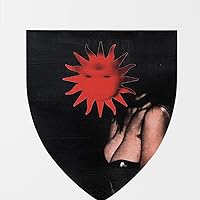
In the 1970s, Yugoslavia emerged as a dynamic environment for conceptual and performance art. At the same time, it pursued its own form of political economy of socialist self-management. Alienation Effects argues that a deep relationship existed between the democratization of the arts and industrial democracy, resulting in a culture difficult to classify. The book challenges the assumption that the art emerging in Eastern Europe before 1989 was either “official” or “dissident” art; and shows that the break up of Yugoslavia was not a result of “ancient hatreds” among its peoples but instead came from the distortion and defeat of the idea of self-management.
The case studies include mass performances organized during state holidays; proto-performance art, such as the 1954 production of Waiting for Godot in a former concentration camp in Belgrade; student demonstrations in 1968; and body art pieces by Gina Pane, Joseph Beuys, Marina Abramovic, and others. Alienation Effects sheds new light on the work of well-known artists and scholars, including early experimental poetry by Slavoj Žižek, as well as performance and conceptual artists that deserve wider, international attention.
Branislav Jakovljević is Sara Hart Kimball Professor of the Humanities at Stanford University, where he teaches in the Department of Theater and Performance Studies. His most recent book is The Performance Apparatus: On Ideological Production of Behaviors (2025, University of Michigan Press). He is the author of the award-winning book Alienation Effects: Performance and Self-Management in Yugoslavia 1945-1991 (2016) and of a number of other books and articles published internationally.
An extraordinary book, methodologically combining philosophy, political theory, performance theory and historical analysis, for a relevant mapping of Yugoslavia's golden age of performing arts. A revelation.
An insightful study of performance in Yugoslavia, with an interdisciplinary approach, responsible methodology, and fresh conclusions. For me as a PhD candidate writing about performance art, it was useful because it is not the usual repetition of already-heard theories but a detailed study from a new perspective. Can get heavy when it comes to marxist theory, theory in general, or when he wants to prove his point, and this is why it takes focus and time to be read (in my case).