Jump to ratings and reviews
Rate this book

Wenjack

Rate this book
Shortlisted for the 2017   OLSN Northern Lit Award

An Ojibwe boy runs away from a North Ontario Indian School, not realizing just how far away home is. Along the way he's followed by Manitous, spirits of the forest who comment on his plight, cajoling, taunting, and ultimately offering him a type of comfort on his difficult journey back to the place he was so brutally removed from.

Written by Scotiabank Giller Prize–winning author Joseph Boyden and beautifully illustrated by acclaimed artist Kent Monkman, Wenjack is a powerful and poignant look into the world of a residential school runaway trying to find his way home.

112 pages, Paperback

First published October 18, 2016

88 people are currently reading
5929 people want to read

About the author

Joseph Boyden

31 books1,322 followers
Joseph Boyden is a Canadian novelist and short story writer.

He grew up in Willowdale, North York, Ontario and attended the Jesuit-run Brebeuf College School. Boyden's father Raymond Wilfrid Boyden was a medical officer renowned for his bravery, who was awarded the Distinguished Service Order and was the highest-decorated medical officer of World War II.

Boyden, of Irish, Scottish and Métis heritage, writes about First Nations heritage and culture. Three Day Road, a novel about two Cree soldiers serving in the Canadian military during World War I, is inspired by Ojibwa Francis Pegahmagabow, the legendary First World War sniper. Boyden's second novel, Through Black Spruce follows the story of Will, son of one of the characters in Three Day Road. He has indicated in interviews that the titles are part of a planned trilogy, the third of which is forthcoming.

He studied creative writing at York University and the University of New Orleans, and subsequently taught in the Aboriginal Student Program at Northern College. He divides his time between Louisiana, where he and his wife, Amanda Boyden, are writers in residence, and Northern Ontario.

Ratings & Reviews

What do you think?
Rate this book

Friends & Following

Create a free account to discover what your friends think of this book!

Community Reviews

5 stars
3,236 (45%)
4 stars
2,727 (38%)
3 stars
886 (12%)
2 stars
163 (2%)
1 star
49 (<1%)
Displaying 1 - 30 of 958 reviews
Profile Image for Matt Quann.
825 reviews452 followers
October 30, 2016
This is the most important Canadian book of the year.

I don't just mean that in a literary sense either. No, this book is absolutely essential reading for Canadians. In a country where we pride ourselves on our kindness and sense of community, it is of paramount importance that we look upon the abject horror of residential schools. It is important that we as a country know these atrocities so that they will never be committed again, and so that reconciliation can begin.

I read Wenjack cover to cover in a single hour-long sitting. When I saw Boyden had a new book on the horizon I knew I'd read it, but I didn't know much about the plot until the weeks leading up to its release. By now I'm sure that most of us have heard Chanie Wenjack's story. It's the true story of a boy who escaped a residential school and attempted to walk to his home in winter, not knowing it was hundreds of miles away. Chanie Wenjack died alone, cold, and far from his family.

Boyden opts to use shapeshifting manitous, whose cultural relevance I won't pretend to know, as they take the form of various animals who watch Chanie on his journey through the cold. The chapters bounce between Chanie as POV, then alternate to show Chanie from the perspective of the given form the manitous have taken in that chapter. This is a story, I believe, that supposes you know its ending and takes you on the harrowing journey to its conclusion. While I appreciated the prose--Boyden's pen is as deft as ever-- I'm unable to say that this is a pleasant read due to its content.

By bringing Chanie's story to light, Joseph Boyden (along with Gord Downie & Jeff Lemire with Secret Path) gives a voice to the unheard. He does so with language that is rich and evocative, but not challenging. This book was written for those who would read Three Day Road as well as those who haven't touched a book in years. It could be taught in high schools, it could be passed between friends and neighbours, it could be displayed on a bookshelf among the best of Canadian literature.

As I read Wenjack, I sipped on a warm beverage in my warm home. Wenjack is a book that makes it possible for one to both be thankful and ashamed of the heat in a single breath.
Profile Image for Canadian Jen.
663 reviews2,850 followers
July 26, 2021
With all the news that has come out in the last few months about these hideous residential schools, here in my own backyard, I thought it’s time for me to find out more about this horrifying history.
I’ve been a fan of Boyden’s for his richly cultured North American Indian stories. This however, is nonfiction, based on Chanie Wenjacks’s desertion from one of these monstrous schools. It’s his journey to try to get home and the animal spirits - Manitous - whom witness him on his way.
This doesn’t have a happy ending.
Frightful as more of these graves have been located. An attempt at the annihilation of the indigenous culture. A “shameful stain” as Boyden labels it. An ugly and horrific one as I see it.
Prayers to those families whose children were ripped from their arms. Prayers for the souls of those children who died without loved ones near.
4⭐️
Profile Image for Norma ~ The Sisters .
743 reviews14.5k followers
October 14, 2025
I read WENJACK by JOSEPH BOYDEN in one sitting which took me less than an hour to read. When I bought this book I didn't realize that is was a novella and I honestly didn't know much about the plot either. I bought it because it looked interesting to me and I knew that I would learn something by reading it. This book is based on Chanie "Charlie" Wenjack's story, which I regretfully have to say that I never knew nothing about. Which is really sad when you think about it.

The story was told in two alternating points of view that of Chanie on his journey and of the manitous taking the form of various animals watching over him. It wasn't an easy story to read as it was heartbreaking and horrifying but an important one about our Canadian History.

The author's note tells us about the real-life story of Chanie "Charlie" Wenjack which I really appreciated reading after finishing this book. I suggest not reading it until you are done the book if you haven't already heard about his story as I found that I appreciated this novel that much more!

It was a fast-paced, heartbreaking and an important read! Would recommend!
Profile Image for Maxwell.
1,443 reviews12.5k followers
March 11, 2021
This is a nice short book that would be a good introduction to Boyden's works. It's a novella that tells the story of Chanie "Charlie" Wenjack who escapes from a Canadian Indian residential school in an attempt to make it back to his family. It's beautifully written, as all Boyden's books are, and tells a harrowing story. It did lack some depth that I feel Boyden captures in his other short stories, but I still enjoyed it and would recommend it. Now that I've read all of his books, I guess I just have to wait for more—or start re-reading them all again.
Profile Image for Lala BooksandLala.
584 reviews75.5k followers
May 24, 2017
"Many thousands of children died during their time in these alien institutions- from disease, from abuse, from exposure or accidents while trying to run away. The true number of children who died under the watch of those responsible for their care will never be known. Proper records were purposefully not kept. The death of these countless innocents remains one of the deepest, most brutal stains on Canada's history."
Profile Image for Brandon Forsyth.
917 reviews185 followers
August 14, 2016
One of those rare stories that only takes an hour to read, but you know will stay with you for the rest of your life. Miigwetch, Mr. Boyden.
Profile Image for HaMiT.
271 reviews60 followers
July 30, 2020
این داستان کوتاه اما واقعی در مورد بخش تاریکی از تاریخ سال های اخیر کاناداست. کشوری که در حال حاضر از لحاظ قوانین حقوق بشری جز سه کشور اول دنیا محسوب میشه، در مدت زمانی که بیش از صد سال بوده (1996-1870) بچه های سرخ پوست رو با زور و بالاجبار و به قصد نسل کشی فرهنگی در مدارس شبانه روزی زندانی میکردند
این بچه ها توی این مثلا مدارس تحت انواع و اقسام فشارهای روحی و روانی بودند، شدیدا تنبیه میشدند و مورد سوء استفاده جنسی قرار میگرفتند
این بچه ها حتی حق حرف زدن به زبان بومی خودشون رو هم نداشتند
به همین خاطر خیلی از بچه ها سعی میکردند از مدارس فرار کنند و تعداد زیادی از اونها موفق به فرار نمیشدند، بسیاری از این بچه ها بنا به دلایل مختلف مثل بیماری و حادثه فوت میکردند. اطراف این مدارس هم قبرستانهایی وجود داشته که بچه ها رو همونجا دفن میکردند بعضا حتی به صورت گمنام
توی این 126 سال، حدود 150 هزار بچه از خونواده اشون جدا شدند. آمار ثبت شده حاکی از مرگ 6 هزار کودک بوده ولی بخاطر گمنام دفن شدن بسیاری از این بچه ها، آمار خیلی بالاتره

چانی هم یکی از همین بچه ها بوده
چانی سال 1966 از پدر و مادر و خواهرهاش جدا میشه و دو سال بعد تصمیم میگیره به همراه دوتا برادر به اسم های رالف و جکی مکدانلد از مدرسه فرار کنه
اما خونه و خونواده ی چانی 600 کیلومتر با مدرسه فاصله داشتند و با توجه به سرمای استخوان سوز اونجا، خودتون میتونید حدس بزنید چه اتفاقی افتاده

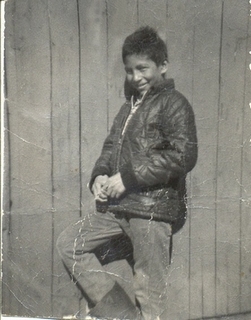
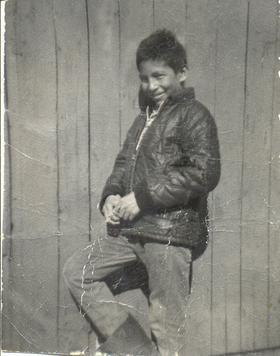
این تنها عکسیه که از چانی موجوده
آپلود عکس

اینم عکس یکی از خواهرهای چانی
آپلود عکس

با اینکه میدونید ماجرا از چه قراره ولی حتما خوندن این داستان کوتاه رو توصیه میکنم
قلم جوزف بویدن بسیار تأثیرگذار و زیباست

راستی همینجا چندتا معلم بخاطر آموزش زبان بومی بازداشت شدند؟
Profile Image for Dave Schaafsma.
Author 6 books32.2k followers
October 14, 2017
10/14/17: Re-read for my Fall 2017 YAL class, partly in conjunction with Secret Path, by Gord Downie and Jeff Lemire. Some revisions/edits.

1/9/17:

“Walk on, little Charlie
Walk on through the snow.
Heading down the railway line,
Trying to make it home.
Well, he's made it 40 miles,
Six hundred left to go.
It's a long old lonesome journey,
Shufflin' through the snow.”

The Ballad of Charlie Wenjack (1972) by the great Indian singer Willie Dunn

Something really special has been happening around the 50th anniversary of Chanie Wenjack’s death. Chanie, an Ojibwe, 11, died escaping in 1966 from a school where he had been forcibly placed to be “re-educated” from what was assumed to be hurting him socially and economically, the fact that he was Ojibwe; that he was Anishinaabe, or part of a group of indigeneous peoples of Canada and the United States. And yes, the U.S. (and probably many other counties) also conducted this cultural genocide in a program of “special schools” (called, so innocently, Residential Education Schools) throughout the country in the past 150 years. Now, in Canada, there is an ongoing Residential Truth and Reconciliation Commission to uncover—for white people, mostly, since indigenous people know all about it, it’s part of the experience of their elders—the sad “secret” history of this shameful practice. There was a report from the Commission in 2008.

Boydon is one of several artists in Canada who set about to memorialize Chanie, whose teachers called Charlie (in the manner of what white people do to colonize people with names they find weird to them), from a variety of angles, media, genres, in a kind of amazing and inspiring collaborative commitment to artistic truth and reconciliation. The Secret Path is an album by Tragically Hip frontman Gord Downie, linked to Jeff Lemire’s silent graphic novel by the same name. The word Anishinaabe translates to "people from whence lowered." Another definition refers to "the good humans," meaning those who are on the right road or secret path given to them by the Great Spirit. In his novella, Wenjack, Boydon references “the secret path” that Chanie and his many fellow students took to try to escape from their school to try to return home.

Boydon’s Wenjack is a kind of elegiac tone poem, a novella in a small book format (I love small books!!) that presumes Wenjack, in his doomed escape, was visited periodically on his trek down the railroad tracks toward home—he actually had no idea where he was going, nor that he was more than 400 miles away, in winter--by Manitou, spirits that inhabit various animals and birds he would have encountered along the way. Owl, Rabbit, Spider, Pike, Lynx. Many chapters are titled and are written from the perspective of these Manitou, alternating with Wenjack himself. It is a work of the soul, devastating. Read it as you look at the silent The Secret Path by Lemire, as you listen to Downie’s music. Almost all proceeds from all of these works go to The Truth and Reconciliation Commission and/or other related causes. See the documentary on the work of the commission. Don’t like political art? I would call this spiritual art, art of the soul, of deep sadness and great beauty.

“One day I will run. One day they won’t hurt me anymore.” –Boydon, Wenjack

Here’s a short bio of Chanie Wenjack:

http://www.thecanadianencyclopedia.ca...

There was an article in Maclean’s magazine in 1967 that seemed to be an important moment in the historical /artistic record.

Here’s an article about how Boydon came to write Wenjack:

http://www.theglobeandmail.com/arts/b...

There’s a documentary on the Truth and Reconciliation Commission that links to Wenjack’s story:

https://www.youtube.com/watch?v=8VCNB...

There’s an animated film by Métis filmmaker Terril Calder. A Tribe Called Red did an album and Boydon does a couple spoken word tracks for on their most recent album:

http://www.cbcmusic.ca/posts/14506/ch...

P.S.: Czarny made me aware of a controversy that has not undermined my view of this work nor of the contributions of white people contributing--as they should, as they must--to the work of critique and grief and reconciliation. Boyden, it seems, has claimed on various occasion that he is in part indigenous Canadian. It appears he may have lied about some of this. This, if true, puts an unfortunate mark on this work. Some will not read it; some just claim he is involved in cultural appropriation, getting famous on the backs of the indigenous folks he has said he has claimed to support, that he is just another lying white guy getting published and using airspace indigenous artists could be using. I believe him and support him in his efforts because the work is beautiful and sad, and because he has done other work on behalf of Chanie and other indigenous causes. Part of the point of the commission is for whites and indigenous and mixed race folks to come together in all their flawed natures, to move ahead with a different future. If he is both a beautiful writer and a liar, well, you will have to make your own choice on these issues. So far, I am with Chanie, and Boyden.
Profile Image for Paul Weiss.
1,469 reviews549 followers
November 22, 2025
They “disappeared like thin ghosts into the thick forest of spruce and poplar and willow”.

Given the Canadian government’s forward-looking decision to acknowledge the reality of the Catholic Church’s historical attempted genocide, the story of a terrified, young Ojibwe boy finding the courage to run away from his mistreatment at a residential school is hardly a unique idea. However, the compelling, poignant, warm and poetic approach of allowing animal spirits – lynx, rabbit, crow, beaver, wood tick, spider, owl and more – to tell the story with first and third person narratives from their animalistic (and aboriginal) points of view, to prod, to comfort, to tease and befuddle young Charlie Wenjack on his long path to a safe family home away from the dangers of the school, sets the brief reading novella WENJACK into a class of its own.

In the concluding author’s note, Joseph Boyden tells us that the media reporting of the inquiry into the real life Charlie Wenjack’s tragic death (on which his novella is based) prompted the exposure of what was a dark national secret and what must now be characterized as a disgusting part of the Roman Catholic Church’s and our national government’s past. But Canada would wait for another thirty years before the doors on the last residential school would be closed forever. Our Truth and Reconciliation Commission has completed half of its work. The truth, for the most part, is known and accepted even if, perhaps, the actual magnitude of the death count will never be known. Now comes the second, and much more difficult, part. The reconciliation has only just begun.

WENJACK is a unique blend of genres – part historical fiction, part fantasy, part philosophy, and part social commentary – that every person who cares about justice should read.

Paul Weiss
Profile Image for KamRun .
398 reviews1,623 followers
October 27, 2017
چانی ونجک، پسربچه‌ای که فقط می‌خواست به خانه‌اش برگردد

از سال 1870 تا 1996، بیش از 150 هزار کودک سرخپوست کانادایی با زور، تهدید و ارعاب از خانواده‌هایشان جدا و در مدرسه‌های شبانه‌روزی اسکان داده شدند. ده‌ها هزار تن آنان بعلت سواستفاده جنسی، بدرفتاری، شکنجه و یا در هنگام فرار جان خود را از دست دادند. آمار رسمی حکایت از کشته شدن 6000 نفر از این کودکان را دارد، در حالی که رقم واقعی بسیار بیشتر از این مقدار است، تا جایی که در کنار هر مدرسه شبانه‌روزی، گورستانی مخصوص به آن هم ساخته شده بود. داستان چانی ونجک، ماجرای یکی از کودکان است


description

چانی ونجک از 9 سالگی در یک مدرسه‌ی شبانه‌روزی زندانی بود تا اینکه در 12 سالگی، همراه با دو کودک دیگر از مدرسه فرار کرد. چانی در رویای کلبه‌ی سرخپوستی خانواده‌اش که جایی در کنار خط راه‌آهن قرار داشت، بدون هیچ لباس و آذوقه‌ای مسیر خود را خود را برای رسیدن به خانه دنبال کرد و در حالی که تنها مقدار ناچیزی از مسیر 600 کیلومتری تا خانه‌اش را پیموده بود، از گرسنگی و سرما جان سپرد. جسد یخ‌زده‌ی او،چند روز بعد از مرگش در کنار خط راه‌آهن پیدا شد. داستان کتاب از روز فرار چانی آغاز و با مرگ او خاتمه می‌یابد. در این کتاب نیز مانند دیگر آثار بویدن از تکنیک چندروایی استفاده می‌شود. چانی راوی اصلی داستان است اما در این میان، جانوران کوچ و بزرگ اطراف چانی هم راویان فرعی هستند که داستان را پیش می‌برند.

این کتاب به مناسبت پنجاهمین سالگرد مرگ چانی ونجک، جهت ایجاد موجی آگاهی‌بخش درباره‌ی نسل‌کشی فرهنگی سرخپوستان در کانادا منتشر شد. بجز جوزف بویدن، هنرمندان دیگری نیز به نوبه‌ی خود در این موج همراه شدند. از جمله گورد دونی با انتشار آلبوم موسیقی مسیر مخفی و انتشار کتابی با همین عنوان. ویدئو کلیپ غریبه، اولین ترانه‌ی این آلبوم را می‌توانید از این لینک دانلود کنید.
Profile Image for NILTON TEIXEIRA.
1,281 reviews645 followers
June 1, 2020
What a terrific novella!
The writing is superb.
Once again Boyden gives a voice to the unheard.
I wished this was a whole novel with hundreds of pages.
The spiritual atmosphere is fascinating.
But the story is extremely sad, based on a true story of Chanie Wenjack, a boy who died alone, after running away from an abusive residential school, trying to find his home.
To hear how Canadians mistreated the aboriginals people is devastating.
I don’t think that there is anyway to correct the injustices of the past.
Are we ever going to learn from our mistakes?
Profile Image for Kathleen.
1,087 reviews
September 27, 2019
"One day I will run.
One day they won't hurt me anymore."

This quote from WENJACK written by Scotiabank Giller Prize-winning author Joseph Boyden and illustrated by artist Kent Monkman, was probably said by many boys brutally taken from their homes to residential Indian schools.

Chanie, an Ojibwe boy runs away from a Residential Indian School in Northern Ontario, not realizing that his home is over six hundred kilometres away. Manitous, spirits of the forest, follow Chanie and comment on his long difficult trek towards home.

WENJACK is a powerful and poignant look into the world of a residential school runaway trying to find his way home. Although this book is fictional, it is based on a true story.

In the Author's Note at the end of the book, Joseph Boyden explains that the real-life Chanie "Charlie" Wenjack was forcibly taken from his parents and his sisters and his home in Ofoki Post, Northern Ontario, in 1964 when he was nine years old.

Boyden writes "From the 1870s until 1996, when the last school closed its doors, more than 150,000 Indigenous children over seven generations were removed from their families in an attempted cultural genocide."

This book was chosen for the September read in my "Real Life Book Club", so I reread it this week. Although it is a small book of 102 pages, it really "packs a punch" and makes the reader aware of the atrocities inflicted upon the Indigenous children. It is a sad story. I look forward to the discussions on this book at Book Club tomorrow.
4.5 heart-breaking stars ⭐️️⭐️️⭐️️⭐️️
Profile Image for Allison.
306 reviews45 followers
February 10, 2017
This book, so tiny and fragile and beautiful, is a gorgeous tribute to a boy who, his family says, was all three of these things.

I love this book -- its frailty in physical size and in emotional contribution.

Boyden has done a beautiful job with a painful subject. Along with Downie & Lemire's Secret Path, Wenjack's story is coming out in a classy way, a touching way and a way that demands attention. I am thankful to all of these artists for what they are giving us as Canadians.
Profile Image for Ammar.
486 reviews212 followers
November 7, 2016
This is a must read for all Canadians, young and old. Joseph Boyden narrates the escape of Chanie 'Charlie' Wenjack from his residential school to go to his home. This glimpse into a First Nation youth's life shows how horrible those schools were.

It does shine the light on one of the worst moments of Canadian history and how the 'European' wanted to educate and civilize the 'savage' and how horribly wrong it was done.

You can grab a copy from the nearest Chapters or Coles , and you won't regret it.
Profile Image for Jason.
243 reviews76 followers
February 17, 2017
A pocketbook worth reading; there is some kind of power in there on those pages. It is a quiet and poignant blend of reality and lore from the first people of what would become known as Canada, raped of their culture by the white man and forced to assimilate. The little boy in this story is a hero and should be regarded as such. His is one of thousands of similar stories of the toll it took on the men and women who'd been ripped from their families.

If I have one criticism, it's that it wasn't long enough. I wish Boyden would have written this into a full length novel to really delve into those tragedies, bring them up to the surface for a thorough re-examination, it's certainly overdue. Credit to Boyden for going somewhere it seems a lot of people are afraid to go and are too quick to forget about. Boyden is saying to the world, Canada looks very good, and it is, but it also has wounds, still not yet healed into a scar. The goal is to turn that wound into a scar, to bring forth the truth so it can be reconciled. This is a story about culture, it's about family bonds, it's about language and art, and all those beautiful things that were stripped of an entire people.

Bold as it may be to say this, but if there is an author in Canada paving himself a path toward a Nobel Prize for Literature, it's Boyden. I look forward to seeing where he goes next.
Profile Image for Maryam.
938 reviews272 followers
April 13, 2017
A must read for every Canadian! This is a very short book but tells the story of one of the darkest periods of First Nation children's lives in Canada!

We always hear how nice everyone is in Canada but reading this book shows not everyone was treated with kindness.
Profile Image for Taylor.
65 reviews21 followers
May 1, 2019
What a beautiful, spiritual, incredibly sad, poetically written short story.

This is a very tiny book, but it reads so much bigger than it is. Absolutely loved the deep spiritual feeling Boyden inserted into his writing.

Boyden wrote this in a such a brilliant and natural way to portray such a dark and deeply sad true story.

Easy 5/5.
Profile Image for Kris (My Novelesque Life).
4,693 reviews209 followers
October 1, 2018
WENJACK
Written by Joseph Boyden
2016; Hamish Hamilton (118 Pages)
Genre: literary fiction, historical fiction, canadian, canada

RATING: ★★★★

Chanie Wenjack, a young Ojibwe boy is taken from from his family and put into aresidential school in Ontario, Canada. While there he is bullied and abused by those that are supposed to care for him. Despite the danger, he decides to runaway with two fellow "students". Later, he would be found dead. Wenjack's death would lead to an inquest that would reveal the truth behind residential schools.

I first learned about Chanie Wenjack and residential schools when I was in elementary school. Wenjack's story has always stuck with me as I was about the same age and my experience with school was so different. As I grew and learned more about Wenjack and residential schools, I have been sadden that this happened but more so that it took until the mid-1990s to get rid of residential schools. Canada has always had a rough history when it comes to people of colour. Japanese were put into internment camps during World War II, Chinese were given dangerous jobs to build the railroads in Canada, Indians (from India) were sent back to India because they were undesirable as citizens, etc. Whether the new government apologizes on the behalf of the old government at this point seems to be beside the point. It can not undo all the horrors that young Aboriginal children experience or give back their lives. At this point, learning from the past is the what will make a difference. If we learn from history and put in place measures that will prevent this from happening again will begin to honour their memory.

I picked up this novella last night and was transformed to another place and time. Boyden re-imagines Wenjack's escape so beautifully, but will leave you heartbroken. Along the way on his journey Wenjack is followed along the way "by Manitous, spirits of the forest who comment on his plight, cajoling, taunting, and ultimately offering him a type of comfort on his difficult journey back to the place he was so brutally removed from" (from Amazon). I find that this short novel reads like a long poem. It is beautiful and haunting in the images written by Boyden and hits you with the sad truth, time and again. I recommend this novel to every Canadian as this is a part of history, whether we want to accept it or not.

My Novelesque Life
Profile Image for ❀ Susan.
939 reviews68 followers
October 21, 2016
https://ayearofbooksblog.com/2016/10/...

After meeting Joseph Boyden in June, at the Celebrating Canada’s Indigenous Writers Event, I have been looking forward to his latest book. Wenjack is a novella that is a “pocket-sized” book with a striking black and white drawings of the spirit animals which followed Chanie Wenjack in the fictional story based on his escape from the residential school. Despite its’ small size, the book shares a large impact on readers who consider the terrible legacy of residential schools.

Chanie had been removed from his family two years prior. After having his name changed, being punished for his indigenous language and suffering abuse, he ran away with two older boys. He was slower moving and coughing up blood which was typical of tuberculosis, a common infection in residential school settings. It started out as a warm fall day as young Chanie followed the boys to their Uncle’s home. His plans were to continue on his journey to his own home, especially since he was not welcome at the Uncle’s.

The real Chanie knew that his family lived along the railroad tracks. What he did not know was that while they did live along the tracks, they lived 600 km along the tracks! He began his journey only to die of exposure. After being forced to attend residential schools for 2 years, he finally returned to his family – in a casket.

Boyden’s story is told from the perspective of Chanie and from his spirit guides, the 12 animals that are depicted in each chapter of the story. It is a creative version of Chanie Wenjack’s true experience which is a dreadful part of the Canadian history. This is a novella that EVERY high school student in Canada should read as part of their history curriculum to understand the experience of residential schools and the lasting impact that remains on indigenous families.

This story provides a starting point for learning more about indigenous history and residential schools which had a goal of assimilation. These schools were built across Canada and included the Mohawk Institute, also known as “the Mush Hole”, here in Brantford. This building is now the Woodland Cultural Centre which operated as residential school from 1831 to 1971.

Joseph Boyden is one of my favourite authors and I would recommend this quick read as well as his other novels: The Orenda, Three Day Road and Through Black Spruce.
Profile Image for Celise.
576 reviews320 followers
December 22, 2017
50 years ago, 12-year old aboriginal boy Chanie Wenjack ran away from a Canadian residential school, heading for the home he had been taken from. He didn't make it.

If you went to a Canadian high school anything like mine was, this subject was optional learning. History class glazed over the chapter where we mistreated first nations children, ripping from their homes, beating them when they escaped, and forcing them to forget their own language, names, and family.

In English class, when Three Day Road by this author was a pick for literature group, it was up against ten other choices. I picked it because I thought it sounded "interesting".

In college I got my degree in film production. We had one course centered on documentary and as a director study we had to select a filmmaker and watch three of their films. I just happened to pick Alanis Obomsawin's series on first nations in Québec because hers were the shortest films.

A few years ago I signed up for change.org to save tigers in China or something. Eventually I started getting emails about an abundance of missing aboriginal women in Canada, whom I hadn't even known were gone because of how brushed over it was, until pressure was recently put on our prime minister to do something about it.

And then I picked up this palm sized book that I read within an hour, because I wanted something fast to read between my regular reads, and because I just so happened to have already loved a previous work of fiction by this author.

All this to say that it was all my choice, often controlled by whim, to learn about this sordid history of my country, and I think that's just a really irresponsible way of educating our students.

Please take it upon yourself to open your mind a little bit, whether through this excellent author or just through research. I think it's really important. Read this book! And because I'm not totally wide-eyed and know that's not how people work, let me also tell you that this book is super short, beautifully written, beautifully illustrated, and will help you complete your reading goal in a pinch.

I haven't yet read The Secret Path by Gord Downie and Jeff Lemire, but that is also about Chanie Wenjack, for anyone interested.

What a non-review.

Sometimes that happens.


Profile Image for Petra.
1,245 reviews38 followers
May 27, 2017
My heart goes out to Chanie Wenjack and all the others who experienced the loneliness and fear of the Residential School system.
The mysticism in this story warmed my heart. Chanie wasn't alone through his ordeal of finding his way home. I truly hope that Chanie had the hearts of the spirits with him.
This story can be seen on many levels:
Chanie Wenjack, the frightened, hungry, scared 12-year old who tried to find his way home.
Chanie Wenjack, the boy who's plight caused a nation to look at what they are doing to a People and to start making changes for the betterment of the People.
Chanie Wenjack, the child who stands as a symbol for all those who suffered before and after him until the horror was finally ended.

I was appalled to read that the Residential Schools ran until 1996. This is shameful.
Our country welcomes immigrants from all countries. We allow them to practice their customs, religions and speak their language openly and without discrimination. Yet we denied those privileges to our own countrymen.....at the same time we allowed it to others. Shame, Canada!

This story should never be forgotten. It needs to be told. I hope more of these stories come forward so that healing and awareness happen, with the determination to never let this situation arise again.
Profile Image for Kristi.
186 reviews41 followers
August 11, 2016
The story of 12 year old Chanie Wenjack, an Anishinaabe boy who ran away from his residential school and subsequently died from hunger and cold alone along railway tracks in Northern Ontario in 1966. His death launched an investigation into these horrendous institutions - though it still took many decades for the last school to finally close its doors . In short: another absolutely essential read from Canada's greatest living writer.
Profile Image for Maria.
731 reviews489 followers
August 9, 2020
“Wenjack” measures up to all my expectations, and then some. It was beautiful how he changed each chapter up, and wrote in a different point of view. If it wasn’t our main character, Chanie, then it was an owl, or a spider, or even a lynx. The interweaving of man and animal is essential to the storyline of this book. Read my full review on my blog, ReadingMaria : https://mariazuppardi.wordpress.com/2...
Profile Image for Andrew.
690 reviews248 followers
August 26, 2016
Picture the genius writing of A Little Life but in less than one hundred pages, and made even sadder with a First Nations angle.

And a child alone in the cold.

And a true story.

Not for the faint of heart. But you have to have a heart to read it.
Profile Image for David.
1,687 reviews
July 22, 2021
I start with an apology. Canada has a dark secret but over the last decade, it has been exposed. In the last few months, countless unmarked graves have been discovered in connection with residential schools. Since the 1870s, indigenous children were sent to residential schools, as they put it, “to beat the Indian out of them” so they could be Canadian. That was the attitude if the Church and the government. The schools ended in 1996.

I went to a Catholic school where many students were from the nearby Tsuu T’ina peoples. They were ridiculed and tormented. I made friends with Sandford and Tony. Sandford would grow up to be Chief; I have no idea what happened to Tony. We were only ten at the time.

Our country is having a day of reckoning. We have renamed schools, bridges and landmarks. Their names were part of the original residential school program. They are now forgotten.

I went to the Calgary Stampede this year. It is known as the “greatest outdoor show on earth.” It was different this year because of the pandemic. Instead of chuck wagon racing and other events, they included a bareback horse relay, a featured indigenous event. It was great and the crowd loved it. This was the first time it was put on, even though the Stampede has been around for over one hundred years!

This book is about a young boy, Chanie, who escaped the horror of his school in the cold wilderness of Ontario. It’s heartbreaking. It should be read by every single child in this country. We must never forget what we did and find a way to move forward.

The book has been illustrated by well-known Cree artist Kent Monkman. Gord Downie, the frontman of the Tragically Hip (he sadly died a few years ago) had set up a fundraiser to improve the lives of First Nations Peoples in Canada. Sadly the author, Joseph Bowden has had controversies about his origins.

It doesn’t matter. The story needed to be told. Read it.
Profile Image for Czarny Pies.
2,832 reviews1 follower
October 17, 2017
"Wenjack" is a short novel by Joseph Boyden (winner of the 2008 Scotiabank Giller Prize) the tells the story of Chanie Wenjack (a native Canadian) who at the age of 13 died of hunger after fleeing the Cecilia Jeffrey Indian Residential School at age 13 in Kenora, Ontario, Canada.
Boyden's superb text is accompanied by outstanding illustrations. My problem with the book is the grievous lack of expository material to assist readers unfamiliar with Northern Ontario and the Canadian Residential School system. I hope that the paragraphs below will be helpful.
Chanie Wenjack grew up in Ogoki Post. To reach the his residential school he would have needed to take a 2.75 flight to Nakina and travel 9 hours to cover the 800 kilometres between Nakina and Kenora.
This strange system of educating native children was the result of Canada's legal and political history. Schools in Canada have always been funded by property taxes. As there are no taxes on reserves there did not seem to be any way to build or operate schools on Indian Reserves. At the time the residential schools were founded in 1883 a more serious problem was that the vast majority of Indian children would have lived more than 5 miles away from a white school. Given that neither school buses nor paved roads existed at the time boarding schools seemed to be the only option. In this context the residential school scheme was invented.
The Anglican and Catholic Churches agreed to raise funds to purchase land and build residential schools. The teachers were priests, nuns, and protestant missionaries none of whom were paid. The schools were located on agricultural land. The students fed themselves by growing crops and tending livestock. Not surprisingly with this type of arrangement there were never more than 20% of the Indian children in school. The rest had to make do without education. Nonetheless due to the residential schools, at the time of WWI at least 15% of Canadian Indians were able to read, write and do arithmetic.
By the 1950s, the road network was in place to allow the majority of Indians to bus to white schools on a daily basis. The federal government paid the school boards a subsidy for the Indian students that they accepted. For children in very remote communities however residential schools still seemed to be the only option which is why Chanie came to his tragic end.
In 1960 Indians gained the right to vote. They ceased to be wards of the Crown and it was no longer possible to seize Indian children arbitrarily to enroll them in the residential schools. The last residential schools closed in the 1990s.
By the end of the 20th century Canada's Indians had learned how to use their votes to secure government services. They have convinced the Federal Government that their children were not being properly served in schools operated primarily for white children. Thus the Federal Government started building schools on reserves which is probably what should have been done in the 19th century.
Profile Image for Chihoe Ho.
408 reviews98 followers
October 9, 2016
So much emotional weight and societal significance is packed into this novella, and really, only a great master storyteller like Joseph Boyden can capture the nuance of this tragic true story in such succinct ways through the eyes of the creatures who witness Chanie Wenjack's perilous journey.
Profile Image for Krista.
1,469 reviews858 followers
June 26, 2017
Charlie. His real name is Chanie. But the ones who forced him to that school can't pronounce or don't care to listen and so say it with sharp tongues instead. If we could feel pity for this one, we would. His walk before, his walk to come. Neither is easy. All he wants is home. We follow now, we follow always, not to lead but to capture. Someone, yes, will capture this boy's life.

The genesis of Wenjack sounds like the stuff of urban myth: After Gord Downie's brother rediscovered the old Maclean's article that was written shortly after the death of Chanie (Charlie) Wenjack, a plan was made for several Canadian artists to create memorials for the young boy upon the fiftieth anniversary of his death in 2016, “without saying anything to Canada” about their intention. As a result, Downie wrote an album with both an associated graphic novel (Secret Path, illustrated by Jeff Lemire) and an animated film (created by Terril Calder), A Tribe Called Red included “interludes” about Chanie on their latest album (We Are the HalluciNation), and Joseph Boyden wrote Wenjack (illustrated by Ken Monkman), wrote and performed the spoken word interludes on A Tribe Called Red's album, and wrote a Heritage Minute about Chanie that began appearing this summer. As a celebrated author who obviously approached this project with much thought and passion, Boyden has created a slim novella – it doesn't take an hour to read – that not only brings Chanie Wenjack fully to life, but exposes the larger subject of residential schools; an issue we Canadians like to think of as in the past, but which obviously has had lasting negative effects on the survivors of (and the families of the victims of) those insidious institutions. This book is so short and so beautifully written that no Canadian has an excuse not to pick it up and join in the conversation.

We peer down at the boy, a dark speck on the tracks below, honking out a greeting to him, letting him know we see him, that we witness his lonely walk now a torture. As we follow the tracks that cut through rocks and muskeg and bush we talk back and forth among ourselves about how far we think the boy can go before his body fails. Not far. Our shining eyes catch the day's low light and we can see how these tracks we follow from above stretch impossibly across the harsh earth. For all the chance he has we might as well try to fly to the near-full moon that plans to appear, if only briefly, tonight.


One warm October afternoon in 1966, twelve-year-old Chanie and two of his friends decided to run away from the Cecilia Jeffrey Indian Residential School in Kenora, Ontario (nine other children attempted to run away that day and were all quickly caught). The weather turned cold and wet, and after becoming separated from his friends, Chanie continued to follow the train tracks that he vaguely remembered would lead him to his family home; not knowing that that home was 600 km away. Within four days of making his escape, Chanie was found dead beside those unending tracks. In Boyden's retelling of this story, we move between Chanie's first-person experience (of his desperate flight and his recollections of the abuse he was trying to escape at the school), and the points-of-view of various animals that watch his route through the forest; these creatures (from Lynx to Wood Tick) actually being manitous, or Anishinaabe spirits, that have taken on animal forms to bear witness to Chanie's end.

Despite Chanie and his friends referring to the teachers at their residential school as “Fish Bellies”, Wenjack isn't about overtly blaming “the white man” for what happens to these boys; this is simply Chanie's true story (and while it's obvious that responsibility does fall on Canada's official residential school policy of trying to “kill the Indian in the child”, this book reads more nuanced and less angry than the facts might reasonably provoke). On its own, Wenjack is a quietly powerful read, fully displaying Boyden's gifts of capturing people and nature. As Boyden said in an interview with The Globe and Mail, his intention with this book is for “us as Canadians to understand the fuller history of our country, to take it upon him or herself to learn beyond what you weren’t taught in school. And the importance of that. It’s not so we feel guilty or bad for what people we never met did, it’s beyond that. It’s how do we come together as a nation and move forward together”. And doesn't that sound important? I would encourage everyone to read Wenjack, and the Maclean's article that prompted this project (which, despite being quite short, did a great job of capturing the mood on the scene in the aftermath of Chanie's death), and also take the time to watch the Heritage Minute: as the camera pans back in the final shot, showing young Chanie laying prone beside the tracks and those familiar words appear – A Part Of Our Heritage – you can't help but acknowledge, “This is a part of our heritage”. We should all have the courage and the openness to bear witness to that fact.
Profile Image for Carolyn Walsh .
1,907 reviews563 followers
November 19, 2016
Chani Wenjack, a 12 year old indigenous boy has become a symbol of the many children who died at residential schools. He died 50 years ago while running away from the school he was forced to attend many miles away from home. Chani's story serves as a companion piece to The Secret Path by Gordon Downie and Jeff Lemire which tells the boy's story through song and a graphic novel.
The horrific conditions at the schools which existed from the 1870's until the last one closed in 1996. Thousands of children died some from abuse, disease, accidents or in attempting to run away. They were physically abused for speaking their native language or any infractions of the rules. Some caretakers and teachers are now known to have been sadists or pedophiles, and the purpose of the schools seem to be assimilation and the elimination of native language and culture. It is a shameful dark stain in Canadian history.
At the school Chani's name was changed to Charlie. Like fellow children he was abused and punished if he let slip a word of his native language he had always spoken. It is believed he was suffering from TB when he ran away. He was trying to reach home, walking through the woods in rain, sleet and snow, hungry and lacking warm clothing. He had been forced to attend the school for 2 years and had no idea that his home he was trying to reach was 400 miles away. 33 children are known to have perished running away from these schools but accurate records were not kept.
The short book is heartbreaking. It tells the boy's terrible short journey before his death. He is watched by spirits of the woods who take the form of birds, fish and animals who comment on his suffering. The book is beautifully illustrated. Canadians should be aware of the history of the shameful mistreatment of our indigenous people and the residential schools are part of this shame.
Displaying 1 - 30 of 958 reviews

Can't find what you're looking for?

Get help and learn more about the design.