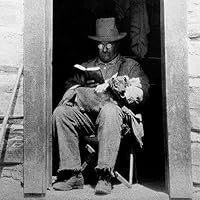
A towering figure on the American cultural landscape, H.L. Mencken stands out as one of our most influential stylists and fearless iconoclasts--the twentieth century's greatest newspaper journalist, a famous wit, and a constant figure of controversy. Marion Elizabeth Rodgers has written the definitive biography of Mencken, the most illuminating book ever published about this giant of American letters. Rodgers captures both the public and the private man, covering the many love affairs that made him known as "The German Valentino" and his happy marriage at the age of 50 to Sara Haardt, who, despite a fatal illness, refused to become a victim and earned his deepest love. The book discusses his friendships, especially his complicated but stimulating partnership with the famed theater critic George Jean Nathan. Rodgers vividly recreates Mencken's the glittering tapestry of turn-of-the-century America, the roaring twenties, depressed thirties, and the home front during World War II. But the heart of the book is Mencken. When few dared to shatter complacencies, Mencken fought for civil liberties and free speech. We see the prominent role he played in the Scopes Monkey Trial, his long crusade against Prohibition, his fierce battles against press censorship, and his constant exposure of pious frauds and empty uplift. The champion of our tongue in The American Language , Mencken also played a pivotal role in defining the shape of American letters through The Smart Set and The American Mercury , magazines that introduced such writers as James Joyce, F. Scott Fitzgerald, and Langston Hughes. The paradoxes of Mencken's life are explored, as new gaps are filled regarding his notorious views of minorities and his conflict, as a German American, during two world wars. And throughout, Rodgers captures the irrepressible spirit and irreverent wit for which Mencken was famed. Drawing on research in more than sixty archives including private collections in the United States and in Germany, previously unseen, on exclusive interviews with Mencken's friends, and on his love letters and FBI files, here is the full portrait of one of America's most colorful and influential men.
“He pummeled censorship, Prohibition, and hypocritical Puritanism with equal ardor. The defense of individual freedom always brought out the best of his powers, and the suppression of civil liberties became one of his dominant targets, bringing it more fully into the mainstream of public discourse.”—page 227/673
Standard disclaimer: In my personal pantheon of heroes, Henry Louis Mencken has long been idealized, lionized, and even damn near canonized, as one of the all-time truly great Americans. A free thinking wordsmith/linguist extraordinaire and an adorably charismatic curmudgeon, Mencken was one of those incredible people, among the likes of Mark Twain, P. T. Barnum and Clarence Darrow, with whom I could dearly wish to have been friends.
In her comprehensive ‘warts-an’-all’ biography, MENCKEN: THE AMERICAN ICONOCLASTS: The Life and Times of the Bad Boy of Baltimore, Marion Elizabeth Rodgers hits all the notes of wonder, wit, wisdom, and weirdness. I enjoyed reading it tremendously.
Recommendation: What’s not to love about HLM? There’s something in his character and writings to offend practically everyone. Commended more so to the thick-skinned than the thickheaded.
“I am, in belief, a libertarian of the most extreme variety, and can imagine no human right that is half as valuable as the simple right to pursue the truth at discretion and utter it when found.”—page 116/673
“I have believed all my life in free thought and free speech.”—page 564/673
How ironic that the most extensive biography covering the controversial life of the author of "In Defense of Women" was written by a beautiful woman. Marion Elizabeth Rodgers has no doubt written the most intimate(using mainly primary sources) work on the life of Baltimore's greatest sage H.L. Mencken. I am sure Mencken would have been flattered to have read Rodger's wonderful book.
“Send a maniac to catch a maniac,” as the phrase went in one of my favorite childhood movies, “Demolition Man” (which I think still holds up quite well). The writer to “catch” Henry Louis Mencken in biography form, by that standard, would have to be a prose wizard and critical to the point of scabrousness. Alas, in this biography, the task is taken up by a journeyman writer whose attitude towards her subject is mostly one of hero worship.
Do people still think much about Mencken? An article recently said Matt Taibbi thinks of himself as a Mencken figure, which is a complicated claim I’m just going to leave alone. I thought about him well before I read much of him because his name was ubiquitous if you read much about American culture from a period roughly between 1920 and 1945 or so. It’s not an exaggeration to say that every American writer who came of age in that period wrote in Mencken’s shadow. From his perch at The American Mercury and The Smart Set, Mencken propelled American literary modernism into the spotlight through his criticism and curation. He was one of the most famous men in America during the Jazz Age, and young intellectuals the country over aped his hard-drinking, cigar-chomping style. He was also a working journalist and was famous for reporting on presidential campaigns and on the “Scopes Monkey Trial.” His linguistic work, “The American Language,” is highly respected.
It’s hard to explain much about Mencken’s career without going into detail about his politics, which is a problem because a lot of the contexts of what mattered to him were different back then. In fact, you could argue that as his context converged more with one we could recognize, the more he kicked against it, and the further he fell from his twenties heights.
H.L. Mencken is at one and the same time a very contemporary figure, and one not necessarily easy to place given contemporary ideas about writing and politics. He was, in many respects, the original talented edgelord, laying the pattern for media iconoclasts from his day to the time of Parker and Stone. He was the guy who always one step ahead in terms of wit, who didn’t care when you did (and sometimes, just to show you up, cared when you didn’t, or didn’t expect him to), the “equal opportunity asshole,” the guy you couldn’t help laughing at or otherwise enjoying his work. Many of the same hot button issues Mencken leaned on are similarly deployed by edgy types today, from the hypocrisy of religion to the fecklessness of politicians to the importance of free speech.
That last might give us an entry point into the ways in which Mencken eludes us. Rodgers depicts Mencken as a man whose first and last priority was always free speech. She opens with a scene of him baiting a Boston blue nose into having him arrested for selling a copy of the American Mercury, which the Watch and Ward Society had had banned (this was the time when “banned in Boston” was a known phrase), getting the case dismissed, and stopping by Harvard for rousing applause. Mencken was, in fact, critical in opening both cultural and legal doors that allowed literary modernism to flourish in the United States. But it’s worth noting that the sensibilities offended were usually those around the use of working-class language like “damn,” allusion to the existence of sex workers, or depictions of such lascivious acts as kissing.
The point being, if you showed Mencken an episode of South Park without context, I think it quite likely he would agree with his Boston antagonist that it was filth and should be banned post-haste. This is a guy who broke up with a movie starlet at least in part because she made jokes about Johan Strauss’s waltzes. In this way, he’s both utterly unlike the “free speech purists” (outside of some chan-bound fantasists no one believes in literally free speech but you know what I mean), and strangely parallel. They get weirdly easily offended, too, a lot of the time. A lot of the time, what they’re about is more the promulgation of quality, as understood by themselves and as done over the objections of busybodies, rabble, and losers, than they are about anyone else’s freedom.
Mencken’s contemporary quality and his distance from our time come together in his reaction to Franklin Delano Roosevelt. Mencken hated FDR since he came onto national political scene in 1920, seeing him as a silver-tongued mountebank (a favorite Mencken insult, “mountebank”). When FDR became President and started implementing the New Deal, Mencken grew increasingly angry, and grandiose, paranoid, in his anger. FDR spelled an end to American liberties, with his throwing money at the poors and his management of the press. On the one hand, this was, more or less, ideologically consistent for Mencken- he was always an elitist and always despised the poor. On the other, FDR was actually known as a relative fiscal conservative going into his term of office (Rodgers neglects to mention this), but Mencken still hated him and had for over a decade.
I think it’s actually easy to see why Mencken hated FDR so much, so consistently, for so long, even as FDR was key to ending the Prohibition law Mencken hated so. FDR beat Mencken. FDR beat Mencken at his own game, communicating in American English via mass media, and shifted the cultural ground under Mencken’s feet. Mencken couldn’t adjust to post-1929-crash reality, and FDR steered many aspects of that reality. FDR even beat Mencken at ridicule, owning him in speeches, and all Mencken could do was fume and fulminate, getting less and less funny with each column inch he took up screaming after the president. Whatever abrogations of due process FDR undertook in his time, he didn’t need secret police to beat his most determined opponent in the press- just his own wit and popular goodwill. That must have gutted Mencken, to the extent he understood it. It revealed a deeper weakness- Mencken always did best against weak opposition. He was a front-runner, great at turning his nose up at the “boobs” but unable to do much against anyone who could match wits with him or see something he couldn’t.
From there, it was downhill for Mencken. He was materially secure, more or less, but increasingly culturally irrelevant, somewhere between an honored relic and a cautionary tale. Among other issues, he was part of a whole generation of people whose justifiable skepticism regarding American intervention in World War One led to some horrifying judgment calls as its sequel came around. Mencken, ever the Germanophile and mindful of how exaggerated (some) anti-German propaganda in the Great War was, systematically downplayed the dangers of fascism and of Hitler in particular. Whenever there was a choice between sympathizing with inconvenienced Germans and with existentially endangered Jews, he always chose the former, and didn’t shy away from stereotype and crude language in so doing- why would the guy who called his critical collection “Prejudices”? By the time he died in the fifties, it made sense that a scabrously racist gang of paleocons had taken his name for one of their societies.
Well! I guess I should talk about Rodgers’ book rather than giving you this report on the guy, huh? Most of what I’ve written here I knew before I listened to this biography. Of course, I learned a fair amount in listening… but a lot of that was minutiae. This wound up raising questions for me that I found more diverting than the book as it wore on. How do you generate good questions in a biographical project? It’s so easy to fall into the trap of taking a side in some notional Egyptian afterlife courtroom, waiting to see if the alligator eats the subject’s heart. This leads biographers to array their investigations around the established controversies — in this case, “how much of a racist, antisemitic prick was Mencken, all told?” mostly — and neglect more interesting approaches.
The upshot of this is that as Rodgers went on into the period of Mencken’s life defined by public controversies, especially ones where he both loses and looks bad by contemporary lights, the more analytical energy she spends trying to justify him. This sucks, because not only are some of her calls pretty bad, but when she lets the thing breathe a little it isn’t half bad. You can see this in the early parts of the biography, where Mencken’s boyhood Baltimore comes to life, and the Edwardian (they often say “Victorian” but that’s basically wrong) context in which Mencken grew up and which shaped so many of his ideas comes across clearly. Among other things, the German-American milieu of Mencken’s youth (I forget whether Mencken’s parents or grandparents were the immigrants) comes in loud and clear, the combination of respectability and skepticism and the quiet certainty that they were, in fact, superior in terms of culture to American-Americans.
Basically, think of this book as having three stages (it has like seven “parts” but ignore that). Mencken’s youth is the best part, basically up until the end of World War One. Along with fun descriptive bits, it seemed to be setting up a clash between Mencken’s Edwardian, vaguely-German-American-nationalist idea of what an advanced man should be like, and the realities of modernity as revealed by the war. We get a little bit about this in the second part, Mencken’s salad days in the twenties. We see some of how the literary critical sausage gets made, Mencken’s negotiation with the “tribal twenties” — despite believing black people to be essentially inferior to whites, he published many more black writers than any other white editor, respecting talent where he found it — but we also start getting a lot of “hot goss” about Mencken’s love life. It was intermittently interesting — and Rodgers seems more indignant at the way the bachelor playboy Mencken dealt with some of his women than how he borderline denied the Holocaust — but not a good sign, how much it dominated the book. Then you get the end, with Rodgers scraping the bottom of the evidentiary barrel to make her man look good in his decline. By this time, analysis of anything interesting has gone out the window in favor of lawyering up- admitting what she has to admit, but giving “context” to excuse him.
The context I’d be interested in is that of historical change, and not just “a lot of people didn’t believe atrocity stories from Nazi Germany that people now know are true.” A real historical contextual understanding of someone like Mencken wouldn’t be a defense, or a takedown. He’s interesting enough, and important enough to American letters, to contextualize for its own sake. I wonder where Rodgers is at these days- I think she teaches somewhere, used to contribute to Reason, and you can see this as an addition to an aughts-era libertarian canon of saints. What it all would have meant, to her or to anyone, after libertarianism took its big fall against Trump, is a question you can’t glean an answer to from this book, alas. Will anyone with a critical acuity anywhere near matching Mencken’s — and despite some holes in his abilities, when he was good, he was phenomenal — ever take on the project of bringing him and his times truly to life, or will it all be fans and/or detractors from here on out, until people finally forget him? ***
One quote that really struck me, both an example of Mencken's perspicacity but also his blindness. Hearing William Jennings Bryan at the Democratic National Convention in 1904, he wrote:
As Bryan began to speak, Mencken observed how a hush fell over the crowd, and how he was cheered and jeered in turn by the excited hall. “He knew that the swift way to get things done in this country was not to argue for an idea, but to arouse a hatred,” Mencken wrote later, “and that is exactly what he set out to do, dramatically and ruthlessly…. He knew, too, the subtle power of religious reminiscences and suggestions—its power to enchant and to arouse ancient and deep-lying passions, its power to sentimentalize even as dull a thing as a problem in political economy. In a word, he knew how to make the crowd run amuck…. The people were not brought in to decide a problem, but merely to slaughter a villain." With some heat, Mencken noted, "Such a mountebank as the Hon. William Jennings Bryan, with his astounding repertoire of bogus remedies, would be almost unimaginable in Germany."
Germanophile that he was, he failed to recognize what was to happen in Germany some thirty years later. His myopia in that regard, and refusal to admit to the appalling depredations against the Jews, was to lose him many friends during the years leading up to WW II. This myopia is only partly ameliorated by his defense of the black community, an unpopular stance. He was dismayed by the lynching of a man and incurred the enmity of the "eastern shore" residents for his editorials that cost the Sun a lot of advertising revenue. As late as the thirties, while in Germany, Mencken failed to appreciate the dangers faced by Jews in Germany as he considered Hitler a harmless buffoon. His naïveté was extreme and remarked upon by his friends who could see that Germany by this time was a schizophrenic mess of economic success and terror.
Mencken's support for unpopular causes was legendary. The suppression of free expression under Wilson during WWI was appalling. Anything and everything German or even suspected of being sympathetic to anything German was subject to arrest. One debt of gratitude we owe Mencken was his resistance to suppression of free thought which was rampant Palmer raids. Mencken was heavily involved in the strategy for taking on Bryan during the Scopes trial. It was his idea to put Bryan on the stand, according to Rogers, although I was unable to confirm that anywhere else. Indeed, Mencken left to return to Baltimore before the famous climax of the trial. (On a side note, if you have not seen Inherit the Wind starring Spencer Tracey and Frederic March, go do that right now. The 1960 version, not the 1988 film with Kirk Douglas and Jason Robards. That one is junk.)
On the nomination of Warren Harding: The Presidency tends, year by year, to go to such men. As democracy is perfected, the office represents, more and more closely, the inner soul of the people. We move toward a lofty ideal. On some great and glorious day the plain folks of the land will reach their heart’s desire at last, and the White House will be adorned by a downright moron.
He thought Prohibition was abominable. While some viewed agitation against alcohol and tobacco a simple nuisance, Mencken believed such attitudes actually endangered individual liberty. “The Free Lance” bristled with indignation at the pretensions of a moral mania that was chipping away at man’s basic freedoms; his right to smoke a cigar, for example. A moralist could challenge him to a debate on smoking, he declared, even denounce him as a sinner, “but when, not content with this, he proceeds to snatch my cigar out of my mouth, or to belabor me with a club from behind, or to have a law passed condemning me to 30 days in jail, then he goes beyond my rights, and I am fully justified in calling him names, in pulling his whiskers and blacking his eyes. And whether I am justified or not, I am going to do it.”
Mencken could be quite Randian, years before she articulated the individualism he subscribed to: "He scorned the mob man or the believer, what he later called the “booboisie,” versus the first-rate man of the civilized minority—in other words, the iconoclast, whose mission it was to “attack error wherever he saw it and to proclaim truth wherever he found it. It is only by such iconoclasm and proselytizing that humanity can be helped.” Unfortunately, some of that thinking resulted in a favorable view of social Darwinism.
While I generally enjoyed the book, I found the numerous sections on his multiple girlfriends --it took him years to settle on Sara -- to be a bit tedious. I was not aware that he had done so much for the literary community, especially black writers, almost by himself bringing black writers to the attention of the country. His studies of the American language were epic and justifiably famous.
My husband is laughing because my copy of this book has oodles of different colored sticky tabs sticking out from the different pages, each one marking something that Mencken said that I wanted to highlight. (Yes, I know, it's time to get a Kindle and electronically highlight all those passages, but I can't help myself. I just love books. Each one has its own personality... its feel, its heft, its typeset, the texture and smell of its pages... all of this is lost on a Kindle.)
I absolutely loved this biography, and appreciate how well-researched it is. Marion Rogers captures so much detail, and deftly weaves in so many quotes from Mencken to tell the story that at times, it sounds more like an autobiography than a biography. She brings Mencken to life, making him so vividly real that I found myself feeling a bit blue for next day or two after finishing the book. Why? Because Mencken, not surprisingly, dies at the end of the book. Never mind that the actual H.L. Mencken died before I was even born; I feel like he died just last Thursday, when I finished the book.
This biography gives a fascinating account of not only Mencken's life, but of America's history and the psychology of her people in the first half of the last century. There are so many striking parallels with what is going on in today's politics that the book does not seem historical at all.
If there was anything I found fault with the book it would be that Rodgers organizes the book according to themes versus a straight chronology. While this allows her to explore certain aspects of Mencken's life from a thematic standpoint, it is a little hard to follow at times. But overall, the themes tend to run in enough of a chronological order that one gets the basic idea of the timeline.
This book left me wanting more Mencken, and definitely wanting to read more of his writings.
A biography of Mencken that updates ones by William Manchester and Charles A. Fecher. It underscores the popularity of the iconoclast in the beginning of the 20th Century for his stands on censorship, Prohibition, evangelicals -- and particularly his American literary criticism. Later he would become rabidly anti-government (or anti-New Deal) and gradually become disengaged from popular culture because of his dislike of movies, radio and television.
In a sense Henry L. Mencken was a Victorian projected into the 20th Century and might be copmared to Winston Churchill, except that Churchill was an occasional journalist and Mencken did nothing but write. This is a great book for unearthing choice Mencken quotes though it quotes sparingly from his writing. Early in the book Rodgers uses a Mencken quote to summarize his philosophy: "The two main ideas that run through all my writing whether it be literary criticism or politcal polemic, are these: I am strongly in favor of liberty and I hate fraud." And it should be read with a dictionary nearby to decipher the meaning of ichor, chalybeate, peruna and other obsolete words.
Rodgers has access to many personal letters of Mencken, so the book carries quite a bit of information about his love life, which was surprisingly prodigious and included several Hollywood actresses, though he disdained the film medium.
I've come across him in so many other books, references & research sources covering the first half of the 20th century...it was time to finally check out HL Mencken in detail. I wasn't disappoint: this man is grit, talent, drive, ambition...but also full of complicated, contradictory and offensive qualities. It makes for fascinating reading, although a stronger editor would have cut 50 to 100 pages from this brick without losing anything.
Mencken was once asked whether he wanted to be known as the sage of Baltimore or the man who hated everything. To which he replied that he did not care a damn (as long as one did not call him an old dodo). But he added that is was a little inaccurate to say he hated everything. "I am strongly in favor of common sense, common honesty and common decency."
This is a very good biography but I am not sure it was a good idea to read it. I did read his diaries so I knew something about the man. But I have not read anything else, except for some quotations and the famous short piece that just lists all the Gods that have died (this alone would have made HLM a giant.)
So I feel I really should have read a couple of his books, before going deeply into his biography.
Anyway. Mencken was a journalist. Quite literally he started as a reporter the moment his father died and he was saved from a life as a manufacturer of cigars. He did not waste his time going to some university. And the first thing that amazes you is how did he get his education? Where did he get the knowledge (and chutzpah) to start his book-writing career with a work on Nietzsche?
And how do these guys find the time to get involved with so many women. Mencken at some time had three woman friends all hoping to marry him, while he spends Christmas alone writing letters to all them, telling them how much he missed them. One of the woman was an actress who was famous at the time who later married a friend of Mencken, James Cain. Was this the always twice ringing Postman Cain I wondered? Yes, I just checked. Funny, that Rodgers quotes from the unpublished(!) memoirs of Cain. (How is it possible that memoirs of such a man remain unpublished?)
Mencken was proud of his German ancestry. I liked this, but it is, to say the least, disturbing, to see that a brilliant man like him going to Germany in 1938 for example, could be totally unwilling to believe that anything really wrong was going on in Germany. People do believe what they want to believe. Of course, he was accused of being an antisemite. And not without some evidence. "The jews could be put down as the most unpleasant race ever heard of." - "They have vanity without pride, voluptuousness without taste, and learning without wisdom." This is from his Treatise on the Gods a book he regarded as his best. It seems there is not an excuse. But Mencken believed in free speech if he believed in anything. And he said: "I don’t apologize. I am entitled to my prejudices." And he also said: "I am sick and tired of this nationalism, anyhow. That goes for racialism. There is no pure race, the anthropologists tell us. So why not mix? Why not get our blood intermingled? Something interesting might result." (356)
And he fought in his editorials to let in Jewish refugees when the official policy was to be outraged about their treatment but to keep them out of the country at the same time. (And Mencken did delete the passage in a later edition.)
As for the quotations, of course, when Mr. Trump became President, people remembered being told by Mencken: "As democracy is perfected, the office of the President represents, more and more closely, the inner soul of the people. On some great and glorious day, the plain folks of the land will reach their heart’s desire at last, and the White House will be occupied by a downright fool and a complete narcissistic moron." (223) - It helps to remember though, that Mencken despised FDR, a man we were told at school approached George Washington in saintliness.
I wanted to learn more about Mencken the man and his personal history before further reading of his essays, Prejudices: The Complete Series. Marion Rogers is a new author for me and I am thrilled to have found her book biography documenting HR Mencken. This is one of the best written biographies I have had the pleasure to read and HR Mencken turns out for me to be one of the best subjects. His worldview has been validated by history while those areas from which he diverged are less profound than those of convergence. He was a canary in the coalmine as pertains to the institutionalization of propaganda by the government to achieve false flag wars, centralized power for the few, economic dependence, and consolidation of power in the Executive branch to the detriment of legislative and judicial. He had an incredibly insightful view regarding the ultimate revolution of media from print to pictures with the earliest of the silent films as bellwethers impacting the literacy of society. The TV capped his aprophical outlook in the late 1940s as the harbinger of non-critical thinking and cultural desolation to come. He does all of this with a vocabulary, wit, and humor capping the delivery of the message with laughter and deep for appreciation for his intellectual rigor. His self declared mission to be a voice for truth and the protection of civil liberties marks his legacy as alive and well for those continuing to read his essays and take an interest in this crusader's epic life story. Highly recommended as context and entertainment for all things related to Mencken.
Until I read this book, I knew little about H.L. Mencken, other than being familiar with the name. After reading this book, I feel like he is a personal friend. Additionally, I was amazed at how much I learned of American history that you don't learn from the American history books. Henry Mencken was a very complex and unique individual, who had no qualms about saying what was on his mind, no matter how many people railed against him and shook their fists (and probably many threw things). He was, in many respects, a walking contradiction, partly truth and partly fiction. Having finished the book, I actually feel as though I miss the man; clearly, I will have to pick up some of his work and get better acquainted. Marion Elizabeth Rodgers did an outstanding work with this biography of a highly prolific and controversial hero of an era, and it was a pleasure to read. Had I known when I started what I know now, I might even have purchased a bottle of excellent brandy with an equal quality cigar to accompany me on this literary journey.
This is an extremely detailed biography on the famous critic / newspaperman / reporter of the American Jazz Age, Henry Louis Mencken.
Rodgers writes well, but seems to include every fact she ever stumbled upon on her subject; the book is simply too long. It gets bogged down in irrelevant tidbits, asides, and conversations that add little to no value to the reader. It's almost as if during her research, if there was even a shred of relevance to adding something, the decision was made to include it. This drag is compounded throughout the 670-page book.
The endless list of girlfriends, would-be girlfriends, and what-could-have-been wives nearly pushed me over the edge in the middle sections. I was probably as relieved as Mencken when he finally read his vows to Sara.
Rodgers also rarely provides a summary or analysis paragraph at the end of her chapters. Instead, the book hops from one year to the next, piling on detail after detail without giving the reader much chance to process along the way.
I do, however, have some favorite Mencken quotes that I would like to share :)
"...to Mencken, golf and idiocy were the same word."
"The dirtiest man that I have ever seen in my life was in charge of the sandwich counter at Chicago."
"The Presidency tends, year by year, to go to such men. As democracy is perfected, the office represents, more and more closely, the inner soul of the people. We move toward a lofty ideal. On some great and glorious day the plain folks of the land will reach their heart's desire at last, and the white house will be adorned by a downright moron."
"Nations get on with one another, not by telling the truth, but by lying gracefully."
I loved this book! It is actually the first book I've "read" in audio and I am now a convert. At 19 discs and 24 hours of length, it took me a long time to complete. My commute/car time is short, but this amazing book made me look forward to driving. Henry Louis Mencken fully embodied the term iconoclast. He was intelligent, snappy, contradicted himself often . he was funny, generous, grumpy, and loud. With him, I explored nearly 75 years of American history. As a journalist, Henry covered Presidential conventions for decades. He was an astute observer of American society. Although sometimes a bigot, an anti-Semite, and a harsh critic of society, he was a tender person who became a supporter of civil rights for all people. He was a standout man of his era. When I listened to the end of his life, I felt I'd lost a friend. I was deeply enriched by this book and the knowledge gained with stay with me for a long time. I highly recommend this book.
This is another fascinating but ultimately disappointing Mencken biography. Rodgers does not disparage any of Mencken's unpopular views, and gives a full, objective account of his views on race (and the Jews), challenging typical views of his purported racism and anti-Semitism. She continually refers to Mencken's "contradictions", most of which are merely paradoxes, without addressing his deepest contradiction. And while the book is fairly thorough and detailed, Ayn Rand is never mentioned. This particular edition, at least, needed much more proofreading and editing (some passages are difficult to grasp).
I always enjoyed Mencken's writings even though I'm a Catholic and he's a hard-core atheist.
This is a super entertaining biography of the Sage of Baltimore. If you enjoy his writing you'll love this book. Favorite part recounts his total fabrication of his reporting of the Russo-Japanese war.
He guessed the outcome of the decisive battle correctly and was able to garner national fame by being the first to report it. He recalls years later that is he had been wrong his career would have ended there.
His marriage to Sara Haardt was more touching than what i had imagined. His slow decline was also quite moving.
Fascinating man who was right and wrong about much.
I read this in a piecemeal fashion over a few years. Subtitled “The Life and Times of the Bad Boy of Baltimore,” it’s essentially a biography of H.L. Mencken, a very influential journalist, critic, and “celebrity” in the early 20th century. A German bon vivant, he had some controversial views--particularly his lenient treatment toward Hitler--that leave a bad taste. But it was also really interesting to read about his experience covering the Scopes “monkey” trials. (6)
An engaging biography of a man I practically idolized as a young, fire-breathing conservative (a million years ago). Now, as a middle aged centrist liberal I find a lot more about Mencken that's hard to love, but I still appreciate his wit, honesty, and fierce devotion to a free press.
The most comprehensive biography of H.L. Mencken. It made me realize how much nuance was (by necessity) left out in shorter volumes. Restores faith in literary biography, with its balanced discussions of issues and attention to important details (but not unimportant ones!).
I thought her book was very well written and showed a side to Mencken that I had not seen before. There was a lot you could say about that guy. She did a good job revealing more of his character.
Added 3/20/16. (first published January 1st 2005) I know I'll never be able to finish reading this tome but I'm going to try to savor as much of it as I can. I've borrowed it from our public library. Too bad they don't have it as an audio book.
4/22/16 - I skimmed parts of this book. Pretty dense reading. While some of it interested me, much of it dealt with areas in which I had no interest. Of course, Mencken was a very witty man and it's fun reading some of his comments. I got the impression he was quite a womanizer but that he did have one special love at one time. I decided not to continue reading because there are other books calling to me at this time. Perhaps I'll look him up at Wiki. https://en.wikipedia.org/wiki/H._L._M... Excerpt from Wiki: ===================================== "Henry Louis "H. L." Mencken (1880-1956) was a German-American journalist, satirist, cultural critic and scholar of American English. Known as the "Sage of Baltimore", he is regarded as one of the most influential American writers and prose stylists of the first half of the twentieth century. As a scholar Mencken is known for American Language, a multi-volume study of how the English language is spoken in the United States. His satirical reporting on the Scopes trial, which he dubbed the "Monkey Trial", also earned him notoriety. He commented widely on the social scene, literature, music, prominent politicians and contemporary movements." ================================
To hear a sample of the audio book, go here: http://www.audible.com/search/ref=a_m... "Mencken: the American Iconoclast: The Life and Times of the Bad Boy of Baltimore" Regular Price:$34.96, UNABRIDGED, By Marion Elizabeth Rodgers, Narrated By Patrick Cullen.
PS-I found the following comment online regarding Mencken's style (I thought it was a good way to describe it.): "... Mencken’s verbal gymnastics, his apparent refusal to say something plain when it could be said with the cocksure verbosity of a Southern lawyer." FROM: http://www.theparisreview.org/blog/20... (There's a good picture of the young Mencken at the above-linked page.)
MORE FROM THE ABOVE-LINKED PAGE (an article written April 20, 2016 by Carson Vaughan, a freelance writer): =============================== "I was aware that Mencken, like the Boobus Americanus he lampooned, had never attended college himself. In fact he rarely left the confines of Baltimore, and spent much of his adult life living with his mother and eating her sandwiches. In 1928, Irving Babbitt accused Mencken of “intellectual vaudeville,” and more recent critics have labeled him a philistine, but it didn’t matter to me. The show had already started, and his ridicule, in a way, seemed a privilege." ===============================
PS-SEE MORE ABOUT MENCKEN AT: http://www.menckenhouse.org/txt/about... EXCERPT: ******************************* "The effect of all this energy made him irresistibly attractive to women. “Girls swarmed after him,” according to Anita Loos, herself inspired by Mencken to write "Gentlemen Prefer Blondes". In newspaper polls, women called Mencken one of the most fascinating men in the United States. “America’s Best Known Bachelor” was, during the 1920s, the patron saint of single men."
"In 1930, after a seven-year on and off courtship, the confirmed bachelor finally married, at age 50, a Goucher College graduate and Southern writer, Sara Haardt. The news of Mencken’s marriage made headlines across the country."
"One reporter wrote: “Bachelors of the nation are aghast and sore afraid, like a sheep without a leader.” After years of bachelorhood, they asked, how had Mencken known he was enough in love to contemplate marriage? “The Holy Spirit informed and inspired me. Like all other infidels, I am superstitious and always follow hunches: this one seemed to be a superb one.”" ****************************** PPS-Also see my review of the book, Bobos in Paradise: The New Upper Class and How They Got There, at the page linked below: https://www.goodreads.com/review/show...
I just finished reading this book and if you want to learn about one of the most influential journalists of the early 20th century this is a great place to start. Mencken was a consistent defender of freedom of speech and particularly the freedom (and responsibility) of the press to question the actions of those in power. He was constantly a gadfly to the media inciting them to be skeptical of the motives of our leaders. Quite an interesting man. This book was written well enough that it did...more I just finished reading this book and if you want to learn about one of the most influential journalists of the early 20th century this is a great place to start. Mencken was a consistent defender of freedom of speech and particularly the freedom (and responsibility) of the press to question the actions of those in power. He was constantly a gadfly to the media inciting them to be skeptical of the motives of our leaders. Quite an interesting man. This book was written well enough that it did not bog down. I never felt like I was slogging through it just to get it done. It was interesting to see history swirl around this man.
I just finished reading this book and if you want to learn about one of the most influential journalists of the early 20th century this is a great place to start. Mencken was a consistent defender of freedom of speech and particularly the freedom (and responsibility) of the press to question the actions of those in power. He was constantly a gadfly to the media inciting them to be skeptical of the motives of our leaders. Quite an interesting man. This book was written well enough that it did not bog down. I never felt like I was slogging through it just to get it done. It was interesting to see history swirl around this man.
The tale of Mencken's life is fascinating and illuminating. The writing is a little disjointed and the time periods are frequently interwoven, and you get off track. It's a book written by a thorough researcher, who never quite grasped how to juggle simultaneous events into a smooth narrative arc. She makes a valiant try, but maybe the editors were too much in a hurry to get it out, and just abandoned the attempts for chronological clarity for the sake of expediency. In his own books, Mencken mastered this difficult task quite well.
Decided to read this instead of Terry Teachout's bio because Teachout apparently spends a lot of time analyzing Mencken's works, which are readily available, fun to read and easily analyzed by you and me. Rodgers concentrates on the day-to-day life and has dredged up some apparently new material that is summed up by the chapter title "The German Valentino." The book seems comprehensive and it's a constant pleasure, even at nearly 600 pages..
I've been reading this slowly for months. It is a good introduction to the man. He has so much to offer in his views of the U.S in the early last century and of people in general. I will probably be exploring books written BY him and about him in the future.
THE BAD-BOY OF BALTIMORE!!! Hunter Thompson had a great admiration for this man as he fought against censorship long before it was hip. My admiration for Thompson got me reading into the people that he admired...Thanks to The Good Doctor.