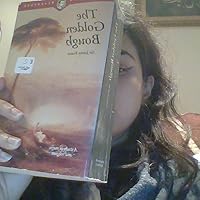
Our greatest fear is of losing control - of our lives, but, most of all, of ourselves. In these ten unsettling tales of unexpected madness master storyteller Roald Dahl explores what happens when we let go our sanity..
Among other stories, you'll meet the husband with a jealous fixation on the family cat, the landlady who wants her guests to stay forever, the man whose taste for pork leads him astray and the wife with a pathological fear of being late.
Roald Dahl reveals even more about the darker side of human nature in the four centenary editions featuring his own stories: Madness, Deception, Cruelty and Lust. --back cover
Roald Dahl was a beloved British author, poet, screenwriter, and wartime fighter pilot, best known for his enchanting and often darkly humorous children's books that have captivated generations of readers around the world. Born in Llandaff, Wales, to Norwegian parents, Dahl led a life marked by adventure, tragedy, creativity, and enduring literary success. His vivid imagination and distinctive storytelling style have made him one of the most celebrated children's authors in modern literature. Before becoming a writer, Dahl lived a life filled with excitement and hardship. He served as a Royal Air Force pilot during World War II, surviving a near-fatal crash in the Libyan desert. His wartime experiences and travels deeply influenced his storytelling, often infusing his works with a sense of danger, resilience, and the triumph of the underdog. After the war, he began writing for both adults and children, showing a rare versatility that spanned genres and age groups. Dahl's children's books are known for their playful use of language, unforgettable characters, and a deep sense of justice, often pitting clever children against cruel or foolish adults. Some of his most iconic titles include Charlie and the Chocolate Factory, Matilda, The BFG, James and the Giant Peach, Fantastic Mr Fox, and The Witches. These works are filled with fantastical elements and moral undertones, empowering young readers to challenge authority, think independently, and believe in the impossible. Equally acclaimed for his work for adults, Dahl wrote numerous short stories characterized by their macabre twists and dark humor. His stories were frequently published in magazines such as The New Yorker and later compiled into bestselling collections like Someone Like You and Kiss Kiss. He also wrote screenplays, including the James Bond film You Only Live Twice and the adaptation of Ian Fleming's Chitty Chitty Bang Bang. Despite his literary success, Dahl was a complex and sometimes controversial figure, known for his strong opinions and difficult personality. Nonetheless, his books continue to be treasured for their wit, originality, and the sense of wonder they inspire. Many of his stories have been adapted into successful films, stage plays, and television specials, further cementing his legacy. Dahl's impact on children's literature is immeasurable. His ability to connect with young readers through a mix of irreverence, heart, and imagination has made his stories timeless. Even after his death, his books remain in print and continue to be read by millions of children worldwide. His writing not only entertains but also encourages curiosity, courage, and compassion. Roald Dahl's work lives on as a testament to the power of storytelling and the magic of a truly original voice. He remains a towering figure in literature whose creations continue to spark joy, mischief, and inspiration across generations.
edward the conqueror - 4 stars katina - 2 stars the sound machine - 5 stars an african story - 2 stars the landlady - 5 stars pig - 5 stars the boy who talked with animals - 3 stars dip in the pool - 5 stars william and mary - 5 stars the way up to heaven - 5 stars
Oh wow, unsettling as heck. Took me a little while to get into but when it was good, it was GOOD. Definitely recommend if you fancy something more on the disturbing side.
This is the first time I've read anything by Roald Dahl. Somehow I managed to miss his stories for children in my own childhood. As an adult, he's a writer I always meant to get around to and never quite got there. Recently my favorite BookTuber (shoutame) reviewed it quite favorably and I knew it was time to buy a copy and read him. I have often found my book paths cross with Amy and share her opinion on a wide variety of different genres. Again, I find myself sharing her opinion of this collection of short stories. I loved it. I loved his writing. He manages to convey complete scenarios without excessive words and the story flows quietly forth, often with a jolt. Penguin has put out 8 short story collections of Dahl's: Madness, Deception, Lust, Cruelty, Fear, Treachery, Innocence and War. I plan on getting them all eventually and will be ordering Deception next.
I received a free copy of this at the local literature festival. Dahl's short stories have been re-edited into 4 new themed collections, bringing out the darker side of his writing. Interesting to read them grouped in this way, as it shows how often he returned to the same ideas, although inevitably some fit the theme better than others.
Madness is one of eight centenary editions of Dahl’s short stories for adults, grouped together by theme, and collects ten short stories published between the mid-40’s (Katina, 1944) and the late 70’s (The Boy Who Talked With Animals, 1977) that explore, not so much what happens when we let go of our sanity (although there certainly are some of those as well), but rather the pleasures, dangers, and consequences of indulging in an odd obsession or eccentricity that might well be perceived as madness by others.
Out of all the themed collections so far, this was by far my favorite (not counting Innocence, which was largely non-fiction)—there was only one story I didn’t enjoy (An African Story), but none I actively disliked. Every story was incredibly memorable, and there were more stand-outs than ever before: I love when he writes about women gone rogue, particularly meek wives who finally take a stand against their domineering husbands, so my highlights included The Way Up to Heaven, William and Mary, and The Landlady, which I was already familiar with, but it still held up as one of my favorites in Dahl’s body of work. I also love his sardonic black humor, so Pig and A Dip in the Pool deserve a mention as well—it's often not entirely clear which character is meant to be the one on the brink of insanity, an ambiguity I loved. This is a great selection of stories that flow well from one to the next, particularly in the second half, which contains the better tales; if you only pick one of these themed collections up, Madness gets my vote.
Edward the Conqueror · ★★★ A piano-playing wife convinces herself that the long-haired silver cat that shows up in their garden one day is the reincarnation of famous classical composer Liszt. Her husband is none too thrilled, with catastrophic consequences… the ending is foreshadowed from the start, but the predictability makes it no less upsetting.
Katina · ★★★½ Published in 1944, as WWII was still ongoing, this is a story introduced as “some brief notes about the last days of RAF fighters during the first Greek campaign“—Dahl himself fought in these battles, and I wonder how much of this is autobiographical. It’s a vivid, memorable, and gut-wrenching outlier of a story about a nine year old Greek girl who lost her entire family in a bombing, and is “adopted” by the British fighter pilots who find her vacantly staring at the ruins of her home. I ponder why this was put into the collection dealing with madness, when there is one focused on war—is it the madness of war-waging? The madness of such an innocent and pure girl turned fierce and numb with rage? Or the madness of hope?
The Sound Machine · ★★★½ An eccentric man obsessed with sound constructs an apparatus which is able to make vibrations that are beyond the human ear heard, and he excitedly decides to test it to hear sounds of nature. It’s up to the reader to decide whether his device actually worked or if it simply triggered his lunacy, but I sure will never look at a lawn or flower bouquet the same way again.
An African Story · ★★ An odd story within an even odder story, set in the Kenyan Highlands and involving the mystery of milk vanishing out of an old man’s cow overnight. It was a bizarre and cruel tale, and I’m not sure what the point of the framing story was—it was just as bizarre as the main one, and quite elaborate, yet we never return to it.
The Landlady · ★★★★★ This is one of my all-time favorites short stories by Dahl, but it’s the first repeat I’ve come across in these themed collections—it’s also included in Innocence (bizarrely; it works much better here). It takes less than ten minutes to read this delicious horror tale, but it fills the reader with a mounting sense of dread, and I found it so evocative despite its brevity that I could almost taste the tea the accommodating landlady brewed for her unfortunate new tenant.
Pig · ★★★★ When newborn Lexington’s parents are killed in an unfortunate encounter with the police, he is adopted by an old aunt, and grows up to be an accomplished vegetarian cook who goes on a quest to write a book of recipes. Even by Dahl standards, this is one of the most sinister, twisted, violent and cruel stories I’ve encountered yet, and a stand-out—I particularly liked the generous use of black humor, it lent it a jarring and surreal feel. A cautionary tale about the dangers of shielding children from the realities of the world, which will cause them to grow up into naive and all too trusting adults.
The Boy Who Talked With Animals · ★★★ The narrator is vacationing in Jamaica when a group of sailors come back to the resort with the catch of a lifetime: A huge, ancient sea turtle. Rich guests want to buy it for its shell while the hotel manager wants it for its meat, but a young boy becomes hysterical, shaming the adults for their cruelty, and his parents volunteer to buy the turtle in order to save its life. This paired nicely with the preceding story, but I found it too long for what it was… or mostly just wish I had my own giant turtle friend to carry me away from all my problems to an uninhabited tropical island.
Dip in the Pool · ★★★½ On a cruise ship, there is a betting pool wherein passengers try to correctly guess the number of miles the ship will travel that day, within ten miles above or below the captain’s own guess. On a suddenly stormy day, a passenger places a huge bet on “low field”, but when he wakes up to bright blue skies and realizes that he will lose years of savings, he makes a rash decision to ensure he’ll still win. I saw the deliciously macabre ending coming from several nautical miles away, but still very much enjoyed the voyage to get there.
William and Mary · ★★★★ After William, emotionally abusive and controlling husband, dies of cancer, his late wife Mary receives a long letter in which he tells her that he underwent an experimental procedure in the hope of retaining consciousness beyond death. This disturbing Frankenstein-esque story was probably the goriest by Dahl I’ve read yet, and I could see it working really well as a Black Mirror episode…! It was perversely satisfying, a stand-out in the collection, but the reason I’m docking a star is because I’m not very fond of epistolary exposition, and it was very heavy on dull medical pseudo-science-talk—it would’ve packed more of a punch without it.
The Way Up To Heaven · ★★★★½ An otherwise perfect, elderly wife’s only peculiarity is that she’s very anxious about being punctual, but lately, her husband seems to enjoy tormenting her by trying to make her late. When he does this as she’s trying to catch a plane to Paris for a six week solo trip to visit her daughter and grandchildren, she makes a fateful decision… this was a masterfully crafted short story. The building tension made my palms sweat (I, too, am very anxious about being late), all the subtle hints and foreshadowing, and then the amusingly sadistic ending that I didn’t see coming! A great way to end the collection.
—————
My other reviews of Dahl's centenary editions of tales for adults (work in progress):
Much like I did with FPS, I am going to be reviewing the 10 short stories in this anthology individually until I've completed the book.
10/03/2024. Edward the Conqueror, 3.5 stars. Very simple story with a brilliant open ending. I really missed Dahl's writing, it's been quite some time. I of course do not condone even the implication of animals getting hurt in writing as well as of course in real life and this gave me a bit of a flashback regarding Apt Pupil by Stephen King although what happens is not explicitly stated. What's interesting about this is that as the reader, I'm the one who has to decide who is most insane and in this case, I feel sorry for Louisa because she was causing no harm to anybody and then Edward barged in.
14/03/2024. Katina, 2 stars. I'm quite certain that this one is autobiographical. It is both infuriating and depressing. I'd say that it's more about grief and anger rather than madness. Madness is more of a consequence of the 2 former emotions that is not quite delved into. Cruelty and PTSD are quite prominent themes in this one too. Dahl spent a long time working for the RAF and here he recounts how the Germans destroyed so many Greek machines and killed so many people. The narrator lost a lot of friends as well. Katina certainly deserved better. I'm not sure whether the word madness is here synonymous with anger but there certainly isn't a lot of mental derangement I suppose. Of course, one should take into account that this is war at the end of the day. Not boring or horribly written, just not for me I suppose.
18/03/2024. The sound machine, 4 stars. Pretty sure vegans would hate this one. Fantastic descent into madness btw Klausner's character deteriorates rather quickly after using the sound machine for the first time though it would be interesting to see how the sound machine came to be and how much of a genius Klausner actually is. Brilliant balance between discovery, destruction and sympathy. Pretty cool to see how the main character's knowledge of the world of plants, those which do not have a voice as we understand it, led to his psychological downfall. Of course, despite the implications, it is still rather open ended.
21/03/2024. An African Story, 3 stars. This one was all kinds of cruel. A giraffe, several dogs, and a man were killed off rather brutally. I wouldn't say that this one was particularly original or mind blowing despite still pertaining to the theme of madness. Not particularly memorable either. The story is repetitive and I can't say the suspense is great either. To be fair, the persona, perhaps Dahl, could be anyone else, does say that this text is not his and attributes it to a friend of his from the raf. I don't want to spoil too much but I agree that loud chewing and slurping noises do get on my nerves and could be a great reason to kill something or someone. The way the old man behaved gave John Wick vibes even though during Dahl's days, Wick was hardly conceived.
08/04/2024. Landlady, 4 stars. SPOILERS AHEAD. There is so much implied and the main character seems to be way too naïve. I certainly would have been able to put 2 and 2 together and escaped from the landlady's residence. Of course, not sure how quickly the poison would have knocked me out. Fantastic story and definitely packs a punch despite how short it is. Would certainly recommend for the escalation alone. The landlady is officially one of my favourite characters created by Dahl. She's so composed yet absolutely insane. The writing is fascinating too! Would have certainly loved to read more of this but it's open ended and we're left to assemble our own conclusions despite how obvious they may be.
15/12/2024. Dip in the Pool, 3 stars. Very suspenseful and well written but honestly not much to say. I did appreciate how minimalistic Dahl is with this one. It has to do with a man who, with the people on board the same ship as his, bets on how far they would travel within the next few hours and, like the rest, tries to make a quick buck based on the weather. When he realises that the ship will travel much further than he'd originally anticipated, William Botibol tries all within his power to delay the ship. SPOILERS AHEAD He decides to jump off the side of the ship and the old lady he'd spoken to prior to jumping didn't realise that the man was now in a lot of danger. It was a calculated risk which did not work in his favour. The old lady thought he'd jumped off to exercise rather than as a way of making a lot of money which is why I suppose the short story is titled dip in the pool. I can't blame her for not understanding the context despite her decrepit nature. Very unfortunate but I suppose he got what he deserved considering his manipulative, though cunning, nature. He just wanted to make his wife happy I suppose and, as always, money posed an issue. I wonder whether Mr Botibol froze to death or somehow made it out alive. I'm sure his wife would have killed him regardless.
07/09/2025. The Way Up To Heaven, 3 stars. Rather mid but I am a fan of Dahl's writing style. He's so descriptive and in describing a woman who suffers from anxiety, he makes his readers anxious or in my case frustrated and surprised. Mrs Foster is a person who worries about not being on time and her husband does his utmost to trigger her anxiety. I do not understand why he'd do such a thing. Perhaps it is to tease her or to hold power over his wife but from what I could gather, their marriage is a long and successful one. Maybe it's just a habit of his and he doesn't have any negative intentions although he did come across as a bit of a downer which too is to be understood in his old age I suppose. If I understood the conclusion correctly and a bit of a SPOILER ALERT if so, she gets rid of him by messing about with the elevator prior to her leaving for France to meet her daughter and grandchildren for six weeks. I understand that she'd want to live with her family in France and that perhaps she's quite submissive towards her husband (this was written in the 1950s) but killing him, whether directly or not, came across as excessive. At least, we were not given enough context to properly hate Mr Foster and to empathise with the wife. Even if she did not get rid of him, she does seem extremely happy when she realises that he won't be forming part of her life anymore. Rather strange and uncalled for. The elevator only comes into play in the final few lines and explains why the story is called the way up to heaven. Yet another clue as to what happened. Heaven also implies that Mr Foster was a good guy who probably deserved better.
09/09/2025. The Boy who Talked with Animals, 3.5 stars. Very simple story of a turtle which is captured by a fisherman and a boy who insists on it being released. His father pays for the huge turtle to be released in order for the creature not to be slaughtered and then the boy travels thousands upon thousands of miles upon its back. He never returns to his family and spends plenty of time with his new turtle friend. This was a rather weird thing for the child to do especially considering how he had several animals at home which he very carelessly abandoned just to be with the turtle. Might as well have given the 9-year-old a car because he could understand the way the engine worked. Very strange behaviour considering how the parents seem to care quite a lot about their child and the boy does not seem to be unhappy with them but I suppose seeing how cruel humans can be towards an innocent and majestic creature as is the turtle, the child did learn plenty in too short a time about the unfairness the world guarantees. I enjoyed this one for the weird vibe, how easily the turtle and the boy got along despite the several warnings given with regard to how the creature would bite the kid's head off, and the stance the child took never to come in contact with humans again. Blud would have made a great Robinson Crusoe or Tarzan. Perhaps he was eventually promoted to Dr. Dolittle teehee To be fair the Dr. Dolittle series was written in the 1920s whereas this story was published in 1977.
12/09/2025. Pig, 3 stars. Well, this one very unexpectedly ended in tragedy. SEVERAL SPOILERS AHEAD Lexington's parents were killed via police brutality when he was only a few days old, his aunt raised him as her own and left him all her wealth, he was stiffed out of it, and then he was slaughtered like a pig in a very literal sense. That's pretty much the meat of it (pun very much intended). Considering how he was raised on a vegetarian diet and how creative he was with the meals he invented using ingredients that lacked meat, it was my assumption that he'd grow to become very successful. Quite ironic how he rather fell in love with the taste of human flesh just a few moments before his death. Expresses the cruelty that takes place in a slaughterhouse quite well and would make both vegetarians and vegans proud to see a man who enjoyed the taste of flesh so brutally murdered. It's a shame that Aunt Glosspan didn't teach Lexington about money and what to expect after she'd inevitably pass away. This story gave me the opportunity to be extremely antisemitic but I shall not share my thoughts here because they'd be extremely politically incorrect. Just saying that the guy ended up with 15k when his inheritance was half a million. Rather stupid for him not to have objected to be fair. Ed Winters, the author of "This is Vegan Propaganda", would have enjoyed this one quite a lot too and probably delighted in the irony. Lexington deserved way better but I suppose there had to be a mad twist for the story to be included in this anthology specifically. All blud wanted to do was to publish a book of recipes for vegetarians. His aunt did brainwash him as to how horrible meat is from a young age but he definitely did not deserve all he went through in such a short amount of time. Only one tale to go.
13/09/2025. William and Mary, 4 stars. It took me a year and a half to get through all ten stories but I am finally finished with this anthology. Overall rating is a 3/5 stars and this one consists of 230 pages in total. This was such a repulsive yet thought-provoking tale (30 pages in length and published in 1960 in Kiss Kiss). I haven't read something that was successful in causing my stomach to churn in ages. It basically revolves around a man called William who is given the opportunity for his brain and eye to remain conscious after pancreatic cancer consumed his body and killed him. The concept is of course fascinating because the topic of consciousness and how realities come to be is always one that intrigues me however I don't understand why the entire head couldn't have remained and just the body removed. The scientist who performed the surgery was successful yet took away William's ability to do anything but read and look at what was put directly in front of him. Mary seems to have enjoyed this concept very much indeed as the power dynamic in their relationship was switched entirely.
Personally, I would not have wanted this done to me as playing god and extending life regardless of the consequences just for the sake of survival is not something which I agree with however it made for one thought-provoking story. Dahl's ability to be so descriptive should not be used in such a morose way perhaps however it's extremely telling of how skilful and imaginative of a person he was. Half the story is told in letter form where William explains to his wife his intentions for what he wished would happen to his body after it died whereas the other half consists of the wife realising how he'd no longer control her life while still being present physically if only somewhat. A grieving wife would not have reacted in such a way surely (Mary is insane) especially considering how she could have done anything she'd wanted had she buried or cremated her husband still. I suppose she just wanted the thrill of giving him a taste of his own medicine. He might have been too controlling and formal so perhaps she does have a point. I was certainly weirded out but I know many freaks who would have been turned on by the story especially back in the day considering I took a unit at university called Gender and Power. William would have been better off dead despite how much of a fascinating mind he might have had. I must admit that Landy is a brilliant scientist and surgeon. The experiences of a human being, in my humble opinion, are subjective and determined by an individual and emotions definitely play a huge role in how the stories are narrated or how conclusions regarding certain topics come to be. In taking away fear, the need to eat, drink, sleep, use the bathroom, or feel pain, one also takes away from the human experience so seeing that the point was to preserve the mind because of its brilliance I see this experiment as quite a failure regardless of the amazing surgical work and artificial heart. I'm sure an ethical board would agree. Mary Shelley, Frankenstein, and his monster would have probably had something to say about this too.
”Our greatest fear is of losing control - above all, of losing control of ourselves.”
Madness by Roald Dahl is an unsettling collection of short stories that centred around sanity - or rather, the lack of it. The lack of sanity is dissected from various interesting forms - for example, we can see a husband with a jealous fixation on a cat in Edward the Conqueror, although there was quite a blurred line on who was actually at the the brink of insanity. In Dip in The Pool, we can see how a man would act rashly and life-threateningly to ensure he got what he wanted and we can see how a woman who was been passive throughout her life, could find courage to stand up for herself in The Way Up to Heaven (yes, this is my absolute favourite).
It was a compelling and twisted collection but sadly there were more misses than hits.
What an amazing collection! Usually I consider a book of short stories good if I like about 60-70% of it. I think it’s a full 100 with this one :) The stories are wonderfully written, sometimes terrifying, and weirdly satisfying to read. I’ll definitely have to check out other Dahl’s adult books now.
although most of the stories are slightly unsettling at best and boring at worst, i'm giving it 4 stars for the few good ones. maybe 3.5
here are my ratings: edward the conqueror - 2 stars katina - 1 star the sound machine - 4 stars an african story - 2 stars the landlady - 4 stars pig - 5 stars the boy who talked with animals - 3 stars dip in the pool - 5 stars william and mary - 5 stars (this was my favourite. so morbid) the way up to heaven - 5 stars average = 3.7
the second half of the book was definitely better than the former half. i kept thinking "he's a much better children's writer, just like sylvia plath was a much better poet than a writer of prose". the later stories MAY have changed my mind. i LOVED the twist endings of some of these. the characters in these stories are so nicely written, some of these you cant help but hate, just like dahl probably intended. finally, he wrote about marital dissatisfaction quite intelligently. made me feel real sad and gloomy at some points. also, i really hate men.
i found this book at a fair about two years ago. big bad wolf or something, it was called. i searched for hours and hours, everything there was YA stuff you could find anywhere, just make it a few hundred rupees more expensive. also i was at that point where i had maybe graduated past YA but hadn't really gotten into NA or what have you, so i was really confused about what i wanted to read. i found a beautiful giant notebook there though, very cheap and very pretty. my most favourite journal; documenting the summer between freshman year and the start of the pandemic, really lovely time sigh, before all went to shit.
The two stars are for The Landlady and The Way Up to Heaven which I thought were very good, the rest of the short stories were just kind of fine… I don’t really think think the overarching concept and theme of madness really shone through too much in most of the stories. Probably not something I’ll ever re-read.
edward the conqueror - 2.5 stars // entertaining read but predictable ending
katina - 3 stars // well-written tale of hope and resignation during war
the sound machine - 4 stars // interesting concept but the ending felt rushed
an african story - 4 stars // disturbing and kept me on edge
the landlady - 3 stars // unsettling, though i wish it was longer
pig - 4 stars // was not expecting the story to go in this direction
the boy who talked with animals - 2.5 stars // didn’t really get where this was going
dip in the pool - 2.5 stars // didn’t really catch my interest at first but it picked up. i found it funny —the things some people do for money
william and mary - 3 stars // the potential was there, i just found the ending to be a bit anticlimactic considering how interesting the concept is
the way up to heaven - 3 stars // i thought the wife was perfectly reasonable, why were they trying to make her seem crazy!
average = 3.15 stars madness is an interesting exploration of the human psyche and the idea of losing yourself to your fears and desires. overall, the storytelling was excellent, it was an entertaining read, even for the stories i rated low. i really enjoyed reading all the short stories, though i do feel like it got a bit repetitive, especially with the concept of the husband and wife resenting each other.
Ronald Dahl was one of my favorite writers as a kid, and it’s such a joy to discover that his stories for adults appeal to me just as much. These stories were deeply unsettling but often with a subtle touch of dark humor that made it hard to put down. The theme of “quiet, subdued wife living in fear of her husband who ‘disciplined’ her to be obedient” was present A LOT and made me roll my eyes A LOT but considering most of this was written in the 1950s, I guess that’s understandable. Also, these stories often ended in the wife having the upper hand anyway, so Roald Dahl gets it.
Roald Dahl's CRAZYYYYY i didn't know bro wrote stores like this it's v good if u want to read some messed up stuff bc u can tell he gave these stories a lot of thought the first chapter itself it catches you off guard bc you wouldn't be expecting that the FIRST chapter. i love it honestly 😸🫶🏼
The book features ten stories, each more beautiful than the last…
In this selection, Roald Dahl explores moments and situations where seemingly ordinary people lose control. I found it particularly intriguing to observe the characters' mental states as they developed—sometimes suddenly and sometimes gradually—toward madness...
I especially enjoyed the last two stories, which portray the experiences of women who endured psychological abuse from their husbands for many years. Both stories would make excellent films; I can easily envision Olivia Colman in the lead role:))
"I stood staring into the flames, and as I stared, the fire became a deeper red and I saw beyond it not a tangled mass of smoking wreckage, but the flames of a hotter and intenser fire"
Well these stories got dark fast... I remember the gold old days of oompa loompas and giant peaches, but upon finishing this I felt creeped out, yet mystified that the author who wrote about Matilda also came up with these stories. I read a lot of Roald Dahl when I was younger and loved his books, but upon reading his adult fiction it has put me into a sort of spin that turns my childhood on its head. I did thoroughly enjoy the short stories as they did provide me with a bit of contemplation to whether or not Dahl himself lost his mind while writing these stories.
From the mundane to the obscene these stories encapsulate what it means to loose our minds while also questioning just what exactly sanity is. Dahl has cemented himself as one of the weirdest and wackiest writers of the 20th century, yet his adult short stories are not as well known, they are eclipsed by the sheer popularity of his children's books, which is honestly sad. I honestly never knew that Dahl actually wrote adult short stories until I found them in the bookstore. I do hope to get more of his collections that are "categorised" by the subjects of the stores such as deception, lust, cruelty etc.
I've been crap at finding time to read this year so I chose another selection of short stories to dip in and out of. Happily, I enjoyed these so much that it's kind of kick started my reading again. Some of the stories are very much of their time, but other than that, every story is thoroughly enjoyable.
There is a darkness to several of the stories that is evident to some extent in Dahl's children's books but, in his work for adults, he's allowed to go that bit further.
I'm looking forward to getting to grips with some of his other collected works.
These were sort of creepy and unnerving, which is the point so it was good. They were so well done that for some the twist was either expected but in a way that made you feel uneasy and apprehensive rather than disappointed, or unexpected and surprising. The first story took me a while to get in to but the stories towards the end were the best ones. Am thinking about picking up the other three books in this set to read now as well.
My first book, because I don't recall ever having read any of his children's books--by Dahl. And it ain't bad at all. I got this at the Big Bad Wolf sale at Davao for a measly P190, and I doubt I would have bought this at regular price at Fully Booked, never having read him before. Also, I am not a fan of the movies made from his books (James and the Giant Peach, Willy Wonka and the Chocolate Factory).
The book's preface promised to "entertain, amuse and shock generations of readers even today," and I'd say over half of the 10 stories here have fairly succeeded with me. I was "entertained" and "amused" by The Boy Who Talked With Animals, which happily (or unhappily) ends with a sighting of a runaway boy navigating the Bahamas astride an aged turtle of prehistoric proportions, the dotty landlady in The Landlady, the equally dotty passenger in Dip in the Pool, the possibly un-dotty Klausner in The Sound Machine, and Mrs Foster, with her mania for promptness and time, in The Way Up to Heaven. Pig just plained "shocked" me, and to a lesser degree, An African Story for its lactose-tolerant black mamba--it'll be hard to beat the visuals on that.
This book consists of 10 short stories. I don't quite understand some of them such as the second story "Katina" and the last one "The Way Up to Heaven". Both of them don't quite make sense to me. I don't get which part tells us about madness. What I learn from the book is that there are always consequences when we put aside our sanity or become obsessive with certain things. People might take advantage of us and most of the time, those who became insane themselves are simply digging up their own grave. My personal favorite would be "Dip in the Pool". The protagonist is rather foolish as he was willing to dive into the ocean and prentend to drown just for the sake of winning the auction. He ended up dying as the old lady who saw him jumped thought the man wasn't in trouble. Hence, it is obvious that only the mad ones would do such things.
This entire review has been hidden because of spoilers.
This is such an unsettling read and whilst I found it so difficult to put down I didn’t enjoy ALL the stories (so no 5⭐️). Having so many frightening short stories is an easy way to finish a book within a week 🙌🏻 . I’ve wanted to read the whole series for a while (I picked up this one and “Lust” in Victoria) because of so many reviews of all the collections being so shocking and scary. And whilst it really is, you shouldn’t be surprised if you think that Roald Dahl gave us Oompa Loompas, The Twirs and The Grand Witch. All deeply terrifying 😧 . My favourites of the stories are: Edward the Conqueror, The Landlady, Pig (just unnerving and couldn’t read it fast enough 🐽) and The Boy Who Talked With Animals.
Such a great collection of very clever and intense stories. At first it was a little hard to get into, but the way these stories wrap up so intricately and often times very intense. The first one I had to get into a bit, but after that all the stories really took of for me. I love the way most of these stories are basicly in very mundane, familiar settings. Family and marital troubles as in "William and Mary" and "The way up to heaven". The stories are easy to relate to on the one hand, but hard to actually fully comprehend on another level.
Most of these stories really stand the test of time, and they are so well bundled together in this book.
I was expecting it to be stories that relate to the people going completely insane, though there were some, but it didn't really meet my expectations.
Most of the people who are actually quite mental here actually just need therapy/ a person to talk to, they are misunderstood individuals. Probably all of the mental ones were women, and that's all because their shitty husbands 😭. Though I understood why the husbands were written that way considering the stories were written in the 1950s.
But overall, I only enjoyed the chapters where the women going insane because of their apathetic husbands.
I really really wanted to enjoy this more. Roald Dahl? Great! Short stories? Amazing. It wasn't meant to be. The stories are ok, but in most cases don't delve as much into madness as I would have liked, probably because the theme and curation of the stories was done after his death. They were, after all, written as stand alone stories for newspapers, and I think if I came across them in this context I would have enjoyed them a bit more. I see a book with the theme of madness and want some full on craziness, and in some places this happens...But still, not for me, sadly!