The matter in our universe is composed of electrons and quarks. The dynamics of electrons and quarks is described by the Standard Model of particle physics, which is based on quantum field theories. The general framework of quantum field theories is described in this book. After the classical mechanics and the relativistic mechanics the details of classical scalar fields, of electrodynamics and of quantum mechanics are discussed. Then the quantization of scalar fields, of spinor fields and of vector fields is described.The basic interactions are described by gauge theories. These theories are discussed in detail, in particular the gauge theories of quantum electrodynamics (QED) and of quantum chromodynamics (QCD), based on the gauge group SU(3). In both theories the gauge bosons, the photon and the gluons, have no mass. The gauge theory of the electroweak interactions, based on the gauge group SU(2) x U(1), describes both the electromagnetic and the weak interactions. The weak force is generated by the exchange of the weak bosons. They have a large mass, and one believes that these masses are generated by a spontaneous breaking of the gauge symmetry.It might be that the strong and the electroweak interactions are unified at very high energies ("Grand Unification"). The gauge groups SU(3) and SU(2) x U(1) must be subgroups of a big gauge group, describing the Grand Unification. Two such theories are discussed, based on the gauge groups SU(5) and SO(10).
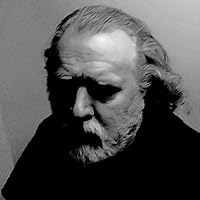
German theoretical physicist known for his contributions to the theory of quarks, the development of Quantum Chromodynamics and the great unification of the standard model of particle physics. After completing his education in Zwickau 1961, he became Soldier of the Nationale Volksarmee of the GDR. He studied Physics in Leipzig from 1963 to 1968. After fleeing to West Germany, he continued his studies in Munich where he finished his Ph.D. under the supervision of Heinrich Mitter.
In 1970 Fritzsch visited the Aspen Center of Physics, where he met Murray Gell-Mann. They started a collaboration, first in Aspen, later at the California Institute of Technology. In 1971 they introduced the concept of the colour charge quantum number which allowed them in collaboration with William A. Bardeen to explain the decay rate of pions. In the fall of 1971 Fritzsch and Gell-Mann moved to Geneva in Switzerland, where they worked together at CERN. They proposed a gauge theory for the strong interaction, which now is called Quantumchromodynamics. In September 1972 they moved back to Caltech. In 1975 Fritzsch published a paper together with Peter Minkowski in which they proposed the symmetry group SO as the symmetry of the grand unified theory which has become a standard theory. In 1976 Fritzsch moved to CERN. After working for one year at the University of Wuppertal and the University of Bern, Fritzsch became professor at the Ludwig Maximilian University of Munich in 1980.
Fritzsch worked also on "composite models" of leptons and quarks, mass matrices of quarks and leptons, weak decays of heavy quarks, cosmology and the fundamental constants of physics. He retired in 2008.
Well, what do say? I had heard some good things about this book but felt down the more I went through it. I think the author made a few potentially series and envisioned all remaining humans to band together for the greater good but doesn't count on human being well,,, "Human" with all of our flaws.
A decent intro book. I've read better and much balance.
I have read dozens of book about Qft,this book so far is the clearest,Straight to the point. However with additional details from other sources is needed for Large picture. Overall this book deserves a 9 so far. Not a 10 because it lacks a lot of materials.