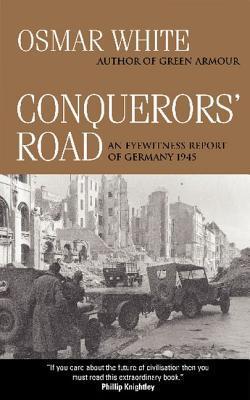
This is a book with a very odd history. Australian journalist, novelist, author and war correspondent Osmar White published a very good account of the New Guinea campaign, Green Armour, which should be read alongside George Johnston's admirable New Guinea Diary. White then moved on to the European theatre, arriving in time to enter Germany in the wake of Patton's army (like everybody else, he couldn't actually keep up with Patton!). This is his first-hand account of the invasion of Germany, the surrender, and the early weeks of a Russian-held Berlin and the mopping up campaign of the Americans. When he submitted the book for publication in 1946, it was at first gleefully accepted as a natural follow-on in tone and temper from his earlier work. And then suddenly, after publication dates had been set and all seemed ready to go, the book was dropped.
Looking back, it is not difficult to see why: White made no bones about the over-zealous attitude of the invading armies at the end of the war, and what he felt to be the foolish processes that took place at the beginning of the peace, including the Nuremberg trials. This was much too controversial a topic at the time and neither the Americans or the English would publish the book as it stood.
Yet White was back in Australia by this time and working on other projects, so he let the matter drop. It was not until 1996 that the idea of publishing this long-forgotten work surfaced, and White decided that he would try and get it out. This edition has now been available for a decade or so and must constitute one of the last remaining documents of its kind (without including still-classified government information, of course) to be made available to students, historians and the general public.
It is initially a straightforward account of the fast-paced campaign to cross the Rhine and head for the heart of Germany and White's prose is certainly up to the task. Once the war is over, however, White begins to analyze certain aspects of the end-of-war scenario that is building, and he becomes a severe critic of much of the military and political leadership of the day. A very worthwhile read with that unbeatable additional ingredient: first-hand experience of these very historic, yet very sad weeks and months at the end of the European war.