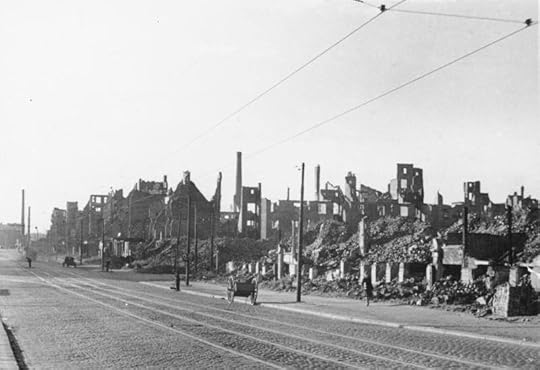
Hava Savaşı ve Edebiyat, W. G. Sebald'in 1997'de Zürih Üniversitesi'nde verdiği derslerden bir kesiti yansıtıyor. Müttefik Devletler'in İkinci Dünya Savaşı'nı sonlandırmak üzere, Alman kentleri ve sivil halkı yok etmeye yönelik giriştiği stratejik bombardıman sürecinin, Alman ulusunda yarattığı travmanın etkisini irdeleyen derslerdir bunlar. Zürih derslerinde Sebald, bu imha operasyonunun savaş sonrası edebiyatta niçin yeterince işlenmediği, dahası Alman ulusunun kolektif hafızasında niçin yer etmediği gibi sorulara cevap ararken, Alman ulusunun kendine dair algısının İkinci Dünya Savaşı sonrasında nasıl yön değiştirebildiğini enine boyuna tartışıyor.
Hava Savaşı ve Edebiyat, Müttefikler'in imha operasyonunda deyiş yerindeyse dengeleyici bir unsur bulan, Nazizmin savaş suçlarındaki kolektif sorumluluğunu bu yıkım harekâtıyla üzerinden atan yeni bir kimlik algısına işaret ediyor.
Sebald'in bu yeni Alman kimliğiyle ilintili olarak, yazar Alfred Andersch üzerine bir makalesini de kitaba eklediği Hava Savaşı ve Edebiyat, unutmak ve hatırlamak üzerine küçük ama büyük bir kitap.
Winfried Georg Maximilian Sebald was a German writer and academic. His works are largely concerned with the themes of memory, loss of memory, and identity (both personal and collective) and decay (of civilizations, traditions or physical objects). They are, in particular, attempts to reconcile himself with, and deal in literary terms with, the trauma of the Second World War and its effect on the German people.
At the time of his death at the age of only 57, he was being cited by many literary critics as one of the greatest living authors, and was tipped as a possible future recipient of the Nobel Prize in Literature.
John Martin: la distruzione di Sodoma e Gomorra, 1852.
Un Sebald insolito per me, più per forma che per contenuto, trattandosi sostanzialmente sempre di memoria e malinconia.
La forma: insolita perché qui ha veste di lezioni/conferenze, non di narrazione – inoltre, in appendice, un pamphlet polemico, anche questo insolito, perché la polemica non si addice al Sebald che ho conosciuto finora. Mentre molto gli si addice l’ironia, che in questo ultimo breve saggio raggiunge vette alpestri: l’ironia è sempre presente nelle pagine di Sebald.
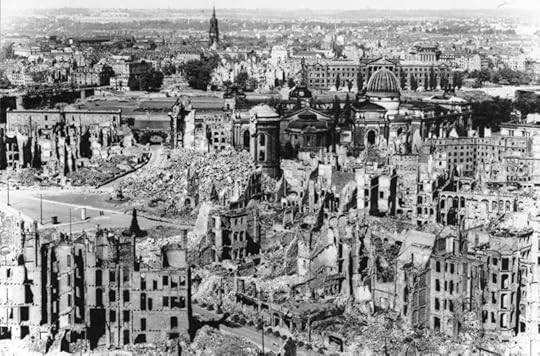
Dresden
Gli Alleati (gli Inglesi) pianificarono una (molto innaturale) distruzione e disintegrazione delle città tedesche: attacchi aerei ripetuti e bombardamenti a tappeto (la maggior parte degli aerei partiva da basi dislocate nell’East Anglia che Sebald attraversò a piedi in Gli anelli di Saturno), prima dell’avvento delle bombe ‘intelligenti’, coi risultati che ci si può immaginare, che conosciamo e che Sebald descrive con dettagli indimenticabilmente raccapriccianti. Una chirurgica carneficina, sotto forma di guerra aerea: un milione di tonnellate di bombe sganciate, 400.000 incursioni, 131 città attaccate a più riprese (alcune delle quali letteralmente rase al suolo), 600.000 vittime civili, tre milioni e mezzo di alloggi distrutti. Un’efficienza devastatrice che colpiva indiscriminatamente la popolazione civile, e prescindeva da ogni giustificazione bellica, quale l’individuazione di possibili obiettivi militari: lo scopo era quello del più completo annichilimento del nemico, compresi i luoghi da questo abitati, la sua storia e il suo ambiente naturale.
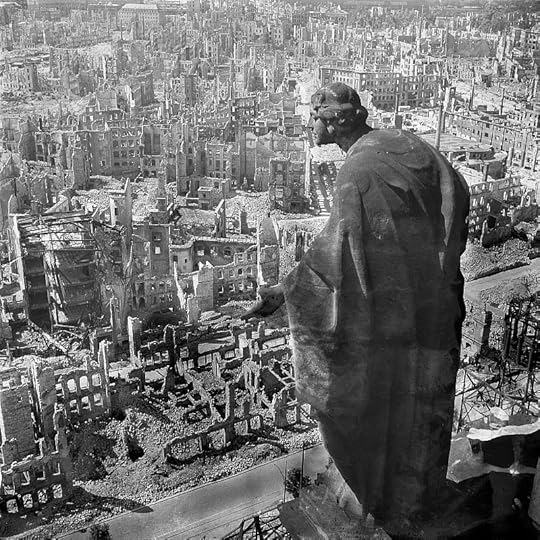
Dresden
Neppure ciò spinse i tedeschi a riflettere a fondo sul nazismo – forse, proprio questa ‘umiliazione’ collettiva li spinse piuttosto a ‘insabbiare’. La scelta del silenzio non era generata da direttive imposte dall'alto, ma scaturiva dalle vittime stesse del massacro. L’opera sistematica di rimozione degli orrori della guerra assume la valenza di un provvidenziale cono d’ombra che oscura non solo i massacri in cui la popolazione tedesca assume il ruolo di vittima sacrificale, ma anche retroattivamente, quelli in cui, poco tempo prima, le vittime avevano interpretato la parte di volenterosi carnefici di Hitler ”: un popolo che aveva assassinato e torturato milioni di persone nei suoi lager non poteva certo chiedere conto alle potenze vincitrici della logica politico-militare che aveva imposto la distruzione delle città tedesche.
La tesi centrale del libro è appunto che i tedeschi siano scesi a patti col loro passato nazista troppo in fretta, con poco sforzo, e molta rimozione. Il rifiuto del lutto, l’assenza di elaborazione del medesimo, potrebbe anche essere rintracciabile nello stesso processo, quasi maniacale, di ricostruzione tedesco, nella fretta di riedificare città e infrastrutture distrutte dalla guerra (processo che fu portato avanti, da non sottovalutare, in un paese diviso tra Ovest ed Est sovietico).
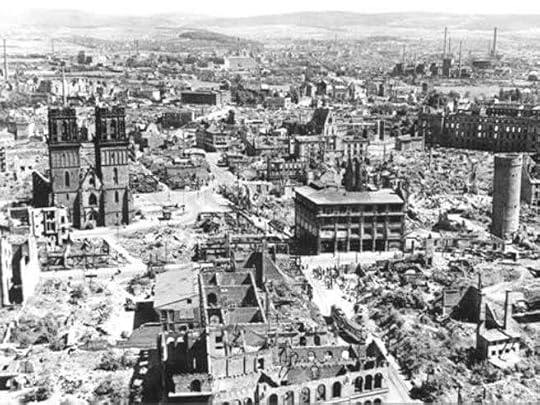
Hamburg
Qui, la psicanalisi soccorre: il passato viene in questo modo “de-realizzato”, reso irreale come un sogno, e si annulla la partecipazione emotiva alla realtà del massacro di milioni di esseri umani. Cancellazione dell’angoscia, del dolore, del lutto, e della colpa.
Se la malinconia è l’incapacità di elaborare il dolore (Freud, Lutto e malinconia), una sorta di malinconia di massa deve aver regnato sovrana nella Germania degli anni Cinquanta e Sessanta, come risultato del reiterato diniego di responsabilità collettiva per il passato nazista.
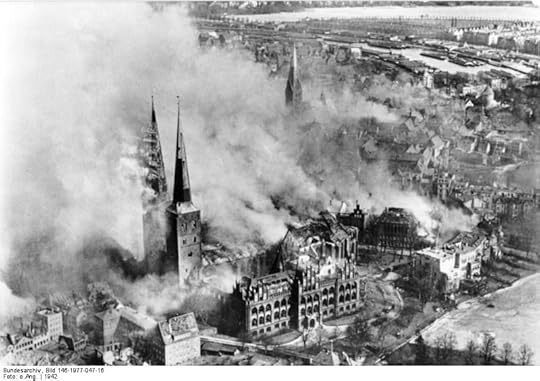
Lübeck
Sebald oppone un rifiuto a questo meccanismo-processo, e si schiera con implicita chiarezza per una necessità di assunzione di responsabilità della colpa collettiva.
Il suo studio si concentra sul periodo immediatamente seguente alla fine della Seconda guerra mondiale, e comunque precedente alla riunificazione del 1990: credo che da allora importanti passi siano stati compiuti in Germania nella direzione auspicata da Sebald.
PS Da tenere accanto a Autunno tedesco di Dagerman e Serra con ciclamini di Rebecca West.
Although Sebald has some clearly stated moral criticisms of the Allied carpet-bombing of German civilians during WWII, these are not the main subject of his Zurich lectures nor of the personal responses he includes in this volume. Rather, it is the widespread impact of such trauma and the subsequent effects of what amounts to a massive cultural as well as psychological repression that he analyses. I think such an effort is worthwhile mainly because it suggests parallel phenomena in many other areas of large-scale human tragedy.
There are events simply too terrible to recall, to discuss, or even to admit to consciousness. Sebald’s case in point is the intentional mass killing of non-combatants in dozens of German cities from 1943 through 1945. The death toll in Hamburg alone was probably that of the atomic blasts in Hiroshima and Nagasaki combined. And the physical destruction was virtually complete in many German cities over even greater areas than in Japan.
The remarkable thing for Sebald is that these losses were not seriously considered in either official analyses or in literature for almost half a century. According to Sebald “There was a tacit agreement, equally binding on everyone, that the true state of material and moral ruin in which the country found itself was not to be described.” He goes on to portray a sort of continuing conspiracy to avoid “the well-kept secret of the corpses built into the foundations of our state, a secret that bound all Germans together in the postwar years, and indeed still binds them, more closely than any positive goal such as the realization of democracy ever could.”
Sebald identifies several possible reasons for this communal “self-anaesthesia.” The first and most obvious is the repressed guilt for the war itself. But there is also the humiliation risked if such events were to recognised in the presence of the forces of the occupying victors. And given the immense task of rebuilding from nothing in the affected cities, morale could only have been compromised by contemplating the causes of the devastation. These seem obvious, or at least plausible, enough.
But these are rationalisations rather than explanations. The basic fact that these rationalisations revolve around is the experience itself, an experience of survival within inexpressibly horrible conditions of death, destruction, decay, filth, and disease. The survivors witnessed extinction not just of their friends and families but of an entire civilisation. They starved, lived in caves, acted more like an insect colony than a society - in some cases, for years.
Collective catastrophe forms an historical break, a before and after. The before becomes largely mythological in light of the catastrophe while the catastrophic events themselves are incomprehensible, almost divinely transcendent in their sheer excessiveness. Melodrama is always a literary temptation in these circumstances; but this is a distraction rather than an exploration of the horror involved.
Sebald puts his intellectual finger on the central problem which is not with officials or authors but with the nature of the experience: Those who undergo such trauma cannot express their experience. He refers to the Japanese author Kenzaburo Oe’s notes on his conversations with survivors of the Hiroshima bomb who were unable to speak about the day of the blast 20 years later. Primo Levi’s If This Is a Man describes his hopelessness in the Nazi death camp knowing that he will be unable to communicate the depth of the suffering he is experiencing. The survivors of apartheid in South Africa similarly report a failure of expression during the Truth and Reconciliation process. Some things simply can’t be said.
It does not seem unreasonable to extrapolate this sort of mute testimony to other events - to slavery and the extermination of the natives in America; to those who served in the trenches in the first European war; to the survivors of genocide in Rwanda and Yugoslavia. The list of such occasions in which language of their existential reality is entirely absent is of course endless. Recognition that perhaps the most important things about such events are inherently beyond language is significant in everything from literature to government policy-making. Minimally it might make us all a bit more humble in our opinions.
When Zhou Enlai, the Chinese premier was asked in 1972 about the long term effects of the French Revolution, his famous response was “It’s too early to say.” Experiences get passed on subtly from generation to generation. Mass trauma seems most likely to get transmitted entirely outside of language. This makes their effects more rather than less pronounced. Just recognising this possibility might be a major intellectual breakthrough.
Sebald mentions Walter Benjamin’s Angel of History, painted so evocatively by Paul Klee. The Angel, with horrified fixity, looks back on the past while it is swept forward by the storm of events. It is completely oblivious to either its present state or its future. It, therefore, has no real experience except of what has already been recorded. It is helplessly mute because records are inadequate to cope with the circumstances in which it finds itself.
Sebald’s book is a rambling series of notes, memories, and anecdotes which are highly personal and intensely engaged in German literary politics. It’s merit, I think, lies in these two apparently restrictive characteristics. Sebald doesn’t present a thesis; he provokes thought. The book is a sort of meditation which demands thinking about tragedies other than the destruction of almost every German city. It is a book that tries to at least get Walter Benjamin’s Angel of History to look over its shoulder.
Sebald’dan okuduğum üçüncü kitap (Kır Evinde İkamet, Vertigo). Çok sağlam ve cesur bir kitap. Benim kafamda 2. Dünya Savaşı’na dair bir çok soru var, bunlardan birisinin cevabını bu kitapta bulurum sandım, ama anlaşılan Sebald da cevabı bulamamış.
Savaşın erken bitirilmesi için İngiliz Karaliyet Hava Kuvvetlerinin 1941-1945 arasında, zaman zaman Amerikan Hava Kuvvetlerinin de desteğiyle Almanya’ya karşı uyguladıkları “halı bombardımanı” denilen öldürücü-tahrip edici bombalar ve yangın bombalarıyla yapılan hava saldırılarının, askeri hedeflerden çok sivil hedeflere yönelmesi, bu nedenle yüzbinlerce insanın ölmesi, milyonlarca evsiz kalan insanın oluşturduğu büyük bir yıkımın ve trajedinin edebiyatta yankı bulamamasını sorguluyor W.G. Sebald.
Benim kafamdaki deli soru ise yukarıda açıklanan bu açık insanlık ve savaş suçu ile birlikte doğuda Sovyet Rusya askerlerinin başta Polonya ve İskandinav ülkeleri olmak üzere Almanya’da gerçekleştirdikleri, kadınlara tecavüz, erkeklere işkence ve öldürme, yağma gibi savaş suçlarının neden hiç yargı önüne getirilmemesi, hatta gündeme bile gelmemesidir. Sanki müttefiklerle yenilen Almanlar arasında gizli bir anlaşma varmış gibi, hiç bir şey yaşanmamış gibi neden davranılmış ve hala davranılıyor. Almanlar bu insanlık dışı hava bombardımanlarını, yangınları, enkazları, trajedileri neden bireysel ve kollektif hafızalarında yok sayıyorlar, bu meşum ve utanç anlarını bir sır olarak saklıyorlar? Holokost’dan daha az kötü denilebilir mi bu olanlara? Hayatlarına teslim oldukları 8 Mayıs 1945’den sonra sanki hiçbir şey olmamış gibi devam etmişler ? Bilmek istemedikleri ya da gözlerinin önünde olanları unutmayı seçmeleri bir utanç mı, bir kibir mi, toplumsal bir susma yemini mi? Bu sorulara edebiyat üzerinden yaklaşan kendisi de bir Alman olan ve 20 yaşına kadar orada yaşayan Sebald sanırım bu konuda en cesur yazıyı kaleme alan ilk (belki de tek yazın insanı).
Bir diğer deli soru da kafamdaki şu; her yaştan, cinsten, her sınıf ve meslekten milyonlarca Nazi’ye, führerlerini çılgınca alkışlayan, körce peşinden giden faşist Almanlara ne oldu ? Bir gecede buhar mı oldular, Almanlar teslim olunca nüfusun yarısından çoğunu oluşturan bu naziler nereye kayboldu, fikir değiştirip nedamet mi getirdiler, aptala mı yattılar, bunların elebaşılarının peşine niye düşülmedi ? Sorular bitmiyor, göstermelik Nürnberg Mahkemele’rinde bir avuç Nazi’yi yargılamakla milyonlarca kişinin katledilmesi karşılığını buldu mu ? Geride kalan Alman halkı hangi şartlarda ayakta kalmaya çalıştı, sivil yıkım için müttefikler mazlum halk için neler yaptılar ?
Bu soruların cevabını bulmak için Sebald gibi cesur ve duyarlı insanlara gerek var.
Besides the essay on area bombing, of which I was interested and which was the main reason for me purchasing this book, I was very pleasantly surprised by a review of Jean Avery's work, which I can't wait to read now. Beautifully written on the part of Sebald and with such consideration towards victims, such strong belief that we must understand both the perpetrator and the victim in any criminal process (such as the WWII genocide was). To hear of mothers who pack their burned and mummified children in suitcases after escaping from German cities that were flattened out by the British and American bombers, is to hear the side of the story very rarely told: the double victims of the Second World War, the citizens of a country run by a raging lunatic who had to suffer at the hands of his and his friends' insanity, while at the same time being bombed for intimidation purposes by the Allies. It's a loss-loss situation, and when speaking and writing of Nazi Germany, a lot of people forget that.
Попри сполучник "і" у назві, це есеї про те, чому в німецькій літературі якраз немає повітряної війни. Повітряні нальоти союзників зрівняли із землею певну кількість німецьких міст, знищуючи здебільшого цивільне населення - ціллю були не об'єкти інфраструктури, а самі міста (чи вплинуло це на хід війни - невідомо, можливо, навіть у мінус, зважаючи, скільки літаків не поверталося з цих місій). Обгорілі руїни стали тим чистим аркушем, з якого почали будувати нову кращу Німеччину, вже не заплямовану злочинами нацизму. Про це лишилася певна кількість свідчень очевидців, але це здебільшого нонфікшн - від опису розтинів зотлілих трупів до розповідей свідків про жінок, які втікають з руїн, несучи у валізках обгорілі трупики своїх маленьких дітей. Здавалося б, травматична подія такого масштабу мусила би стати поживою для авторів на багато десятиліть наперед. Натомість у цьому місці в німецькій літературі фактично панує тиша: це фігура замовчування. Причому ці катастрофи замовчують прямо в процесі, коли вони відбуваються, стверджує Зебальд: мешканці зруйнованого вщент Гамбурга продовжують кавувати на балкончику над попелищем, як кавували завжди, це особливий німецький дух (пише він, забуваючи про фото лондонських молочарів чи читачів у зруйнованій бібліотеці часів Бліцу - а також буквально всіх мешканців воєнних зон будь-коли і будь-де: людина така тварина, що адаптується до всього, й до останнього намагатиметься триматися за шматки нормального життя). Я, правду кажучи, не певна, чи в мене аж настільки безмежна емпатія, щоб вона могла вмістити водночас жертв нацистських геноцидів, мільйони загиблих у розв'язаній німцями війні - і рендомних фрау мюллер у гамбургу, у яких чоловік, імовірно, як не в армії, то на нацистській військовій промисловості трудиться. Але питання про те, що нам потрібно забути в минулому, аби мати майбутнє, цікаве і варте роздумів (бо ми зазвичай думаємо про те, що треба пам'ятати, аби вижити: але в якихось ситуаціях буває й навпаки).
Також у книжці вміщено нібито літературознавчі статті про те, що німці таки писали про роки нацизму, але в цьому літературознавстві забагато біографічного підходу. Ми знаємо, що Альфред Андерш зрікся своєї дружини-єврейки, щоб мати успішну кар'єру в нацистській Німеччині - і тому в його книжках шукаємо недолугого самовиправдання. Ми знаємо, що Жан Амері пройшов концтабори за критику нацизму - і тому коли він після брутального опису тортур з іронічною відстороненістю пише про етимологію слова "тортури", в цьому бачиться шляхетна мужність (а якби знали, що він був по бік катів, то бачили б у цьому цинізм). Коротше, я не бачу там відповіді, як етично писати про страшні досвіді. "Спробуйте просто не бути мудаком", - мовби каже Зебальд.
The bulk of the book consists of an adapted lecture series on the bombing of German cities, the unprecedented nature of the destruction in cities such as Hamburg and the curious lack of references to it in most German post-war literature. This is powerful, moving and thought provoking.
The remainder of the book is a series of essays on three German writers, none of whom I knew anything about, and although this was interesting in what it said about the culture of the time, it would not inspire me to read any of these writers. The first is Alfred Andersch - who seems comically vain and egotistical, the second is Jean Amery, a Jewish survivor of the camps and the third is Peter Weiss, who was also a painter.
Sebald was always an intriguing writer, but for the most part I don't think this ranks with his best work.
Guerra aérea e literatura: lições de Zurique - 5* O escritor Alfred Andersch - 5* Contra o irreversível: sobre Jean Améry - 4* Sinceros remorsos: sobre memória e crueldade na obra de Peter Weiss - 4*
4 pequenos ensaios muito interessantes em torno do tema da guerra aérea na Alemanha durante a Segunda Guerra Mundial, incidindo mais precisamente nos seus efeitos sobre a psique nacional e a reação literária, ou falta dela, às respetivas experiências traumáticas.
میخواستم برای بد بودن این کتاب یه مرور بنویسم، ولی اون وسط به کشورمون حمله شد و خودمون دیدیم اینکه وسط جنگ آسمون بالاسرمون بیپناه باشه چه حسی داره.
عنوان اصلی کتاب به آلمانی "Luftkrieg und Literatur" به معنای "جنگ هوایی و ادبیات" است و هرچی تو متن هست، جز همین عنوان (مرسی از یکی از کاربرهای گودریدز که عنوان آلمانی کتاب رو بهم گفت). خلاصه نمیخوام خیلی تند بگم، ولی زباله مطلق بود این کتاب. یکی دوتا ایده جالب توش بود، یکی دوتا اثر خوب هم ازش پیدا کردم، ولی خب، که چی؟
الان که دوباره فکر کردم، دیدم تهی بودن و فاقد هرگونه محتوای قابل توجه بودن این کتاب خیلی داره اذیتم میکنه. آخه چجوری میشه یه سوژهٔ انقدر خاص و مهم رو اینجوری حیف و میل کرد. الحق و الانصاف که این خودش هنریه.
کتاب بد زیاده، ولی وقتی میبینم یه ایدهٔ مهم رو یه نفر اینجوری نیست میکنه خیلی بهم بر میخوره. تازه تو کتاب خیر سرش کلی ارجاع داشت و قشنگ اون منش "ارجاعدهی آکادمیک به منظور ارضای حس اشراف به منابع" توی متن موج میزد. دیگه ادامه نمیدم این متن رو.
A partire dal 1942 circa, gli Alleati iniziarono un piano sistematico di bombardamenti delle città tedesche, che mirava prevalentemente a distruggere abitazioni e a uccidere civili. Difficilmente si può pensare che questi bombardamenti fossero finalizzati all’abbreviazione del conflitto, visto che i civili non partecipavano alla guerra e certamente non c’era, in Germania, una opinione pubblica da convincere.
Perché, allora, la sola Royal Air Force sganciò un milione di tonnellate di bombe su centotrentuno città tedesche uccidendo seicentomila civili e lasciando senzatetto più di sette milioni e mezzo di persone? (domanda assolutamente attuale, visto che ancora oggi si bombardano i civili durante azioni di guerra).
Per Sebald la domanda non ha una risposta univoca. Nel comando degli Alleati c'erano tante idee differenti in merito alla strategia bellica; curioso comunque che nessuna analisi sia stata svolta al riguardo.
"Il generale Anderson dell’ottava flotta aerea statunitense rileva che, in fin dei conti, quel carico di bombe costituisce una merce costosa… All’atto pratico non la si può buttare via scaricandola sui monti o in aperta campagna, dopo tutte le risorse profuse in patria per fabbricarla"
Vivere bombardamenti di quel tipo dev'essere stata una esperienza terribile, sicuramente in grado di segnare permanentemente le persone rimaste fortunatamente illese. Oggi non siamo nemmeno in grado di immaginare la scena, forse perché, stranamente, quasi nessuno si cimentò nel racconto. Come se l'esperienza fosse stata rimossa.
"Sapendo quello che oggi sappiamo della rovina di Dresda, ci sembra inverosimile che chi si è trovato quel giorno ad assistere allo spettacolo della città in fiamme, mentre da ogni parte guizzavano lampi, sia potuto venirne fuori nel pieno possesso delle proprie facoltà mentali. Il fatto che, nella maggior parte delle testimonianze oculari, il linguaggio normale continui a funzionare senza danni apparenti, suscita non pochi sospetti circa l’autenticità dell’esperienza in esse registrata. Il rogo che portò a morte nel giro di poche ore un’intera città, con tutti i suoi edifici e tutti i suoi alberi, con i suoi abitanti, gli animali domestici, le attrezzature e gli impianti di ogni genere, dovette necessariamente condurre a un sovraccarico e a una paralisi della capacità razionale ed emotiva in quanti riuscirono a salvarsi."
Eppure, quasi niente di tutto questo appare nei giornali, nella narrativa tedesca nel periodo immediatamente successivo alla guerra. I tedeschi, sia quelli rimasti in patria che quelli emigrati in America, rimasero praticamente muti davanti a questa distruzione di massa.
"Se le generazioni del dopoguerra volessero limitarsi alle testimonianze degli scrittori, troverebbero difficoltà a farsi un’idea dello svolgimento, dell’estensione, della natura e delle conseguenze che assunse la catastrofe abbattutasi sulla Germania."
Per Sebald, che in questo saggio tratto da conferenze tenute a Zurigo nel 1997 tenta di dare risposte a queste domande, i suoi compatrioti restarono muti in merito alla catastrofe in quanto dovevano elaborare la loro colpa nazionale, il loro disonore, per aver seminato morte e distruzione in tutta Europa. Per reazione, l'orrore fu rimosso collettivamente sostituendolo con il colossale sforzo nella ricostruzione che impedì "che si volgesse lo sguardo al passato e, orientando la popolazione esclusivamente verso il futuro, la costrinse a tacere su quanto aveva vissuto."
Una efficientissima ricostruzione quindi per tumulare rapidamente un passato scomodo e ingombrante, un passato di cui ci si vergogna. Questo silenzio dei tedeschi, soprattutto di quelli che erano emigrati, non è stato forse implicitamente una dichiarazione di colpevolezza?
Un grande numero di riferimenti, vicende storiche e citazioni letterarie fa da corollario a questo testo che, anche se forse un po' pesante, è certamente esaustivo e interessante tanto da rendere difficile smettere la lettura una volta iniziata.
«Повітряна війна і література» - книжка есеїстики, скомпонована на основі швейцарських лекцій Зебальда. Найголовніший есей стосується килимових бомбардувань Німеччини союзниками під час Другої Світової війни.
Коли я бралася за читання цієї книги, мені хотілося дізнатися, наскільки триґерною для мене вона буде. На місці Німеччини - сьогоднішня РФ, відповідно якщо автор намагатиметься вичавити з мене співчуття… Одним словом, цікаво було подивитися, що чекає мене під обкладинкою.
Самі союзники наче бачили неефективність власних дій (бомбардування цивільних не змушувало німецьку армію здаватися), але продовжували їх. Виявляється, був навіть алгоритм дій: «За вже випробуваною методою, спершу чотиритисячофунтові фугаси вибивали всі вікна й двері, затим від легких запалювальних снарядів займалися горища, а запалювальні бомби вагою до 15 кілограмів пробивалися до нижчих поверхів. Буквально за декілька хвилин по всій зоні бомбардування, яка становила приблизно двадцять квадратних кілометрів, спалахували велетенські пожежі й розгорялися так швидко, що вже за чверть години після падіння перших бомб увесь повітряний простір, хоч куди поглянь, перетворився на суцільне море вогню.»
Автор доходить висновку не тільки про брак досліджень та осмислень культурою цих подій, а й неначе колективну німецьку амнезію. Люди продовжували жити серед руїн або переміщалися. Руйнування були такими масштабними, що про розчищення завалів часто не йшлося («…дату руйнування міста можна визначити за тим, наскільки заросли купи уламків»).
Голокост – це, мабуть, найкраще досліджений геноцид, бомбардування ж Німеччини наче за замовчуванням цілої нації витерто з памяті. Історична іронія?
«І не було цих дискусій насамперед тому, що для народу, який знищив і закатував до смерті мільйони людей в таборах, було неможливим вимагати від держав-переможниць інформації про воєнно-політичну логіку, яка диктувала руйнування німецьких міст.»
Я читала цю книгу у тому числі під час повітряних тривог і думала про те, що якби на Київ летіли не шахеди, а бомбардувальники, а у нас би не було наших ППО? А якби на РФ? Чи усвідомили б вони тоді причинно-наслідкові зв’язки? Впевнена, що ні.
1943 yazında Almanya'da yaşananlar özetle şöyle; on bin ton patlama ve yangın tesirli bomba bir şehri olabildiğince yerle bir etmek için atıldı. İki bin metreye kadar yükselen alevler çevredeki bütün oksijeni büyük bir iştahla emip hava akımının kasırga hızına erişmesini sağlıyor ve yangının 150 kilometrelik bir hızla sel gibi caddelerde aktığı, bazı kanallardaki suyun bile yandığı söyleniyor. Dumansa sekiz bin metreye kadar ulaşıyormuş. Peki 1943 Temmuzunda bu bombaların şehirlere, sivillere değil de neden Nazilerin üretim yaptığı silah fabrikalarına ya da kilit noktalarına düşmediğini nasıl açıklayabiliyoruz?
"..geç kalınmadan Martini kulelerine altı yatak çarşafından oluşacak bir beyaz bayrak çekilse yapılacak saldırıdan vazgeçilir miydi sorusunu askeri açıdan ele alır. Generalin açıklamaları bütün rasyonalist gerekçelendirmelerin bilinen irrasyonel şahikasını göründüğü bir ifadeyle zirve yapar. Anderson uçakların yanlarına aldıkları bütün bombaların nihayetinde "pahalı mallar" olduğuna işaret eder. "Bunları onca çalışıp ürettikten sonra dağa taşa, boş tarlalara atmak mümkün değildi tabii.""
1️⃣ Повітряна війна і література Письменник, що народився у 1944 у відносно спокійному регіоні Німеччини, який не застав масштабних руйнувань, а потім жив і працював в Британії, пише про те, що інші, старші його колеги, які застали це нищення, або були якийсь час в міграції, пишуть про війну неправильно. Треба більше свідчень і детальної документальності. Але коли вони є, то неправильні, бо якісь однакові і ненадійні. Люди мають право не говорити про трагедію, право на мовчання, бо ж так працює механізм самозахисту, але не німці, у німців - колективна амнезія. Консервативне ставлення до форми й мови не впливає на оцінку літературних творів, але критика падає на те, як написано, а не на те, що.
І я вже хотіла стаити цій книзі 5⭐ Пояснюю.
Це абсолютно геніально написано і чудово перекладено. Я чи не на кожній сторінці залишала гнівні коментарі, звертаючись до Зебальда "чувак", "ти", "алло", але не могла дочекатись, коли закінчаться заняття, щоби продовжити свою із ним дискусію. Це наштовхує на думки, висновки, ідеї, власні пошуки істини. Саркастичні коментарі Зебальда на рахунок праць своїх колег - це щось. Була б першою фанаткою, якби автор мав свій літературний блог. У післямові Зебальд нагадав, що німцям дісталось за діло, і що саме їхня агресія вернулася бумерангом. І ще. Це більше про літературу, ніж про війну. Ці лекції - рефлексії і нотатки Зебальда на рахунок того, хто, що писав, і як. Так, автор тут і там допускає якусь статистику, переказує чиїсь спогади, цитує документи часів Другої світової, але усі його висновки базуються на "я не довіряю", "я не вірю", "я не читав, але не можу уявити" - себто на тотальних відчуттях і припущеннях (хоспадя, і після цього він шпиняє колег за їхню абстрактно-уявну прозу 🤦🏼♀️).
2️⃣ Письменник Альфред Андерш Зебальд пише про, сюрприз-сюрприз, Альфреда Андерша, самовпевненого письменника-невдаху, чиї літературні таланти і особистісні якості не витримують критики. Автор методично розписує основні переломні моменти в житті колеги, а також переказує і злегка рецензує Андершові головні романи. По фіналу, забираю свої слова про літературний блог Зебальда і моє примарне фанатство, бо нуднішої рецензії я ще не читала. Це як параграф підручника із вкрапленнями особистої негативної оцінки. А мені дуже не подобалось читати параграфи підручників. Враження, що це було написано, бо Зебальд сильно-сильно хотів похвалитись тим, що читав маловідомого письменника. І тут така штука. Письменник маловідомий, я його не читала, тож мені не цікаво було спостерігати за думками чужої людини про порожній для мене предмет. Рецензія негативна, тож у мене не виникло бажання спробувати прозу Андерша. Питання: кому воно було написано і навіщо? 0 зірочок із 10.
3️⃣ Гризота серця 4️⃣ Очима нічного птаха В двох останніх нарисах Зебальда є два приклади письменників, які, на думку автора, описували війну правильно - Петера Вайсса і Жана Амері. Це читати було трошки жвавіше, адже на відміну від Андерша цих двох Зебальд хоча б намагався "рекомендувати". Перший писав щось таке твердо-трагічне, а другий - плаксиве. Більше мені сказати нема чого. Висновки 🔽
По-перше, я не оцінила рішення видавців набити обсяг видання трьома нудними оглядами творчості пера Зебальда.
По-друге, в цьому виданні багато ілюстрацій. Це добре. Але тільки одна з них прямо пов'язана з текстом - портрет Андерша (навіщо? чому немає портретів двох інших?). Абсурдність вибору ілюстрацій досягає свого апогею, коли в есеї про Вайсса автор кілька сторінок в деталях описує його картини : перший план, задній план, зліва-справа і т.д. Скільки зображень Вайссівських картин помістили видавці на сторінки? Правильно здогадались - 0. І ви скажете: лінива ти жопа, поґуґли! А я вам скажу: я 30 хвилин витратила на пошуки першої з них і не знайшла. Бо назви картин подані українською без оригінальних найменувань, а українською половини з них просто нема, бо, припускаю, перекладач використав не академічні тлумачення, а дослівні. А може й ні, ми про це не дізнаємось 🤷🏼♀️
От тепер у мене точно все. Коливаюсь між ⭐⭐⭐ і ⭐⭐⭐⭐ - дуже вибісило передостаннє есе своєю непрофесійною організацією.
This book contains four essays, the final three (which I did not read) dealing with three writers I do not know: Alfred Andersch, Jean Améry, Peter Weiss. The opening essay, which anchors the book (and is 48% of the book) deals with the interesting topic of the German cultural amnesia regarding the devastation they suffered from the allied bombing of German cities. The essay is clear and contains some interesting points. Sebald believes that contemporary Germans suffer from a sort of cognitive disconnect that comes from denying the fact of their trauma -- AND the fact that they themselves quite obviously were the ultimate cause of that trauma. For those seeking to understand the strange psychology of the Germans that is on display today in the current crisis, this essay will repay the effort of reading it.
You would think the massive air raids on Germany in World War II, the most dramatic experience the German people have ever gone through, would be a subject Germans couldn't stop talking about. The exact opposite is the case. But why? Sebald goes to the bottom of this phenomenon in the four essays that make up this book. He comes up with a thorough, convincing and riveting explanation.
German authors are largely to blame. The first essay traces this out. The second names a famous German author as an example of this. The third essay discusses a German author who resisted this trend. The fourth essay recaps these ideas in a discussion of the artist Peter Weiss. Readers see how Germany's authors glazed over not just the experience of the air raids, but the experience of the years leading up to them.
Along the way Sebald calls into question not only authors, but the accounts of ordinary Germans as well. For example, letters written at the time show no syntactical problems describing the attacks. That is, in their clichéd and vacuous accounts, people learned to describe the attacks without ever touching the experience of being bombed.
I'm curious how the German accounts of air attacks compare to the British ones of the Blitz. But that's another essay. German authors, for their part, had careers to build, and the realism of the actual experience gave way to the authorial quest for cool --
... by invoking pseudo-humanist and Far Eastern philosophical notions, with a great deal of Symbolist jargon [...] to make the real horrors of the time disappear through the artifice of abstraction and metaphysical fraudulence [...] as if [...] to enlighten those who barely escaped [...] about the presumed metaphysical meaning of their experience ...
About Germany's writers the author is equally to the point:
When a morally compromised author claims the field of aesthetics as a value-free area it should make his readers stop and think.
This caution should serve for all readers. Sebald points out that such literary stylization tends to create a complicity between reader and author. Do modern authors similarly mask our current problems? This is thought-provoking.
I give the book only four stars in part because I wasn't familiar with the authors Sebald criticizes (mea culpa) and also because, for once, I think an author didn't say quite enough. A concluding essay would have gone down well with me. One thing Sebald does particularly well is to give readers a clue as to the really great German books and authors they ought to look into. Start with this one. On the Nautral History of Destruction is top-notch, and I strongly recommend it.
Non ho sicuramente le competenze storiche, né tantomeno quelle letterarie, per commentare questo saggio di W.G. Sebald, in realtà più che un saggio la raccolta parziale di alcune conferenze tenute dall'autore sul tema "Guerra aerea e letteratura" e un'analisi critica sulla figura e sulla produzione letteraria dello scrittore tedesco Alfred Andersch, per cui mi limiterò ad alcune riflessioni personali. Sebald era nato nel maggio del 1944, afferma per cui di appartenere «al novero di coloro che, in fondo, sono stati risparmiati dalla catastrofe compiutasi allora nel Reich». «Una catastrofe che tuttavia ha lasciato tracce nella [sua] memoria». Cerca di capire, Sebald, come mai «non sia ancora stato scritto il romanzo epico tedesco sulla guerra e il dopoguerra» e pone l'accento sul fatto che «quando volgiamo gli occhi al passato, [noi tedeschi] in particolare agli anni compresi fra il 1930 e il 1950, è sempre al tempo stesso un gettare e distogliere lo sguardo». Ecco, una sorta di amnesia collettiva di un popolo che ha voglia di dimenticare e che allo stesso tempo crede che la distruzione aerea di cui sono state bersaglio città come Dresda, Amburgo o Berlino (ma anche molti centri minori di cui non abbiamo mai sentito parlare), l'esodo forzato che portava milioni di persone ad abbandonare stordite e sotto choc le proprie città e a vagare da una parte all'altra della Germania, la convivenza passiva con vermi e parassiti che divoravano i cadaveri, i propri bambini morti durante i bombardamenti trasportati dentro le valigie, fossero tutte "punizioni" meritate, fossero quanto il popolo tedesco doveva scontare perché postosi dalla parte dei "cattivi". Mi viene in mente una bellissima frase pronunciata nel film "The Reader", tratto dall'altrettanto bel romanzo "A voce alta" di Bernhard Schlink, che uno studente tedesco negli anni '70 rivolge, riferendosi al periodo post-bellico, ad uno dei suoi insegnanti: "Non ci chiediamo come avete fatto a non accorgervi di quanto stava succedendo, ma come avete fatto, quando l'avete capito, a non uccidervi". Forse la chiave è tutta lì, in quella mancata presa di coscienza che avrebbe dovuto portare non al suicidio di massa del popolo tedesco, quanto piuttosto all'elaborazione di un lutto collettivo.
Had this been reviewed more fairly by my fellow Goodreaders, I probably would have gone up to 3 stars, but instead I find myself thrown into a position of aggression. Had this been written by, e.g., Peter Weiss, not only would it not have x hundred ratings; it wouldn't even have been published. Thankfully for lovers of mildly diverting amateur history and effective literary polemic (i.e., probably not you), it was written by Sebald, and so is not only published, but published in cheap paper-back by a major publishing house. Meanwhile, one third of Peter Weiss's Aesthetics of Resistance, which Sebald praises effusively in the last essay here, has been published by a small university press. So it goes.
The main attraction of this volume is a pair of lectures Sebald gave on the German people's supposed failure to remember and therefore work through the horrific destruction of that country's cities at the end of the second world war--a destruction that will be familiar to anyone interested in now slightly out of favor novels like Slaughterhouse 5. Sebald argument flits back and forth between a number of similar but *not* identical claims:
i) Germans have repressed the destruction of, e.g., Hamburg, and do not remember it at all.
This has the virtues of appealing to what I am told are Sebald's main themes, memory and forgetting. I confess, these are not my favorite themes, but I am saved here because statement i) is blatantly untrue. Sebald modifies it, without *too* much silliness, to
ii) German writers have repressed the destruction of, e.g., Hamburg, and do not write about it at all.
This, too, is untrue, as Sebald admits, and once more alters his statement to
iii) German writers have not repressed the destruction of, e.g., Hamburg, but they have not written about it in a way that satisfies me, W. G. Sebald; that is, they have not written extremely plain descriptions of objects like burnt human limbs.
Please note that Sebald was an infant while the bombing was going on, so he certainly doesn't and can't 'remember' the destruction.
This is really where the argument comes to rest: nobody has written a book about the destruction of the German cities, to which Sebald could, in good conscience, have given five stars on goodreads. That is not much of an argument. The insights it gives into Sebald's aesthetic preferences do not endear him to me, either, since his suggestion is that any 'artistic' representation of this destruction is morally bankrupt, and what is needed is, more or less, the straight facts ma'am. Perhaps among German authors this could seem like a radical statement. To those of us used to Anglo-American 'plainness,' unfortunately, it sounds like a plea for yet more lower journalism.*
There are some nice things at the start and end of this volume. The two lectures are nicely written, and the essay on Peter Weiss (aforementioned) may, I hope, spur publication of Aesthetics of Resistance's second and third thirds. I hope this in part because the essay on Jean Amery was probably behind the recent translation of the work discussed here, on the air war. The first lit-crit essay is a polemic against Alfred Andersch, a writer I'd never heard of, and thanks to Sebald's entirely convincing essay, will probably never read. Of course, that would have been the case without Sebald's essay.
The dark core of the book is Sebald's addendum to his lectures (starting on page 69). I suspect that this is the most Sebaldian part of the book: it flits around the author's uninteresting personal experiences, and the fragments seem, to me at least, to add up to nothing. Unlike the lectures, it is not well written (and/or well translated); rather, it is filled with sentences like "The material in the passages above indicates that attitudes to the realities of a time when urban life in Germany was almost entirely destroyed have been extremely erratic," (91). That might well be very clear in German, but in English it is rebarbatively abstract.
Someone I trust almost entirely tells me that Rings of Saturn is the place to start, and I will give it a shot. But after the disaster of 'Austerlitz' and the feel-good pseudo-criticism of 'On NHD' (aren't you glad that *you* are not guilty of the great sins of not remembering things Sebald says are important, or of writing books Sebald doesn't like?), my patience with W. G. won't hold much longer.
*: There's an interesting, though academic, article to be written comparing Adorno's reaction to the war and the art that comes after it, and Sebald's reaction here. Adorno would argue that this just-the-facts is a mirror of the oppressive world that led to the war. Sebald would argue that modernist formalist is an immoral distortion of people's actual suffering. Note that for Adorno the problem is *social*, and focused on justice; for Sebald the problem is *individualistic* and focused on personal morality. This might explain my distaste for what I've read of WGS so far.
This posthumous volume of Sebald's non-fiction writing is a major contribution to German literary criticism and politico-cultural analysis. Accompanying his reflections on the traumatic impact of the air war against German cities are essays studying the very diverse reactions of three `witnesses' of that time as reflected in their post-war literary works. In AIR WAR AND LITERATURE, originally presented as the Zurich Lectures, Sebald delves deeply into some very uncomfortable questions. The air war on 131 German cities killed some six hundred thousand civilians and destroyed more than the homes of seven and a half million people. Why have these events resulted mostly in public silence for decades? Why have so few literary works attempted to speak to the traumatic impact on the population? Most Germans seem to have tried to come to terms with the realities of the war years by suppressing their immediate pain and the longer-term suffering. Sebald has thoroughly researched a multitude of authors, both in fiction and non-fiction. Yet, he deems their explanations unsatisfactory. Heinrich Boell is cited as one of the early exceptions, yet publication of his book, The Silent Angel, was delayed by forty years.
Sebald contemplates the different causes for this persistent silence. For example, basing himself on a range of contemporary sources, he confronts the reader with a detailed description of the Hamburg firestorm. As disturbing as his account is, Sebald's reflective style makes it readable. His objective reporting neither criticises the Allies' campaign nor does he apologise for German actions leading to the war. He wonders, though, whether the depth of the traumatic experiences of this and other air attacks may have left many people numb and dazed, unable to express their reactions for a long time. The account of a young mother wandering through the station confused and stunned is one of several examples. Her suitcase suddenly opens onto the platform revealing the charcoaled remains of her baby.
Sebald's intent is not to shock but to explain the deep sense of loss that must have been felt by people like her. He further contends that at that time in the war, the growing acceptance of guilt for the Nazi's atrocities led in many civilians to an acknowledgment of justified punishment by the Allied forces. Last, not least, after the war many Germans experienced a `lifting of a heavy burden' that they felt they had lived under during the Nazi regime. Concentrating on building the new Germany focused their minds on a better future. The publication (in German) of his Lectures in 1997 resulted in a range of reactions from readers. He reflects their varied views and comments in a postscript, thereby adding a fascinating 1990's dimension to his "rough-and-ready collection of various observations, materials, and theses".
The three authors who are the subject of the essays in this volume may be better known to students of German literature and culture. They represent a fine example of Sebald's skill as a contemplative and sensitive literary critic. At the same time, these essays complement Sebald's Lectures in a more fundamental way. In terms of coming to terms with the Nazi period and its atrocities, each one represents a specific type of German with his own means and ways of dealing with the recent past. Alfred Andersch is presented as having reinterpreted his personal history to fit his vision of self-importance in post-war Germany. Jean Amery, of half Jewish parentage, suffered through SS torture and survived various concentration camps. For the rest of his life, which he ended himself, he did not lose the nightmares of his torment. It was not until the mid-sixties, that he found his voice to impart his experiences in the form of essays on exile, genocide and resistance. Peter Weiss, who had lived in exile most of his life, found his self-expression mainly through painting and theatre productions until he published late in life his major fiction work, Aesthetics of Resistance.
This collection of "mediations on natural guilt, national victimhood, and the universal consequences of denying the past" is a significant socio-political document. Its importance for today's reader goes beyond the concrete German situation. As it addresses more fundamental issues of dealing with a society's traumatic past experiences, Sebald also confronts the need to develop the capacity to heal while learning and sharing the lessons from that past.
La otra cara de la moneda. Habla de los bombardeos que hubo en Alemania durante la ww2, parte de la historia que se suele olvidar. Se pregunta Sebald, porqué tan poca literatura de la época retrata todo esto, y cómo reacciona el pueblo alemán a ser atacado de esa manera. Muy bueno y recomendable.
Cada vez que lo escucho o leo a Sebald, siento más respeto. La visión que tiene de la literatura me parece increíble.
Ci voleva uno scrittore del calibro di Sebald per poter trattare un argomento tabù quale i bombardamenti alleati sulle città tedesche durante la seconda guerra mondiale. Se ai nostri occhi, influenzati dalla narrazione dei vincitori, i tedeschi furono i mostri e non meritavano redenzione alcuna - questo persino ai loro stessi occhi, da qui Sebald inizia il discorso, facendo vedere come non ci fu nessuno nell'immediato dopoguerra in Germania che avesse voglia di parlarne, forse per non inimicarsi gli occupanti e la nuova opinione pubblica - ebbene, è pur successo che i bombardamenti sulle loro città furono qualcosa di mai visto prima nella storia, e non del tutto giustificati. Sebald si addentra nel racconto e nella riflessione proprio su questo tabù, sull'analisi delle decisioni di americani e inglesi, nella narrazione di come funzionavano e cosa causavano quei bombardamenti, fino a descrivere quello che forse era il reale motivo ed è stato il reale effetto di essi: la distruzione del patrimonio storico-culturale del nemico. Sono storie poco conosciute, adombrate poi dalle bombe atomiche sul Giappone, eppure meritano una riflessione.
Como todo libro de Sebald, Sobre la historia natural de la destrucción es una obra muy difícil de catalogar o definir, de encasillar, criticar, reseñar, obviamente también de leer. Nunca voy a olvidar mi primer estupor al buscar este libro por primera vez y después de horas buscándolo en los anaqueles de la librería, sección de novelas, ensayo, historia, al final encontrarlo nada más y nada menos que en la sección de ciencias naturales. Mi segundo estupor, que todavía dura a pesar de varías relecturas y decenas de años, fue para la perfección estilística y narrativa, para mi gusto. Sin embargo, sin alejarse del todo de las ciencias naturales, nunca ha existido un libro que sin dejar de lado la ficción sea más cercano a la historia de la Segunda Guerra Mundial, al ensayo acerca de la destrucción total de las ciudades, de la psicología del dolor y el silencio de las masas ante lo indefinible e indescriptible. Sobre los límites y lo inservibles del arte y la inteligencia humana ante el horror, el verdadero horror…….. Solo Sebald hubiera podido escribir este libro.
This book was loaned me by a friendly coworker. It was the first explicit account I'd ever read of the allied bombing of Germany during World War II. Since then I've followed up with further studies of allied bombing strategies against the Germans and Japanese, their intentions and their actual accomplishments.
In addition to describing the devastation imposed upon urban centers, the author meditates upon the subsequent virtual silence of most German-speaking writers as regards these events.
Οι βομβαρδισμοί που υπέστησαν οι γερμανικές πόλεις από τους συμμάχους στον Β' Παγκόσμιο Πόλεμο, ως απάντηση στις φρικαλεότητες που οι ίδιοι οι Γερμανοί προξένησαν αλλά και πως η γερμανόφωνη λογοτεχνία αντιμετώπισε το παρελθόν της, αποτέλεσαν το θέμα διαλέξεων και δοκιμίων του Sebald που παρουσιάζονται σε αυτό το βιβλίο.
Τελικά πως ένα έθνος, μια ολόκληρη γενιά αντιμετωπίζει το παρελθόν; Ο όλεθρος για τον γερμανικό λαό πήρε ''τη μορφή ενός επονείδιστου οικογενειακού μυστικού , κάτι σαν ταμπού''. ''Στερεοτυπικές εκφράσεις'' όπως ''μοιραία νύχτα'' δημιουργούν εύκολα την ''εντύπωση της πλαστότητας''. Η ανικανότητα του πενθείν, το δικαίωμα στη σιωπή, ο μελοδραματισμός, ο διδακτισμός και η αποστασιοποίηση είναι ύποπτη, παράλογη και μπορεί να ξεπλύνει το παρελθόν . Το ύφος, η γλώσσα, η συνοχή ή όχι ενός κειμένου προδίδουν πάντα τις προθέσεις αλλά και τον πραγματικό ψυχισμό του συγγραφέα. Γιατί όπως λέει ο Νίτσε ''μόνο ότι δεν παύει να μας προξενεί πόνο, μένει χαραγμένο στην μνήμη''.
Αναρωτιέμαι αν λογοτεχνικά έργα των Ελλήνων συγραφέων που βίωσαν τα εγκλήματα του εμφυλίου στην Ελλάδα και τα έχουν εξιστορήσει έχουν μπει ποτέ στο μικροσκόπιο; Δηλαδή αν υπήρξε σοβαρή κριτική (και όχι παρουσίαση σε κυριακάτικη επιφυλλίδα) για το έργο τους;
Книга складається з чотирьох частин, перша - лекції Зебальда про бомбардування Німеччини, і те, що німці відчуваючи себе в ролі винного агресора колективно забули про те, наскільки руйнівними і колосальними були наслідки бомбардувань найбільших німецьких міст.
Виписала кілька моментів: "Потяг був переповнений, але ніхто не дивився назовні. А оскільки він сам дивився у вікно, у ньому впізнали чужинця." - буквально відверталися від руїн. "... вібулося бурхливе поширення паразитів, які множилися на непохованих трупах. Показовий брак відповідних спостережнь і коментарів пояснюється підспудним табуюванням, а воно стає ще зрозумілішим, якщо взяти до уваги, що німцям, які ставили собі за мету повне очищення і гігієнізацію Європи, доводилося тепер відбиватися від жаского уявлення, ніби справді вони самі є зграєю щурів." "Дату руйнування міста можна було визначити за тим, наскільки заросли уламки." "Ухвалюється рішення жити далі так, ніби нічого не сталося." Після влучання бомби, кіномеханічка починає розчищати завали, щоб "встигнути до сеансу на 14:00"
Три наступні частини - есеї про німецьких літераторів і те як вони торкались цього досвіду у своїх творах, що було не дуже цікаво, так як я незнайома з цими авторами і творами. Втім, кожен з них переживає цей досвід по-своєму.
Але найбільша претензія до книги - в передмові зазначено "книга виходить у січні 2023 року на 11 місяці війни росії проти України", що просто максимально іронічно бачити в книзі про те як колективна памʼять забуває жахливі воєнні події. Радше, було б іронічно, як би не було жахливо і сумно.
I was wary when I started this - I bought this a few weeks ago based on the strength of a recommendation from somebody I normally trust, unaware that it was a series of four lectures. And normally that means I'll be bored to tears. (Bad flashbacks ensued from two semesters of studying German literature, an altogether stultifying experience thanks to the toothless and ossified lecturers at my university).
The first lecture, on collective memory regarding the air raids and aftermath, takes about 50% of the book and is a five-star read (all the quotes I typed up are from there). The clarity and restraint of the prose is awe-inspiring. Writing like *that* about something like *that* is a Herculean achievement.
The next two lectures deal with individual German authors that I'd heard about, Alfred Andersch being drawn as a self-important ass who re-edited his past in a manner that makes you cringe: first divorcing his Jewish wife to gain access to the Nazi-run Writer's Association - a prerequisite to getting published - then claiming her as his wife when it was expedient (in American captivity, though calling her a "half Jewish mongrel"). The next lecture deals with Amery, a survivor of the Nazi terror, adding a very impressive study to my previous knowledge of Primo Levi's account.
I did not care for the last lecture, on Peter Weiss. It just didn't quite hang together for me - and I thought the analysis was the weakest, so a bit of a downer to end the book on. I understand why he was included, as Weiss laboured under being both Jewish and German, so he fits into the larger context, but I enjoyed the other parts of the book a great deal more.
Above all, the sources he cited triggered my historian/packrat reflex and drove me back to buy further books.
Sebald’ın okumadığım tek kitabıydı. Tabii bu kitap akademik yönüyle diğer eserlerinden farklı bir nitelik taşıyor. İkinci dünya savaşının son yıllarında Almanya’daki sivil yerleşim yerlerine yönelik hava saldırılarının getirdiği muazzam yıkımın Alman toplumu üzerindeki etkileri, özellikle bunun edebiyat üzerindeki yansımaları inceliyor. Toplumsal unutkanlık veya kolektif hafıza kaybı - ki bu Nazizme verilen toplumsal desteğin bir çeşit kefareti olarak iradi bir tavır olarak görülüyor - üzerinde duruluyor, yıkımla ilgili çarpıcı tasvirlere yer veriliyor. Yazarın bir başarısı da, aslında kolay istismar edilebilecek bir konuda dengeli yaklaşımını koruyabilmesinde. Savaştan galip çıkanların yol açtığı ve (tarihi galiplerin yazdığı şiarını doğrulayan bir şekilde) pek üzerinde durulmayan muazzam sivil kayıpları ve tahribatı ve bu durumu Alman toplumunun suçluluk kompleksiyle görmezden gelmesini hatırlatması açısından önemli bir eser. Bu konuda henüz okumamış olanlara Dresden özelinde Kurt Vonnegut’un Slaughterhouse 5 (Mezbaha 5) adlı unutulmaz ve belki de savaş karşıtı edebiyatın zirvelerinden olan romanını da tavsiye ederim.
On the Natural History of Destruction is perhaps the the work of Sebald's that I've enjoyed the least thusfar. This means it was still fucking transcendent.
The reason I didn't enjoy it as much is a fairly simple one. I just haven't read most of the authors he references in his long essays about, among Peter Weiss, Alfred Andersch, or the various Trümmerlitteratur authors. I did enjoy the essay on Jean Améry... it's a wonderful meditation on an author, who, like Sebald, embodies the spirit of international postwar literature.
The parts that weren't arguments about authors I hadn't read were beautiful, beautiful, beautiful. Like most Americans, I had no idea just how destroyed Germany was. I knew about the carpet-bombings of Berlin, Dresden, etc., but I didn't know how many people they'd directly killed and how much additional misery they caused. This, of course, speaks to his argument that the destruction of Germany has been erased from cultural memory both inside and outside the country. His arguments are persuasive, gorgeously written, and filled with grisly detail.
Hava Savaşı, Müttefik Devletler'in kolektif tarihten silinen saldırısı ve on yıllarca edebiyatta dahi zuhur edememesi üzerinden işlenen çok etkili bir ders. Alfred Andersch makalesi de bir yazarı en iyi yine bir yazarın kaleminden okumak gerektiğinin kanıtı sanki.
Зебальда люблю із перших сторінок Аустерліца. Це книга лекцій Зебальда про килимові бомбардування німецьких міст, що збирали їх вщент та про пам’ять, чи то її брак у німецькому суспільстві про це винищення. Книга страшна, направду. Зебальд, базуючись на архівних даних, свідченнях та тій дещиці, що записано показує, як уярмлене суспільство, медіа мовчить про те, що не висказати. Зебальд разом із тим говорить про вину суспільства. Гітлера могло б не бути. Мільйонів жертв могло б не бути. Ми бачимо народ, який із захватом до тих бомбардувань спостерігав за новинами по той бік фронту, коли німецькі літаки винищували європейські міста, коли газові камери були нормою. Він нищівно проходиться по творчості письменника Андерша, із повагою звертається до доробку Петера Вайса та Жана Амері, якому не сила жити після Аушвіцу. «Без сумніву, автор трактату про самогубство охоче підписався б під тезою свого однодумця Чорана про те, що жити далі можна тільки «через брак нашої уяви та нашої пам’яті». Можна також прочитати оповідання Генріха Белля «Подорожній, коли ти прийдеш у Спа» Це страшна книга, яку варто читати.
reading this at this particular historical moment is a good reminder of my own personal moral cowardice and pusillanimity, and the extent to which i am complicit in a charnel house of horrors. i read it on the beach in the sun.