The recording sessions for Let It Be actually began as rehearsals for a proposed return to live stage work for the Beatles, to be inaugurated in a concert at a Roman amphitheatre in Tunisia. In this thoroughly researched book, Steve Matteo delves deep into the complex history of these sessions. He talks to a number of people who were in the studio with the Beatles, recording the sights and sounds of the band at work bringing to life a period in the Beatles' career that was creative and chaotic in equal measure.
A Sessionography rather than Music Analysis A review of the Continuum paperback (August 10, 2004).
I still have a bit of a soft spot for The Beatles since I did live my teenage years during the 1960s. I don't listen to them much any more, but I did enjoy seeing Peter Jackson's recent revisionist documentary The Beatles: Get Back (2021) which did much to remove the downbeat breakup sadness of Michael Lindsay-Hogg's original Let It Be (1970) film. With that in mind I took a chance on reading this early outing from the 33 and 1/3 series of books analyzing significant music recordings.
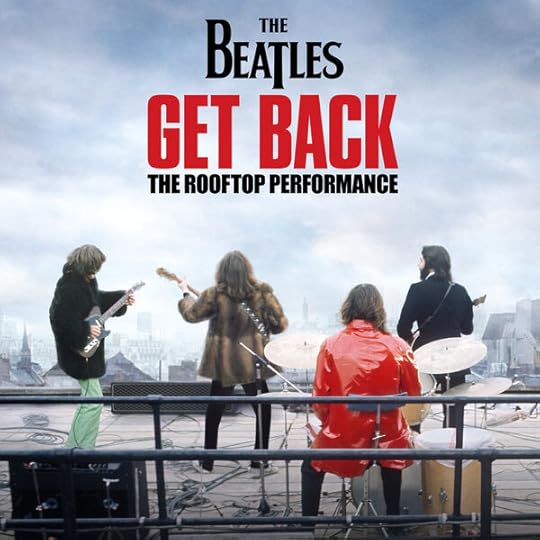
Cover image of the "Get Back: The Rooftop Performance" (2022) album. Image sourced from Discogs.
Disappointingly, Steve Matteo spends most of this book simply giving an almost day-by-day report of the Let It Be recording and filming sessions in January of 1969. While that is somewhat interesting, it is hardly the same as the sort of track by track music analysis that is usually provided in the 33 and 1/3 series. This was an early 33 1/3 outing though (#12 according to the listing) so the pattern had not really been set. There were still some interesting bits of trivia provided, but overall it left you searching elsewhere for further information. Fortunately there has been so much further documentation provided since 2004 with the Peter Jackson documentary and all of the enhanced and extended recordings.
So this was a 2.5 star (somewhat liked it), rounded down to a GR 2 star rating.
Soundtrack and Bonus Tracks Listen to the 2009 remastered version of the Let It Be (1970) album on Spotify here.
Listen to the re-edited version Let It Be: Naked (2003) on Spotify here (Note: This removes later disgraced and imprisoned producer Phil Spector's overproduction on various tracks, especially on The Long and Winding Road.
Listen to the famous last ever Beatles live public performance in January 1969 Get Back: The Rooftop Performance (2022) on Spotify here.
Listen to the extended super deluxe 50th anniversary box set collection of Let It Be (2021) on Spotify here.
Trivia and Links The Beatles' Let It Be was published as part of the Continuum 33 1/3 original series of books surveying significant record albums, primarily in the rock and pop genres. The series is now published by Bloomsbury Academic. The GR Listopia for the 33 1/3 series is incomplete with only 139 books listed as of February 2025 (and the number ordering is incorrect). For an almost up-to-date list see Bloomsbury Publishing with 200 books listed for the Main Series as of February 2025. I call it "almost up-to-date" as there seems to be some doubt as to whether Kate Bush's The Dreaming (2020) was ever released.
The Main Series does not include the 33 1/3 books in the Global series which focuses on music from the regions of Europe, Oceania, Japan, Brazil, South Asia and Africa. You can search through those at the World Music listing here.
Disappointingly dry and bogged down with details of the recording, rather than personal perspective from the author. Nothing to really distinguish it from the mountain of other books written about Let It Be.
Sarah Vowell's essay, "Take the Cannoli," is about her undergraduate obsession with The Godfather. She would, she writes, surreptitiously watch the movie between classes while her housemates were away because her compulsion to repeatedly see it felt like a shameful addiction. As someone who also really loves that movie and who - more to the point- has fed a few monkeys on the sly, I found her confession hilariously relatable.
I've been thinking about that essay a lot because I just finished watching Peter Jackson's entire, nine-hour Get Back miniseries for the second time. I hadn't intended to watch the whole thing twice; I just wanted to hang out with them a little more (and indulge my huge crush on 1969 Paul McCartney). Before I watched Get Back, I can say with confidence that Let It Be was my least favorite Beatles record. I have now spent a lot of time with those songs and I love them, every one. I read this book, despite my general dissatisfaction with the series*, mostly because I didn't want my wife to catch me watching the show a third time.
I think, if I'd read this just a few years ago, I would've had a more satisfying reading experience. As is often the case with 33 and 1/3 titles, a great deal of the book details the process of recording the record and Matteo bases his account on audiotapes and some film from the Get Back sessions. After eighteen hours of viewing, I was fairly familiar with some of the incidents he reports and analyzes and while, on the whole, Let It Be, the book is a respectable and workmanlike effort, I not infrequently found myself being an annoying, argumentative nerd in response to factual inaccuracies and pedestrian interpretations.
Decent enough, I guess, but can't really recommend unless you don't want your wife to catch you, either. It ended up being totally worth my time, though, because I learned the fun fact that the same piano was used to record "Hey, Jude," "Goodbye, Yellow Brick Road," and "Bohemian Rhapsody."
There are a lot of books out there on the Beatles and I certainly haven't read the majority of them, but I have read quite a few. And the only real new thing I learned of interest to me was that the name that became Loretta in "Get Back" was originally 'Teresa' in the working lyrics. The writer of the book spelled it 'Theresa' but how does he know what was in McCartney's mind? ;)
Geez. Do I really need to know what instrument everyone played at every session? Some interesting facts here, but the narrative constantly stalls out with needless details.
A very disappointing introduction to the 33 1/3 series. Much of this book read like a pre-first draft — as if the roughly chronological notes had to be turned into sentences and rushed to the printer, without anyone having tried to impose any narrative structure, or stylistic polish. Far too many straight lists of songs rehearsed on a particular day; speculation that may have been informed, but giving no indication that it was; weird, disorienting skips in time of just a few days; no new insight, nor, really, any particular reason for this book to exist. It's almost impressive to have turned a tumultuous period of the most important band in popular music into something so dull. At some point I realised I was only reading in order that these notes on the book could at least be informed (that and it is mercifully short). To be totally fair, it did get slightly more interesting in the 2nd half, but that praise is faint indeed.
As a huge Beatles fan that's read a lot about them, Steve Matteo's The Beatles' Let It Be did not impress me. It was thoroughly researched, but it often felt like a laundry list of facts that he had found and put together. Additionally, it didn't offer any new insights to the album for me. Although it was a quick read, I wouldn't recommend it to Beatles fans who know a lot about them; if you're a casual Beatles fan, then this might be for you. It also might be helpful if you've seen the movie Let It Be since that in itself is such a large part of what makes the album what it is.
This would have been a better book if it had focused less on what day such and such happened and more on the actual music. The story of how the album came to be is definitely fascinating, but I wanted there to be more discussion of the songwriting process or at least a deeper analysis of the musical content of each song.
I feel like this would’ve been way better if the Let it Be tapes didn’t exist, because basically this book just rehashes that. I didn’t love the writing style either, it did a lot of telling and not a lot of showing. Fine, but should’ve been more entertaining.
Describes the making of the Beatles's Let It Be album, including the Twickenham rehearsals, the rooftop concert, and the Phil Spector production in a straight forward, factual way. Full of Beatlegeek lists of people, equipment, and song names. It held my interest throughout, but I found myself wishing it was a bit longer and detailed in terms of people's motivations.
Let It Be was initially conceived as a warm-up for the Beatles to return to live stage gigs with the first to be a lavish show in a ruined Roman Amphitheatre in Tunisia and in actuality became just one show - the legendary rooftop concert, the Beatles’ last live gig together. Originally titled Get Back to highlight the band returning to its roots, the rehearsals were filmed for an accompanying documentary and showed a band on the verge of breakup, and it was retitled Let It Be, as a fitting epitaph to the fractured group. Though the album would be the last released under the Beatles name, it was recorded before their actual last album, Abbey Road.
Steve Matteo writes wonderfully about the creation of the troubled recordings, interviewing the many engineers, documentary crew, and Apple staff who witnessed the work, and using quotes from the Beatles themselves, giving us an insight into the process and the band’s personalities rather than in-depth interpretations on the songs themselves, like other books in the 33 1/3 series sometimes do.
Despite John’s increasingly troubling drug problems (he and Yoko were snorting a lot of heroin at the time) and George’s discomfort at Paul’s overbearing attitude, the recordings over several weeks were very fruitful with the band enjoying playing music together and in addition to the songs that appeared on Let It Be, half of the songs to appear on Abbey Road would be written during this period and others would appear on John, Paul and George’s solo records.
Matteo provides detail of the equipment used and recording process without being too didactic, gives us a compelling image of the chaotic atmosphere of the Apple offices, and even manages to write about the complex bootleg cottage industry spawned in the years following the scores of tapes of these sessions disappearing. He follows the record into the 21st century when a Phil Spector-less production of the record appeared called Let It Be…Naked, up to Phil Spector’s murder trial (which he would later be found guilty of).
Let It Be certainly isn’t The Beatles’ best record but it contains some legendary classics and captures an interesting time in the group’s existence, namely what it was like near the end. As someone who hasn’t read a lot of Beatles books and wasn’t looking for an overlong account of this time, this 130+ page small book was exactly what I was looking for and perfectly sufficient for general readers interested in the subject. It’s a fascinating story, well-researched and written by Steve Matteo and a highly enjoyable read.
What’s a series of music books without a Beatles entry? It’s probably carved into a stone tablet somewhere that the Beatles must be included in all such projects. Given that, it’s pretty cool that the Beatles album chosen for the series is this one. Recorded between The White Album and Abbey Road (although not released until later), it’s a hodgepodge of throwaways and brilliance that the band itself didn’t want anything to do with once it was done. But even when half-baked (no pun intended), the Beatles were… well, you know… The Beatles.
Unlike with Meloy’s book, the author isn’t present at all in the narrative. Actually, I can’t remember a single instance in the book when he offered any subjective content at all. So… this one’s a history book. Want to know what bass Paul used for the bulk of the sessions? The ‘63 Hofner, although the author confirms that a ‘61 Hofner was also present at the studio, but by all accounts went untouched. The book is a blizzard of facts and figures. Luckily for the reader (although not for the participants at the time), it also details a tumultuous period in the history of the band.
The “Get Back” sessions, as these were initially called, included days of having rehearsals filmed in a freezing cold film studio for a documentary, and the band’s first ever move from the known confines of Abbey Road to their own custom built studio at Apple (complete with a space-age, 72-channel mixing board, which unfortunately didn’t work.) Oh yeah, and this is when George Harrison quit, prompting John Lennon’s now-famous shrug of a response, “if he doesn’t come back by Tuesday, we’ll just get Clapton.”
Who can fault Matteo for his “just the facts” approach, though? When it comes to the Beatles, it’s all been said and said again. There are literally thousands of books on the band, covering every album from every conceivable angle. Matteo must have known that anything he wrote will be scrutinized by myriad “Beatles scholars” (many of whom should, you know, get a life) for the slightest error. In fact, someone will probably find something wrong with this one paragraph in this one blog, and email me tomorrow about getting my factual ducks in a row.
It must be a gas to contribute to the 33 1/3 series. And being the author who gets to write about the Beatles must, strangely enough, be very much like drawing the short straw.
Matteo’s monograph on the Beatle’s ‘Let it Be’ album, including the history of the recording sessions, release details, numerous bootleg issues and later reception might have been a significant read before the release of the ‘Get Back’ documentaries produced by Peter Jackson. However with that sizeable contribution to the monolithic repository of Beatles material this title in the ‘33 1/3’ series is a bit underwhelming.
Matteo provides some useful contextual information that either supports or provides some additional insights into the Beatles’ work on the album (and associated filming & roof top concert at Apple), yet at its heart his book is a rather dry recounting of who did what in the studios during the recording. There is some reference to the critical reaction to the album and the author gives some of his own opinions on certain tracks. Yet it would’ve been more illuminating to read more discussion of how the album was received instead of oft repeated tales of the Beatles’ break up.
A book such as this is vulnerable to developments online or in other recent media platforms, so to sustain validity for the Beatles’ fan Matteo should’ve been less worried about logging the who, the what, the where, the when. A more analytical text would’ve been a better read. It might appeal to neophytes and those who have not seen ‘Get Back’, however I suspect that audience is nowhere near as invested in reading Matteo’s work today as they might’ve been when the book was released. It is not the definitive text on the subject, but Matteo has done his best to encourage people to engage with ‘Let it Be’, and that’s a good thing.
One of the most unique books I've ever read. It's the first one I've tackled from the 33 1/3 series and I was impressed with the deep detail and research that went into it. The author dissects the 3 or so weeks of recording that went into the album as if it were the most important few weeks in human history. Endless details (pointless details for those who aren't interested), countless descriptions, and first-person accounts all pepper the narrative. The book gives an amazing ringside account of the Beatles on the edge of breaking up and in many ways changed my understanding and view of that period. Much of the story, I think, is told through the titles of the songs that were rehearsed and mainly discarded during the recording sessions, so an understanding of the material (and bootlegs) of the era are a bit of a perquisite to understanding what is going on. This is a fun read for the Beatles fan, music fans, and those who appreciate deep biographical documentary stuff. I don't know what the other books in the series are like, but I am interested in trying some of the others.
As with all of the books that I have read in this series, the quality of the book is based more upon the author than the subject matter. Matteo’s book is very well researched and his writing is good, the only problem was that the book lacked “heart” to me… it never hooked me and had me caring about The Beatles or this album or this point in their story. I’m a big Beatles fan, but this book just didn’t do much for me; it felt more like a collection of well-researched data than a story of the making of the album. I still enjoyed it but it honestly just wasn’t that great… it left me wanting more. Now, I could be poetic and say that Matteo did that purposefully: He wrote a book that left you “wanting more” about an album that itself leaves listeners “wanting more”, but I think that would be a bit too kind to assume his intent was that poetic. Nonetheless, I appreciated his research and the time he must have spent learning about this period in the Beatles history. If you’re a Beatles fan then you’ll still enjoy this quick read, but otherwise (there’s a lot written on The Beatles… they were pretty famous and sold a record or two) I wouldn’t recommend it too highly.
Even more minutiae-heavy than I was expecting. Ever wanted to know what 3 guitars Paul may have played on day 3 of recording? No? Well, you'll find out anyway. It also pre-supposes that the reader comes in knowing the basics of the Beatles' "Get Back" project and how that eventually begat the albums "Abbey Road" and "Let It Be." That all makes sense, I guess - any series of books on the history and/or themes of famous records probably isn't meant for the casual fan - but it's still a lot to assume. I like the Beatles a lot, but even I'm a little fuzzy on the history. But all that aside, it's well-written, mostly accessible, and undeniably thorough, so it's worth checking out if you're so inclined.
If you’re looking for a detailed list of the addresses where The Beatles recorded, or the names of each person who worked in the studio, or which instruments were present in the studio - then this is the book for you. It is academic and void of storytelling or interest.
I’ve read other books in this series that told great stories behind the music, and offered insight into each individual song. I had higher expectations for this book, and I’m now reluctant to try another one in the series unless highly recommended from a trusted source.
i remember being rather enthralled with this. there was a ton of info on where the band was as they fell apart, and how all the different mixes came about, resulting an an album none of the beatles apparently liked. its record geek blasphemy, but this is still probably my favorite beatles album.
These 33 1/3 series of books are nice little snacks that either detail or discuss famous albums. This one offered little new info to this Beatles fan, but it was interesting to see how so many songs were originally worked on years before their release on Fab Four records or solo works.
It started out well enough, but it got a bit bogged down by the going-on in the recording process. In the end, it turned into just another book about the Beatles.
I’ve read a good amount of books in the 33 1/3 series, and there’s really two different ways the authors tackle the album they’re discussing: either they give an extremely personal take on the album, or they clinically go through the creation of the album. My personal preference are the books that do a bit of both, giving the reader insight into great albums, but also explain why this album means so much to the writer.
Steve Matteo’s book on The Beatles’ “Let It Be” is an extremely straightforward breakdown of the recording of the final album released by The Beatles, and even what happened to the unused recordings that were missing from decades. Matteo is extremely thorough, exploring what songs The Beatles played during practice for fun, or even running down exactly what instruments the band used in their sessions. I absolutely feel like I learned quite a bit about The Beatles during the end of their time together, but this dissection sort of lacks heart.
And there’s a lot to say about “Let It Be,” which Matteo touches on at the very beginning and never returns to. After making the perfect wrap-up for the band with “Abbey Road,” “Let It Be” - largely a collection of unreleased and unused songs from a movie - was released, sort of ruining The Beatles’ ideal ending for the band’s recorded material. In the chronology of The Beatles’ music, “Let It Be” is an extreme letdown that leaves a disappointing period on the band’s history, which should’ve been the exclamation point of “Abbey Road.”
Matteo doesn’t really get into the legacy of “Let It Be,” and doesn’t discuss too much how this album factored into the breakup of the band. Instead, he’s just there to describe what happened - and that’s fine, and I did find it interesting - but I would’ve liked more of a larger look at what the album meant, it’s legacy since its release, and even some personal takes on what the album or even The Beatles mean to Matteo. Matteo’s book is certainly well-researched, but I wish he had a bit more fun with the project.
But I guess it sort of makes sense that the book on “Let It Be” is a bit of a letdown, much like the album itself. I came in wanting more than I would eventually get, and that’s certainly a disappointment. Matteo’s book is good for what it is, but as someone who has read several 33 1/3 books that are better than this, I could definitely the opportunities that were missed here.
A quick and easy read for the curious. Though not always riveting, I did learn some fun details from reading this book. Featured below, be warned that some of them have profanity in them:
The same piano Paul used to record "Hey Jude," "Elton John later used for 'Goodbye Yellow Brick Road,' and Queen used it for 'Bohemian Rhapsody.'" (11) (This piano was at Trident Studios at 17 St. Anne's Court in London.) Much of the inspiration for doing the Get Back project (which to led to the Let It Be film/album) was because of the return to live performance the group had while filming the "Hey Jude" video.
"One point of interest in 'Hey Jude' happens at 2:59 into the song. Upon close listening, one can hear a very frustrated Paul McCartney say, 'Fuckin' hell.' He said it because he rushed too quickly to the next lyric while he was doing a vocal take of the song...Through various mixes the expletive continued to get more and more buried, but because the vocal was so good, it was never completely removed." (15)
"'One After 909,' written by John sometime in 1957, was one of the earliest original compositions written by John and/or Paul and was performed by John's first group, the Quarry Men, in 1957. The song was one of many that John and/or Paul composed at Paul's Liverpool home on 20 Forthlin Road, where the McCartney family lived from 1955 until 1964. The two wrote many songs around Paul's father's piano in the small front parlor. Songs written there, but not recorded until much later, included 'I Saw Her Standing There,' 'Love Me Do,' and even 'When I'm 64.'" (38-39)
This is fairly well-known, but I had forgotten that "Let It Be" was references Paul's mother not the Virgin Mary: "The imagery of his mother, whom he lost when he was 14 years old, coming to him and offering him hope, solace, and advice, is both heartbreaking and comforting." (40)
"Across the Universe": "The songs' origin dates back to February of 1968. It was originally slated to appear on a British EP of 'Yellow Submarine,' which was never released. John was obviously influenced to write it by his time in India: the song's hypnotic chorus, 'Jai Guru De Va Om,' means 'victory to the guru God.'" (42)
"The Long and Winding Road": "The song was clearly influenced by Paul's time in Scotland. The road in question was no doubt the B842, a sixteen-mile road that snaked along the coast in dramatic twists and turns and connected Paul's house to Cambeltown." (43)
The entire Get Back project was originally conceived as rehearsals toward a live concert. Cameraman Les Parrott tells how the major idea that was tossed around was "staging a concert in a ruined Roman amphitheater in north Africa, with a crowd of 1000 saffron-robed locals" (47). If that weren't interesting enough, George suggested contacting the US Air Force to take them up on their offer to help transport all the equipment necessary for such a monumental undertaking. "However, one lunch time this all ended...at Twickenham...It was certainly at one point well over the proverbial fifty percent approval mark, with the visual notion of one or more thousand saffron-robed Arabs being a major selling point. Then Yoko spoke up, 'After 100,000 people in Shea Stadium, everything else sucks.' That it in that short sentence; the idea evaporated. 'Yeah, right; good point, of course,' chorused the Beatles, and that was it." (47-48)
January 10, 1969: "It was during lunch, just after a heated exchange between Paul and George...that George walked out of the session and quit, saying, 'See you 'round the clubs.'...George Martin had arrived just before Harrison left. Martin was driving his Triumph Herald and accidentally hit Harrison's Mercedes. It must have happened just minutes before Harrison left, because when George Martin walked onto the soundstage, [recording engineer, Dave] Harries said, 'George didn't have time to tell him 'I dinged your car.'" (48-49) They kept filming, shooting close-ups of the other three, the camera crew having been told George was away briefly visiting his mother. "There was, oddly enough, almost a sense of complete denial of the fact that he was gone. [Film director, Michael] Lindsay-Hogg even suggested that for the live concert they could simply say he was sick. As for John Lennon, his famous quote was, 'If he doesn't come back by Tuesday, we'll just get Clapton.'" (50)
While recording "Abbey Road," another historic event was taking place. "August 15 [1969] marked the first day of Woodstock, the three-day music festival in upstate New York. As the concert got underway, the Beatles were at Abbey Road working on 'Golden Slumbers/Carry That Weight,' 'The End,' 'Something,' and 'Here Comes the Sun,' all of which would end up on 'Abbey Road.'" (99)
"On August 20, John, Paul, George, and Ringo were all at Abbey Road Studios for the mixing and the sequencing of the 'Abbey Road' album. It was he last time they would all be together at the studios." (99)
"January 3, 1970, marked a return to work related to the 'Get Back' project. At a recording session at Abbey Road, Paul, George, and Ringo officially recorded 'I Me Mine' for the first time...John Lennon, on vacation in Denmark, did not attend." (100)
While playing on John's solo song "Instant Karma" in January 1970, they were having trouble getting the sound they wanted. "At the suggestion of George Harrison, who was playing on the song, Phil Spector was brought in to produce the track." (102) Billy Preston is one of five musicians on the track. He along with the others are credited for playing piano on the track. Also on the track was Klaus Voorman on bass and piano.
"Klaus Voorman, a German artist who designed the cover of 'Revolver' and the 'Anthology' releases, had played with John at the Plastic Ono Band's two live shows in 1969 at the Lyceum Ballroom" (102)
"Spector's deft touch convinced John and George that he was just the man to take the languishing 'Get Back' tapes and make them into an album. Spector would begin the process on March 23. He would also go on to produce John's albums 'Plastic Ono Band,' 'Imagine,' 'Walls and Bridges' and part of the 'Rock 'n' Roll' album. His work on Let It be, particularly on 'The Long and Winding Road,' would also become one of the many reason for the ultimate break-up of the Beatles." (104)
"The Beatles had truly admired Spector's immense talents. The records he produced for the Ronettes and the Crystals, among others, were the American musical Holy Grail to the Beatles. of course, the Beatles knew Spector. They had toured with the Ronettes and Spector had even accompanied the Beatles on their first visit to America, flying with them from London to new York in February of 1964. Certainly the idea of Spector producing the Beatles was a dream for them. (One wonders why they would need Klein as an intermediary.) Now Spector had come to Lennon's rescue and in one night made a recording of one of John's songs that was arguably as good as anything George Martin had ever done." (108)
This entire review has been hidden because of spoilers.
Out of the three books I've read in this series, this one was probably the most interesting so far. It's definitely pushed me to discover more about the lives of the beatles after their split, and I loved the parts that went into each member's mood during the Twickenham sessions. I was mostly intrigued by George Harrison's feelings during the recordings, and how he was eager to break free and start his own solo work. (After finishing that particular chapter, I checked out his first solo album, All Things Must Pass, and have been listening to it since).
I've also gained a little more perspective as to why the Beatles needed to break up. It seemed that during these sessions, John, Paul, and George were more passionate about their pet projects and solo creations, and seemed to be going through the motions at times. The book paints a bittersweet picture of the group sticking together and reliving the feel of their early work, but ultimately knowing that they would eventually have to "Let it be" and go their separate ways.
At times, I was a little overwhelmed by the technical jargon and overly detailed accounts given of the recording equipment, instruments, recording engineers, timestamps, and dates listed for the sessions, but I imagine this appeals to others more interested in those recording details. Ultimately, I enjoyed getting an in-depth view of the day-to-day proceedings during this pivotal time for the Beatles. It revealed a lot I wasn't necessarily aware of, and convinced me to delve into more of their solo work as well.
I've read many 33 1/3 books and this has to be the worst I've seen so far.
The book read like a mandatory assignment returned by a student who didn't feel like doing it. There are many repetitions in the book restating the same facts over and over using slightly different words. There are significant sections about events only indirectly related to "Let It Be", like the story of "Hey Jude". There are completionist passages meticulously listing equipment or names of bootlegs that could have been an Appendix but are pretty boring in the main context of the book.
The book also didn't age particularly well, being published just after "Let It Be... Naked". It states that a re-release of the movie "Let It Be" using that mix is imminent. That never materialized. Instead we got the "Get Back" documentary, which is likely a better insight into "Let It Be" than this book.
There are some albums that don’t need a 33 1/3 volume, and this was one. The Beatles and their output been documented to death, as acknowledge by Matteo in an introduction to the book. So why another? I’m not sure. I didn’t get a sense that I learned much from this. It’s told fairly linearly, made somewhat difficult by the fact that the Let It Be album eventually was cobbled together by Glyn Johns, Phil Spector, and other parties. I guess I hadn’t known before this how much the Beatles’ solo careers were already taking off before the release of both Abbey Road and Let It Be, but that’s one small fact. Useful if you didn’t know much about the latter days of the band, but otherwise to be skipped.