

What do you think?

Galactic Pot-Healer
His imagination and play on words are as potent as ever - Evening Standard
An entertaining mix of fantasy, sci-fi, philosophy and mythology pictured with corrosive satire and told with a dead-pan humour.
Joe Fernwright, an unemployed ceramic tinker in a plastic world, was in a dangerous try-anything mood. Ready even to accept an extremely chancy proposition from an extremely peculiar and powerful creature - a Glimmung.
The Glimmung invites Joe to help raise an ancient cathedral from he sea-bed of a distant planet...
The sunny side of SF - The Scotsman
Admirable for Dick's incidental invention - The Scotsman
Cover illustration: Ian Miller
An entertaining mix of fantasy, sci-fi, philosophy and mythology pictured with corrosive satire and told with a dead-pan humour.
Joe Fernwright, an unemployed ceramic tinker in a plastic world, was in a dangerous try-anything mood. Ready even to accept an extremely chancy proposition from an extremely peculiar and powerful creature - a Glimmung.
The Glimmung invites Joe to help raise an ancient cathedral from he sea-bed of a distant planet...
The sunny side of SF - The Scotsman
Admirable for Dick's incidental invention - The Scotsman
Cover illustration: Ian Miller
156 pages, Paperback
First published June 1, 1969
About the author
Philip K. Dick
1,943 books23.3k followersPhilip Kindred Dick was a prolific American science fiction author whose work has had a lasting impact on literature, cinema, and popular culture. Known for his imaginative narratives and profound philosophical themes, Dick explored the nature of reality, the boundaries of human identity, and the impact of technology and authoritarianism on society. His stories often blurred the line between the real and the artificial, challenging readers to question their perceptions and beliefs.
Raised in California, Dick began writing professionally in the early 1950s, publishing short stories in various science fiction magazines. He quickly developed a distinctive voice within the genre, marked by a fusion of science fiction concepts with deep existential and psychological inquiry. Over his career, he authored 44 novels and more than 100 short stories, many of which have become classics in the field.
Recurring themes in Dick's work include alternate realities, simulations, corporate and government control, mental illness, and the nature of consciousness. His protagonists are frequently everyday individuals—often paranoid, uncertain, or troubled—caught in surreal and often dangerous circumstances that force them to question their environment and themselves. Works such as Ubik, The Three Stigmata of Palmer Eldritch, and A Scanner Darkly reflect his fascination with perception and altered states of consciousness, often drawing from his own experiences with mental health struggles and drug use.
One of Dick's most influential novels is Do Androids Dream of Electric Sheep?, which served as the basis for Ridley Scott's iconic film Blade Runner. The novel deals with the distinction between humans and artificial beings and asks profound questions about empathy, identity, and what it means to be alive. Other adaptations of his work include Total Recall, Minority Report, A Scanner Darkly, and The Man in the High Castle, each reflecting key elements of his storytelling—uncertain realities, oppressive systems, and the search for truth. These adaptations have introduced his complex ideas to audiences well beyond the traditional readership of science fiction.
In the 1970s, Dick underwent a series of visionary and mystical experiences that had a significant influence on his later writings. He described receiving profound knowledge from an external, possibly divine, source and documented these events extensively in what became known as The Exegesis, a massive and often fragmented journal. These experiences inspired his later novels, most notably the VALIS trilogy, which mixes autobiography, theology, and metaphysics in a narrative that defies conventional structure and genre boundaries.
Throughout his life, Dick faced financial instability, health issues, and periods of personal turmoil, yet he remained a dedicated and relentless writer. Despite limited commercial success during his lifetime, his reputation grew steadily, and he came to be regarded as one of the most original voices in speculative fiction. His work has been celebrated for its ability to fuse philosophical depth with gripping storytelling and has influenced not only science fiction writers but also philosophers, filmmakers, and futurists.
Dick's legacy continues to thrive in both literary and cinematic spheres. The themes he explored remain urgently relevant in the modern world, particularly as technology increasingly intersects with human identity and governance. The Philip K. Dick Award, named in his honor, is presented annually to distinguished works of science fiction published in paperback original form in the United States. His writings have also inspired television series, academic studies, and countless homages across media.
Through his vivid imagination and unflinching inquiry into the nature of existence, Philip K. Dick redefined what science fiction could achieve. His wor
Raised in California, Dick began writing professionally in the early 1950s, publishing short stories in various science fiction magazines. He quickly developed a distinctive voice within the genre, marked by a fusion of science fiction concepts with deep existential and psychological inquiry. Over his career, he authored 44 novels and more than 100 short stories, many of which have become classics in the field.
Recurring themes in Dick's work include alternate realities, simulations, corporate and government control, mental illness, and the nature of consciousness. His protagonists are frequently everyday individuals—often paranoid, uncertain, or troubled—caught in surreal and often dangerous circumstances that force them to question their environment and themselves. Works such as Ubik, The Three Stigmata of Palmer Eldritch, and A Scanner Darkly reflect his fascination with perception and altered states of consciousness, often drawing from his own experiences with mental health struggles and drug use.
One of Dick's most influential novels is Do Androids Dream of Electric Sheep?, which served as the basis for Ridley Scott's iconic film Blade Runner. The novel deals with the distinction between humans and artificial beings and asks profound questions about empathy, identity, and what it means to be alive. Other adaptations of his work include Total Recall, Minority Report, A Scanner Darkly, and The Man in the High Castle, each reflecting key elements of his storytelling—uncertain realities, oppressive systems, and the search for truth. These adaptations have introduced his complex ideas to audiences well beyond the traditional readership of science fiction.
In the 1970s, Dick underwent a series of visionary and mystical experiences that had a significant influence on his later writings. He described receiving profound knowledge from an external, possibly divine, source and documented these events extensively in what became known as The Exegesis, a massive and often fragmented journal. These experiences inspired his later novels, most notably the VALIS trilogy, which mixes autobiography, theology, and metaphysics in a narrative that defies conventional structure and genre boundaries.
Throughout his life, Dick faced financial instability, health issues, and periods of personal turmoil, yet he remained a dedicated and relentless writer. Despite limited commercial success during his lifetime, his reputation grew steadily, and he came to be regarded as one of the most original voices in speculative fiction. His work has been celebrated for its ability to fuse philosophical depth with gripping storytelling and has influenced not only science fiction writers but also philosophers, filmmakers, and futurists.
Dick's legacy continues to thrive in both literary and cinematic spheres. The themes he explored remain urgently relevant in the modern world, particularly as technology increasingly intersects with human identity and governance. The Philip K. Dick Award, named in his honor, is presented annually to distinguished works of science fiction published in paperback original form in the United States. His writings have also inspired television series, academic studies, and countless homages across media.
Through his vivid imagination and unflinching inquiry into the nature of existence, Philip K. Dick redefined what science fiction could achieve. His wor
Ratings & Reviews
Friends & Following
Create a free account to discover what your friends think of this book!
Community Reviews
Displaying 1 - 30 of 502 reviews

July 7, 2018

I wonder if Philip K. Dick was familiar with the Q & A:
Q: Why do ducks fly over Cleveland upside down?
A: There's nothing worth crapping on.
I ask since this novel opens in dystopian Cleveland in the year 2046, a futuristic city where absolutely nothing is worth crapping on - it's totalitarian with a vengeance: state officials utilize sinister mind control techniques and a ruthless, intrusive police force maims, brutalizes and otherwise inflicts itself on the city's inhabitants at every turn.
Joe Fernwright is the book’s protagonist. Joe is a pot-healer, a mender of broken ceramic pots as his father was before him. Similar to those master craftsmen who helped build medieval cathedrals, Joe takes a special pride in his skill.
Unfortunately, he’s living in a world of computers and other highly advanced technology, a world where everything is made out of plastic. Poor Joe. His talents are no longer needed and he sits in his office cubical alone, without work, and, as a way to kill time and take the edge off his boredom and frustration, he uses a Skype-like program to play The Game (a clever intellectual guessing game) with other men across the globe who are likewise bored and frustrated. When he’s not playing The Game, Joe ponders: What do I really want?
But then Joe receives a mysterious note: "Pot-healer, I need you. And I will pay.” Immediately thereafter all varieties of bizarre events ensue until Joe finds himself interrogated and threatened at a Cleveland police station. He can't take the cruelty, runs out the door and is rescued in a strange, outer space kind of way by a strange outer space kind of being.
Glimmung is the name of the outer space being and author of the aforementioned quizzical communique. Glimmung presents Joe with an opportunity to infuse new meaning into his life by healing pots on his distant planet of Sirius 5. Divorced, childless, unemployed and now that he's a wanted man by the police, Joe figures he has little to lose and accepts Glimmung's proposition, thus setting out on what Joseph Campbell termed “The Hero’s Journey.”
Galactic Pot-Healer strikes me as a cross between a sacred Gnostic text from Nag Hammadi and a book written by Philip K. Dick. Wait a minute, is that a legitimate description? Well, avid Dickheads will know what I’m driving at. For others, think of a wild, weird, very funny science fiction novel (not “hard” sf since PKD doesn’t get into the actual science behind traveling from Earth to another Earth-like planet) complete with Jungian archetypes written in a way that touches on ancient esoteric mythology and religion.
The Hero’s Journey is never an easy one - recall the trials of Odysseus, of Gautama Buddha, of Joan of Arc, of Luke Skywalker. Joe encounters all sorts of people, places, things and far-out creatures as part of his quest. To list a number:
Glimmung: A being with enormous size and tremendous powers who can manifest in diverse forms. Glimmung assembles scores of specialists in the arts and sciences from all over the galaxy to his current home planet of Sirius 5 aka Plowman’s Planet for a specific purpose: to help raise Heldscalla, a cathedral sunken beneath a vast ocean. Joe’s ongoing dealings with Glimmung place our luckless pot-healer, in many ways an ordinary kind of guy, in the role of probing philosopher. At the top of the list is that perennial human question: yea, yea, yea . . . but what about me?!
Harper Baldwin: One of the other human specialists recruited along with Joe. Harper is the prototypical manager/organization man, forever giving directions and attempting to assert his will as self-appointed leader. Harper's bluster and American-style pragmatism add much color and comedy to the tale.
Mali Yojez: Did I say Joe was luckless? That has more to do with his life in Cleveland. The specialist sitting next to Joe on the flight to Sirius 5 is a marine biologist, a stunning young lady from a planet very much like Earth. A strong emotional bond quickly develops. Joe and Mali team up and wherever Joe goes, Mali is sure to follow. Lucky guy! The two of them even share an apartment together at the Sirius 5 luxury hotel. In this way, Mali becomes the novel’s second main character. And Mali has an intriguing take on the English language. That’s the way to juice up your story, PKD!
Anomalous Aliens: All types of intelligent, non-humans the size of humans from other planets are among the specialists. At one point Joe observes: “A chitinous multilegged quasiarachnid and a large bivalve with pseudopodia arguing about Goethe’s Faust. A book which I’ve never read – and it originated on my planet, is the product of a human being.” Fortunately, every one of these creatures has a sense of proper decorum and never even thinks of making a meal of Joe.
Willis: Without question, the coolest dude in the story. And Willis is a robot. But a robot with the temperament and timing of a stand-up comic, right up there will George Carlin and Jonathan Winters and the deadpan comic Jackie Vernon. Willis is one fantastic reason Galactic Pot-Healer rocks the house.
Book of the Kahlends: The one and only book written on Sirius 5, a book that purports to predict the future. To say more would be to say too much - you will have to read all about it for yourself.
The New Man: The Hero’s Journey is one of continual discovery. What Joe Fernwright learns about himself, how he grows as a person, the decisions he makes regarding his chosen craft and the steps he takes to actualize his capacity and spirit for individual creativity is nothing short of uplifting. I can clearly picture Philip K. Dick siting at his typewriter, tingling with excitement (even without drugs or many cups of black coffee) as he put the finishing touches on Galactic Pot-Healer.


“A man is an angel that has become deranged, Joe Fernwright thought. Once they – all of them – had been genuine angels, and at that time they had had a choice between good and evil, so it was easy, easy being an angel."

“Death is very close, he thought. When you think in this manner. I can feel it, he decided. How near I am. Nothing is killing me; I have no enemy, no antagonist; I am merely expiring, like a magazine subscription: month by month.”
― Philip K. Dick, Galactic Pot-Healer

June 19, 2013
Hilarious.
Philip K. Dick’s writing makes me smile. He’s like a weird, unorthodox friend who has a loud, goofy laugh that you cannot help joining in laughing yourself.
One of the most endearing themes of Phil’s work is his propensity to cast as protagonist an ordinary guy or gal. Small appliance repairman seems to be the occupation of modal frequency, but Galactic Pot Healer joins The Three Stigmata of Palmer Eldritch as a novel that features a ceramicist as the hero. A pot healer is one who repairs broken ceramic pots.
In a book that may have paid homage to H.P. Lovecraft and may in turn have influenced China Miéville, Douglas Adams and Monty Python; Galactic Pot Healer tells the off beat tale of a depressed loner who is hired by a Cthulu like alien god to be a part of his restoration project.
This is definitely one of his more fantastic endeavors and critics may point to his own mental health and / or self-medication, but this is a true pulp science fiction classic. Willis the robot steals the show and I loved the dial in confessional where the penitent can select Buddhist, Baptist, Muslim, Irish Catholic or whatever faith will work for the situation.
A fan will notice many PKD standard themes, Biblical, theological and classic references.

Philip K. Dick’s writing makes me smile. He’s like a weird, unorthodox friend who has a loud, goofy laugh that you cannot help joining in laughing yourself.
One of the most endearing themes of Phil’s work is his propensity to cast as protagonist an ordinary guy or gal. Small appliance repairman seems to be the occupation of modal frequency, but Galactic Pot Healer joins The Three Stigmata of Palmer Eldritch as a novel that features a ceramicist as the hero. A pot healer is one who repairs broken ceramic pots.
In a book that may have paid homage to H.P. Lovecraft and may in turn have influenced China Miéville, Douglas Adams and Monty Python; Galactic Pot Healer tells the off beat tale of a depressed loner who is hired by a Cthulu like alien god to be a part of his restoration project.
This is definitely one of his more fantastic endeavors and critics may point to his own mental health and / or self-medication, but this is a true pulp science fiction classic. Willis the robot steals the show and I loved the dial in confessional where the penitent can select Buddhist, Baptist, Muslim, Irish Catholic or whatever faith will work for the situation.
A fan will notice many PKD standard themes, Biblical, theological and classic references.

March 26, 2024
I've met a certain kind of person a number of times in my life. Cheerful and upbeat, "happy" in their job, "happy" in their personal life, yet dying inside. Maybe they don't know that they radiate sadness despite the cheerful smiles, that the almost desperate happiness that they are trying to portray comes across as manufactured and even tragic. At the very least, the difference between the affect and what lies beneath is uncomfortable, unsettling - they fool even themselves. Another version of this person only pays lip service to being happy: openly petty, judgy, vindictive, yet always making sure to state "I'm doing good!" or "I love my life" - they dare you to disagree. You've met these kind of people too, I'm sure - or maybe you've been them? I sure have. Maybe you've watched them on Bravo.
Galactic Pot-Healer is the book version of such personalities, the two being flip sides of the same coin. Cheerful, light-hearted, surprisingly cutting at times, other times rather strenuously silly... all a bright-toned cover for the dark desperation and feeling of failure throbbing underneath. A tragic book, despite what could be considered a happy ending. An uncomfortable, unsettling book, despite its friendly exterior. A deep sadness, despite the sarcasm and the absurdities. The protagonist "heals pots" but this sad zombie can barely recognize his own brokenness. He goes through the motions of life, his attempts to connect with others are like people trying to have a conversation while underwater. When other characters try to engage with him in an honest way, his response is to tell a joke, make a non-sequitur, recount some pointless anecdote. Or he gets passive-aggressively angry for reasons even he doesn't understand. He's drowning while saying don't worry, don't save me, I'm perfectly fine, leave me alone.


Galactic Pot-Healer is the book version of such personalities, the two being flip sides of the same coin. Cheerful, light-hearted, surprisingly cutting at times, other times rather strenuously silly... all a bright-toned cover for the dark desperation and feeling of failure throbbing underneath. A tragic book, despite what could be considered a happy ending. An uncomfortable, unsettling book, despite its friendly exterior. A deep sadness, despite the sarcasm and the absurdities. The protagonist "heals pots" but this sad zombie can barely recognize his own brokenness. He goes through the motions of life, his attempts to connect with others are like people trying to have a conversation while underwater. When other characters try to engage with him in an honest way, his response is to tell a joke, make a non-sequitur, recount some pointless anecdote. Or he gets passive-aggressively angry for reasons even he doesn't understand. He's drowning while saying don't worry, don't save me, I'm perfectly fine, leave me alone.
"You mean you're trying to protect your life?" Joe said. "But your life is over." He did not comprehend; it made no sense, it was eerie and bizarre. The thought of a decayed corpse - his corpse - living this semilife down here, going through the motions of making itself safe... "Improve living standards for the dead," he said savagely, speaking at large, to neither Mali nor the corrupted body floating before him.His life may be hollow, but he will try to protect it. Even when given an opportunity to be a part of something larger than himself, something that will connect him to others, he will find ways to fuck it up. It's like he can't help himself.
I should feel sorry for you," Mali said. "But I can't. You brought this on all of us - you've destroyed Glimmung, who meant to save you from your puerile pastimes. He meant to restore the dignity of work to you in a heroic enterprise, a joint enterprise involving hundreds of us..."The book feels like its narrative is leading to some grand adventure, so many people and aliens gathered together to accomplish something remarkable, something that will give their empty lives meaning. Not so much though, or at least not so much for our poor, tragic, angry, friendly Galactic Pot-Healer. Don't buy what the book is pretending to sell, on its surface. Dick is just fucking with you.

June 7, 2017
The story of Joe, a penniless pottery and ceramic mender whose main kick in life is playing odd wordgames with remote participants (online?).
Unexpectedly, he meets Glimmung, an ancient being endowed with almost boundless powers. Joe is offered to join him and partake in a massive, large-scale enterprise : help in restoring a flooded cathedral lying at the bottom of an otherwordly abyss, so as to restore order and harmony on an alien planet.
Arguably the bleakest and most melancholy poetical work issued by Philip K. Dick. One of the most perceptibly Jungian, too.
Haunting.
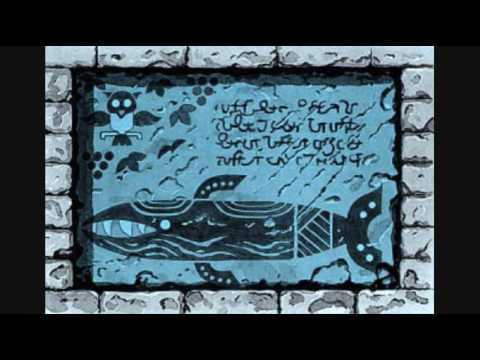
- The Wind Fish in The Legend of Zelda : Link's Awakening
Matching soundtrack :
Voices of the Deep - OverClocked Remix
Unexpectedly, he meets Glimmung, an ancient being endowed with almost boundless powers. Joe is offered to join him and partake in a massive, large-scale enterprise : help in restoring a flooded cathedral lying at the bottom of an otherwordly abyss, so as to restore order and harmony on an alien planet.
Arguably the bleakest and most melancholy poetical work issued by Philip K. Dick. One of the most perceptibly Jungian, too.
Haunting.
- The Wind Fish in The Legend of Zelda : Link's Awakening
Matching soundtrack :
Voices of the Deep - OverClocked Remix

May 14, 2026
4–4.5
Reading this book feels like getting cornered at a party by that one eccentric friend who hasn’t slept in three days, is drinking something suspiciously herbal, and starts telling you about God, pottery, and interdimensional ocean‑girls like it’s the most normal thing in the world. And the worst part?
You’re ENJOYING it.
PKD writes like a man who has had one intrusive metaphysical thought too many and decided to publish every single one. He’s chaotic, brilliant, paranoid, hilarious, and somehow deeply sincere — like a cosmic raccoon rifling through the trash of existence and handing you shiny bits of philosophy.
Joe Fernwright?
My sweet depressed pot‑healer king.
He’s out here in a future where nobody cares about art, beauty, or ceramics, just vibing in his sad little life until the Glimmung — a creature that looks like a gyroscope, a teenage girl, AND an ocean having an identity crisis — yoinks him into a cosmic group project.
And the Glimmung?
Oh, that thing is absolutely a god with anger issues.
A divine drama queen.
A celestial girlboss with tentacles.
The whole book is a fever dream of:
existential dread
weird little creatures
cosmic union meetings
theology that feels like it was written during a caffeine overdose
and Joe just trying to glue pots together while the universe screams around him
It’s messy.
It’s brilliant.
It’s unhinged.
It’s somehow profound.
It’s PKD at his most “I’m not okay but let’s make it art.”
And honestly?
I had FUN.
Like, stupid grin, “what the hell am I reading,” chaotic fun.
A short, strange, metaphysical sci‑fi romp that feels like being dragged through the cosmos by your weirdest friend — and you’re laughing the whole way.
Reading this book feels like getting cornered at a party by that one eccentric friend who hasn’t slept in three days, is drinking something suspiciously herbal, and starts telling you about God, pottery, and interdimensional ocean‑girls like it’s the most normal thing in the world. And the worst part?
You’re ENJOYING it.
PKD writes like a man who has had one intrusive metaphysical thought too many and decided to publish every single one. He’s chaotic, brilliant, paranoid, hilarious, and somehow deeply sincere — like a cosmic raccoon rifling through the trash of existence and handing you shiny bits of philosophy.
Joe Fernwright?
My sweet depressed pot‑healer king.
He’s out here in a future where nobody cares about art, beauty, or ceramics, just vibing in his sad little life until the Glimmung — a creature that looks like a gyroscope, a teenage girl, AND an ocean having an identity crisis — yoinks him into a cosmic group project.
And the Glimmung?
Oh, that thing is absolutely a god with anger issues.
A divine drama queen.
A celestial girlboss with tentacles.
The whole book is a fever dream of:
existential dread
weird little creatures
cosmic union meetings
theology that feels like it was written during a caffeine overdose
and Joe just trying to glue pots together while the universe screams around him
It’s messy.
It’s brilliant.
It’s unhinged.
It’s somehow profound.
It’s PKD at his most “I’m not okay but let’s make it art.”
And honestly?
I had FUN.
Like, stupid grin, “what the hell am I reading,” chaotic fun.
A short, strange, metaphysical sci‑fi romp that feels like being dragged through the cosmos by your weirdest friend — and you’re laughing the whole way.

March 21, 2016
“No structure, even an artificial one, enjoys the process of entropy. It is the ultimate fate of everything, and everything resists it.”
― Philip K. Dick, Galactic Pot-Healer

The idea of this book at first reminded me of the concept of Kintsukuroi (金繕い or golden repair). Kintsukuroi, essentially, is the Japanese art of fixing broken pottery with a lacquer mixed with gold, silver, or platinum. I was first exposed to this idea and unique art form years ago when I was reading about Wabi-Sabi. I have since been over-exposed to photos of beautifully broken vases and bowls repaired and posted on Pinterest and Facebook. As a philosophy, or idea, Kintsukuroi is kinda amazing. At its core, breakage and repair are seen as just phases of the history of an pot/bowl/plate. So, insert transcendent metaphor here about broken things being healed, etc.
So, I started this book with that idea kinda sitting on the shelf behind me. But Dick isn't going to go at any idea directly. He is going to throw in weird gods, funky totalitarian states, unsatisfied relationships, reluctant heroes, aborted rescues, weird creatures.
This isn't Dick's best novel, but there is something redeeming about it. Something affirming and languid about it. He is dealing with issues of decay, death, loss, loneliness, dark doppelgängers, and dysfunctional teams. This is a funky, sad, but in the end redeeming novel. I give it 3 stars not because it doesn't deserve more, but because it isn't top-shelf PKD, but something for the serious Dick fan (or the curious Dick fan who likes pottery and gods fractured and funky).
― Philip K. Dick, Galactic Pot-Healer
The idea of this book at first reminded me of the concept of Kintsukuroi (金繕い or golden repair). Kintsukuroi, essentially, is the Japanese art of fixing broken pottery with a lacquer mixed with gold, silver, or platinum. I was first exposed to this idea and unique art form years ago when I was reading about Wabi-Sabi. I have since been over-exposed to photos of beautifully broken vases and bowls repaired and posted on Pinterest and Facebook. As a philosophy, or idea, Kintsukuroi is kinda amazing. At its core, breakage and repair are seen as just phases of the history of an pot/bowl/plate. So, insert transcendent metaphor here about broken things being healed, etc.
So, I started this book with that idea kinda sitting on the shelf behind me. But Dick isn't going to go at any idea directly. He is going to throw in weird gods, funky totalitarian states, unsatisfied relationships, reluctant heroes, aborted rescues, weird creatures.
This isn't Dick's best novel, but there is something redeeming about it. Something affirming and languid about it. He is dealing with issues of decay, death, loss, loneliness, dark doppelgängers, and dysfunctional teams. This is a funky, sad, but in the end redeeming novel. I give it 3 stars not because it doesn't deserve more, but because it isn't top-shelf PKD, but something for the serious Dick fan (or the curious Dick fan who likes pottery and gods fractured and funky).

April 13, 2023
My 13th PKD novel.
I can safely say I absolutely loved the first half - from page one. As for the rest... it's not that I didn't love it; it's that it morphs into a constantly disorienting, über-'Star Trek' episode that would have that show's producers fainting over budget concerns. ~ like they accepted a spec script capriciously tossed off by the staff writers over at 'Voyage to the Bottom of the Sea', thinking, 'Well now... *this* is edgy...'.
A title like 'Galactic Pot-Healer' has a beatnik ring of the 1950s, as opposed to when it was published (1969). It's interesting to place this title in chronological context. Dick had just written two of his most iconic works - 'Do Androids Dream of Electric Sheep?' and 'Ubik' - and would soon establish another - 'Flow My Tears, the Policeman Said' (which, so far, remains my favorite).
So 'GPH' was squeezed in-between. A bit of a creative palate cleanser, with a stylistic flourish that (in its tone) oddly echoes 'Alice in Wonderland' and 'Fantasia'. Not only is the first half immediately and immensely engaging, it also holds some of PKD's funniest, most playful material.
Of course then things change. It's not that the book suddenly goes all dark in spirit (there are some rather funny lines in the second half) but there's a pointed shift that's decidedly spiritual in content.
An amusing set-up for that occurs earlier on when, feeling "weak and unsure of himself" as he considers a huge change in his life, the titular character - Joe Fernwright - uses a pay phone to call various dial-a-faith options for advice.
Joe finds himself in the most specific ontological dilemma - which shocked the hell out of me since it is one I still tend to turn over in my own mind:
The narrative leads inexorably to this mission - which, in typical PKD fashion, will mess with the reader's head. The beauty of the book's second half lies in its oblique nature. Its conflict is contradictory at every turn and, for the most part (until its - perhaps - relatively straightforward conclusion), each reader will distill meaning in a personal way.
I bet it would make for a hell of a dissertation. And the book's last line is a gut-punch.
I can safely say I absolutely loved the first half - from page one. As for the rest... it's not that I didn't love it; it's that it morphs into a constantly disorienting, über-'Star Trek' episode that would have that show's producers fainting over budget concerns. ~ like they accepted a spec script capriciously tossed off by the staff writers over at 'Voyage to the Bottom of the Sea', thinking, 'Well now... *this* is edgy...'.
A title like 'Galactic Pot-Healer' has a beatnik ring of the 1950s, as opposed to when it was published (1969). It's interesting to place this title in chronological context. Dick had just written two of his most iconic works - 'Do Androids Dream of Electric Sheep?' and 'Ubik' - and would soon establish another - 'Flow My Tears, the Policeman Said' (which, so far, remains my favorite).
So 'GPH' was squeezed in-between. A bit of a creative palate cleanser, with a stylistic flourish that (in its tone) oddly echoes 'Alice in Wonderland' and 'Fantasia'. Not only is the first half immediately and immensely engaging, it also holds some of PKD's funniest, most playful material.
Of course then things change. It's not that the book suddenly goes all dark in spirit (there are some rather funny lines in the second half) but there's a pointed shift that's decidedly spiritual in content.
An amusing set-up for that occurs earlier on when, feeling "weak and unsure of himself" as he considers a huge change in his life, the titular character - Joe Fernwright - uses a pay phone to call various dial-a-faith options for advice.
Joe finds himself in the most specific ontological dilemma - which shocked the hell out of me since it is one I still tend to turn over in my own mind:
Strength. The strength of being, he thought, and opposite to that the peace of nonbeing. Which was better? Strength wore out in the end, every time; so perhaps that was the answer and no more was needed. Strength--being--was temporary. And peace--nonbeing--was eternal; it had existed prior to his birth and would resume for him after his death. The period of strength, in between, was merely an episode, a short flexing of borrowed muscles--a body which would have to be returned... to the real owner.His personal quest for meaning will ultimately blend with something (literally) much larger than himself.
The narrative leads inexorably to this mission - which, in typical PKD fashion, will mess with the reader's head. The beauty of the book's second half lies in its oblique nature. Its conflict is contradictory at every turn and, for the most part (until its - perhaps - relatively straightforward conclusion), each reader will distill meaning in a personal way.
I bet it would make for a hell of a dissertation. And the book's last line is a gut-punch.

February 6, 2021
Surprisingly coherent for Dick. Conspicuously absent are any mind altering drugs or paranoid conspiracies, the story revolving around themes of fatalism, yin & yang/universal balance, depression and the search for meaning in life. Equally profound and thought provoking as it is ridiculous and mind bending, as one would expect from Dick at his best.

February 14, 2021
How on earth do I begin to write about this one then?
I guess by saying, I thought it was wonderful.
I found it belly laugh funny in parts such as the commercial on the radio for Hardovax an impotence drug and the joke told to Joe, our main protagonist by Nurb K’ohl Dáq, a warmhearted bivalve.
“Here’s one they’re telling on Deneb four,” the bivalve said. “A freb whom we’ll call A is trying to sell a glank for fifty thousand burfles.” “What’s a freb?” Joe asked. “A kind of—” The bivalve undulated with effort. “A sort of idiot.” “What’s a burfle?” “A monetary unit, like a crumble or a ruble. Anyhow, someone says to the freb, ‘Do you really expect to get fifty thousand burfles for your glank?’ ” “What’s a glank?” Joe asked. Again the bivalve undulated; this time it turned bright pink with effort. "A pet, a valueless lower life-form. Anyhow, the freb says, ‘I got my price.’ ‘You got your price?’ the interrogator interrogates. ‘Really?’ ‘Sure,’ the freb says. ‘I traded it for two twenty-five-thousand-burfle pidnids.’ ” “What’s a pidnid?”
The bivalve gave up; it slammed its shell shut and withdrew into privacy and silence.
I also had to look up this to see if it was an actual poem and.. it is;
The Drowned Girl by Bert Brecht https://poetryintranslation.wordpress...
And then more time googling;
The philosophy of symbolic logic. Which according to the analysis of C.I. Lewis, the three characteristics of symbolic logic are:
(1): The use of symbols to stand for concepts rather than use words for the same purpose:(2): The use of the deductive method
(3): The use of variables.
Might have to look further into that.
And finally the part I was hoping for with regards to the title of the book and Phil didn't let me down.. 😁
Now the nonhumanoid life-forms made their way from the hovercraft onto the small meld. The multilegged gastropod, the immense dragonfly, the furry ice cube, the red jelly supported by its metal frame, the univalvular cephalopod, the kindly looking bivalve Nurb K'ohl Dáq, the quasiarachnid, its chitinous shell gleaming, its many legs drumming. and then the portly, rope-tailed werj driver himself. The various forms scuttled, wiggled, walked, and haltingly slithered under the protection of the three hermetically sealed domes of the staging center, getting themselves out of the nocturnal cold. Mali, alone, remained with Joe-except for the werj driver, who loitered nearby smoking some peculiar form of native grass. It looked pleased with itself.
A resounding success for me 5 glittering *
I guess by saying, I thought it was wonderful.
I found it belly laugh funny in parts such as the commercial on the radio for Hardovax an impotence drug and the joke told to Joe, our main protagonist by Nurb K’ohl Dáq, a warmhearted bivalve.
“Here’s one they’re telling on Deneb four,” the bivalve said. “A freb whom we’ll call A is trying to sell a glank for fifty thousand burfles.” “What’s a freb?” Joe asked. “A kind of—” The bivalve undulated with effort. “A sort of idiot.” “What’s a burfle?” “A monetary unit, like a crumble or a ruble. Anyhow, someone says to the freb, ‘Do you really expect to get fifty thousand burfles for your glank?’ ” “What’s a glank?” Joe asked. Again the bivalve undulated; this time it turned bright pink with effort. "A pet, a valueless lower life-form. Anyhow, the freb says, ‘I got my price.’ ‘You got your price?’ the interrogator interrogates. ‘Really?’ ‘Sure,’ the freb says. ‘I traded it for two twenty-five-thousand-burfle pidnids.’ ” “What’s a pidnid?”
The bivalve gave up; it slammed its shell shut and withdrew into privacy and silence.
I also had to look up this to see if it was an actual poem and.. it is;
The Drowned Girl by Bert Brecht https://poetryintranslation.wordpress...
And then more time googling;
The philosophy of symbolic logic. Which according to the analysis of C.I. Lewis, the three characteristics of symbolic logic are:
(1): The use of symbols to stand for concepts rather than use words for the same purpose:(2): The use of the deductive method
(3): The use of variables.
Might have to look further into that.
And finally the part I was hoping for with regards to the title of the book and Phil didn't let me down.. 😁
Now the nonhumanoid life-forms made their way from the hovercraft onto the small meld. The multilegged gastropod, the immense dragonfly, the furry ice cube, the red jelly supported by its metal frame, the univalvular cephalopod, the kindly looking bivalve Nurb K'ohl Dáq, the quasiarachnid, its chitinous shell gleaming, its many legs drumming. and then the portly, rope-tailed werj driver himself. The various forms scuttled, wiggled, walked, and haltingly slithered under the protection of the three hermetically sealed domes of the staging center, getting themselves out of the nocturnal cold. Mali, alone, remained with Joe-except for the werj driver, who loitered nearby smoking some peculiar form of native grass. It looked pleased with itself.
A resounding success for me 5 glittering *

February 1, 2025
Jeśli to ma być najzabawniejsza powieść w dorobku pisarza, to zaczynam się bać jego następnych książek!

August 17, 2011
Philip K. Dick's 24th published sci-fi novel, the whimsically titled "Galactic Pot-Healer," first saw the light of day as a Berkley Medallion paperback in June 1969, with a cover price of 60 cents. It both followed up and preceded two of its author's finest and most beloved works, 1968's "Do Androids Dream of Electric Sheep?" and 1969's "Ubik," and if not in the same rarefied league as those two, remains a fine yet mystifying addition to the Dickian canon nevertheless. In the book, in the dystopian Cleveland of 2046, we meet a depressed individual named Joe Fernwright. A ceramics repairman in a world now largely gone plastic, Joe spends his useless days sitting in a cubicle, waiting for work that never comes and playing retranslated word games via computer with "friends" around the globe (a la the Internet games of today!). Joe's lot is rapidly changed when a message in a bottle (found in his toilet tank, of all places) informs him that the semidivine being Glimmung wishes him to travel to Sirius 5 (aka Plowman's Planet) and assist an interstellar team in raising the cathedral Heldscalla from the oceanic depths of that world's Mare Nostrum. Joe's adventures on Sirius 5, and his budding relationship with the gray-skinned sweetie from Proxima, Mali Yojez, make up the bulk of this somewhat atypical novel from P.K. Dick.
In truth, I'm having a bit of trouble writing about this novel, even more so than I had with Dick's largely unfathomable "Lies, Inc." "Galactic Pot-Healer" is simply written and tells a simple story, and yet it is difficult to tell whether its author is trying to make subtle statements or if everything is on the surface. Do the Glimmung and its dark doppelganger represent some sort of Zoroastrian-like cosmology or are they merely cool action elements in Dick's story? Sirius 5's Book of the Kalends, which predicts the futility of the Heldscalla endeavor: Is this just another fun story element, or is Dick making some kind of veiled pronouncement regarding free will vs. determinism? Joe's decision to go off on his own, at the novel's end: merely a nifty wrap-up or Dick saying how individual creativity is more important than love, companionship and teamwork? It is hard to know for sure, as none of these disparate story elements is explored with any great persistence.
As usual, some of the author's pet themes and obsessions are touched on, including religion, suicide, divorce, classical music and operettas; the punlike "Thingisms" are trotted out again (they had been featured also in "Lies, Inc."); and the early 1930s vibe of Plowman's Planet is very similar to the devolved U.S. found in "Ubik." The book reads like a fantasy novel in parts, and is filled with any number of surreal, dreamlike touches. In one section, one of the mysterious Kalends appears in Joe's apartment and just kind of peters away as the author seemingly forgets its presence; in another baffling scene, Joe encounters his own decomposed yet still talkative corpse while exploring the planet's undersea realm! This is hardly a Hal Clement-like "hard" science fiction novel! The book also contains numerous imaginative touches, such as the SSA machine that can determine a couple's future compatibility (Dick, who was himself married five times, might have benefited from one of these); the talking beds that compel everyone to dream the same dream; the "rapid-transit hover blimps"; Hardovax, a drug for male erectile dysfunction that Phil thought of almost 30 years before Viagra came on the scene; and the book's remarkable cast of unusual life forms (Joe eventually befriends Nurb K'ohl Daq, a bivalve from Sirius 3). Glimmung itself, a blustering blowhard of indeterminate weight (Dick tells us it weighs 80,000 tons in one scene and 40,000 in another; still, either would make the "90-ton mass of protoplasmic slime" that figures in Dick's "Our Friends From Frolix-8" seem like a pip-squeak), is quite different from the Glimmung of Plowman's Planet to be found in Dick's only book for children, "Nick and the Glimmung" (written by Phil in 1966 but not published until 22 years later). The novel features a more blatant use of Dick's penchant for fragmented sentences, too. Thus, instead of writing "A Fog-thing from antiquity which still lived," Phil gives us "A Fog-thing. From antiquity. Which still lived." More readable this way? More dramatic? Perhaps.
Anyway, whatever else might be said about "Galactic Pot-Healer," the fact remains that it is both unpredictable and fascinating from beginning to end; just try to foresee how Glimmung, Joe and the others ultimately grapple with that undersea cathedral, for example. And, oh...this is the first book I've ever read that contains my favorite word; the coolest word in the English language: chthonic. I would recommend it to all readers on that basis alone! One last thing: Can anyone please tell me the answer to the riddle "Bogish Persistentisms. By Shaft Tackapple."? I'm assuming that "Shaft Tackapple" is Ray Bradbury, but "Bogish Persistentisms"? Oh, wait a minute: "Something Wicked This Way Comes"?!?!
In truth, I'm having a bit of trouble writing about this novel, even more so than I had with Dick's largely unfathomable "Lies, Inc." "Galactic Pot-Healer" is simply written and tells a simple story, and yet it is difficult to tell whether its author is trying to make subtle statements or if everything is on the surface. Do the Glimmung and its dark doppelganger represent some sort of Zoroastrian-like cosmology or are they merely cool action elements in Dick's story? Sirius 5's Book of the Kalends, which predicts the futility of the Heldscalla endeavor: Is this just another fun story element, or is Dick making some kind of veiled pronouncement regarding free will vs. determinism? Joe's decision to go off on his own, at the novel's end: merely a nifty wrap-up or Dick saying how individual creativity is more important than love, companionship and teamwork? It is hard to know for sure, as none of these disparate story elements is explored with any great persistence.
As usual, some of the author's pet themes and obsessions are touched on, including religion, suicide, divorce, classical music and operettas; the punlike "Thingisms" are trotted out again (they had been featured also in "Lies, Inc."); and the early 1930s vibe of Plowman's Planet is very similar to the devolved U.S. found in "Ubik." The book reads like a fantasy novel in parts, and is filled with any number of surreal, dreamlike touches. In one section, one of the mysterious Kalends appears in Joe's apartment and just kind of peters away as the author seemingly forgets its presence; in another baffling scene, Joe encounters his own decomposed yet still talkative corpse while exploring the planet's undersea realm! This is hardly a Hal Clement-like "hard" science fiction novel! The book also contains numerous imaginative touches, such as the SSA machine that can determine a couple's future compatibility (Dick, who was himself married five times, might have benefited from one of these); the talking beds that compel everyone to dream the same dream; the "rapid-transit hover blimps"; Hardovax, a drug for male erectile dysfunction that Phil thought of almost 30 years before Viagra came on the scene; and the book's remarkable cast of unusual life forms (Joe eventually befriends Nurb K'ohl Daq, a bivalve from Sirius 3). Glimmung itself, a blustering blowhard of indeterminate weight (Dick tells us it weighs 80,000 tons in one scene and 40,000 in another; still, either would make the "90-ton mass of protoplasmic slime" that figures in Dick's "Our Friends From Frolix-8" seem like a pip-squeak), is quite different from the Glimmung of Plowman's Planet to be found in Dick's only book for children, "Nick and the Glimmung" (written by Phil in 1966 but not published until 22 years later). The novel features a more blatant use of Dick's penchant for fragmented sentences, too. Thus, instead of writing "A Fog-thing from antiquity which still lived," Phil gives us "A Fog-thing. From antiquity. Which still lived." More readable this way? More dramatic? Perhaps.
Anyway, whatever else might be said about "Galactic Pot-Healer," the fact remains that it is both unpredictable and fascinating from beginning to end; just try to foresee how Glimmung, Joe and the others ultimately grapple with that undersea cathedral, for example. And, oh...this is the first book I've ever read that contains my favorite word; the coolest word in the English language: chthonic. I would recommend it to all readers on that basis alone! One last thing: Can anyone please tell me the answer to the riddle "Bogish Persistentisms. By Shaft Tackapple."? I'm assuming that "Shaft Tackapple" is Ray Bradbury, but "Bogish Persistentisms"? Oh, wait a minute: "Something Wicked This Way Comes"?!?!

July 10, 2024
In a futuristic Cleveland, a typical PKD sad-sack, everyman named Joe who is mostly whiling away his days on the dole gets recruited by a powerful alien for a weird scheme to raise an ancient cathedral from the bottom of the sea on Sirius five. Joe is a pot-healer, meaning he restores damaged pottery to its original condition. The alien has approached him because of this skill, as the cathedral in question contains a lot of pottery. En route to Sirius five, Joe finds that his fellow passengers on the ship have also been gathered up by the alien based on their own individual skills. Thus begins their collective adventure. This was an enjoyable read, full of PKD weirdness, but it doesn't quite fulfill the expectations established by the ambitious-sounding premise. The pacing felt off at times, the characters are unevenly developed, and the ending kind of felt like a car backfiring several times before stalling out for good. Certainly not one of PKD's finest, but a pleasant distraction nonetheless.

September 12, 2023
Why is PKD so f*cking weird? 😅

January 4, 2008
PKD books are never filled with sunshine and bunnies, but this one has one of the most depressing beginnings of any I've read so far. The protagonist is stuck in a meaningless bureaucratic job in a stagnant and oppressive uber-socialist future USA, and his only enjoyment (which has become a hollow enjoyment) is the playing of "The Game" with other bored cube-rats in other countries ("The Game", amusingly enough, involves feeding a computer translation of English into a another language back into the translator to get mangled English - a game a good number of people I know have played with BabelFish).
But once is rescued/entrapped/employed by the bizarre, god-like entity the Glimmung, the novel takes on the character of a fever dream that is equal parts deep philosophical inquiry, total bullshit, raw despair, surreal imagery and often hilarious absurdity. Here all of Dick's obsessions, excesses, and off-kilter humor somehow work in harmony to keep the grandiose (and yes, often awkwardly written) proceedings from collapsing into a mess - it instead somehow generates its own captivating dream logic. And when he undercuts his heavy ponderings and symbolism with humor or pop trash, he doesn't do it in an arch or coy, post-modern way, he seems to be insisting, "No, the profound and the trash, they really are deeply intertwined for anyone who is really looking."
But once is rescued/entrapped/employed by the bizarre, god-like entity the Glimmung, the novel takes on the character of a fever dream that is equal parts deep philosophical inquiry, total bullshit, raw despair, surreal imagery and often hilarious absurdity. Here all of Dick's obsessions, excesses, and off-kilter humor somehow work in harmony to keep the grandiose (and yes, often awkwardly written) proceedings from collapsing into a mess - it instead somehow generates its own captivating dream logic. And when he undercuts his heavy ponderings and symbolism with humor or pop trash, he doesn't do it in an arch or coy, post-modern way, he seems to be insisting, "No, the profound and the trash, they really are deeply intertwined for anyone who is really looking."

December 24, 2023
Estamos a una semana de acabar el 2023 y casi finalizo el año sin contactar de nuevo con la obra de Philip K. Dick. A última hora, casi con el timbre sonando, pero he leído al menos este Gestarescala para no faltar a la cita y mantener la comunicación con todo ese mundo de precognizadores, babosas alienígenas, telepatía, robots y demás avances tecnológicos como la inteligencia artificial.
Como marca el libro de estilo de Dick, Joe, el protagonista de la narración, es un hombre divorciado y atribulado, alguien que mantiene una empleo insustancial que lo mantiene alienado, llevando una vida aséptica y sin nada en el horizonte que lo estimule y anime. Le convierte en el blanco idóneo para ser reclutado por la entidad alienígena Glimmung, que fuera de su planeta posee poderes de transformación, telequinesis entre otras propiedades. Esa falta de rumbo vital, sumado a que es el ente quien le entrega una misión, y por lo tanto un rumbo, es lo que ha convertido en un tópico que Glimmung es una especie de metáfora de Dios o de la religión.
Al principio puede que sí lo parezca, por lo menos mientras Glimmung, es algo intangible e incognoscible, pero en mi opinión esa parábola se quiebra cuando ya en el planeta Labrador, Joe y otros seres que han sido reclutados, aparecen y también lo hace Glimmung y de ahí la narración se vuelve errática y un poco caótica. Se puede notar que, hacia el final, todo ocurre un poco a tontas y a locas, parece escrito de forma apresurada, sin detallar o perfilar de forma coherente los hechos y los efectos que van surgiendo, muestras de precisión que caracteriza a la escritura con calidad. Por lo visto en la época que Dick escribió Gestarescala iba muy inflado de anfetas, las comía como caramelos, cosa que pueda explicar lo errático que se vuelve ese tramo final, dónde todos los elementos presentado al inicio (Glimmung, la catedral sumergida Gestarescala, los dobles oscuros o los antiguos pobladores de Labrador, llamados cosas-niebla) aparecen y desaparecen casi como en un vodevil. Por lo tanto, tras eso, creer que todo eso es una parábola sobre la religión me parece -como poco- voluntarioso.
Lo que sí que creo más fundamentado es el mito fáustico, citado varias veces por los personajes, y que expresa los esfuerzos del ente Glimmung por sacar a la superficie la catedral sumergida Gestarescala, lo que podría resucitar el culto a unos dioses antiguos. Este esfuerzo por alcanzar una cota estratosférica resulta efectivamente destructivo, de modo que ahí sí que se ajusta al mito de Fausto.
Quien haya leído más libros de Dick comprenderá que no se trata de una de sus narraciones mejor acabadas, tampoco la más interesante, aún y así es una novela entretenida, por mucho que la narración pierda consistencia. En los tiempos actuales, acostumbrados a blockbusters atolondrados, todo ese baile de grandes criaturas muriendo, luchando, resucitando, reapareciendo y levantando catedrales como si fuesen cajas de herramientas tampoco resultará del todo extraño.
Por mi lado, para mi entra en la parte baja de la clasificación de obras de Philip K. Dick. No es de sus mejores libros, tampoco el más recomendable.

March 19, 2026
My thoughts on Galactic Pot-Healer by Philip K Dick:::::::
Joe lives in the future. His job is to mend ceramics. The world around him is even more of a capitalist nightmare than our current one. A quasi-internet exists through the use of phones. You can call Mr Encyclopedia, ask an AI bot anything you want. It might not complete its answer if you don't have enough money.
Joe is single and ready to mingle but he's not very interesting. Not many people like him. His ex-wife is one of his few friends but she hates him and is a terrible person. One day he gets a note in which he's offered a lot of money to perform a job. That job isn't specified but he is instantly curious find out what a crumble (unit of currency) is and how many Terra bucks they're worth.
After investigating the note and attempting to find its sender, Joe is zipped away into a box inside a basement. The perpetrator of his kidnapping is an ancient omniscient giant alien, a Glimmung. It can turn into anything. It can manifest anything it wants but it needs Joe's help. Joe is needed on Sirius 5 aka Plowman's Planet.
This all powerful creature needs Joe's help to heal pots that have been buried for many years inside of a cathedral. It is at the bottom of an ocean on Plowman's Planet. The Glimmung needs to raise the entire structure to be put back onto dry land. This will allow the worshipping of other ancient beings to come back into practice. The Glimmung wants to bring back the old ways and pay respects to an architectural triumph. Joe and a team of other experts will be recruited to help carry out this task.
This is one of the most bat shit crazy plots I've ever encountered.
This novel was written is the midst of a binge. Dick was using drugs to fuel his writing. He made his living from writing. The only way to make enough money was to sell books. He wrote furiously and extensively. His plot structures during this time can be wild and unruly. In letting his mind go to its limits Dick created new landscapes, genres, philosophies.
In Galactic Pot-Healer, Dick was channeling Vonnegut at his weirdest. Sirens of Titan vibes are all over this story. The twists and plot shifts. The humor. This book is as funny as Sirens or Cat's Cradle. It made me guffaw many times which is rare because everything in society right now is tragic and constantly upsetting. The only humor I enjoy, at the moment, are dark disturbing comedies.
Pot-healer's tone is one of bewilderment. There's no way to justify what is happening at any given moment in this story. You have to go with it. The earnestness that Dick writes with demands it be taken seriously. When he injects sarcasm or irony, it hits hard.
This book moves at a break neck pace. It never gets dull. It is always evolving. Up until the very last line. I loved it. This is definitely one of my new favorites from him.
Joe lives in the future. His job is to mend ceramics. The world around him is even more of a capitalist nightmare than our current one. A quasi-internet exists through the use of phones. You can call Mr Encyclopedia, ask an AI bot anything you want. It might not complete its answer if you don't have enough money.
Joe is single and ready to mingle but he's not very interesting. Not many people like him. His ex-wife is one of his few friends but she hates him and is a terrible person. One day he gets a note in which he's offered a lot of money to perform a job. That job isn't specified but he is instantly curious find out what a crumble (unit of currency) is and how many Terra bucks they're worth.
After investigating the note and attempting to find its sender, Joe is zipped away into a box inside a basement. The perpetrator of his kidnapping is an ancient omniscient giant alien, a Glimmung. It can turn into anything. It can manifest anything it wants but it needs Joe's help. Joe is needed on Sirius 5 aka Plowman's Planet.
This all powerful creature needs Joe's help to heal pots that have been buried for many years inside of a cathedral. It is at the bottom of an ocean on Plowman's Planet. The Glimmung needs to raise the entire structure to be put back onto dry land. This will allow the worshipping of other ancient beings to come back into practice. The Glimmung wants to bring back the old ways and pay respects to an architectural triumph. Joe and a team of other experts will be recruited to help carry out this task.
This is one of the most bat shit crazy plots I've ever encountered.
This novel was written is the midst of a binge. Dick was using drugs to fuel his writing. He made his living from writing. The only way to make enough money was to sell books. He wrote furiously and extensively. His plot structures during this time can be wild and unruly. In letting his mind go to its limits Dick created new landscapes, genres, philosophies.
In Galactic Pot-Healer, Dick was channeling Vonnegut at his weirdest. Sirens of Titan vibes are all over this story. The twists and plot shifts. The humor. This book is as funny as Sirens or Cat's Cradle. It made me guffaw many times which is rare because everything in society right now is tragic and constantly upsetting. The only humor I enjoy, at the moment, are dark disturbing comedies.
Pot-healer's tone is one of bewilderment. There's no way to justify what is happening at any given moment in this story. You have to go with it. The earnestness that Dick writes with demands it be taken seriously. When he injects sarcasm or irony, it hits hard.
This book moves at a break neck pace. It never gets dull. It is always evolving. Up until the very last line. I loved it. This is definitely one of my new favorites from him.

May 22, 2021
Joe Fernwright abita a Cleveland, sua moglie l'ha lasciato, il suo lavoro è anche la sua passione (è un restauratore di ceramiche) ma nessuno richiede più i suoi servizi, la società è oppressiva e controlla anche la velocità con cui cammini per strada. In questa situazione disperata, Joe accetta la proposta di un alieno misterioso dai poteri paranormali e si reca su un lontano pianeta, insieme ad altri personaggi altamente specializzati, reclutati in tutta la galassia con lo scopo di riportare in superficie l'antichissima cattedrale di Heldscalla, ora sommersa nel Mare Nostrum del pianeta. Le vicende si complicheranno in maniera drammatica ma il gruppo di specialisti troverà importanti ragioni per lavorare insieme. Il tema del libero arbitrio è forse l'argomento più importante che viene trattato nel romanzo. Sulla Terra esso è collegato alla società totalitaria e oppressiva. Sul lontano "Pianeta del Contadino", dipende dalla presenza delle Calende, entità autoctone con poteri di precognizione, che condizionano la vita di tutti gli abitanti del pianeta.
Indubbia la bravura di Dick che riesce in poche pagine (186) a creare una storia completa ed esaustiva, a volte bizzarra ma avvincente e sorprendente.
Indubbia la bravura di Dick che riesce in poche pagine (186) a creare una storia completa ed esaustiva, a volte bizzarra ma avvincente e sorprendente.

March 7, 2025
Tak kulturalnego bóstwa w świecie fantasy jeszcze nigdy nie spotkałam. Glimmung budzi sympatię, choć odbiera indywidualizm, „pochłania” jednostki. Dobrze, że Joe zdecydował się iść własną ścieżką, nawet jeśli miałaby być naznaczona beznadzieją i cierpieniem.

February 22, 2017
Dick en estado puro. Un cacao tan grande que por momentos resulta incomprensible. Aun así, es asombroso.

November 8, 2023
The pot was awful.
Yes, I was mildly disappointed to find that the "pot" with which our healer protagonist is concerned is of the ceramic rather than herbal variety. (What's the deal with pots, Dick?! This is the third PKD novel (of those few I've read so far) in which pottery plays more than a passing role--Three Stigmata and Simulacra being the others. I would be surprised if there are not more.)
Not disappointed with the roundness of our protagonist. There are relatively fewer odd, seemingly superfluous characters in this one, so we have more time with our depressed pot-fixer (not even a potter) on basic subsistence in 2046 Cleveland. (Wow, that's dire.) On top of it all, he's in trouble with the militarized police.
Willis the robot: just brilliant. PKD must have cracked himself up with this character.
Another Dickian detail I missed at first: The story by “Shaft Tackapple". Such a very KJV thing to do... Surely, this is Ray Bradbury just as certainly as Kilgore Trout is Theodore Sturgeon??
Yes, I was mildly disappointed to find that the "pot" with which our healer protagonist is concerned is of the ceramic rather than herbal variety. (What's the deal with pots, Dick?! This is the third PKD novel (of those few I've read so far) in which pottery plays more than a passing role--Three Stigmata and Simulacra being the others. I would be surprised if there are not more.)
Not disappointed with the roundness of our protagonist. There are relatively fewer odd, seemingly superfluous characters in this one, so we have more time with our depressed pot-fixer (not even a potter) on basic subsistence in 2046 Cleveland. (Wow, that's dire.) On top of it all, he's in trouble with the militarized police.
Willis the robot: just brilliant. PKD must have cracked himself up with this character.
Another Dickian detail I missed at first: The story by “Shaft Tackapple". Such a very KJV thing to do... Surely, this is Ray Bradbury just as certainly as Kilgore Trout is Theodore Sturgeon??


February 23, 2017
3'5/5
Algo irregular, no es de mis Dick favoritos, pero siempre es una delicia leer a este autor. La edición de Cátedra, traducida y prologada por Julián Díez, es inmejorable.
Algo irregular, no es de mis Dick favoritos, pero siempre es una delicia leer a este autor. La edición de Cátedra, traducida y prologada por Julián Díez, es inmejorable.

October 27, 2008
As with all of the PKD books that I have read, there always seems to be underlying messages. The protagonist is Joe Fernwright and he is a pot healer that lives in a time on earth when ceramics are no longer used and is replaced by plastic. He passes his time by playing a meaningless word game with his co-workers in a struggling economy and that is something I can relate to.
The meaning of life is one of the underlying messages that stood out to me the most. Joe is contacted by Glimmung a flawed but omniscient deity; which that in itself brings up a lot of questions. The questions that Joe had where the same question that I had and as I read along, I fused with Joe and our questions were answered simultaneously.
I wouldn’t recommend this for a first time PKD reader, but if this is one that you haven’t read, I would get on it! It's a classic PKD.
The meaning of life is one of the underlying messages that stood out to me the most. Joe is contacted by Glimmung a flawed but omniscient deity; which that in itself brings up a lot of questions. The questions that Joe had where the same question that I had and as I read along, I fused with Joe and our questions were answered simultaneously.
I wouldn’t recommend this for a first time PKD reader, but if this is one that you haven’t read, I would get on it! It's a classic PKD.

July 19, 2017
Review shortly

Read
January 6, 2023Philip K. Dick’s novels are unique in style and theme.
Gnosticism, the fabric of reality, dystopian futures, the essence of Being and philosophical existentialism are the central themes of his novels and while we live and dream for PKD is the Dream that Is dreaming us living.
In this novel of personal fulfilment, challenging fate and healing, the science fiction aspects are only sketched as background details to give structure to the story and set some sort of frame to the plot. As usual in FKD books this is about philosophical doubts and alienation, and the questions raised by it, and clearly, he doesn't care much to answer them while playing havoc with the reader's beliefs.
I read somewhere that Philip K Dick was the "Poet of Paranoia"; I don't see him as a "poet", not at all; even if we consider the figures of speech of his writings, always fluid and with a unique sense of style, but as a chronicler of the anguish and the corrosive state of "To Be"... or not…
No structure, even an artificial one, enjoys the process of entropy. It is the ultimate fate of everything, and everything resists it.
Do you like Si-Fi movies? Do you ever seen or ear about "Blade Runner", Total Recall", Minority Report", and "Paycheck"? As I could find out there are 14 of his stories adapted to the cinema, and if among them there is my favourite movie, the stories are much more interesting without the Hollywoodesc "sponge of censorship" that usually sets the story on the political correctness "right tracks". The exception is Blade Runner (the original one from 1982).
While it is not among the most accomplished books written by Philip K. Dick, in my opinion, Galactic Pot-Healer is interesting as it puts before you for consideration a few philosophical questions. When I first read it, I must confess that it stroke me as an unfinished work despite the usual deep dark dry humour of PKD:
Death is very close, he thought. When you think in this manner. I can feel it, he decided. How near I am. Nothing is killing me; I have no enemy, no antagonist; I am merely expiring, like a magazine subscription: month by month.
Or if it was in its finished format, then it wasn't reviewed at all before publication, mostly due to the abrupt and downhearted end.
But when I started thinking about what I have just read, a more profound meaning started to emerge, which was hidden, disguised in the plot as the raising of an entire colossal cathedral from the bottom of the ocean with all the consequences that it would entail, including the "reborn" of a god and its counterpart evil.
This is not really about Sci-Fi; PKD doesn’t care much about the actual science behind, let us say, travelling from point A to another wherever point B in the Univers. But he cares, a lot, about the metaphysical questions and consequences of a human being transported from A to B. How can the journey transform each individual? And as typical in PKD he does it with speculation to lead you, the reader, to some conclusion.
Some critics state that the core of PKD's entire work is the "Nature of Reality". I have almost all his books and he, as an author, always strikes me as someone tormented and obsessed with what means to Be Human and all the theological and metaphysical questions that arise when you start questioning your existence and purpose in the physical Universe or the "other" one.
A man is an angel that has become deranged. Once they – all of them – had been genuine angels, and at that time they had had a choice between good and evil, so it was easy, easy being an angel. And then something happened. Something went wrong or broke down or failed. And they had become faced with the necessity of choosing not good or evil but the lesser of two evils, and so that had unhinged them and now each was a man.
If it was another of his books I would say, "go ahead, read it". But Galactic Pot-Healer, even being a short book (177 pages) needs some, let us say investment, from the part of the reader to be fully enjoyed if never fully understood. In the words of Sting:
Yet all the ragged souls
Of all the ragged men
Looking for their lost homes
Shuffle to the ruins
From the levelled plain
To search among the Tombstones
When the angels fall
And I can't prevent myself to mention that Galactic Pot-Healer gives us what is probably the most cooler robot in Sci-Fi literature, Willis.
Philipe K Dick is not the easiest writer for someone starting to read Science Fiction (or any other literary style), but along with Harlan Ellison, he's a very good, intriguing and interesting one.
I will stop my pitiful lucubrations and leave you with another example of the wry sense of humour of PKD:
The main character enters an automatic booth where one can get advice from different religious faiths from an A.I., and asked:
I haven't worked for 7 years and now I've got a job and I'm afraid. What if I can't do it? What if I've lost my skill?
He dialled at random and got Zen:
"Not working is the hardest work of all". Figures!
Then he switches to Puritan Ethics:
"Without work a man is nothing. He ceases to exist."
Roman Catholic:
God and God's love will accept you, you are safe in His arms."
Allah:
"Kill your foe. Overcome your enemies in a jihad"
Judaism:
"Eat a bowl of Martian fat worm soup"
And that was, maybe, the best advice of all....
Gnosticism, the fabric of reality, dystopian futures, the essence of Being and philosophical existentialism are the central themes of his novels and while we live and dream for PKD is the Dream that Is dreaming us living.
In this novel of personal fulfilment, challenging fate and healing, the science fiction aspects are only sketched as background details to give structure to the story and set some sort of frame to the plot. As usual in FKD books this is about philosophical doubts and alienation, and the questions raised by it, and clearly, he doesn't care much to answer them while playing havoc with the reader's beliefs.
I read somewhere that Philip K Dick was the "Poet of Paranoia"; I don't see him as a "poet", not at all; even if we consider the figures of speech of his writings, always fluid and with a unique sense of style, but as a chronicler of the anguish and the corrosive state of "To Be"... or not…
No structure, even an artificial one, enjoys the process of entropy. It is the ultimate fate of everything, and everything resists it.
Do you like Si-Fi movies? Do you ever seen or ear about "Blade Runner", Total Recall", Minority Report", and "Paycheck"? As I could find out there are 14 of his stories adapted to the cinema, and if among them there is my favourite movie, the stories are much more interesting without the Hollywoodesc "sponge of censorship" that usually sets the story on the political correctness "right tracks". The exception is Blade Runner (the original one from 1982).
While it is not among the most accomplished books written by Philip K. Dick, in my opinion, Galactic Pot-Healer is interesting as it puts before you for consideration a few philosophical questions. When I first read it, I must confess that it stroke me as an unfinished work despite the usual deep dark dry humour of PKD:
Death is very close, he thought. When you think in this manner. I can feel it, he decided. How near I am. Nothing is killing me; I have no enemy, no antagonist; I am merely expiring, like a magazine subscription: month by month.
Or if it was in its finished format, then it wasn't reviewed at all before publication, mostly due to the abrupt and downhearted end.
But when I started thinking about what I have just read, a more profound meaning started to emerge, which was hidden, disguised in the plot as the raising of an entire colossal cathedral from the bottom of the ocean with all the consequences that it would entail, including the "reborn" of a god and its counterpart evil.
This is not really about Sci-Fi; PKD doesn’t care much about the actual science behind, let us say, travelling from point A to another wherever point B in the Univers. But he cares, a lot, about the metaphysical questions and consequences of a human being transported from A to B. How can the journey transform each individual? And as typical in PKD he does it with speculation to lead you, the reader, to some conclusion.
Some critics state that the core of PKD's entire work is the "Nature of Reality". I have almost all his books and he, as an author, always strikes me as someone tormented and obsessed with what means to Be Human and all the theological and metaphysical questions that arise when you start questioning your existence and purpose in the physical Universe or the "other" one.
A man is an angel that has become deranged. Once they – all of them – had been genuine angels, and at that time they had had a choice between good and evil, so it was easy, easy being an angel. And then something happened. Something went wrong or broke down or failed. And they had become faced with the necessity of choosing not good or evil but the lesser of two evils, and so that had unhinged them and now each was a man.
If it was another of his books I would say, "go ahead, read it". But Galactic Pot-Healer, even being a short book (177 pages) needs some, let us say investment, from the part of the reader to be fully enjoyed if never fully understood. In the words of Sting:
Yet all the ragged souls
Of all the ragged men
Looking for their lost homes
Shuffle to the ruins
From the levelled plain
To search among the Tombstones
When the angels fall
And I can't prevent myself to mention that Galactic Pot-Healer gives us what is probably the most cooler robot in Sci-Fi literature, Willis.
Philipe K Dick is not the easiest writer for someone starting to read Science Fiction (or any other literary style), but along with Harlan Ellison, he's a very good, intriguing and interesting one.
I will stop my pitiful lucubrations and leave you with another example of the wry sense of humour of PKD:
The main character enters an automatic booth where one can get advice from different religious faiths from an A.I., and asked:
I haven't worked for 7 years and now I've got a job and I'm afraid. What if I can't do it? What if I've lost my skill?
He dialled at random and got Zen:
"Not working is the hardest work of all". Figures!
Then he switches to Puritan Ethics:
"Without work a man is nothing. He ceases to exist."
Roman Catholic:
God and God's love will accept you, you are safe in His arms."
Allah:
"Kill your foe. Overcome your enemies in a jihad"
Judaism:
"Eat a bowl of Martian fat worm soup"
And that was, maybe, the best advice of all....

April 16, 2009
Even most of the minor sci-fi novels of Philip K. Dick are worth reading. That is certainly true of Galactic Pot-Healer, one of his most oddly named works. Joe Fernwright is a specialist in repairing broken ceramics, but he is not exactly thriving on Earth. He is in trouble with the police for some minor infraction and listens closely when he is recruited by an extraterrestrial called the Glimmung to help restore a cathedral called Heldscalla.
The Glimmung rescues Joe in the nick of time before the cops nab him, and off he goes to Plowman's Planet (aka Sirius 5) along with other humans and extraterrestrials with various other exotic talents. He meets a young humanoid by the name of Mali Yojez, with whom he forms an attachment of sorts.
On Plowman's Planet, everybody buys a copy of a book called the Kalends, which is written in a number of Galactic languages and updated continuously. It contains predictions of the failure of the Glimmung to raise Heldscalla from the depths of the ocean and of everyone's future. The Glimmung pooh-poohs the Kalends and insists on continuing his project with the help of the individuals he has selected from around the Galaxy.
The job turns out to be a fight, because there is also a Black Glimmung and a Black Heldscalla, so the Good Glimmung and his crew have their work cut out for them.
A fun read from start to finish.
The Glimmung rescues Joe in the nick of time before the cops nab him, and off he goes to Plowman's Planet (aka Sirius 5) along with other humans and extraterrestrials with various other exotic talents. He meets a young humanoid by the name of Mali Yojez, with whom he forms an attachment of sorts.
On Plowman's Planet, everybody buys a copy of a book called the Kalends, which is written in a number of Galactic languages and updated continuously. It contains predictions of the failure of the Glimmung to raise Heldscalla from the depths of the ocean and of everyone's future. The Glimmung pooh-poohs the Kalends and insists on continuing his project with the help of the individuals he has selected from around the Galaxy.
The job turns out to be a fight, because there is also a Black Glimmung and a Black Heldscalla, so the Good Glimmung and his crew have their work cut out for them.
A fun read from start to finish.

June 1, 2016
Now that was a bizarre read.
There are so many persistent themes in Dick that I really enjoy... and a few that I don't:
-His fascination with decay and the destruction of form has taken so many different shapes in his novels. There seems to be a personal obsession with death, particularly suicide, embodied in many of his characters.
-He approached failure in a peculiar way - it seemed something of an expectation for him, and he makes it in to an entertaining spectacle in so many novels. In fact, his characters seem to excel at failure - but they're so self-aware that it is, in many way, quite hilarious. Though it also has a feeling of futility and defeatism...
-He obviously had a very low opinion of women, and expected to be treated by them in a certain way.
-His recurrent racism always surprises me. Whether it's ebonics or some other jarring insertion, it's strange and always disappoints me. It's sort of how I feel about my grandfather - I love the gist of the entity, but I hate some of the shit that comes out of his mouth.
Dick is really, really funny. I loved this novel, perhaps because of how strange it is, and find it really endearing that Fernwright, after so much effort, manages to find his way out of fulfillment and happiness in to loneliness and failure. There truly are people like that, and it's sad and humorous and totally believable - even in the midst of such a chaotic, fantastic comedy of errors, it's what really stands out to me. It makes me curious to know how much Dick identified with Fernwright. It's apparent that Fernwright is the author of his own misery. Did Dick feel the same? I suspect so.
There are so many persistent themes in Dick that I really enjoy... and a few that I don't:
-His fascination with decay and the destruction of form has taken so many different shapes in his novels. There seems to be a personal obsession with death, particularly suicide, embodied in many of his characters.
-He approached failure in a peculiar way - it seemed something of an expectation for him, and he makes it in to an entertaining spectacle in so many novels. In fact, his characters seem to excel at failure - but they're so self-aware that it is, in many way, quite hilarious. Though it also has a feeling of futility and defeatism...
-He obviously had a very low opinion of women, and expected to be treated by them in a certain way.
-His recurrent racism always surprises me. Whether it's ebonics or some other jarring insertion, it's strange and always disappoints me. It's sort of how I feel about my grandfather - I love the gist of the entity, but I hate some of the shit that comes out of his mouth.
Dick is really, really funny. I loved this novel, perhaps because of how strange it is, and find it really endearing that Fernwright, after so much effort, manages to find his way out of fulfillment and happiness in to loneliness and failure. There truly are people like that, and it's sad and humorous and totally believable - even in the midst of such a chaotic, fantastic comedy of errors, it's what really stands out to me. It makes me curious to know how much Dick identified with Fernwright. It's apparent that Fernwright is the author of his own misery. Did Dick feel the same? I suspect so.

November 30, 2020
Creo que de todos los libros que he leído de Dick, y llevo unos cuantos, este ha sido uno de los libros más complejos de leer. Es una obra curiosa, que mezcla ciencia ficción y distopía con alusiones filosóficas (algunas muy oscuras para mí) para hablar del sentido de la vida y el destino. Como en casi todo lo que leído de este autor, hay un momento, hacia la mitad, en el que me apetece tirar el libro por la ventana (no lo hago porque es un lector de libros electrónicos y no sobreviviría) porque parece que se atasca, o empieza a desvariar, pero como siempre consigue remontar y reconciliarme con la historia. No es un libro optimista, de hecho creo que predomina una visión bastante fatalista, y el protagonista me desesperaba, pero salvo ese parte, me ha gustado la historia sobre todo el final, y me he reido con las escenas más delirantes.

April 18, 2015
One of my favorite of Dick's novels. At times it's funny as hell, an absolute riot. But it's also a mind bender, exploring issues of theology, such as various conceptions of the deity (the Glimmung is a deity I could warm up to, lol), and intertwined issues of philosophy, such as the concepts of fate and determinism and free will. And what a complement of bizarre alien life forms. Reminds me at times of Douglas Adams and the Hitchhiker's Guide (although I suppose it's really the other way around, Adams was influenced by Dick works like this one). Highly recommended.

December 30, 2015
I love P.K. Dick, but this book was just absolutely ridiculous. Maybe I read it wrong, or read it half asleep or something, but it made not one lick of sense to me
Displaying 1 - 30 of 502 reviews