

What do you think?

Drowned Worlds
We stand on the brink of one of the greatest ecological disasters of our time – the world is warming and seas are rising, and yet water is life; it brings change. Where one thing is wiped away, another rises.
Drowned Worlds looks at the future we might have if the oceans rise – good or bad. Here you’ll find stories of action, adventure, romance and, yes, warning and apocalypse. Stories inspired by Ballard’s The Drowned World, Sterling’s Islands in the Net, and Ryman’s The Child Garden; stories that allow that things may get worse, but remembers that such times also bring out the best in us all. Multi-award winning editor Jonathan Strahan has put together sixteen unique tales of deluged worlds and those who fight to survive and strive to live.
Featuring fiction by Paul McAuley, Ken Liu, Kim Stanley Robinson, Nina Allan, Kathleen Ann Goonan, Christopher Rowe, Nalo Hopkinson, Sean Williams, Jeffrey Ford, Lavie Tidhar, Rachel Swirsky, James Morrow, Charlie Jane Anders, Sam J. Miller and Catherynne M. Valente.
‘I can hardly wait to see where Jonathan Strahan’s continuing chronicle of the future history of humanity heads next.’
Tor.com on Reach for Infinity
Drowned Worlds looks at the future we might have if the oceans rise – good or bad. Here you’ll find stories of action, adventure, romance and, yes, warning and apocalypse. Stories inspired by Ballard’s The Drowned World, Sterling’s Islands in the Net, and Ryman’s The Child Garden; stories that allow that things may get worse, but remembers that such times also bring out the best in us all. Multi-award winning editor Jonathan Strahan has put together sixteen unique tales of deluged worlds and those who fight to survive and strive to live.
Featuring fiction by Paul McAuley, Ken Liu, Kim Stanley Robinson, Nina Allan, Kathleen Ann Goonan, Christopher Rowe, Nalo Hopkinson, Sean Williams, Jeffrey Ford, Lavie Tidhar, Rachel Swirsky, James Morrow, Charlie Jane Anders, Sam J. Miller and Catherynne M. Valente.
‘I can hardly wait to see where Jonathan Strahan’s continuing chronicle of the future history of humanity heads next.’
Tor.com on Reach for Infinity
243 pages, Kindle Edition
First published July 12, 2016
Ratings & Reviews
Friends & Following
Create a free account to discover what your friends think of this book!
Community Reviews
Displaying 1 - 30 of 68 reviews

December 7, 2016
The stories in this book are cautionary tales about what will happen in man does nothing to rein in global warming and keeps on polluting the environment. Most of the stories were very good.

July 14, 2016
As always it is hard to rate an anthology. Some of the stories were five-star stories while others were less successful to me. I like the idea of cli-fi aka climate fiction, because it is something that gives writers a lot of science to work with. On the other hand it is always teetering on the precipice of didacticism. I think science fiction can be useful to this end, but I don't want to feel it, if that makes sense. The most successful stories in this anthology to me took the concepts of climate change and said, okay, this is where I start. The less successful stories were mourning the loss, and learning from the elders about the way things used to be. There is a place for that but the creativity sweet spot was climate change as jumping off point.
Some favorites:
"Venice Drowned" by Kim Stanley Robinson
Liking this story completely negates what I said above because despite the fact that this is set in an underwater Venice, the diving tourist industry dismantling the cultural history of the city was very compelling.
I completely zany story about people genetically modifying themselves into sea creatures. It reminds me of another short story I read a few years back, about a woman voluntarily having her consciousness transferred into an alien of some kind, wish I could recall it.
"Because Change was the Ocean and we Lived by Her Mercy" by Charlie Jane Anders
To me, this story is a lovepoem to San Francisco. If the California coast is covered by the sea, what would remain? What is San Francisco if not the place? I think Anders attempts to answer that question in this story, set in a time where humanity has pulled itself back from the brink of destruction, and the newer generations are puzzled by the worries of their parents and grandparents. Science has prevailed, but to some, that is not what life should be about.
"The New Venusians" by Sean Williams
After committing a faux pas in the waters above what used to be Tuvalu, Tash is sent to her Grandpa, a scientist living on Venus. I loved this contrast between Venus's climate and Earth's and all the factors at work (even if I didn't understand how anyone could float above the planet exactly.)
"The Future is Blue" by Catherynne M. Valente
If any author could bring vibrant imagination to a floating world of trash, Cat Valente has done it.
Some favorites:
"Venice Drowned" by Kim Stanley Robinson
Liking this story completely negates what I said above because despite the fact that this is set in an underwater Venice, the diving tourist industry dismantling the cultural history of the city was very compelling.
"'I'm the last of them,' the woman said. 'The waters rise, the heavens howl, love's pledges crack and lead to misery. I - I live to show what a person can bear and not die. I'll live till the deluge drowns the world as Venice is drowned. I'll live till all else living is dead.'""Who Do You Love?" by Kathleen Ann Goodman
I completely zany story about people genetically modifying themselves into sea creatures. It reminds me of another short story I read a few years back, about a woman voluntarily having her consciousness transferred into an alien of some kind, wish I could recall it.
"Because Change was the Ocean and we Lived by Her Mercy" by Charlie Jane Anders
To me, this story is a lovepoem to San Francisco. If the California coast is covered by the sea, what would remain? What is San Francisco if not the place? I think Anders attempts to answer that question in this story, set in a time where humanity has pulled itself back from the brink of destruction, and the newer generations are puzzled by the worries of their parents and grandparents. Science has prevailed, but to some, that is not what life should be about.
"But that city down there, under the waves, had been the place everybody came to, from all over the world, to find freedom. That legacy was ours now."
"The New Venusians" by Sean Williams
After committing a faux pas in the waters above what used to be Tuvalu, Tash is sent to her Grandpa, a scientist living on Venus. I loved this contrast between Venus's climate and Earth's and all the factors at work (even if I didn't understand how anyone could float above the planet exactly.)
"The Future is Blue" by Catherynne M. Valente
If any author could bring vibrant imagination to a floating world of trash, Cat Valente has done it.

June 14, 2020

Who Do You Love? by Kathleen Ann Goonan ★★★★½
“We aim to form a planet-spanning reef that communicates with humans, so that humans will care. We’re going to try and do it right this time.”
I loved this! It could have been Solarpunk. It was a deep exploration of love, our relationship with the natural world, and unrelenting hope!

Last Gods by Sam J. Miller ★★★★½
“I stood there, shivering and wet beneath a useless sun, and watched my Gods abandon me.”
A post apocalyptic water world has chosen new gods and their acolytes must sacrifice to keep the new world order, to keep the peace.
Regardless of belief.

Dispatched From the Cradle: The Hermit - Forty-Eight Hours in the Sea of Massachusetts by Ken Liu ★★★★☆
“Who are we to warm a planet for a dream and cool it for nostalgia?”
Ken Liu doesn’t back down from the hard questions. Old societies fall apart and new ones grow. To the people who grow up in the new world, in the remains, the reimagined, that’s their home. If you can, in the future, put back what once was lost are you not destroying what’s there now, someone’s home?
Venice Drowned by Kim Stanley Robinson ★★★½☆
“They take those things all over the world and put them up them up and say this is from Venice, the greatest city in the world.”
I sympathize with Carlo but I think his wife had it right, just let the art come out of the water, let it be seen!

Because Change Was The Ocean and We Lived By Her Mercy by Charlie Jane Anders ★★★½☆
“Staring down at the wasteland, trying to imagine how many generations it would take before something green came out of it.”
Another Solarpunk type story, this one somber and full of hard graft. Change and progress were difficult here.

The Common Tongue, The Present Tense, The Known by Nina Allen ★★★½☆
A thoughtful look at the past from the postdiluvian perspective. When you are trying to remake a better world, maybe it’s best to just let go of the old because it’s not longer relevant.
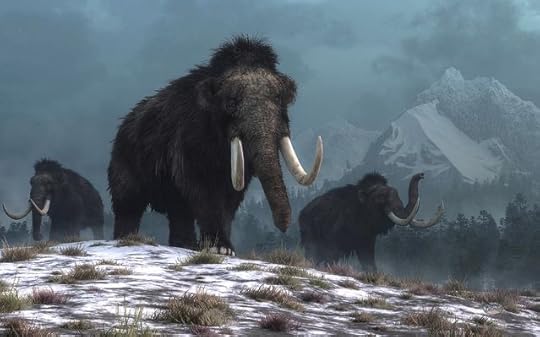
Elves of Antarctica by Paul McAuley ★★★☆☆
“You can’t hate change. It’s like hating life.”
I don’t understand how bringing back Mammoths went with the story of a world hot enough to have lost the Marshall Islands. Or where the elves fit in or why. It was all odd but a pretty visual.
Brownsville Station by Christopher Rowe ★★★☆☆
”How many times have you been outside?”
Humans have fought climate change by living in bubbled cities connected by underground trains. But they can’t hold back the ocean. Luckily, a small portion of humanity never stopped living outside, adapting.
What Is by Jeffrey Ford ★★★☆☆
Sad story about a community that forgets to be a community when thing get tough. At least the dog survives.
The New Venusians by Sean Williams ★★★☆☆
Half asleep from the previous story I did not fully appreciated this one. It was about a girl visiting her grandfather on Venus just as he does something momentous.
Inselberg Nalo Hopkinson ★★★☆☆
A four eyed tour guide leads the unprepared around the flooded ruins. I think everyone dies at the end?
Only Ten More Shopping Days Left Tull Ragnarök by James Morrow ★★★☆☆
That was an odd one. By killing off the excess of cynicism, and a few key executives, by means of intuit mythology the world turns the corner.
Drowned by Lavie Tidhar ★★★☆☆
Pleasant postdiluvian folktale origin story.

The Future is Blue by Catherynne M. Valente ★★★☆☆
Imagine Waterworld built on the Pacific Garbage patch. It’s a rough world but Tetley has found happiness and can’t understand why others would trade their current joys for hope (false hope?).
I’m not sure if this is a commentary on the current obsession with colonizing Mars or just a general climate change warning story.
Destroyed by the Waters by Rachel Swirsky ★★☆☆☆
Profoundly boring. I had to give it three go’s to get to the end.
Fifteen stories with an average rating of 3.3 stars.

June 14, 2020
What I rated each story is in the updates. 15 stories. Average 3.25. I enjoyed most of the stories. My favorites being "Who do you love?" and "Last Gods".

June 3, 2016
I read this themed anthology in kindle format prior to the publication date, and it was sent to me at no cost as a reader who writes public reviews. Jonathan Strahan has edited a number of themed anthologies, as well as ten volumes of an annual anthology “The Best Science Fiction and Fantasy of the Year”. The stories collected here were requested specifically for this anthology and some are newly written in 2016. The theme for the anthology was inspired by J.G. Ballard’s The Drowned World, and in fact, it's titled after that defining work. I was impressed by the ambitiousness of this theme, and also by the list of participating writers. I’m not quite sure how to review the editorship of an anthology like this one, other than by reviewing the stories themselves. There are a few gems in there, which I feel may be awards class, and a few that, well, aren’t. Here are my thoughts on each.
Elves of Antarctica, by Paul McAuley ***
Antarctica is developed for human habitation as the rest of the Earth grows uninhabitable. Stone elves are brought a vestigial religious symbol by some of the underclass workers.
Dispatches from the Cradle: The Hermit – Forty Eight Hours in the Sea of Massachusetts, by Ken Liu ****
A well-heeled Venusian woman goes native among the declining humans on Earth. As typical for Liu, the story contains reflections on the nature of humanity, class, and the using up of finite resources, which are more interesting than the plot itself.
Venice Drowned, by Kim Stanley Robinson *****
A man makes his living guiding tourists over the sunken ruins of the Italian Coast. Some Japanese treasure hunters force him to confront his own identity, in a richly described setting. I have to admit I am just a big fan for almost anything KSR writes.
Brownsville Station, by Christopher Rowe ***
A tense story of a disaster on a circum-Caribbean train, in a circum-Caribbean megalopolis.
Who Do You Love?, by Kathleen Ann Goonan **
This story is set in a post-human and post-apocalyptic future, and told from the various perspectives of a woman transformed into a coral reef, and her family around her. Unfortunately, the characters didn’t really capture my concern.
Because Change was the Ocean and We Lived by Her Mercy, by Charlie Jane Anders ***
This is a life journey through a strange and creatively envisioned post-apocalyptic future. In this case, main character aged believably and became someone I did care about.
The Common Tongue, the Present Tense, the Known, by Nina Allan *
Unfortunately, this is a fragmented first person account of a woman living rootlessly in a flooded future. It ends so abruptly, that I suspect there may be an actual error in the structure of the ebook by the publisher. But if intentional, this is a terrible ending.
What is, by Jeffrey Ford ***
This story describes a penultimate shoot-out in a desertified and desperate near-future Oklahoma. There is a theme of climate change, but not really of a drowned world.
Destroyed by the Waters, by Rachel Swirsky *****
On a diving expedition to sunken New Orleans, a long-married couple comes to terms with the drowning of the son in the sudden submersion of Baltimore which they learned of without witnessing. The two male characters and their relationship is the strength of the story.
The New Venusians, by Sean Williams ****
A spoiled teenager is sent to live with her grandfather on Venus as it is terraformed.
Inselberg, by Nalo Hopkinson ***
A tour group is guided on a tropical vacation of all that is left of an island. The reader only understands what is happening through the patter of the tour guide, who is clearly not shocked by the shocking twists that nature has taken.
Only Ten More Shopping Days Left Till Ragnorök, by James Morrow **
A man and his wife on a bucket-trip vacation to the North Pole, encounter a disaster and a secret hidden community living on the dwindling ice. Unknown, this community has been responsible for the continued survival of humanity.
Last Gods, by Sam J. Miller ***
A surviving community of humans has devolved their understanding of the fall of civilization into a religion. Adze gives up what life she has found for herself to follow Kelb out of their safe community, in an act of desperate love. But Kelb has his own motivations.
Drowned, by Lavie Tidhar ***
Little Mai hears the story of how Grandma Toffle once had the opportunity to fly, and the old story of how Flora and Deuteronomy came to live in the tiny fringe of the world that still supports human life.
The Future is Blue, by Catherynne M. Valente *****
Humanity has survived a flooded future by colonizing a floating trash vortex. The story is told first person from the perspective of a social outcast, who has apparently done some great wrong for which she is being punished. The driving plot tension is to find what it is she has done. But in the twisted world of Garbagetown, where the cast-off refuse of our own times make up the only resources available, bizarrely sorted into homogeneous patches, it is never clear what is considered right or wrong. It is an irrational setting, but one in which we can see raw aspects of human lives – this story follows in the footsteps of J.G. Ballard’s original The Drowned World.
Elves of Antarctica, by Paul McAuley ***
Antarctica is developed for human habitation as the rest of the Earth grows uninhabitable. Stone elves are brought a vestigial religious symbol by some of the underclass workers.
Dispatches from the Cradle: The Hermit – Forty Eight Hours in the Sea of Massachusetts, by Ken Liu ****
A well-heeled Venusian woman goes native among the declining humans on Earth. As typical for Liu, the story contains reflections on the nature of humanity, class, and the using up of finite resources, which are more interesting than the plot itself.
Venice Drowned, by Kim Stanley Robinson *****
A man makes his living guiding tourists over the sunken ruins of the Italian Coast. Some Japanese treasure hunters force him to confront his own identity, in a richly described setting. I have to admit I am just a big fan for almost anything KSR writes.
Brownsville Station, by Christopher Rowe ***
A tense story of a disaster on a circum-Caribbean train, in a circum-Caribbean megalopolis.
Who Do You Love?, by Kathleen Ann Goonan **
This story is set in a post-human and post-apocalyptic future, and told from the various perspectives of a woman transformed into a coral reef, and her family around her. Unfortunately, the characters didn’t really capture my concern.
Because Change was the Ocean and We Lived by Her Mercy, by Charlie Jane Anders ***
This is a life journey through a strange and creatively envisioned post-apocalyptic future. In this case, main character aged believably and became someone I did care about.
The Common Tongue, the Present Tense, the Known, by Nina Allan *
Unfortunately, this is a fragmented first person account of a woman living rootlessly in a flooded future. It ends so abruptly, that I suspect there may be an actual error in the structure of the ebook by the publisher. But if intentional, this is a terrible ending.
What is, by Jeffrey Ford ***
This story describes a penultimate shoot-out in a desertified and desperate near-future Oklahoma. There is a theme of climate change, but not really of a drowned world.
Destroyed by the Waters, by Rachel Swirsky *****
On a diving expedition to sunken New Orleans, a long-married couple comes to terms with the drowning of the son in the sudden submersion of Baltimore which they learned of without witnessing. The two male characters and their relationship is the strength of the story.
The New Venusians, by Sean Williams ****
A spoiled teenager is sent to live with her grandfather on Venus as it is terraformed.
Inselberg, by Nalo Hopkinson ***
A tour group is guided on a tropical vacation of all that is left of an island. The reader only understands what is happening through the patter of the tour guide, who is clearly not shocked by the shocking twists that nature has taken.
Only Ten More Shopping Days Left Till Ragnorök, by James Morrow **
A man and his wife on a bucket-trip vacation to the North Pole, encounter a disaster and a secret hidden community living on the dwindling ice. Unknown, this community has been responsible for the continued survival of humanity.
Last Gods, by Sam J. Miller ***
A surviving community of humans has devolved their understanding of the fall of civilization into a religion. Adze gives up what life she has found for herself to follow Kelb out of their safe community, in an act of desperate love. But Kelb has his own motivations.
Drowned, by Lavie Tidhar ***
Little Mai hears the story of how Grandma Toffle once had the opportunity to fly, and the old story of how Flora and Deuteronomy came to live in the tiny fringe of the world that still supports human life.
The Future is Blue, by Catherynne M. Valente *****
Humanity has survived a flooded future by colonizing a floating trash vortex. The story is told first person from the perspective of a social outcast, who has apparently done some great wrong for which she is being punished. The driving plot tension is to find what it is she has done. But in the twisted world of Garbagetown, where the cast-off refuse of our own times make up the only resources available, bizarrely sorted into homogeneous patches, it is never clear what is considered right or wrong. It is an irrational setting, but one in which we can see raw aspects of human lives – this story follows in the footsteps of J.G. Ballard’s original The Drowned World.

June 14, 2020
While there were a couple of very good stories in this collection, most of them were just a bit 'meh' for me. I think I expected more post-apocalyptic action and a few scares but there was a lot of preaching about how we screwed things up and now we have to get on with adapting to our new world. Possibly a good collection for the right reader, unfortunately I'm not that one.

July 3, 2016
...All in all Drowned Worlds contained many more forgettable stories than memorable ones. As such I was mildly disappointed with it. There are too many stories that only superficially deal with the chosen theme. It turns the anthology into a parade of half-hearted images of what sea level rise might look like, overlaid with decent but not special plots. One can't help but wonder if the anthology wouldn't have benefited from a slightly wider theme, if only to make it a bit more varied. But even with a narrow theme I can't help but feel there ought to be a better selection out there.
Full Random Comments review
Full Random Comments review
July 30, 2016
For me, the most interesting aspect of Drowned Worlds -- with apologies to the individual authors who appear within it -- is its overall shape as an anthology. It opens with Paul McAuley’s “Elves of Antarctica”, which may be the most Kim Stanley Robinson story that Kim Stanley Robinson never wrote, and follows a displaced Marshall Islander working as a helicopter pilot in warming Antarctica, who becomes intrigued and then obsessed with stones scattered across the continent bearing inscriptions in (Tolkien’s) Elvish. Who is leaving them, and why? It ends with Catherynne M. Valente’s “The Future is Blue”, in which a young girl grows up on a floating garbage island that has been improbably Sorted into various types of refuse, with each district assigned a whimsical name -- Candle Hole, Electric City, Soapthorpe, and so on -- and goes on a quest to obtain her name. McAuley is plausible with a dash of mystical; Valente is surrealist with a dash of realist; and the rest of the stories more or less traverse a continuum between those two points.
That I prefer the former aesthetic, and indeed find it for the most part more useful as a response to the intensifying reality of climate change (although I do like that Valente’s characters’ label for our past selves is, unromantically, the Fuckwits), is certainly a personal preference. It did mean, however, that somewhere around the mid-point -- which I might gloss as the point at which it seems that the primary inspiration for the writers becomes other SF, rather than the anthropocene itself -- I found myself with a sense of diminishing returns. There are perhaps four stories here as good as anything I’ve read this year: the McAuley, and Ken Liu’s journalistic report about a noveau-Thoreauvian hermit, “Dispatches from the Cradle”, Charlie Jane Anders’ fluid San Francisco commune story “Because Change Was the Ocean and we Lived by Her Mercy”, and Jeffrey Ford’s more explicitly moralising dustbowl showdown, “What Is”. All of them, and a few of the others, address the question of personal experience in a drowned world, the question of coming to terms, the question of how it might feel. But there are an equal number that seemed to be, to a greater or lesser extent, glib or thin (Sam J. Miller’s “Last Gods”, with its clumsy depiction of faith, was a particular disappointment, given how much I’ve liked some of his other work), which for me creates an interesting but frustrating whole.
That I prefer the former aesthetic, and indeed find it for the most part more useful as a response to the intensifying reality of climate change (although I do like that Valente’s characters’ label for our past selves is, unromantically, the Fuckwits), is certainly a personal preference. It did mean, however, that somewhere around the mid-point -- which I might gloss as the point at which it seems that the primary inspiration for the writers becomes other SF, rather than the anthropocene itself -- I found myself with a sense of diminishing returns. There are perhaps four stories here as good as anything I’ve read this year: the McAuley, and Ken Liu’s journalistic report about a noveau-Thoreauvian hermit, “Dispatches from the Cradle”, Charlie Jane Anders’ fluid San Francisco commune story “Because Change Was the Ocean and we Lived by Her Mercy”, and Jeffrey Ford’s more explicitly moralising dustbowl showdown, “What Is”. All of them, and a few of the others, address the question of personal experience in a drowned world, the question of coming to terms, the question of how it might feel. But there are an equal number that seemed to be, to a greater or lesser extent, glib or thin (Sam J. Miller’s “Last Gods”, with its clumsy depiction of faith, was a particular disappointment, given how much I’ve liked some of his other work), which for me creates an interesting but frustrating whole.

May 13, 2018
I love short SF stories. The old SF pulps were my intro into the world of reading. I didn't care for these stories, though. They were long on descriptions & angst. The characters were OK, but generally not really likable, at least I never got attached to any. The points of the stories were trite & drowned in the imagery. Strahan seems to have picked them mostly to show how we're destroying the world. That's fine once, got old due to repetition, & eventually lost its impact entirely.
That's pretty tough to do to me. I'm kind of an environmental nut lending my support to several organizations for decades plus I'm constantly battling invasive species & fostering native ones on my own land. No one could count the hours I've spent doing so.
Normally with short stories, I'd list them & give a quick description & rating. Not worth it in this case. Only one story started to make a decent point about change is inevitable & we'll never get back to our ideals of what nature used to & should be. I forget which one, but it was early on; maybe the second or third.
Well narrated & I could see where some might like these. They just lack the punch that I prefer.
This is the wrong edition. I listened to an audio book, but it's not listed & I'm too busy to add it right now.
That's pretty tough to do to me. I'm kind of an environmental nut lending my support to several organizations for decades plus I'm constantly battling invasive species & fostering native ones on my own land. No one could count the hours I've spent doing so.
Normally with short stories, I'd list them & give a quick description & rating. Not worth it in this case. Only one story started to make a decent point about change is inevitable & we'll never get back to our ideals of what nature used to & should be. I forget which one, but it was early on; maybe the second or third.
Well narrated & I could see where some might like these. They just lack the punch that I prefer.
This is the wrong edition. I listened to an audio book, but it's not listed & I'm too busy to add it right now.

October 3, 2016
Jonathan Strahan is one of the foremost editors of short speculative fiction working today, producing annual Best Science Fiction and Fantasy of the Year anthologies since 2007, as well as many other themed anthologies, including the excellent Infinity series. Drowned Worlds is an anthology which explores what the world--and humanity--might become after climate change has caused the sea levels to rise.
In the introduction to the anthology, Strahan talks about reading J.G. Ballard's The Drowned World, which he calls "one of the great British disaster novels". He goes on to talk about following links from The Drowned World to Paul McAuley's The Choice, and Kim Stanley Robinson's The Wild Shore. All of these combined with the real world effects of climate change into the inspiration for this particular anthology. Looking at that inspiration, one might think that the reader is going to encounter many bleak visions of the world in the stories in Drowned Worlds, but the reality is anything but. There's a strong thread of hope which weaves through all of the stories--life always finds its way, and humanity endures, even if has been forced to change.
The authors featured in this anthology could be read almost as a who's who of groundbreaking science fiction writers working today. All of the stories in the anthology are excellent, and though several of them didn't resonate with me personally, they were still a very good read and likely a reader with different tastes to mine will pick them out as the strongest in the anthology.
Many of the stories are outstanding because of their use of voice, among them Christopher Rowe's Brownesville Station and Nalo Hopkinson's Inselberg. Catherynne M. Valente's The Future is Blue also falls into this category, combining a brilliant, unique voice with an technicolour world that is described with Valente's usual deft literary hand.
Many of the strongest stories in the anthology focus almost entirely on humanity and character's relationships with each other, with much of the changed/drowned world almost receding into the background. The characters and their lives are changed by the world, but they are not defined by it. There is so much hope in these kinds of stories, which include Paul McAuley's Elves of Antarctica, Kathleen Ann Goonan's Who Do You Love, Charlie Jane Anders' Because Change Was the Ocean and We Lived By Her Mercy, Nina Allen's The Common Tongue, The Present Tense and Rachel Swirsky's Destroyed by the Waters. Each of these stories has heartbreak, but there is also hope, and the assertion that even though the world has changed, humanity and individual humans will find a way to continue.
Also to be noted are two excellent stories which draw on mythology and belief: James Morrow's Only Ten More Shopping Days Left Till Ragnarok (which may be one of the most biting and brilliant titles I've read) and Sam Miller's Last Gods.
Fans of Sean Williams should also note the inclusion of his story The New Venusians, which ties into his Twinmaker universe. I've adored the novels and stories I've read in this universe, and this story is no exception.
Overall, Drowned Worlds is one of the best anthologies I've read, with every story strong and compelling. In another editor's hands, this could easily have become an anthology filled with doom and despair, and while the stories contained within absolutely acknowledge the grief and anger of a climate-change-wracked world, they also give the characters a quiet strength, and hope that no matter what, humanity will endure. The whole collection is highly recommended, with my personal favourites being the Valente, Morrow, Anders, Swirsky and Goonan.
In the introduction to the anthology, Strahan talks about reading J.G. Ballard's The Drowned World, which he calls "one of the great British disaster novels". He goes on to talk about following links from The Drowned World to Paul McAuley's The Choice, and Kim Stanley Robinson's The Wild Shore. All of these combined with the real world effects of climate change into the inspiration for this particular anthology. Looking at that inspiration, one might think that the reader is going to encounter many bleak visions of the world in the stories in Drowned Worlds, but the reality is anything but. There's a strong thread of hope which weaves through all of the stories--life always finds its way, and humanity endures, even if has been forced to change.
The authors featured in this anthology could be read almost as a who's who of groundbreaking science fiction writers working today. All of the stories in the anthology are excellent, and though several of them didn't resonate with me personally, they were still a very good read and likely a reader with different tastes to mine will pick them out as the strongest in the anthology.
Many of the stories are outstanding because of their use of voice, among them Christopher Rowe's Brownesville Station and Nalo Hopkinson's Inselberg. Catherynne M. Valente's The Future is Blue also falls into this category, combining a brilliant, unique voice with an technicolour world that is described with Valente's usual deft literary hand.
Many of the strongest stories in the anthology focus almost entirely on humanity and character's relationships with each other, with much of the changed/drowned world almost receding into the background. The characters and their lives are changed by the world, but they are not defined by it. There is so much hope in these kinds of stories, which include Paul McAuley's Elves of Antarctica, Kathleen Ann Goonan's Who Do You Love, Charlie Jane Anders' Because Change Was the Ocean and We Lived By Her Mercy, Nina Allen's The Common Tongue, The Present Tense and Rachel Swirsky's Destroyed by the Waters. Each of these stories has heartbreak, but there is also hope, and the assertion that even though the world has changed, humanity and individual humans will find a way to continue.
Also to be noted are two excellent stories which draw on mythology and belief: James Morrow's Only Ten More Shopping Days Left Till Ragnarok (which may be one of the most biting and brilliant titles I've read) and Sam Miller's Last Gods.
Fans of Sean Williams should also note the inclusion of his story The New Venusians, which ties into his Twinmaker universe. I've adored the novels and stories I've read in this universe, and this story is no exception.
Overall, Drowned Worlds is one of the best anthologies I've read, with every story strong and compelling. In another editor's hands, this could easily have become an anthology filled with doom and despair, and while the stories contained within absolutely acknowledge the grief and anger of a climate-change-wracked world, they also give the characters a quiet strength, and hope that no matter what, humanity will endure. The whole collection is highly recommended, with my personal favourites being the Valente, Morrow, Anders, Swirsky and Goonan.

July 4, 2023
All in all a great anthology. I will certainly be checking out more of Strahan's collections. 4.03★
13 Elves of Antarctica by Paul McAuley
Monuments of nostalgia and mammoths 3.5★
Dispatches from the Cradle: The Hermit – Forty-Eight Hours in the Sea of Massachusetts by Ken Liu
The story asks: 600 years from now, after much human-induced climate change, can trying to reverse it also mean too much destruction? 3.5★
Venice Drowned by Kim Stanley Robinson
How to preserve cultural history in a drowned Venice. 3.75★
Brownsville Station by Christopher Rowe
Oh, what a great premise/world (I wanted more!); like the opening chapter of a fun and entertaining trilogy. 4.5★
Who Do You Love? Kathleen Ann Goonan
Great idea, great ending 4.5★
Because Change Was the Ocean and We Lived by Her Mercy by Charlie Jane Anders
Made me think of "Tales of the City"; after all this time, these kinds of communities still exist in a drowned San Francisco. Very solid story and character. 3.5★
The Common Tongue, the Present Tense, the Known by Nina Allan
The middle school essay "Understanding Climate Change: Timeline and Analysis" from June 2132 is a highlight. 3.5★
What is by Jeffrey Ford
Feels very, very realistic: what would happen to the "communities" in the South Central States; not only the climate, but also the fact that the neighbours are quite the opposite of neighbourly. 4★
Destroyed by the Waters by Rachel Swirsky
An old couple working through their loss by diving in a drowned New Orleans. Beautiful and sad. 5★
The New Venusians by Sean Williams
An absolute highlight. A teenager and her grandfather, two great and very different characters, in the clouds of Venus. 5★
Inselberg by Nalo Hopkinson
Great fun, the narrating tour guide has a rather unique point of view. 4.5★
Only Ten More Shopping Days Left Till Ragnarök by James Morrow
They meet Inuits, and then fantastic things happen. 3★
Last Gods by Sam J. Miller
Given recent news from the Mediterranean and the Atlantic, the gods in this story make a lot of sense. 3.5★
Drowned by Lavie Tidhar
A story about storytelling, a lord in a castle, a brave 'princess', and planet-altering genetic mutations. I love all the grannies in this story. 3.75★
The Future is Blue by Catherynne M. Valente
The second absolute highlight. A vibrant world – a huge floating garbage island – and a social outcast in search of happiness. This story also feels a bit like the beginning of a great YA trilogy. 5★
13 Elves of Antarctica by Paul McAuley
Monuments of nostalgia and mammoths 3.5★
Dispatches from the Cradle: The Hermit – Forty-Eight Hours in the Sea of Massachusetts by Ken Liu
The story asks: 600 years from now, after much human-induced climate change, can trying to reverse it also mean too much destruction? 3.5★
Venice Drowned by Kim Stanley Robinson
How to preserve cultural history in a drowned Venice. 3.75★
Brownsville Station by Christopher Rowe
Oh, what a great premise/world (I wanted more!); like the opening chapter of a fun and entertaining trilogy. 4.5★
Who Do You Love? Kathleen Ann Goonan
Great idea, great ending 4.5★
Because Change Was the Ocean and We Lived by Her Mercy by Charlie Jane Anders
Made me think of "Tales of the City"; after all this time, these kinds of communities still exist in a drowned San Francisco. Very solid story and character. 3.5★
The Common Tongue, the Present Tense, the Known by Nina Allan
The middle school essay "Understanding Climate Change: Timeline and Analysis" from June 2132 is a highlight. 3.5★
What is by Jeffrey Ford
Feels very, very realistic: what would happen to the "communities" in the South Central States; not only the climate, but also the fact that the neighbours are quite the opposite of neighbourly. 4★
Destroyed by the Waters by Rachel Swirsky
An old couple working through their loss by diving in a drowned New Orleans. Beautiful and sad. 5★
The New Venusians by Sean Williams
An absolute highlight. A teenager and her grandfather, two great and very different characters, in the clouds of Venus. 5★
Inselberg by Nalo Hopkinson
Great fun, the narrating tour guide has a rather unique point of view. 4.5★
Only Ten More Shopping Days Left Till Ragnarök by James Morrow
They meet Inuits, and then fantastic things happen. 3★
Last Gods by Sam J. Miller
Given recent news from the Mediterranean and the Atlantic, the gods in this story make a lot of sense. 3.5★
Drowned by Lavie Tidhar
A story about storytelling, a lord in a castle, a brave 'princess', and planet-altering genetic mutations. I love all the grannies in this story. 3.75★
The Future is Blue by Catherynne M. Valente
The second absolute highlight. A vibrant world – a huge floating garbage island – and a social outcast in search of happiness. This story also feels a bit like the beginning of a great YA trilogy. 5★

Read
April 5, 2017DNF
The stories for the most part couldn't keep my attention. Maybe I'm just not in a sci-fi phase right now. I'll try again later.
The stories for the most part couldn't keep my attention. Maybe I'm just not in a sci-fi phase right now. I'll try again later.

Did Not Finish
December 20, 2016I have been reading this for months now and I really don’t care about this anthology. Out of the eight or nine stories that I’ve read, I only enjoyed two, the other ones were just meh or boring. I have tried to pick it up several times but it never managed to grab my attention and so far, having this one my Currently Reading shelf only has prevented me to start other anthologies because I absolutely wanted to finish this one.
The themes and ideas were interesting on the paper but the execution wasn’t there for me and I don’t want to force myself to finish it. The only two stories that I would recommend are The Last Gods by Sam J. Miller (because this guy can’t write a bad story and The Last Gods was excellent) and Destroyed By The Waters by Rachel Swirsky which was a beautiful story about love and loss.
I don’t have many stories left so I might try to finish this but not today or anytime soon.
The themes and ideas were interesting on the paper but the execution wasn’t there for me and I don’t want to force myself to finish it. The only two stories that I would recommend are The Last Gods by Sam J. Miller (because this guy can’t write a bad story and The Last Gods was excellent) and Destroyed By The Waters by Rachel Swirsky which was a beautiful story about love and loss.
I don’t have many stories left so I might try to finish this but not today or anytime soon.

May 30, 2020
3.5 stars
This collection starts and ends at a High Point but is consistently strong with only a few less interesting exceptions. It presents multiple possible adaptations to a more water bound world but largely struggles with the question of whether to adapt at all.
This collection starts and ends at a High Point but is consistently strong with only a few less interesting exceptions. It presents multiple possible adaptations to a more water bound world but largely struggles with the question of whether to adapt at all.
April 4, 2017
enjoyed most of the stories. A couple I had a hard time staying focused .. but overall a good collection on the theme.

Read
August 25, 2016Every so often one reads sententious op-eds asking why literature isn't addressing the threat of climate change. Like its predecessor, 'Why don't musicians make protest songs anymore?'*, this complaint has only ever meant one thing: the complainant is not only ignorant of where to look for counter-examples, but ignorant even of their own staggering ignorance. The answer, obviously, is that this work is being done in science fiction, because the very fact of the topic makes any such story science fiction, just like any story set in the time a book will be published (as against the months or years previously when it was written, or even before that) must necessarily be science fiction, because that's how quickly the world moves nowadays. And here is a collection of some of that science fiction.
Now, SF being better at the big picture and the long view than litfic or journalism, there's perhaps less wailing and gnashing of teeth than you might expect, and that despite the remit precluding can-do stories in which Science Saves The Day and the waters are safely held at bay. More than one tale has characters noting that the status quo of our present, and their past, was really no more or less natural than that during the Ice Ages; why should we assume that it's right for Doggerland to be below the waves but Venice above them? And in several stories the societies of the post-inundation futures seem to have fought their way to something which, at least in some respects, feels like a more humane humanity than our current systems allow. But then the mood darkens again, particularly in Jeffrey Ford's 'What Is', which for my money cheats slightly by being set in the new dustbowl wrought by increased temperatures and fracking-generated earthquakes. Yes, if the temperature is higher then presumably the coasts are swamped even as the heartland cracks, but given the anthology title, would it have killed Ford to at least mention that in passing? Still, this is undoubtedly bleaker than anything which precedes it; angry, and justifiably so, about the dreadful future being stored up for the US by its current legislators, but perhaps a little too didactic in playing that out as fiction. Sam Miller's 'Last Gods' continues in a similarly doomed vein, its human remnants fearful savages rather than the polymorphously perverse techno-resurgents of Charlie Jane Anders' 'Because Change Was the Ocean and We Lived by Her Mercy', or the old couple diving where once they honeymooned in Rachel Swirsky's elegaic 'Destroyed by the Waters'. The storytellers of Lavie Tidhar's 'Drowned' remember a little more of the world that was, but even for them our apocalyptic near future is their barely-remembered past, with more still lost in the interim. The final word, though, goes to Cat Valente, whose narrator subsists on one of the floating islands of rubbish we're leaving even as we allow what used to be land to sink below the waves. The people of Garbagetown refer to us, their forebears, as simply Fuckwits. And looking at our feeble politicians and merrily belching chimneys, it's hard to disagree.
*If there's one silver lining to the unconscionable brutality of some US police departments, it's putting that particular load of old bollocks firmly to bed.
(Netgalley ARC)
Now, SF being better at the big picture and the long view than litfic or journalism, there's perhaps less wailing and gnashing of teeth than you might expect, and that despite the remit precluding can-do stories in which Science Saves The Day and the waters are safely held at bay. More than one tale has characters noting that the status quo of our present, and their past, was really no more or less natural than that during the Ice Ages; why should we assume that it's right for Doggerland to be below the waves but Venice above them? And in several stories the societies of the post-inundation futures seem to have fought their way to something which, at least in some respects, feels like a more humane humanity than our current systems allow. But then the mood darkens again, particularly in Jeffrey Ford's 'What Is', which for my money cheats slightly by being set in the new dustbowl wrought by increased temperatures and fracking-generated earthquakes. Yes, if the temperature is higher then presumably the coasts are swamped even as the heartland cracks, but given the anthology title, would it have killed Ford to at least mention that in passing? Still, this is undoubtedly bleaker than anything which precedes it; angry, and justifiably so, about the dreadful future being stored up for the US by its current legislators, but perhaps a little too didactic in playing that out as fiction. Sam Miller's 'Last Gods' continues in a similarly doomed vein, its human remnants fearful savages rather than the polymorphously perverse techno-resurgents of Charlie Jane Anders' 'Because Change Was the Ocean and We Lived by Her Mercy', or the old couple diving where once they honeymooned in Rachel Swirsky's elegaic 'Destroyed by the Waters'. The storytellers of Lavie Tidhar's 'Drowned' remember a little more of the world that was, but even for them our apocalyptic near future is their barely-remembered past, with more still lost in the interim. The final word, though, goes to Cat Valente, whose narrator subsists on one of the floating islands of rubbish we're leaving even as we allow what used to be land to sink below the waves. The people of Garbagetown refer to us, their forebears, as simply Fuckwits. And looking at our feeble politicians and merrily belching chimneys, it's hard to disagree.
*If there's one silver lining to the unconscionable brutality of some US police departments, it's putting that particular load of old bollocks firmly to bed.
(Netgalley ARC)

December 4, 2016
If this book has a common thread besides the ocean rise catastrophe, it is that the stories and characters are a bit wooden and much of it seems impersonal and unengaging. I had a hard time getting through the book. So why did I give it four stars? I read it because it has stories by Kathleen Goonan and Charlie Jane Anders. Those stories did not disappoint. The Goonan has, as usual, some extreme (though not for her) gene engineering and characters who were complex and likable. Anders contributed a classic young bohemian seeker coming-of-age story - contemporary now but in a nicely-built future setting. Oh, and Nalo Hopkinson's story was excellent, and Catherynne Valente's story provided a nice ending to the book.

September 16, 2017
Finished this anthology last night. Overall thoughts: it was fine? Uneven, as you generally expect multi-author anthologies to be. There was a mix of established masters, up-and-comers and unknowns, and the quality of the stories generally sorted out in that fashion. I suppose it does a good job of capturing the 2016 zeitgeist around climate change.
"Elves Of Antarctica" by Paul McAuley ★
"Dispatches From The Cradle: The Hermit – Forty-Eight Hours In The Sea Of Massachusetts" by Ken Liu ★★
"Venice Drowned" by Kim Stanley Robinson ★★★★
"Brownsville Station" by Christopher Rowe ★★
"Who Do You Love?" by Kathleen Ann Goonan ★★★
"Because Change Was The Ocean And We Lived by Her Mercy" by Charlie Jane Anders ★★★
"The Common Tongue, The Present Tense, The Known" by Nina Allan ★
"What Is" by Jeffrey Ford ★★★
"Destroyed by The Waters" by Rachel Swirsky ★★★
"The New Venusians" by Sean Williams ★★★
"Inselberg" by Nalo Hopkinson ★★★★
"Only Ten More Shopping Days Left Till Ragnarök" by James Morrow ★★
"Last Gods" by Sam J. Miller ★★★
"Drowned" by Lavie Tidhar ★★
"The Future Is Blue" by Catherynne M. Valente ★★★★
Overall rating: ★★★
Favourite stories: "Venice Drowned", "Inselberg", "The Future Is Blue", "What Is"
Least favourite: "Elves Of Antarctica", "The Common Tongue, The Present Tense, The Known", "Dispatches From The Cradle: The Hermit – Forty-Eight Hours In The Sea Of Massachusetts"
"Elves Of Antarctica" by Paul McAuley ★
"Dispatches From The Cradle: The Hermit – Forty-Eight Hours In The Sea Of Massachusetts" by Ken Liu ★★
"Venice Drowned" by Kim Stanley Robinson ★★★★
"Brownsville Station" by Christopher Rowe ★★
"Who Do You Love?" by Kathleen Ann Goonan ★★★
"Because Change Was The Ocean And We Lived by Her Mercy" by Charlie Jane Anders ★★★
"The Common Tongue, The Present Tense, The Known" by Nina Allan ★
"What Is" by Jeffrey Ford ★★★
"Destroyed by The Waters" by Rachel Swirsky ★★★
"The New Venusians" by Sean Williams ★★★
"Inselberg" by Nalo Hopkinson ★★★★
"Only Ten More Shopping Days Left Till Ragnarök" by James Morrow ★★
"Last Gods" by Sam J. Miller ★★★
"Drowned" by Lavie Tidhar ★★
"The Future Is Blue" by Catherynne M. Valente ★★★★
Overall rating: ★★★
Favourite stories: "Venice Drowned", "Inselberg", "The Future Is Blue", "What Is"
Least favourite: "Elves Of Antarctica", "The Common Tongue, The Present Tense, The Known", "Dispatches From The Cradle: The Hermit – Forty-Eight Hours In The Sea Of Massachusetts"
June 26, 2021
There were so many talented writers in this selection of short stories, and I really enjoyed all the different takes on what a post-climate change world would look like. Some were more rooted in reality than others, but almost every one of these stories was enjoyable in its own right.
What I valued most though was just the opportunity to get snippets of so many well-known and up-and-coming SFF writers. It really helped me to get an idea of whose writing appealed to me more. Kim Stanley Robinson and Charlie Jane Anders topped the list for me, but I also loved the stories by Paul McAuley, Ken Liu, Lavie Tidhar and Catherynne Valente, and am now eager to read more of their work.
I think it really says a lot when you ask an author to write about a specific theme, and see what they come up with. And to see how diverse all the stories ended up being was a total pleasure, despite the bleak subject matter. Also, a surprising amount of the stories were light-hearted (or at least had light-hearted moments). The future is not all doom and gloom, even if in retrospect, maybe not causing global warming would've been nice.
I think Valente put it best at the end of her story, which was also the end of the book: "We can't go back, not ever, not even for a minute. We are so lucky. Life is so good. We're going on and being alive and being shitty sometimes and lovely sometimes just the same as we always have, and only a Fuckwit couldn't see that." - Well said!
What I valued most though was just the opportunity to get snippets of so many well-known and up-and-coming SFF writers. It really helped me to get an idea of whose writing appealed to me more. Kim Stanley Robinson and Charlie Jane Anders topped the list for me, but I also loved the stories by Paul McAuley, Ken Liu, Lavie Tidhar and Catherynne Valente, and am now eager to read more of their work.
I think it really says a lot when you ask an author to write about a specific theme, and see what they come up with. And to see how diverse all the stories ended up being was a total pleasure, despite the bleak subject matter. Also, a surprising amount of the stories were light-hearted (or at least had light-hearted moments). The future is not all doom and gloom, even if in retrospect, maybe not causing global warming would've been nice.
I think Valente put it best at the end of her story, which was also the end of the book: "We can't go back, not ever, not even for a minute. We are so lucky. Life is so good. We're going on and being alive and being shitty sometimes and lovely sometimes just the same as we always have, and only a Fuckwit couldn't see that." - Well said!

dipped-in
January 10, 2019Read Nina Allan's story 'The Common Tongue, the Present Tense, the Known'. It is, I soon realised, a sequel to the author's 2009 story 'Microcosmos'. Melodie is once again the main character, though she is now an adult, and in contrast to the enigmatic 'Microcosmos', this story gives us several clues about the world she lives in. It's set in the early 22nd century; climate change has caused widespread harm, with many countries uninhabitable due to flooding, and others afflicted by permanent drought. Melodie lives in Cornwall, in what was her 'uncle' Lindsay's cottage, and has befriended Noemi, an inscrutable stowaway who scavenges on the beach.
I found 'Microcosmos' an uncomfortable story, and I'm not completely convinced by the revision of Lindsay Ballantine as a benign character. The undertones of the earlier story, to me, suggested otherwise. 'The Common Tongue, the Present Tense, the Known' is moody and poetic, with Noemi staying remote. As Melodie says, the end of the world has taught her that love is a luxury. The story is too detached to stand beside the best of Allan's work, but its aloof tone suits the bleak post-disaster setting.
I found 'Microcosmos' an uncomfortable story, and I'm not completely convinced by the revision of Lindsay Ballantine as a benign character. The undertones of the earlier story, to me, suggested otherwise. 'The Common Tongue, the Present Tense, the Known' is moody and poetic, with Noemi staying remote. As Melodie says, the end of the world has taught her that love is a luxury. The story is too detached to stand beside the best of Allan's work, but its aloof tone suits the bleak post-disaster setting.

March 30, 2019
An anthology of short stories themed around rising sea levels, often but not exclusively connected to global warming.
Honestly, I don't have a whole lot to say about the anthology. The stories were largely okay, but no real standouts (if pressed, I might pick out Charlie Jane Anders' "Because Change Was the Ocean and We Lived By Her Mercy" which at least I remember enjoying more than I would have expected from that style of story). As a whole, the book's theme is one of those tricky ones, ones which might be fine for any individual story, but could potentially wear people out if they choose to read story after story on the theme in one book. It had a little of that effect on me, that too many were hitting similar notes and themes, and the ones that took risks tended to not work for me for other reasons.
It may be because of that that I give it a two, even though many of the individual stories might rate higher (and I don't know if any rate a one).
Honestly, I don't have a whole lot to say about the anthology. The stories were largely okay, but no real standouts (if pressed, I might pick out Charlie Jane Anders' "Because Change Was the Ocean and We Lived By Her Mercy" which at least I remember enjoying more than I would have expected from that style of story). As a whole, the book's theme is one of those tricky ones, ones which might be fine for any individual story, but could potentially wear people out if they choose to read story after story on the theme in one book. It had a little of that effect on me, that too many were hitting similar notes and themes, and the ones that took risks tended to not work for me for other reasons.
It may be because of that that I give it a two, even though many of the individual stories might rate higher (and I don't know if any rate a one).

June 9, 2019
As with most themed anthologies, there are some great stories and some awful ones in this collection.
Hopkinson, Anders, and Valente are the standouts-- an opinion which will surprise no-one who's ever spent time with the pile of books closest to my bed.
Robinson's offering was Just Ok, which I found disappointing, especially considering how much I loved his New York 2140.
The ones that could've happily been cut from the bunch were "Brownsville Station", "Who Do You Love?", "What Is", "Destroyed By The Waters", "The New Venusians", and "Only 10 More Shopping Days Left Till Ragnarök". They ranged from maybe-with-more-time-and-edits to appallingly bad.
Hopkinson, Anders, and Valente are the standouts-- an opinion which will surprise no-one who's ever spent time with the pile of books closest to my bed.
Robinson's offering was Just Ok, which I found disappointing, especially considering how much I loved his New York 2140.
The ones that could've happily been cut from the bunch were "Brownsville Station", "Who Do You Love?", "What Is", "Destroyed By The Waters", "The New Venusians", and "Only 10 More Shopping Days Left Till Ragnarök". They ranged from maybe-with-more-time-and-edits to appallingly bad.

February 28, 2017
This is a really succesful collection of short fiction. There's a diverse range of voices and settings at work, ranging from evidenced-based speculative near-futures to fantastical tales at the far end of the imaginative spectrum. I have to say I preferred the latter, as I found the former a little samey in their worldbuilding (although perhaps that's a hard one to dodge, given the subject matter), and it's a shame there weren't more of these. That said, there's plenty of good ideas here, and some truly excellent voices. Perhaps the best reason to read this sort of anthology is to sample new authors, and I'm happy to say I've picked up a few I'm definitely going to read more of.

June 10, 2019
Some good stories and some forgettable stories. I don't think I've ever read a Charlie Jane Andersstory or novel I haven't liked; I was also a fan of Catheryne Catherynne M. Valente's "The Future Is Blue" (quirky, disturbing). If I were you, I would be selective about what I chose to read - thumb through this first before diving in.

November 30, 2022
I was drawn to the concept of this anthology, but found many of the stories kind of dull. I think I was hoping for more oceanic action and less human misery.
The story that I enjoyed most was Nalo Hopkinson's. I also liked the elements of Tidhar's, but the story was too unresolved (there's a murder mystery and a science mystery, and they're both left unexplained!). Valente's was both too twee and too miserble for my tastes, but I have to give props for that one aragraph where the young MC prays to St Oscar (the Grouch).
The story that I enjoyed most was Nalo Hopkinson's. I also liked the elements of Tidhar's, but the story was too unresolved (there's a murder mystery and a science mystery, and they're both left unexplained!). Valente's was both too twee and too miserble for my tastes, but I have to give props for that one aragraph where the young MC prays to St Oscar (the Grouch).

January 14, 2026
I look over the ocean of stories I’ve just travelled across. I’m looking for something, but I can’t see it. After a while I jump in and with my head underwater I try to find it. I come up again. It’s not by the shore. Then I swim out into the ocean in search of it. It must be there somewhere. Finally I find it in the back alley of a submerged city. It’s the review for this anthology. It’s short. Only one sentence. “A decent collection of post apocalyptic stories with a few, very few, solarpunk tales thrown in for good measure, none great but some clearly better than others.”

October 30, 2017
There are some great stories in this anthology, and the ones I didn't like are, in the main, mostly down to a matter of taste on my part. This will, of course, be no surprise to anyone who has read a Jonathan Strahan-edited anthology before - he has assembled a great collection of authors, and they have delivered great, extremely timely, stories.

January 2, 2021
Post-rising sea level stories about human adaptation. Floating worlds, becoming one with coral, diving excursions to see a drowned NOLA, “ego-tourism” (great phrase) to the last remaining patch of land, etc. Most set in the all-too-near future while some embrace what we’re making of life on the moon, Venus and Mars.

November 8, 2021
This is a collection of short stories about the future of climate change, after the ocean levels rise. Unsurprisingly, the stories are bleak and depressing. The stories that stand out are Cat Valente’s ”The Future is Blue”, which she has turned into a novel, The Future is Red, and “The New Venusians” by Sean Williams.

December 12, 2021
I genuinely enjoyed most of these stories! My favorites were 'The Future Is Blue' (even though I've already read 'The Past Is Red', which contains it, it's such a special story), 'The Common Tongue, The Present Tense, The Known', and 'Drowned', though the premise of 'Last Gods' will stick with me a while.
Displaying 1 - 30 of 68 reviews